
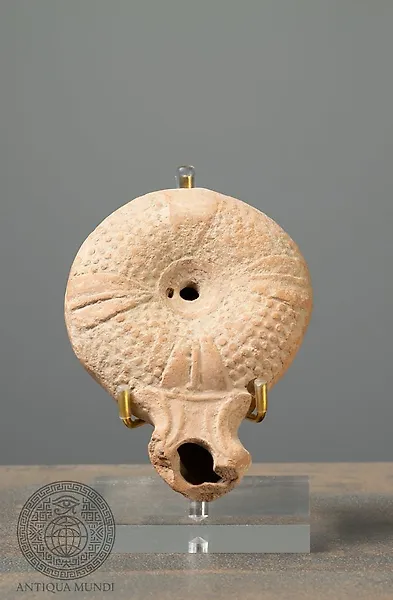
Ancient Roman Terracotta - Oil lamp decorated with Serapis - 1st century CE - expert assessment by Brigitte Cordelle

Ancient Roman terracotta oil lamps are everyday artifacts that provide fascinating glimpses into domestic and religious practices of the Roman Empire. This example, dating from the 1st century CE, features decoration with Serapis, a Greco-Egyptian deity symbolizing a syncretism of Egyptian and Hellenistic religious beliefs introduced to the Roman world. Terracotta was a common material for oil lamps due to its ease of molding and firing, affordability, and lightweight nature. Lamps typically had a central reservoir for oil and a spout for the wick, serving both practical and symbolic functions, sometimes used in household lighting and funerary contexts. The expert assessment by Brigitte Cordelle, a respected authority on ancient art, suggests this piece holds considerable historical significance and authenticity. Collectors and historians alike appreciate such lamps for their artistic detail, cultural symbolism, and insights into ancient religious syncretism and daily life.
VoxFati participates in various affiliate programs. When you click on links to different merchants on this site and take certain actions, such as making a purchase or signing up for a service, it may result in us earning a commission.




Comments
Comments appear after approval.
Log in to comment