
European Neolithic flint Tanged, Barbed Arrowhead - 25 mm (No reserve price)
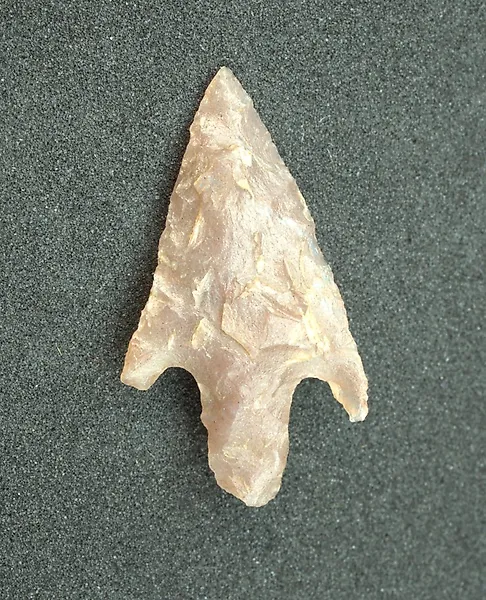
The European Neolithic period, spanning roughly from 7000 to 1700 BCE depending on the region, marked a significant transition in human prehistory. One characteristic artifact from this era is the flint tanged, barbed arrowhead. These arrowheads were crafted from flint, a hard type of sedimentary rock that fractures predictably, making it ideal for sharp tools and weapons. The tanged design features a narrow, pointed extension at the base, or "tang," which was inserted into a wooden shaft to create an arrow. Barbs—small, backward-facing projections on the arrowhead—served to increase the projectile's effectiveness by making removal from an animal or foe more difficult, causing greater injury. With a size around 25 millimeters, these arrowheads exhibit fine workmanship and are indicative of the advanced tool-making skills developed by Neolithic communities. Such artifacts provide valuable insight into hunting practices, craftsmanship, and the spread of early agricultural societies across Europe during this pivotal time of human development.
VoxFati participates in various affiliate programs. When you click on links to different merchants on this site and take certain actions, such as making a purchase or signing up for a service, it may result in us earning a commission.



Comments
Comments appear after approval.
Log in to comment