
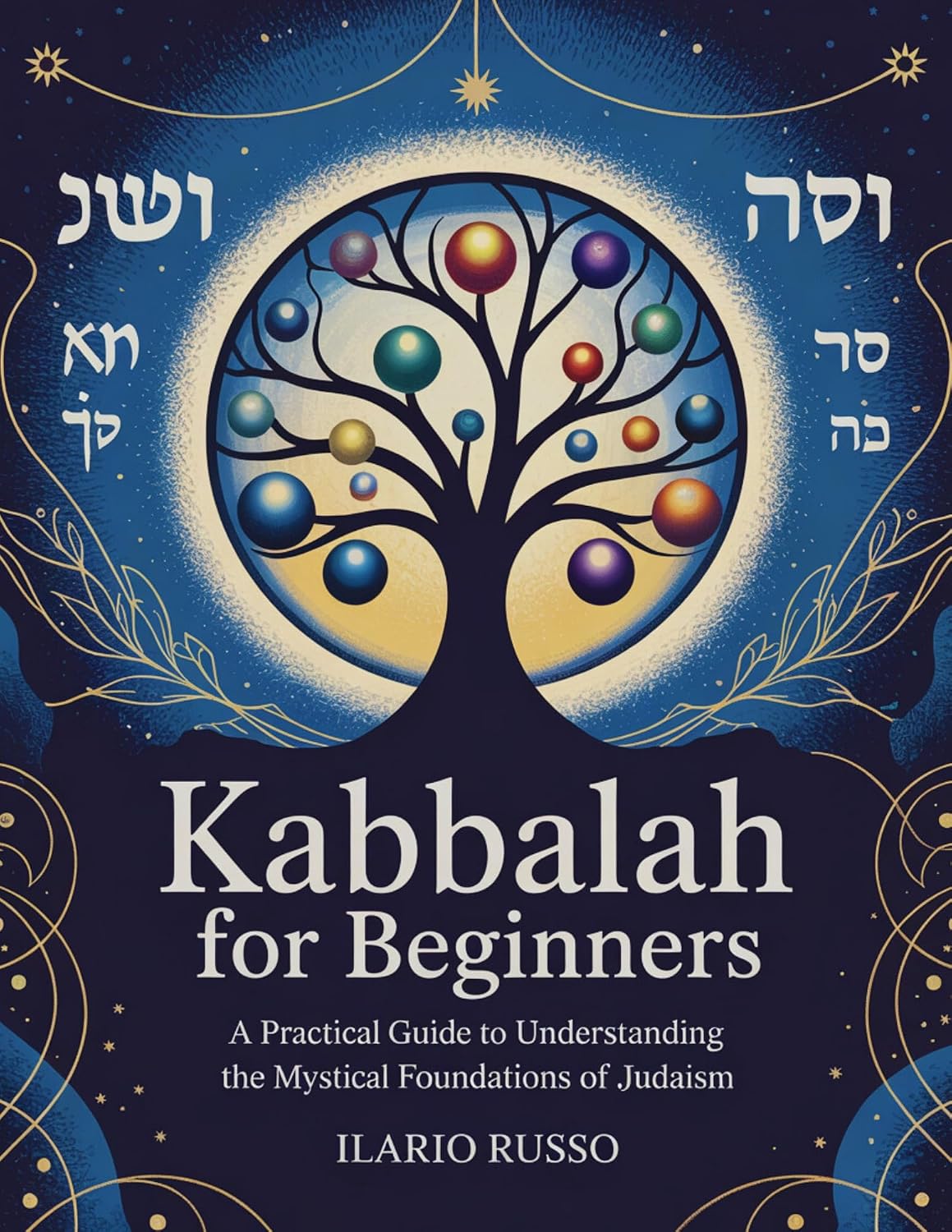
Kabbalah for Beginners: A Practical Guide from A to Z


Kabbalah is one of those subjects where you can read ten books and still not know where to start. One tells you the ten sefirot are levels of divine emanation, another says they're layers of the psyche, a third pairs them with colours and tarot cards. They all use the same vocabulary and they all mean something different by it. This book begins by sorting that confusion out — because until you know which tradition a text comes from, you can't judge it fairly or put it to use.
Inside you'll find a full grounding in the fundamentals: the Tree of Life taken apart piece by piece, each of the ten sefirot treated separately along with what happens in excess and in deficiency, the twenty-two paths and letters, the four worlds, the levels of the soul, and the Lurianic teaching of withdrawal, catastrophe and repair. The material is laid out to be understood rather than memorised — with clear marking of which elements come from Hebrew sources, which were added during the Renaissance, and which were invented in London at the end of the nineteenth century. That distinction isn't pedantry. It determines whether you know what you're holding.
The second half is practical. Exercises described step by step, with specific durations, a specific order, and honest information about what to expect and what not to. Working with a single sefirah, vibrating divine names, an energy exercise built on the central axis of the diagram, a first approach to the paths. Plus keeping a record — because without one, six months in you have no way to check whether anything has changed, or to catch the moment you started bending your own notes toward what you wanted to see.
There's also a section most manuals leave out: what to do when the work starts doing harm. Not the dramatic dangers of folklore, but the quiet, slow-building ones — a growing sense of your own specialness, narrowing interests, disturbed sleep, the moment your personal crisis starts being called a stage of initiation. You get concrete warning signs and concrete instructions, including the simplest one: when to stop.
This is a book for someone who wants to use the system, not just read about it — and who would rather be told how long the work actually takes than be promised quick results. At the end you'll find a mapped-out programme for the first year, with an honest account of where it will leave you and what you still won't be able to do.
VoxFati participates in various affiliate programs. When you click on links to different merchants on this site and take certain actions, such as making a purchase or signing up for a service, it may result in us earning a commission.




Comments
Comments appear after approval.
Log in to comment