
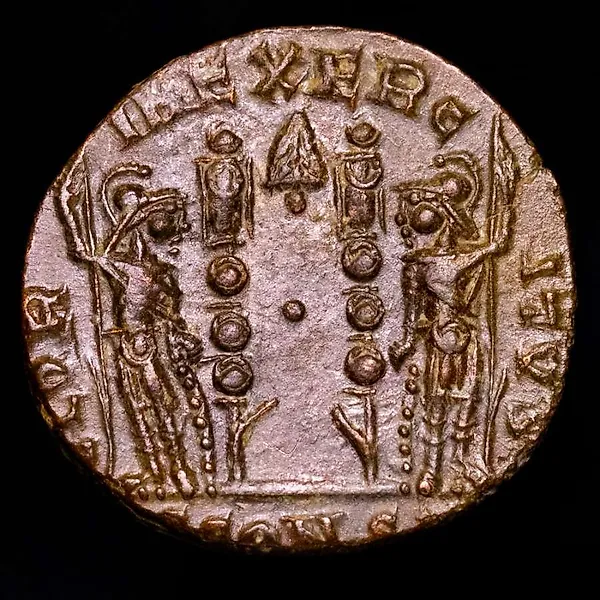
Roman Empire. Crispus (AD 317-326). Follis Thessalonica, A.D. 318/319. VOT•V MVLT•X CAESS •TS•Є• in four lines. (No reserve price)

The Roman Empire under Emperor Crispus, son of Constantine the Great, featured coins such as the follis minted in Thessalonica around AD 318-319. The follis was a large bronze coin introduced during the early 4th century as part of monetary reforms to stabilize the imperial economy. Crispus played a significant role in defending and consolidating his father's rule, and coins bearing his name often include inscriptions reflecting vows or dedications, such as "VOT V MVLT X," indicating vows for five and many times ten years of reign, a common formula expressing loyalty and hope for stability. Thessalonica, an important commercial hub in ancient Macedonia, was a key minting location. The design and inscriptions on these coins provide insight into the administration, propaganda, and religious dedication of the late Roman Empire period.
VoxFati participates in various affiliate programs. When you click on links to different merchants on this site and take certain actions, such as making a purchase or signing up for a service, it may result in us earning a commission.




Comments
Comments appear after approval.
Log in to comment