
Community
Self-Discovery
Stillness Beneath the Moving Light
A serene Buddha portrait glows in violet, green, and coral as translucent ribbons surround the stone figure, exploring calm amid changing sensations.

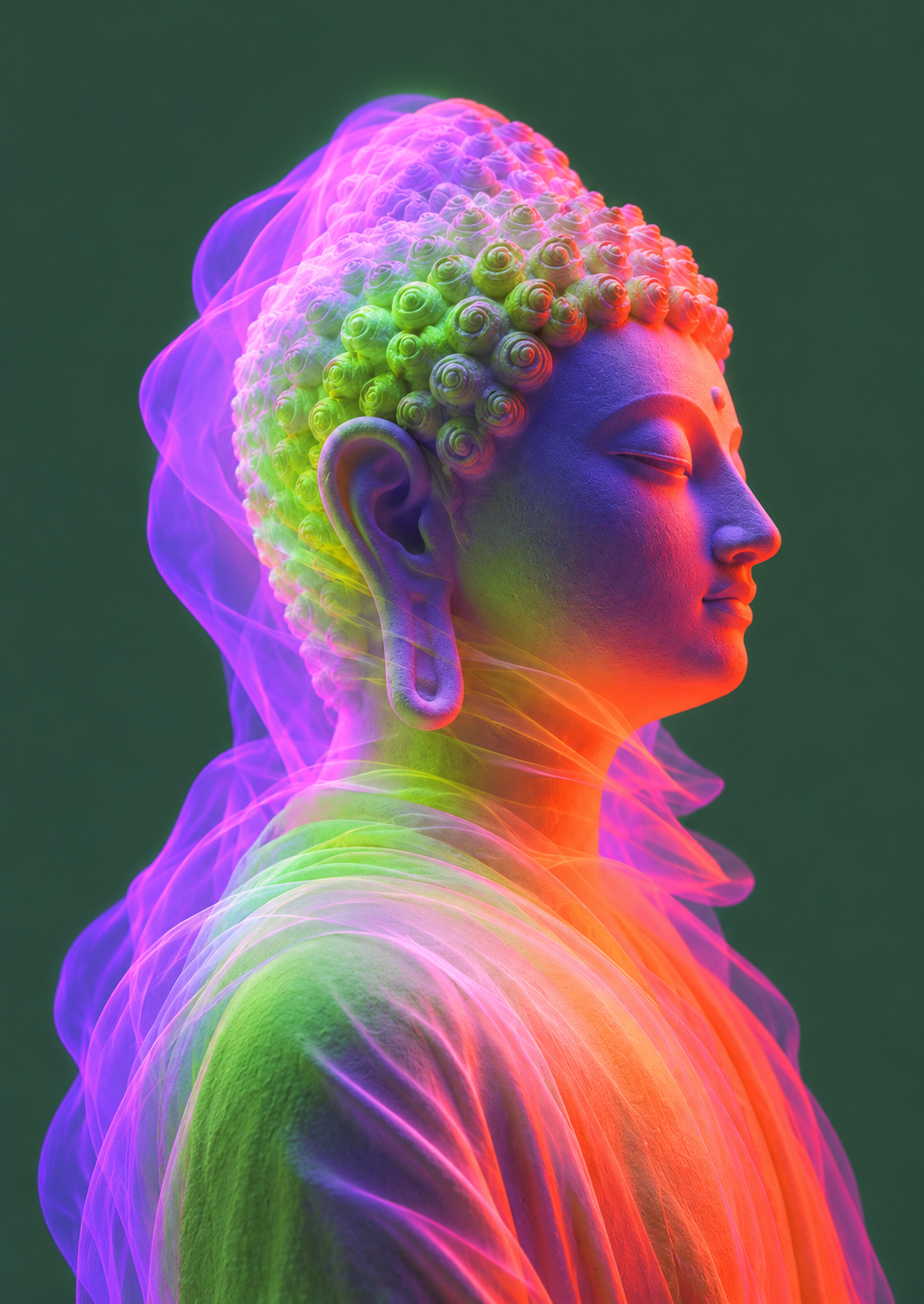
A Buddha bust turns gently to the right, eyes closed and expression composed. The textured stone surface remains clearly visible beneath washes of violet, lime green, and coral-orange light. Around the curled hair, elongated ear, neck, and draped shoulder, translucent ribbons of pink and purple appear to drift through the air. A dark green background gives this luminous movement room to unfold.
The portrait brings two different rhythms together. The sculpture feels steady and substantial, while the surrounding light appears fluid and temporary. That contrast can suggest a familiar experience: thoughts, moods, and sensations continue to change even when we pause long enough to notice them. The figure offers a visual center around which those changes can move.
Closed eyes turn the emphasis away from outward activity. The gently settled mouth and relaxed features suggest contemplation without demanding that the viewer imagine a perfectly empty mind. The image leaves space for a quieter kind of attention, one that can acknowledge movement without needing to follow every shift.
Color changes the apparent character of the same stone. Cool violet deepens the face, green illuminates the curls and shoulder, and coral warms the profile and throat. These transitions can be read as a reflection on perception: what we encounter may feel different according to the light, mood, or perspective through which we approach it. Beneath those changing impressions, the sculpted features remain continuous.
The transparent ribbons wrap around the figure without hiding its outline. Their overlapping folds resemble flowing fabric or trails captured through a long exposure, creating a sense of movement in an otherwise motionless portrait. As a visual metaphor, they can suggest experiences passing through awareness rather than becoming permanent definitions of who we are.
The fine grain of the sculpture keeps the image grounded. Its tangible surface balances the almost weightless light, inviting attention to both solidity and change. The dark background supports that balance, allowing the brighter colors to feel vivid without filling every part of the frame.
Stillness Beneath the Moving Light offers a contemporary interpretation of contemplative imagery. It invites a pause to consider whether calm can be practiced within changing experience, through a little more patience with what we notice and a little less urgency to hold it still.




Comments
Comments appear after approval.
Log in to comment