
Translate Court Card Personalities into Decision Making Styles
This VoxFati Library lesson teaches learners to translate court-card personalities into practical decision-making styles using three supplied Minor Arcana court cards: Queen of Cups, King of Swords, and Knight of Pentacles. Anchored to Rider-Waite-Smith imagery and the provided upright and reversed texts for each card, the article explains technique, interpretation logic, common reading mistakes, step-by-step spreads, and family-focused examples so students can move from symbol to actionable advice.
Cards explored in this article
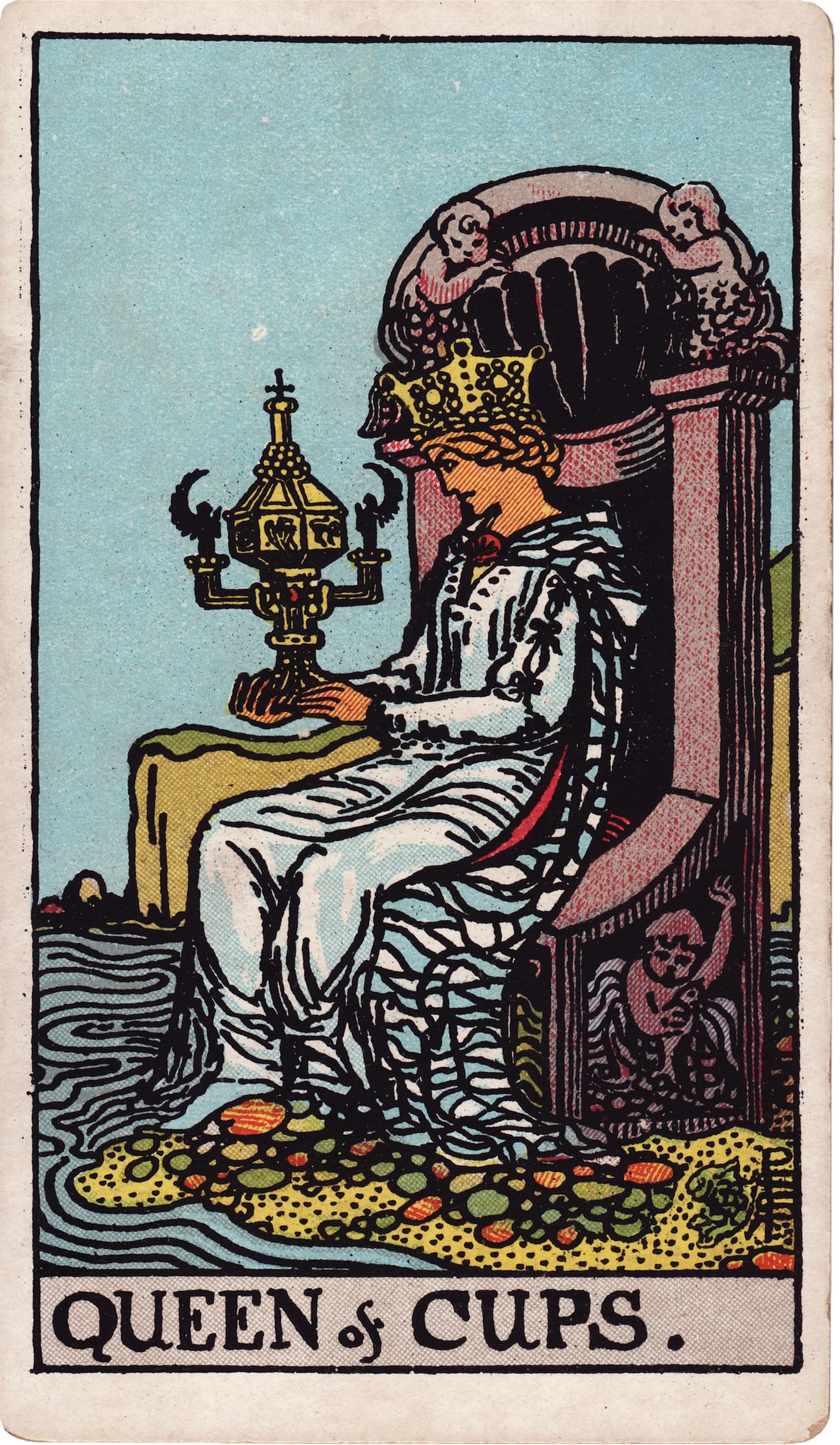 Queen of Cups
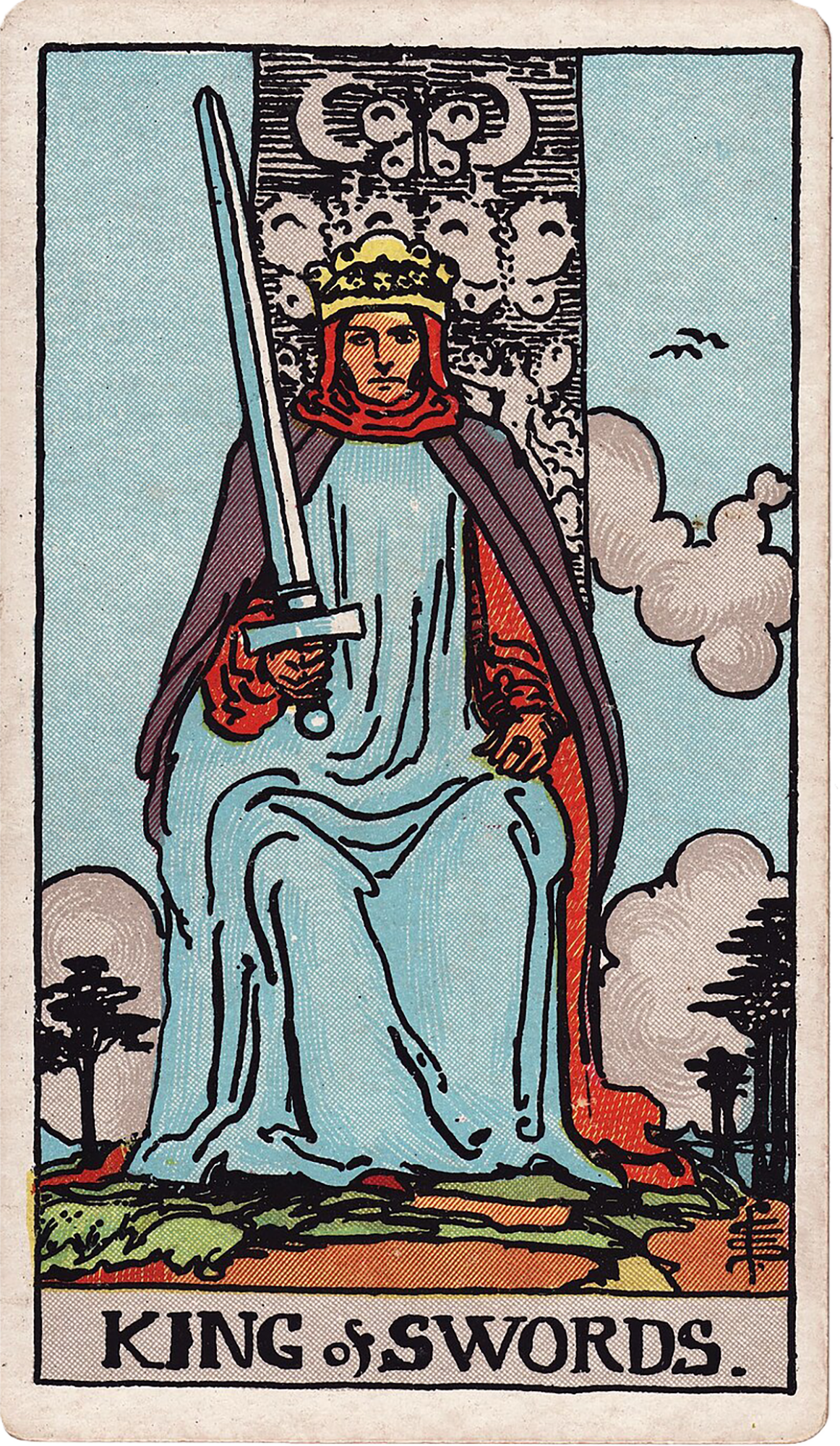 King of Swords
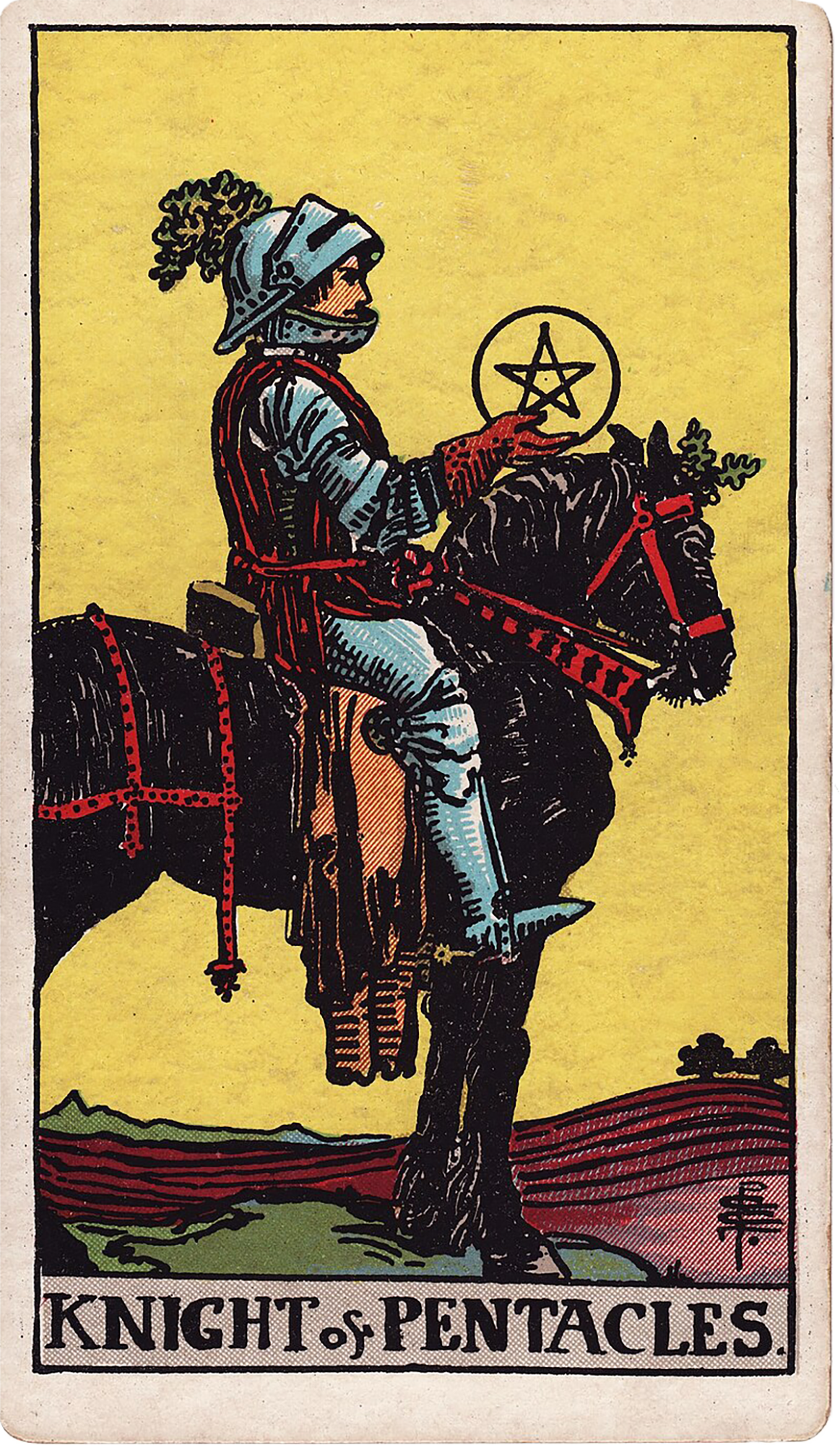 Knight of Pentacles
Introduction: Court Cards as Decision Architects
Court cards in the Minor Arcana function like people in a story: they show attitudes, roles, and ways of acting. When a court card appears in a spread it often points toward an approach or posture that either already exists in the situation or is needed to move forward. This lesson focuses on three supplied court cards — Queen of Cups, King of Swords, and Knight of Pentacles — and teaches how to translate their personalities into repeatable decision-making styles. The examples and exercises emphasize family scenarios and Suit lessons, using Rider-Waite-Smith symbolism and the provided upright/reversed notes as the primary interpretive anchors. This is practice-oriented teaching for learners, not a promise of future events.
Why think of court cards as decision styles
Court cards represent distinct psychological and behavioral templates. In a reading they can describe how a person approaches choices, how a group is operating, or what stance the querent should try adopting. Turning a court card into a decision-making style gives concrete steps to act on: not merely 'be compassionate' or 'be logical,' but 'use empathy to gather information and set a boundary based on those feelings,' or 'gather evidence, list principles, then make a timed judgment.' Court-card decision styles are especially useful in family readings because many family issues combine emotions, resources, and rules. By mapping each supplied card to a style, you can advise someone to shift processes rather than personalities — a pragmatic move that helps people act more skillfully in real life.
Read the image: Queen of Cups and its emotional decision style
Examine the supplied image of the Queen of Cups. In the Rider-Waite-Smith deck she sits on a throne near water, holding a covered cup and gazing gently toward it. The throne and cup decorations all reference marine life and inward attention: the card's visual language is containment and tenderness placed beside a vast emotional landscape. The supplied upright text emphasizes mature emotional receptivity, empathy and intuitive understanding while keeping an inner container: 'respond in a way that fits the present stage' rather than idealism. The reversed description highlights emotional overwhelm, codependency, absorption of others' moods, or withdrawal into fantasy, and suggests examining where the process has become stuck. Decision-style translation: The Queen of Cups models an empathic, reflective, context-sensitive decision process. Steps you can take when this style is active or recommended: - Create an emotional container: name feelings present without trying to immediately solve them. - Gather subjective data: listen for memories, relational patterns and body sensations as evidence. - Test options for humane fit: choose actions that preserve relationships and care for emotional ecology. - Include pause points: time to feel the consequences and adjust plans. How this looks in family practice: faced with a caregiving question, a Queen-of-Cups approach asks 'How are family members feeling? What does the person being cared for seem to need emotionally right now?' Decisions prioritize empathy plus sustainable boundaries rather than purely efficiency.
Read the image: King of Swords and principled analytical decision style
Look at the supplied King of Swords image. The Rider-Waite-Smith King sits on an elevated throne, holding an upright sword. His posture is controlled and authoritative; the throne's iconography and the sky behind him suggest intellectual clarity, principle and the realm of air — thought and communication. The supplied upright text highlights mature intellectual authority, strategic judgment and decisions based on principle and evidence. The reversed text warns of coldness, intellectual arrogance, manipulation or abuse of authority and suggests the energy may be stuck or misapplied. Decision-style translation: The King of Swords models a clear, principle-first decision method that emphasizes evidence, structure and fair communication. Practical steps: - Define the objective clearly and translate values into criteria (e.g., fairness, safety, legal soundness). - Gather facts and test assumptions; separate emotion from evidence without denying feelings. - Lay out options against agreed principles and choose the course that best fits criteria. - Communicate the decision with transparent rationale and invite relevant questions. Family example: Sorting a dispute over inheritance or household rules benefits from this method — define the principles (equity, need, legal constraints), gather documentation, and deliver a written or clearly stated plan to reduce ambiguity.
Read the image: Knight of Pentacles and steady execution style
Study the supplied Knight of Pentacles. In RWS the knight sits in armor on a steady horse, holding a pentacle; the scene shows ploughed fields and mountains in the distance. The composition communicates persistence, duty and slow, reliable effort rather than glamour or speed. The upright text emphasizes steady execution, reliability and progress through routine; the reversed text points to stagnation, stubbornness or confusing slowness with lack of movement. Decision-style translation: The Knight of Pentacles is a methodical planner and executor. Steps to apply this style: - Break the goal into repeatable tasks and schedule them. - Prioritize consistency and maintenance over flash; small, steady gains matter. - Set measurable checkpoints and default-to-routine rules for hard moments. - Watch for signs of rigidity or perfectionism that cause paralysis; introduce small experiments to test whether the pace needs adjusting. Family example: Managing household finances, health routines, or ongoing childcare logistics often needs the Knight's approach: set budgets, automatic transfers, chore rotations and a calendar system that reduces daily friction.
How to translate visual cues into specific actions
Practice converting imagery into verbs. Use three visual prompts common to these cards — gaze and posture, object held, surrounding environment — then ask 'what action does this invite?' - Gaze and posture: The Queen of Cups looks inward toward the cup, inviting reflective listening and containment. Action verbs: 'pause,' 'listen,' 'mirror.' - Object held: The King of Swords holds an upright sword, inviting clear boundaries and decisive articulation. Action verbs: 'define,' 'declare,' 'enforce.' - Environment: The Knight of Pentacles stands in cultivated fields, inviting regular work and tending. Action verbs: 'schedule,' 'maintain,' 'document.' When you read, name one verb for each visual cue and assemble them into a 2–4 step recommendation. Example: Queen of Cups -> 'pause, ask, hold boundaries' yields a decision script: 'Pause the meeting, ask each person how this change affects them, then agree on a temporary care plan.'
Practical reading method: a three-position court-card decision spread
Use a small spread that explicitly frames the court card as a decision style rather than a fixed personality. Suggested spread: Position 1 = Current emotional/ practical state; Position 2 = Court-card style needed; Position 3 = First actionable step. How to conduct it: 1. Shuffle with a clear question about a family decision (e.g., 'How should I approach deciding whether to hire a home health aide?'). 2. Lay three cards. If Position 2 is a court card, read it as the recommended style. If Position 2 is not a court card, ask which court posture is most compatible with the suit and energy in Position 2 — then draw a court card intentionally to clarify. 3. Use the supplied upright and reversed notes to refine: an upright Queen of Cups suggests mature receptivity and intuitive containment; reversed suggests the emotional dimension is stuck and you need simpler steps to restore balance. 4. Translate into action: convert the court card's steps into the immediate next move written down as a due date or a commitment to a conversation. Example script: If the King of Swords appears in Position 2, say, 'Use the King of Swords method: set criteria for the decision, collect documents, schedule a family meeting with a clear agenda, and present your recommended option.' Then write the meeting date as Position 3.
Interpreting upright and reversed court-card styles
The supplied card texts recommend treating reversals as process stuckness rather than simple opposites. Apply that in decision translation: - Upright: The style is available and likely healthy. You can deploy it directly but still check the development stage (beginning, pressure, resolution). - Reversed: The style is present but blocked, overused, or underdeveloped. Ask where the process is stuck. For example, reversed Queen of Cups may indicate emotional overwhelm; the actionable move is to simplify and create clearer boundaries rather than double down on feeling alone. Reversed King of Swords may require tempering decisive rhetoric with empathy and checking for abuse of authority. Reversed Knight of Pentacles might need interventions to break paralysis: introduce timed experiments and accountability to restart progress. Always pair the suit skill with the court role: Cups are about feeling; Swords about thought and communication; Pentacles about resources and routine. The court defines how that suit energy expresses as a decision method.
Common mistakes and how to avoid them
Mistake 1: Treating the court card as a personality demand. Fix: Read it as a temporary stance or tool. You are suggesting a mode of action, not prescribing character change. Mistake 2: Using reversals as moral failure. Fix: Interpret reversals as practical blockages to be diagnosed and repaired, following the supplied guidance to simplify, acknowledge or practice missing steps. Mistake 3: Ignoring the suit when translating behavior. Fix: Always combine court role (who or how) with suit skill (what realm: emotion, thought, resources). Mistake 4: Over-committing to a single style when the situation needs multiple approaches. Fix: Use composite scripts: sometimes a Queen of Cups initial listening session followed by a King of Swords fact-finding meeting and then Knight of Pentacles routines for implementation will be best. Mistake 5: Projecting the querent into the card without testing. Fix: Ask clarifying questions: 'Are you being asked to adopt this posture, or is someone else manifesting it?' and 'Is this energy currently healthy or stuck?'
Practice exercises to build fluency
Exercise 1: Image-to-action drill. Spend 10 minutes with each supplied image. Write three verbs suggested by gaze, held object, and environment. Then create a 3-step decision script from those verbs. Exercise 2: Role-switch practice. With a partner, role-play a family decision scenario three times, each time adopting one of the supplied court-card styles. Notice outcomes and friction points. Exercise 3: Reversal troubleshooting. Pull the Queen of Cups upright and reversed (or imagine reversed). For each, list five small behaviors that will restore healthy expression. Example for reversed Queen: set a 15-minute boundary for listening, schedule self-care, delegate tasks, write feelings in a journal, invite a neutral mediator. Exercise 4: Triad implementation. Pick a real family decision and map a three-phase plan: Phase A = Queen of Cups listening; Phase B = King of Swords criteria meeting; Phase C = Knight of Pentacles execution calendar. Track results for one month and adjust.
Family-focused case studies
Case study 1 — Caregiving choice (Queen of Cups primary): A mid-career adult must decide how to share caregiving for an elderly parent. Reading shows Queen of Cups upright in Position 2. Translation: begin with an empathetic intake: set a family meeting focused solely on feelings and needs for 60 minutes. Action steps: each person speaks for three minutes uninterrupted, a scribe notes requests and limits, and a temporary rotation is agreed for two weeks to test capacity. Follow-up uses Knight of Pentacles routines to schedule shifts. Case study 2 — Sibling boundary over money (King of Swords primary): Two siblings argue about a shared account. King of Swords appears upright. Translation: define principles (legal fairness, proportional contribution), gather bank statements, set a date for a structured mediation with a written agenda, and present a proposal grounded in evidence. If the King appears reversed, temper the approach by inviting one-on-one conversations to reduce perceived aggression. Case study 3 — Family logistics and long-term project (Knight of Pentacles primary): A family needs to reorganize household schedules and budgets for school-year changes. Knight of Pentacles appears upright. Translation: create a calendar, automatic bill payments, a chore rotation, and weekly 15-minute check-ins. If the Knight is reversed and progress stalls, introduce micro-goals and a visible tracker to reintroduce momentum.
Conclusion and next steps
Translating court-card personalities into decision-making styles turns symbolic imagery into practical tools. Use the supplied Queen of Cups, King of Swords and Knight of Pentacles as templates: empathic containment, principled analysis, and steady execution. Practice the three-position decision spread, use the image-to-action drills, and combine styles when real-life family problems require multiple phases. Remember to treat reversals as invitations to investigate stuck processes and to always pair court roles with the suit's domain. Over time, this approach makes readings more immediately useful for querents who want guidance on how to act.
Practice questions
• Which of the three supplied court-card styles (Queen of Cups, King of Swords, Knight of Pentacles) do you naturally default to in family decisions, and how has that served or hindered outcomes?
• When you look at the image of the Queen of Cups, what single verb comes to mind? How can you turn that verb into a concrete first step for an emotional family issue?
• Think of a recent stalled family project. Which card would you draw to jumpstart it, and what would be the first two measurable actions you would take following that card's style?
• How do you spot when a court-card style is upright and healthy versus reversed and stuck? What troubleshooting step would you try first for each of the three supplied cards?
• Plan a week-long experiment to use one of the three styles intentionally in family interactions. What metrics will you use to measure whether the experiment improves decision quality?
Comments
Sign in to comment.
Continue learning
Mastering Decision Making with the Five Card Cross Tarot Spread
The Five Card Cross Tarot Spread is a powerful tool for deepening decision-making skills by examining the present situation, past influences, future possibilities, challenges, and...
Exploring The High Priestess in Career Relationships and Personal Growth
The High Priestess card in the tarot deck invites readers to explore intuition, hidden knowledge, and inner wisdom across various life contexts. This article examines how The High...
Understanding The Chariot Card in Personal Ambition and Overcoming Obstacles
The Chariot card represents the power of focused will, disciplined action, and choosing a clear direction amid competing impulses. Upright, it encourages decisive steps forward usi...
Enhancing Clarity in Complex Choices with the Five Card Cross Tarot Spread
The Five Card Cross Tarot Spread is a practical tool designed to clarify complex choices by breaking down the decision into manageable parts. This article explores each position in...
Using the Five Card Cross Tarot Spread to Navigate Career Changes with Confidence
The Five Card Cross Tarot Spread is a versatile and insightful tool for navigating career changes. This article guides learners through the method step-by-step using a practical ex...
Understanding The Hermit in Self Discovery and Spiritual Enlightenment
The Hermit card in the Rider-Waite-Smith deck embodies themes of introspection, solitude, and spiritual wisdom. This article examines how The Hermit's upright and reversed position...
Using the Five Card Cross Spread to Make Confident Life Decisions
The Five Card Cross spread is a practical and insightful tarot layout designed to assist with complex life decisions by clarifying the situation, presenting options, uncovering hid...
Unlocking Emotional Depth with The Moon and The Lovers in Tarot Combinations
This article delves into the nuanced interplay between The Moon and The Lovers tarot cards, emphasizing how their combination unlocks emotional depth and complexity. By examining u...
Making Confident Life Choices with the Five Card Cross Tarot Spread
The Five Card Cross Tarot Spread is a powerful tool designed to aid practical decision-making, particularly within family or life-altering situations. This article explains the spr...
Using the Five Card Cross Tarot Spread to Gain Confidence in Difficult Decisions
The Five Card Cross spread is a powerful practical tool for navigating difficult decisions with confidence. By placing cards in positions representing Situation, Option A, Option B...