
Understanding The Hermit Card for Inner Guidance Solitude and Personal Transformation
The Hermit card from the Rider-Waite-Smith deck symbolizes introspection, solitude, and seeking deeper wisdom through withdrawal from external distractions. This article examines The Hermit's upright and reversed meanings and demonstrates how its core themes adapt across reading contexts such as love, career, money, advice, challenge, person, outcome, and spiritual reflection. By anchoring interpretations to The Hermit's traditional imagery — the cloaked figure holding a lantern — readers gain practical insights into working consciously with this card for personal transformation. The piece also discusses common reading mistakes, offers a step-by-step technique for integrating The Hermit into intuitive practice, and highlights reflection questions to deepen understanding and application.
Cards explored in this article
 The Hermit
Introduction to The Hermit Card and Its Symbolism
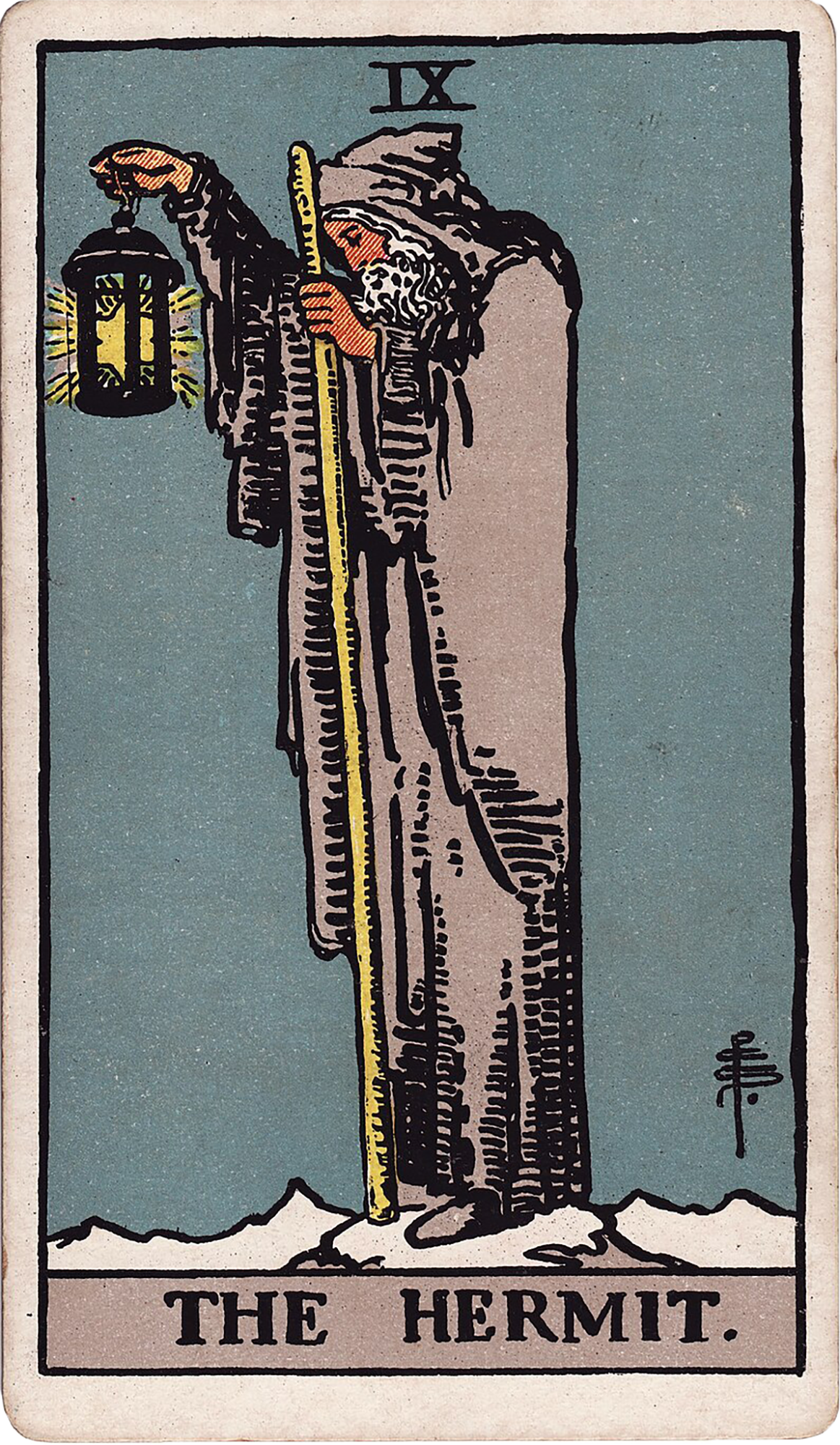
The Hermit is the ninth Major Arcana card in the Rider-Waite-Smith Tarot deck, depicting an elderly figure cloaked in a gray robe standing alone on a mountain peak. He holds a lantern in one hand, illuminating the path ahead, and a staff in the other, symbolizing support and stability. This imagery encapsulates the card’s central themes of introspection, solitude, and inner guidance. The mountain represents the spiritual heights one aspires to reach through contemplation and wisdom. The lantern’s light is not only external illumination but a metaphor for the inner light of understanding that arises from reflection. Traditionally, The Hermit invites the seeker to step away from distractions and noise to access deeper knowledge and clarity about life’s questions.
Upright Meaning of The Hermit Card
When The Hermit appears upright, it emphasizes purposeful withdrawal from external chaos to think clearly and with intention. The card encourages seeking depth over superficiality and trusting inner wisdom rather than outside opinions. Importantly, The Hermit does not promise that the situation will become easy; rather, it highlights the constructive quality of reflection as a tool to navigate difficulty. The upright Hermit suggests consciously engaging with the issue at hand by asking: where is a clearer boundary, a more honest conversation, or a deliberate choice needed? Practically, this means working with what is visible now instead of waiting for certainty. The Hermit’s lesson is about identifying the next proportional step forward, often involving solitude or quiet contemplation.
Reversed Meaning of The Hermit Card
In reversal, The Hermit’s themes become distorted or blocked. It may indicate excessive isolation, avoidance, loneliness, or the use of withdrawal as escape rather than growth. The reversed position does not mean disaster but signals an imbalance or difficulty in accessing The Hermit’s upright qualities. It often highlights internalized struggles, resistance to change, or overthinking that stalls progress. In some readings, reversal suggests the issue turning inward—becoming more psychological or private. It can also represent a moment of correction: the person begins to recognize old patterns but has yet to transform them fully. To understand a reversed Hermit, look closely at neighboring cards to see if the energy is expressing resistance, recovery, excess, or a temporary pause.
Technique for Reading The Hermit in Single-Card Spreads
To effectively read The Hermit alone, begin by carefully observing the card’s imagery: note the figure’s posture, the shining lantern, the staff, and the stark mountain setting. Reflect on how these symbols relate to the question or situation. Ask yourself: What inner guidance is being illuminated here? What solitude is necessary for clarity? Next, determine whether the card appears upright or reversed, as this shifts the energy from constructive reflection to possible blockage or imbalance. Consider the context of the reading—love, career, money, or spirituality—and frame your interpretation around how the Hermit’s core ideas of introspection and personal transformation apply. Finally, encourage the querent to identify one concrete action or attitude inspired by the card, such as taking a mindful pause or setting a clear boundary.
Interpreting The Hermit Across Different Contexts
The Hermit’s universal themes adapt uniquely depending on the reading context: Love: Upright, The Hermit indicates a time for introspection regarding one’s emotional needs and boundaries. It encourages honest self-reflection before deeper connection. Reversed, it warns of loneliness, emotional withdrawal, or avoidance of intimacy that may hinder growth. Career: Upright, the card suggests stepping back to assess goals and values, seeking mentorship, or dedicating time to focused study. Reversed, it may signal isolation at work, burnout, or reluctance to engage with necessary challenges. Money: The Hermit upright promotes prudent reflection on spending and saving habits, advocating for careful planning over impulsiveness. Reversed, it might highlight financial isolation, avoidance of budgeting, or hesitation to seek advice. Advice: The Hermit calls for deliberate pause and inner listening, urging the querent to trust their own wisdom rather than external noise. When reversed, it cautions against withdrawing from necessary action or overthinking without resolution. Challenge: The upright Hermit frames challenges as opportunities to grow through contemplation and measured steps. The reversed suggests struggles with feeling cut off, misunderstood, or stuck in mental loops. Person: The Hermit may represent a wise, introspective individual who guides others, or alternatively, someone currently embracing solitude. Reversed, it can portray someone isolated by choice or circumstance, or resistant to insight. Outcome: Upright, The Hermit signals that the situation will benefit from thoughtful consideration, leading to deeper understanding or transformation. Reversed, the outcome may include continued isolation or delayed clarity. Spiritual Reflection: The Hermit invites deep meditation and connection with inner truth, emphasizing personal transformation through solitude. Reversed, it points to spiritual withdrawal or difficulty accessing inner guidance.
Common Mistakes to Avoid When Reading The Hermit
A frequent error is interpreting The Hermit as merely loneliness or sadness, overlooking its empowering role in self-guided wisdom. Another mistake is ignoring the reversed nuances, which often provide vital clues about imbalance rather than a simple negative outcome. Readers sometimes expect immediate solutions, missing that The Hermit emphasizes gradual insight through patience. It’s also important not to read The Hermit in isolation from context—recognizing how it interacts with the question and surrounding cards (even in a single-card focus, the question itself forms part of the context). Finally, avoid forcing The Hermit’s message to fit a desired answer; instead, explore what the card teaches about inner work and conscious engagement.
Practical Application and Examples
Imagine a querent asks about a career decision, and The Hermit appears upright. You might suggest the querent take time away from external pressures to reflect on what truly resonates with their values. Encourage journaling or seeking a mentor’s perspective. If reversed, the reading might highlight avoidance of difficult choices or feeling isolated in the workplace, prompting strategies to reconnect or set boundaries. In a love context, The Hermit upright invites introspection about emotional readiness or the need for honest communication. For someone single, it might advise enjoying solitude to cultivate self-awareness before pursuing new relationships. Reversed, it warns against withdrawing emotionally or resisting vulnerability. For spiritual reflection, The Hermit encourages meditation, silent retreats, or study of esoteric wisdom. A reversed appearance might indicate spiritual stagnation or the need to break free from limiting beliefs preventing inner illumination. In all cases, encourage clients to notice which aspects of The Hermit’s lesson they already embody, and which require conscious cultivation. This approach roots the card’s meaning in practical, actionable insight rather than deterministic prophecy.
Conclusion and Summary
The Hermit card is a profound symbol of inner guidance, solitude, and personal transformation. Its traditional Rider-Waite-Smith symbolism — the solitary figure, the lantern, and the mountain — guides readers toward understanding the value of thoughtful withdrawal to gain clarity. Whether upright or reversed, The Hermit invites us to engage consciously with introspection and to recognize moments when solitude serves growth versus when it risks isolation. By adapting its core meanings to contexts like love, career, money, advice, and spirituality, readers unlock nuanced insights that support deliberate action and self-awareness. Avoiding common pitfalls and working with the card’s symbolic imagery helps deepen Tarot practice and fosters meaningful personal evolution.
Practice questions
• In what areas of my life might I benefit from intentional solitude or reflection?
• Am I using withdrawal as a tool for growth or as an escape from challenges?
• How can I identify the ‘next proportional step’ The Hermit encourages in my current situation?
• What inner wisdom is illuminated by The Hermit’s lantern in my personal journey?
• Where might I be resisting necessary introspection or honest boundary-setting?
Comments
Sign in to comment.
Continue learning
Harnessing the Power of The Magician and Ace of Wands: Igniting Creativity and Manifestation in Tarot Readings
The combination of The Magician and the Ace of Wands in tarot readings offers a potent blend of creative energy and manifestation power. This article delves into the ways these car...
Understanding the Synergy Between The Empress and The Emperor in Tarot Card Combinations
This article delves into the intricate synergy between The Empress and The Emperor cards in Tarot, focusing on how their combined energies modify and enrich readings across various...
Advanced Techniques for Combining The Moon and The Star to Enhance Intuition in Tarot Readings
This article explores advanced techniques to combine the symbolism and energy of The Moon and The Star Tarot cards to enhance intuition during Tarot readings. Drawing from traditio...
Using the Five Card Cross Tarot Spread to Navigate Career Changes with Confidence
The Five Card Cross Tarot Spread is a versatile and insightful tool for navigating career changes. This article guides learners through the method step-by-step using a practical ex...
Finding Emotional Healing and Renewal with The Star and The Moon Tarot Combination
This article examines the rich interplay between The Star and The Moon tarot cards when they appear together in a reading. Using the traditional Rider-Waite-Smith symbolism and the...
Using the Career Five Card Spread to Uncover Professional Strengths and Opportunities
This article presents a comprehensive guide to the Career Five Card Spread, designed to help learners explore professional strengths and opportunities using five specific Tarot car...
Unlocking Emotional Resilience with Strength and The Star in Tarot Combinations
This article delves into the Tarot card combination of Strength and The Star, revealing how their interplay highlights pathways to emotional resilience. Anchored in the Rider-Waite...
Unlocking Emotional Transformation with Death and The Moon Tarot Combination
This article explores the rich and complex interaction between the Death and The Moon tarot cards within the Rider-Waite-Smith tradition, focusing on their combined potential to un...
Unlocking Personal Ambition and Emotional Balance with The Chariot and Queen of Cups
The Chariot and Queen of Cups together represent a compelling combination of disciplined ambition and emotional maturity. This article guides learners through understanding how the...
Using the Three Card Spread to Gain Clarity on Past Present and Future Influences
This article guides learners through the practical use of the Three Card Spread to gain clarity on past, present, and future influences. Using the specific cards The Emperor in the...