
Understanding The Justice Card in Ethical Decision Making and Personal Accountability
The Justice card in Tarot symbolizes fairness, truth, and accountability, emphasizing clear-eyed decision making and ethical responsibility. This article explores how Justice’s upright and reversed meanings apply to various life contexts such as love, career, and spirituality. By examining the Rider-Waite-Smith imagery and the card’s traditional symbolism, learners gain insight into interpreting Justice thoughtfully. Practical reading techniques and common pitfalls are discussed to help readers integrate the card’s lessons into ethical decision processes and personal accountability.
Cards explored in this article
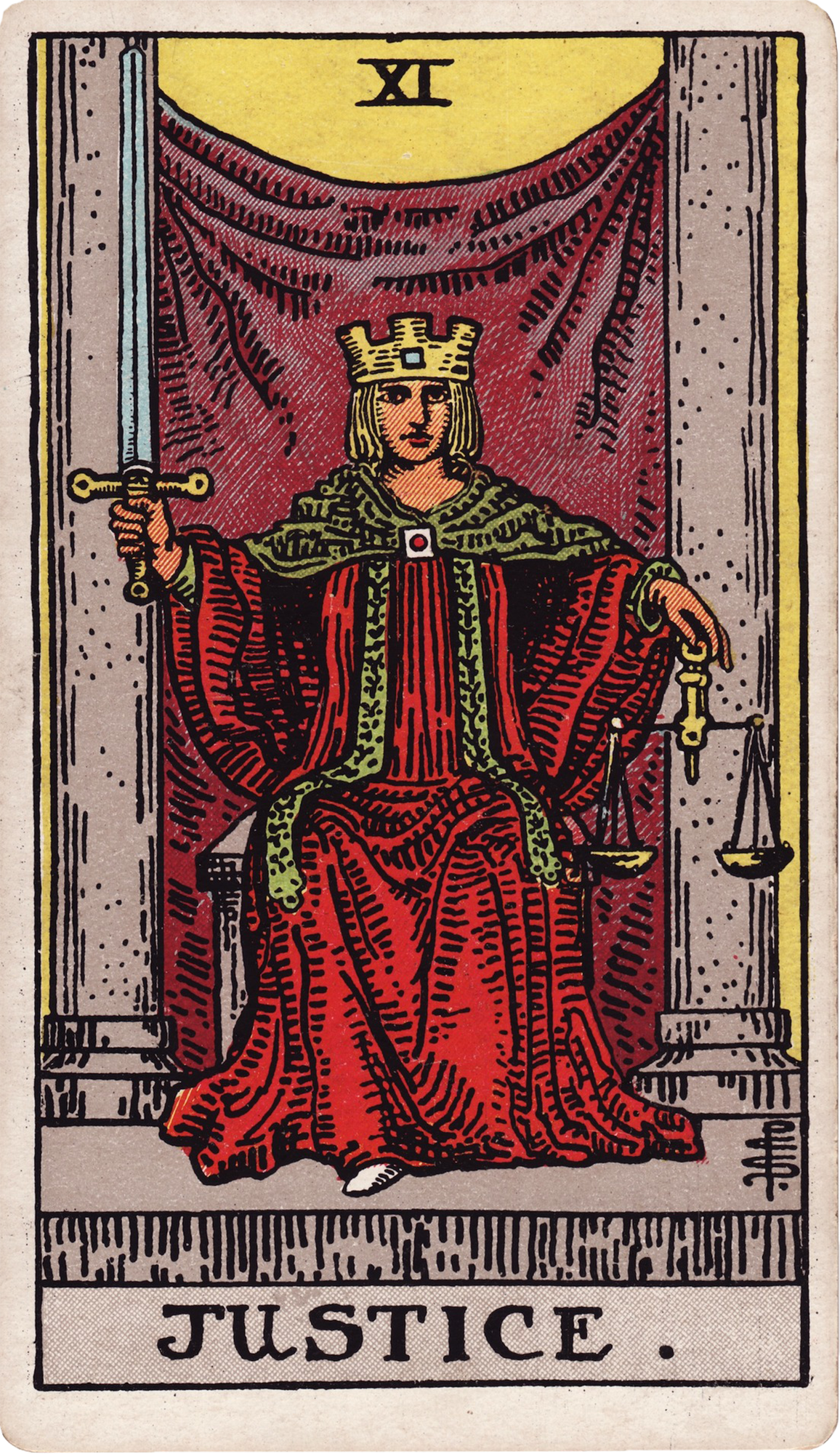 Justice
Introduction to the Justice Card and Its Symbolism
The Justice card, traditionally numbered XI in the Rider-Waite-Smith deck, depicts a seated figure holding a sword upright in the right hand and scales balanced in the left. These symbols evoke fairness, balance, truth, and clarity. The sword signifies mental clarity and the power to cut through confusion, while the scales represent weighing evidence and impartial judgment. The figure’s direct gaze and posture convey authority and accountability. The card calls for honesty and accepting consequences based on clear facts. In upright position, Justice encourages deliberate ethical choices and responsibility. Reversed, it signals potential bias, denial, or imbalance in judgment. Understanding these core symbols establishes a foundation for applying Justice across diverse reading contexts.
Justice as a Tool for Ethical Decision Making
Justice emphasizes engaging with facts rather than emotions or assumptions. It invites readers to identify the truth in a situation, accept responsibility for actions, and make decisions that can withstand scrutiny. This does not guarantee easy outcomes but rather encourages integrity and fairness. When Justice appears upright, ask: Where do I need clearer boundaries? What consequences must I accept? Where is a more deliberate choice required? The card suggests working with available information rather than waiting for certainty. In readings, it signals an opportunity to act ethically and transparently. Reversed, Justice highlights distortions such as bias or avoidance of accountability, inviting reflection on personal or external resistance to fairness. It may indicate internal conflicts or partial truths.
Interpreting Justice in Love and Relationships
In love contexts, upright Justice calls for honesty and fairness between partners. It suggests evaluating the relationship with clear eyes, recognizing patterns, and communicating boundaries openly. The scales in the card remind the reader to balance needs and responsibilities, encouraging equitable give-and-take. Decisions about commitment, trust, or resolution of conflicts should be grounded in truth rather than wishful thinking. Reversed Justice warns of denial, unfair treatment, or imbalance—perhaps one party is not taking responsibility or is avoiding difficult conversations. It may also signal biased perspectives or unresolved issues becoming private struggles. Readers should look for clues in the surrounding cards to understand if the reversal reflects resistance or a phase of internal reflection.
Justice in Career and Work Situations
Career readings featuring Justice highlight the importance of ethical standards and transparent decision-making in professional environments. Upright, it encourages assessing workplace dynamics honestly and acting with integrity, even if the path is challenging. It may signal fair treatment, legal considerations, or the need to weigh options carefully before a decision. The sword and scales remind the querent to cut through office politics or unclear motives to find what is equitable. Reversed Justice suggests possible injustice, bias, or unfair evaluation occurring at work. It may point to avoidance of responsibility or a decision made prematurely. This reversal urges scrutiny of hidden agendas or the need for deeper awareness of workplace ethics.
Financial Contexts and the Justice Card
Regarding money, Justice upright emphasizes balanced budgeting, honest assessment of financial situations, and accepting consequences of past financial decisions. The card encourages clear boundaries around spending and thoughtful choices based on facts rather than impulsive desires. It may indicate legal or contractual matters related to finances where fairness is critical. Reversed Justice signals financial imbalance, possible dishonesty, or denial about monetary realities. It can warn against risky or unfair financial deals and urges the querent to reconsider their approach. Awareness of one’s biases and assumptions about money is crucial to restoring equilibrium.
Advice and Guidance from Justice in Readings
When offering advice, Justice encourages readers to focus on transparency, accountability, and fairness, whether in personal decisions or interpersonal dynamics. Upright, the card advises the querent to act with integrity, set clear boundaries, and accept consequences rather than avoid them. It recommends deliberate steps based on facts and ethical principles. Reversed Justice cautions against denial, bias, or unfair treatment—advocating for internal reflection and correction of imbalances. Practical advice involves identifying distorted perceptions or resistance to fairness and gently working toward honest self-assessment and responsibility.
Justice as a Challenge or Obstacle
When Justice appears as a challenge, the card points to difficulties in confronting truth, accepting responsibility, or making fair decisions. Upright, this challenge might manifest as discomfort with clear boundaries or fear of consequences. It asks the querent to face these obstacles with courage and honesty. Reversed, Justice as a challenge suggests internal or external blocks such as bias, denial, or unfair treatment that distort judgment. The reader should explore where accountability is being avoided or where perceptions are skewed. This challenge requires conscious effort to restore balance and integrity.
Person Representation through the Justice Card
Justice as a person often embodies qualities of fairness, rationality, and ethical leadership. This individual is someone who values truth, accountability, and clear boundaries in their interactions. Upright Justice may represent a judge, lawyer, mediator, or simply someone who upholds high ethical standards. This person is methodical and deliberate, emphasizing consequences and fairness. Reversed, the person might struggle with denial, bias, or inconsistency in applying ethical principles. They may avoid responsibility or distort facts to suit personal interests. Understanding these nuances helps readers identify personality traits or influences in the querent’s life.
Outcome and Resolution Indicated by Justice
As an outcome card, upright Justice suggests resolutions based on truth, fairness, and accountability. It implies that decisions will be made transparently and consequences accepted, even if difficult. The balance and sword imagery reassure that clarity and integrity will prevail. Reversed Justice as an outcome warns of delayed justice, biased results, or unresolved issues. It may indicate that fairness has not yet been achieved or that deeper psychological work is needed before true resolution. Readers should advise patience and ongoing reflection when Justice appears reversed, emphasizing gradual correction rather than immediate closure.
Spiritual Reflection and Inner Accountability with Justice
Spiritually, Justice calls attention to inner moral compass and the importance of self-accountability. The card urges the querent to examine their own biases, assumptions, and past actions with honesty and clarity. The sword symbolizes cutting through self-deception, while the scales invite weighing one’s life choices and ethical alignment. Upright Justice guides toward conscious living founded on truth and personal integrity. Reversed Justice reflects internal imbalance, denial, or shadow aspects that block full acceptance of responsibility. This card encourages ongoing spiritual growth through honest self-examination and ethical awareness.
Practical Techniques and Common Mistakes in Reading Justice
A key technique when reading Justice is to closely observe the sword and scales in the supplied card image. The sword’s sharpness reminds readers to cut through confusion, while the balanced scales emphasize weighing evidence fairly. Always consider whether Justice appears upright or reversed, as the meaning shifts from constructive fairness to potential imbalance or denial. Avoid common mistakes such as assuming Justice guarantees an easy or favorable outcome; instead, focus on the quality of the decision-making process. Another error is to interpret Justice solely as legal matters; its scope includes personal ethics and accountability across life domains. Anchor interpretation in the card’s symbolism and the context of the question, using neighboring cards if available to clarify nuances. Encourage querents to reflect on where they need clearer boundaries, deeper honesty, or acceptance of consequences.
Practice questions
• Where in my life do I need to apply clearer boundaries or more deliberate choices?
• How do I respond to situations when faced with uncomfortable truths or consequences?
• In what ways might I be resisting full accountability or fairness in my relationships or work?
• How can I cultivate greater honesty and ethical awareness in my decision-making process?
• What biases or distortions might be affecting my judgment or perception of fairness?
Comments
Sign in to comment.
Continue learning
Interpreting the Dance of Justice and The Devil: Balancing Morality and Temptation in Tarot Readings
The combination of Justice and The Devil in tarot presents a profound exploration of morality, temptation, and personal accountability. This article unpacks how these cards influen...
Mastering Decision Making with the Five Card Cross Tarot Spread
The Five Card Cross Tarot Spread is a powerful tool for deepening decision-making skills by examining the present situation, past influences, future possibilities, challenges, and...
Enhancing Clarity in Complex Choices with the Five Card Cross Tarot Spread
The Five Card Cross Tarot Spread is a practical tool designed to clarify complex choices by breaking down the decision into manageable parts. This article explores each position in...
Using the Five Card Cross Spread to Make Confident Life Decisions
The Five Card Cross spread is a practical and insightful tarot layout designed to assist with complex life decisions by clarifying the situation, presenting options, uncovering hid...
Making Confident Life Choices with the Five Card Cross Tarot Spread
The Five Card Cross Tarot Spread is a powerful tool designed to aid practical decision-making, particularly within family or life-altering situations. This article explains the spr...
Using the Five Card Cross Tarot Spread to Gain Confidence in Difficult Decisions
The Five Card Cross spread is a powerful practical tool for navigating difficult decisions with confidence. By placing cards in positions representing Situation, Option A, Option B...
Using the Five Card Cross Spread to Gain Clarity in Difficult Life Decisions
The Five Card Cross Spread is a structured tarot layout designed to help clarify challenging life decisions by examining the situation, options, hidden influences, and advice. This...
Using the Five Card Cross Spread to Clarify Complex Decisions
The Five Card Cross Spread is a practical tarot method designed to clarify complex decisions by laying out the situation, contrasting options, hidden factors, and advice. This arti...
Using the Five Card Cross Spread to Gain Insight into Relationship Dynamics
This article provides an in-depth guide to using the Five Card Cross Spread for gaining clarity on relationship dynamics, especially within family contexts. Anchored by a worked ex...
Using the Five Card Cross Spread to Make Balanced and Informed Life Decisions
The Five Card Cross Spread is a powerful Tarot layout designed to aid balanced and informed decision-making. This article teaches learners how to use this spread effectively, focus...