
Understanding The King of Swords in Leadership Communication and Ethical Challenges
The King of Swords embodies mature intellectual authority, strategic judgment, and principled decision-making. This article explores how the card’s upright and reversed meanings manifest in various contexts such as leadership communication, ethical dilemmas, love, career, and more. Using the card’s traditional Rider-Waite-Smith symbolism and its portrayal in this specific Tarot image, readers learn to connect visual cues with interpretive logic. The article provides practical techniques for integrating the King of Swords into readings, common interpretative pitfalls, and questions for deeper reflection, helping learners to apply its lessons effectively and ethically.
Cards explored in this article
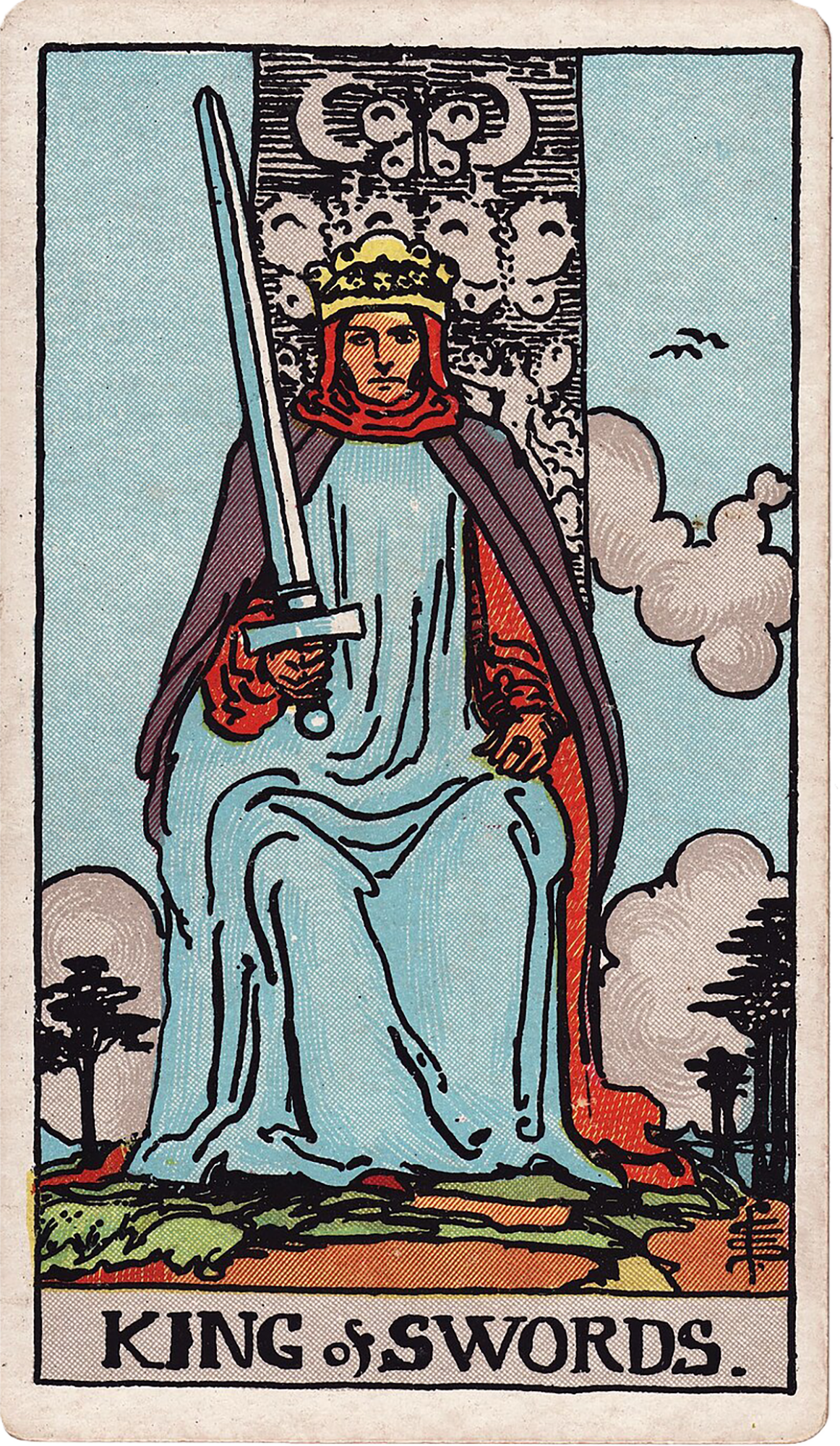 King of Swords
Introduction to the King of Swords and Its Symbolism
The King of Swords has long been a symbol of intellectual authority and ethical clarity in the Tarot tradition, particularly within the Rider-Waite-Smith system. The card depicts a mature king seated firmly on his throne, holding a sword upright. This sword represents truth, justice, and mental clarity. His stern expression and poised posture communicate a readiness to act decisively and fairly. The colors and imagery—such as the blue sky and clouds—suggest a clear mind and balanced emotions, while the throne’s details evoke structure and stability. In its upright form, the King of Swords commands respect through principle and evidence-based decisions, highlighting strategic thinking and mature leadership. The reversed card warns against coldness, intellectual arrogance, or misuse of authority, signaling a breakdown in ethical communication and leadership. Understanding these visual and symbolic elements forms the foundation for interpreting the King of Swords in various readings.
Technique for Reading the King of Swords in Different Contexts
When interpreting the King of Swords, the first step is to observe its upright or reversed position. Upright, it signals clarity, careful judgment, and ethical consideration. Reversed, it indicates potential distortions such as manipulation or rigidity. Effective reading involves integrating the card’s symbolism with the specific question or context—whether love, career, money, or spiritual reflection. Focus on mental faculties, communication dynamics, and ethical concerns. Use the surrounding cards to track development or obstacles in the energy represented by the King of Swords. Ask how the themes of thought, truth, and principle manifest in the situation. Avoid jumping to conclusions about the card’s moral value; instead, consider where the energy is balanced or imbalanced, nascent or resolved. This process ensures readings grounded in nuanced interpretation rather than stereotypes.
The King of Swords in Leadership Communication
In leadership communication, the King of Swords represents a figure who leads through reasoned argument, ethical standards, and clear directives. This card suggests that the best approach is a combination of intellectual rigor and fairness, where facts and principles guide decisions rather than emotion or bias. The image of the King holding his sword upright illustrates the power of truth to cut through confusion. In practical terms, this means prioritizing transparency, listening carefully, and addressing conflict with integrity. The King models strategic judgment, weighing consequences before acting. When reversed, the card warns of communication breakdowns caused by arrogance, cold detachment, or manipulation of truth. Leaders should watch for these pitfalls and strive to return to authentic, evidence-based discourse.
Ethical Challenges Reflected in the King of Swords
The King of Swords highlights the ethical dimension of decision-making. Its upright presence asks readers to consider how principles and truth inform actions now, rather than relying on abstract ideals disconnected from reality. Ethics here is practical and context-sensitive. The King’s authority depends on consistent integrity and respect for others’ participation, not treating people as problems to be controlled. The reversed card draws attention to ethical lapses such as abuse of power or intellectual arrogance. These challenges may be subtle and internal, making honest self-reflection vital. The card encourages simplifying complexity and acknowledging uncomfortable truths to restore ethical clarity. In readings, its appearance serves as a prompt to assess where ethical intentions and communication align or diverge.
Interpreting the King of Swords in Love Contexts
In love readings, the King of Swords symbolizes clarity in communication, intellectual compatibility, and honesty. Upright, it may represent a partner or the querent who values truth and principled interactions, encouraging rational discussions rather than emotional avoidance. This card invites mature conversations about boundaries, expectations, and conflicts, promoting solutions based on mutual respect. It does not prioritize romantic idealism but highlights realistic and thoughtful connection. When reversed, the King of Swords can indicate emotional coldness, manipulation, or communication barriers. It warns against treating a partner as a problem or being excessively critical. Learners should note that the King’s intellectual authority must balance with empathy to sustain healthy relationships.
Career and Professional Development Insights
In career contexts, the King of Swords reflects leadership through strategic thinking, ethical decision-making, and authoritative communication. Upright, it signals career advancement based on merit, clear judgment, and respect for rules and evidence. It encourages a focus on skills involving analysis, planning, and fair conflict resolution. The King serves as a role model for professional integrity and mental discipline. In reversal, this card cautions against misuse of power, office politics, or intellectual arrogance that alienates colleagues. It may also highlight internal struggles with ethical dilemmas or communication difficulties. For learners, the King of Swords suggests that career success depends not just on knowledge but on how it is applied with fairness and clarity.
Financial Context and Decision-Making
The King of Swords in financial matters emphasizes rational planning, clear communication, and principled management of resources. Upright, it advises making decisions based on evidence, avoiding emotional impulsivity, and seeking expert advice if needed. This card promotes strategic risk assessment and honest scrutiny of financial situations. The King’s upright sword symbolizes cutting through confusion and misinformation for sound fiscal choices. Conversely, when reversed, it warns of manipulation, deceit, or overly rigid attitudes toward money that may cause harm. It could reveal internal hesitation or denial about financial realities. Practically, the card encourages simplifying complexity and communicating transparently with stakeholders to restore financial balance.
Advisory Role of the King of Swords in Tarot Readings
When the King of Swords appears as advice, it calls for clarity, ethical reflection, and decisive communication. It urges the querent to use reason and evidence in handling current challenges, to communicate honestly and assertively, and to uphold principles even under pressure. The card recommends stepping into leadership roles with intellectual maturity and fairness, avoiding emotional reactivity or manipulation. In reversed position, the advice is to identify where coldness or arrogance obstruct progress, and to simplify issues to their core truths. Practitioners should encourage querents to practice transparent communication and ethical consistency to move forward constructively.
Understanding the King of Swords as a Challenge Card
As a challenge, the King of Swords highlights difficulties with intellectual rigidity, communication barriers, or misuse of authority. Upright, the challenge might be to embody the card’s ideals fully—such as balancing logic with empathy or developing strategic judgment under pressure. The card may indicate situations requiring difficult decisions that uphold principles but are not emotionally easy. Reversed, the challenge becomes deeper: overcoming intellectual arrogance, manipulative tendencies, or ethical blind spots. This state often manifests internally and may not be obvious to others, making self-awareness crucial. Readers should prompt querents to reflect on where thought patterns or communication styles hinder growth and how to realign with the card’s constructive side.
The King of Swords in Outcome Positions
When appearing as an outcome, the King of Swords suggests resolution through clear-headed decisions, ethical leadership, and honest communication. The outcome favors situations where truth and principle prevail, and where mature intellectual authority guides the next steps. It may indicate success in resolving conflicts through reasoned discussion or strategic planning. The card’s imagery signals mental clarity and readiness to act decisively. In reversal, the outcome warns of potential ongoing manipulation, power struggles, or ethical compromises that may require further attention. Readers should assess surrounding cards carefully to determine if the reversed King represents an internal hurdle or external challenges impacting resolution.
Spiritual Reflection and Internal Integration
Spiritually, the King of Swords invites reflection on the integration of intellect and ethics in one’s inner life. Upright, it symbolizes clear discernment, principled living, and the courage to face truth even when difficult. The card encourages cultivating mental discipline and emotional neutrality to support spiritual growth. The sword represents the power of conscious awareness cutting through illusion. The reversed King suggests areas where intellectual arrogance or ethical inconsistency block inner harmony. It calls for introspection on how communication patterns and mental habits align with one’s spiritual values. For spiritual seekers, this card serves as a guide to embody wisdom not as abstract knowledge but as lived ethical practice.
Common Mistakes and Practical Tips for Readers
A common mistake with the King of Swords is to interpret it as purely cold or authoritarian without acknowledging its ethical and intellectual maturity. Readers should remember the card’s balance of fairness, principle, and strategic thought. Another pitfall is treating the reversed King as simply the 'opposite' of the upright rather than exploring where the leadership process is stuck or imbalanced. Always relate the card’s energy to the question’s context and the surrounding cards to avoid overgeneralization. Practically, encourage querents to name the task or challenge clearly when this card appears, then explore what principled, evidence-based actions would strengthen the positive energy. Use visualization of the card’s imagery to anchor interpretations—notice the King’s steady gaze, upright sword, and composed throne as symbols of clarity and authority.
Practice questions
• Where in my life am I embodying mature intellectual authority like the King of Swords?
• How do I balance truth and empathy in my communication and leadership roles?
• In what ways might intellectual arrogance or ethical blind spots be influencing my decisions?
• How can I simplify complex situations to better align with principled action?
• What does it mean for me to act with strategic judgment based on evidence rather than emotion?
• Where might I be treating people as problems instead of participants in shared solutions?
Comments
Sign in to comment.
Continue learning
Mastering Decision Making with the Five Card Cross Tarot Spread
The Five Card Cross Tarot Spread is a powerful tool for deepening decision-making skills by examining the present situation, past influences, future possibilities, challenges, and...
Exploring The High Priestess in Career Relationships and Personal Growth
The High Priestess card in the tarot deck invites readers to explore intuition, hidden knowledge, and inner wisdom across various life contexts. This article examines how The High...
Understanding The Chariot Card in Personal Ambition and Overcoming Obstacles
The Chariot card represents the power of focused will, disciplined action, and choosing a clear direction amid competing impulses. Upright, it encourages decisive steps forward usi...
Enhancing Clarity in Complex Choices with the Five Card Cross Tarot Spread
The Five Card Cross Tarot Spread is a practical tool designed to clarify complex choices by breaking down the decision into manageable parts. This article explores each position in...
Using the Five Card Cross Tarot Spread to Navigate Career Changes with Confidence
The Five Card Cross Tarot Spread is a versatile and insightful tool for navigating career changes. This article guides learners through the method step-by-step using a practical ex...
Understanding The Hermit in Self Discovery and Spiritual Enlightenment
The Hermit card in the Rider-Waite-Smith deck embodies themes of introspection, solitude, and spiritual wisdom. This article examines how The Hermit's upright and reversed position...
Using the Five Card Cross Spread to Make Confident Life Decisions
The Five Card Cross spread is a practical and insightful tarot layout designed to assist with complex life decisions by clarifying the situation, presenting options, uncovering hid...
Unlocking Emotional Depth with The Moon and The Lovers in Tarot Combinations
This article delves into the nuanced interplay between The Moon and The Lovers tarot cards, emphasizing how their combination unlocks emotional depth and complexity. By examining u...
Making Confident Life Choices with the Five Card Cross Tarot Spread
The Five Card Cross Tarot Spread is a powerful tool designed to aid practical decision-making, particularly within family or life-altering situations. This article explains the spr...
Using the Five Card Cross Tarot Spread to Gain Confidence in Difficult Decisions
The Five Card Cross spread is a powerful practical tool for navigating difficult decisions with confidence. By placing cards in positions representing Situation, Option A, Option B...