
When Did Tarot Meanings Become Standardized and Why It Matters
Tarot meanings were not fixed from the start; they crystallized over centuries through designers, occult schools, and mass publishing. Standardization became most influential in the English-speaking world with the Rider-Waite-Smith deck (1909) and Waite's Pictorial Key (1910), building on earlier efforts by Etteilla and the Golden Dawn. Standardized meanings create teaching clarity and a shared language, but they can also calcify intuition and obscure cultural differences. This article traces the history, explains why it matters for family and tradition, and gives concrete, image-led techniques for working with standardized meanings using The Magician, Strength, and Justice as continuing visual anchors.
Cards explored in this article
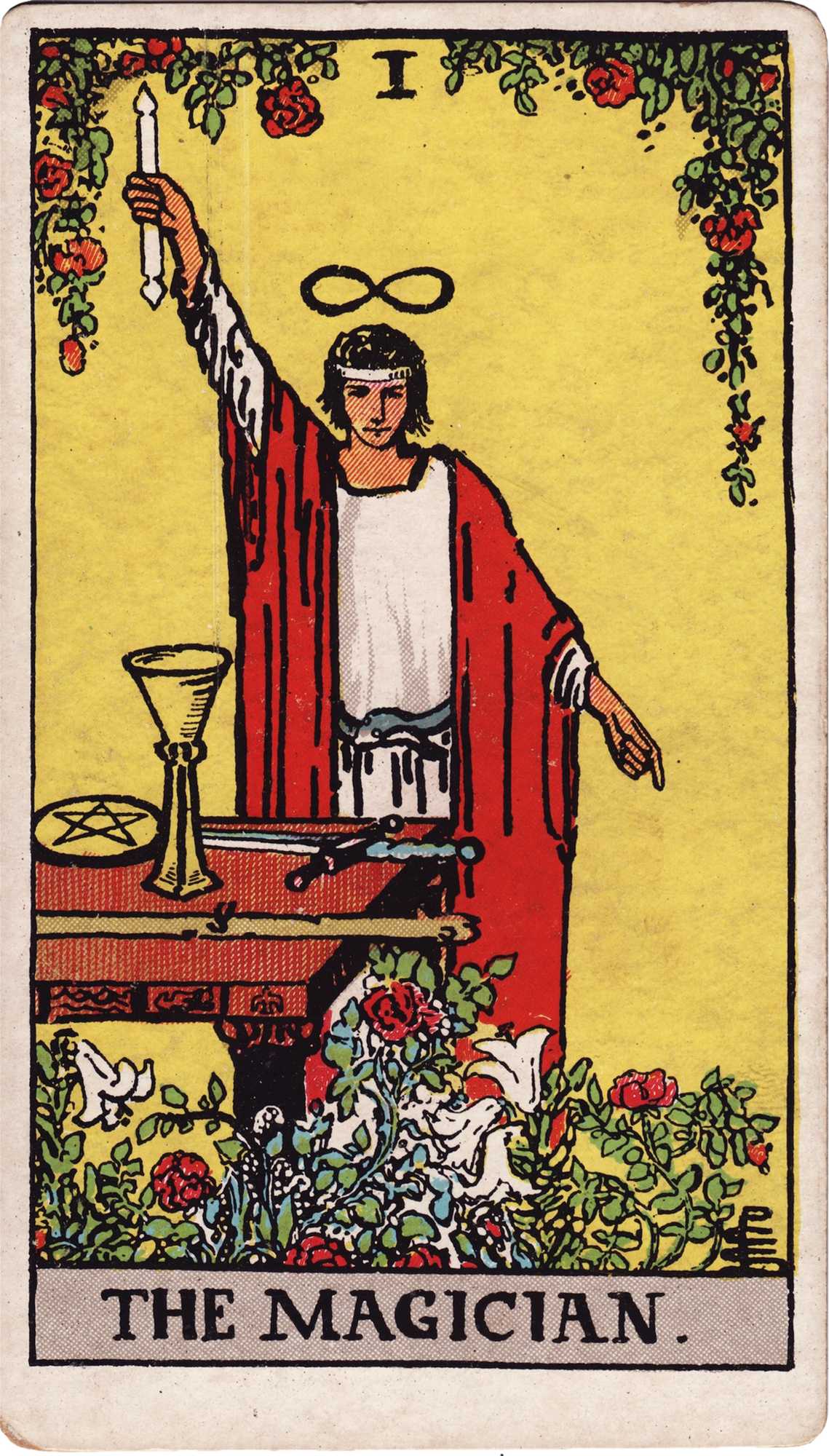 The Magician
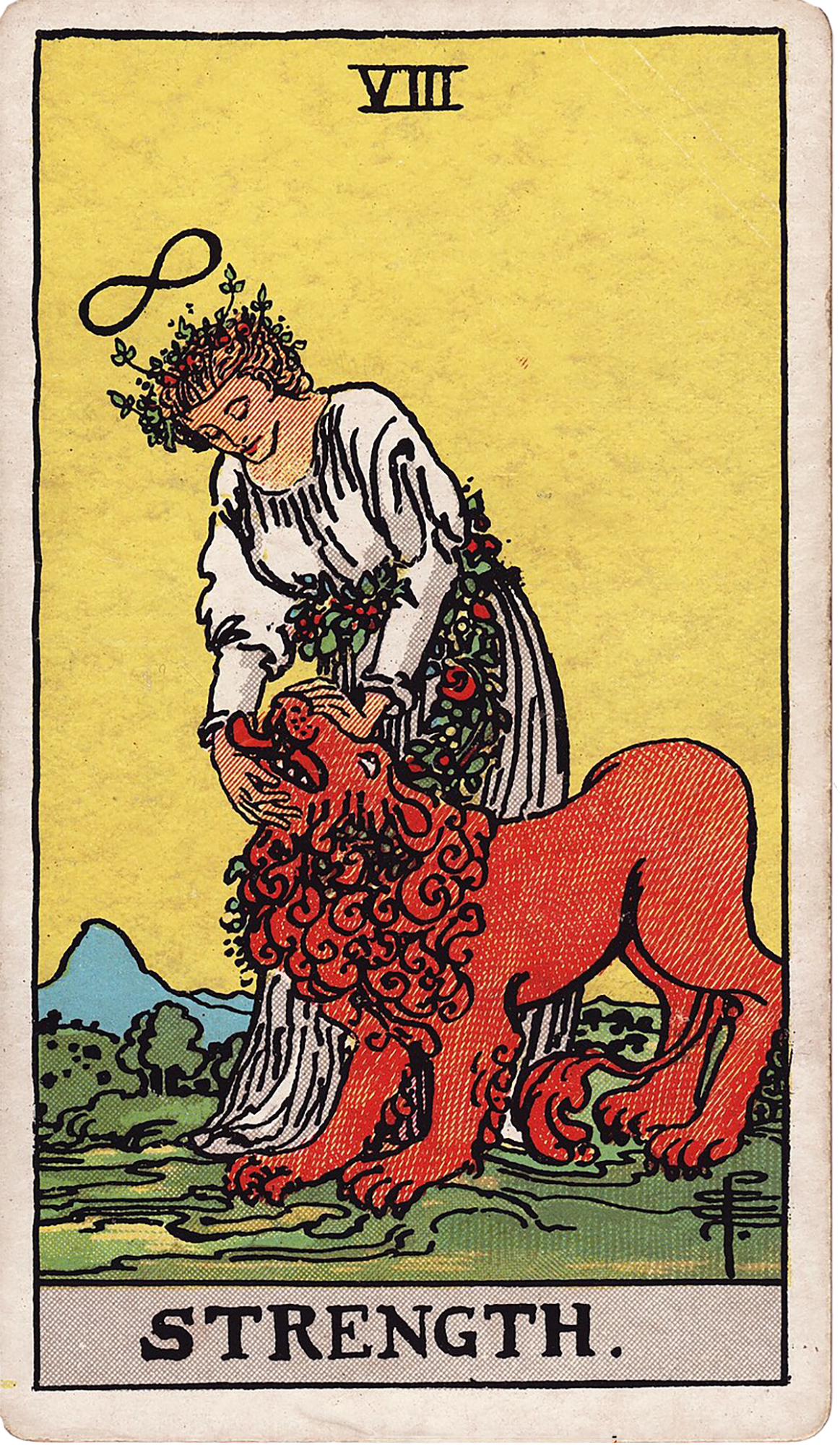 Strength
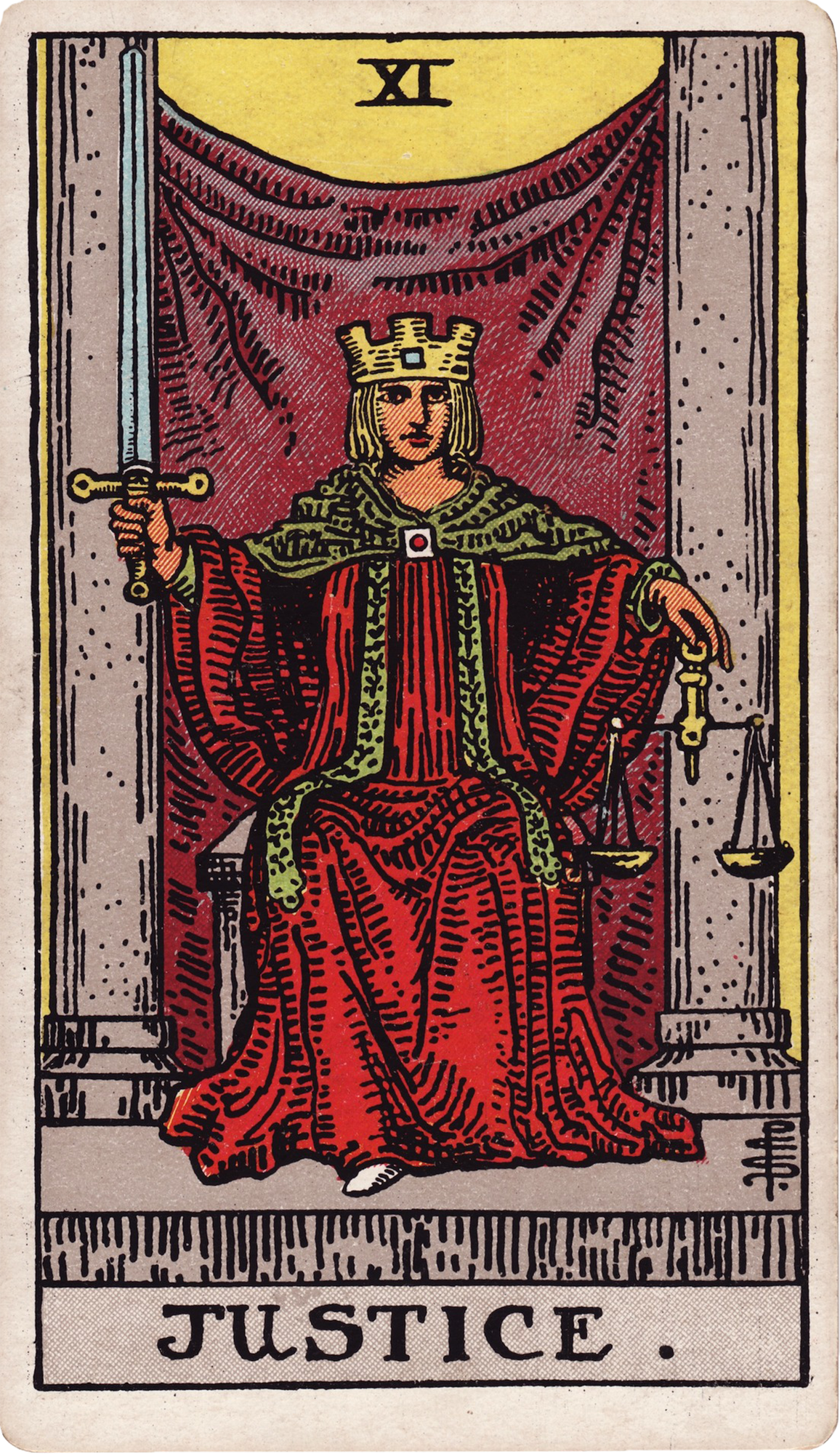 Justice
Thesis and Why This Question Matters
Tarot began as illustrated playing cards; meanings were fluid, localized, and often private. Over the past 250 years, a set of conventions emerged that many readers now treat as "standard." Understanding when and how that happened matters for learners, teachers, and families who pass tarot practice down across generations. Standardization created a common vocabulary that makes teaching, publishing, and comparing readings possible. At the same time, it shapes what gets noticed in a spread, what is passed on in a family tradition, and what can be assumed in a therapeutic or ritual context. Throughout this article we will repeatedly use the supplied card images—The Magician, Strength, and Justice—to show how standard meanings attach to visual cues and how to use them practically without becoming dependent on rote lists.
A concise timeline of standardization
Late 18th century: The first explicit attempt to create a consistent divinatory system associated with tarot cards appears with Antoine Court de Gébelin's speculative essays and Jacques Auguste Simon Etteilla's published deck and manuals. Etteilla assigned meanings and astrological correspondences and produced one of the first mass-market systems. 19th century: Occult and esoteric groups in Europe developed richer interpretive frameworks. The Hermetic Order of the Golden Dawn (late 19th/early 20th centuries) mapped tarot to Kabbalah, astrology, and elemental systems, producing a dense web of correspondences that many later teachers adopted. 1909–1910: The Rider-Waite-Smith (RWS) deck (Pamela Colman Smith, artist; A. E. Waite, author) and Waite's Pictorial Key marked a decisive moment. RWS gave fully illustrated scenes for all the minor arcana (not only the majors or pip arrangements), and Waite published explicit meanings and guidance. This pairing provided a user-friendly, visually explicit foundation that accelerated standardized teaching in the English-speaking world. Mid 20th century: Aleister Crowley and others offered alternative systems (Crowley's Thoth deck and book, for example) but RWS remained widely influential because of its imagery and the proliferation of English-language guidebooks. Late 20th century to present: Mass publishing, classes, and the internet further standardized keywords and upright/reversed conventions. Many modern readers still use RWS-derived imagery and Waite-influenced meanings as a starting point; others reinterpret or reject aspects of that system. But the practical effect is clear: a widely shared base of meaning makes communication about tarot far easier than in pre-standardized eras.
Key moments and players in the standardization process
Etteilla (18th century) — one of the first to publish a deck designed for divination and to provide a set of meanings and correspondences. The Golden Dawn (late 19th century) — developed an integrated esoteric system that linked tarot, Hebrew letters, astrology, and elemental symbolism. Its symbolic richness and ritual usage influenced many later interpreters and teachers. A. E. Waite and Pamela Colman Smith (1909–1910) — Waite’s written guide paired with Smith’s visual scenes produced a near-universal teaching tool. The RWS deck’s illustrated pips and narrative scenes made it easier for readers to memorize associations by image rather than by rote lists. Aleister Crowley and the Thoth tradition — offered a highly systematic alternative with different attributions, showing that "standardization" does not mean "unanimity". Multiple standardized traditions can coexist and influence each other. Publishers and mass education (20th–21st centuries) — inexpensive printed decks, guidebooks, workshops, and now online content created a feedback loop: authors used Waite-like systems because readers recognized the imagery and keywords, which in turn reinforced those systems as "standard."
How Rider-Waite-Smith imagery standardized meaning using The Magician, Strength, and Justice
One reason the RWS deck had such an outsized impact is that its images make certain meanings look obvious in a way earlier decks often did not. Look closely at the three supplied cards. The Magician (I): The figure stands before a table holding a cup, sword, pentacle, and wand — the four suits — and points one hand to the sky and the other to the earth (the "as above, so below" posture). An infinity symbol (lemniscate) floats above his head; flowers and foliage suggest active, fertile energy. These visual cues make standard meanings intuitive: resourcefulness, skill, deliberate action, and the beginning of a conscious engagement with opportunity. That strong iconography is why many readers now associate the Magician with initiating skillful, directed action. Strength (VIII in most RWS-based sequences): The image of a woman gently closing a lion's jaws, with an infinity sign above her head and a garland of flowers, communicates inner courage, patient influence, and the integration of instinctual energy. The gentleness in the depiction argues against seeing "strength" only as brute force. RWS imagery helped shift public understanding from raw power to controlled, compassionate mastery. Justice (XI in RWS ordering): A seated figure holding scales and a sword, often between pillars, signals balance, clear judgment, and consequences. The scales suggest weighing facts; the sword symbolizes decisive clarity. RWS renders the concept of legal and ethical balance in a straightforward way that supports standardized interpretive lines: fairness, accountability, and objective decision. Because RWS visually encodes these meanings, teachers could point to the imagery when explaining keywords. Visual reinforcement is a faster route to consensus than complex textual systems alone.
Why standardization helps learners and families
Shared vocabulary: If family members or students use the same basic meanings, a reading becomes a conversation instead of a translation exercise. A grandmother who learned a set of meanings in the 1970s can communicate with a grandchild using laminated RWS cards because the imagery and many keywords overlap. Faster teaching: Beginners can anchor intuition to a known scaffold. Instead of inventing entirely new associations, learners can practice with standardized meanings and gradually adapt them. Comparability and documentation: Standardization allows you to keep reading journals, compare past readings, and discuss case studies with other readers. For families that pass tarot practice down, that creates a tangible lineage of interpretation. Accessibility: A common set of symbols and keywords has helped low-barrier resources (books, workshops, online videos) proliferate, giving more people access to tarot as a reflective tool.
How standardization can mislead or constrain practice
Authority can become dogma: When a meaning book is treated as scripture, readers stop looking at the card. A Magician doesn't always mean "use your skills now" if the surrounding cards show blockage or if the querent's context calls for caution. Cultural flattening: Standardized meanings often reflect the background assumptions of their originators (European occultists, early 20th-century English-speaking culture). Families from other cultures may find that those meanings don't map neatly onto their lived metaphors. Loss of individualized tradition: If a household uncritically adopts a popular standard, family-specific metaphors and stories can be lost. Conversely, if a family keeps an idiosyncratic set of meanings without reference to a broader community, its members may struggle to learn from wider resources. Over-reliance on keywords: Beginners sometimes read only a single word ("manipulation," "justice," "strength") and miss nuance, reversals, imagery, and relational dynamics.
A step-by-step practical reading method anchored to the three cards
1) Clarify context and question: Before shuffling, ask whether the reading is advisory, reflective, or predictive. The way you respond to The Magician, Strength, and Justice will differ if the question is "Should I take this job?" versus "How can I grow in resilience?" 2) Choose a spread appropriate to the question: For orientation, start with one-card or three-card. For deeper context, use a cross-style spread or a 10-card Celtic Cross. 3) Look first at imagery, then keywords: When The Magician appears, note the tools on the table, the posture "as above, so below," the flowers, and the infinity symbol. These images anchor interpretations like resourcefulness and initiation. When Strength appears, note the woman’s calm demeanor, the lion, and the infinity sign. For Justice, look at scales, sword, posture, and how the figure sits in relation to the surroundings. 4) Use standardized meanings as hypotheses, not verdicts: Read the supplied upright and reversed traits as a set of possible directions. The upright Magician encourages deliberate use of what you have; reversed, it points to scattered talent, empty promises, or manipulation. Use those as starting hypotheses and test them against the querent’s story and nearby cards. 5) Combine cards logically: Ask what role each card plays. If Magician and Justice appear together, one logical reading is that the querent must use their skills (Magician) to secure a fair outcome (Justice) or that someone is using skill to shape a legal or contractual result. If Strength and Magician appear, the fusion suggests applying skill with calm courage; with Strength reversed and Magician upright, a reader might consider whether confidence is missing even though skill is present. 6) Check orientation and placement meaningfully: Reversals are not automatically "bad." The supplied reversed descriptions for these cards emphasize distortion, blockage, or internalization. If Justice is reversed, ask: who is avoiding accountability? If Strength is reversed, where is confidence eroding? If Magician is reversed, is there manipulation or self-doubt? Place each question alongside the querent’s real-world facts. 7) Translate to action steps: Good readings end with practical options. If the Magician appears upright in a career reading, a useful translation is: "Identify one concrete action using your strongest skill this week (a clear phone call, a brief portfolio update)." If Justice appears upright in a relationship reading, the action might be to gather facts and speak transparently about agreements or boundaries.
Sample readings using the supplied cards
Example A — One-card pull for a starting project: The Magician upright. Interpretation logic: Use RWS imagery—the tools on the table, the lemniscate—plus the supplied upright wording that emphasizes deliberate use of available skills. Meaningful question to ask: "What specific ability do I already have that will move this project forward?" Suggested action: Identify the next smallest useful step that uses a concrete skill (write the first paragraph, send one targeted email). Example B — Three-card Past/Present/Future: Past = Strength upright, Present = Magician reversed, Future = Justice upright. Interpretation logic: Past: You developed resilience through patient courage (Strength imagery: gentle handling of the lion). Present: Skills or confidence feel scattered or misapplied (Magician reversed—self-doubt or manipulation). Future: A fair, accountable outcome is likely if evidence is gathered and decisions are made (Justice upright). Practical advice: Use your inner steadiness (reflected in Strength) to reorganize resources (address Magician’s reversal), then prepare documentation or clear agreements for the outcome (Justice). Example C — Interaction reading: Magician upright + Strength reversed. Interpretation logic: There is competence and an ability to act, but the querent's confidence or emotional regulation is frayed. The RWS cues show Magician’s active posture but Strength’s gentleness is compromised. Action: Break the larger action into tiny, confidence-building steps and guard against overcompensation or forcing outcomes. Example D — Ethical red flags: Magician reversed + Justice reversed. Interpretation logic: With both cards reversed, the reading points to misuse of skill (Magician reversed: manipulation) and an avoidance of accountability (Justice reversed: bias, denial). This combination suggests caution in legal, financial, or interpersonal contracts and prompts questions like: Who profits from this arrangement? Are facts being hidden? Recommended step: Pause, verify facts, seek impartial counsel.
Common mistakes and how to avoid them
Mistake: Treating keywords as absolutes. Fix: Always read imagery and context. The Magician’s tools and posture modify the keyword "initiative." A Magician seen near water imagery in a custom deck might emphasize emotional communication. Mistake: Ignoring reversals or treating them as merely "bad." Fix: Use the supplied reversed descriptions as nuanced signals—blocks, corrections, internalization—not moral judgments. Mistake: Forcing a standardized meaning that conflicts with the querent’s lived reality. Fix: Test meanings with questions. If Justice appears and the querent reports no formal process, ask where fairness or accountability is needed in daily life (household, finances, promises). Mistake: Overvaluing the "standard" over family tradition. Fix: Learn the standard, then document and honor your family’s variants. Keep both in your practice so you can translate between vocabularies.
Teaching practices and exercises to integrate standard meanings without losing intuition
Exercise 1 — Image-first practice: Shuffle and draw one of the three supplied cards. Before consulting a keyword list, spend three minutes describing the card aloud or in writing: colors, posture, objects, and atmosphere. Then check the standardized upright/reversed meanings and note where your image-led interpretation converged or diverged. Exercise 2 — Pairing practice: Pull two cards and write three possible relational meanings for the pair. For example, Magician + Justice: "Skill used to secure a fair contract," "cleverness tested by law," or "a needed decision about how to use talent fairly." Compare which reading fits the querent’s situation. Exercise 3 — Reverse-mindset reading: Intentionally treat each card that appears as reversed (or upright if it is reversed) and practice creating plausible narratives that explain why the energy might be blocked or expressed. This builds fluency in both upright and reversed logics. Exercise 4 — Family mapping: Ask a family member how they would describe Strength, Magician, and Justice in everyday language. Document their metaphors and compare to standardized meanings. This preserves family tradition while giving learners translation skills.
Conclusion The practical payoff of knowing when and why meanings standardized
Knowing that tarot meanings became standardized gradually—and that a major inflection point came with the Rider-Waite-Smith deck and Waite’s writings—gives readers permission to use standardized systems as a learning scaffold without mistaking them for the only way. Standardization matters: it makes teaching faster, fosters community, and preserves interpretive continuity across families and generations. But the best practice is hybrid: learn the standard (so you can speak with others and access a large body of literature) and then let imagery, context, and ethical reflection guide how you actually interpret cards like The Magician, Strength, and Justice. That way, you retain both skill and integrity: deliberate action (Magician), calm courage (Strength), and fair accountability (Justice).
Practice questions
• When you look at The Magician image supplied, which detail stands out first and why? How does that detail influence the card’s standardized meaning?
• Has your family used a set of tarot meanings before? If so, how do they differ from Rider-Waite-Smith conventions and why might those differences matter?
• Think of a recent decision. If Strength appeared upright and Justice reversed, how would that change the advice you’d give?
• Where do you find yourself relying on keyword lists rather than imagery and context? What small practice could move you from keywords toward image-led interpretation?
• If The Magician shows up reversed in a reading about a relationship, what concrete steps could you suggest that reflect the reversed meanings (scattered talent, manipulation, or internal block) rather than assuming worst-case outcomes?
• How would you translate the three supplied cards into a single sentence of practical advice for a querent who feels stuck?
Comments
Sign in to comment.
Continue learning
Interpreting the Dance of Justice and The Devil: Balancing Morality and Temptation in Tarot Readings
The combination of Justice and The Devil in tarot presents a profound exploration of morality, temptation, and personal accountability. This article unpacks how these cards influen...
Mastering Decision Making with the Five Card Cross Tarot Spread
The Five Card Cross Tarot Spread is a powerful tool for deepening decision-making skills by examining the present situation, past influences, future possibilities, challenges, and...
Enhancing Clarity in Complex Choices with the Five Card Cross Tarot Spread
The Five Card Cross Tarot Spread is a practical tool designed to clarify complex choices by breaking down the decision into manageable parts. This article explores each position in...
Using the Five Card Cross Spread to Make Confident Life Decisions
The Five Card Cross spread is a practical and insightful tarot layout designed to assist with complex life decisions by clarifying the situation, presenting options, uncovering hid...
Making Confident Life Choices with the Five Card Cross Tarot Spread
The Five Card Cross Tarot Spread is a powerful tool designed to aid practical decision-making, particularly within family or life-altering situations. This article explains the spr...
Using the Five Card Cross Tarot Spread to Gain Confidence in Difficult Decisions
The Five Card Cross spread is a powerful practical tool for navigating difficult decisions with confidence. By placing cards in positions representing Situation, Option A, Option B...
Using the Five Card Cross Spread to Gain Clarity in Difficult Life Decisions
The Five Card Cross Spread is a structured tarot layout designed to help clarify challenging life decisions by examining the situation, options, hidden influences, and advice. This...
Using the Five Card Cross Spread to Clarify Complex Decisions
The Five Card Cross Spread is a practical tarot method designed to clarify complex decisions by laying out the situation, contrasting options, hidden factors, and advice. This arti...
Using the Five Card Cross Spread to Gain Insight into Relationship Dynamics
This article provides an in-depth guide to using the Five Card Cross Spread for gaining clarity on relationship dynamics, especially within family contexts. Anchored by a worked ex...
Using the Five Card Cross Spread to Make Balanced and Informed Life Decisions
The Five Card Cross Spread is a powerful Tarot layout designed to aid balanced and informed decision-making. This article teaches learners how to use this spread effectively, focus...