
When the Six of Cups Appears Interpreting Nostalgia Reunions and Inner Child Work
This deep single-card lesson explores the 6 of Cups as shown in the supplied upright and reversed images. It anchors interpretation in Rider-Waite-Smith symbolism and the supplied upright and reversed descriptions. The article shows how the 6 of Cups shifts meaning across contexts — love, career, money, advice, challenge, person, outcome, and spiritual reflection — and teaches practical technique for single-card readings, clarifying questions, common mistakes, and exercises for inner child work.
Cards explored in this article
 6 of Cups
Introduction to the 6 of Cups and the single-card approach
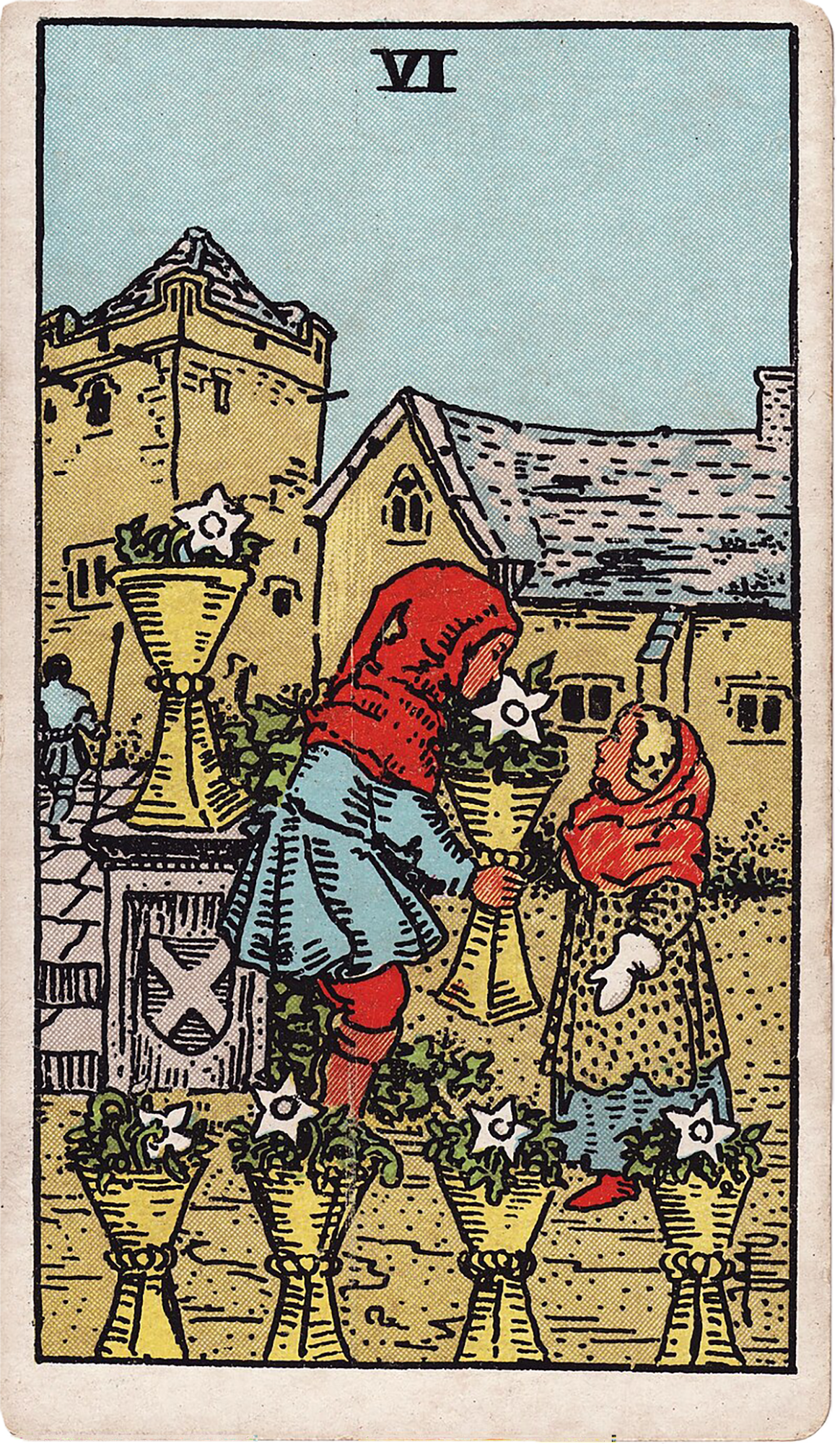
The 6 of Cups is one of the most recognizably nostalgic cards in the Rider-Waite visual vocabulary. In the supplied upright image you will see two children in a garden, six cups arranged with small white flowers, a house in the background and a path leading away. The supplied upright description frames the card: "Upright, 6 of Cups highlights the past returns through memory, familiarity or generosity; the card asks what should be cherished and what should not be idealized." The supplied reversed description draws attention to getting stuck in the past and the need to release or simplify. Because this lesson is a single-card context, you will learn to let the 6 of Cups itself answer questions across many everyday contexts while always returning to its visual and canonical cues: childhood, exchange, memory, generosity, and the fidelity between past and present.
Reading the imagery: Rider-Waite-Smith symbolism in the supplied card
Work always begins with what is actually on the card. The supplied upright card shows two children, one offering a cup with flowers to the other. That gift gesture is central: it indicates exchange that is innocent, reciprocal, or ritualized. The child motif signals the inner child, formative memories, early patterns and the way safety or care was first experienced. The six cups themselves, filled with flowers, are both containers of feeling and tokens of generosity. The garden and house in the background suggest a cultivated, bounded environment — not wilderness but a domestic scene that carries history. The path or road leading away hints at a direction: memories may invite movement or return. The colors and posture often read as calm and receptive rather than dramatic, which matches the supplied upright text noting that the card is practical and asks for a present-focused response. When you flip the supplied reversed version, the same pictures tilt into a warning: nostalgia can become a trap, generosity can be conditional or performative, and an inner image of safety can be idealized and not match current realities. The supplied reversed prompt advises you to "examine where the process has become stuck" and to ask what needs simplifying or releasing.
Core meanings to carry when you read the supplied 6 of Cups
Before you apply the card to contexts, keep these core meanings visible: past memories returning; familiarity and recognition; generosity, gift exchange and reciprocity; inner child and early conditioning; domestic or childhood setting; and the difference between cherishing and idealizing. Also remember the supplied guidance: upright promotes handling the situation through Cups skills — emotion, relationships, intuition and receptivity — while reversed signals over-attachment to the past, repeating old dynamics, or an internalized issue not yet visible externally. These anchor meanings will shape how you answer specific questions.
Interpreting the supplied 6 of Cups in love and relationships
Upright: In a love position the supplied upright 6 of Cups often points to reconnection, reunions, or a relationship that feels familiar in a comforting way. The image of one child giving a cup to another highlights small acts of care and the importance of gentle generosity. For couples it can mean remembering why you first connected and intentionally bringing those earlier caring gestures back into the present. For single querents it can indicate a past partner returning, a romantic spark from earlier years, or meeting someone who resonates with your youthful emotional blueprint. Use the supplied upright text: ask what should be cherished and what should not be idealized. The garden scene asks you whether the safety you remember is actually present now. Reversed: When the supplied card is reversed in relationship queries it usually warns of living in an intoxicating memory rather than responding to current reality. People may romanticize an ex, or a partner may behave in ways that simply repeat an old family function rather than truly change. The reversal suggests asking who is expected to perform the old roles and whether those roles are healthy. It can also mean the issue is internal: the querent is clinging to a childhood idea of love and thus cannot build a mature present. Practical questions to ask: which behaviors are repeated from childhood? What would it look like to test whether the current connection meets my needs now?
Interpreting the supplied 6 of Cups in career and vocation
Upright: In career context the supplied 6 of Cups points to returning to a previous role, reconnecting with former colleagues, or finding satisfaction in work that feels familiar or service-oriented. The gift imagery suggests mentorship, apprenticeship or generosity between experienced and newer workers. It can also indicate that skill learned earlier in life is now useful. Because the supplied upright meaning stresses a practical response, ask what present action will honor that past skill rather than simply longing for it. Reversed: Reversed at work warns of stagnation caused by clinging to a past job identity, refusing to update skills, or chasing a career that is nostalgically comforting but financially or professionally obsolete. It can mean you are idealizing an earlier phase of your career and resisting necessary change. Alternatively, the inner-child theme may point to emotional dynamics at work — e.g., seeking parental approval from a manager instead of asserting professional boundaries. Ask what concrete steps move you from sentimental attachment to practical competence.
Interpreting the supplied 6 of Cups for money and practical resources
Upright: Financially the supplied upright 6 of Cups often signals generosity, gifts, inheritance, or receiving help from family. The cups holding flowers suggest small, nurturing exchanges rather than major windfalls. It can also mean a return to budgeting habits learned earlier that bring security. The card asks you to distinguish what financial patterns are worth carrying forward. Reversed: Reversed here is cautionary. It can indicate financial decisions influenced by nostalgia or denial — such as investing in a family business because of nostalgic loyalty without assessing current viability. It can also flag dependence on parental support that's keeping you from financial independence. Ask which routines or assumptions are preventing present financial clarity and what small practical changes would reduce risk.
Interpreting the supplied 6 of Cups as advice
Upright as advice: The supplied upright card advises generosity, simple acts of kindness, and practical application of emotional wisdom. It invites reconnecting with supportive people or reclaiming practices from your past that genuinely served you. Because the upright description emphasizes responding to "the present stage rather than an abstract ideal," the advice includes testing memory against current conditions: offer a small gift, reach out with humility, or schedule a reunion with the intention of listening rather than reliving. Reversed as advice: The reversal instructs you to release idealized pictures and simplify. It often recommends distinguishing sentimental longing from actionable needs. Practice saying a concise boundary such as "I appreciate our history, but my needs are different now," or let go of a repeating pattern by replacing it with a small, practical habit. The key is to translate insight into a doable change.
Interpreting the supplied 6 of Cups as challenge
Upright as challenge: Even upright, the 6 of Cups can be challenging when it triggers over-dependence on comfort or avoidance of growth. The image of children in a safe garden reminds you what you miss; the challenge is to allow nostalgia to inform but not control choices. Use the supplied upright prompt to spot where the pattern is already visible and decide what action strengthens its constructive side. Reversed as challenge: The supplied reversal directly names the difficult pattern: repeating old dynamics, romanticizing childhood, or an internalized version of safety that no longer applies. The obstacle is not intellectual understanding alone; it is the lived practice. Identify one small behavior to stop repeating and one new, tiny behavior to practice as a replacement.
Interpreting the supplied 6 of Cups as a person
Upright: Read as a person, the supplied upright 6 of Cups typically describes someone who is warm, generous, childlike in the best sense (curious, open), or someone who carries strong attachments to family and tradition. They may be a mentor, an older sibling, a family friend, or a partner who is emotionally available in familiar ways. They often give gifts, favors, or emotional reassurance. Reversed: As a person, the supplied reversal suggests someone stuck in the past, perhaps emotionally immature, or someone who pressures others to act according to older scripts. It can be someone well-meaning but prone to idealizing relationships, or someone who gives conditionally. If the question asks whether this person will change, the reversal cautions that patterns are entrenched and will require intentional work.
Interpreting the supplied 6 of Cups as an outcome and spiritual reflection
Outcome upright: As an outcome the supplied 6 of Cups often signals a reunion, a healing reconnection, or the successful reintegration of a helpful past resource. Because the card's imagery and upright text emphasize practical response, the favorable outcome is usually tangible: a reconciled relationship, a revived practice of care, or the healthy reintroduction of earlier skills. Outcome reversed: Outcome in reversal warns that without work the situation will stagnate in nostalgia or repeat unhealthy patterns. The result may be a temporary emotional uplift that lacks durable change. It can also indicate that the resolution will involve internal work rather than public repair. Spiritual reflection: Spiritually, the supplied upright image invites you to honor formative experiences and retrieve gifts from your past — capacities for tenderness, wonder, or ritual. The six cups as filled vessels become a prompt to integrate those offerings now. The supplied reversed text asks you to acknowledge where an idealized spiritual memory prevents current growth. The spiritual task is to practice presence: bring youthful wonder into present practice without importing fantasy.
Practical single-card technique and step-by-step method
1) Ground and look: Sit quietly, study the supplied 6 of Cups image for 1 to 3 minutes. Note immediate feelings and which elements stand out: the children, the cups, the flowers, the house, the path. 2) Read the supplied canonical prompts: If upright, use the supplied upright line that it "highlights the past returns through memory, familiarity or generosity" and "asks what should be cherished and what should not be idealized." If reversed, bring the supplied reversed reminder that it "draws attention toward living in the past" and to ask where the process is stuck. 3) Contextualize: Ask your specific question (e.g., relationship, career, money) and choose the relevant context. Bring forward the core images and apply them literally: who in your life resembles the child-giver figure? Where is the garden or house metaphor present in your situation? 4) Form clarifying questions: For nostalgia pitfalls ask, "Is this longing a signal to reclaim a useful habit, or is it a wish to relive an unreal past?" For action-oriented readings ask, "What small practical act can I take now that aligns with this kindness or gift?" 5) Prescribe a small test: The 6 of Cups calls for practical testing. Recommend one small experiment — a short conversation, a gesture of care, a revised budget, a boundary — and set a time to observe effects. 6) Follow-up: In a subsequent reading, track whether the pattern shifted toward healthy integration or repetition. Use the same single-card method to monitor progress.
Examples and scripts you can use in session
Example 1, love — upright: A querent draws the supplied upright 6 of Cups while asking about a partner who feels distant. Script: "The card shows a simple exchange between two children — ask yourself what small, concrete offering could reconnect you: a memory-sharing conversation, an apology, or a gift that acknowledges your partner's history. Test it with a 15-minute conversation scheduled this week and observe whether the dynamic softens." Example 2, career — reversed: Querent worried about staying in a comfortable but dead-end role draws the supplied reversed 6 of Cups. Script: "The reversal warns of idealizing earlier career identity. Make a list of three marketable skills you learned then, and take one step to update them: a short course, a portfolio refresh, or a networking email. If nothing changes in 30 days, reassess." Example 3, money — upright: The card suggests support from family or an inheritance. Script: "Confirm in conversation whether any support is offered, then plan how a small gift would be used responsibly. Treat the gift as a temporary resource and allocate it to a specific need rather than ongoing expenses."
Common mistakes readers make with the supplied 6 of Cups and how to avoid them
Mistake 1: Equating nostalgia with solution. Avoid assuming that what feels good in memory is what will solve current problems. Ask for evidence and propose a small experiment. Mistake 2: Treating reversal as purely negative. The supplied reversed 6 of Cups often names a place to work; it points the way toward necessary release or practice. Ask what needs simplified or practiced. Mistake 3: Over-relying on romantic replay. The children on the card represent formative exchange, not fate. Emphasize agency: the giver and recipient are actors. Mistake 4: Ignoring the card's practical prompt. The supplied upright meaning repeatedly emphasizes practical response. Always translate nostalgia into one concrete step.
Exercises and inner child work guided by the supplied 6 of Cups
Exercise 1, retrieval ritual: Sit with the supplied upright image, breathe, and name three strengths you learned as a child (curiosity, resilience, kindness). Write one sentence about how each strength can show up this week and pick one to practice. Exercise 2, letter to your younger self: Use the image of the child offering a cup as a template. Write a short letter from your present self to your younger self acknowledging what was hard, what you are grateful for, and one promise to keep. Exercise 3, boundary practice for reversal: If the supplied reversed 6 of Cups shows over-attachment, create a small boundary script to end a repeating dynamic: e.g., "I appreciate your concern, but I decide X for myself." Role-play it twice. These exercises convert imagery into action and avoid the trap of mere sentimentality.
Putting it together with a reading checklist
Use this quick checklist when the supplied 6 of Cups appears: 1) Note whether the card is upright or reversed and read the supplied canonical line for orientation. 2) Describe which visual element stands out most and why. 3) Relate that element to the question's context (love, career, money, etc.). 4) Ask a clarifying question that separates useful retrieval from idealization. 5) Prescribe one small action to test the card's guidance. 6) Schedule a follow-up check-in to see whether patterns shift. This disciplined approach prevents slipping into dreamy interpretations and keeps readings actionable.
Conclusion and ethical considerations
The supplied 6 of Cups is tender and potentially deceptive. Its imagery invites warmth and care but also warns about the seduction of comfortable stories. As a reader, prioritize the querent's present safety and agency. Distinguish between honoring the past and becoming captive to it. Use the supplied upright and reversed prompts as practical lenses: upright calls for present action informed by past gifts; reversed calls for releasing, simplifying, and practicing new behaviors. Anchor every interpretation to the card's visual cues and the querent's real-life capacity to act.
Practice questions
• When you look at the supplied upright image of the 6 of Cups, which detail feels most resonant and why?
• Is the longing you feel for the past helping you meet present needs or preventing you from taking a necessary step?
• What small, testable action could you take in the next week that would honor a positive resource from your past?
• Who in your life represents the child-giver archetype and how does that person affect your present choices?
• If the 6 of Cups appears reversed, what repeating dynamic is most visible and what one habit could begin to interrupt it?
Comments
Sign in to comment.
Continue learning
Mastering Decision Making with the Five Card Cross Tarot Spread
The Five Card Cross Tarot Spread is a powerful tool for deepening decision-making skills by examining the present situation, past influences, future possibilities, challenges, and...
Exploring The High Priestess in Career Relationships and Personal Growth
The High Priestess card in the tarot deck invites readers to explore intuition, hidden knowledge, and inner wisdom across various life contexts. This article examines how The High...
Understanding The Chariot Card in Personal Ambition and Overcoming Obstacles
The Chariot card represents the power of focused will, disciplined action, and choosing a clear direction amid competing impulses. Upright, it encourages decisive steps forward usi...
Enhancing Clarity in Complex Choices with the Five Card Cross Tarot Spread
The Five Card Cross Tarot Spread is a practical tool designed to clarify complex choices by breaking down the decision into manageable parts. This article explores each position in...
Using the Five Card Cross Tarot Spread to Navigate Career Changes with Confidence
The Five Card Cross Tarot Spread is a versatile and insightful tool for navigating career changes. This article guides learners through the method step-by-step using a practical ex...
Understanding The Hermit in Self Discovery and Spiritual Enlightenment
The Hermit card in the Rider-Waite-Smith deck embodies themes of introspection, solitude, and spiritual wisdom. This article examines how The Hermit's upright and reversed position...
Using the Five Card Cross Spread to Make Confident Life Decisions
The Five Card Cross spread is a practical and insightful tarot layout designed to assist with complex life decisions by clarifying the situation, presenting options, uncovering hid...
Unlocking Emotional Depth with The Moon and The Lovers in Tarot Combinations
This article delves into the nuanced interplay between The Moon and The Lovers tarot cards, emphasizing how their combination unlocks emotional depth and complexity. By examining u...
Making Confident Life Choices with the Five Card Cross Tarot Spread
The Five Card Cross Tarot Spread is a powerful tool designed to aid practical decision-making, particularly within family or life-altering situations. This article explains the spr...
Using the Five Card Cross Tarot Spread to Gain Confidence in Difficult Decisions
The Five Card Cross spread is a powerful practical tool for navigating difficult decisions with confidence. By placing cards in positions representing Situation, Option A, Option B...