
Why Tarot Trumps Have Different Numbers Across Traditions and What That Means
Tarot trumps are not fixed in number across all historic decks. Decks such as the Tarot de Marseille, the early Visconti-Sforza variants, and the modern Rider-Waite-Smith lineage show different orderings for certain Major Arcana. The best-known example is the swapping of Strength and Justice. This article surveys why those differences arose — from iconographic priorities and printing practices to esoteric mapping and deliberate reordering by occultists — and shows what the differences mean for interpretation. Using the supplied Strength and Justice card contexts and Rider-Waite-Smith imagery conventions as anchors, the article offers a step-by-step technique for reading when numbering differs, worked examples, common mistakes to avoid, and practical exercises to build fluency across traditions.
Cards explored in this article
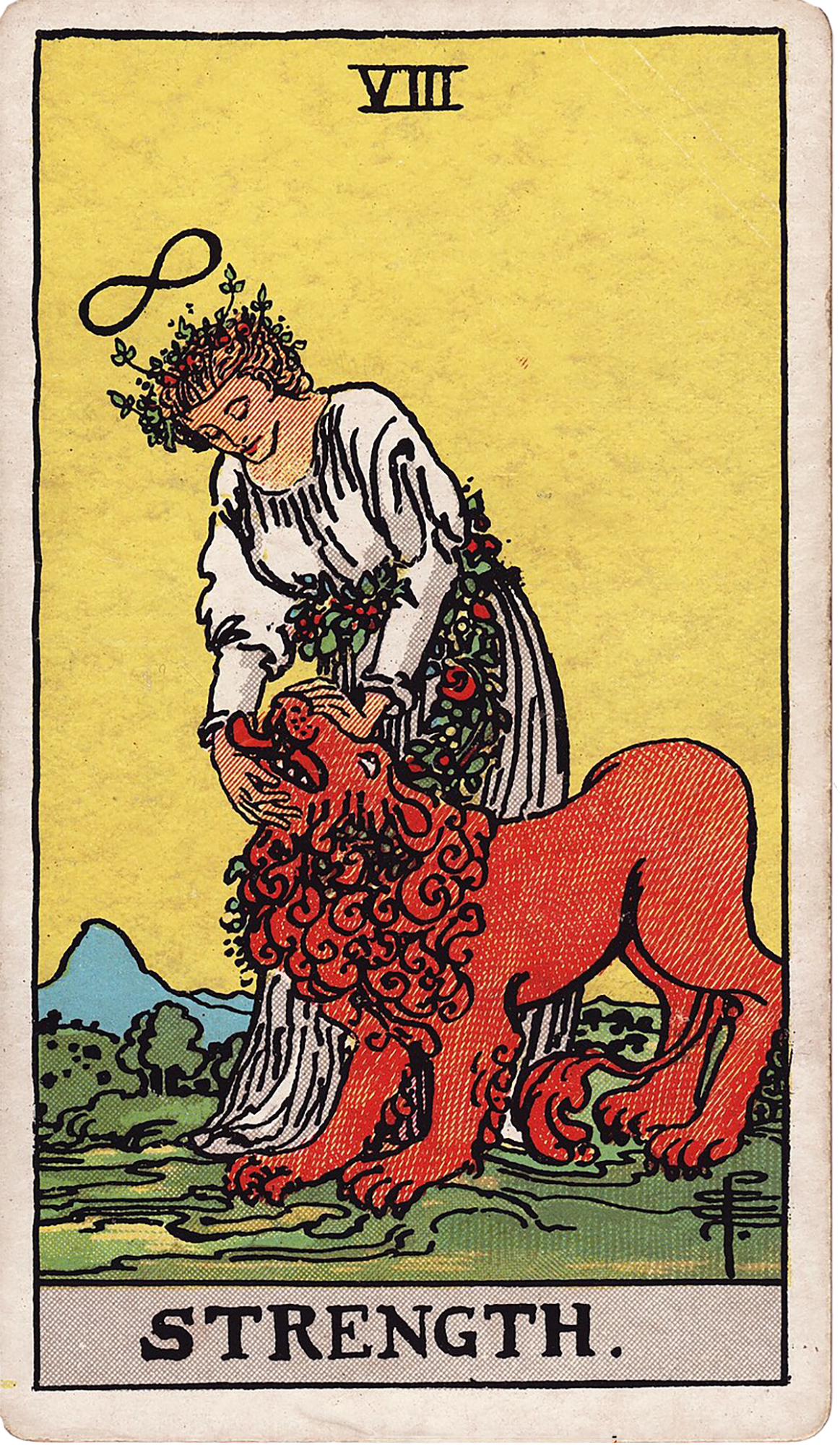 Strength
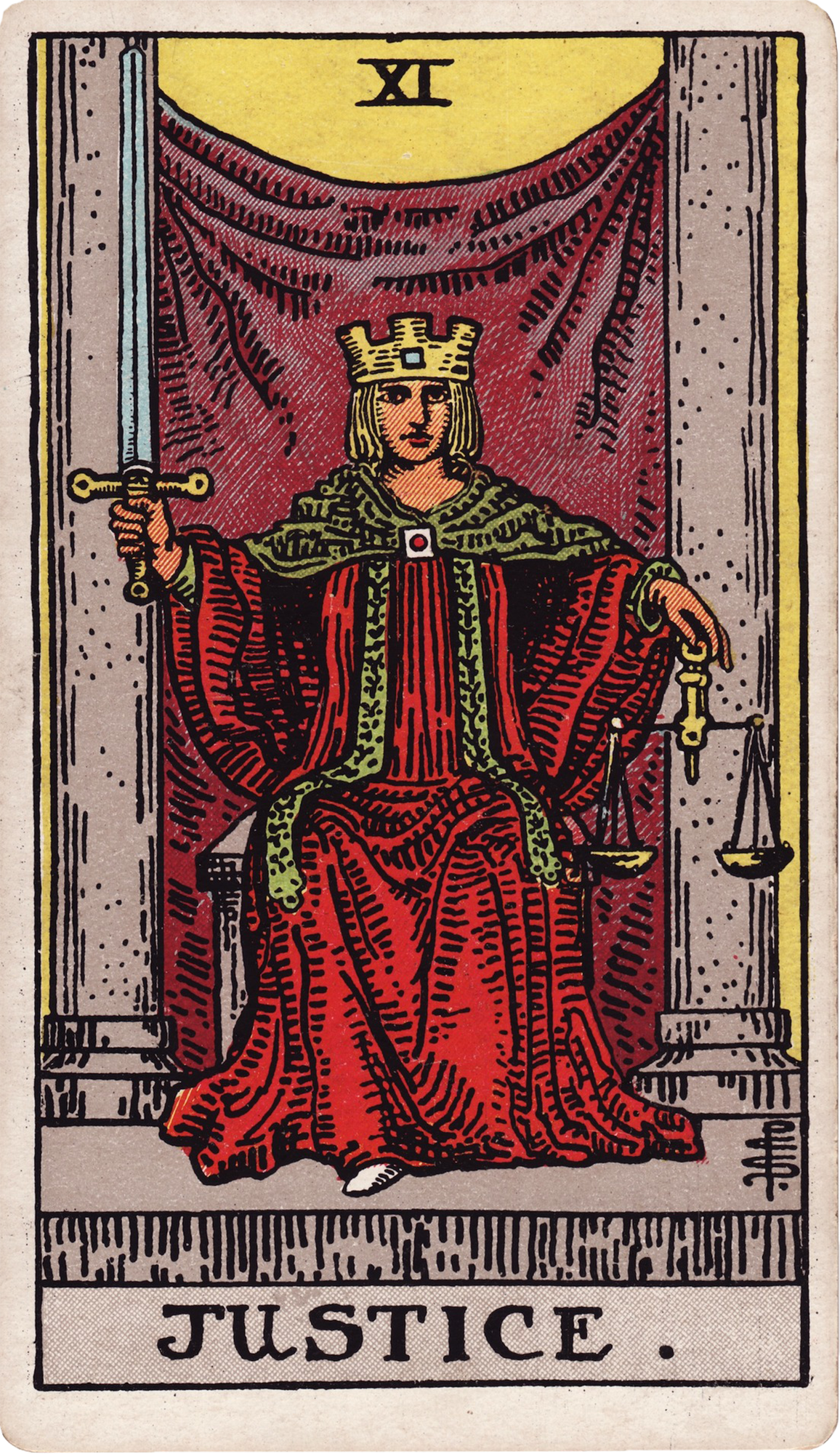 Justice
Introduction: Why numbering matters and why it varies
Tarot readers often assume the Major Arcana numbering is universal. In practice it is not. Though most modern English-language decks follow the Rider-Waite-Smith (RWS) numbering, older and some contemporary decks follow the Tarot de Marseille (and other pre-RWS) orders. The difference is not merely cosmetic: where a trump sits in the sequence affects its numerological associations, its placement in spreads that use numeric progression, and how teachers and systems map the tarot to astrology, Hebrew letters, or the Tree of Life. The most famous divergence is between the cards that portray a woman and a lion (commonly called Strength) and a seated figure with scales (commonly called Justice). In older decks Justice is often VIII and Strength XI; in Rider-Waite-Smith the positions are swapped. Understanding why this happened and what it changes in practice helps readers interpret with confidence and nuance rather than simply following a number.
A short history of trump order: from early decks to the 20th century
The tarot Major Arcana emerged in 15th-century Italy as part of painted card sets such as the Visconti-Sforza. Those early sequences varied; the visual series crystalized over centuries into versions now called Tarot de Marseille, which became a standard continental model. The Tarot de Marseille tradition typically assigns the scales-and-sword figure the number VIII and the lion-and-woman figure XI. In the 18th and 19th centuries occultists and cartomancers began to attach fixed esoteric meanings to the trumps. Different authors rearranged or reinterpreted trump positions to fit their theories. By the late 19th century, groups such as the Hermetic Order of the Golden Dawn developed complex mappings between the Major Arcana, the Kabbalistic Tree of Life, Hebrew letters, and astrology. These mappings did not always match the Marseille order. When A.E. Waite worked with artist Pamela Colman Smith to produce the Rider-Waite-Smith deck (first published in 1910), the deck reflected Waite's interpretive and esoteric priorities. In the RWS ordering, the card we now commonly call Strength appears as VIII and Justice as XI — a reversal of earlier common continental practice. Because the Rider-Waite-Smith deck became highly influential, many modern decks follow its numbering, but a significant and legitimate number of decks retain the earlier Marseille arrangement.
Why the Strength and Justice swap happened and what choices it reflects
There is no single mechanical cause for the swap; it is the result of interpretive choices. - Iconographic emphasis: Different traditions emphasized different visual cues. Earlier decks placed the legal-social symbol (scales) earlier in the moral sequence; later esotericists wanted the inner, moral quality of strength (courage, mastery of impulses) to occupy the earlier position. - Esoteric mapping: Occult systems that attempted a grand synthesis (including Kabbalah and astrology) sometimes needed certain cards to fall on specific paths, numbers, or astrological correspondences. Reassigning which trump is VIII or XI made those mapping schemes 'work' internally. Waite and his circle adjusted card order to fit their interpretive framework. - Readability and message: Waite favored the image of the woman taming the lion as a representation of an early moral triumph of character (inner strength) rather than an institutionalized sense of justice. That was a thematic reason for placing the Strength figure at VIII — to make the sequence read in a particular psychological way. - Printing and editorial practice: When decks are reproduced or reinterpreted, small editorial changes proliferate. Waite's decision was taken up by many English-language publishers, and that editorial choice created a widely adopted convention that is not the only historically legitimate one. These choices are interpretive, not 'right' or 'wrong.' Each ordering invites slightly different emphases when you read the Major Arcana as a developmental or narrative sequence.
Numerology, astrology and symbolic consequences of numbering differences
Numbers add a layer of meaning beyond the image. When Strength is VIII, readers often interpret it with the numerological qualities associated with eight: mastery, material power, balance through force or disciplined action. When Strength is XI the numerological flavor changes: 11 is often treated as a master number, associated with higher intuition, revelation, and sometimes justice or spiritual insight. Likewise, Justice as VIII foregrounds numerological themes of structure, cause/effect, or material constraint; as XI it foregrounds higher ethical law and accountability. Astrological correspondences are also affected. Many mapping systems attach zodiac signs or planets to Major Arcana using their numeric positions. If you are working in a system that links card numbers to zodiacal energies, a swap will change which sign or planetary tone you intuitively associate with that card. That in turn affects how you read combinations and which life domains you prioritize in an interpretation. Take numerology in practice: if a querent asks about personal power and you draw the Strength card labeled VIII, you might emphasize earthly mastery and practical self-control; if the same card is labeled XI, you might emphasize a more spiritual or karmic dimension to the power, as if the issue is tied into larger balances and moral law. Both readings can be accurate if anchored to the imagery and to the client's situation; the number is one guiding cue, not a decree.
Anchoring theory to imagery: Looking closely at the supplied Strength and Justice cards
The supplied card texts and images are central to this teaching. Use them as your ground truth. - Strength (supplied text): Upright, Strength emphasizes meeting intensity with calm courage, using patience as power, and responding from self-respect rather than fear. It prompts the reader to ask where direct response, clearer boundary, deeper honesty, or more deliberate choice would move the situation forward. Reversed, Strength points to self-doubt, suppressed anger, overcompensation, or loss of confidence and invites the question 'where is this energy becoming distorted or difficult to access?' - Justice (supplied text): Upright, Justice emphasizes looking at facts clearly, accepting consequences, and making a fair decision that can withstand scrutiny. Reversed, Justice points to bias, denial, avoiding accountability, or a decision made without enough evidence and invites investigation of where balance is blocked. Notice how the supplied descriptions already model an interpretive economy: image first, number second. The lion and the woman in Strength suggest inner courage harnessed with gentleness; the scales and sword in Justice suggest weighing evidence and acting accordingly. Those visual facts should anchor your interpretation whether the card shows VIII or XI. The number will flavor the interpretation but should not overrule the visual cues. For example, an upright Strength picture with the supplied upright text invites a practical, present-oriented reading focused on next steps. If that same image carries the number XI in a Marseille-style deck, you may also mention the larger systemic or karmic contexts that XI suggests, but you should not ignore the clear message about using available personal power.
Technique for reading when trump numbering differs
Here is a practical step-by-step method you can apply every time you encounter decks that disagree about numbering. This approach respects both image and tradition and keeps your reading transparent. 1) Identify the deck tradition: Before a reading, note whether the deck follows RWS order or an older Marseille-style order. Check the numeral printed on the card or the deck documentation. Tell the querent if there's an unusual ordering if it affects the reading. 2) Read the image first: Describe what you see on the card — pose, color, objects, gestures. Anchor your reading to the visual cues and to the supplied card texts if you are using those as part of your library. 3) Bring the number in as a modifier: After the image, add the numerological layer. Ask yourself: does the number emphasize agency (8), a turning point (11), a master-teacher theme (11), or something else? Use numeric meaning to provide nuance, not to rewrite the image. 4) Consider the spread and neighbors: If your spread depends on numeric sequence (for example, a progressive life-line or a numeric-path spread), adjust the narrative according to the deck's numbering. If Strength appears between certain cards, use the local sequence rather than an abstract universal order. 5) Cross-check with supplied upright/reversed meanings: Use the supplied upright and reversed texts to anchor your phrasing. For Strength, focus first on questions of calm courage, boundary, and action. For Justice, focus on fact-gathering, accountability, and fairness. Apply number-based modifiers after this. 6) State your interpretive choices aloud: If you make a strong numerological interpretation (for example, reading Strength as an 11), say, 'In this deck Strength is numbered XI, so I see a larger ethical or karmic layer here in addition to the visual call to courage.' Naming your hermeneutic posture increases trust and clarity. 7) Avoid forced equivalence: Do not pretend that one ordering is authoritative for all decks. Teach querents that both orders have historical validity and that the image always remains primary for practical readings. 8) Practice with both orders: Include decks of both traditions in practice sessions so you become fluent at toggling the numeric flavor quickly.
Worked examples anchored to the supplied cards
Example 1 — Strength in a near-term action position Spread context: Strength appears upright in a 'next step' position in a career reading. The deck is Rider-Waite-Smith style and labels Strength VIII. Reading anchored to supplied text and image: Begin with the image and supplied upright text: 'Strength emphasizes meeting intensity with calm courage, using patience as power, and responding from self-respect rather than fear.' In this spread the message is practical: choose a proportionate next step that honors your confidence and limits. Because the card is numbered VIII here, emphasize practical mastery and resource management. Suggest concrete actions: set a clear boundary in a meeting, prepare a short demonstration of competence, or take one decisive step that tests and strengthens skill. If reversed, use the supplied reversed text to ask whether self-doubt or overcompensation is blocking forward movement. Example 2 — Justice in a reputation/legal context Spread context: Justice appears upright in a legal or conflict-resolution position. The deck follows a Marseille tradition and labels Justice VIII. Reading anchored to supplied text and image: Start with the supplied Justice upright text: 'Justice emphasizes looking at facts clearly, accepting consequences, and making a fair decision that can withstand scrutiny.' Since the deck gives Justice the number VIII, draw attention to structural, immediate consequences and a need for clear cause-and-effect thinking. Advise the querent to gather documentation and present facts calmly. If the card were XI instead, you might lean more on ethical, karmic, or long-term fairness themes. In either case keep the practical instructions grounded in the imagery (scales, sword) and the supplied upright/reversed cues. Example 3 — Both cards in a moral pivot spread Spread context: Strength appears reversed in a 'personal obstacles' position; Justice appears upright in an 'outcome' position. Deck is RWS (Strength VIII, Justice XI). Reading anchored to supplied texts: Use the supplied reversed Strength text to probe internal doubt and misapplied force. Ask where anger is suppressed or where confidence has been hollowed out by fear. Then read Justice upright as the outcome: encourage the querent to bring facts and accountability into the process. Note how the RWS numbering suggests a trajectory from a personal struggle (VIII Strength) into a larger moral reckoning (XI Justice). The numerological sequence can be used narratively: personal mastery is the practical work that opens the path to a fair, scrutinized outcome.
Common mistakes and how to avoid them
Mistake 1 — Letting the number speak louder than the image. Avoid leading with numerology. Always describe the picture first and use the number to enrich rather than replace that reading. Mistake 2 — Insisting one canonical order is correct. Historical diversity matters. Acknowledge that both Marseille and RWS orders are legitimate traditions and that your interpretive choices are contingent. Mistake 3 — Mechanical cross-deck comparison. If you read a querent using a Marseille-based deck but then quote a RWS book passage that assumes the swapped order, you can create confusion. Match your references to the deck in hand or explicitly state when you are translating between systems. Mistake 4 — Overusing esoteric correspondences without client permission. Not all querents want a Kabbalistic or astrological overlay. Ask whether the client wants symbolic depth or practical advice. Mistake 5 — Treating reversed meanings as inherently negative. The supplied Strength and Justice reversed texts model a balanced approach: reversed cards show blocked or internalized energies, not doom. Use reversal as diagnostic, not alarmist.
Practical exercises to build fluency across traditions
Exercise 1 — Dual-deck comparison. Take a simple three-card spread (past/present/future) and perform the reading twice: once with a deck that uses the Marseille order and once with a RWS-ordered deck. Use the same querent question each time and note differences in emphasis. Practice explaining the divergences aloud. Exercise 2 — Image-first journaling. Pull Strength or Justice daily. Spend five minutes describing the image in sensory detail, then write one paragraph using the supplied upright text and one paragraph as if the card number were the alternate tradition. Notice how the number changes nuance. Exercise 3 — Teach a short lesson. Teach someone the two-order difference using only the supplied Strength and Justice descriptions and images. Ask them to make a short interpretive choice and explain why the number matters or does not. Exercise 4 — Spread design. Create a spread that explicitly uses numeric sequence (for example, a 'growth by number' spread where cards are read in numeric progression). Try the spread with both orderings and note how the narrative arc shifts.
Interpretation logic: balancing image, number, and context
Good tarot interpretation is triangulation. The image grounds meaning in sensory, narrative, and archetypal details. The number provides structural and numerological seasoning. The context — the querent's question, the spread position, and neighboring cards — gives the reading immediate relevance. When numbers differ across traditions, privilege image and context, and treat number as an additional interpretive lens rather than a censoring rule. With the supplied Strength and Justice cards, the image and upright/reversed texts give you the most reliable interpretive backbone: Strength calls for patience and deliberate choice; Justice calls for fact-based decision and accountability. Where numbering shifts, explicitly name the shift and add a sentence that uses the alternate numeric nuance. That transparency is both pedagogically honest and practically useful for clients who may consult multiple sources.
Conclusion and practical takeaways
Different tramplings of trump numbers are part of tarot's living history. The swap between Strength and Justice is the classic example, but it is one illustration of a broader truth: tarot is a family of practices with overlapping but non-identical traditions. For readers: know which deck you are using, describe the image first, add number-based nuance second, and be explicit when you translate between systems. Use the supplied Strength and Justice texts as stable anchors for practice: they keep you connected to image-based meaning while allowing you to layer in numerology and historical context. With that approach you can honor both Marseille and Rider-Waite-Smith lineages and give readings that are historically informed, practically useful, and visually grounded.
Practice questions
• When you look at the supplied Strength image and read its upright text, which aspects feel primary for you: inner confidence, physical control, or moral courage? How would a different number change your emphasis?
• If you were reading Justice in a disputed workplace situation, how would you phrase practical advice differently if the card were numbered VIII versus XI?
• Think of a recent reading where a Major Arcana card’s number mattered to you. Did you prioritize numerology or image? What might you change next time?
• How comfortable are you explaining to a querent that two valid tarot traditions order trumps differently? Try scripting a short explanation you could say in a session.
• Choose Strength or Justice and design a two-card practice spread that deliberately uses numeric sequence. How does swapping the numbers between decks change the narrative arc?
Comments
Sign in to comment.
Continue learning
Interpreting the Dance of Justice and The Devil: Balancing Morality and Temptation in Tarot Readings
The combination of Justice and The Devil in tarot presents a profound exploration of morality, temptation, and personal accountability. This article unpacks how these cards influen...
Mastering Decision Making with the Five Card Cross Tarot Spread
The Five Card Cross Tarot Spread is a powerful tool for deepening decision-making skills by examining the present situation, past influences, future possibilities, challenges, and...
Enhancing Clarity in Complex Choices with the Five Card Cross Tarot Spread
The Five Card Cross Tarot Spread is a practical tool designed to clarify complex choices by breaking down the decision into manageable parts. This article explores each position in...
Using the Five Card Cross Spread to Make Confident Life Decisions
The Five Card Cross spread is a practical and insightful tarot layout designed to assist with complex life decisions by clarifying the situation, presenting options, uncovering hid...
Making Confident Life Choices with the Five Card Cross Tarot Spread
The Five Card Cross Tarot Spread is a powerful tool designed to aid practical decision-making, particularly within family or life-altering situations. This article explains the spr...
Using the Five Card Cross Tarot Spread to Gain Confidence in Difficult Decisions
The Five Card Cross spread is a powerful practical tool for navigating difficult decisions with confidence. By placing cards in positions representing Situation, Option A, Option B...
Using the Five Card Cross Spread to Gain Clarity in Difficult Life Decisions
The Five Card Cross Spread is a structured tarot layout designed to help clarify challenging life decisions by examining the situation, options, hidden influences, and advice. This...
Using the Five Card Cross Spread to Clarify Complex Decisions
The Five Card Cross Spread is a practical tarot method designed to clarify complex decisions by laying out the situation, contrasting options, hidden factors, and advice. This arti...
Using the Five Card Cross Spread to Gain Insight into Relationship Dynamics
This article provides an in-depth guide to using the Five Card Cross Spread for gaining clarity on relationship dynamics, especially within family contexts. Anchored by a worked ex...
Using the Five Card Cross Spread to Make Balanced and Informed Life Decisions
The Five Card Cross Spread is a powerful Tarot layout designed to aid balanced and informed decision-making. This article teaches learners how to use this spread effectively, focus...