
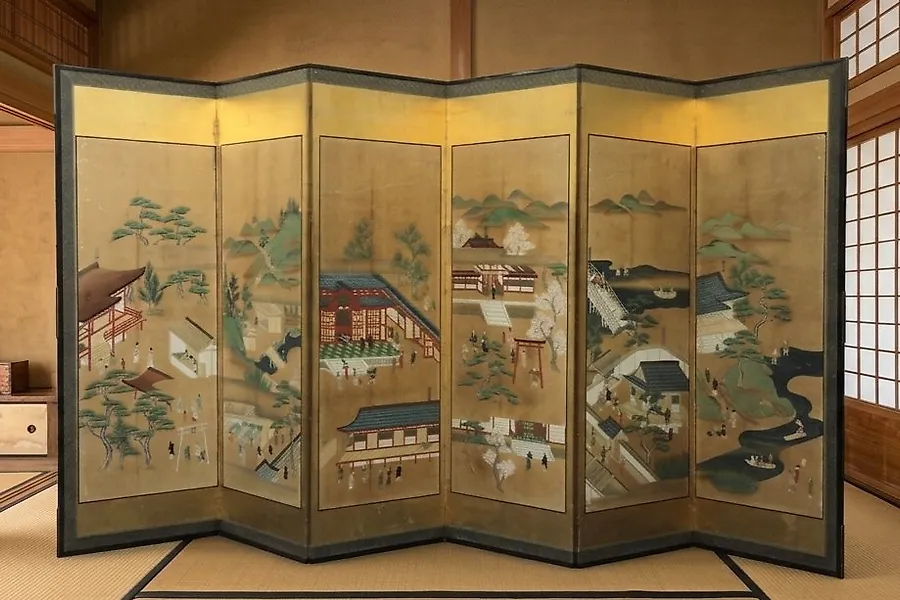
Folding screen with Japanese embroidery - Wood, Silk, Paper, Embroidery - Japan - Taishô to early Shôwa period (Early/Mid-20th century)

Folding screens, or byōbu, have been both functional and artistic elements in Japanese interiors for centuries. This example from Taishō to early Shōwa periods (early to mid-20th century) features intricate Japanese embroidery on silk fabric, combined with wood and paper panels. Such screens were used to partition spaces or as decorative backdrops.
Japanese embroidery is a highly refined craft, involving meticulous stitching techniques that create detailed imagery and textures, often depicting natural themes like flowers and landscapes. The combination of wood, silk, and paper offers a harmonious balance between structural stability and delicate artistry. During the Taishō and Shōwa periods, there was increased interest in blending traditional crafts with modern influences, which can be seen in the design and construction of such folding screens. These pieces are treasured for their fine craftsmanship, cultural symbolism, and the way they evoke a sense of tranquility and elegance in interior spaces.
VoxFati participates in various affiliate programs. When you click on links to different merchants on this site and take certain actions, such as making a purchase or signing up for a service, it may result in us earning a commission.






Comments
Comments appear after approval.
Log in to comment