
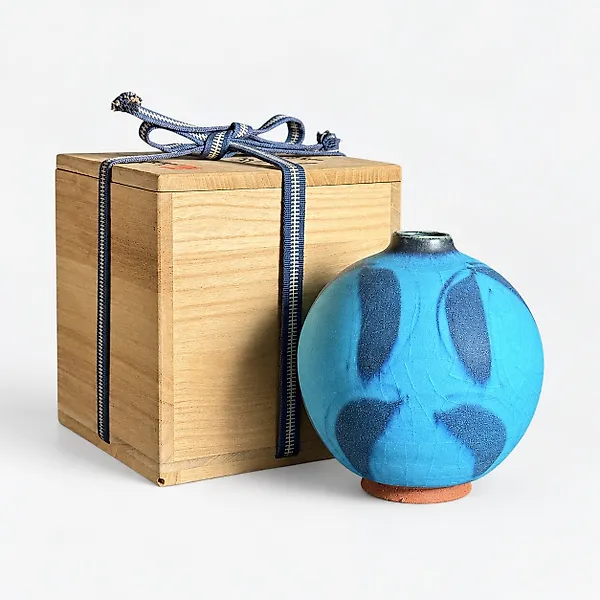
Mashiko ware mizusashi with kiln-effect glaze by Mitsuru Kimura - Ceramic - Kimura Mitsuru (木村充, 1939–1998) - Japan - Shōwa period (1926-1989)

Mashiko ware is a renowned form of Japanese pottery originating from Mashiko town in Tochigi Prefecture. Known for its rustic beauty and practical design, this ceramic style emphasizes simplicity, natural glazes, and the traditional aesthetics of wabi-sabi, which find beauty in imperfection and transience. A key functional vessel in Japanese tea ceremonies and daily life is the mizusashi, a water container used to hold fresh water for replenishing the tea kettle or rinsing the tea utensils. The mizusashi itself often reflects the artistry and cultural significance of its maker and region.
This particular mizusashi boasts a kiln-effect glaze characteristic of mid-20th century ceramic techniques, showcasing the interplay of natural ash deposits and controlled firing conditions, resulting in unique variations and textures on the surface. Crafted by Mitsuru Kimura (木村充, 1939–1998), an influential figure in the Shōwa period, the piece reflects both traditional craftsmanship and postwar ceramic innovation. Kimura’s work typically exhibits a harmony between form and glaze, with a delicate yet bold expression that respects regional Mashiko traditions while exploring individual artistic textures.
During the Shōwa period (1926–1989), Japanese ceramics underwent significant evolution, balancing the preservation of centuries-old techniques with the influences of modernization and international art movements. Kimura’s ceramics from this era are prized for their direct engagement with kiln environments, often celebrating the unpredictable effects of firing, which complements the spontaneous and organic aesthetic of Mashiko ware.
Collecting Mashiko ware mizusashi by noted artists like Kimura offers insight into Japan’s rich ceramic heritage and the cultural practice of tea. It also provides an appreciation for the physical characteristics of the clay, glaze variations, and the meticulous yet naturalistic approach to functional art pieces. Such ceramics are valued both as practical utensils and as collectible works representing mid-20th-century Japanese ceramic art.
VoxFati participates in various affiliate programs. When you click on links to different merchants on this site and take certain actions, such as making a purchase or signing up for a service, it may result in us earning a commission.



Comments
Comments appear after approval.
Log in to comment