
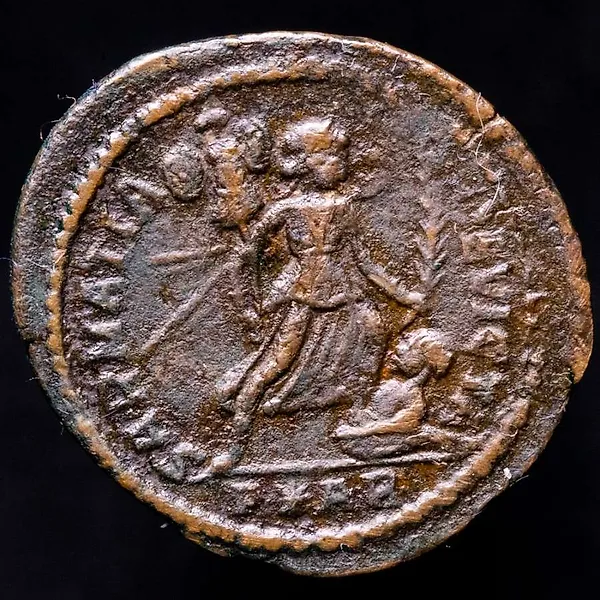
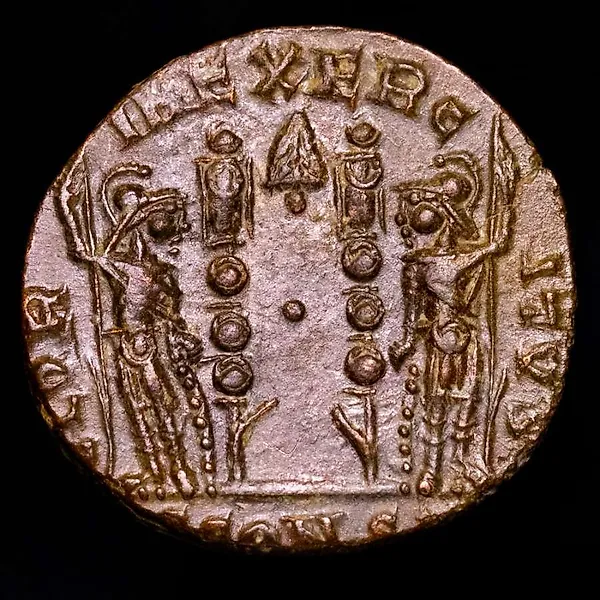
Roman Empire. Constantine I (AD 306-337). Follis Arles (Arelate) mint, 320. VRTVS EXERCIT. VOT XX; on either side, captive seated on ground. PARL. (No reserve price)

The follis is a type of bronze coin used during the Roman Empire, and the specimens minted under Emperor Constantine I (reigned AD 306-337) offer important insights into the coinage and symbolism of the era. An example from the Arles (Arelate) mint dated 320 AD typically bears inscriptions such as "VRTVS EXERCIT" alongside depictions of captives seated on the ground. This imagery is emblematic of Roman military virtues and victories over enemies, reflecting Rome's dominance and the emperor's authority. The seated captives symbolize defeated foes, a common motif intended to convey power and control. Coins like these circulated widely and served both monetary and propagandistic functions, reinforcing the emperor's legitimacy and the empire's military strength. The Arles mint was an important provincial mint located in what is now southern France, demonstrating the wide distribution of imperial coinage and its role in the cohesion of the Roman Empire during a period of significant political and military transformation.
VoxFati participates in various affiliate programs. When you click on links to different merchants on this site and take certain actions, such as making a purchase or signing up for a service, it may result in us earning a commission.










Comments
Comments appear after approval.
Log in to comment