
Ace of Swords and 2 of Swords Reading Clarity Against Indecision
This article teaches how to read the Ace of Swords paired with the 2 of Swords. Using Rider‑Waite‑Smith symbolism and practical technique, it shows how a decisive intellect or new insight (Ace of Swords) modifies a suspended choice or stalemate (2 of Swords). You will learn how to interpret upright and reversed dynamics, avoid common mistakes, use positional spreads and storytelling, and apply the combination in relationship, career and emotional contexts.
Read the cards together
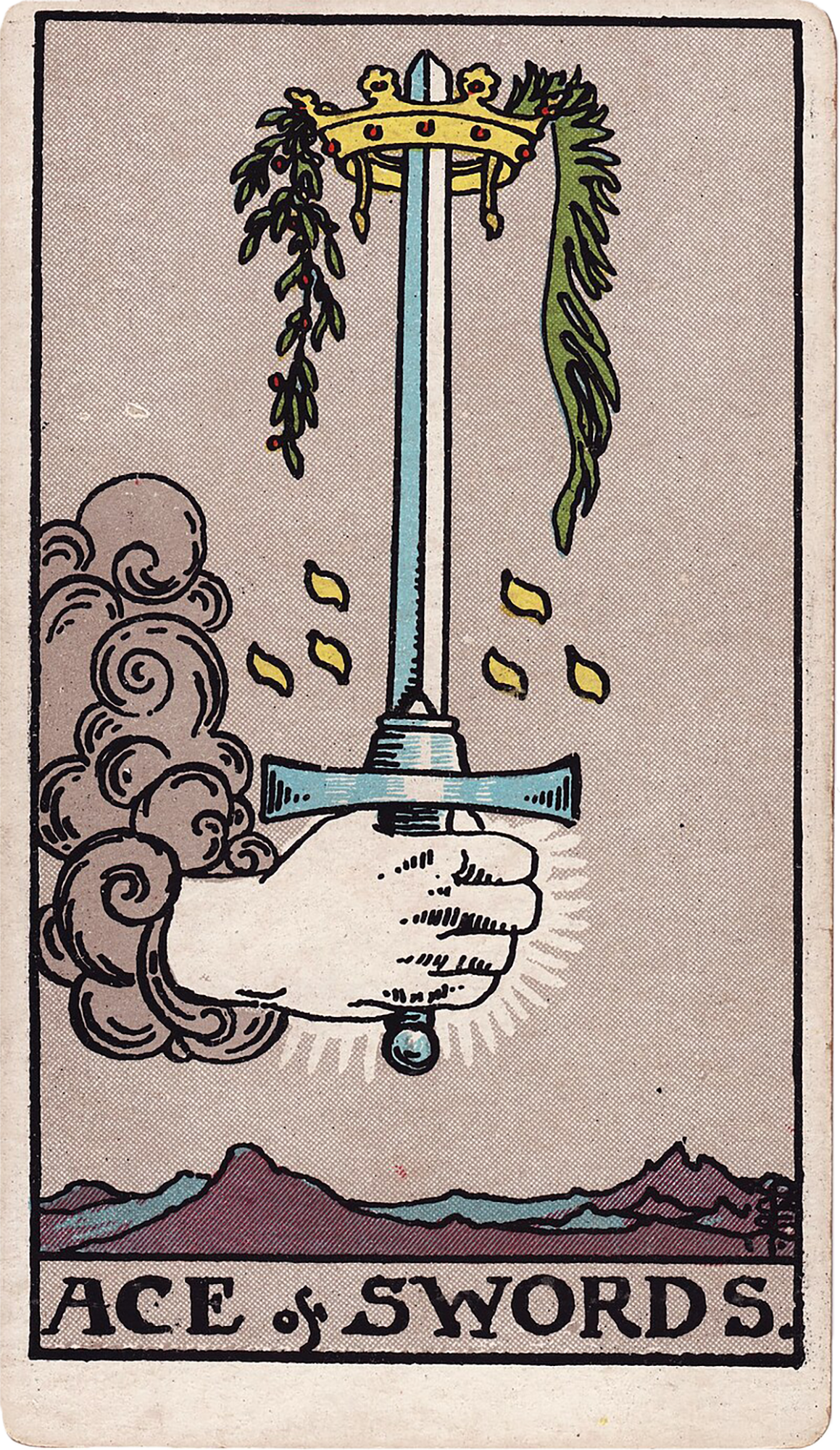 Ace of Swords
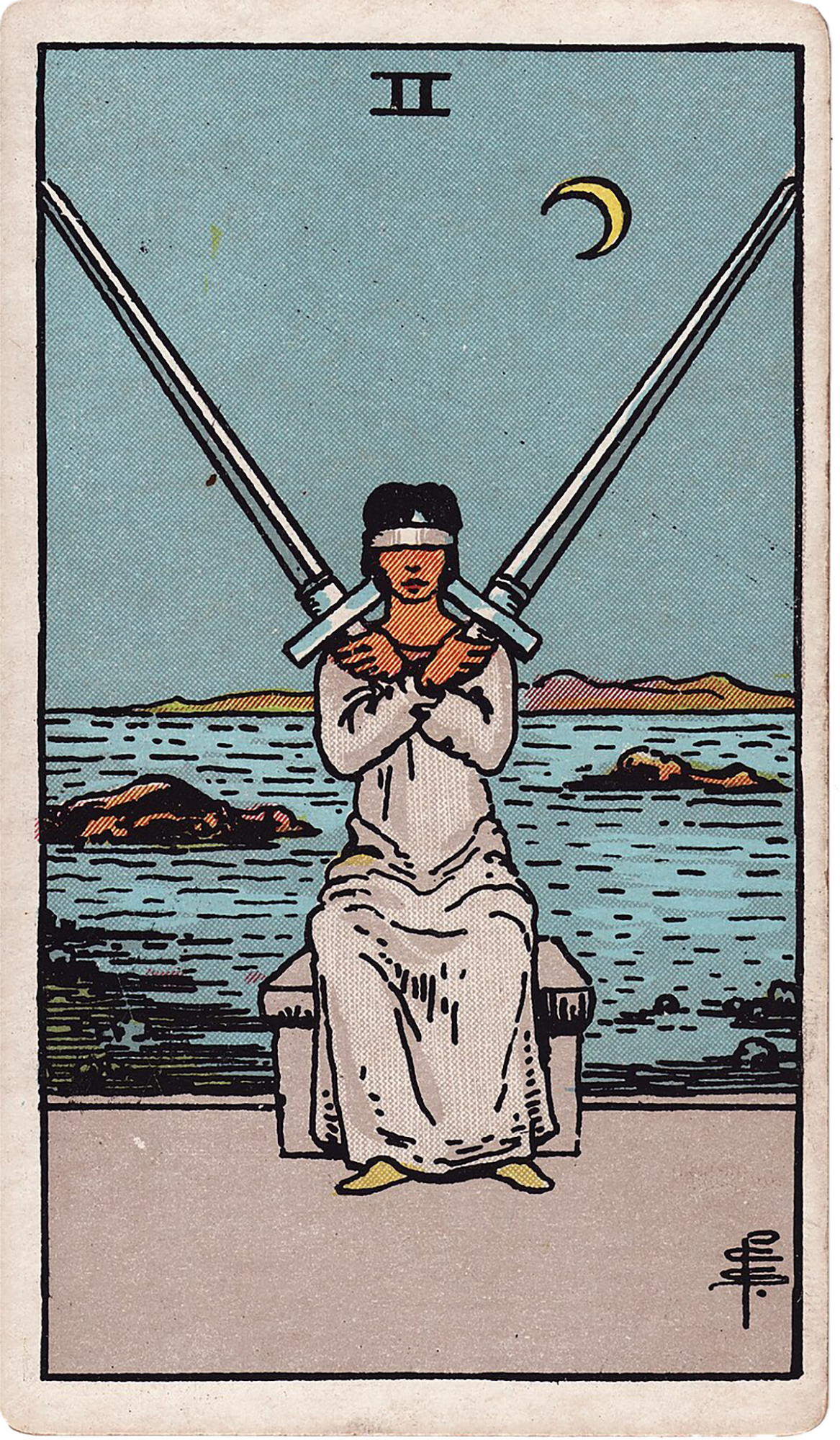 2 of Swords
Introduction: Why this combination matters
The Ace of Swords and the 2 of Swords form a compact lesson about the movement between insight and indecision. The Ace of Swords, in Rider‑Waite‑Smith imagery, is a hand emerging from a cloud holding a clear, double‑edged sword topped with a crown and laurel — a symbol of a new idea, a decisive conversation or a truth that arrives with authority. The 2 of Swords shows a blindfolded figure holding two crossed swords, seated before a body of water under a crescent moon — a visual shorthand for stalemate, internal conflict, and decisions held in suspension. Together they ask: when clarity or truth arrives, how does it meet a person who is not ready, unwilling, or unable to choose? For learners, this pair is ideal because it teaches how to read interaction, not just single‑card meaning.
Core meanings and key imagery to anchor every reading
To interpret the pair reliably, anchor to their most visible symbols. For the Ace of Swords notice: the hand from the cloud (an idea or impetus that feels like it originates outside ordinary deliberation), the crown and laurel (authority, the potential for victory or a new beginning), and the sword itself (clarity, cutting through confusion). For the 2 of Swords notice: the blindfold (the choice is happening internally or is intentionally avoided), the crossed swords (stalemate or balancing two options), the water and moon (emotions and subconscious influences that are neither clear nor fully accessible). Always begin by naming how these visible elements could play into the querent's story: is there a sudden idea (Ace) aiming to penetrate an emotional stalemate (2)? Is the blindfold preventing the sword's clarity from being used effectively?
How the cards modify one another: basic dynamics
There are a few reliable dynamics when these two cards appear together. Treat the combination as an interaction rather than two isolated signals. - Clarifying force meets suspended choice: The Ace of Swords can represent a breakthrough, question, or invitation to speak that illuminates the decision the 2 of Swords is blocking. In this dynamic the Ace is the energetic catalyst; the 2 names the resistance. - Clarity exposed but not acted upon: Sometimes the Ace gives the correct diagnosis or a perfectly logical plan—but the 2 shows that the querent is not emotionally ready or lacks full information. In that case the Ace is real but prematurely deployed. - Internalized conflict becomes articulate: The 2 of Swords often points to an inner stalemate; paired with the Ace this stalemate can become externalized into conversation or thought. The Ace helps the querent put the internal dilemma into words. - Weaponized truth versus constructive use: If the Ace is showing a harsh or misapplied intellect (a reversal or an overbearing tone), it can intensify the 2’s avoidance. A ‘truth’ may be used to pressure a choice rather than to enable one. When you read the pair, ask which of these dynamics fits the querent’s situation and which card is playing the active versus passive role. Positioning in a spread often makes that clear (see practical reading method below).
Upright and reversed permutations and their meanings
Because both cards are Swords, their reversals are about process problems rather than categorical opposites. Use reversals to highlight where energy is blocked, exaggerated, or immature. 1) Ace of Swords upright + 2 of Swords upright - Typical meaning: A new insight or decisive piece of information has arrived but the querent is still weighing or holding the decision. The image: a crisp sword wants to cut through the crossing blades of indecision. Practical interpretation: this is a call to gather missing facts, name the tradeoffs aloud, or commit to a decision ritual that uses the Ace’s logic without steamrolling emotions. 2) Ace of Swords reversed + 2 of Swords upright - Typical meaning: The ‘clarity’ is compromised — harsh logic, mental fog, or premature conclusions. The 2’s blindfold remains in place because the insight is not trustworthy or is being wielded as a weapon. Practical interpretation: slow down. Check assumptions, test information, and work on communication style. The image warns against forcing a choice by rhetoric or intimidation. 3) Ace of Swords upright + 2 of Swords reversed - Typical meaning: The stalemate is starting to break, perhaps reluctantly. The Ace’s clear thought or a frank conversation is a likely trigger for movement. Interpretation: focus on timing and pressure points — who must speak, when, and with what tone — to help the choice complete rather than swing into regret. 4) Ace of Swords reversed + 2 of Swords reversed - Typical meaning: Messy release or decision fatigue. The blocked clarity and the collapsing stalemate can produce impulsive choices, regret or volatile conversations. Interpretation: counsel caution and aftercare. Rebuild clarity by reestablishing boundaries, facts, and emotional processing. Always avoid treating reversal as merely ‘bad.’ Reversals map a process issue to be diagnosed: is the insight authentic? Is it being applied at the wrong time? Is the decision suppressed or about to snap?
Contextual readings: relationships
Relationships are classic settings for this pair: the Ace of Swords brings clarity about needs, truth, or an idea for change; the 2 of Swords shows how that clarity collides with indecision or emotional unreadiness. - If the querent asks about whether to speak up: Ace upright + 2 upright suggests the timing is right for clear, honest communication but warns that the other party (or the querent) may not be emotionally prepared. Use language that is direct yet sensitive to the 2’s emotional undercurrent (the moon and water imagery). - When contemplating commitment or separation: Ace upright can be the insight that reveals the main issue; the 2 upright is the hesitation. Here the reading often moves to process: what information or emotional work would remove the blindfold? If the Ace is reversed, the ‘truth’ may be a rationalization intended to justify an avoidance, so the querent should test whether their stated reasoning is compassionate and real. - If the 2 of Swords is reversed and the Ace is upright, a conversation or event will likely force movement. Help the querent prepare a script or cooling‑off plan to avoid reactive decisions — the Ace can produce a win, but it can also sever if wielded like a sword rather than a scalpel. Anchor interpretations to the imagery: encourage the querent to picture the blindfold and the water — what emotions are submerged? The Ace’s crown asks: who earns the authority to speak, and from what place of integrity?
Contextual readings: career and decision making
In professional contexts the pair often maps to a strategic insight meeting operational hesitance. - New idea versus organizational paralysis: Ace upright suggests a strategic proposal or a clear email/argument that could move a project forward. The 2 upright indicates stalled meetings, incomplete data or decision‑makers deferring. The reading asks: what concrete steps will allow the sword to cut through administrative inertia? Consider framing: present the Ace’s idea in a way that addresses the 2’s missing information — add metrics, risk analysis, or stakeholder input. - Job choice or offer: Ace upright + 2 upright can mean a great offer or a clear reason to move but personal or financial hesitance keeps the person blindfolded. The image suggests weighing emotion (water) and intuition (moon) alongside logic. - If the Ace is reversed in career, watch for intellectual hubris, misread market signals, or arguments used to bully rather than persuade. The 2 reversed with Ace reversed warns of rushed exits or decisions made from exhaustion. Always cross‑check the Ace’s ‘clarity’ against external facts and the 2’s emotional readiness: a good strategy requires both correct logic and follow‑through.
Contextual readings: emotional and practical situations
Not every question is dramatic. The pair is equally useful for small, practical decisions and for inner emotional work. - Everyday decisions: When a querent asks about a practical question (should I enroll in a course, sign a lease, choose a contractor?), the Ace may signal a decisive piece of information (a missing clause found, a critical review) while the 2 says the querent is not yet comfortable committing. Suggest a checklist: what items must be resolved before signing? The Ace gives the priority; the 2 names the barrier. - Emotional processing: For inner work, the Ace can represent a sudden realization (“I’ve been minimizing my boundaries”) and the 2 shows the tendency to push it aside. Use the imagery: remove the blindfold through journaling, talk therapy, or a ceremony that externalizes the thought the Ace represents. - Health and self‑care: The Ace’s precision is useful for diagnosing a routine that needs to change; the 2 warns against avoidance. Practical approach: create a small experiment (two‑week trial) that lets you test the Ace’s logic while honoring the 2’s need for gradual movement.
Practical reading method: step by step
Here is a repeatable method for reading the Ace of Swords + 2 of Swords together in any spread. 1) Identify positions and temporal order. Which card sits in the present, which in the obstacle/advice slot, or does the spread place one on the left (past) and one on the right (future)? Position clarifies who is driving the dynamic. 2) Describe the images. Before leaping to meaning, say aloud: “Ace of Swords: a hand from a cloud, crown, laurel, sharp sword. 2 of Swords: blindfolded figure, crossed blades, water, moon.” This grounds your reading in the cards’ visible story. 3) Name active versus passive roles. Ask: which card is initiating change (active) and which is receiving or resisting it (passive)? An Ace in an advice slot is active; a 2 in an obstacle slot is resisting. 4) Ask three clarifying questions: a) What does the Ace most want? (truth, decisive talk, new plan). b) What does the 2 most need? (time, information, emotional readiness). c) What would a responsible next step look like? Use these to craft practical counsel. 5) Check reversals as process diagnostics. If either card is reversed, treat that as a signal about the quality of the insight or the nature of the stalemate (see permutations above). 6) Weigh risks and timing. The Ace can be powerful and cutting; examine whether the timing is safe and whether consequences have been considered. The 2’s presence makes timing especially important. 7) Offer steps, not verdicts. Translate the reading into a small plan: what to say, who to consult, what evidence to gather, or an emotional practice to remove the blindfold. 8) Close with a reflective question for the querent: often the best reading ends with an actionable question they can sit with for a day or two before deciding.
Sample readings: three realistic scenarios
Example 1 — Relationship, Ace upright + 2 upright Scenario: Querent wonders whether to raise concerns about patterns with their partner. Reading: The Ace of Swords indicates a clear point to be made — a succinct observation about boundaries that, if voiced, could change the pattern. The 2 of Swords upright shows the querent is afraid of the emotional reaction and so has been holding the issue inward. Advice: prepare a short, specific statement that names behavior and the desired change; allow time afterwards for processing rather than demanding an immediate decision. Example 2 — Career, Ace reversed + 2 upright Scenario: Querent considering pushing for a bold reorg at work. Reading: Ace reversed warns the proposed ‘clarity’ might be built on assumptions or aggressive rhetoric. The 2 upright shows leadership is stalling, not because they lack intelligence, but because voices of concern or missing data exist. Advice: gather objective metrics and reframe proposals to avoid sounding accusatory; run the idea by a neutral colleague before presenting. Example 3 — Personal decision, Ace upright + 2 reversed Scenario: Should the querent accept an urgent relocation? Reading: The 2 reversed suggests the stalemate is breaking — pressure or circumstances are forcing a choice. The Ace upright implies there is clear reasoning and a logical case for moving. But because the stalemate ends under pressure, advise a pause to check emotional readiness: build a contingency plan and set a review date post‑move. Each sample ties back to imagery: the Ace’s crown and sword represent the clarity and authority available; the 2’s blindfold, moon and water highlight what needs illumination or compassionate timing.
Common mistakes and how to avoid them
Learners often fall into reading traps with this pair. Watch for these errors: - One‑card thinking: treating the Ace as automatically the solution and ignoring the 2’s need for process. Remedy: always ask what the blindfold hides before recommending action. - Reversal absolutism: assuming reversed cards are purely bad. Remedy: reverse indicates a quality of process to diagnose (misapplied logic, avoidance, decision fatigue). - Overvaluing intellect: because both cards are Swords, readers sometimes privilege rational solutions and neglect emotional work. Remedy: let the 2’s water and moon imagery demand attention to feelings and timing. - Skipping positional context: failing to consider spread placement changes meaning. Remedy: always map cards to spread roles (past/present/future, obstacle/advice/outcome). - Forcing narrative closure: pushing for a definitive yes/no when the 2 suggests nuance. Remedy: offer staged steps and experiments rather than immediate verdicts. Finally, remember tarot is a language of symbols and advice, not a mechanical predictor. Use the Ace+2 to illuminate decision architecture: where to speak, what to check, when to wait.
Exercises and practice prompts for learners
To build fluency with this pair, practice these exercises: 1) Two‑card position drill: Lay Ace of Swords on the left as ‘insight’ and 2 of Swords on the right as ‘obstacle’. Write a one‑paragraph reading that ties image to action. Swap positions and note how meaning changes. 2) Journaling prompt using imagery: Look at the 2 of Swords image. Write a list of what the blindfold might be hiding. Then draw the Ace: what single sentence would cut through that list compassionately? Practice turning that sentence into a script. 3) Roleplay conversation: With a friend, practice delivering an Ace‑style clear statement while the friend responds as the 2 (hesitant, emotional). Notice tone and pacing adjustments that keep the sword constructive. 4) Reversal debugging: Pull the Ace reversed and 2 upright. Invent three scenarios where an insight could be misleading. For each, propose two factual checks that would test the Ace’s validity. These practices train you to move beyond definitions into applied skill.
Wrapping up: interpretive logic and ethical reading advice
Interpretive logic for this pair balances agency and readiness. The Ace of Swords often supplies agency — a speech, plan or clear perception. The 2 of Swords names readiness — the emotional, informational or temporal conditions that must be met. Your job as reader is to narrate how agency meets readiness, and to convert symbolic advice into pragmatic next steps. Ethically, be cautious about recommending immediate, irrevocable action when the 2 indicates unprocessed emotion. Encourage testing, small experiments and communication practices rather than exhortations. Anchor every suggestion to the cards’ imagery so the querent can see the reading’s logic: the crown suggests authority, the blindfold suggests inner work, the moon suggests hidden feelings. Readings are educational tools; teach querents how to use clarity responsibly and how to remove their own blindfolds when they choose.
Practice questions
• Where in my life do I feel like the blindfolded figure of the 2 of Swords?
• What single insight (Ace of Swords) have I ignored because I feared the consequences of choosing?
• When I feel pressured to decide, how can I test whether my clarity is genuine or a rushed rationale?
• What small experiment could I run this week to honor both clear thinking and emotional readiness?
• Who in my circle can help me turn the Ace’s idea into a safe, stepwise plan?
• If the Ace of Swords were advising me now, what would that single sentence be?
• What assumptions am I making that would change if I removed the 2 of Swords’ blindfold?
• How would I communicate a difficult truth compassionately so it isn’t experienced as attack?
Comments
Sign in to comment.
Continue learning
Interpreting the Dance of Justice and The Devil: Balancing Morality and Temptation in Tarot Readings
The combination of Justice and The Devil in tarot presents a profound exploration of morality, temptation, and personal accountability. This article unpacks how these cards influen...
Harnessing the Power of The Magician and Ace of Wands: Igniting Creativity and Manifestation in Tarot Readings
The combination of The Magician and the Ace of Wands in tarot readings offers a potent blend of creative energy and manifestation power. This article delves into the ways these car...
Understanding the Synergy Between The Empress and The Emperor in Tarot Card Combinations
This article delves into the intricate synergy between The Empress and The Emperor cards in Tarot, focusing on how their combined energies modify and enrich readings across various...
Decoding Transformation and Renewal with Death and The Star in Tarot Combinations
This article delves into the card combination of Death and The Star, two powerful Major Arcana cards from the Rider-Waite-Smith deck. It explores how their imagery and meanings int...
Balancing Ambition and Compassion with The Emperor and Queen of Cups in Tarot Combinations
This article delves into the nuanced Tarot card combination of The Emperor and Queen of Cups, emphasizing how their energies complement and challenge each other. By analyzing their...
Finding Emotional Healing and Renewal with The Star and The Moon Tarot Combination
This article examines the rich interplay between The Star and The Moon tarot cards when they appear together in a reading. Using the traditional Rider-Waite-Smith symbolism and the...
Unlocking Emotional Wisdom with The High Priestess and The Queen of Cups in Tarot Combinations
This article delves into the card combination of The High Priestess and The Queen of Cups, emphasizing their shared themes of intuition, emotional depth, and receptivity. By examin...
Unlocking Emotional Resilience with Strength and The Star in Tarot Combinations
This article delves into the Tarot card combination of Strength and The Star, revealing how their interplay highlights pathways to emotional resilience. Anchored in the Rider-Waite...
Unveiling Emotional Strength with Strength and The Queen of Cups in Tarot Combinations
This article delves into the dynamic Tarot combination of Strength and The Queen of Cups, emphasizing how these cards together illuminate emotional strength, compassionate boundari...
Unlocking Emotional Transformation with Death and The Moon Tarot Combination
This article explores the rich and complex interaction between the Death and The Moon tarot cards within the Rider-Waite-Smith tradition, focusing on their combined potential to un...