
Balancing Cash Flow Savings and Long Term Growth with the 2 4 and 7 of Pentacles
This article uses the 2 of Pentacles, 4 of Pentacles, and 7 of Pentacles as a single teaching set to explore the practical question of balancing cash flow, savings, and long-term investment. Anchored in Rider-Waite-Smith symbolism visible in the supplied images, the lesson shows how these three Pentacles cards modify each other in career, relational, household, and business contexts. You will learn a repeatable reading method for three-card Pentacles spreads, examples of upright and reversed dynamics, how to avoid one-card simplifications, and concrete steps a querent might take after a reading.
Read the cards together
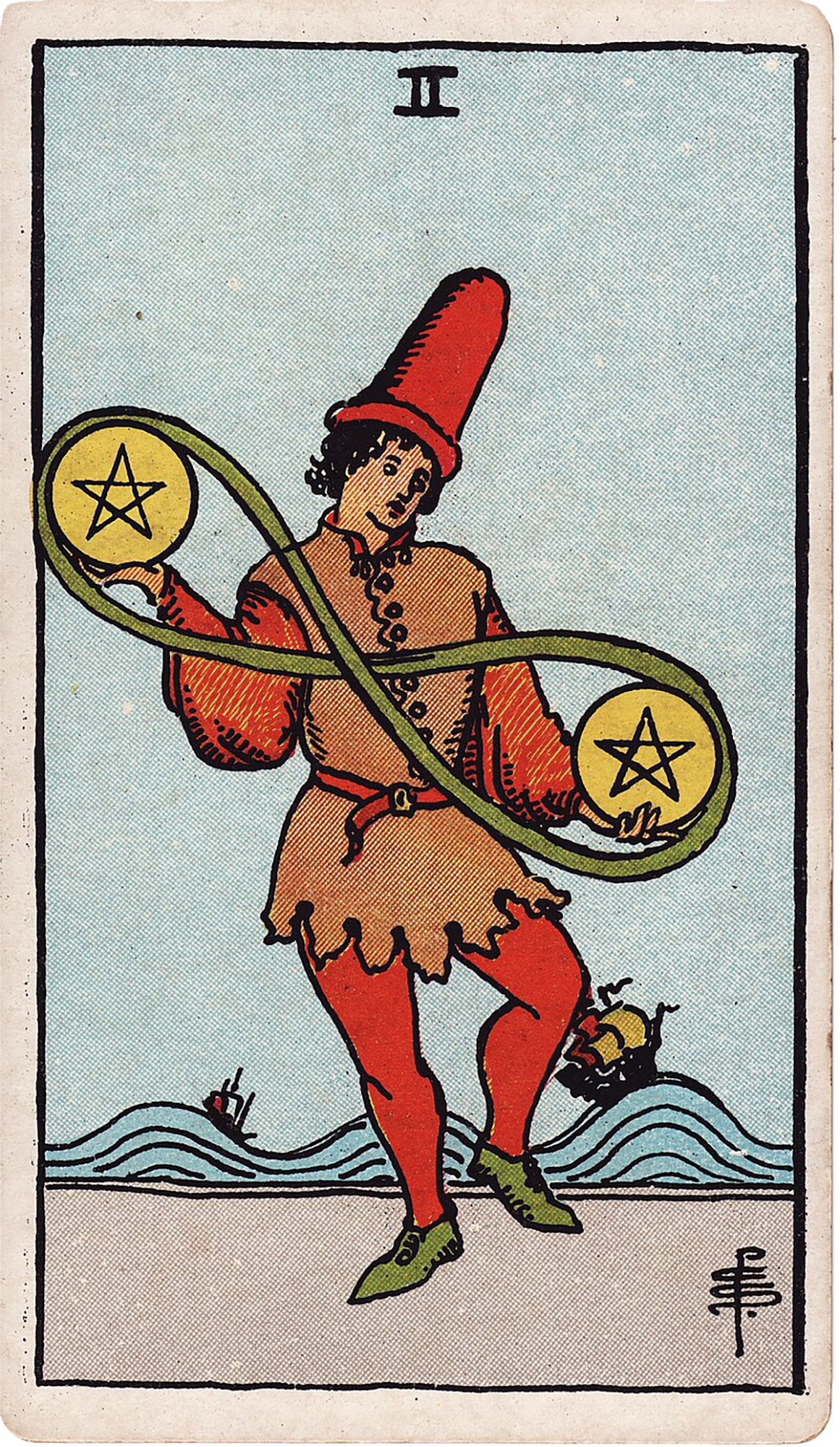 2 of Pentacles
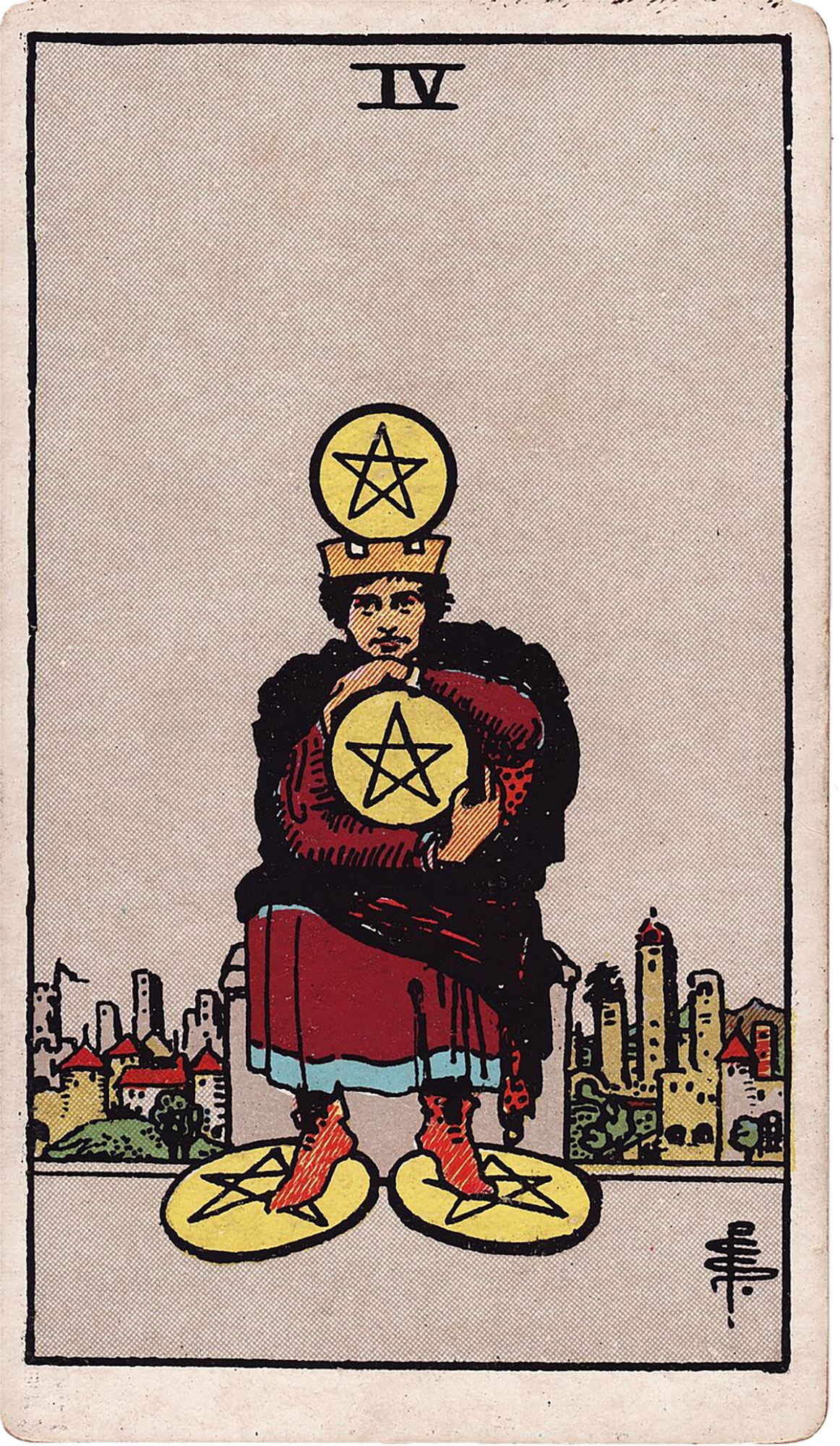 4 of Pentacles
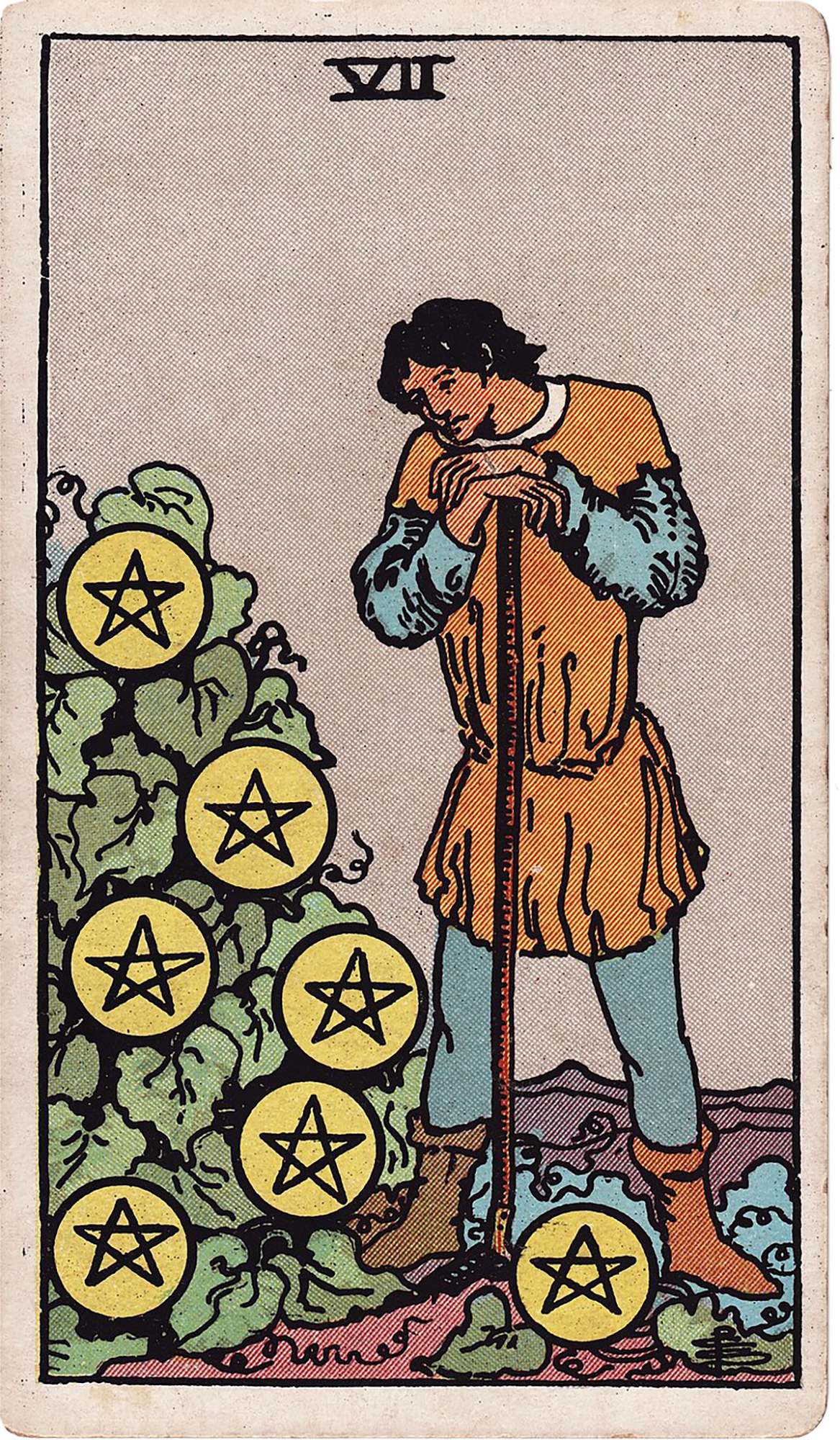 7 of Pentacles
Why these three cards matter for financial and practical questions
The 2 of Pentacles, 4 of Pentacles, and 7 of Pentacles form a compact narrative about motion, protection, and assessment — a sequence that maps neatly onto cash flow, savings, and long-term growth. In the Rider-Waite-Smith imagery the 2 of Pentacles shows an active figure juggling two coins on a ribbon shaped like an infinity symbol; the background ship riding waves reminds us that material life moves and can be unpredictable. The 4 of Pentacles presents a seated figure clinging to a coin, one beneath his foot and one on his crown — the posture reads like guarding and contraction. The 7 of Pentacles depicts a worker leaning on a hoe, pausing to look over a crop of pentacles: the image insists on review, patience, and honest appraisal of investment. Use the supplied images to recognize those gestures: the juggling movement, the locked posture, and the contemplative pause. When a querent asks about practical financial choices—how much to keep liquid, how much to save, whether investments are still worth the wait—these three cards together give a layered answer that ordinary single-card pulls cannot provide.
Reading technique for the 2-4-7 combination
Treat this trio as a small ecosystem rather than three independent messages. Practical technique steps: 1) Establish positions and timing. Use three clear positions that match the question: Cash Flow (short-term), Savings/Protection (mid-term), Growth/Investment (long-term). Label them explicitly for the querent. For example, position A = "This month’s liquidity," position B = "What you’re holding onto," position C = "The project or investment you’re growing." The imagery of each supplied card will map naturally to those positions. 2) Read sequentially and then relationally. Start by describing each card in its position using image-based language: the 2 of Pentacles' juggling motion, the 4 of Pentacles' closed hand and guarded chest, the 7 of Pentacles' leaning, patient stance. Then ask: what tension or flow runs between A → B, B → C, and A → C? Where is energy moving and where is it blocked? 3) Use clarifiers and conditional questions. If the 4 of Pentacles appears tight and the 7 looks doubtful, ask whether the querent is protecting capital so much that growth is starved. If the 2 is reversed (overstretched), consider whether cash flow volatility is forcing hoarding or premature harvesting. 4) Anchor in action. A reading should end with 2–4 concrete, realistic steps. The cards suggest the shape of those steps: juggle and rebalance, loosen or tighten holding, and re-assess delays or continuing investment.
How these cards modify one another: core dynamics
When these three Pentacles appear together they behave like components in a small economy. - 2 of Pentacles modifies 4 of Pentacles: The 2’s flexibility can either relieve the 4’s rigidity (teaching the querent how to keep funds moving even while protecting a core) or, if stressed, it can exacerbate the 4’s fear by creating more volatility to guard against. Look at the 2’s posture — if the figure in the image looks light and playful the energy leans toward adaptive rebalancing; if the ship in the background is stormy, the 2 can be warning of precarious juggling. - 4 of Pentacles modifies 7 of Pentacles: The 4’s protection may preserve capital that the 7 needs to mature, but it may also withhold necessary inputs. In the Rider-Waite image the figure clutches coins to his chest; reflexively holding cash can reduce the labor and resources required for future harvest. Ask whether saving now is buying time for growth or blocking it. - 2 of Pentacles modifies 7 of Pentacles: The 2’s active juggling informs whether the 7’s patient pause is wise or premature. If the 2 shows skillful balance, the 7’s wait is likely a strategic pause to let roots deepen. If the 2 is in reversal (overwrought), the 7 may be suffering from inconsistent effort and a poor return. Read them together to answer: is the system balanced (liquid funds circulate, savings protect a core, and long-term work is allowed to bear fruit), or is one function dominating (over-juggling, hoarding, or impatience) and therefore distorting the whole?
Upright and reversed nuances you should consider
Use upright and reversed meanings selectively. Upright 2 of Pentacles invites active rebalancing; reversed 2 draws attention to overcommitment or dropped balls. Upright 4 protects and creates stability; reversed 4 warns of hoarding or letting go. Upright 7 calls for patient evaluation; reversed 7 signals impatience, sunk-cost, or misread returns. Examples of nuance: - Upright 2, Upright 4, Upright 7: A healthy cycle. The querent can juggle monthly cash flow, place a secure reserve, and let long-term investments continue. Advice: formalize a budget rhythm, lock a small emergency fund, and schedule a quarterly review for long-term projects. - Reversed 2, Upright 4, Upright 7: Cash flow is chaotic and the querent responds by clinging to resources. Here the 4’s protection amplifies the 2’s stress; the 7 could be neglected. Advice: simplify transactions, reduce the number of active obligations, and protect a minimal liquid buffer while not cannibalizing investments that still have time. - Upright 2, Reversed 4, Upright 7: The querent is open to letting money circulate (reversed 4 suggests loosening control) and is actively managing flows; the 7 asks to evaluate whether recent loosened control supports growth. Advice: measure outcomes of newly released reserves; set guardrails rather than clenched control. - Any reversed 7: Ask whether impatience or sunk-cost thinking is driving the querent to either clench (4) or constantly rebalance (2). The reversed 7 often calls for recalibration: either accept a longer horizon or redirect resources.
Interpretations across contexts: career, relationship, household, and business
Career context: - 2 of Pentacles in the cash-flow position often reads as juggling projects, gig work, or multiple income streams. Look for the ship-in-rough-water detail: is the workload manageable or disruptive? The 4 in the savings position can represent salary hoarding, tight budgeting, or an employer’s micromanagement of resources. The 7 in the growth position asks whether time invested in a long-term role or skill will pay off. If the 4 is overly tight the employee may be staying out of fear rather than strategic saving; if the 2 is reversed they could be overextended and need to drop a project. Relationship/household finances: - The 2 may indicate balancing dual budgets, shared expenses or one partner handling payments while the other manages savings. The 4 highlights control dynamics around money; the image of the figure clutching coins may surface as possessiveness in a partner. The 7 asks whether joint projects (home upgrades, education funds) are being neglected because of imbalanced day-to-day managing. If the 4 is reversed, it could be a healthy loosening of control allowing mutual contributions. Business/entrepreneurship: - The 2 represents cash-management tools: rolling reserves, lines of credit, invoicing cadence. The 4 can be the founder’s reluctance to spend on growth or a defensively stocked runway. The 7 is your investor/effort review point: is the product or service fruiting? If the 4 is too rigid, hiring and marketing are starved; if the 2 is constantly reversed, the business is operating on reactive cash patches rather than systems. Emotional/practical context: - These Pentacles also speak to emotional economies: how much emotional energy to keep liquid (2), how much to preserve as personal boundaries (4), and when to commit time to slow-growing personal projects (7). The imagery helps: the juggling figure is emotional flexibility, the seated guardian is emotional contraction, and the leaning worker is contemplative patience.
Common reading mistakes and how to avoid them
Mistake 1 — Reading one card at a time: Treating the 2, the 4, and the 7 as separate canned meanings ("2 means balance, 4 means hoarding, 7 means patience") misses how they interact. Fix: always describe the relational movement: who is guarding whom, what the juggling is protecting, and what the assessment is evaluating. Mistake 2 — Moralizing the 4 of Pentacles: Many readers immediately label the 4 as "bad" (greedy) and the 2 as "good" (flexible). Fix: use image detail. The 4 can be a prudent emergency fund; the 2 can be nimble and responsible. Ask the client: what do you need to protect, and what can you let move? Mistake 3 — Ignoring scale and timeline: The 7 asks about long horizons; treating it as immediate action is a misread. Fix: ground the reading in explicit timeframes (30 days, 6 months, 3 years). Mistake 4 — Overemphasizing reversal as failure: Reversed cards show process stuckness or internal dynamics, not doom. Fix: locate where practice or policy needs change — reversed 2 might prompt a simplification plan, reversed 4 might invite therapy for scarcity anxieties, reversed 7 might require a metric-based reassessment.
Step-by-step sample reading (case studies)
Case 1 — Freelance rearrangement (Upright 2, Upright 4, Upright 7) - Spread: Short-term cash flow (2 of Pentacles), Reserve/savings policy (4 of Pentacles), Long-term project (7 of Pentacles). - Visual notes: The juggling figure looks steady, the seated figure sits calmly, and the worker is in a considered pose. - Interpretation: The querent is balancing multiple gigs but maintains a stable reserve and is patient about a longer creative project. Action: formalize invoicing cadence, convert a percentage of each payment to the reserve, and schedule three-month milestones for the long-term project. Case 2 — Small business under stress (Reversed 2, Upright 4, Reversed 7) - Spread: Cash flow problems and hoarding reaction. - Visual notes: The 2’s ship imagery is stormy, the 4 clutches hard, the 7 looks frustrated. - Interpretation: The business is overcommitted (failed juggling), management responds by tightening control, and the long-term project shows poor return or impatience. Action: simplify product lines, create a minimum viable cash buffer, and create a short-term KPI to decide whether to continue the larger investment. Case 3 — Household balance and generosity (Upright 2, Reversed 4, Upright 7) - Spread: The 2 juggles household budgets; the 4 reversed suggests loosening rigid control; the 7 calls for continued investment in family education. - Interpretation: The household has moved from rigid saving to a healthier flow, and the long-term fund (education, retirement) is worth continued contribution. Action: set rules for shared expenses, agree on an emergency fund floor, and automate regular transfers to the long-term account.
Practical exercises to develop skill with this combination
Exercise 1 — Imagery mapping: Look at the supplied images for five minutes each. Write a one-sentence story describing the figure in the 2 of Pentacles, the posture in the 4, and the gaze in the 7. Repeat this weekly when you do financial planning; the repetition trains you to read symbolism in context rather than relying on keywords. Exercise 2 — Three-position practice spread: Pull the 2, 4, 7 for three different real questions (your own, a friend’s, a fictional client). For each, write: one short-term action, one rule for reserves, one metric to evaluate the long-term project. Compare outcomes monthly. Exercise 3 — Reversal role-play: Shuffle until one card appears reversed. Practice asking clarifying questions for that reversal: what specifically is stuck? What can be simplified? What conversation needs to happen?
Integrating readings into client guidance and follow-up
A clear reading ends in an observable plan. After you interpret the 2-4-7 pattern, translate the insight into measurable steps: amounts, dates, or behaviors. Examples: "Move 5% of income into an emergency savings account each payday" (a 4-of-Pentacles-style rule); "Limit active gigs to three at a time and use a weekly ledger" (2-of-Pentacles management); "Revisit project status in six months with this specific metric: net revenue per hour" (7-of-Pentacles assessment). Encourage clients to treat the Tarot input as advisory: test the suggestion, track results, and return to the cards for a follow-up reading after a defined period.
Final interpretive logic: a checklist for balanced guidance
When you finish a 2-4-7 reading run through this checklist: - Movement: Where is money or effort flowing? Is the direction healthy? - Blockage: Which card is creating a bottleneck? (Rigid 4, chaotic 2, or stalled 7) - Timeframe: Is the client imposing too-short or too-long a timeline on the 7? - Actionability: Does the reading give 1–3 concrete steps? Are they measurable? - Emotional economy: Is fear (4) driving the other dynamics? Does the 2 indicate adaptability or distraction? If the answers reveal imbalance, recommend small experiments rather than large, irreversible moves. Tarot excels at illuminating patterns; the 2 of Pentacles, 4 of Pentacles, and 7 of Pentacles together show whether the querent needs to rebalance, protect, or patiently reassess. Use the imagery in the supplied cards — the ribbon, the coins underfoot, the leaning worker — as visual metaphors when you explain the reading to the querent so the lesson is memorable and embodied.
Practice questions
• When you look at the 2 of Pentacles image, what part of your life feels like juggling right now and how steady is the figure's balance?
• Does the 4 of Pentacles' guarded posture reflect a healthy emergency fund or a fear-based refusal to invest or share?
• What project or relationship in your life resembles the 7 of Pentacles' patiently tended crop and does it need more time or a new approach?
• Which of the three cards feels most like a blockage and what small test could you run to change that dynamic?
• How would you translate this combination's advice into one measurable step to try for the next 30 days?
Comments
Sign in to comment.
Continue learning
Interpreting the Dance of Justice and The Devil: Balancing Morality and Temptation in Tarot Readings
The combination of Justice and The Devil in tarot presents a profound exploration of morality, temptation, and personal accountability. This article unpacks how these cards influen...
Harnessing the Power of The Magician and Ace of Wands: Igniting Creativity and Manifestation in Tarot Readings
The combination of The Magician and the Ace of Wands in tarot readings offers a potent blend of creative energy and manifestation power. This article delves into the ways these car...
Understanding the Synergy Between The Empress and The Emperor in Tarot Card Combinations
This article delves into the intricate synergy between The Empress and The Emperor cards in Tarot, focusing on how their combined energies modify and enrich readings across various...
Decoding Transformation and Renewal with Death and The Star in Tarot Combinations
This article delves into the card combination of Death and The Star, two powerful Major Arcana cards from the Rider-Waite-Smith deck. It explores how their imagery and meanings int...
Balancing Ambition and Compassion with The Emperor and Queen of Cups in Tarot Combinations
This article delves into the nuanced Tarot card combination of The Emperor and Queen of Cups, emphasizing how their energies complement and challenge each other. By analyzing their...
Finding Emotional Healing and Renewal with The Star and The Moon Tarot Combination
This article examines the rich interplay between The Star and The Moon tarot cards when they appear together in a reading. Using the traditional Rider-Waite-Smith symbolism and the...
Unlocking Emotional Wisdom with The High Priestess and The Queen of Cups in Tarot Combinations
This article delves into the card combination of The High Priestess and The Queen of Cups, emphasizing their shared themes of intuition, emotional depth, and receptivity. By examin...
Unlocking Emotional Resilience with Strength and The Star in Tarot Combinations
This article delves into the Tarot card combination of Strength and The Star, revealing how their interplay highlights pathways to emotional resilience. Anchored in the Rider-Waite...
Unveiling Emotional Strength with Strength and The Queen of Cups in Tarot Combinations
This article delves into the dynamic Tarot combination of Strength and The Queen of Cups, emphasizing how these cards together illuminate emotional strength, compassionate boundari...
Unlocking Emotional Transformation with Death and The Moon Tarot Combination
This article explores the rich and complex interaction between the Death and The Moon tarot cards within the Rider-Waite-Smith tradition, focusing on their combined potential to un...