
Balancing Inner Courage and Temptation with Strength and The Devil
This article explores the interplay between Strength and The Devil, anchoring interpretation in the Rider‑Waite‑Smith imagery and practical card‑combination technique. Learners will get clear methods for reading these two cards together in relationship, career, emotional and practical contexts, plus upright and reversed permutations, common mistakes, and concrete steps to translate insight into action.
Read the cards together
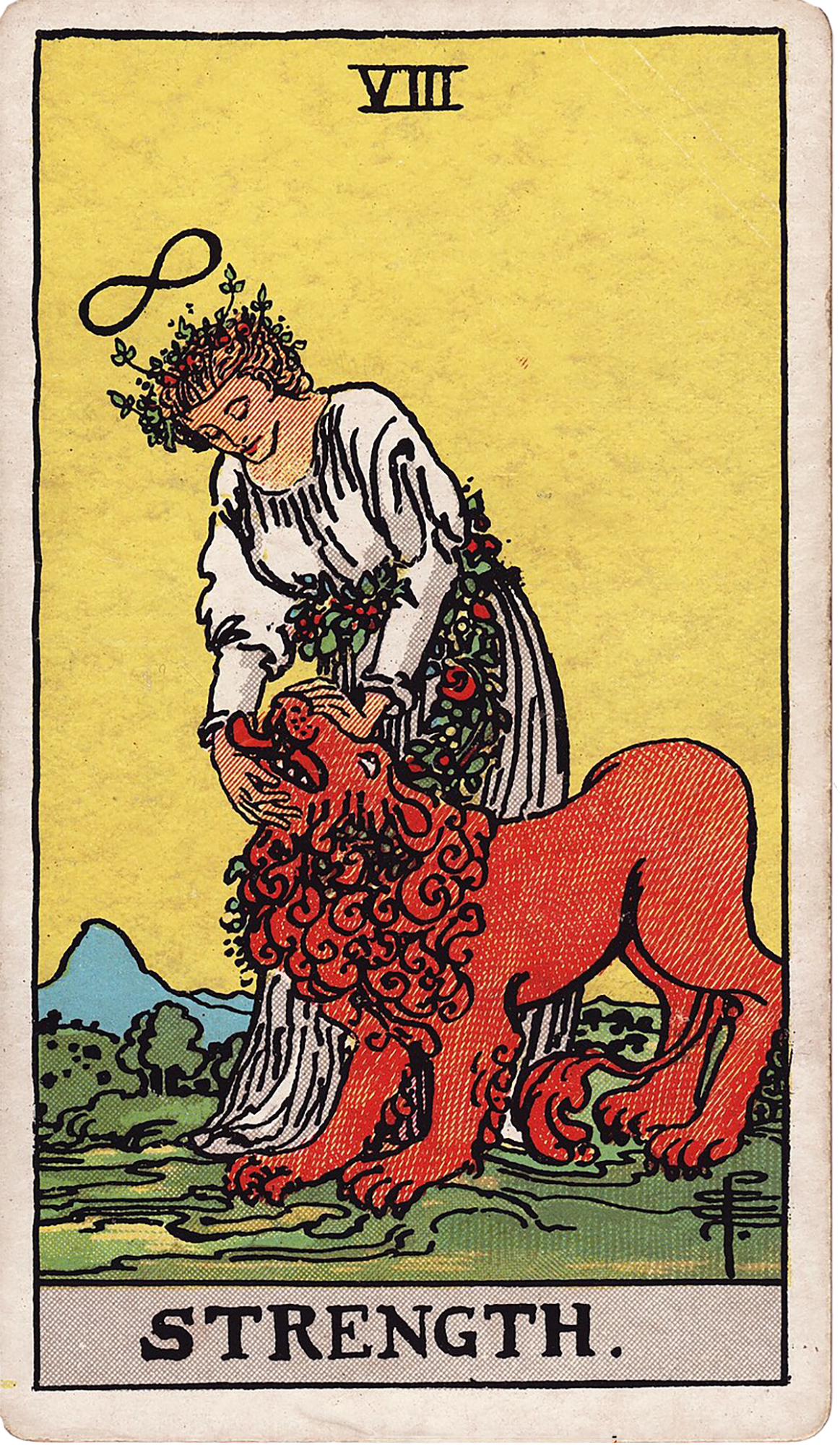 Strength
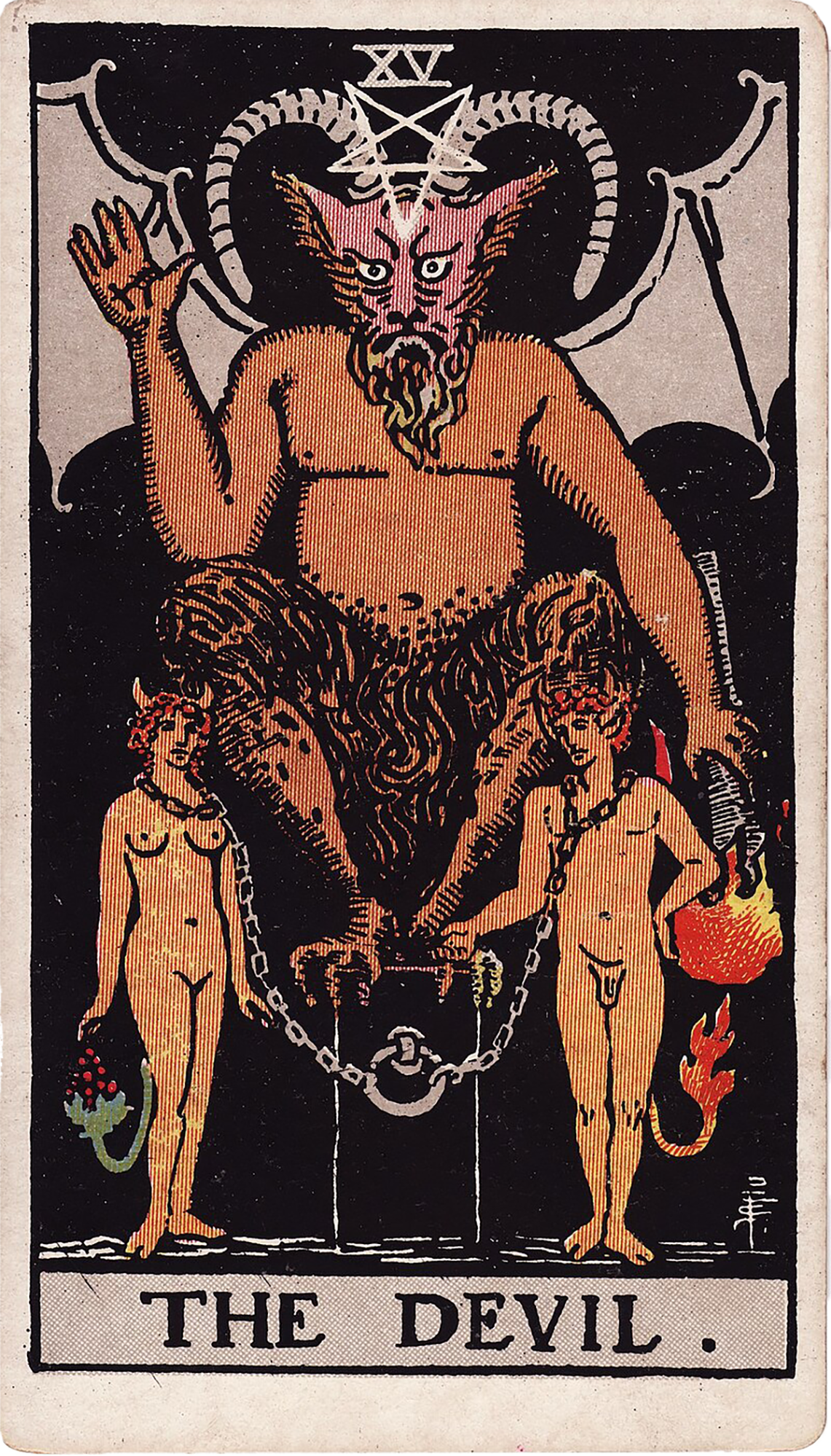 The Devil
Introduction to the Combination
Strength and The Devil is a compact but powerfully charged pairing. The images you will see — the gentle woman calmly holding the lion's jaws on the Strength card and the horned figure with chained human figures on The Devil — place two very different but related dynamics into conversation: inner courage and self-mastery on the one hand; attachments, temptation, and bondage on the other. Together these cards invite a reading that asks where bravery meets desire, where discipline meets temptation, and how agency can be recovered inside patterns that feel binding. This lesson treats the cards as partners in a scene rather than isolated signals. That framing changes practical advice, ethical nuance, and how you translate the spread into usable guidance for a querent or for personal reflection.
Core imagery and conventional meanings
Anchor your reading in the Rider‑Waite‑Smith imagery before you abstract. On Strength you should notice the woman gently controlling the lion's mouth, the lemniscate (infinity) above her head, her white robe and floral crown, and the mountains in the background. These visual elements suggest calm mastery, sustained patience, an internalized or spiritual power, and a continuity of character. Strength asks: where do you meet intensity with compassion rather than force? Where can patience, steady attention, and self‑respect redirect a difficult impulse? The supplied upright and reversed descriptions align with this symbolism: upright stresses meeting intensity with calm courage and using patience as power; reversed points to blocked access to that quality, self‑doubt, or misdirected control. On The Devil the immediate visuals are the horned, bestial figure, a heavy pedestal or throne, and two human figures bound by short chains, often wearing animalistic features themselves. There's also the inverted pentagram motif on the devil's head and dark bat-like wings — imagery of bondage, shadow impulses, and desires that can claim agency by promising immediate gratification. The Devil asks: what attachments, fears, or gratifications have become forms of bondage? The supplied upright description emphasizes naming unhealthy attachment and honest facing of desire; reversed emphasizes breaking patterns or denial that may be premature. Keep these images in front of you as you interpret how the two cards modify one another.
How card combinations work conceptually
Reading two cards together proceeds from a simple premise: each card can act as subject, modifier, environment, or outcome. To interpret Strength plus The Devil together, establish roles. Ask: which card reads as the active force in the situation and which reads as condition or obstacle? Roles are decided by spread placement, reading order, or the querent's felt resonance. Combination logic has several useful modes: - Amplification: both cards intensify the same theme (for example, Strength amplifying persistence in resisting temptation posed by The Devil). - Tension or opposition: one card offers remedy or containment to the other's problem (for example, Strength's self‑control countering The Devil's bondage). - Mutual revelation: each card helps reveal hidden aspects of the other (for example, The Devil exposing the shadow desires beneath Strength's composure or Strength revealing the personal courage needed to liberate from The Devil's chains). - Sequence or narrative: one card describes the current state and the other describes the necessary next step or likely consequence. Context and placement determine which of these modes applies. Never read each card as a separate sentence; aim for a phrase or short paragraph formed by both cards together. For example, "Strength steadying the heart against The Devil's lure" is a single interpretative line that honors both images.
Determining directional influence and prominence
Several practical cues help you decide which card functions as modifier: 1) Placement in the spread. If Strength occupies the 'advice' position and The Devil occupies the 'obstacle' position, Strength is active as remedy. 2) Reading order. When you draw Strength first and The Devil second, read the second card as the complication to the first. 3) Visual prominence. Which image grabs the querent or you first? The card that resonates more strongly often carries the primary voice. 4) Reversal status. A reversed card often signals a blocked or internalized energy and tends to be read as a condition that needs addressing. 5) Querent responses. Ask the person which card they feel toward; their emotional reaction helps define agency. Apply these cues together rather than singly. In a two‑card spread it is legitimate to let the cards swap roles mid-reading: perhaps The Devil appears first as the immediate problem, and Strength then appears as both an internal capacity and the long-term work required to resolve it. Express that change: "Right now you are bound by a pattern (The Devil); the path out is slow, steady courage (Strength)."
Relationship contexts
When Strength and The Devil appear together in relationship readings, the dialogue centers on attraction, boundaries, and inner work. Use the cards' imagery: the woman and lion on Strength suggest gentle authority and emotional steadiness; the chained figures on The Devil suggest co‑dependent dynamics or temptations that mask as intimacy. Possible interpretations and directions: - Strength (upright) with The Devil (upright): The relationship contains strong desire or compelling patterns that feel addictive or limiting. Strength advises calm honesty with both yourself and your partner. Practically, this signals that boundary work, patient conversation, and steady consistency will be necessary to loosen the chains. The Devil here names what is binding: possessiveness, jealousy, sexual compulsion, or mutual enabling. The work requires tenderness toward the lion inside — do not fight fire with fire. - Strength (upright) with The Devil (reversed): There is potential escape from a toxic habit or attachment, but it may be fragile. Strength here says use compassion and courage, not shame, to help the other person or to leave. The reversed Devil sometimes signals denial or premature declarations of freedom; Strength warns against naive rushes and encourages a stepwise plan. - Strength (reversed) with The Devil (upright): The relationship theme is likely that the querent's inner courage is depleted or misdirected; they may be using force, people-pleasing, or suppression to keep the relationship intact while The Devil's patterns assert control. The reading often points to the need to restore inner strength before attempting to disentangle from harmful dynamics. - Both reversed: This combination can be a call to inner work. Shame, secrecy, and failing boundaries may be feeding each other. The reading should focus on small measurable steps to restore agency (therapy, boundary negotiation, accountability), not dramatic pronouncements.
Career and work contexts
In professional readings, Strength and The Devil interrogate integrity, ambition, and what you tolerate for success. - Strength upright with The Devil upright: You may be in a job that offers power, money, or addictive reward structures but asks you to compromise values or become bound by toxic conditions (long hours, exploitative relationships, unethical shortcuts). Strength recommends steady boundaries, patience with the process of change, and honest negotiation. Ask where courage could replace blaming or passive endurance. - Strength upright with The Devil reversed: This can indicate breaking free from a habit of overworking or from workplace cultures that feel controlling. Strength helps you maintain professional composure while you assert your needs. The reversed Devil cautions: don’t confuse leaving with escaping without a plan. - Strength reversed with The Devil upright: Risk of burnout or coercive pressure. You may be trying to control outcomes through force or suppression rather than honest leadership. The Devil shows where you feel trapped — by a title, reputational fear, or financial dependency. The reading should prioritize restoring personal resourcefulness (rest, boundary setting, skill refresh) before making big moves. In all career readings, convert symbolic insight into tactical steps: which conversations to have, which metrics to protect (work‑life boundaries, health), and what timeline is realistic for change.
Emotional and practical life contexts
The combination also lends itself well to inner work: habits, addictions, shame, compulsions, courage-building routines, and practical decision-making. - Practical interpretation: The Devil identifies the specific habit or attachment — smoking, compulsive spending, an unhealthy pattern of thinking — and Strength maps the inner resources required to change it: patience, self-stewardship, and consistent small acts rather than dramatic gestures. - Emotionally: Strength indicates the capacity to feel and hold intensity (like grief, anger, or longing) without being consumed by it. The Devil shows where emotion is turned into avoidance or numbing. Read them together as a treatment plan: name the attachment, map a small behavioral experiment to reduce its power, and commit to daily practices that re-train your nervous system (breathwork, micro-boundaries, accountability partners). - The Devil reversed in this context is promising but cautious — it may mark the beginning of separation from the pattern that requires continued Strength to avoid relapse. Strength reversed shows where self-criticism or willpower-only approaches will likely fail; the corrective is gentler, identity‑based practice instead of punitive measures.
Upright and reversed permutations with examples
Work with actual-looking mini-readings to show how to synthesize. Example A — Both Upright (Relationship): You pull Strength upright and The Devil upright in a two-card spread where Strength is on the left and The Devil on the right. Interpretation: "You have more composure and patience than you realize (the woman with the lion), and that capacity is what will help you see and name the attachments in this relationship (The Devil). This is not a quick fix; use steady boundaries and direct conversations rather than dramatic exits or blaming." Example B — Strength upright, The Devil reversed (Career): The querent draws Strength in the present position and The Devil reversed in the outcome. Interpretation: "You are cultivating the temperament (gentle authority, calm fortitude). The Devil reversed warns that you are in the early stages of freeing yourself from an enmeshing plan at work. Proceed, but plan finances, notice where denial could cause premature celebration, and enlist practical supports." Example C — Strength reversed, The Devil upright (Personal habit): Strength reversed in problem position, The Devil upright as obstacle. Interpretation: "Right now, your inner reserve is fraying; you may be trying to muscle through by force. The habit (The Devil) remains powerful because it is fed by either shame or avoidance. Begin with restoration activities and remove triggers; don't rely on willpower alone." Example D — Both reversed: This combination often indicates a quieter, more internal crisis: shame and self-doubt have replaced courage, while denial or secretive repetition continues. The practical guidance is therapeutic and stepwise: compassionate accountability, small lived experiments, and time‑framed supports (12‑step, therapy, coaching).
Technique and practical method for readings
A reliable short protocol helps you deliver useful readings when these two cards appear: 1) Ground and name the question. Clarify whether the querent wants advice, insight, or prediction. Two cards lend themselves well to advice or clarifying a blockage. 2) Note placement and reading order. Decide roles: which card is obstacle, which is help, or do they describe current state and next step? 3) Read images aloud. Invite the querent to describe what they notice in the woman, the lion, the chains, or the chained figures. Shared visual noticing ties interpretation to the cards rather than your projection. 4) Translate to a one‑sentence synthesis. Combine the two card meanings into a single guiding line: e.g., "Gentle courage is the lever for untying the patterns that keep pulling you back." 5) Translate into 2–3 concrete actions. Example actions have a timeframe and measurement: "Practice a 10-minute grounding ritual every morning for two weeks; set one clear boundary at work this week and journal the outcome; identify one trigger and avoid it for 72 hours to test whether the urge weakens." Keep the actions consistent with the Temperament shown on Strength (small, steady, compassionate). 6) Check for reversals and emphasize process. If either card is reversed, frame it as an internal condition or a timing issue rather than doom. Reversed cards tell you where to be gentle, where the skill is blocked, or where denial might be in play. 7) Offer next steps for follow-up. Suggest a repeat draw in two weeks or a targeted spread (for instance, "What I can do" / "What binds me") to track changes.
Common mistakes and how to avoid them
These two cards easily invite simplistic moralizing or binary thinking. Avoid the following pitfalls: - Mistake: Treat Strength as 'good' and The Devil as 'bad.' Instead, read them as energies with useful information. The Devil can reveal what you must face; Strength can show how you will meet it. - Mistake: Reading cards in isolation. Two cards are a conversation; articulate the sentence they form together. - Mistake: Over-literalizing The Devil as only addiction or sexual immorality. The Devil can signify any binding pattern — fear of failure, money habits, prestige addiction. - Mistake: Prescribing radical solutions when Strength suggests steady work. The lion image implies gradual taming, not dramatic suppression. - Mistake: Ignoring who the querent is in the image. Ask whether they identify with the woman on Strength, with the lion, or with the chained figures. That identification holds interpretive clues about agency and locus of change. To avoid these mistakes, always tie language to the imagery, offer small experiments rather than moral judgment, and ask the querent to choose which card feels like 'them' now.
Practical exercises and integration
To internalize the technique, try these exercises: - Visual pairing exercise: Lay the two cards side by side. Spend five minutes writing a one-sentence story that starts with the image on Strength and ends with the image on The Devil. Then write a one-sentence story in reverse order. Notice how sequence changes nuance. - Action mapping: For a real habit the querent wants to change, map The Devil onto the triggering context (time of day, people present, emotional state). Then design three micro-actions consistent with Strength's temperament (30 seconds of breath, a short boundary phrase, a 5-minute walk) and track success for a week. - Question reframing: Practice turning problematic statements into questions that the pair can answer, e.g., "How can I meet my urge without losing myself?" or "What small boundary would ease this pattern for three days?".
Closing integration
Strength and The Devil together do not give a single verdict; they describe a process. The woman with the lion reminds you that steady tenderness and inner stamina are often the real tools for disentangling from powerful attractions or patterns. The Devil reminds you where attention and honesty are required — name the pattern, map the triggers, stop glamorizing bondage. Read them together as a prompt to translate character into habit: small, patient, embodied actions that weaken chains over time. In practice, that looks like measured boundary setting, honest conversation, and the ongoing cultivation of courage rather than dramatic moralizing or instant freedom claims.
Practice questions
• Which of the two images — the woman with the lion on Strength or the chained figures on The Devil — do you most identify with right now, and why?
• What pattern or attachment does The Devil name for you specifically when you look at the card's imagery?
• In what area of life could a steady, patient approach (the Strength posture) be more effective than immediate action?
• If Strength is the remedy and The Devil the obstacle, what is one concrete, measurable step you could take this week to test that remedy?
• If the cards were reversed in your reading, what internal block or premature declaration might that reversal be signaling?
• When you feel compelled by desire or fear, what small ritual could help you introduce the woman’s calm presence before you act?
• How might you practice compassionate boundaries so they do not become another form of control?
• What supports (friends, therapy, accountability) could help you convert inner courage into sustainable change?
Comments
Sign in to comment.
Continue learning
Interpreting the Dance of Justice and The Devil: Balancing Morality and Temptation in Tarot Readings
The combination of Justice and The Devil in tarot presents a profound exploration of morality, temptation, and personal accountability. This article unpacks how these cards influen...
Harnessing the Power of The Magician and Ace of Wands: Igniting Creativity and Manifestation in Tarot Readings
The combination of The Magician and the Ace of Wands in tarot readings offers a potent blend of creative energy and manifestation power. This article delves into the ways these car...
Understanding the Synergy Between The Empress and The Emperor in Tarot Card Combinations
This article delves into the intricate synergy between The Empress and The Emperor cards in Tarot, focusing on how their combined energies modify and enrich readings across various...
Decoding Transformation and Renewal with Death and The Star in Tarot Combinations
This article delves into the card combination of Death and The Star, two powerful Major Arcana cards from the Rider-Waite-Smith deck. It explores how their imagery and meanings int...
Balancing Ambition and Compassion with The Emperor and Queen of Cups in Tarot Combinations
This article delves into the nuanced Tarot card combination of The Emperor and Queen of Cups, emphasizing how their energies complement and challenge each other. By analyzing their...
Finding Emotional Healing and Renewal with The Star and The Moon Tarot Combination
This article examines the rich interplay between The Star and The Moon tarot cards when they appear together in a reading. Using the traditional Rider-Waite-Smith symbolism and the...
Unlocking Emotional Wisdom with The High Priestess and The Queen of Cups in Tarot Combinations
This article delves into the card combination of The High Priestess and The Queen of Cups, emphasizing their shared themes of intuition, emotional depth, and receptivity. By examin...
Unlocking Emotional Resilience with Strength and The Star in Tarot Combinations
This article delves into the Tarot card combination of Strength and The Star, revealing how their interplay highlights pathways to emotional resilience. Anchored in the Rider-Waite...
Unveiling Emotional Strength with Strength and The Queen of Cups in Tarot Combinations
This article delves into the dynamic Tarot combination of Strength and The Queen of Cups, emphasizing how these cards together illuminate emotional strength, compassionate boundari...
Unlocking Emotional Transformation with Death and The Moon Tarot Combination
This article explores the rich and complex interaction between the Death and The Moon tarot cards within the Rider-Waite-Smith tradition, focusing on their combined potential to un...