
Balancing Rapid Action and Overload with Ace of Wands 8 of Wands and 10 of Wands
This lesson explores how the Ace of Wands, 8 of Wands and 10 of Wands form a single story about impulse, acceleration and burden. Learn to read their visual symbols from the Rider‑Waite‑Smith tradition, avoid one-card literalism, work with upright and reversed positions where useful, and translate the combination into concrete, compassionate guidance across relationship, career and practical life contexts.
Read the cards together
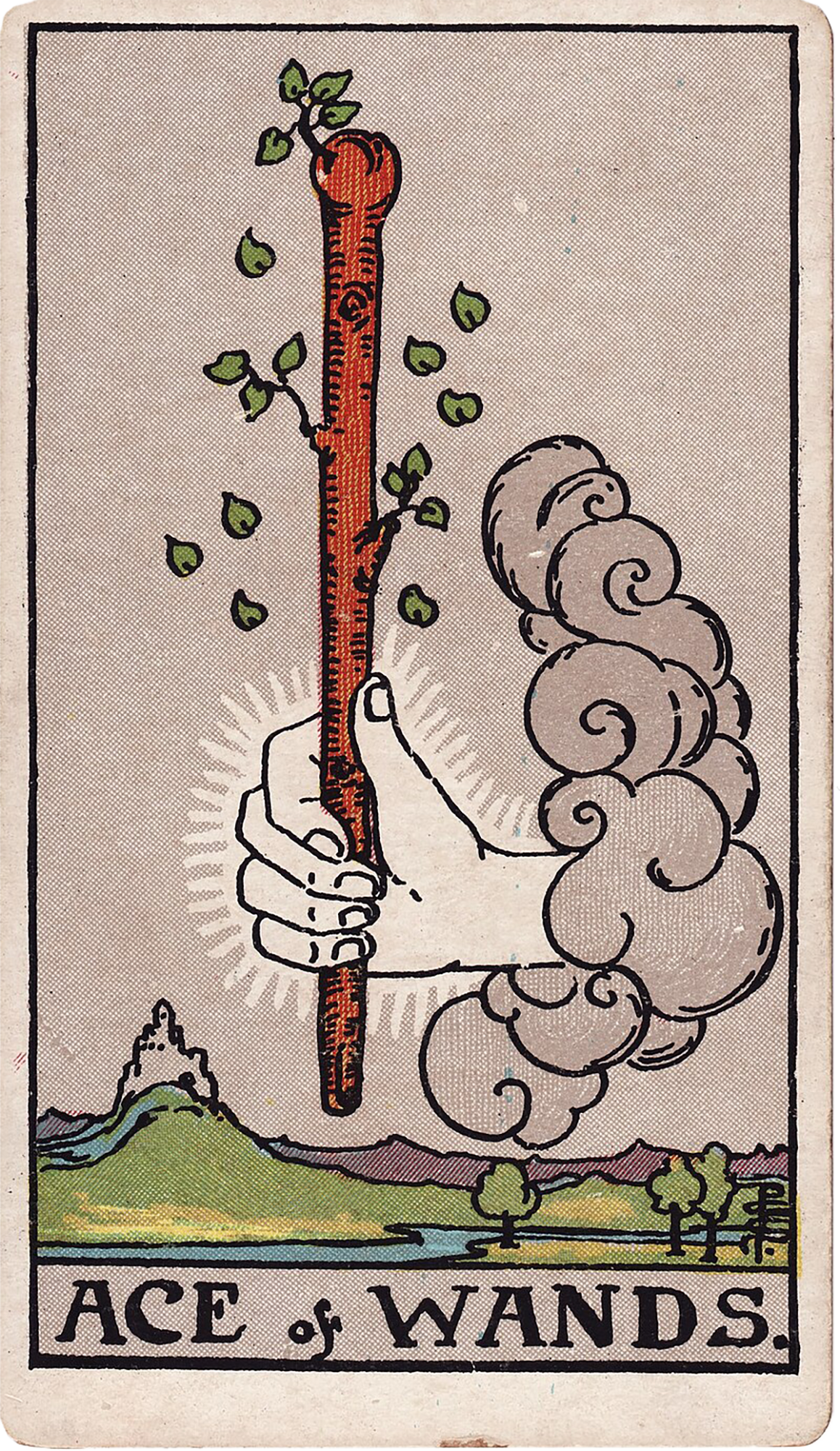 Ace of Wands
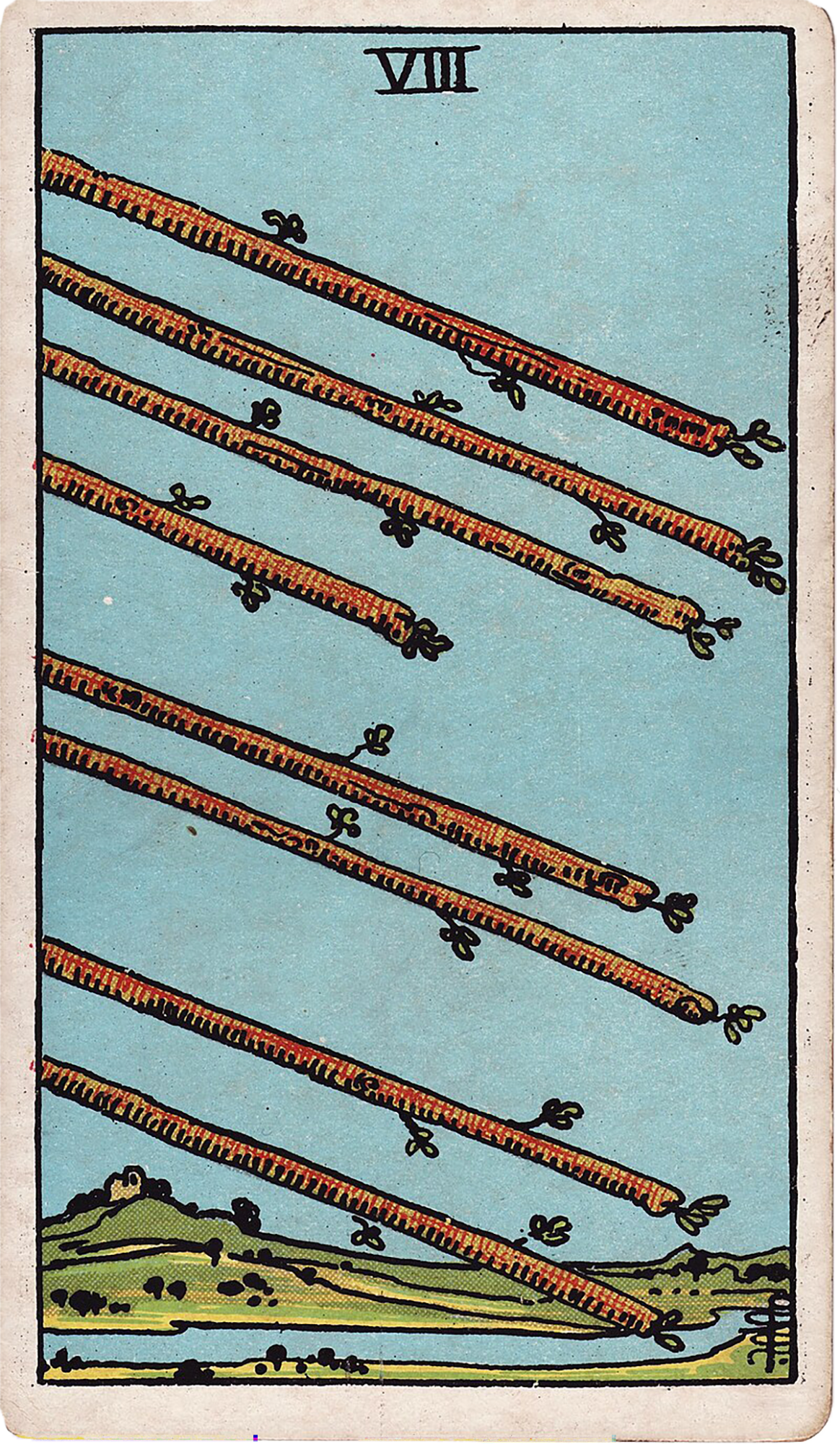 8 of Wands
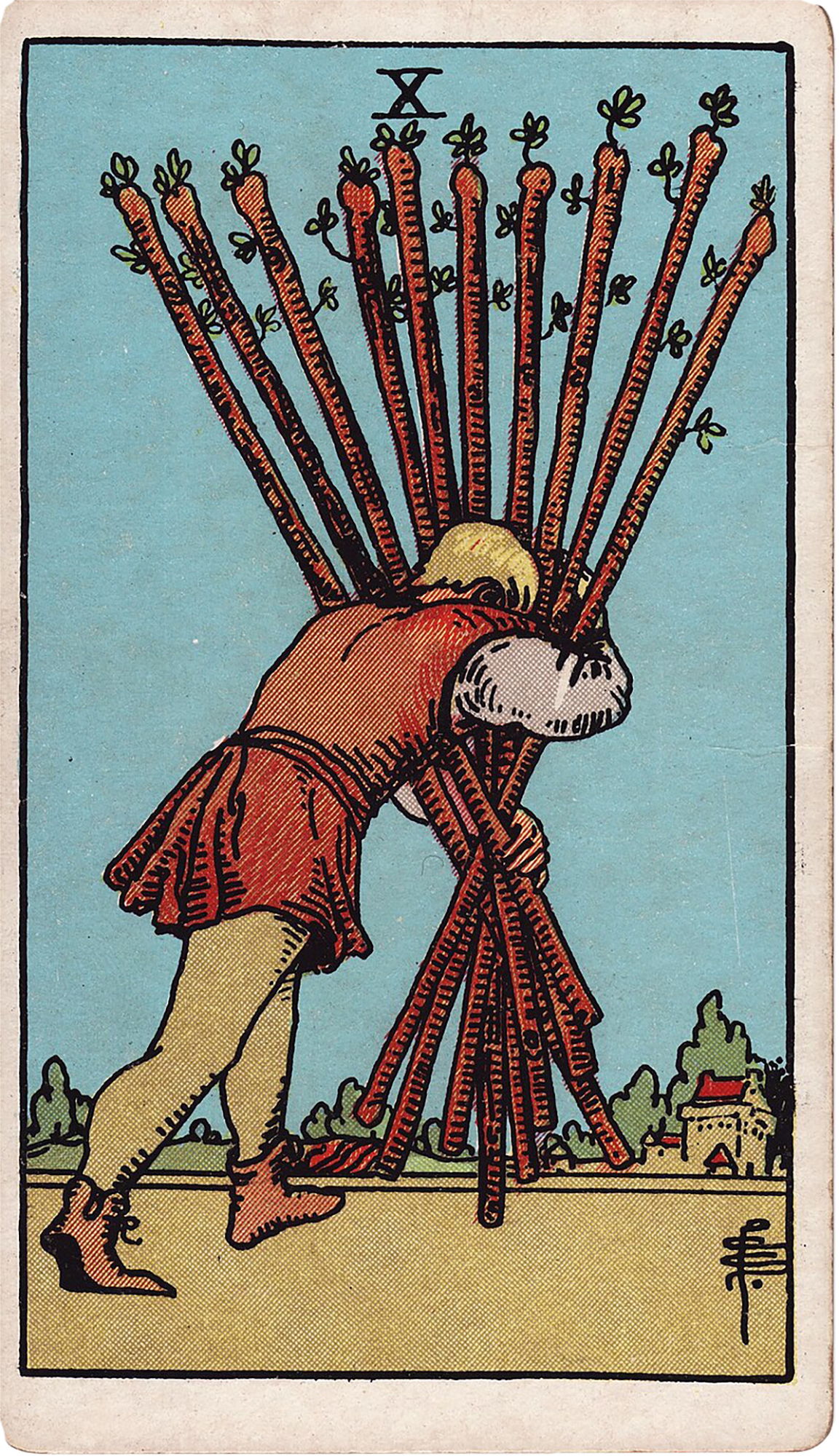 10 of Wands
Introduction and learning goals
This article teaches you how to read the Ace of Wands, 8 of Wands and 10 of Wands as a coherent combination rather than as isolated meanings. These three Wands cards commonly appear together when action, speed and responsibility interact—sometimes productively, sometimes destructively. By the end of this lesson you will be able to: (1) read the three cards as phases of a process (initiation, momentum, load), (2) identify how each card modifies the others in relationships, career and emotional/practical situations, (3) use imagery and RWS symbolism to ground your interpretation, and (4) apply a reproducible reading method that avoids the simplistic 'one card = one forecast' trap.
Visual anchors and Rider‑Waite‑Smith symbolism
Anchor your reading to the pictures on these specific cards. Rider‑Waite‑Smith images give concrete cues you can ask the querent about. Ace of Wands: a single hand emerges from a cloud holding a budding wand. The hand in the cloud suggests a sudden, possibly divinely inspired impulse; the sprout on the wand implies a beginning that contains potential growth. 8 of Wands: eight wands fly across open air toward a distant ground—motion, trajectory, communication and alignment are foregrounded; the absence of obstacles in the image emphasizes speed and direct progress. 10 of Wands: a bundled figure carries ten heavy wands toward a clustered town or structures on the horizon; the image evokes weight, near completion but also imbalance and the need to offload or reorganize. Keep these three visuals in mind when combining the cards: Ace gives the spark, 8 gives the speed, 10 shows what happens when responsibility accumulates.
Core meanings and tonal ranges of each card
Summarize each card's practical range so you can hear how they layer. Ace of Wands (upright): the initial impulse to do, create or assert; a ripe opportunity that demands a first practical step. Ace of Wands (reversed): blocked or scattered inspiration, premature action, or waiting for perfect certainty. 8 of Wands (upright): rapid progress, messages, events aligning; clarity of direction matters. 8 of Wands (reversed): delays, crossed signals, rushing past necessary details. 10 of Wands (upright): accumulated duties becoming heavy; completion is possible but requires delegation, simplification or reallocation. 10 of Wands (reversed): collapse from overload, refusal to delegate, or finally dropping burdens that don't belong to you. These tonal ranges help you read modifier relationships: for example, an Ace of Wands next to an upright 8 of Wands accentuates fast-moving beginnings, while a reversed 8 of Wands between Ace and 10 can signal that momentum is misdirected and causing the accumulation prematurely.
How to avoid simplistic one‑card‑at‑a‑time readings
A common beginner mistake is to read each card as an independent sentence rather than parts of a paragraph. With Ace of Wands, 8 of Wands and 10 of Wands, treat them as sequential actors: who starts (Ace), who accelerates (8), who bears the end‑result (10). Ask: is the Ace initiating what's causing the load, or is the Ace an alternative possibility that would relieve the 10? Always link cards through verbs: the Ace sparks, the 8 propels, the 10 constrains. Use directional questions about agency, timing, and capacity. For example: Who triggered the current workload? Are communications (8) clarifying or overwhelming the responsibilities (10)? Are we trying to act (Ace) before resources are allocated? These questions force synthesis rather than separate dictionary definitions.
Combination dynamics: general patterns
Three broad patterns recur when these cards appear together: 1) Productive arc (Upright Ace + Upright 8 + Upright 10): a new project fires quickly and gathers everyone’s energy; success is likely but the team must reorganize before the final push or burnout. 2) Premature acceleration (Upright Ace + Upright 8 + Reversed 10): the impulse and speed are genuine, but the reversed 10 warns that collapse, refusal to delegate, or martyrdom could follow unless responsibilities are redistributed. 3) Blocked momentum leading to overload (Reversed Ace or Reversed 8 + Upright or Reversed 10): if inspiration or clear communication is blocked, momentum either stalls or becomes chaotic, and the ten of wands shows that someone will carry the weight—perhaps unnecessarily. Read combination dynamics as cause/effect chains and ask whose hands the wands belong to; Rider‑Waite imagery stresses the human figure in the 10 of Wands and the offered hand in the Ace—pay attention to agency and ownership.
Relationship context: passion, messages and responsibility
When these three cards appear in a relationship spread, read them as a short narrative about desire, pacing and emotional labor. Ace of Wands shows the spark—new attraction, idea for the relationship, or impulse to change dynamics. Use the image of the hand offering the budding wand to ask who made the offer and how it felt. 8 of Wands brings rapid developments: declarations, travel, quick decisions or sudden alignment. The flying wands invite questions about whether both partners are on the same trajectory. 10 of Wands introduces emotional labor: one partner may be carrying too much—planning, managing, or 'keeping things together'—as indicated by the hunched figure and the town the figure approaches. Upright pattern example: Ace upright, 8 upright, 10 upright suggests a relationship that ignites and moves fast; congratulations are possible, but plan how to share tasks and emotional load. If 8 is reversed between Ace and 10, ask whether rushed communication led to misunderstandings that now leave one partner overloaded. If Ace is reversed, the 'spark' may be unexpressed or blocked, and the 10 indicates someone taking on responsibility to compensate. Always ask: who is carrying the wands, and who will release them?
Career and project context: launch speed and unsustainable loads
In career or project readings these cards are almost textbook for launch → sprint → burn. Ace of Wands signals an opportunity, new role or initiative; the RWS bud suggests fertile beginnings that need concrete next steps. 8 of Wands brings tight timelines, approvals moving through, or a sudden influx of tasks—use the imagery of wands in flight to assess whether the project has a clear target. 10 of Wands warns that responsibilities can overwhelm the initiator or the team near delivery. If you see Ace upright + 8 upright + 10 upright, advise the querent to formalize delegation now, set realistic milestones and define exit criteria for tasks approaching completion. If 10 is reversed, probe for role clarity: is someone refusing to delegate because they fear losing credit? If 8 is reversed, timing advice shifts: slow down, set checkpoints, and correct communications before the workload compounds. Translate the 10 of Wands image into operational tasks: list which wands—meetings, documentation, stakeholder management—can be handed off.
Emotional and practical context: energy management and boundaries
Read these three cards as a lesson in managing psychic energy. Ace of Wands is the impulse to act when emotions are high; 8 of Wands shows that emotions can accelerate and become contagious; 10 of Wands surfaces when good intentions translate into unsustainable commitments. Use the visual contrast between the open hand of the Ace and the hunched carrier of the 10 to talk about boundaries: the Ace asks 'What do you want to try?', the 10 asks 'What are you now carrying that you didn't plan to carry?' If reversed cards appear, treat them diagnostically: a reversed Ace invites practices that regenerate inspiration (small reliable tasks, rituals), a reversed 8 suggests pausing to clarify messages, and a reversed 10 may indicate a necessary shedding of duties. Encourage practical steps like time‑boxing, negotiation scripts to hand tasks back, and micro‑yes/no decision points to prevent emotional spillover into overload.
Upright and reversed interplay for clearer diagnostics
Use reversals as modifiers rather than simply 'good' or 'bad.' Example patterns and what they signal: Ace reversed + 8 upright + 10 upright: a blocked inner spark is still triggering external acceleration—someone else may be initiating activity the querent doesn't feel aligned with, leading them to carry the resulting load. Ace upright + 8 reversed + 10 upright: there was a clear impulse, but miscommunication or logistical delays made work pile up. Ace upright + 8 upright + 10 reversed: rapid progress is happening but the 10 reversed might signal that the querent will collapse under pressure or will (finally) offload—ask which. Always test with clarifiers: Who is the likely carrier of the 10? Is the 8 sending messages to the right inbox? Where is the Ace's hand directed? These literal questions convert symbolic reading into adviceable next steps.
Practical three‑card reading method and scripts
A reliable method for these three cards is to assign functional positions rather than time slots: Position 1: Originizing impulse (Ace of Wands) — ask: What first action is calling? Position 2: Momentum and communication (8 of Wands) — ask: How is speed showing up and who is it affecting? Position 3: Burden and completion (10 of Wands) — ask: What needs to be organized, delegated or released? Use the following reading script: 1) Describe the image on the Ace of Wands and ask the querent who the offered wand might represent in their life. 2) Look at the 8 of Wands and ask whether there is a current rush of messages, travel, or decisions. 3) Point to the 10 of Wands and ask who is carrying the weight and whether the destination (village) is necessary. Then translate into action: identify one step the querent can do within 48 hours (small, practical), list two items to delegate this week, and name one boundary to reject. Use clarifying mini‑pulls if necessary: pull one card to show 'what to delegate' or 'who to communicate with.' Keep answers behavioral and timebound.
Common mistakes and troubleshooting
Watch for these pitfalls: 1) Reading sequence backwards: these cards often form an arc—start with the Ace, then the 8, then the 10—and flipping that flow can invert causal interpretation. 2) Equating speed with success: 8 of Wands is fast, not necessarily correct. Ask for verification and checkpoints. 3) Ignoring ownership: Rider‑Waite imagery invites questions about whose hands the wands are in. If you fail to assign responsibility you may miss the main advice (delegate). 4) Treating reversals as shame markers: a reversed 10 often points to a necessary release; don’t moralize. 5) Over‑specific timing: although the 8 of Wands can indicate rapid movement (days to weeks), timing depends on context; prefer action steps rather than fixed calendars. Fix errors by re‑anchoring to imagery, asking direct agency questions, and requesting the querent describe how the cards make them feel—this often clarifies whether the charge is internal or external.
Worked examples and sample readings
Example 1 — Career: Querent draws Ace of Wands upright, 8 of Wands upright, 10 of Wands upright. Read: a promising project (Ace) has launched and gained fast momentum (8); success is within reach but you or your team are accruing too many responsibilities (10). Guidance: nominate two tasks to delegate today, set a milestone meeting before the next rush, and break final delivery into discrete chunks so the 'ten' becomes manageable. Example 2 — Relationship: Ace reversed, 8 upright, 10 upright. Read: the querent feels blocked from expressing desire or taking initiative (Ace reversed) while things are moving quickly between partners (8); someone is taking on the emotional labor to keep pace (10). Guidance: practice a short script to name your need, ask for one small change from the partner, and make a plan to evenly share household or emotional tasks. Example 3 — Project hazard: Ace upright, 8 reversed, 10 upright. Read: good idea exists but miscommunications or logistical delays (8 reversed) mean tasks pile up on one person (10). Guidance: prioritize clearing communication channels, set clear acceptance criteria, and create a handoff plan for overloaded team members. Each reading converts symbols into verbs and practical steps—this is the core skill to teach your querent.
Teaching technique and how to bring this to learners
When teaching, use the images as prompts for role‑play: have students name who the hand in the Ace represents, act out the flying wands, or pantomime the hunched carrier. Encourage literal observations first (what do you see?) then metaphoric (what might that mean here?). Practice pulls where students must produce three actionable next steps based on the combination. Emphasize checking back: after the querent follows the 48‑hour step, reconvene to see whether the acceleration (8) increased and whether the load (10) shifted—tarot as iterative feedback, not a one‑time verdict.
Conclusion and ethical considerations
Ace of Wands, 8 of Wands and 10 of Wands together form a high‑energy choreography: a beginning that runs, and a result that may weigh someone down. Your job as a reader is to translate that choreography into questions of agency, communication and capacity. Always prioritize harm reduction: when you interpret the 10 of Wands as burden, ask whether the querent is at risk of burnout and advise concrete de‑escalation steps. Avoid deterministic language—present options and empower the querent with strategies drawn from the cards' imagery. Returning repeatedly to the hand, the flying wands, and the hunched carrier will keep your readings grounded and visually resonant for learners and querents alike.
Practice questions
• When you look at the Ace of Wands image, who or what does the offered wand represent in the querent's life?
• How does the direction and openness of the 8 of Wands' flight change your sense of timing or target?
• In the 10 of Wands image, what does the approaching town represent and could it be unnecessary?
• Which card in this combination most often requires immediate practical action and why?
• How would you rephrase a reading that sounds deterministic into options the querent can act on?
• What clarifying question will you ask first when these three cards appear together in a reading?
• If one of these cards appears reversed, how will you test whether that reversal is internal (feeling) or external (circumstance)?
• What small, time‑bound step can you suggest to a querent who has Ace upright, 8 upright and 10 upright?
Comments
Sign in to comment.
Continue learning
Interpreting the Dance of Justice and The Devil: Balancing Morality and Temptation in Tarot Readings
The combination of Justice and The Devil in tarot presents a profound exploration of morality, temptation, and personal accountability. This article unpacks how these cards influen...
Harnessing the Power of The Magician and Ace of Wands: Igniting Creativity and Manifestation in Tarot Readings
The combination of The Magician and the Ace of Wands in tarot readings offers a potent blend of creative energy and manifestation power. This article delves into the ways these car...
Understanding the Synergy Between The Empress and The Emperor in Tarot Card Combinations
This article delves into the intricate synergy between The Empress and The Emperor cards in Tarot, focusing on how their combined energies modify and enrich readings across various...
Decoding Transformation and Renewal with Death and The Star in Tarot Combinations
This article delves into the card combination of Death and The Star, two powerful Major Arcana cards from the Rider-Waite-Smith deck. It explores how their imagery and meanings int...
Balancing Ambition and Compassion with The Emperor and Queen of Cups in Tarot Combinations
This article delves into the nuanced Tarot card combination of The Emperor and Queen of Cups, emphasizing how their energies complement and challenge each other. By analyzing their...
Finding Emotional Healing and Renewal with The Star and The Moon Tarot Combination
This article examines the rich interplay between The Star and The Moon tarot cards when they appear together in a reading. Using the traditional Rider-Waite-Smith symbolism and the...
Unlocking Emotional Wisdom with The High Priestess and The Queen of Cups in Tarot Combinations
This article delves into the card combination of The High Priestess and The Queen of Cups, emphasizing their shared themes of intuition, emotional depth, and receptivity. By examin...
Unlocking Emotional Resilience with Strength and The Star in Tarot Combinations
This article delves into the Tarot card combination of Strength and The Star, revealing how their interplay highlights pathways to emotional resilience. Anchored in the Rider-Waite...
Unveiling Emotional Strength with Strength and The Queen of Cups in Tarot Combinations
This article delves into the dynamic Tarot combination of Strength and The Queen of Cups, emphasizing how these cards together illuminate emotional strength, compassionate boundari...
Unlocking Emotional Transformation with Death and The Moon Tarot Combination
This article explores the rich and complex interaction between the Death and The Moon tarot cards within the Rider-Waite-Smith tradition, focusing on their combined potential to un...