
Balancing Surrender and Clarity with The Hanged Man and Ace of Swords
This in-depth lesson explores how The Hanged Man and Ace of Swords combine to describe a dynamic between surrender and clarity. Anchored to Rider-Waite-Smith imagery, the article explains how the suspended perspective of The Hanged Man works together with the cutting truth of the Ace of Swords. You will learn interpretation logic, technique for multi-card synthesis, context-specific readings (relationships, career, emotional/practical decisions), common mistakes to avoid, and practical exercises to develop reliable, flexible readings.
Read the cards together
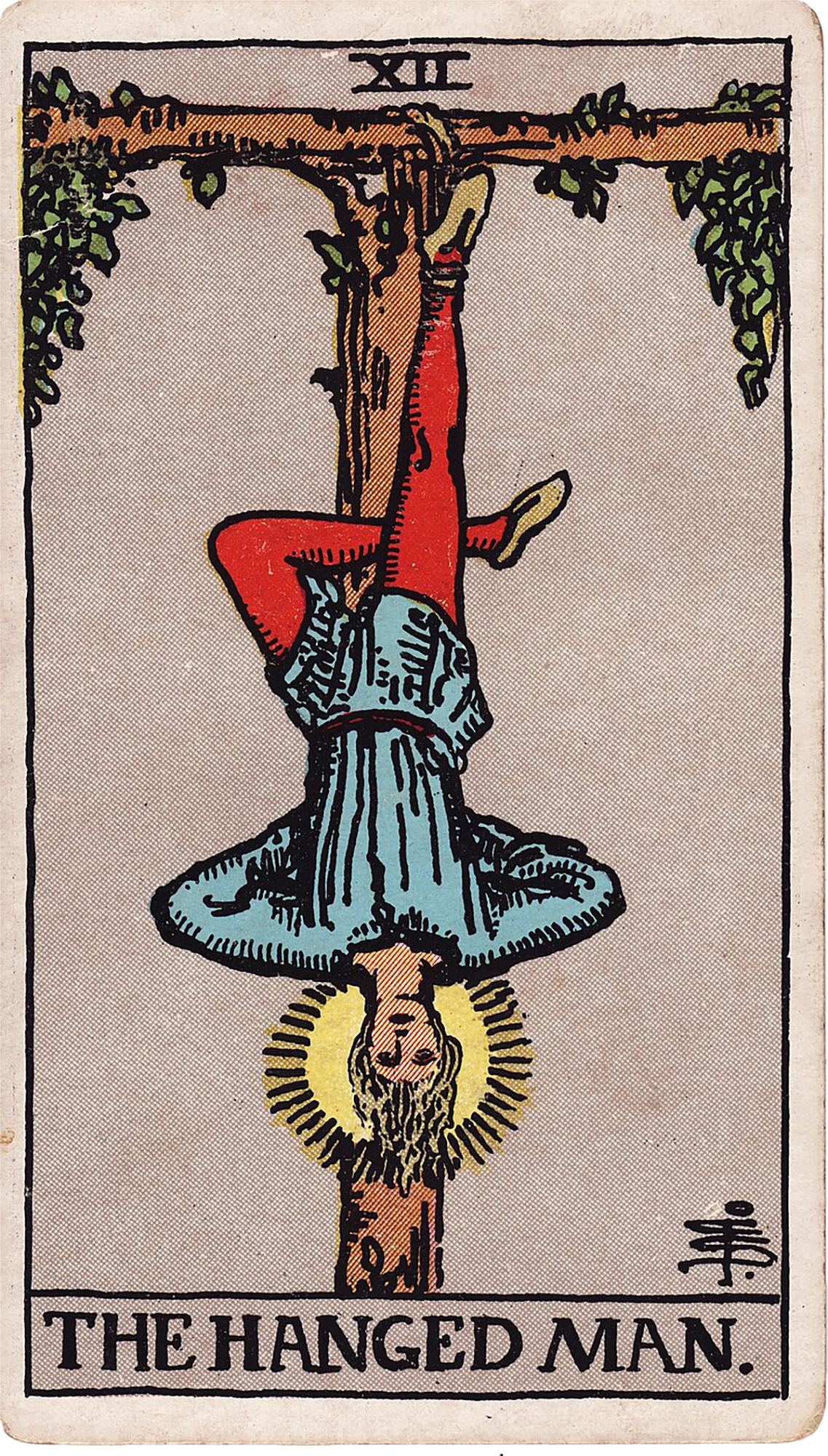 The Hanged Man
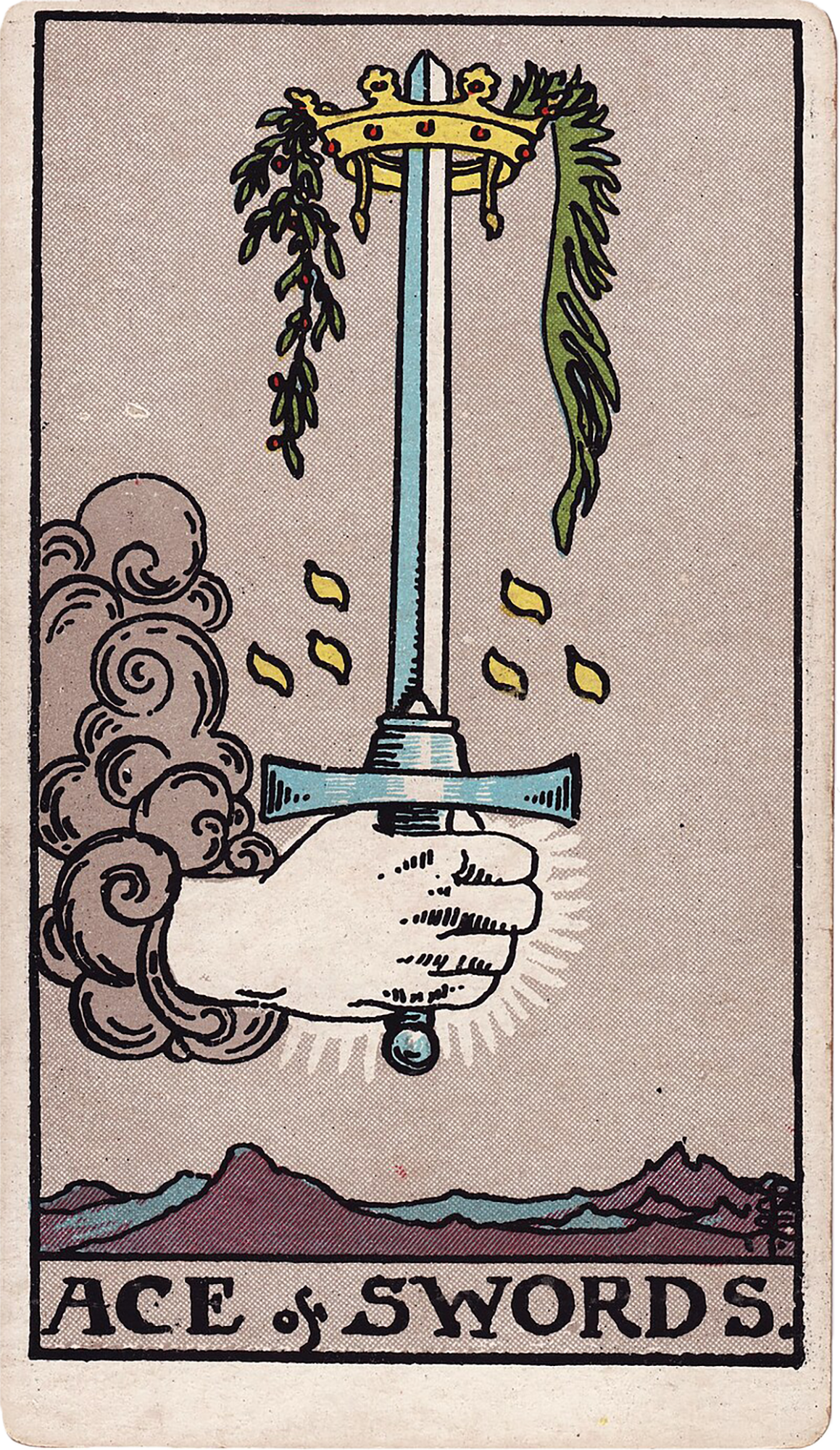 Ace of Swords
Introduction: Why this pairing matters
The Hanged Man and the Ace of Swords form a compact drama: pause and perspective meet decisive insight. The Hanged Man invites intentional suspension — a deliberate pause, release of control, and reorientation of vision. The Ace of Swords announces a breakthrough in thought, a clear question, or a decisive statement that can cut through confusion. Together they show how a change in stance (Hanged Man) can create the mental clarity or truth-telling moment described by the Ace of Swords — or conversely how a new idea or harsh clarity can force someone into a necessary pause. Readers learning card combinations need more than memorized lines. This lesson teaches you to read these two cards as a single interaction: what one card opens, the other qualifies. We'll use Rider-Waite-Smith symbolism and the supplied upright/reversed descriptions to keep interpretations anchored in the images you are seeing: the inverted figure with the halo in The Hanged Man and the hand holding an upright, crowned sword in the Ace of Swords.
Card portraits: close readings of the two images
Refer to the supplied images as you read these portraits. The Hanged Man (Rider-Waite-Smith based portrait): In the classic image a man hangs upside down by one foot from a T-shaped tree. He is calm, eyes open, with a glowing halo around his head. His leg arrangement — one bent behind the other — forms an asymmetric but contained posture. The hanging suggests surrender not as collapse but as a chosen vantage point. The halo announces inner illumination arising from the changed perspective. Upright meaning (as supplied) emphasizes deliberate pause, releasing control, and a transformed understanding; reversed meanings revolve around stagnation, martyrdom, or resistance to the pause. Ace of Swords (Rider-Waite-Smith based portrait): A hand emerges from a cloud, gripping an upright double-edged sword crowned with a laurel-wreathed crown. The imagery signals a new idea or decisive truth appearing as if delivered from beyond the ordinary mind. The sword is a cutting instrument: intellectual clarity, decisive speech, or a judgment that resolves ambiguity. Upright meaning (as supplied) highlights clear insight, decisive conversation, and the need for responses that fit the present stage; reversed meanings draw attention to confusion, misused logic, or premature judgment. Keeping these images in view helps you translate visual detail into interpretive choices. The halo and calm inversion of The Hanged Man speak to inner change; the crown and hand-from-cloud of the Ace of Swords point to an externally manifest or newly available truth.
How the images interact: metaphor and mechanics
When you place these images together in a reading, ask: which card is acting and which is responding? Metaphorically, the suspended, contemplative figure of The Hanged Man can create the conditions for the sword’s clarity to appear. The Hanged Man modifies the Ace of Swords by softening the immediate urge to act on truth — suggesting that the insight needs to be integrated or observed from the new vantage first. Conversely, the Ace of Swords can sharpen the meaning of the pause: the Hanged Man’s surrender might not be passive but a necessary preparation to receive or wield an exacting truth. Mechanically, think in terms of three interaction patterns: - Preparation enables clarity: The Hanged Man asks the querent to pause so that the Ace of Swords' insight can be recognized and used skillfully. - Clarity forces surrender: The Ace of Swords delivers a truth that compels a change of posture; the Hanged Man shows how the querent must hold still to process it. - Tension and correction: Reversals or excess in either card create distortion — a Hanged Man stuck in martyrdom paired with a harsh Ace of Swords can point to cruel self-criticism; a receptive Hanged Man with a muddled Ace suggests a pause without insight yet. Visual cues guide these decisions. Is The Hanged Man’s halo prominent (inner insight available)? Is the sword bright and uncrowned (does the insight appear provisional)? These details help you decide whether the two cards are harmonizing or clashing.
Core interpretive themes: surrender, timing, truth and stewardship
Use these core themes as your interpretive scaffolding. Surrender vs. Resistance: The Hanged Man describes the quality of surrender needed — voluntary suspension rather than forced defeat. Look at the Ace of Swords to see whether the truth demands immediate action or a contemplative response. If the Ace is strong and upright, the clarity may require a measured statement or decision; if reversed, the supposed truth may be weaponized and require careful discernment before surrendering to it. Timing and Proportion: The Hanged Man encourages working with what’s available now and choosing a proportionate next step rather than a dramatic leap. The Ace of Swords will show whether the proportional action is to speak a truth, set a boundary, or craft a simple plan. Clarity as a Tool: The Ace of Swords represents a tool — logic, language, strategy — rather than moral absolutism. Paired with The Hanged Man, the reading often asks the querent to steward the clarity: translate it into practice without losing the reflective stance that allowed it to arise. Integration and Practice: Combine the cards' messages into pragmatic habits. After a Hanged Man pause, how will the querent practice the Ace of Swords' insight? Integration prevents the Ace’s clarity from becoming harsh and prevents the Hanged Man’s pause from becoming indefinite stagnation.
Contextual readings: relationships
Relationships are fertile ground for this pair because interpersonal difficulties often require both perspective-taking and clear communication. Scenario A — Healthy development (The Hanged Man upright + Ace of Swords upright): The Hanged Man’s pause indicates one or both partners stepping back to see the relationship from a different angle. The Ace of Swords upright suggests a clear, direct conversation follows — an insight like "I need X" or "I will do Y" that cuts through recurring arguments. Advice to the querent: honor the pause, prepare your words so they are proportionate, and avoid saying more than the moment requires. Scenario B — One partner is resistant (The Hanged Man reversed + Ace of Swords upright): Reversed Hanged Man can show waiting without learning or martyrdom; the Ace of Swords upright may be a blunt truth delivered by the other partner. Interpretation: the querent may be stuck in passive suffering while the partner speaks frankly. Practical approach: convert martyrdom into agency — use the Ace’s clarity to set an honest but measured boundary. Scenario C — Harsh truth without reflection (The Hanged Man upright + Ace of Swords reversed): The querent has chosen to pause, but the truth available is distorted — perhaps criticism masquerading as clarity. The task is to slow the response to the Ace: test whether the "truth" is constructive or hurtful. Reframe the Ace’s content into questions: "Is this fact or framing?" and "What part of this helps us move forward?" Scenario D — Both reversed: stagnation plus weaponized logic can mark destructive cycles, such as repeated harsh conversations that leave no space for reflection. You will rely on context questions: who benefits from the pattern, what would a small proportionate action look like, and whether external help (mediation, therapy) is needed.
Contextual readings: career, projects, and authority
In career contexts these cards often speak to strategic pause and decisive communication. Scenario A — New direction after reflection (The Hanged Man upright + Ace of Swords upright): You may be in a strategic pause — reassessing priorities — and then receive a clean insight about next steps: a job application, a pitch line, or a structural change to a project. The Hanged Man asks you to test the idea internally before broadcasting it; the Ace encourages crisp language and clear documentation when you act. Scenario B — Avoiding action (The Hanged Man reversed + Ace of Swords upright): The Hanged Man reversed flags stuckness or passive compliance; the Ace of Swords upright might be a critique from a manager or a market truth. Interpretation: the querent is being shown evidence that requires a change, but is resisting. Practical reading advice: choose a single step to break the stall — a brief email, a 15-minute call, an updated plan — rather than trying to overhaul everything. Scenario C — Premature, unpolished critique (The Hanged Man upright + Ace of Swords reversed): You've taken time to pause, but the message you or someone else delivers is confused or weaponized. The combination cautions against using the sword as blame. Instead, use the pause to refine arguments and gather facts; make the Ace into a tool for constructive decisions, not a club. Scenario D — Authority and mandate: If the Ace of Swords is especially prominent, it can represent a formal decision (a policy, a line manager’s directive). The Hanged Man provides the interior work: how you accept the mandate, what you will let go of, and which parts of the role you will reframe so the decision fits your values.
Contextual readings: emotional and practical decision-making
When the question is internal — whether to end something, start something, or change behavior — this pairing is about the quality of decision-making. The Hanged Man invites you to identify what you already have access to in the present moment. The Ace of Swords asks what clarity is emerging and what proportionate action fits that clarity. Practically, pair them this way in your process: 1) Use The Hanged Man to inventory: What assumptions can I release? Which outcomes am I clinging to? What small perspective-shift is possible now? 2) Use the Ace of Swords to define the first actionable sentence: a concise plan, a boundary, or a statement to yourself. 3) Iterate: return to the Hanged Man posture to check whether the action actually fits. Examples: deciding whether to end a habit — the Hanged Man suggests a mindful pause to notice triggers; the Ace of Swords helps you craft a short rule to interrupt the trigger ("I wait five minutes and name the urge"). Another example: choosing whether to move — the Hanged Man invites a pause to examine non-negotiables; the Ace of Swords provides the single decisive criterion for choosing (e.g., commute time < X or salary >= Y).
Reading method and step-by-step practice
Avoid simplistic one-card-at-a-time readings by constructing a dialog between the two cards. Here is a practical method you can apply in practice sessions or client readings. Step 1 — Anchor the question and position: Define the question clearly. If using positions in a spread, decide whether The Hanged Man or Ace of Swords is voice A and voice B (e.g., Process vs. Outcome, Inner vs. Outer, Pause vs. Action). Step 2 — Describe each card visually and thematically: Say aloud the images you see — Hanged Man’s halo, the rope, the posture; Ace of Swords’ hand, crown, and the sword’s edge. This keeps you tied to the cards' present images rather than canned lines. Step 3 — Map probable directions: Ask what each card would recommend independently (Hanged Man: pause, perspective; Ace: speak, decide). Then ask how each modifies the other: Does the pause temper the decision? Does the decision create necessary boundaries around the pause? Step 4 — Test for harmony vs. tension: If both cards support the same action (e.g., pause leading to a clear statement), interpret as a constructive sequence. If they contradict (pause vs. urgent speech), identify which card is advising internal work versus external statement, and ask follow-up questions to the querent: "Are you ready to speak this truth?" "What is at risk if you wait?" Step 5 — Create a proportionate action: Offer one or two concrete, small next steps that respect both cards. Example: "Spend three days in reflective journaling (Hanged Man) and then schedule a 20-minute conversation using bullet points rather than an emotional monologue (Ace of Swords)." Step 6 — Follow-up and integration: Encourage the querent to report back or to set a practice check to ensure the insight has been integrated rather than wielded destructively.
Upright, reversed, and mixed dynamics: practical notes
Use reversals to diagnose where energy is blocked or exaggerated rather than as simple 'bad' or 'good' labels. Hanged Man upright + Ace of Swords upright: Classic ideal for learning then acting. The sequence is contemplative clarity leading to useful expression. Warn against over-intellectualizing the pause — the halo implies not more thought but changed vision. Hanged Man reversed + Ace upright: The pause is corrupted (stagnation, martyrdom); the clarity offered by the Ace might be wasted if the querent remains passive. Practical read: convert martyrdom into a specific boundary or request. Hanged Man upright + Ace reversed: You have inner reorientation but the apparent truth is muddied (harshness, misapplied logic). Use the Hanged Man’s calm to test and rephrase the Ace: is the "truth" a fact or an interpretation? Reword it into a tool. Both reversed: High risk of becoming stuck in passive self-defeat while using logic destructively. The reading may require external support or interim steps like setting tiny goals to regain momentum. Always ask: Which card describes internal process and which describes external expression? Reversals often indicate whether the process is currently trapped inside or being projected outward as an unhealthy behavior. Address stabilization first: if a card shows excess, propose a balancing habit (breathing practices, journaling prompted by the Hanged Man; delayed response techniques for the Ace of Swords).
Common mistakes and how to avoid them
1) Reading cards in isolation: Treating the Hanged Man and Ace of Swords as separate pronouncements stops synthesis. Always ask how one card changes the other's timing, tone, and scope. 2) Ignoring visual clues: Overreliance on keywords like "pause" or "clarity" without describing the image leads to generic readings. Explicitly note the halo, the hanging rope, the crown on the sword, and the hand-from-cloud gesture. 3) Forcing action prematurely: Interpreters often push the Ace of Swords’ decisiveness into immediate action even when the Hanged Man indicates more internal work. Offer proportionate steps instead of radical solutions. 4) Using the Ace as moral verdict: The Ace’s clarity is a tool, not always the absolute truth. Encourage the querent to test who benefits from the claimed "truth." 5) Neglecting reversals as process markers: Reversals rarely mean doom; they diagnose where a process is stuck, exaggerated, or private. Use that diagnostic quality to propose realistic, supportive practices. 6) Forgetting integration: The Hanged Man often signals that insight must be lived before it can be spoken. Ask for small behavioral tests to confirm integration.
Practice exercises and study suggestions
1) Image-to-phrase drill: Look at the two supplied images for five minutes. Write three single-sentence prompts that bridge them (e.g., "I will wait and observe until I can state one clear need"). This trains concise synthesis. 2) Two-position spread: Use position A = "What I need to pause about" (The Hanged Man) and position B = "What one clear statement will do" (Ace of Swords). Practice with neutral daily decisions. Report outcomes after 48 hours. 3) Role-play conversations: With a partner, one person holds the Hanged Man stance (reflective, slow) while the other uses the Ace's clarity. Practice transforming harsh critiques into proportionate requests informed by the pause. 4) Reverse-diagnosis journal: When you draw one or both cards reversed, journal answers to diagnostic questions: Where is the energy stuck? What small step would restore balance? Repeat weekly and track improvements. 5) Compare contexts: Pull this pair for three different questions (relationship, work, inner decision) and note differences in phrasing of advice. This builds flexibility in applying core themes. Study suggestion: Revisit the Rider-Waite-Smith card art regularly. Anchor your readings to specific visual details instead of abstract keywords. Over time you will notice subtleties — the Hanged Man’s facial expression or the brightness of the sword — that refine your interpretations.
Conclusion: stewarding clarity born of pause
The Hanged Man and Ace of Swords together teach a practical discipline: how to hold still long enough for a truthful cut to reveal what must change, and how to use that cut without turning it into a wound. In readings, they ask you to translate images into a living method: use the pause to notice what’s already available, use the sword to define a proportionate, actionable step, and return to the pause to integrate and refine. Readings that respect both cards produce accountable, small, and testable actions rather than immediate dramatic transforms. For learners, focus on describing the imagery, mapping how one card changes the other, and offering specific, modest follow-ups. Over time, this pairing becomes a model for healthy decision-making: thoughtful suspension creating space for clear, responsible expression.
Practice questions
• Which detail in the images of The Hanged Man and the Ace of Swords stands out to you and why?
• When you force a quick decision, how often do you later wish you had paused? How might a Hanged Man pause change that outcome?
• Think of a recent argument: what would a proportionate Ace of Swords statement look like after a Hanged Man pause?
• If one card feels reversed in a reading, what specific small practice could you propose to restore balance?
• How do you distinguish between useful clarity (Ace of Swords) and harshness or weaponized truth?
• What is one concrete, testable action you could take this week that honors both reflection and decisive speech?
• When placed in your spreads, which position (inner/outer, process/outcome) feels more natural for The Hanged Man and which for the Ace of Swords?
• How will you use the visual details of the supplied cards to avoid defaulting to keyword meanings?
Comments
Sign in to comment.
Continue learning
Interpreting the Dance of Justice and The Devil: Balancing Morality and Temptation in Tarot Readings
The combination of Justice and The Devil in tarot presents a profound exploration of morality, temptation, and personal accountability. This article unpacks how these cards influen...
Harnessing the Power of The Magician and Ace of Wands: Igniting Creativity and Manifestation in Tarot Readings
The combination of The Magician and the Ace of Wands in tarot readings offers a potent blend of creative energy and manifestation power. This article delves into the ways these car...
Understanding the Synergy Between The Empress and The Emperor in Tarot Card Combinations
This article delves into the intricate synergy between The Empress and The Emperor cards in Tarot, focusing on how their combined energies modify and enrich readings across various...
Decoding Transformation and Renewal with Death and The Star in Tarot Combinations
This article delves into the card combination of Death and The Star, two powerful Major Arcana cards from the Rider-Waite-Smith deck. It explores how their imagery and meanings int...
Balancing Ambition and Compassion with The Emperor and Queen of Cups in Tarot Combinations
This article delves into the nuanced Tarot card combination of The Emperor and Queen of Cups, emphasizing how their energies complement and challenge each other. By analyzing their...
Finding Emotional Healing and Renewal with The Star and The Moon Tarot Combination
This article examines the rich interplay between The Star and The Moon tarot cards when they appear together in a reading. Using the traditional Rider-Waite-Smith symbolism and the...
Unlocking Emotional Wisdom with The High Priestess and The Queen of Cups in Tarot Combinations
This article delves into the card combination of The High Priestess and The Queen of Cups, emphasizing their shared themes of intuition, emotional depth, and receptivity. By examin...
Unlocking Emotional Resilience with Strength and The Star in Tarot Combinations
This article delves into the Tarot card combination of Strength and The Star, revealing how their interplay highlights pathways to emotional resilience. Anchored in the Rider-Waite...
Unveiling Emotional Strength with Strength and The Queen of Cups in Tarot Combinations
This article delves into the dynamic Tarot combination of Strength and The Queen of Cups, emphasizing how these cards together illuminate emotional strength, compassionate boundari...
Unlocking Emotional Transformation with Death and The Moon Tarot Combination
This article explores the rich and complex interaction between the Death and The Moon tarot cards within the Rider-Waite-Smith tradition, focusing on their combined potential to un...