
Breaking the Thought Loop with 8 of Swords Ace of Swords and 6 of Swords
This lesson explores a powerful Swords trio—8 of Swords, Ace of Swords, and 6 of Swords—as a map for moving out of mental entrapment into decisive clarity and practical transition. Anchored in Rider‑Waite‑Smith imagery and practical card-combination technique, it shows how each card modifies the others in upright and reversed positions, offers context-sensitive readings for relationships and career, gives stepwise methods for reading the trio without isolating cards, and provides exercises and clarifying questions to practice breaking thought loops in real consultations.
Read the cards together
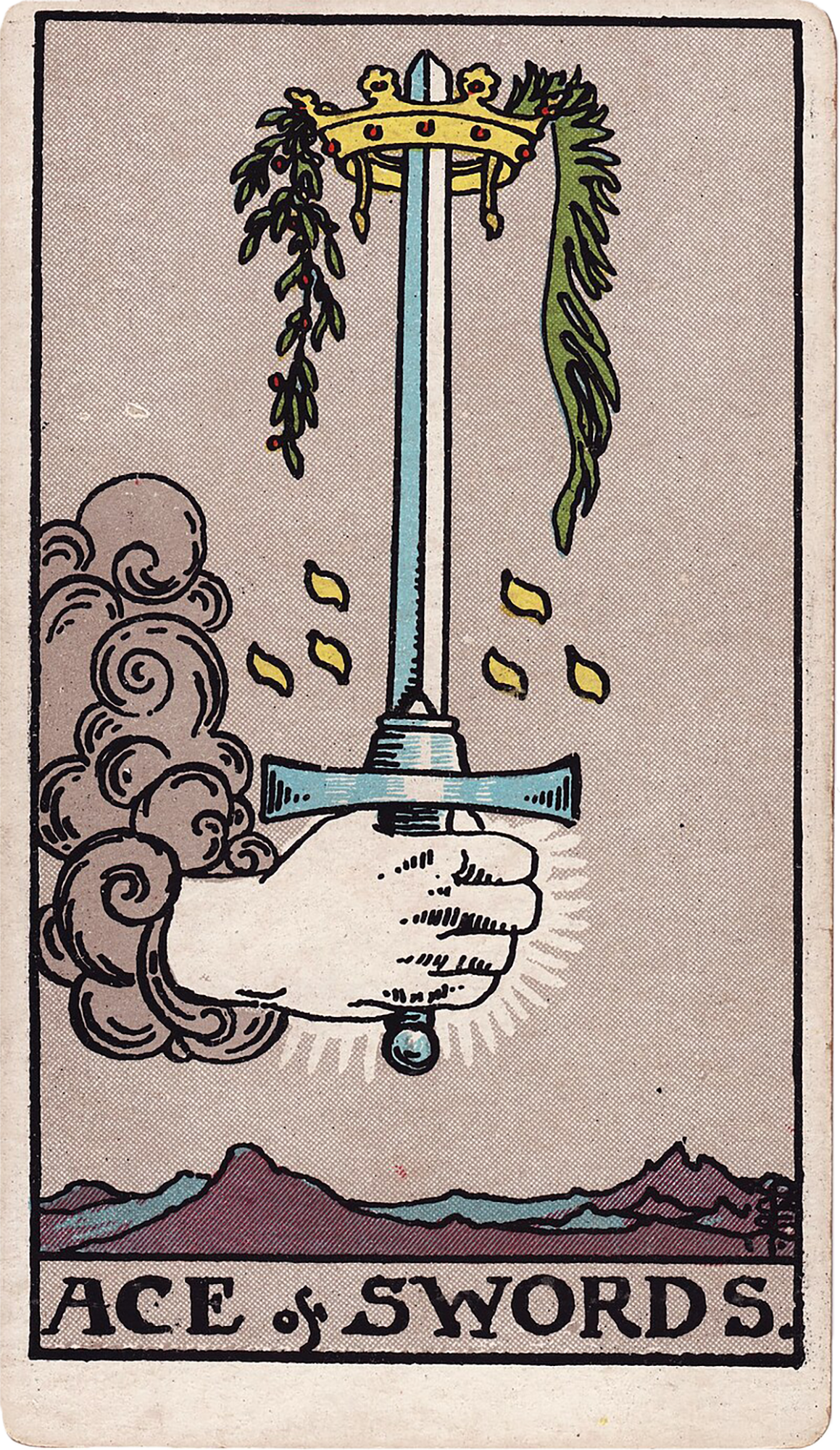 Ace of Swords
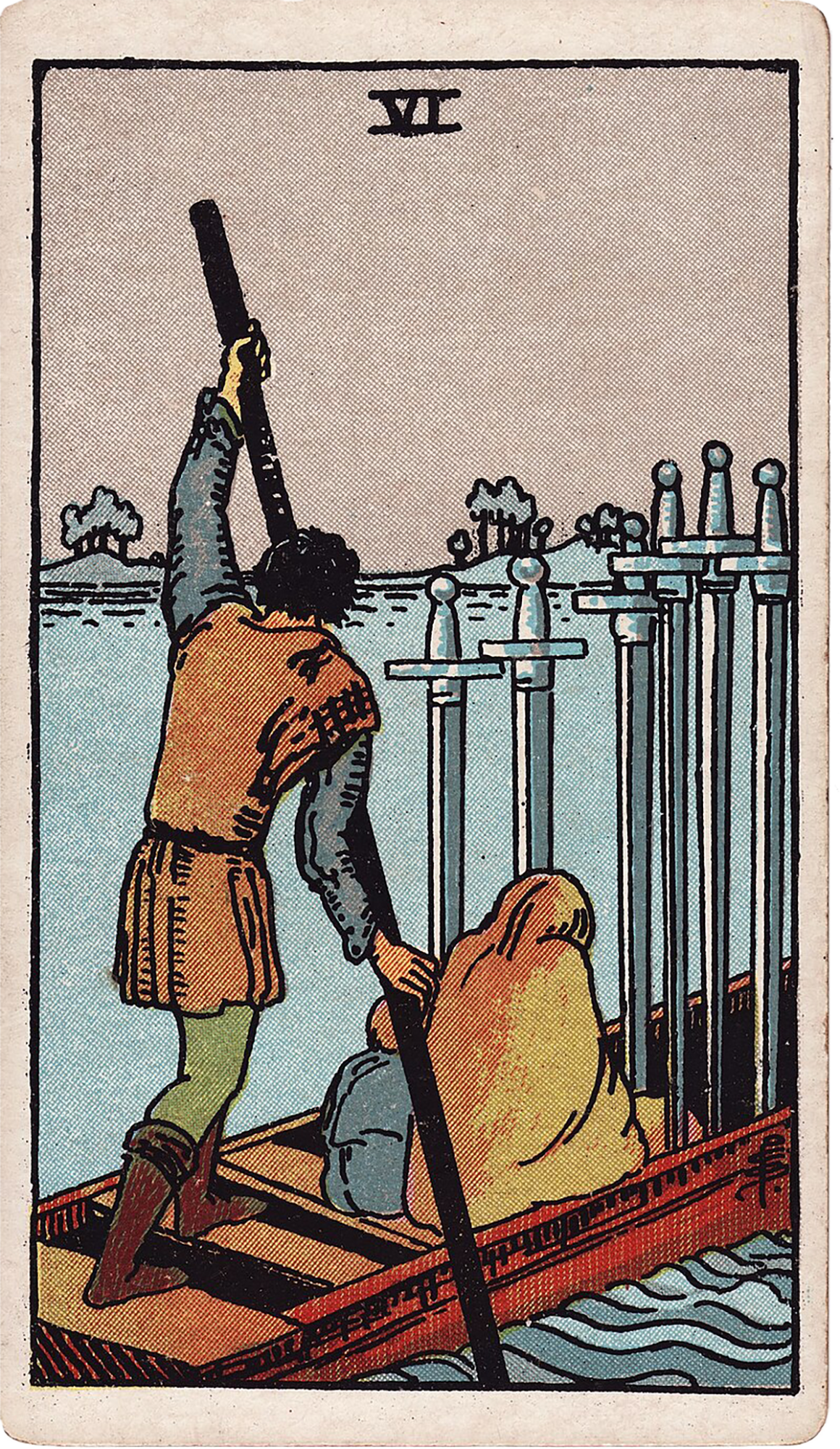 6 of Swords
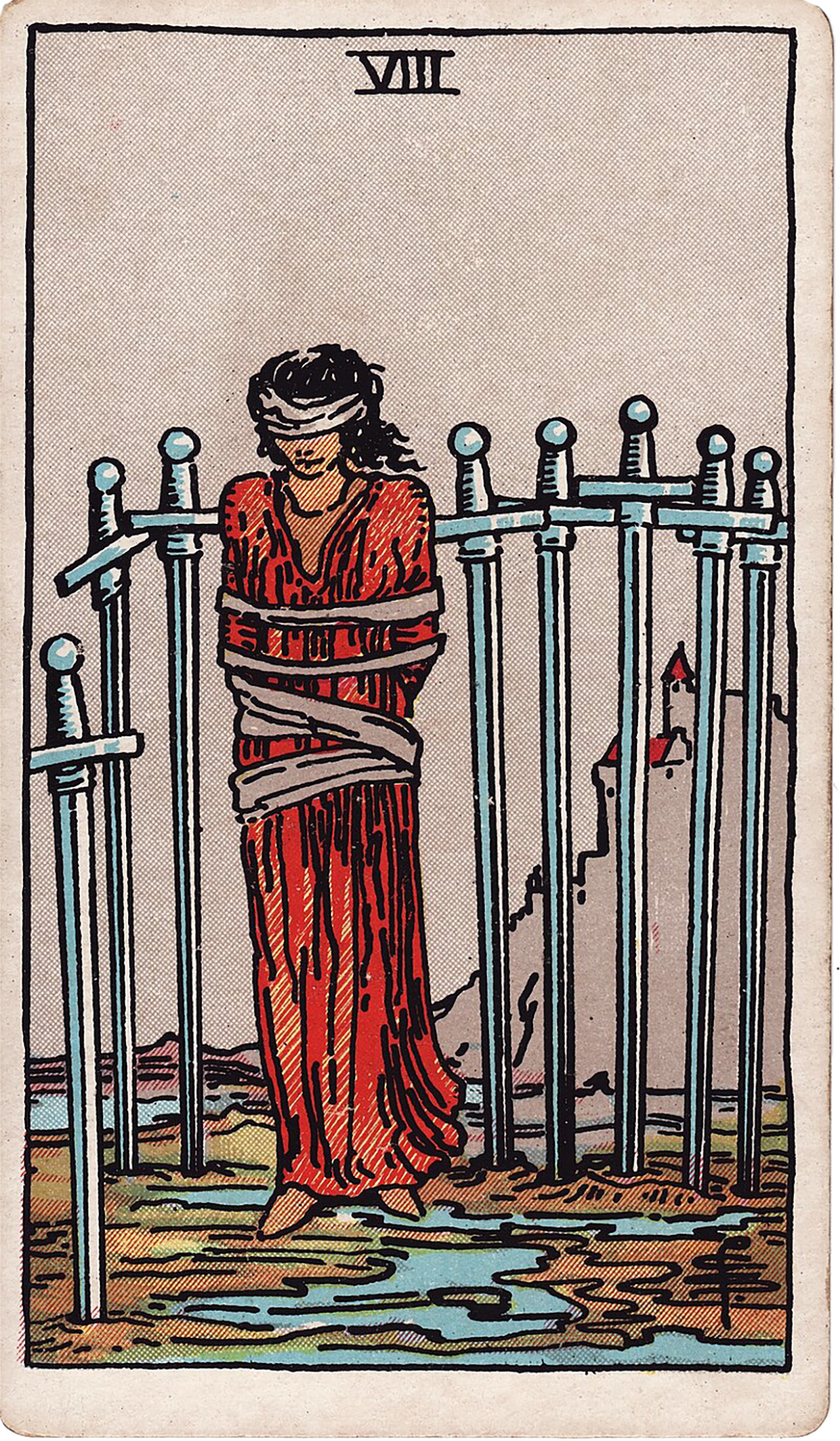 8 of Swords
Introduction: Why these three Swords matter together
When the deck gives you 8 of Swords, Ace of Swords and 6 of Swords in a reading, the suite’s theme is obvious: thought, language and movement of mind. All three are Swords cards in the traditional Rider‑Waite‑Smith language of cognition, so their interplay becomes a concentrated study in mental mechanics. 8 of Swords pictures a bound, blindfolded figure surrounded by swords—a classic image of feeling trapped by thought patterns or assumptions. The Ace of Swords arrives visually as a single upright blade held by a hand emerging from clouds, often crowned and laurelled, representing a fresh razor‑sharp insight or decisive communication. 6 of Swords shows a small boat carrying figures over water from a stormy foreground into calmer waters—movement, transition and the practical work of leaving a difficult mental landscape behind. Read together, these three cards map a process: identify the trap (8), cut a way through with clear thought or truth (Ace), and carry out the transition (6).
Reading the imagery: concrete visual cues and what they mean
Begin with the images—they're the concrete language of the cards and useful anchors when you interpret combinations. 8 of Swords: note the blindfold and loose bindings. The woman is not nailed down; the blindfold points to distorted perception, the swords form a perimeter suggesting a self‑imposed prison. There is a marsh and a castle in the distance showing that safety and structure exist beyond the current fear. Ace of Swords: the hand from the clouds indicates new intellectual energy that isn't yet embodied; the crown and laurel show truth that can be liberating and victorious but also demanding. The sword is double‑edged—truth can cut both ways. 6 of Swords: the small boat, the cloaked ferryman and the direction from rough to calm water signify practical movement. The swords standing upright in the boat suggest the mental contents you carry with you rather than the emotional cargo you leave behind. Use these specific visual points as evidence in a reading. For example, if the 8 of Swords shows loose bindings, that’s a prompt to ask: which constraint is self‑applied? If the Ace of Swords shows a crown, ask: what truth is ready to be claimed publicly? If the 6 of Swords places the boat toward a distant shoreline, consider whether the querent has realistic plans for the next landing or whether movement will be gradual.
How the cards modify one another: pair dynamics and the trio effect
Treat card combinations as dialectics—each card pulls the meaning of the others in a particular direction. Below are the core pair interactions, then the overall trio dynamic. 8 of Swords + Ace of Swords: The Ace operates like a surgical tool against the 8. It can illuminate the blindfold (clarify a belief), reveal that bindings are loose (truth can disconnect them), or make the mental trap feel harsher if the truth is experienced as cutting. If the Ace is upright, it usually points to a usable insight, question or conversation that will dissolve paralysis. If the Ace is reversed, the 'solution' may be delivered harshly or intellectually only, increasing the sense of being trapped. Ace of Swords + 6 of Swords: The Ace supplies the plan, the 6 supplies the route. The Ace gives a clear decision or conversation to enact; 6 shows the need to travel—literal or metaphorical—from a troubled mindscape to calmer thinking. If the Ace is strong but the 6 is reversed or weak, the insight exists but movement is blocked, suggesting a gap between knowing and doing. 8 of Swords + 6 of Swords: These two represent the problem and the process of leaving it. The 8 describes what keeps the querent stuck; the 6 shows the pathway out, often gradual and accompanied by residual sadness. If the 6 is upright, the transition is possible; if reversed, moving on is stalled or contaminated with unresolved baggage. Trio effect (8 + Ace + 6): Read left to right as a narrative: the 8 identifies the loop, the Ace reveals or cuts through it, and the 6 maps the passage onward. But combinations are not strictly linear: the Ace may arrive first, offering a perspective that reframes the 8; the 6 may precede an Ace that clarifies how to travel. The guiding rule is to let each card answer two questions: (1) what is the problem or pattern? (2) what is the functional next step? In the trio, 8 answers question one; Ace usually answers question two; 6 answers how that step will play out practically over time.
Contextual meanings: relationships
In relationship readings these three Swords show a process about communication and movement out of mental traps. Image cues to watch for: the 8 of Swords’ blindfold = assumptions about partner motives; loose bindings = self‑limiting fears; the Ace of Swords’ hand = a conversation or boundary that can clear things; 6 of Swords’ boat = leaving toward calmer patterns together or apart. Common relationship scenarios: - Reframing a stuck pattern: 8 of Swords (partner feels trapped by jealousy or a narrative about the relationship) + Ace of Swords upright (a candid talk or new insight that reframes the story) + 6 of Swords upright (both begin moving into a less turbulent way of relating). The outcome is practical: new communication habits, therapy, or concrete agreements. - Insight without movement: Ace of Swords upright + 6 of Swords reversed + 8 of Swords upright suggests someone has clarity but is not or cannot follow through—old fears keep them tied to the old pattern. The reader’s job is to identify obstacles to action and recommend incremental steps. - Harmful truth: Ace of Swords reversed + 8 of Swords upright + 6 of Swords upright can indicate that a blunt truth exacerbates feelings of entrapment, even if change is technically possible. Encourage formulations that cushion truth into constructive action rather than just blunt weaponization. Always probe whether the 8 of Swords’ constriction is internally generated (blindfold) or externally enforced. That determines whether the Ace of Swords needs to be a personal insight, an external conversation, or both.
Contextual meanings: career and practical life
In career contexts this trio focuses on mental barriers, strategy and practical transition. Visual anchors: 8 of Swords’ marsh and distant castle = limitations that might be logistical, bureaucratic or self‑judged; Ace of Swords’ crown = a decisive pitch, contract or piece of clear reasoning; 6 of Swords’ ferry = a job change, relocation, or stepwise plan. Examples: - Stuck in a job by fear: 8 of Swords upright (fear of leaving, self‑doubt about competence) + Ace of Swords upright (clarity about marketable skills; a crisp CV or interview message) + 6 of Swords upright (a phased transition such as freelancing nights, networking that leads to steady movement). - Cut by logic: Ace of Swords reversed + 8 of Swords upright + 6 of Swords reversed indicates confusion in thinking or a harsh internal narrative that keeps someone from making practical moves. This configuration calls for reframing and practicing decision‑making rather than a single 'aha' moment. - Carrying mental baggage: 6 of Swords upright with swords in the boat reminds you that some ideas come along for the ride. Ask: what thinking does the querent need to bring, and what do they need to offload before starting the next job or project? For careers, emphasize implementation: Ace of Swords can offer a crisp plan—turn it into a list of microtasks that make the 6 of Swords movement feasible.
Contextual meanings: emotional and practical life
Emotionally, the trio maps the pathway from entrapment to clarity to recovery. The 8 describes the panic, the Ace provides a cognitive tool, and the 6 shows recuperation as a process rather than immediate cure. Practically, these cards ask for both inner work and external steps: cognitive restructuring (Ace) plus a change of environment or routine (6). Key coaching prompts: - Ask the querent to name their blindfold (what story are they telling themselves?). - Use Ace of Swords questions to test truth claims: What evidence supports this belief? What is a kinder, truer statement? - For the 6 of Swords, create a timeline: what is the first small move that will change context? Who or what will support that movement? If the 8 of Swords is reversed in a reading, that often signals the beginning of release—use the Ace to give tactical advice and the 6 to schedule next steps. If 6 is reversed, coach for patience in applying insights before expecting full transition.
Upright and reversed permutations: reading with nuance
Upright and reversed meanings are useful when they refine the card’s role in the combination. Use reversals to show stuckness, internalization, delay, or premature expression—not merely 'bad luck.' Useful permutations: - 8 upright, Ace upright, 6 upright: classic pathway. A mental trap is recognized, an insight arrives, and transition begins. Emphasize action steps. - 8 upright, Ace reversed, 6 upright: insight exists but is distorted or harsh. The 'solution' may be weaponized logic—recommend softening communication and testing truth claims. - 8 reversed, Ace upright, 6 upright: liberation is in motion; the querent has started to undo the blindfold and can use a clear plan to sustain momentum. - 8 upright, Ace upright, 6 reversed: the thought work is there but logistical or emotional obstacles stop movement. Focus readings on practical barriers and small experiments. - Ace reversed in center: places the emphasis on internal conflict about truth—someone may know what’s needed but be stuck using logic destructively. Encourage empathy and practice. When multiple cards are reversed, read them as signals that the querent is intellectually processing the issue in a way that isn’t fully embodied. Instead of predicting failure, use reversals as an instruction manual: what needs to be practiced, said, softened, or scheduled?
Avoiding the one-card-at-a-time trap: a method for combinational reading
A common beginner mistake is to read each card independently and then stitch meanings together. That often produces contradiction. Use a systematic combinational method instead: 1. Establish a frame: define the spread positions (past/present/future, problem/action/result, mind/emotion/body). Place 8 of Swords, Ace of Swords and 6 of Swords into those positions deliberately. 2. Describe each card's visual story in one sentence using Rider‑Waite imagery (e.g., '8 of Swords: blindfolded figure in marsh; self‑imposed prison'). 3. Ask interaction questions: How does the Ace alter the perception in the 8? What does the 6 carry forward from the Ace? Use one or two verbs: reveal, cut, carry, move, weaponize, delay. 4. Test polarity: identify where the cards agree and where they conflict. If they agree (all point to movement), the reading is coherent; if they conflict (Ace suggests action, 6 reversed suggests no movement), the tension becomes the reading’s practical focus. 5. Produce advice: translate imagery into 2–4 practical steps. For Swords combinations, one step should be cognitive (reframe or script), one communicative (a conversation or message), and one logistical (timing, micro‑action). This method keeps the cards in conversation instead of isolated monologues.
Examples: two detailed practice readings
Example 1 — Past/Present/Future layout - Past (8 of Swords upright): A client has been telling themselves they lack boundaries and that any attempt to assert will break the relationship. The image of the blindfolded woman shows that fear has defined past decisions. - Present (Ace of Swords upright): A sudden conversation clarified a boundary—the client recognized a clear way to state needs. The hand from the clouds imagery signals that this clarity is fresh, not yet practiced. - Future (6 of Swords upright): The outcome is a gradual move toward a calmer dynamic. The boat imagery says the change will be incremental and may involve external supports. Practical advice: write and practice the boundary script (Ace), rehearse the conversation with a trusted friend (Ace->6), plan stepwise boundary enforcement over weeks (6). Example 2 — Problem/Obstacle/Outcome with reversals - Problem (8 of Swords upright): The querent believes they are always to blame in family conflicts. The loose bindings suggest they could act differently. - Obstacle (Ace of Swords reversed): They have an intellectual solution that sounds like blaming 'facts'—they deliver truth harshly. The double‑edged sword imagery explains why attempts to be 'clear' escalate conflict. - Outcome (6 of Swords reversed): Attempts to leave the pattern stall; the querent keeps returning to the same argument. The boat is moving but circles back. Practical advice: work on tone and empathy when speaking (soften the Ace), practice small boundary experiments (6), and dismantle the internal assumption of blame via journaling prompts that test evidence (8).
Common mistakes and how to correct them
1) Reading in isolation: fix by using the interaction method above. 2) Overemphasizing reversals as doom: see reversals as process indicators about stuckness or internalization and translate them into practice items. 3) Ignoring visual detail: always mention the blindfold, hand from clouds, boat direction, loose bindings, laurel/crown, and marsh—these are your evidence points. 4) Forcing a linear story: let the cards answer two questions—what’s the pattern and what’s the next functional step. If the spread resists linearity, treat it as synchronous forces (conflict between insight and readiness). 5) Neglecting action: Swords can be abstract. Turn intellectual clarity into micro‑actions (scripts, meeting requests, timelines) and make those part of your reading. 6) Over-intellectualizing emotions: remind querents that Swords describe cognitive patterns which interact with feelings; combine Swords advice with companion techniques (breathing, grounding, external support) even if those other practices aren’t in the spread.
Practical exercises for learners
1) Imagery journaling: pull these three cards or imagine them. Write a paragraph describing the visual story for each card without naming upright/reversed meanings. Use descriptions to build a narrative. 2) Verb mapping: list one verb for each card (8: constrict, Ace: clarify, 6: move). Create a one‑sentence advice that uses all three verbs. 3) Role play: practice delivering an 'Ace of Swords' style insight in a gentle vs blunt manner to feel the difference and observe which one encourages 6 of Swords movement. 4) Micro‑action plan: given a real client issue, draft a 3‑step plan where step 1 addresses 8 of Swords (reframe), step 2 activates Ace of Swords (script/decide), and step 3 schedules 6 of Swords (timed small move). 5) Reversal rescue: intentionally arrange the trio with the Ace reversed. List 5 practical interventions to convert that reversed energy into useful practice (tone training, evidence checklists, meditation, communication rehearsals, accountability partner).
How to frame readings ethically and usefully
This trio often touches on anxiety, trauma, or decision paralysis. Read for capacity and resource, not just narrative. When the 8 of Swords shows extreme entrapment, assess safety and refer to mental health support if needed. Avoid promising immediate freedom—6 of Swords typically shows gradual movement and residual sadness. Use the Ace of Swords to give actionable, testable suggestions (script, microtasks) rather than grand pronouncements. Encourage the querent to treat clarity as a practice: cut with the Ace, then build the boat with the 6. Emphasize agency—these cards are about choices within constraints, not fate.
Conclusion: the teaching takeaway
8 of Swords, Ace of Swords and 6 of Swords form a compact toolkit for diagnosing and resolving thought loops. Use Rider‑Waite imagery as evidence, read the cards in interaction rather than isolation, translate insights into micro‑actions, and treat reversals as signals about what to practice. In a reading, ask concrete questions about which bind is self‑applied, what precise truth must be tested, and which first small step will carry the client toward calmer waters. When learners master this trio they gain a repeatable pattern: name the trap, sharpen the mind, plan the passage.
Practice questions
• When you look at the 8 of Swords image, what is the most persuasive evidence that the restriction is self‑imposed rather than externally enforced?
• How would you transform an Ace of Swords insight into a microtask the client can accomplish within 72 hours?
• If the 6 of Swords is reversed, what logistical or emotional obstacles might be preventing movement and how would you test for them?
• Describe a gentle and a blunt version of the same truth suggested by the Ace of Swords. Which is more likely to produce 6 of Swords movement and why?
• What specific language or script could remove one layer of the 8 of Swords’ blindfold?
• How do you avoid turning the Ace of Swords into a weapon in a reading?
• When these three cards appear, what are three signs you would refer a querent for professional mental health support rather than keep working within the reading?
• Practice question: create a three‑step action plan (reframe, speak/practice, move) for someone who believes their fear of failure is stopping a job change.
Comments
Sign in to comment.
Continue learning
Interpreting the Dance of Justice and The Devil: Balancing Morality and Temptation in Tarot Readings
The combination of Justice and The Devil in tarot presents a profound exploration of morality, temptation, and personal accountability. This article unpacks how these cards influen...
Harnessing the Power of The Magician and Ace of Wands: Igniting Creativity and Manifestation in Tarot Readings
The combination of The Magician and the Ace of Wands in tarot readings offers a potent blend of creative energy and manifestation power. This article delves into the ways these car...
Understanding the Synergy Between The Empress and The Emperor in Tarot Card Combinations
This article delves into the intricate synergy between The Empress and The Emperor cards in Tarot, focusing on how their combined energies modify and enrich readings across various...
Decoding Transformation and Renewal with Death and The Star in Tarot Combinations
This article delves into the card combination of Death and The Star, two powerful Major Arcana cards from the Rider-Waite-Smith deck. It explores how their imagery and meanings int...
Balancing Ambition and Compassion with The Emperor and Queen of Cups in Tarot Combinations
This article delves into the nuanced Tarot card combination of The Emperor and Queen of Cups, emphasizing how their energies complement and challenge each other. By analyzing their...
Finding Emotional Healing and Renewal with The Star and The Moon Tarot Combination
This article examines the rich interplay between The Star and The Moon tarot cards when they appear together in a reading. Using the traditional Rider-Waite-Smith symbolism and the...
Unlocking Emotional Wisdom with The High Priestess and The Queen of Cups in Tarot Combinations
This article delves into the card combination of The High Priestess and The Queen of Cups, emphasizing their shared themes of intuition, emotional depth, and receptivity. By examin...
Unlocking Emotional Resilience with Strength and The Star in Tarot Combinations
This article delves into the Tarot card combination of Strength and The Star, revealing how their interplay highlights pathways to emotional resilience. Anchored in the Rider-Waite...
Unveiling Emotional Strength with Strength and The Queen of Cups in Tarot Combinations
This article delves into the dynamic Tarot combination of Strength and The Queen of Cups, emphasizing how these cards together illuminate emotional strength, compassionate boundari...
Unlocking Emotional Transformation with Death and The Moon Tarot Combination
This article explores the rich and complex interaction between the Death and The Moon tarot cards within the Rider-Waite-Smith tradition, focusing on their combined potential to un...