
Closure Rituals and Next Steps with Death Three of Swords and Eight of Cups
This article explores the interaction between Death, 3 of Swords, and 8 of Cups with a focus on family contexts and closure work. Using Rider‑Waite‑Smith imagery as an anchor, it explains how these cards modify one another, how to read them together without reducing each to a single meaning, and how to design realistic closure rituals and next steps that fit the querent's life. The piece teaches technique, offers examples across relationships and career, warns about common mistakes, and gives a step‑by‑step method readers can apply in readings.
Read the cards together
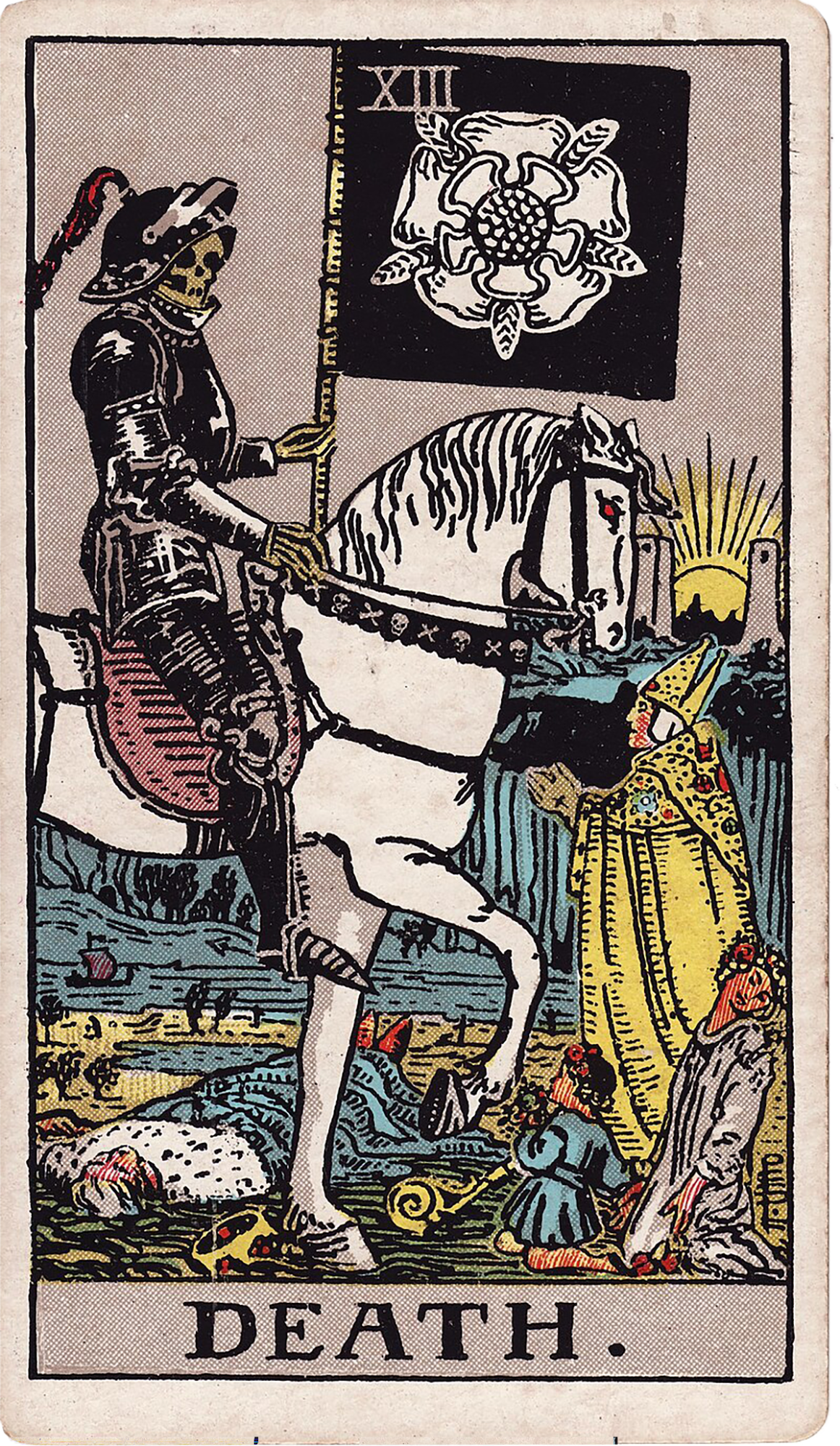 Death
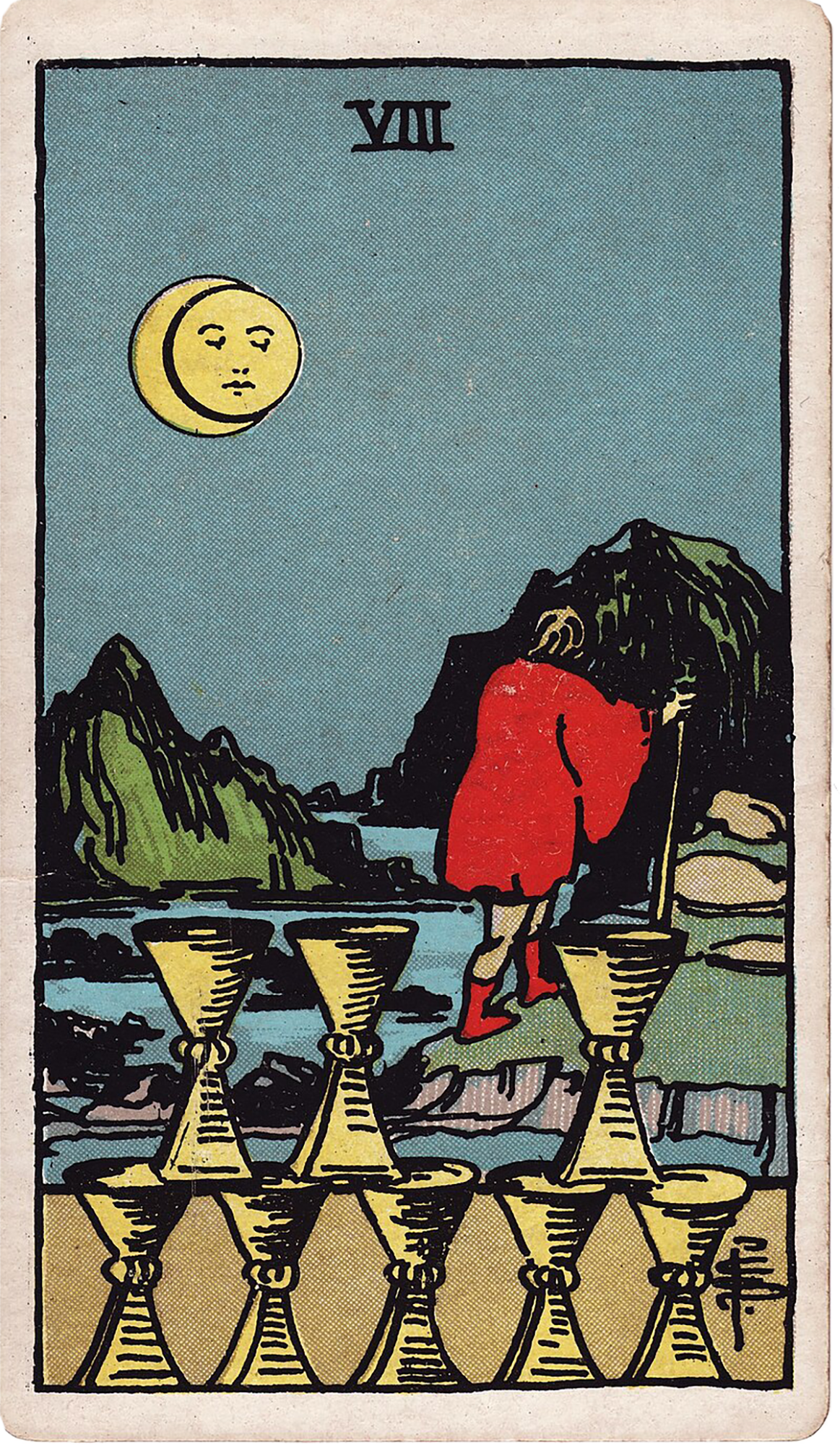 8 of Cups
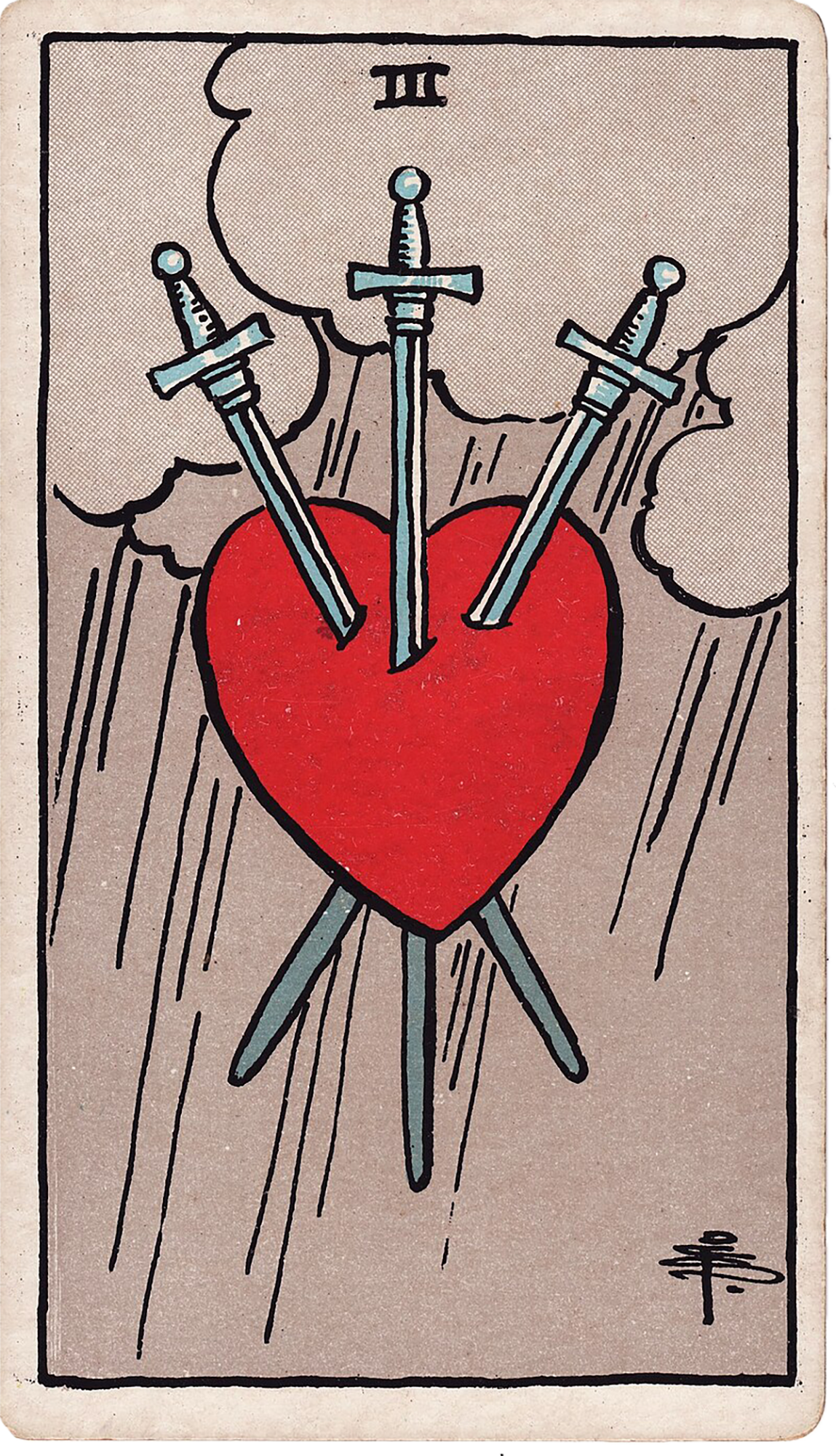 3 of Swords
Introduction: Why these three cards belong together
Death, 3 of Swords, and 8 of Cups form a tight thematic cluster around endings, emotional truth, and the act of leaving. In Rider‑Waite‑Smith imagery those meanings are visible: Death's skeletal rider, the black armor and white rose, and the rising sun between towers signal a necessary ending that makes space for transformation. The 3 of Swords presents a heart impaled by three swords under gray storm clouds—pain named and visible. The 8 of Cups shows a cloaked figure turning away from stacked cups and walking toward moonlit hills—a deliberate departure in search of more meaningful emotional terrain. When these cards appear together in a spread, especially for family questions, they don't simply repeat the same message. Each card answers a slightly different question in the closure process: what must end (Death), what needs to be acknowledged and spoken (3 of Swords), and what leaving or re‑orientation is required (8 of Cups). This article teaches how to read their interaction, design closure rituals that match the psychic anatomy the cards describe, and translate symbolic insight into next steps that are grounded and practical.
Reading the cards visually and functionally
Start with direct observation. Before leaping to keywords, ask the querent to look at the images (or do so yourself) and describe details: Death's banner with a white rose, the sunlight beyond the towers, the fallen figures in the foreground; the starkness of the heart and the rain in 3 of Swords; the turned back and ascending path in 8 of Cups. Use image verbs: Death removes, cleanses, clears space; 3 of Swords cuts open, names pain, forces truth; 8 of Cups abandons or seeks. The suits and the Major Arcana provide technical cues: Swords are intellect, truth, and communication; Cups are emotion, relationships, and inner values; Death is a major arcana force—structural change larger than everyday choices. This helps you assign roles in the reading rather than letting each card mean everything at once.
How the cards modify one another: general logic
Think of the three cards as a small narrative arc or as instruments in a single process. Death supplies the frame: the boundary that makes transformation possible. 3 of Swords supplies the content: the grief, betrayal, or precise hurt that must be named and felt. 8 of Cups supplies the action: the step away or the reallocation of emotional energy. When reading them together, ask which card is most central to the querent's immediate question. For instance, if the querent asks "Am I ready to separate from a family role?" and Death is prominent, the immediate issue may be institutional or systemic—something in family structure needs to be discontinued. If 3 of Swords dominates, the core is unresolved pain requiring honest conversation. If 8 of Cups is strongest, the matter is less about structural endings than about the querent’s readiness to remove themselves emotionally or physically. Consider directionality: does the 3 of Swords read as the cause of the Death (pain necessitating an ending), or does Death precede 3 of Swords (an ending uncovering previously hidden pain)? Similarly, 8 of Cups can be the result of those two forces or the agent that completes them.
Pairwise dynamics: Death and 3 of Swords
When Death and 3 of Swords appear together the theme is transformational grief or an ending that requires naming pain. In family contexts this often looks like a structural change (Death) that forces painful truths to surface (3 of Swords). Example images: the white rose on Death’s banner implies inevitability and purification; the three swords in a bleeding heart insist that whatever is ending has real emotional consequence. Interpretive threads: - Cause and consequence: Death may represent a relationship role, a family habit, or an expectation that is finally ending. 3 of Swords highlights the heartbreak attached—betrayal, disappointment, or long‑neglected grief. Read as a sequence: the ending may be the cause of the emotional rupture, or the emotional rupture may have produced the ending. - Formal closure plus emotional work: Death suggests legal, financial, or logistical endings (e.g., moving out, changing custody, retirement, or closing shared accounts). 3 of Swords insists the emotional truth must be acknowledged—without proper grieving, the ending will be hollow. - Upright/reversed interplay: If Death is upright and 3 of Swords reversed, the system is ending but the querent is repressing or still healing; the reversal suggests recovery or avoidance of naming the wound. If Death is reversed and 3 of Swords upright, there may be resistance to an inevitable ending: the family is clinging to a role while pain grows clearer. Practical reader prompts: Ask what official or material steps begin the ending. Ask what conversations have never been had. Invite the querent to write the truth of the hurt before taking administrative steps. Closure here is a two‑track process: handle logistics (Death) and allow a disciplined mourning period (3 of Swords).
Pairwise dynamics: Death and 8 of Cups
Death paired with 8 of Cups foregrounds the move from structural ending to purposeful departure. The imagery aligns: Death clears the space; 8 of Cups walks away toward a new emotional horizon. In family situations this can mean the family unit or role is dissolving (Death) and the querent is beginning to make a conscious exit or emotional separation (8 of Cups). Interpretive threads: - Voluntary vs. required leaving: If 8 of Cups feels active—figure turning with resolve—this is a voluntary leaving that follows the systemic ending. If 8 of Cups appears hesitant, the leaving may be more about needing to protect emotional well‑being after the system collapses. - Ritualizing endings: Because Death has a ritual quality in imagery (white rose, banner), pairings invite ceremonial transitions. An explicit ritual—returning heirlooms, a family meeting to reassign roles, or a small rite to mark moving out—can make the 8 of Cups departure cleaner and more meaningful. - Upright/reversed interplay: If 8 of Cups is reversed with Death upright, the querent may be staying despite conditions that warrant leaving; they need help acknowledging that the space is no longer emotionally fit. If Death is reversed and 8 of Cups upright, the querent may be choosing to walk away before a formal ending is acknowledged—this can be premature, or it can be the right boundary depending on surrounding cards. Practical reader prompts: Which practical changes does the querent need to make so their leaving is sustainable (housing, finances, custody schedules)? How can a short ritual (spoken statement, exchange, or boundary letter) mark the transition?
Pairwise dynamics: 3 of Swords and 8 of Cups
3 of Swords and 8 of Cups form the emotional choreography of grief and the act of leaving. Here the heart's wound compels departure—or departure uncovers a wound that must be addressed. In family contexts these cards often present as a painful decision to step away from a family pattern, role, or relationship. Interpretive threads: - Grief as agent of change: If 3 of Swords leads, the heartache becomes the reason the figure in 8 of Cups must leave. The querent has named betrayal, disappointment, or unacknowledged hurt and chooses to remove themselves. - Avoidance vs. mature leaving: If 3 of Swords is reversed, there may be suppressed grief—an 8 of Cups departure could be escape rather than healing. The reader needs to differentiate deliberate, value‑aligned leaving from impulsive abandonment. - Timing and staging: The cards invite staging: first name the wound (3 of Swords), then plan the move (8 of Cups), and only then enact the departure. The 3 of Swords’ storm imagery suggests the necessity of a mourning window; the 8 of Cups’ moonlit path suggests a careful, emotionally oriented plan rather than a rash flight. Practical reader prompts: Encourage a containment plan for the grief—therapeutic support, written letters not sent, or a shared mediated conversation. Ask what the querent will miss and what they hope to find by leaving.
All three together: a stepwise closure narrative
When Death, 3 of Swords, and 8 of Cups appear together the reading often outlines a clear and humane closure process: an ending is present or needed (Death); the ending exposes or centers painful truth (3 of Swords); the querent must make an intentional emotional exit (8 of Cups). This can map nicely onto family scenarios where institutional change, emotional truth, and separation all coincide: for example, a parent leaving a household after years of unmet needs; a family business dissolving after a betrayal; or a caregiving role changing after grief is acknowledged. Interpretive sequencing and nuances: - Which card is central visually or positionally? If Death is central, focus on formal endings and legal/financial steps. If 3 of Swords sits in the querent’s position, prioritize grief processing and communication. If 8 of Cups is in the outcome, the querent will need to plan the departure. - Who does the action fall on? In family spreads locate who is represented—Death might be the family structure; 3 of Swords could be the person hurt; 8 of Cups might be the member who will leave. That distribution affects responsibility and next steps. - Compassionate urgency: The combination often calls for both tenderness and decisiveness. Death's image is not punitive; it clears space. 3 of Swords asks for naming and truth. 8 of Cups asks for integrity in leaving. Together they invite a ritualized but realistic closure. Practical ritual template anchored to imagery: 1) Naming: Use the 3 of Swords' clarity—write a concise, honest description of the hurt. Read it aloud privately. 2) Clearing: Following Death's cue, identify practical endings to enact (closing accounts, changing locks, rearranging living arrangements). 3) Departure ritual: Inspired by 8 of Cups, create a small rite for yourself—walk a path, arrange the cups (or objects) you are leaving behind, say a statement of intention. Keep the ritual concrete and bounded; it is a transition, not an erasure of memory.
Contexts in family readings: examples and variations
Relationship/family: The three cards together can indicate a member leaving a household after a painful truth is confronted—infidelity, emotional neglect, or abuse. Death instructs the family system change; 3 of Swords insists on truth telling; 8 of Cups shows who will move away or emotionally disengage. Use direct questions: Who must step down from a role? What conversations must be had first? What logistical arrangements are essential? Parenting/caregiving: If a long caregiving role is collapsing (Death), grief surfaces (3 of Swords) and the caregiver may need to step back or change their involvement (8 of Cups). Here rituals can be practical: a handover meeting, medical proxy updates, and a private time to grieve. Estate and inheritance: Death is literal in process symbolism and can signal legal endings. 3 of Swords brings disputes or old resentments to light; 8 of Cups indicates someone withdrawing from contention. Read carefully: insist on counsel for the legal work, and use ritual for emotional closure rather than to substitute for proper estate processes. Family business/career within family: Death can mean restructuring or closure of the business; 3 of Swords reveals unresolved betrayals; 8 of Cups marks resignation or leaving the enterprise. Encourage staged transitions: truth-telling meetings, financial settlements, and an exit plan that honors both business and emotional needs.
Upright and reversed possibilities when useful
Only consider reversals to answer specific questions about blockage or timing. Useful rules of thumb: - Death reversed: endings are resisted, delayed, or happening internally rather than externally. If paired with an upright 3 of Swords, the family is still clinging despite clear hurt. The reading calls for boundary work and possible external supports to make the ending effective. - 3 of Swords reversed: grief may be suppressed or beginning to heal. In combination with upright Death and upright 8 of Cups, the querent may be leaving too quickly before grief is processed—or if the querent has actively done grief work, this can mark a healthier departure. - 8 of Cups reversed: fear of leaving or returning to an old pattern. Paired with upright Death, it warns against staying in an unsustainable system. Paired with upright 3 of Swords, it suggests grief is immobilizing the querent. Here, practical scaffolding—temporary housing, mediation, therapy—becomes important. Always weigh reversals against the querent's reality. A reversed card is not fate; it is a quality of energy that needs translation into practical interventions.
Avoiding one‑card simplification and common mistakes
Common mistakes learners make with this set include: (1) treating Death as ominous or literal without looking at the surrounding suit messages; (2) equating 3 of Swords with melodrama instead of precise naming of hurt; (3) seeing 8 of Cups purely as abandonment rather than purposeful realignment. To avoid oversimplification: - Read interactions not additions. Ask how each card changes the other's timing, agency, or target. - Locate agency. Who is acting? Which card represents the querent vs. the family system? This prevents misassigning responsibility. - Use clarifying questions and practical checks: can the querent implement the steps implied by Death? Do they have support for the grief highlighted by 3 of Swords? Is the 8 of Cups departure logistically possible? - Keep ritual recommendations realistic and ethics‑aware. Rituals should not replace legal or safety measures nor encourage sudden acts that would endanger the querent or loved ones.
Technique: a step‑by‑step method for readings and ritual design
1) Observe and describe: Let the querent describe what they see in each card. Note details: Death's white rose and rising sun, the three swords' placement, the direction the figure in 8 of Cups is walking. 2) Assign functional roles: Decide which card answers "what must end," "what is the hurt," and "what action is possible." 3) Ask sequencing questions: Which came first? What would happen if the querent acted on 8 of Cups before naming the 3 of Swords? 4) Translate symbol to steps: For Death, list specific endings to enact. For 3 of Swords, list emotional work (talks to have, therapy, letters). For 8 of Cups, list practical logistics for leaving. 5) Create a bounded ritual: Keep three manageable parts that mirror the cards—recognition (speak or write the hurt), clearing (a practical action to mark an ending), and departure (a symbolic act or logistical move). 6) Safety and support check: Always ensure the querent has a safety plan, legal counsel if necessary, and social supports. 7) Follow‑up practice: Schedule a concrete check‑in date to assess emotional and logistical progress. Readers should articulate time windows: grief may require weeks or months; legal closures may take longer. Use the cards to set realistic staging rather than immediate fixes.
Examples and reading scripts
Example 1 — Family separation: A querent pulls Death (center), 3 of Swords (left), 8 of Cups (right). Script: "Death here suggests the family role you're in is ending. The 3 of Swords shows the hurt that's made that inevitable—what precisely is the wound? The 8 of Cups asks: are you prepared to make an intentional exit after you've named that hurt? Let's list one legal step and one emotional step you can take this week." Use concrete tasks: consult a mediator, write a private letter listing the hurts, and plan a weekend away as a symbolic first step. Example 2 — Caregiver burnout: 3 of Swords upright, Death reversed, 8 of Cups upright. Script: "Your pain is clear; you're ready to withdraw (8 of Cups), but Death reversed suggests the system is resisting necessary formal change. We need a two‑track plan: immediate self‑care boundaries and a process to shift responsibilities in the family so the structural ending can proceed." Tasks: organize a family meeting, set temporary respite care, and arrange therapy. Example 3 — Inheritance conflict: Death upright, 3 of Swords upright, 8 of Cups reversed. Script: "The estate or formal closing is happening and it's uncovering resentments. The 8 of Cups reversed warns against leaving the dispute unresolved. Recommend legal counsel and a mediated conversation; create a ritual to say goodbye to shared physical items so emotional release isn't left incomplete."
Closing guidance and ethics
Death, 3 of Swords, and 8 of Cups invite readings that are both compassionate and actionable. Do not conflate symbolic closure with legal closure or safety. Always prioritize concrete supports when family dynamics are involved: legal advice, mediation, emergency planning, and mental health resources. Use the cards to shape a humane process: name the hurt soberly (3 of Swords), delineate the ending transparently (Death), and plan a departure that aligns with values and needs (8 of Cups). When you design rituals, keep them simple, symbolic, and safe—rituals are aids to psychological transition, not substitutes for logistics. Finally, teach the querent to treat these cards as a map rather than a mandate: the tarot describes energies and options, and real life invites negotiation, timing, and compassion.
Practice questions
• Which of these three images—Death’s banner and rising sun, the heart pierced by three swords, or the lone figure walking away—resonates most with you right now, and why?
• In the family situation you are reading about, which card represents the system, which represents the personal hurt, and which represents the agent who will change their role?
• What concrete, bounded ritual could you design that mirrors these cards: a naming step, a clearing step, and a departure step?
• Where might a querent be avoiding the process suggested by these cards, and what small practical scaffolding could help them move forward safely?
• If one of the three cards were reversed in your reading, how would that change your recommended sequence of actions?
Comments
Sign in to comment.
Continue learning
Interpreting the Dance of Justice and The Devil: Balancing Morality and Temptation in Tarot Readings
The combination of Justice and The Devil in tarot presents a profound exploration of morality, temptation, and personal accountability. This article unpacks how these cards influen...
Harnessing the Power of The Magician and Ace of Wands: Igniting Creativity and Manifestation in Tarot Readings
The combination of The Magician and the Ace of Wands in tarot readings offers a potent blend of creative energy and manifestation power. This article delves into the ways these car...
Understanding the Synergy Between The Empress and The Emperor in Tarot Card Combinations
This article delves into the intricate synergy between The Empress and The Emperor cards in Tarot, focusing on how their combined energies modify and enrich readings across various...
Decoding Transformation and Renewal with Death and The Star in Tarot Combinations
This article delves into the card combination of Death and The Star, two powerful Major Arcana cards from the Rider-Waite-Smith deck. It explores how their imagery and meanings int...
Balancing Ambition and Compassion with The Emperor and Queen of Cups in Tarot Combinations
This article delves into the nuanced Tarot card combination of The Emperor and Queen of Cups, emphasizing how their energies complement and challenge each other. By analyzing their...
Finding Emotional Healing and Renewal with The Star and The Moon Tarot Combination
This article examines the rich interplay between The Star and The Moon tarot cards when they appear together in a reading. Using the traditional Rider-Waite-Smith symbolism and the...
Unlocking Emotional Wisdom with The High Priestess and The Queen of Cups in Tarot Combinations
This article delves into the card combination of The High Priestess and The Queen of Cups, emphasizing their shared themes of intuition, emotional depth, and receptivity. By examin...
Unlocking Emotional Resilience with Strength and The Star in Tarot Combinations
This article delves into the Tarot card combination of Strength and The Star, revealing how their interplay highlights pathways to emotional resilience. Anchored in the Rider-Waite...
Unveiling Emotional Strength with Strength and The Queen of Cups in Tarot Combinations
This article delves into the dynamic Tarot combination of Strength and The Queen of Cups, emphasizing how these cards together illuminate emotional strength, compassionate boundari...
Unlocking Emotional Transformation with Death and The Moon Tarot Combination
This article explores the rich and complex interaction between the Death and The Moon tarot cards within the Rider-Waite-Smith tradition, focusing on their combined potential to un...