
Cultivating Momentum Without Burnout with the Ace of Wands the Eight of Pentacles and the Four of Swords
This article teaches how to read the combination of the Ace of Wands, 8 of Pentacles and 4 of Swords as a single narrative about starting, sustaining skillful work, and stopping to recover. It emphasizes imagery-driven interpretation, how the cards modify one another in family, career and relationship contexts, practical spread techniques, and how to avoid common mistakes like one-card reductionism or treating rest as failure.
Read the cards together
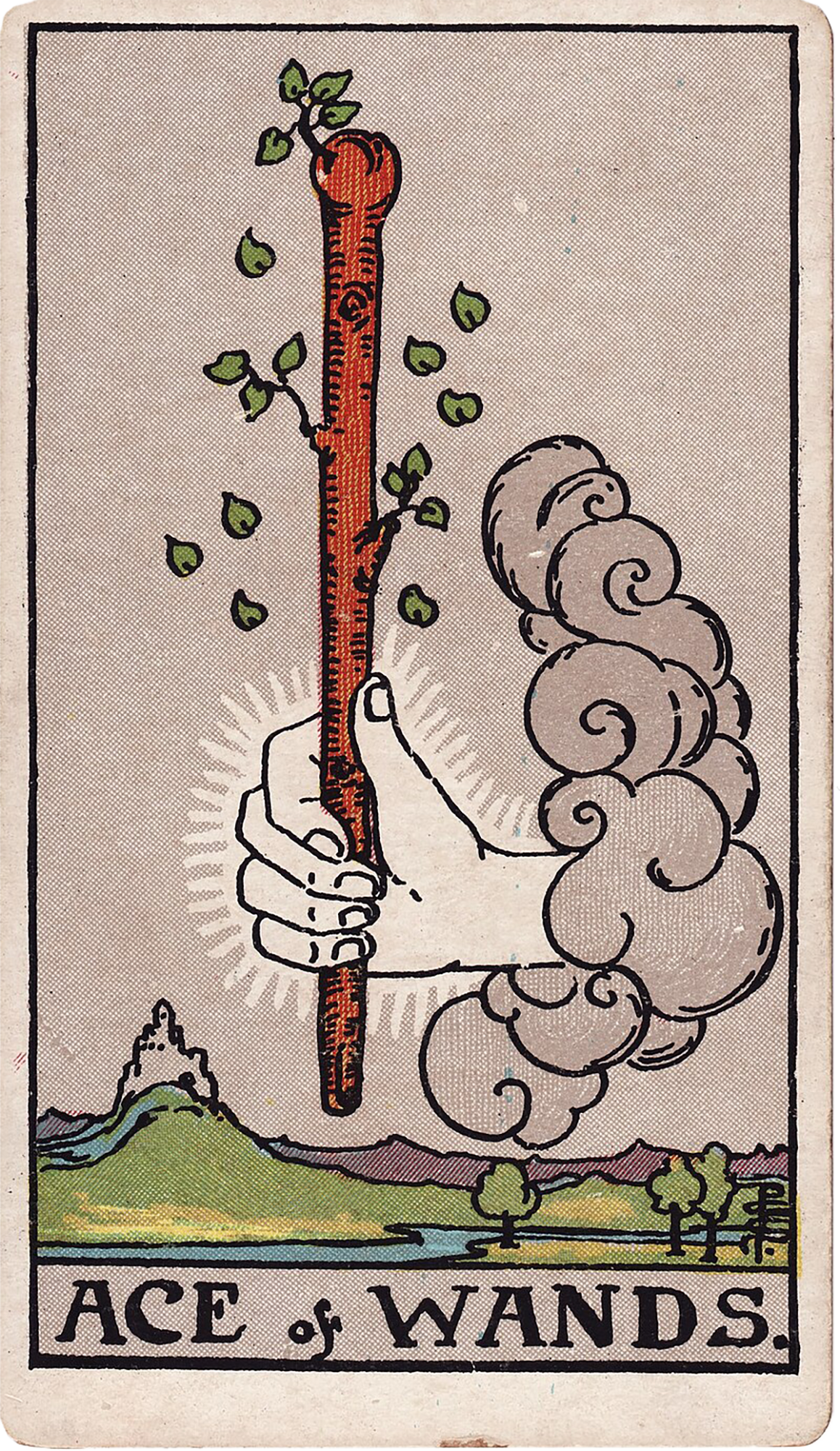 Ace of Wands
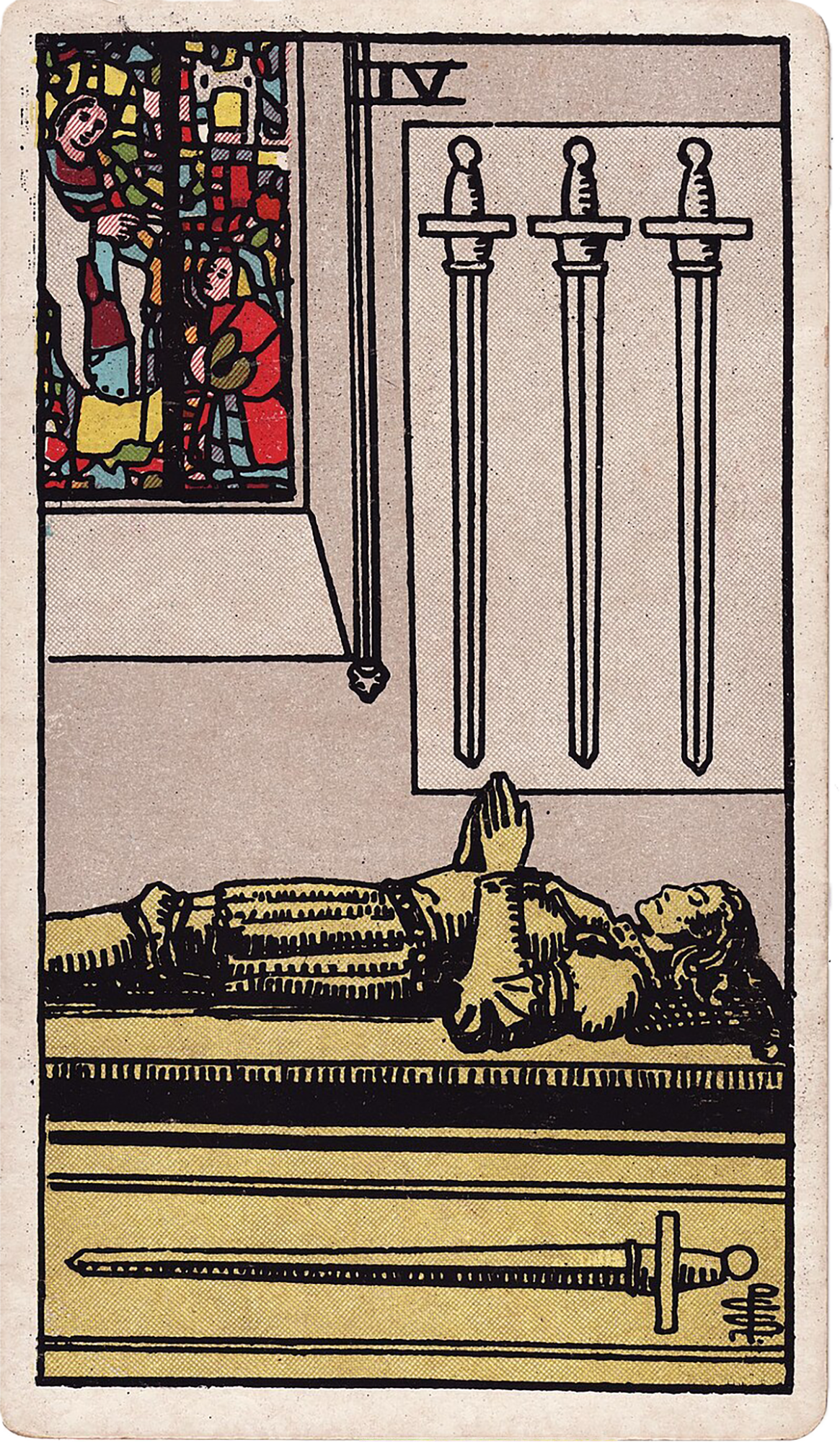 4 of Swords
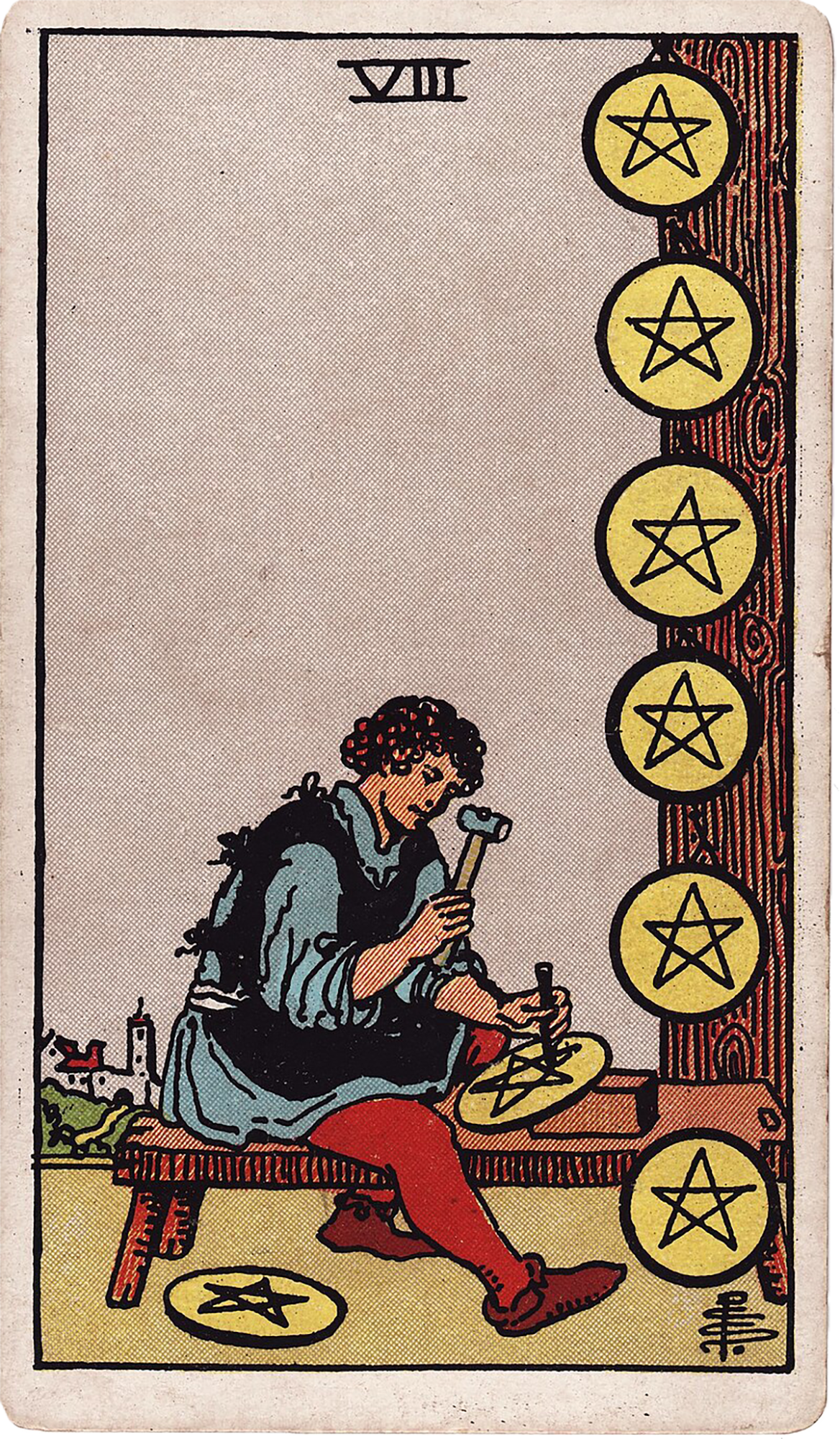 8 of Pentacles
Overview and teaching aim
This lesson explores a three-card combination: Ace of Wands, 8 of Pentacles and 4 of Swords. Read together, these cards describe the cycle of impulse, disciplined practice, and intentional pause. My aim is practical: to show how these cards modify each other, how to read them in different contexts (family, career, relationships, emotional/practical), and how to use the imagery of each card to form grounded, non-deterministic guidance. The public display will show the supplied card images; I will anchor interpretations repeatedly to what you can see in those images so the reading feels directly connected to the cards on the table.
Core symbolism and Rider–Waite–Smith visual cues
Before combining cards, refresh the core RWS imagery you see on the supplied cards and what it suggests practically. Ace of Wands: a hand emerging from clouds holds a budding wand. The hand from the clouds is the sudden impulse or offer—an energy appearing from an external or unconscious source. The budding tip signals potential that demands early action; the wand’s wood and leaves suggest growth when the wand is used. 8 of Pentacles: a focused craftsman sits at a bench repeatedly inscribing pentacles. The scene emphasizes apprenticeship, repetition, small improvements, and attention to material craft. Look at the bench, the tools, the concentration on a single coin—this is the slow accumulation of competence. 4 of Swords: a knightlike figure lies recumbent in a chapel or tomb, three swords hanging on a wall above and one sword beneath. The figure’s posture evokes deliberate rest, recuperation, or convalescence—an enforced lull after strain. The architectural setting (a church-like space) suggests intentional withdrawal rather than aimless escapism. These visual elements are your primary data when you build interpretations—describe them aloud when you read to keep your reading concrete and image-driven.
How these cards naturally modify one another
Think of the three cards as distinct functions in a single process: the Ace of Wands initiates energy, the 8 of Pentacles disciplines and channels it, and the 4 of Swords moderates the tempo with necessary rest. When combined, the cards answer different questions: Where does momentum come from? (Ace of Wands) How is momentum maintained and made reliable? (8 of Pentacles) When and why must it pause? (4 of Swords). Modification happens in two ways: 1) direction and scale: the Ace gives impetus and urgency to the 8’s practice (a budding idea met by steady apprenticeship), and 2) limits and timing: the 4 of Swords places boundaries and recovery windows under the momentum generated by the first two. Read the cards as a system: the Ace’s fire without the 4’s recuperation risks burnout; the 8’s discipline without the Ace’s spark risks mechanical repetition; the 4’s rest without the Ace or 8 risks stagnation or premature withdrawal.
Contextual interpretations: family and household
Family life often requires balancing exciting new initiatives with daily care and the need for rest. If these three cards appear for a family question, the Ace of Wands may represent a new idea—starting a family project, initiating a household tradition, planning a move, or launching a home-based small business. The 8 of Pentacles asks: who will do the day-to-day work to make this idea sustainable? It points to habit, scheduling, delegated tasks and learning practical skills together. The 4 of Swords warns that the family needs built-in recovery: regular quiet evenings, rotating breaks for caregivers, and agreed downtime after busy periods. Practical reading for families: map the Ace to the concept or proposal, the 8 to who will carry the work and what routines help, and the 4 to the recovery agreements (naps, child-free nights, household respite). If the 4 of Swords is reversed or emphasized negatively, it can mean an inability to rest—so use it as an invitation to formalize breaks rather than as criticism of effort.
Contextual interpretations: career and projects
Applied to career or a project, the Ace of Wands is the seed of an initiative—a new role, a side hustle, a presentation. Its RWS hand-from-the-clouds energy signals opportunity and timing: act now while the spark is fresh. The 8 of Pentacles maps to skill-building—training, apprenticeships, incremental deliverables, and quality control. The bench-and-tools imagery is a practical reminder: build systems and rituals that let you practice without thrashing. The 4 of Swords is the recovery policy—scheduled days off, buffers after sprint cycles, mental health breaks. Use the combination diagnostically: if progress stalls, is it because the Ace never got translated into a plan (no 8), or because the 8 is grinding without respite (no 4)? Conversely, a reversed 8 of Pentacles warns of perfectionism or chasing credentials to procrastinate rather than shipping; a reversed 4 of Swords warns of restlessness or forced downtime that shuts you down; and a reversed Ace of Wands may show blocked inspiration or fear of initiating. In practical terms, read these cards into a project plan: sprint (Ace), cultivate skill and deliverables (8), schedule recovery (4).
Contextual interpretations: relationships and emotional life
In relationships, the Ace of Wands often signals a spark—renewed attraction, a new way of relating, or the impulse to start fresh. The 8 of Pentacles asks both partners to put in craft and care: attentive listening, small reliable acts, learning each other’s languages of care. The 4 of Swords recommends intentional downtime to process emotions—private reflection, cooling-off periods after conflict, or agreed spaces to recharge. When reading for couples, map roles: which partner embodies the Ace (the initiator), which is the 8 (the steady contributor), and where does the 4 of Swords come in as a mutual boundary for self-care? If the 4 of Swords is reversed, watch for returning from breaks too soon or refusing rest because of guilt; if the 8 of Pentacles is reversed, watch for grinding away at the relationship without joy or for using busyness as avoidance. Avoid deterministic predictions; use the cards to suggest behaviors: act on the spark, craft the habit, rest intentionally.
Upright and reversed modifiers that matter for this trio
Upright combinations: Upright Ace of Wands + upright 8 of Pentacles + upright 4 of Swords is ideal for sustainable momentum: a clear start, disciplined practice, and scheduled rest. Upright Ace + upright 8 + reversed 4 of Swords signals a high risk of overwork: the group has ignition and capacity but neglects recuperation—advise scheduled breaks. Reversed Ace + upright 8 + upright 4 points to effort without inspiration: someone continues to work out of duty or habit but lacks a motivating ‘why’—reconnect to meaning before scaling. Upright Ace + reversed 8 + upright 4 warns against starting something without the willingness to learn the craft; you might prefer a short pilot that respects rest. Reversed 8 often shows perfectionism, boredom, or cutting corners—look at the Ace to see if the spark or impatience is driving that behavior. Reversed 4 often shows forced inactivity or avoidance—if it appears, ask whether rest is being used to avoid necessary practice (8) or to avoid acting on a new idea (Ace). Always read reversals as process-level signals rather than moral judgments: they point to what needs attention (simplification, boundary-setting, re-motivation).
Avoiding the one-card-at-a-time mistake
A common error when beginners see multiple cards is to read each card in isolation and then tack them together mechanically. Instead, practice relational reading: ask how each card functions in the system (initiate/maintain/restore), then trace interactions: Does the Ace feed the 8, or does the 8 constrain the Ace? Does the 4 interrupt the flow productively or destructively? Use image-based linking: point to the Ace’s budding leaf and ask how the 8’s tools help it grow; point to the 4’s chapel and ask whether the 8’s bench is inside or outside that space. Resist treating the 4 of Swords as 'bad' and the Ace as 'good'; all three are necessary parts of a healthy cycle. When teaching others, model phrases like: "The Ace is the impulse; the 8 turns impulse into craft; the 4 makes craft sustainable by mandating rest." This keeps the cards functionally connected.
Practical reading method and spreads
A reliable spread for these three cards: place them left-to-right as Initiate | Maintain | Recover. This linear reading maps a cycle and is especially useful for planning sessions. Alternative placements: Past | Present | Advice (Ace as past spark, 8 as present labor, 4 as advice to rest) or Role Map: Who Starts | Who Practices | Who Holds Space to Rest. Technique steps: 1) Describe each card’s image out loud to anchor to the supplied artwork. 2) Assign functional roles (initiate/maintain/recover). 3) Ask clarifying questions: Who is the Ace representing? Where does the 8’s work live in daily life? What does a healthy 4 look like here? 4) Look for modifiers (reversals, court cards, major arcana if present—note: in this lesson we only have the three supplied cards). 5) Form an action plan: one immediate action inspired by the Ace, one routine change supported by the 8, one rest boundary instituted by the 4. Use follow-up draws if you need details: draw a card clarifying how to rest (4), or what specific skill to practice (8).
Three example readings
Example 1 — Home renovation: Question: Can we renovate this summer? Ace of Wands: the homeowners are inspired and have a clear vision; act while permits are easy. 8 of Pentacles: the work requires slow craft—either hire skilled trades or build a phased plan of learn-and-do. 4 of Swords: schedule buffer weeks after major work for family rest. Action plan: book trades early (honor Ace’s timing), allocate weekend learning sessions (8), and block a recuperation week post-renovation (4). Example 2 — New teaching role: Question: Should I accept adjunct teaching? Ace of Wands: the role excites your identity and brings new energy. 8 of Pentacles: expect a learning curve—build templates and office-hour routines. 4 of Swords: protect mental bandwidth with prep-day boundaries and a recovery ritual after grading cycles. Example 3 — Relationship refresh: Question: How to restart connection? Ace of Wands: propose a new ritual or date idea. 8 of Pentacles: practice small consistent acts of attention (texts, check-ins, small chores). 4 of Swords: agree to solo downtime after intense conversations so emotions can be processed. Each example maps images to actions: the Ace’s hand asks you to act, the 8’s bench asks you to practice, the 4’s chapel asks you to rest deliberately.
Common mistakes and how to avoid them
Mistake 1: Treating rest (4 of Swords) as optional or as punishment. Fix: read the 4 as infrastructure—an essential resource for sustained productivity. Mistake 2: Reading the Ace of Wands only as "go for it" without checking capacity. Fix: always ask how the 8 of Pentacles will sustain the action. Mistake 3: Ignoring reversals' process-based meaning; calling reversed 8 lazy rather than identifying perfectionism or stagnation. Fix: ask what needs to be simplified or what skills are missing. Mistake 4: Not anchoring to imagery—abstract readings lose the distinctive character of these cards. Fix: describe the hand, the bench, the recumbent figure. Mistake 5: Overlooking who in the querent’s life embodies each card. Fix: assign roles or people to each card to make advice actionable.
Practice exercises for learners
Exercise 1: Do three small readings over one week for different topics but keep the same spread (Initiate | Maintain | Recover). Record how the Ace energizes, how the 8 prescribes routine, and how the 4 insists on rest. Exercise 2: Work with reversals: shuffle until one of the three cards appears reversed and journal the difference in tone—what does the reversed card ask the querent to change? Exercise 3: Image mapping: place the three card images and write one concrete action you can take that includes the visual cues (e.g., "plant one seed this week" for the Ace; "practice one 30-minute skill session" for the 8; "schedule one full evening off" for the 4). Exercise 4: Role-play with a friend: one person plays querent, the other reads the cards, then reverse roles. Focus on linking images rather than memorized meanings.
Closing guidance and interpretive logic
The interpretive logic for this trio is systemic: Ace of Wands supplies directional energy, 8 of Pentacles supplies process and competence, and 4 of Swords supplies limits and recovery. These three functions are all necessary in healthy cycles; the reader’s job is to map them into real-world rhythms and people. Keep the RWS imagery in front of you while you interpret: the wand’s budding leaf helps you judge timing; the craftsman’s bench helps you evaluate scale and routines; the recumbent figure helps you design intentional pauses. Use clarifying questions and follow-up draws when a card’s role is ambiguous. Teach clients that the cards never fix fate—they illuminate options and processes. With practice, the Ace/8/4 combination becomes a practical template for cultivating momentum without burning out.
Practice questions
• Where in my current life do I feel an Ace of Wands spark but lack an 8 of Pentacles plan?
• What routines or skills could I adopt this week that reflect the 8 of Pentacles’ apprenticeship energy?
• How does my current rest schedule measure up to the boundary implied by the 4 of Swords?
• Who in my life embodies the role of initiator, steady practitioner, and recovery-holder?
• When I feel tempted to skip rest, what concrete consequence does the 4 of Swords imagery warn me to avoid?
• If one of these cards were reversed in my reading, what small change would it ask me to try first?
• How can I translate the Ace of Wands’ urgency into a single first action that aligns with the 8 of Pentacles’ long game?
Comments
Sign in to comment.
Continue learning
Interpreting the Dance of Justice and The Devil: Balancing Morality and Temptation in Tarot Readings
The combination of Justice and The Devil in tarot presents a profound exploration of morality, temptation, and personal accountability. This article unpacks how these cards influen...
Harnessing the Power of The Magician and Ace of Wands: Igniting Creativity and Manifestation in Tarot Readings
The combination of The Magician and the Ace of Wands in tarot readings offers a potent blend of creative energy and manifestation power. This article delves into the ways these car...
Understanding the Synergy Between The Empress and The Emperor in Tarot Card Combinations
This article delves into the intricate synergy between The Empress and The Emperor cards in Tarot, focusing on how their combined energies modify and enrich readings across various...
Decoding Transformation and Renewal with Death and The Star in Tarot Combinations
This article delves into the card combination of Death and The Star, two powerful Major Arcana cards from the Rider-Waite-Smith deck. It explores how their imagery and meanings int...
Balancing Ambition and Compassion with The Emperor and Queen of Cups in Tarot Combinations
This article delves into the nuanced Tarot card combination of The Emperor and Queen of Cups, emphasizing how their energies complement and challenge each other. By analyzing their...
Finding Emotional Healing and Renewal with The Star and The Moon Tarot Combination
This article examines the rich interplay between The Star and The Moon tarot cards when they appear together in a reading. Using the traditional Rider-Waite-Smith symbolism and the...
Unlocking Emotional Wisdom with The High Priestess and The Queen of Cups in Tarot Combinations
This article delves into the card combination of The High Priestess and The Queen of Cups, emphasizing their shared themes of intuition, emotional depth, and receptivity. By examin...
Unlocking Emotional Resilience with Strength and The Star in Tarot Combinations
This article delves into the Tarot card combination of Strength and The Star, revealing how their interplay highlights pathways to emotional resilience. Anchored in the Rider-Waite...
Unveiling Emotional Strength with Strength and The Queen of Cups in Tarot Combinations
This article delves into the dynamic Tarot combination of Strength and The Queen of Cups, emphasizing how these cards together illuminate emotional strength, compassionate boundari...
Unlocking Emotional Transformation with Death and The Moon Tarot Combination
This article explores the rich and complex interaction between the Death and The Moon tarot cards within the Rider-Waite-Smith tradition, focusing on their combined potential to un...