
Decide When to Invest Pivot or Wait with 2 of Pentacles 7 of Pentacles and 8 of Pentacles
This lesson teaches how the 2 of Pentacles, 7 of Pentacles and 8 of Pentacles interact to form a decision-making triad about investment, pivoting or waiting. Anchored in Rider-Waite-Smith imagery—the juggling figure and infinity ribbon (2), the patient gardener evaluating growth (7), and the focused artisan at work (8)—the combination describes processes of balancing resources, assessing returns, and developing skill or craft. The article explains pairwise and three-card dynamics, offers context-specific interpretations (career, family/relationship, emotional/practical), presents a practical spread for real readings, highlights common mistakes, and gives concrete example readings. Read for learning and method rather than prediction.
Read the cards together
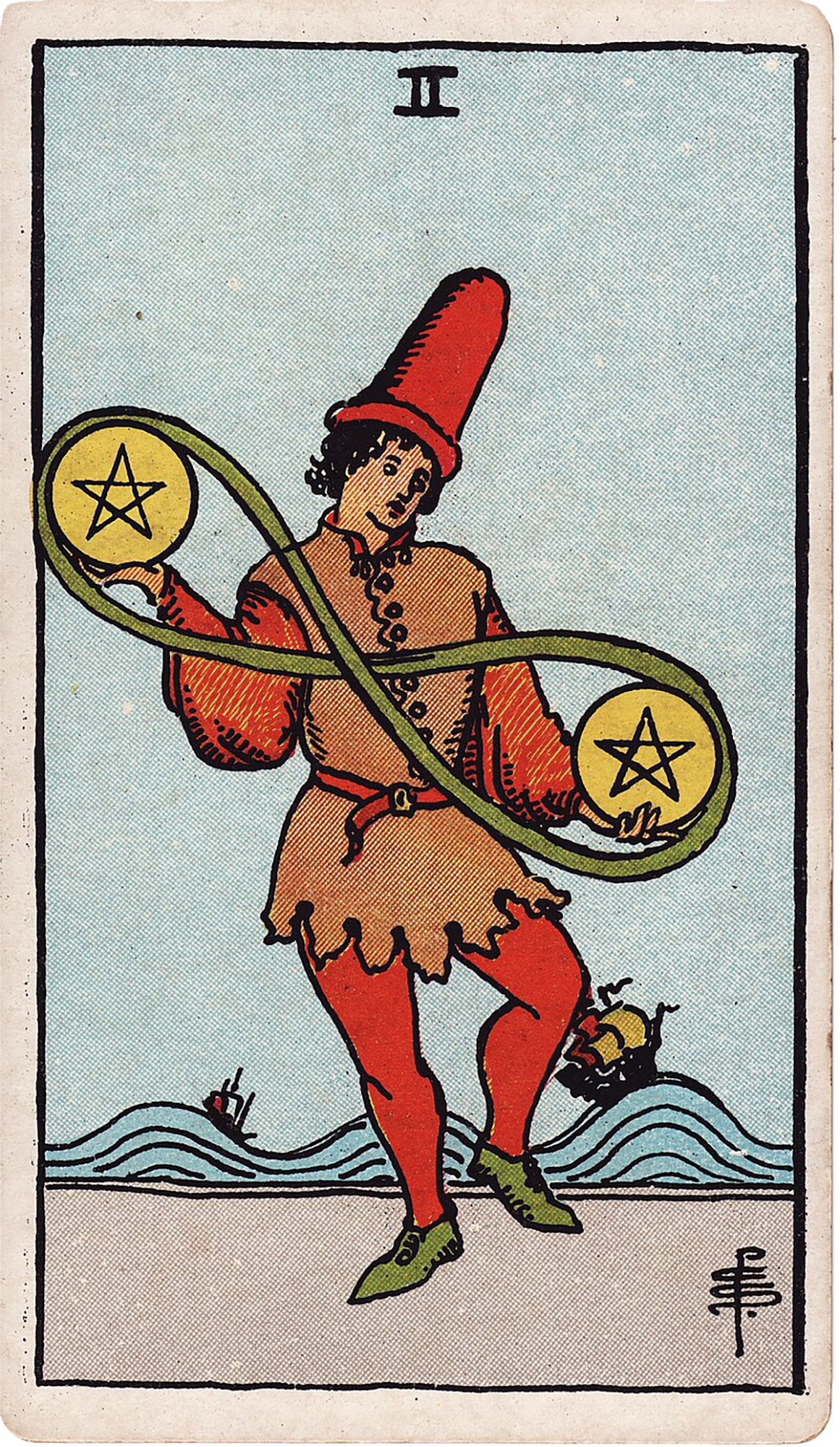 2 of Pentacles
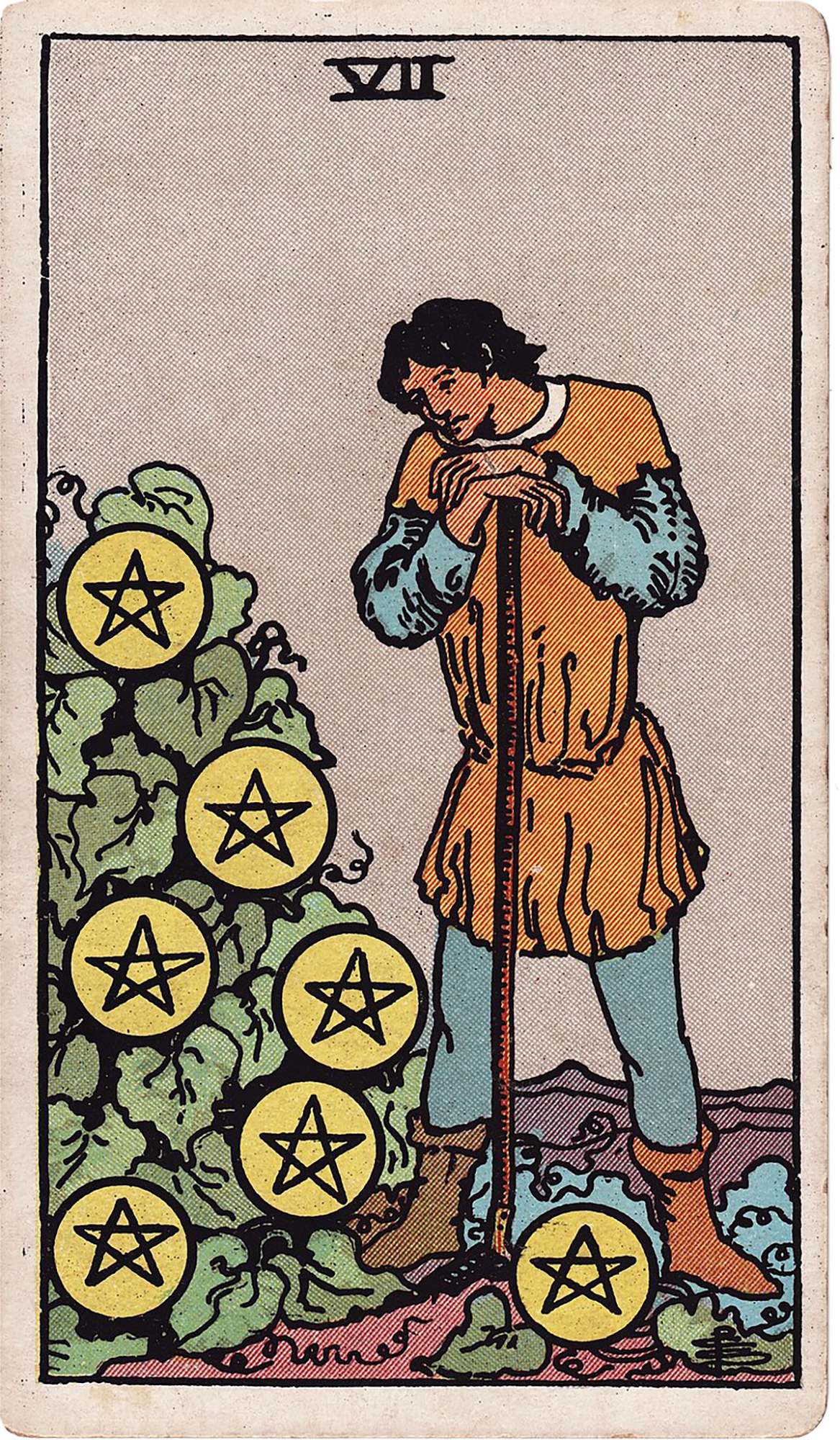 7 of Pentacles
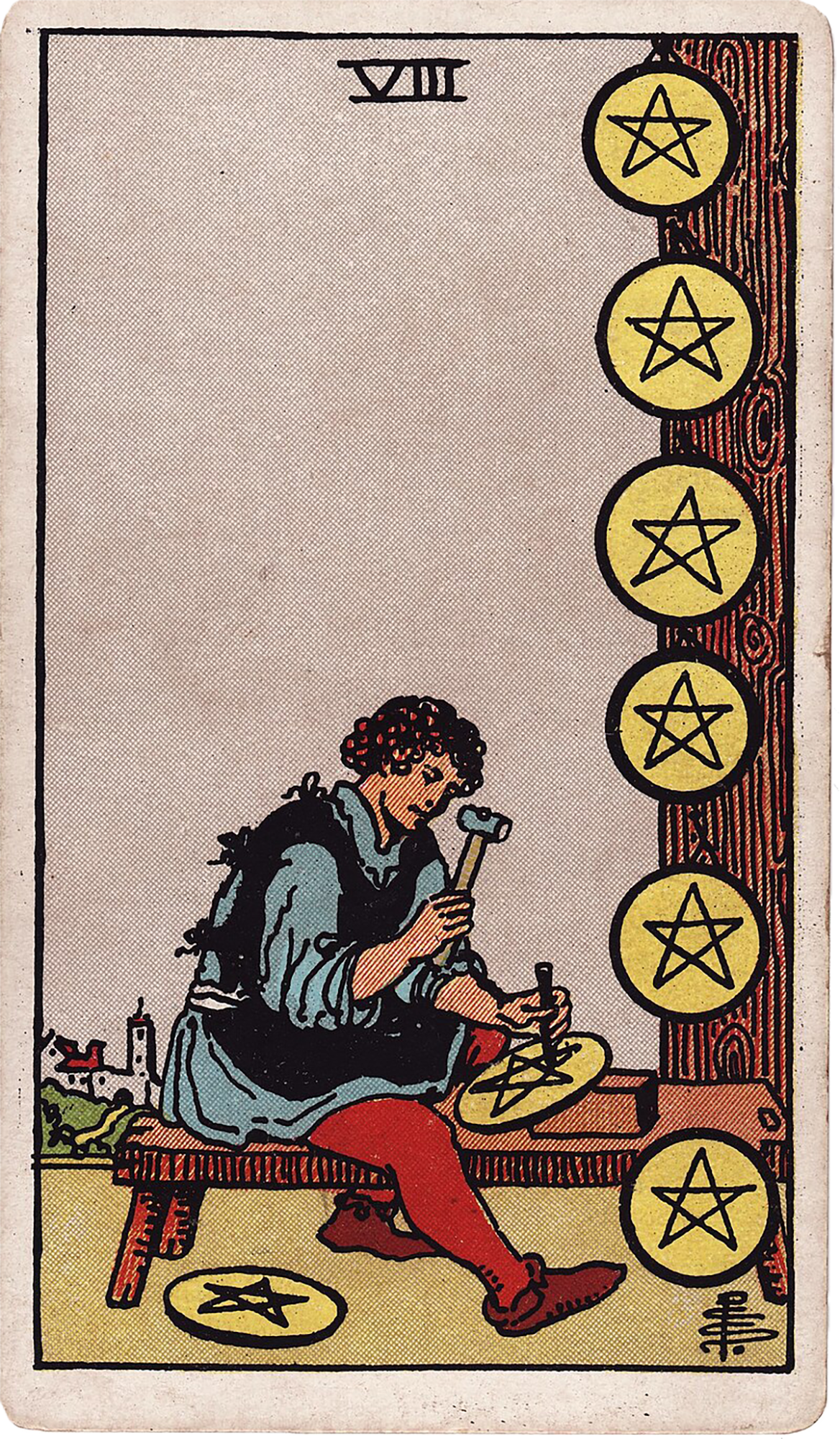 8 of Pentacles
Introduction and pedagogical aim
This article is a working lesson: it teaches you how to read the three supplied cards—the 2 of Pentacles, 7 of Pentacles and 8 of Pentacles—as a coherent system that answers practical questions like "Should I invest more here, change direction, or hold steady?" Rather than treating each card in isolation, we’ll use their Rider-Waite-Smith imagery to map a decision process. You will learn to compare motion (2 of Pentacles), review (7 of Pentacles) and craft/skill (8 of Pentacles) in real contexts. The goal is technique and interpretation logic: how to synthesize, ask clarifying questions, detect when the reading points to work versus timing versus structural change, and avoid simplistic one-card translations. This is educational—use the guidance to deepen your reading practice, not as absolute prediction.
Core images and what they contribute to the decision theme
Before combining meanings, anchor yourself visually. The 2 of Pentacles shows a figure juggling two pentacles connected by an infinity ribbon while ships ride waves behind them. Key visual signals: active balancing, changing tides, and a need for flexible rhythm. On the level of Pentacles the subject is material: money, work, routine, resources. The 7 of Pentacles shows a gardener pausing with a hoe, leaning and considering a bush that bears pentacles. Visual signal: assessment at a midpoint, patience, and a pause to judge progress. The 8 of Pentacles shows a craftsman at a bench, bent over careful work on repeated pentacles. Visual signal: focused practice, skill-building, and process refinement. Taken together visually: movement and juggling (2) happens while someone must evaluate the harvest (7) and decide whether to continue honing craft (8). When you read them together for "invest, pivot, or wait," think in these three time-and-effort registers: balancing resources now, reviewing medium-term yield, and committing to improvement. Use the images—ribbon, ship, gardener’s pause, craftsman’s bench—to read tonal detail and tempo.
How the cards modify each other: pairwise syntheses
Reading combinations is often easier pairwise before adding the third card. Work through each pair and note the directional push each gives. 2 of Pentacles + 7 of Pentacles: This pair frames a present juggling of responsibilities that intersects with a longer-term assessment. Visually: the active juggler is in motion while the gardener waits to see results. Interpretively this suggests you are managing shifting inputs (time, money, energy) while standing at a review point. The question becomes whether the balancing act is still serving the goal. Does the juggling preserve capital until the harvest is in? Or is the juggling obscuring poor returns and preventing a decisive step? Use clarifying questions about timelines and measurable outcomes. 2 of Pentacles + 8 of Pentacles: Here the juggler meets the craftsman. This pairing emphasizes process-level management: can you sustain the effort required to build skill or quality? The 2 of Pentacles asks whether current resource allocation supports repetitive practice; the 8 of Pentacles shows the work that pays long-term. This is often read as a practical scheduling question: can you create a steady routine that allows the craftsmanship the 8 demands while keeping other obligations afloat? If the 2 is reversed (overcommitment), it warns that too many responsibilities will erode the disciplined practice needed by the 8. 7 of Pentacles + 8 of Pentacles: This is the most directly investment-focused pair. The gardener evaluating the crop stands before the artisan at work. The 7 asks "Is the return worth continuing?" and the 8 answers with "Will further focus and training materially change the harvest?" If 7 shows patient, honest evaluation and 8 shows continued skill growth, the combination endorses continued investment with refinement. If 7 reads as sunk-cost thinking or impatience (reversed), and 8 is reversed (stagnation or cutting corners), the pair flags that ongoing effort may not be applied strategically and a pivot could be needed.
Triad reading: how the three build a decision narrative
When you read the full triad—2 of Pentacles, 7 of Pentacles, 8 of Pentacles—think in stages: immediate management (2), evaluation (7), and method/implementation (8). A simple narrative template is: "Right now you are juggling (2); you are at a review point about returns (7); the long-term success hinges on focused work and skill development (8)." From that narrative you can derive the three strategic options. Invest: The triad supports investment when 2 shows manageable balancing (upright), 7 shows realistic assessment and potential for growth (upright), and 8 shows active improvement and skill acquisition (upright). The visual story then reads: you can keep juggling current commitments without collapse, your review shows positive or salvageable returns, and focused craft will turn input into sustainable output. Pivot: The triad points to pivot when the 2 shows instability or overcommitment (reversed or stressed image), 7 shows poor returns or impatience (reversed), and 8 shows either stagnation or that the skill being trained isn’t the right one (reversed or mismatched). The visual story: balancing has become frantic, the harvest is poor, and the work being repeated isn’t producing progress—time to change course. Wait/Hold: The triad endorses waiting when 2 shows active but delicate balance (upright), 7 indicates that growth needs more time (upright) and 8 shows steady, patient improvement but not immediate payoff (upright). Visually: the juggler can keep things afloat, the gardener asks for more time, and the artisan needs continued practice before reaping reward. The advice becomes: maintain the balance, continue steady improvement, postpone large resource commitments.
Contextual interpretations: career and business
Career situations are one of the most natural arenas for these Pentacles. Use the images to translate into concrete workplace language. Scenario A — Early-stage business or project: 2 of Pentacles upright suggests you are managing cash flow, deadlines and multiple roles. 7 of Pentacles upright shows a mid-project review: you’re asking whether current burn is yielding future value. 8 of Pentacles upright shows that the product or service is improving because of focused effort. Combined reading: invest incrementally—reallocate resources to support the 8’s practice, but keep contingency for the 2’s changing tides. If pressure increases (2 reversed), prioritize the highest-leverage improvements from the 8 and delay nonessential spending. Scenario B — Job training or upskilling: 8 of Pentacles is central—skill-building is occurring. 2 of Pentacles tells you whether you can realistically schedule learning alongside work and family. 7 of Pentacles asks whether the expected career return justifies continued training. If 7 looks weak (reversed), consider pivoting your learning to adjacent skills with better payoff. If 2 is strained, rework the schedule or negotiate time to avoid burnout. Practical reading tips for career contexts: ask for specific metrics (revenue, hours, milestones), map timelines against the gardener-image (7) and the craftsman-image (8), and treat the 2 as a risk-management card that reveals whether your plan’s structure is flexible enough to handle the work of the 8.
Contextual interpretations: family and relationships
Although Pentacles are often material, these three cards apply powerfully to family and relationship decisions because family life requires resource allocation, long-term maintenance and skillful care. Household finance or caregiving: 2 of Pentacles shows the household member balancing bills, care duties and time. 7 of Pentacles represents the moment a partner pauses to ask if current patterns are sustainable or if habits must change. 8 of Pentacles brings in the idea of learning—maybe caregiving skills, budgeting, or new routines. If all three are upright you might be advised to wait and keep improving routines rather than make drastic changes. If 7 is reversed (sunk-cost), ask whether continuing to invest energy in the current arrangement is really serving the family. Parenting and education decisions: The 7 gardener’s pause is literal—evaluate whether the child’s current trajectory benefits from more structured skill-building (8). The 2 asks whether family logistics can sustain that additional investment. Use the imagery to discuss scheduling, shared responsibilities, and the realistic time horizon for results.
Emotional and practical life contexts
Emotional work and everyday projects also fit neatly. Health and routine: 8 of Pentacles is the disciplined practice required to change habits; 7 of Pentacles is the mid-course check on results (weight, strength, symptom change); 2 of Pentacles asks whether your life rhythm supports consistent practice. If 8 is upright but 2 is reversed, you may be doing good work but overloading other parts of life—adjust duration or intensity rather than quit. Home projects or property: The gardener-image (7) is perfect for renovations and maintenance. If 7 suggests patience while 8 shows method, the combination says keep improving workmanship. If 2 is stressed, it warns about juggling budgets and timelines—consider staging the project to keep everything afloat.
Upright and reversed nuances and how to avoid one-card thinking
Upright/reversed meanings are clues, not verdicts. Use them to detect whether an energy is healthy or stuck. For example, an upright 2 of Pentacles is adaptive balancing; reversed it signals overcommitment. An upright 7 is honest evaluation; reversed it might mean sunk-cost thinking. An upright 8 is skillful practice; reversed it flags perfectionism or grind without progress. Common pitfall: reading each card as a separate sentence ("2 = balance so do X; 7 = patience so do Y; 8 = work so do Z"). Instead, translate them into a single story about timing and method. Ask: does the 2 describe a stable pattern or an emergency? Does the 7’s evaluation support more investment or signal diminishing returns? Does the 8 represent the right skill or a misapplied routine? Reversals often show where the process needs repair: simplify (if 2 reversed), reframe or cut losses (if 7 reversed), or change method and learning strategies (if 8 reversed).
Practical reading method and a spread template
Use a simple three-position spread that maps to the cards’ natural roles. Label the positions Invest / Pivot / Wait or Present Management / Review Point / Work to Do. Shuffle and lay the three cards intentionally into these slots. Step-by-step method: 1) Read each card in its slot using image detail: note the ribbon in the 2 of Pentacles, the posture of the gardener in the 7, the tools and repetition in the 8. Anchor to what you see before you name meaning. 2) Take pairwise notes: how does the 2 influence the 7? Does the juggler’s motion make the gardener impatient or patient? How does the 8 change the 7’s assessment—can skill development materially change yield? 3) Build the triadic narrative: combine the pairwise work into a decision story that answers "invest/pivot/wait." Avoid binary conclusions—prefer conditional recommendations (e.g., invest if you can protect X; pivot if Y persists). 4) Ask clarifying questions to the querent: What is the minimum acceptable outcome? What is your timeline? What resource can you scale back? These questions map the cards to action. 5) Offer concrete steps: small experiments, time-boxed commitments, or staged investments consistent with the cards’ advice. If the 8 demands practice, suggest how much time per week and a metric to measure progress; if the 7 calls for evaluation, define the review criteria and date. Timing notes: Pentacles don’t always give precise timing. Use the spread to define a short-term action (2), a medium-term review (7), and a long-term methodological commitment (8).
Examples, sample readings and interpretive refinements
Example 1 — Career freelancer: Cards: 2 of Pentacles upright, 7 of Pentacles upright, 8 of Pentacles upright. Reading: You are balancing multiple clients successfully. Your mid-year review shows steady growth but not explosive returns. Focused skill development will convert modest gain into reliable income. Advice: Invest in a single high-leverage course or time-block two afternoons a week for skill practice. Add a measurable KPI for the next three months. Example 2 — Family budget: Cards: 2 of Pentacles reversed, 7 of Pentacles reversed, 8 of Pentacles upright. Reading: The household is overcommitted (2 reversed). You are persisting in an arrangement because of past investment (7 reversed). However, a family member is capable of acquiring a new skill (8 upright) that could change the calculus. Advice: Pause noncritical expenses, stop throwing more money at a failing pattern, and invest in the identified skill-building that could create more income or savings. Example 3 — Health routine: Cards: 2 of Pentacles upright, 7 of Pentacles upright, 8 of Pentacles reversed. Reading: You are managing daily tasks well and are willing to wait for results, but the practice you’re repeating is rote or perfectionistic (8 reversed). Advice: Re-evaluate your method: change exercises, vary intensity, or consult a coach to ensure the work is effective rather than monotonous. Interpretive refinements: Always quantify when possible. Translate "patience" into weeks or months and "practice" into hours per week. If a card’s image shows strain (e.g., the ship in the 2’s background riding high waves), weigh that into the urgency. If the gardener in the 7 looks weary, the reading leans toward impatience or need for rest. Use such visual details to nuance timing and risk.
Common mistakes, troubleshooting and ethical reading
Common mistakes: - Reading cards as directives instead of options. The cards describe dynamics and probabilities, not immutable law. - Ignoring relationships. A strong 8 cannot always offset a collapsing 2; the triad must be synthesized. - Overusing reversals as panic signals. Reversed cards often mean "work to be done," not catastrophe. - Not anchoring to imagery. The Rider-Waite details—ribbon, ship, hoe, bench—carry tempo and tone. Troubleshooting: - If the reading is contradictory, ask for more context or pull clarifying cards within the Pentacles family (if you choose to add cards later) or use yes/no clarifiers about timeline and resources. - If the querent asks for a firm answer and the cards give conditional advice, frame recommendations as experiments with measurable checkpoints. Ethical reading: - Avoid absolutes about money and family. Offer options and emphasize agency: the cards show patterns you can influence. Encourage responsible planning, professional advice for legal/financial matters, and incremental testing rather than radical leaps without due diligence.
Putting it into practice and closing guidance
Practice reads: take everyday decisions and practice laying these three cards in the Invest/Pivot/Wait template. Keep a notebook: record the visible details you relied on (ribbon motion, gardener’s posture, the craftsman’s concentration), the narrative you constructed, and the concrete next steps you suggested. After your chosen interval, check outcomes and refine your questions. Closing guidance: The 2 of Pentacles, 7 of Pentacles and 8 of Pentacles together form a highly practical, material-focused advisory system. They ask you to balance, evaluate, and work. Use them to structure decisions into smaller, testable steps: secure balance (2), set honest review markers (7), and commit to or alter the method of work (8). When in doubt, prefer staged investments and clear exit or review points—this keeps the juggling sustainable, the gardener honest, and the craftsman intentional.
Practice questions
• Where in my current life am I juggling responsibilities like the 2 of Pentacles, and which specific resource is most at risk?
• When I mentally play the gardener in the 7 of Pentacles, what measurable sign would convince me the investment is paying off?
• What practice or skill from the 8 of Pentacles, if strengthened, would most change my results in the next three months?
• Am I confusing steady work (8) with busywork or perfectionism (8 reversed)? How would I tell the difference?
• If the 2 of Pentacles were reversed in a reading, what three commitments could I temporarily simplify or pause?
• What timeline would I set for a review that honors the 7 of Pentacles’ patience but provides actionable information?
• How does the visual detail of each card (ribbon, ship, hoe, bench, tools) shift your sense of urgency or tempo?
• What small, time-boxed experiment could you run now that reflects the triad’s advice and includes a clear exit or review point?
Comments
Sign in to comment.
Continue learning
Interpreting the Dance of Justice and The Devil: Balancing Morality and Temptation in Tarot Readings
The combination of Justice and The Devil in tarot presents a profound exploration of morality, temptation, and personal accountability. This article unpacks how these cards influen...
Harnessing the Power of The Magician and Ace of Wands: Igniting Creativity and Manifestation in Tarot Readings
The combination of The Magician and the Ace of Wands in tarot readings offers a potent blend of creative energy and manifestation power. This article delves into the ways these car...
Understanding the Synergy Between The Empress and The Emperor in Tarot Card Combinations
This article delves into the intricate synergy between The Empress and The Emperor cards in Tarot, focusing on how their combined energies modify and enrich readings across various...
Decoding Transformation and Renewal with Death and The Star in Tarot Combinations
This article delves into the card combination of Death and The Star, two powerful Major Arcana cards from the Rider-Waite-Smith deck. It explores how their imagery and meanings int...
Balancing Ambition and Compassion with The Emperor and Queen of Cups in Tarot Combinations
This article delves into the nuanced Tarot card combination of The Emperor and Queen of Cups, emphasizing how their energies complement and challenge each other. By analyzing their...
Finding Emotional Healing and Renewal with The Star and The Moon Tarot Combination
This article examines the rich interplay between The Star and The Moon tarot cards when they appear together in a reading. Using the traditional Rider-Waite-Smith symbolism and the...
Unlocking Emotional Wisdom with The High Priestess and The Queen of Cups in Tarot Combinations
This article delves into the card combination of The High Priestess and The Queen of Cups, emphasizing their shared themes of intuition, emotional depth, and receptivity. By examin...
Unlocking Emotional Resilience with Strength and The Star in Tarot Combinations
This article delves into the Tarot card combination of Strength and The Star, revealing how their interplay highlights pathways to emotional resilience. Anchored in the Rider-Waite...
Unveiling Emotional Strength with Strength and The Queen of Cups in Tarot Combinations
This article delves into the dynamic Tarot combination of Strength and The Queen of Cups, emphasizing how these cards together illuminate emotional strength, compassionate boundari...
Unlocking Emotional Transformation with Death and The Moon Tarot Combination
This article explores the rich and complex interaction between the Death and The Moon tarot cards within the Rider-Waite-Smith tradition, focusing on their combined potential to un...