
Deciding on New Opportunities When You're Overloaded Ten of Wands and Ace of Pentacles
This article teaches how to read the Ten of Wands and the Ace of Pentacles together as a decision-making pair. The Ten of Wands shows accumulated responsibility and pressure; the Ace of Pentacles offers a tangible new beginning or resource. Read together, they form a tension between burden and possibility. This lesson explains Rider–Waite–Smith imagery for both cards, shows how each card modifies the other in career, relationship and emotional contexts, and presents practical techniques for reading the pair as a story rather than two isolated meanings. You will find examples, clarifying questions, common mistakes, and actionable steps to turn an offer into a sustainable reality or to decide when to decline.
Read the cards together
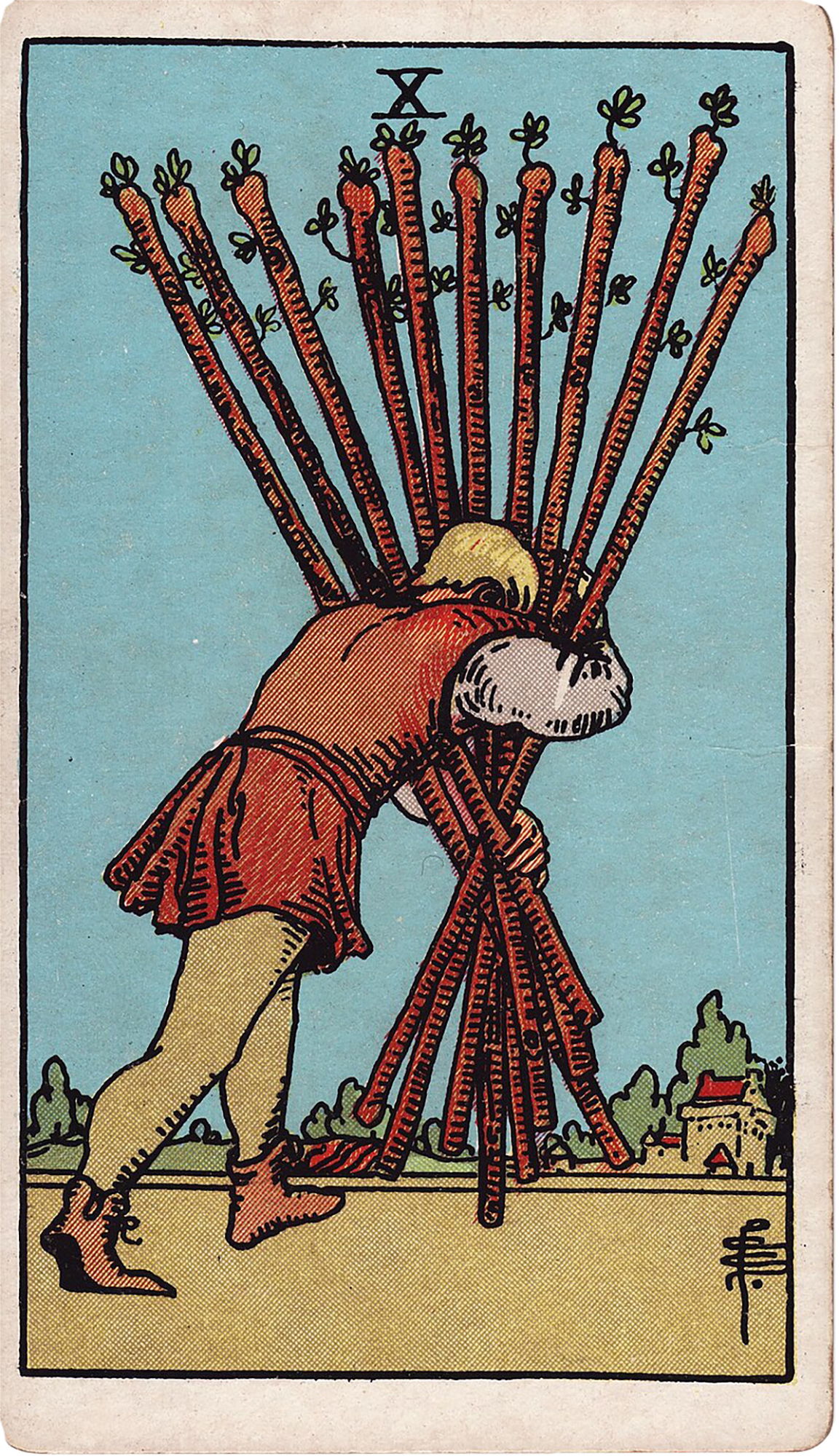 10 of Wands
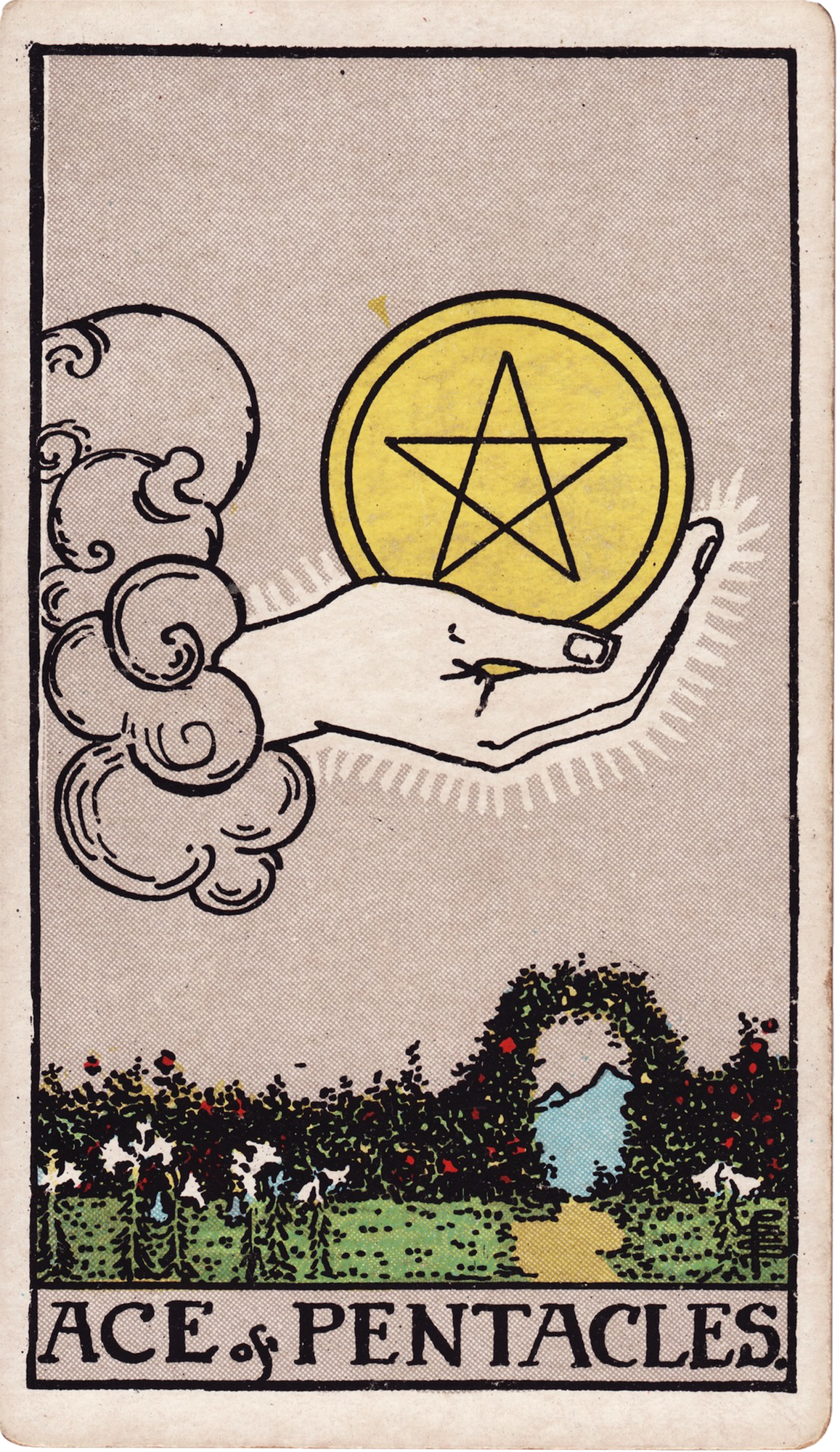 Ace of Pentacles
Introduction and central dilemma
The Ten of Wands and the Ace of Pentacles often arrive together when a querent faces a concrete offer at a moment of strain. The Ten of Wands visually shows a figure bent under a heavy bundle of wands, moving toward a distant town—completion is near but the load is crushing. The Ace of Pentacles shows a hand emerging from a cloud presenting a pentacle — a seed of material opportunity that needs grounding. The central question this combination poses is practical: can you realistically take on or cultivate this new resource when your present responsibilities are already heavy? This article teaches how to read the pair as an active problem to solve rather than a yes/no fortune.
Rider–Waite–Smith symbolism to anchor interpretations
Use imagery as a guide. On the Ten of Wands, note the red robe (drive and ambition continued despite fatigue), the crowded wands (weight that may be self-imposed), and the distant structure (a goal that’s visible but not yet reached). On the Ace of Pentacles, the hand from the cloud indicates an external offering or clear chance arriving; the pentacle as a seed or coin emphasizes tangible value, and the garden/ground motifs (from traditional RWS variations) imply something that will grow if given steady care. Bring these images into your reading: who is carrying the burden, what is the offer’s source, and is there room in the landscape of the card for cultivation?
How the cards modify each other: core narratives
Read the pair as a story with roles. The Ten of Wands provides context: accumulated duties, nearing completion, or self-imposed effort. The Ace of Pentacles is an opportunity that requires attention, resources, and time. Four core narratives emerge: 1) Opportunity arrives but requires lightening the current load before it can be cultivated. 2) The querent’s heavy effort has created the conditions for a new tangible reward — the Ace is a payoff for the grind. 3) The new opportunity is practical but will magnify existing burnout unless systems change. 4) The cards together recommend practical triage: accept after delegation; or decline and allow completion first. Which narrative fits depends on surrounding evidence, timing, and the querent’s capacity.
Career and work context: decoding offers and promotions
In a career reading, the Ten of Wands often marks a person already overloaded by projects, managerial tasks, or side hustles. The Ace of Pentacles can be a raise, a new job, a contract, or tools/resources. If the Ten of Wands dominates imagery (the figure looks exhausted in your mind’s eye), treat the Ace as conditional: the salary or contract is genuine but will require reallocation of time, delegation of existing tasks, or structural support to avoid collapse. If the Ace-of-Pentacles imagery appears more vivid (the hand and pentacle feel emphatic), the offer may come with resources to hire help or fund infrastructure. Clarifying questions: Who or what will absorb additional work? Can the new income buy back time? Is there a trial period to test capacity?
Relationship context: family roles, caregiving and new household resources
For family and relationship questions, the Ten of Wands often describes someone who has taken on disproportionate care work, emotional labor, or household responsibilities. The Ace of Pentacles sometimes indicates a concrete support: shared income, a new living arrangement, a donor, or practical help. Together they ask whether the relationship will redistribute labor to allow the new resource to be useful. If the Ten of Wands is upright, it may mean the person is carrying the bulk; if reversed it can mean they’re finally releasing duties. Read the Ace as either a solution (an offer to share resources) or a temptation that will be wasted unless roles are renegotiated.
Emotional and practical contexts: scarcity, capacity and self-care
Emotionally, the Ten of Wands can signal martyrdom, guilt, or an identity tied to being indispensable. The Ace of Pentacles invites a material or routine-oriented change that could heal or exacerbate stress. Use the pair to examine internal barriers: does the querent believe they must accept every offer because rejecting it feels like failure? Are they conflating worth with busyness? Practically, explore whether the Ace requires habits the querent cannot sustain right now (daily care, regular expense, or steady attention). The interpretive job is to translate feelings into actionable constraints (time, money, energy) and to weigh whether the opportunity aligns with long-term stability or will feed scarcity patterns.
Upright and reversed possibilities and how to use them
Upright Ten of Wands: responsibility is heavy; completion is near but the load must be managed. Upright Ace of Pentacles: a real, material opening. Combined (both upright): the most literal message is conditional green light — you can accept, but you must organize, delegate, or set structures so the seed can be nourished. Reversed Ten of Wands: symptoms of collapse, refusal to delegate, or final release. With an upright Ace, this can mean the querent must let go of tasks before the new resource is useful. Reversed Ace of Pentacles: missed opportunity or poor planning. Paired with an upright Ten, the cards warn that overload will cause failure to capitalize on tangible offers. Rather than treating reversals as binary opposites, ask: where is the process stuck and what must change to allow healthy expression of each card?
Technique to avoid one-card-at-a-time reading
Avoid reading each card as isolated statements. Techniques: 1) Story chaining — narrate the scene: who moves, who offers, and what action is required? 2) Verb focus — convert images into verbs (carrying, offering, grounding, planting) and see how those verbs interact. 3) Resource map — list time, money, emotional bandwidth; mark what the Ten consumes and what the Ace brings. 4) Dominance and source — ask which card is an internal pattern (likely Ten of Wands) and which is external (often Ace of Pentacles with the hand-from-cloud imagery). 5) Clarifiers and timeline — add a clarifying card or time marker to reveal if the Ace is immediate or a future potential. Read for process: burden → decision → action → consequence.
Practical reading method and sample phrasing
Step 1: Ask a specific question (e.g., Should I accept this job?). Step 2: Place Ten of Wands and Ace of Pentacles in a two-position spread: Left = current capacity; Right = opportunity. Step 3: Describe each card’s image aloud: who is carrying, where is the hand offering the pentacle. Step 4: Translate to constraints: how many hours/week, what financial cushion is needed, who will cover tasks. Step 5: Clarify with follow-up Qs: What must be delegated? What trial period would test feasibility? Example phrasing for clients: "The Ace is a real, testable offer, but the Ten shows your plate is already full—before you say yes, let’s list exactly what you’ll stop doing and whether the new income or tools can replace that time."
Common mistakes and how to correct them
Mistake: treating the Ace as automatic good news. Correction: ask what foundation is missing. Mistake: reading Ten only as external pressure when it may be self-imposed. Correction: ask what duties were chosen and why. Mistake: ignoring reversals or treating them as simple negatives. Correction: interrogate the process — reversals often reveal where change is required. Mistake: yes/no oversimplification. Correction: use stepwise plans, thresholds, and contingency language (e.g., accept if you can delegate two tasks or secure a three-month trial).
Exercises to deepen skill and client-facing questions
Practice exercise 1: Lay the two cards and write a 300-word scene that includes both images. Practice exercise 2: Role-play the querent as the Ten figure and the Ace as someone offering help; explore the negotiation. Client-facing clarifying questions: What would delegation look like here? Who benefits if you accept? What would decline allow you to finish? What’s the smallest, reversible step to test the offer? These exercises train you to move from symbolic description to operational advice.
Conclusion and interpretive logic
Reading the Ten of Wands with the Ace of Pentacles is a practical, grounded task. Use Rider–Waite–Smith imagery to anchor answers, transform images into verbs, and build a resource map. The combination rarely gives a blind yes: it asks for triage, structure, or release. Sometimes the right answer is to accept with conditions; sometimes it’s to finish what you’re carrying and then receive the seed. The tarot’s role here is to illuminate choices and thresholds, not to remove agency. Teach querents to test offers, set boundaries, and measure capacity so that new material opportunities can become sustainable growth rather than added weight.
Practice questions
• Which responsibilities in your life feel like wands you are carrying and which are actually chosen by you?
• If the Ace of Pentacles is an offer, what three concrete supports would you need to accept it without increasing burnout?
• Where in the imagery of the Ten of Wands do you see urgency versus poor planning?
• How would your decision change if the Ace of Pentacles came with a three-month trial or a budget for help?
• What habits or beliefs make you say yes to opportunities even when you are overloaded?
• Which tasks could you delegate this week to create one extra hour per day to test the new opportunity?
• If the Ace is reversed (a missed or poorly planned offer), what systems would you put in place to turn similar offers into successes next time?
• How can you translate the cards’ verbs (carrying, offering, grounding) into a two-step action plan?
Comments
Sign in to comment.
Continue learning
Interpreting the Dance of Justice and The Devil: Balancing Morality and Temptation in Tarot Readings
The combination of Justice and The Devil in tarot presents a profound exploration of morality, temptation, and personal accountability. This article unpacks how these cards influen...
Harnessing the Power of The Magician and Ace of Wands: Igniting Creativity and Manifestation in Tarot Readings
The combination of The Magician and the Ace of Wands in tarot readings offers a potent blend of creative energy and manifestation power. This article delves into the ways these car...
Understanding the Synergy Between The Empress and The Emperor in Tarot Card Combinations
This article delves into the intricate synergy between The Empress and The Emperor cards in Tarot, focusing on how their combined energies modify and enrich readings across various...
Decoding Transformation and Renewal with Death and The Star in Tarot Combinations
This article delves into the card combination of Death and The Star, two powerful Major Arcana cards from the Rider-Waite-Smith deck. It explores how their imagery and meanings int...
Balancing Ambition and Compassion with The Emperor and Queen of Cups in Tarot Combinations
This article delves into the nuanced Tarot card combination of The Emperor and Queen of Cups, emphasizing how their energies complement and challenge each other. By analyzing their...
Finding Emotional Healing and Renewal with The Star and The Moon Tarot Combination
This article examines the rich interplay between The Star and The Moon tarot cards when they appear together in a reading. Using the traditional Rider-Waite-Smith symbolism and the...
Unlocking Emotional Wisdom with The High Priestess and The Queen of Cups in Tarot Combinations
This article delves into the card combination of The High Priestess and The Queen of Cups, emphasizing their shared themes of intuition, emotional depth, and receptivity. By examin...
Unlocking Emotional Resilience with Strength and The Star in Tarot Combinations
This article delves into the Tarot card combination of Strength and The Star, revealing how their interplay highlights pathways to emotional resilience. Anchored in the Rider-Waite...
Unveiling Emotional Strength with Strength and The Queen of Cups in Tarot Combinations
This article delves into the dynamic Tarot combination of Strength and The Queen of Cups, emphasizing how these cards together illuminate emotional strength, compassionate boundari...
Unlocking Emotional Transformation with Death and The Moon Tarot Combination
This article explores the rich and complex interaction between the Death and The Moon tarot cards within the Rider-Waite-Smith tradition, focusing on their combined potential to un...