
Decoding Commitment with The Lovers The Hierophant and Two of Cups
This article teaches how to read The Lovers, The Hierophant, and 2 of Cups as a unit focused on commitment, values, and reciprocal partnership. You will learn how each card modifies the others in relationship and family situations, how upright and reversed placements change emphasis, a clear step-by-step method to read the combination, example scenarios, common mistakes, and reflective questions to bring ethical clarity to your readings.
Read the cards together
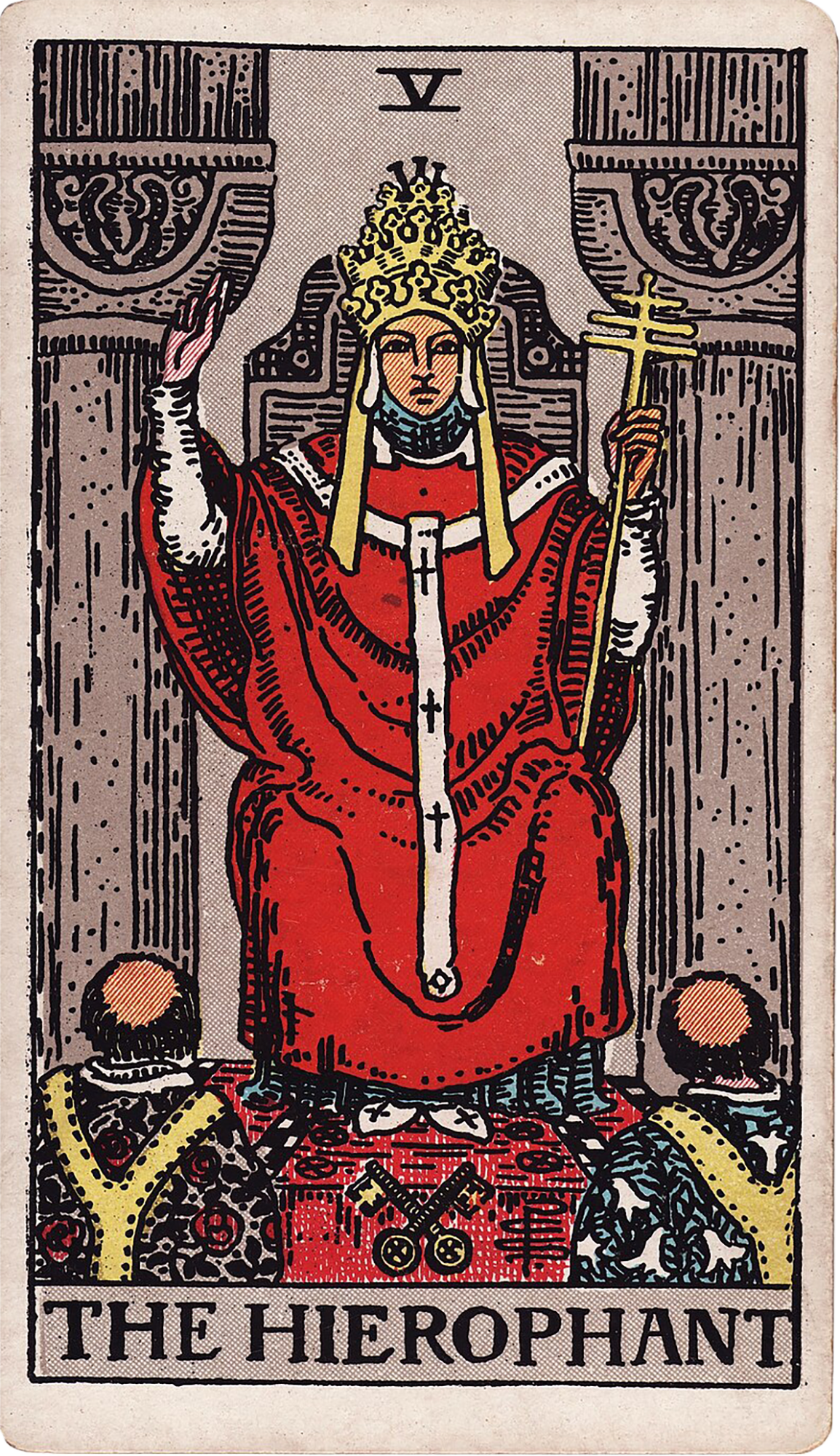 The Hierophant
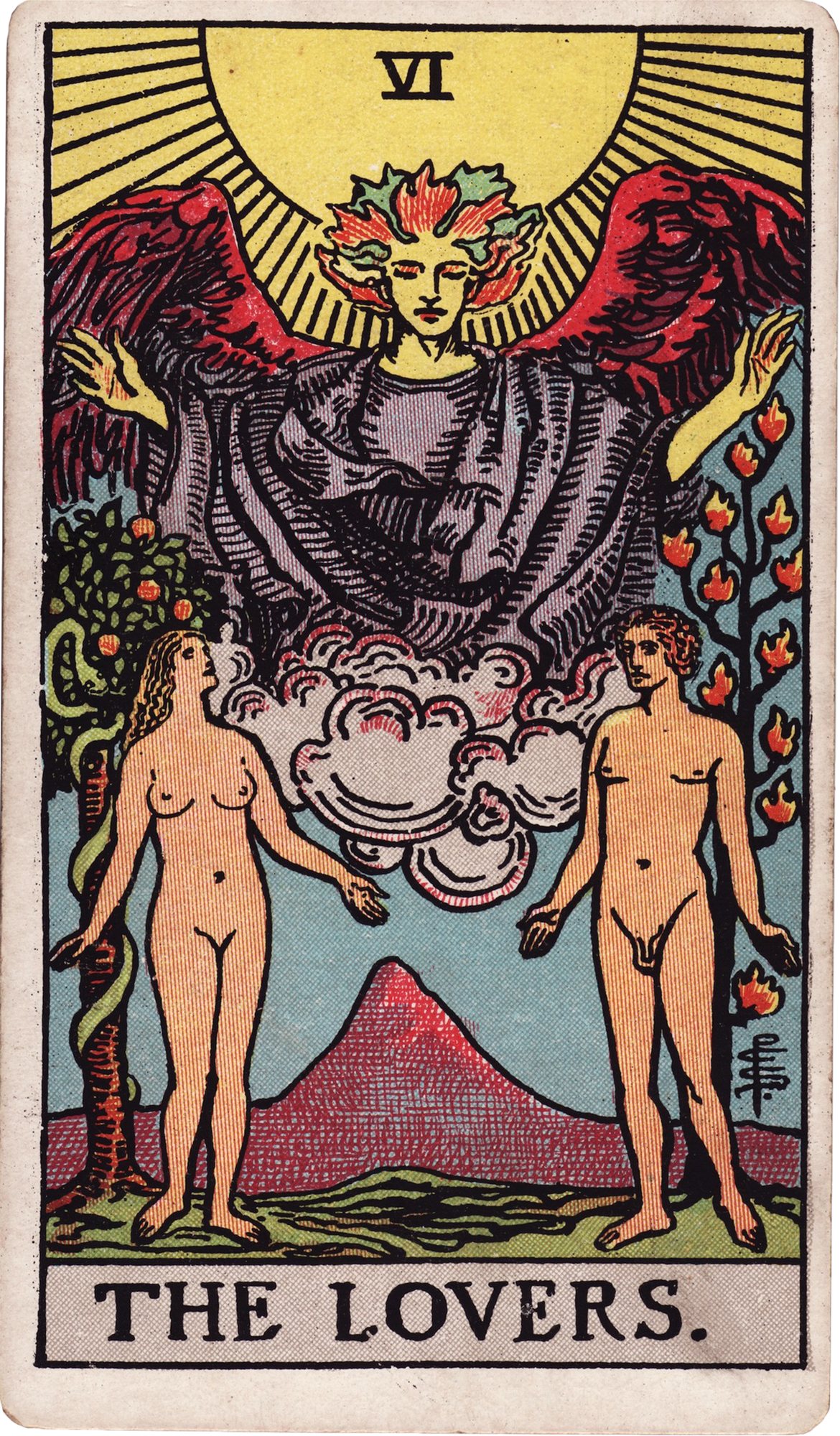 The Lovers
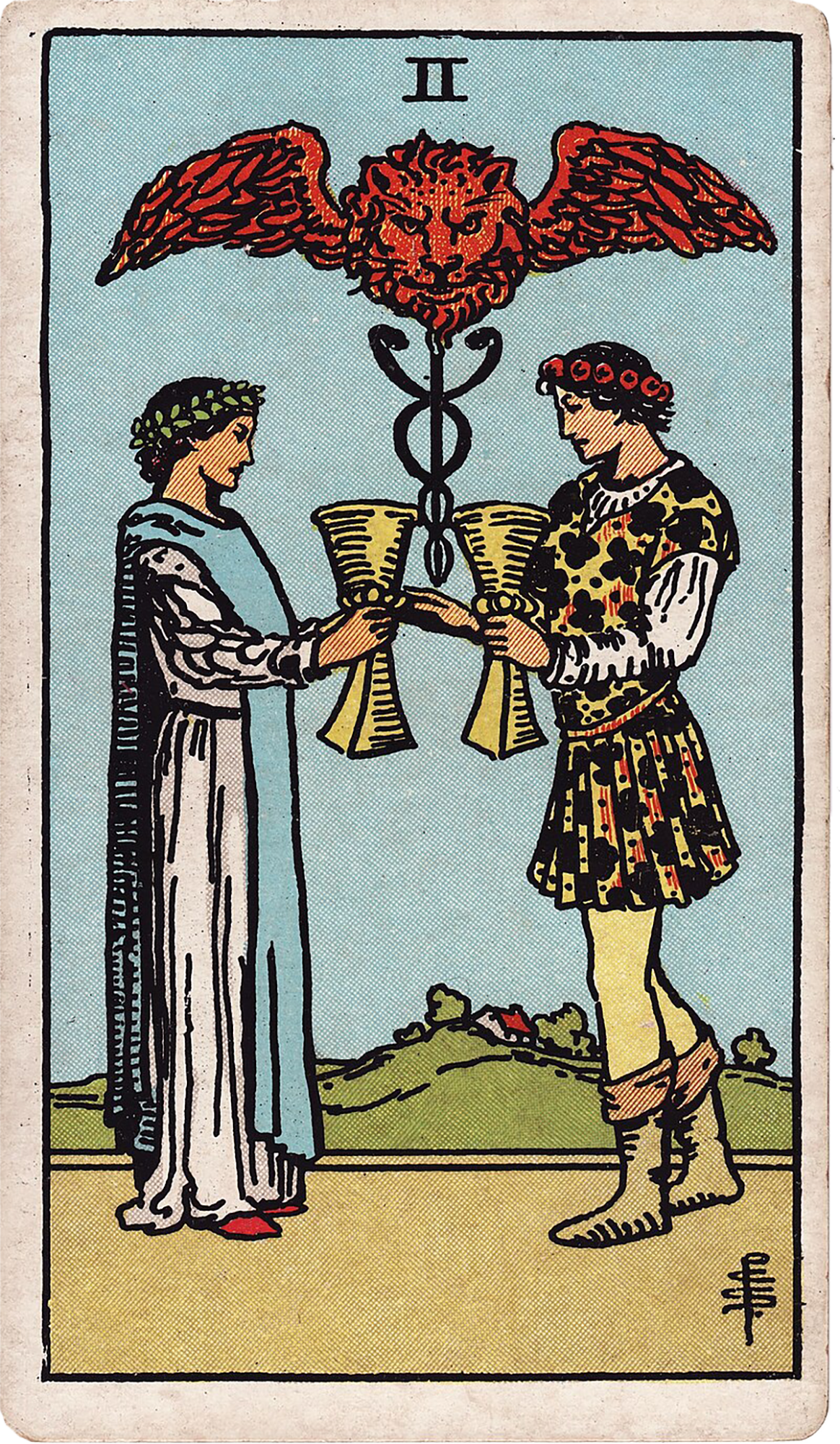 2 of Cups
Overview of the three cards and their visual language
Start by remembering what each image contributes. The Lovers shows two figures beneath an angel, the tree of knowledge and a mountain behind them — classical Rider‑Waite‑Smith symbolism for a choice that binds desire and moral alignment. The Hierophant sits on a throne making a teaching or blessing gesture, flanked by keys and the visual vocabulary of institution and tradition — authority, ritual, and learned structures. The 2 of Cups depicts two people exchanging cups with a caduceus (and a lion’s head on the wand in the RWS deck), a clear symbol of reciprocity, mutual recognition and the chemistry of partnership. When these cards appear together they form a concentrated conversation about choosing to enter or formalize a mutual bond under the oversight, rules, or blessing of a system (family, religion, law, or counselling). Anchor your reading to the images: who is blessing the bond? Are the partners looking at each other or away? Are keys and ritual present as enabling or constraining?
How card combinations modify meaning: basic principles
Treat combinations as a sentence rather than isolated nouns. Decide a reading order (for example: choice — structure — partnership) and read cards as subject, modifier, and outcome. Look for dominating imagery and where symbols repeat: both The Lovers and 2 of Cups include figures facing one another; that doubling strengthens the theme of relationship. The Hierophant’s institutional symbols (keys, throne, ritual gesture) can amplify, constrain, legitimate, or complicate the relational dynamic. Pay attention to posture and gaze in the images: mutual gaze in 2 of Cups suggests active reciprocity; the angel in The Lovers suggests conscience, higher guidance, or an ethical dimension to the choice. If one card shows obvious tension (for example a reversed feeling in the 2 of Cups), use the others to ask why — is the institution (The Hierophant) imposing rules that create inequality, or is the choice (The Lovers) misaligned with values?
Reading the combination in family and relationship contexts
Primary theme: commitment negotiated between personal desire and social or familial structure. Common threads: vows and rituals (The Hierophant), moral alignment and choice (The Lovers), reciprocity and emotional exchange (2 of Cups). Examples: - Traditional marriage or religious ceremony: The Lovers (choice and values) + The Hierophant (ritual, officiant, family expectation) + 2 of Cups (mutual bond). This combination often points to a formalization that feels both emotionally reciprocal and socially sanctioned. - Choosing a nontraditional path within a family context: The Lovers and 2 of Cups upright with The Hierophant reversed can show a couple whose private alignment is strong but who reject or experience strain with institutional models (dogma, empty ritual). - Family mediation or counseling: The Hierophant as qualified guidance, 2 of Cups as the repair of reciprocity, The Lovers as the intentional choice to follow or change family rules. The cards invite asking: are commitments being made from aligned values (The Lovers) and practiced as mutual exchange (2 of Cups), or are they imposed by tradition (The Hierophant) without reciprocity?
Career and practical-family situations
Read the combination broadly where family roles intersect with work or legal structures. For a family business: The Lovers = choice to join or not based on personal values; The Hierophant = existing company culture, rules, or elder authority; 2 of Cups = partnership dynamics with a sibling or spouse. If The Hierophant dominates, expect tradition and precedent to shape the partnership; if 2 of Cups is strained, look for unequal expectations or taken-for-granted roles that need renegotiation. In guardianship, inheritance, or custody contexts, this trio asks whether legal structures (Hierophant) reflect the couple’s values (Lovers) and whether agreements are mutual (2 of Cups). Bring specific, actionable questions: who benefits under current rules? What would reciprocal arrangement look like?
Upright and reversed interactions that matter
Use reversals to refine questions rather than to doom the outcome. Useful pairings: - All three upright: strong sign that a commitment aligns with shared values and will be practiced reciprocally, often supported or formalized by tradition or legal ritual. Not a guarantee of ease, but a coherent path. - The Lovers upright + The Hierophant reversed + 2 of Cups upright: the couple is aligned and reciprocal but intentionally stepping away from institution; examine whether the reversal is healthy independence or unresolved rebellion. - 2 of Cups reversed with The Hierophant upright and The Lovers upright: the relationship’s values are acknowledged and the institution expects commitment, but in practice reciprocity is fractured — ask what practical adjustments (boundaries, communication, renegotiation of roles) are missing. - The Hierophant reversed in any mix warns of ideology, dogma, or internalized rule that is either being questioned or is failing to provide wise guidance. When combined with The Lovers reversed it can signal divided loyalties under pressure from tradition. Always read reversals in context: a reversed Hierophant might be liberation, or it might be stubborn anti‑structure that leaves people unsupported.
Technique: a step-by-step practical reading method
1) Define the question precisely: encourage clients to frame what kind of commitment they mean (legal marriage, cohabitation, family agreement, business partnership). 2) Lay the three cards in a fixed order: Position A — The Lovers — the choice and value test; Position B — The Hierophant — the available structure or authority; Position C — 2 of Cups — the lived reciprocity. 3) Read images first: note gaze, gesture, objects (angel, keys, caduceus), colors, and any emotional tone. 4) Form sentences: "If you choose (Lovers) to follow/modify the institution (Hierophant), then the partnership will be… (2 of Cups)." Try variations with different emphases (structure first, relationship first) to see which narrative the cards support. 5) Ask clarifying questions aloud and, if needed, pull an extra clarifier for the spot that feels unclear. 6) Translate into action: what boundary, conversation, or step fits the level of reciprocity shown? For example, if reciprocity is present but The Hierophant shows rigid rules, suggest negotiation with family or consultation with a neutral mediator. 7) Close by summarizing options rather than predicting outcomes; prioritize agency and ethical alignment.
Common mistakes and how to avoid them
Mistake: assuming The Hierophant always means marriage or external ceremony. Remedy: check the card's role — is it support, pressure, or simply visible structure? Mistake: overreading one upright as globally positive. Remedy: examine the interplay — a lovely 2 of Cups can still be unhealthy if The Lovers shows misalignment. Mistake: treating reversals as absolute negatives. Remedy: read reversals as distortions or internalized forms of the upright quality and ask which practical steps would restore balance. Mistake: ignoring imagery detail. Remedy: use the angel's presence to ask about conscience, the Hierophant’s keys to ask what knowledge or permissions are needed, and the caduceus/lion motif in 2 of Cups to ask whether the bond is energized by healthy negotiation or raw instinct.
Example readings (short case studies)
Case A — Engaged couple uncertain about a religious wedding: Cards: The Lovers upright, The Hierophant upright, 2 of Cups upright. Interpretation: Values align, and family/institutional blessing is available and likely to support equal partnership. Practical advice: discuss expectations explicitly (roles, rituals), ensure ceremony reflects both partners’ values rather than defaulting to tradition. Case B — Partner wants family-business role: The Lovers upright, The Hierophant reversed, 2 of Cups upright. Interpretation: Emotional and value alignment exists, but the business’s traditional governance is problematic. Practical advice: suggest formal agreements, an external advisor, or written role descriptions to replace faulty tradition. Case C — Parents negotiating custody with tension: The Lovers upright, The Hierophant upright, 2 of Cups reversed. Interpretation: Both parties recognize values and legal frameworks are engaged, but practical reciprocity is failing. Practical advice: prioritize mediation, create concrete daily-sharing agreements, and repair communication channels rather than assuming legal structure alone will resolve emotional imbalance.
Putting it into practice ethically and skillfully
Aim for facilitation rather than prescription. Use the cards to illuminate choices and power dynamics. Invite clients to name what they see in the imagery and to decide which interpretation feels true. When The Hierophant appears, consider suggesting qualified guidance (a counselor, lawyer, officiant) if the reading implies institutional steps. When the 2 of Cups is weak or reversed, suggest small, concrete practices to rebuild reciprocity (turn-taking, negotiated chores, explicit appreciation). Keep a notebook: record how combinations play out over time to develop nuance. Teach clients the difference between alignment (The Lovers) and practice (2 of Cups) so they see commitment as both decision and daily action, sometimes supported or constrained by systems (The Hierophant).
Practice questions
• Where in my life am I making a choice (The Lovers) that requires either a ritual or formal structure (The Hierophant) to become stable?
• What does mutual reciprocity look like practically for me and my family (2 of Cups), and which small action would test it?
• Is any pressure to conform coming from healthy guidance or from unexamined dogma (How can I tell?)?
• If one card were missing from this trio, which would it be and how would the situation change?
• What external authority (legal, religious, familial) should I consult to clarify the next step?
Comments
Sign in to comment.
Continue learning
Interpreting the Dance of Justice and The Devil: Balancing Morality and Temptation in Tarot Readings
The combination of Justice and The Devil in tarot presents a profound exploration of morality, temptation, and personal accountability. This article unpacks how these cards influen...
Harnessing the Power of The Magician and Ace of Wands: Igniting Creativity and Manifestation in Tarot Readings
The combination of The Magician and the Ace of Wands in tarot readings offers a potent blend of creative energy and manifestation power. This article delves into the ways these car...
Understanding the Synergy Between The Empress and The Emperor in Tarot Card Combinations
This article delves into the intricate synergy between The Empress and The Emperor cards in Tarot, focusing on how their combined energies modify and enrich readings across various...
Decoding Transformation and Renewal with Death and The Star in Tarot Combinations
This article delves into the card combination of Death and The Star, two powerful Major Arcana cards from the Rider-Waite-Smith deck. It explores how their imagery and meanings int...
Balancing Ambition and Compassion with The Emperor and Queen of Cups in Tarot Combinations
This article delves into the nuanced Tarot card combination of The Emperor and Queen of Cups, emphasizing how their energies complement and challenge each other. By analyzing their...
Finding Emotional Healing and Renewal with The Star and The Moon Tarot Combination
This article examines the rich interplay between The Star and The Moon tarot cards when they appear together in a reading. Using the traditional Rider-Waite-Smith symbolism and the...
Unlocking Emotional Wisdom with The High Priestess and The Queen of Cups in Tarot Combinations
This article delves into the card combination of The High Priestess and The Queen of Cups, emphasizing their shared themes of intuition, emotional depth, and receptivity. By examin...
Unlocking Emotional Resilience with Strength and The Star in Tarot Combinations
This article delves into the Tarot card combination of Strength and The Star, revealing how their interplay highlights pathways to emotional resilience. Anchored in the Rider-Waite...
Unveiling Emotional Strength with Strength and The Queen of Cups in Tarot Combinations
This article delves into the dynamic Tarot combination of Strength and The Queen of Cups, emphasizing how these cards together illuminate emotional strength, compassionate boundari...
Unlocking Emotional Transformation with Death and The Moon Tarot Combination
This article explores the rich and complex interaction between the Death and The Moon tarot cards within the Rider-Waite-Smith tradition, focusing on their combined potential to un...