
Distinguishing True Romantic Bonding from Social Fling with The Lovers Two of Cups and Three of Cups
This article teaches how to read The Lovers, 2 of Cups, and 3 of Cups as a set to distinguish authentic romantic bonding from fleeting social chemistry. Anchoring the lesson in Rider–Waite–Smith imagery (the angel over The Lovers, the cup exchange and caduceus in the 2 of Cups, the celebratory circle in the 3 of Cups), you will learn how a Major Arcana theme of choice and values modifies the minor-arcana signals of reciprocation and social celebration. The piece covers concrete spread layouts, practical questions to ask in a reading, example interpretations (upright and reversed where diagnostically useful), common mistakes, and step-by-step technique for reading combinations instead of cards in isolation.
Read the cards together
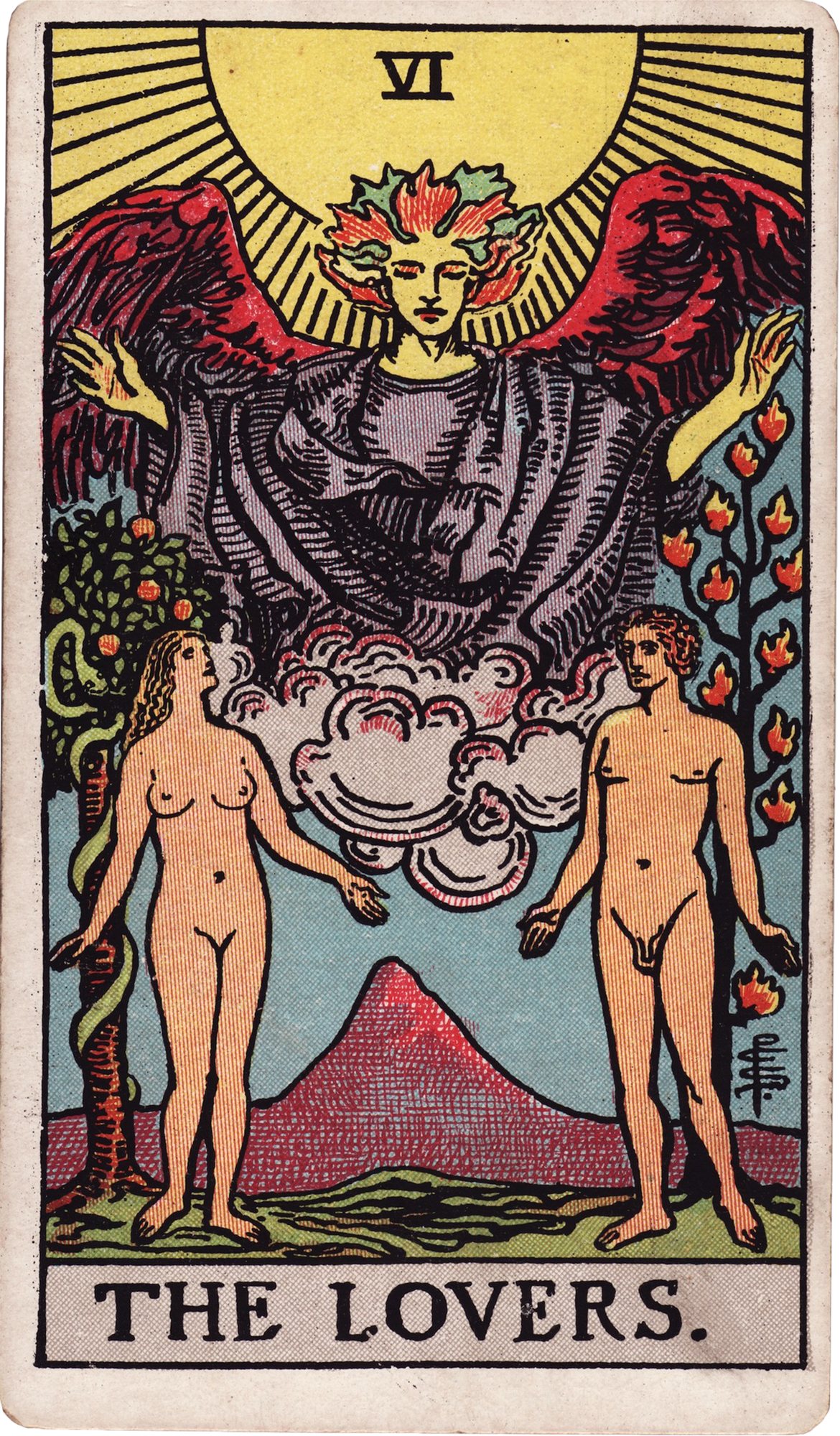 The Lovers
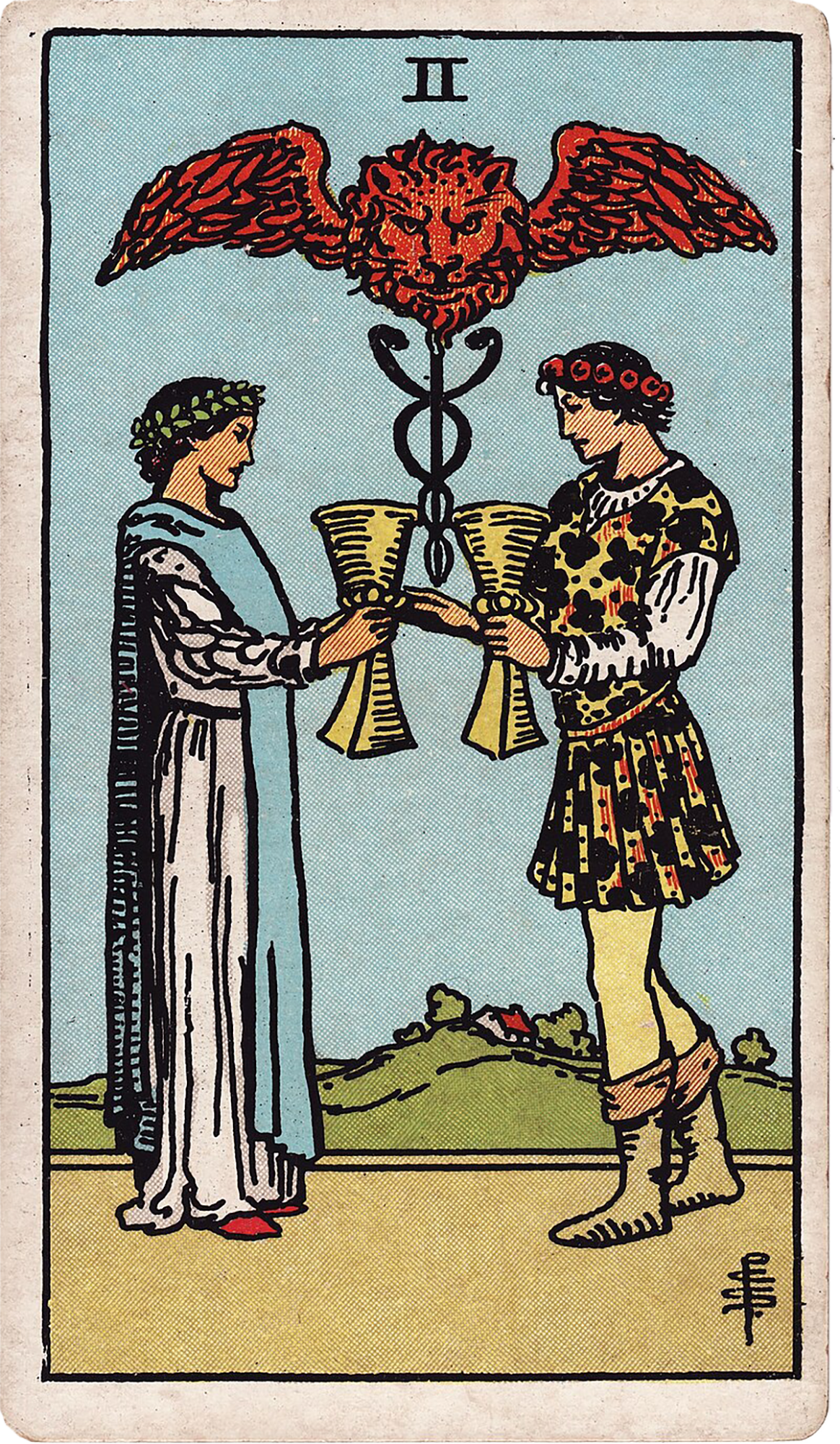 2 of Cups
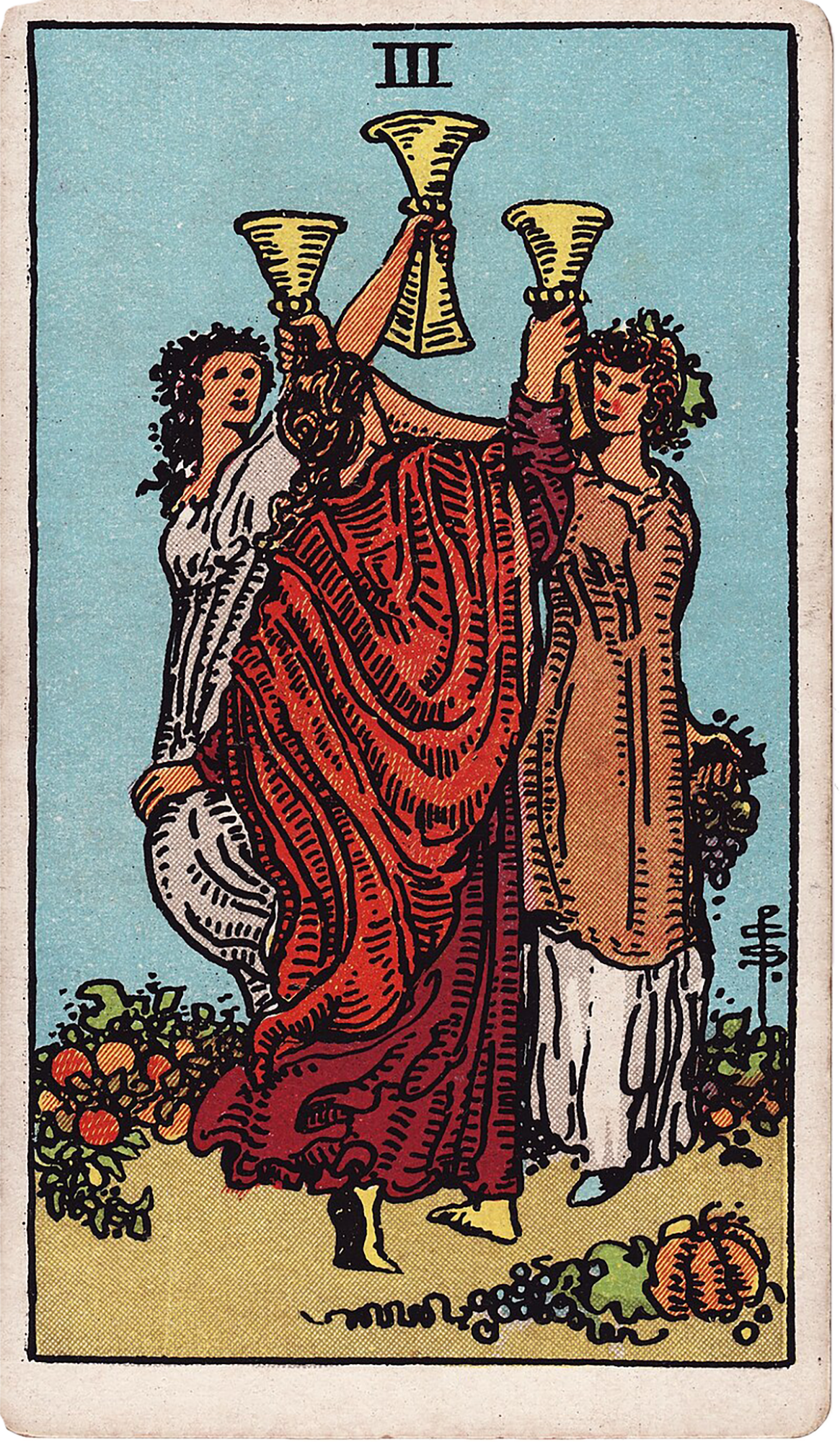 3 of Cups
Introduction: Why these three cards matter for relationship readings
When The Lovers, 2 of Cups, and 3 of Cups appear together, a reader is being shown three related registers of relationship energy: the Major Arcana theme of choice and values (The Lovers) and two flavors of Cups energy: the dyadic, reciprocal chemistry of the 2 of Cups and the communal, celebratory social life of the 3 of Cups. Each card is visually distinct on the Rider–Waite–Smith deck: The Lovers shows a man and a woman beneath an angel with a mountain and path behind them; the 2 of Cups shows two people exchanging cups beneath a caduceus-like symbol with a lion head; the 3 of Cups shows three women lifting cups in a circle, garlanded and harvesting. Those images are not decorative — they encode orientation, emphasis and tone. Working with them as an ensemble helps you move beyond single-card platitudes and toward a nuanced answer to a common client question: 'Is this real or just fun?'
Reading visuals as evidence: the symbolic hints you can trust
Learn to see the cards' images as evidentiary cues, not literal props. The Lovers' angel is a symbol of higher calling, moral alignment and conscious choice: when that angel dominates the reading, the question is not 'will this happen' but 'is this being chosen from a place of integrity?' The path and mountain behind the figures suggest consequences and a longer trajectory—there is a way forward, but it requires mutual willingness. In the 2 of Cups, focus on the exchange itself: cups are offered and accepted; the caduceus and the lion head above them suggest healing, balance of masculine/feminine energies, and a passionate life force shared between two. That card speaks to reciprocity and mutual recognition. In the 3 of Cups, attention goes outward: three women in a ring, raised cups, fruit at their feet—this image speaks to community endorsement, shared joy, possible matchmaking contexts (friends bringing people together), and the social life that either supports or distracts from a couple. When interpreting combinations, ask: which image is central in the querent’s life right now? Who is being depicted: two people in private exchange, or a social circle celebrating?
How the cards modify one another: principles of interaction
Work with these guiding principles when combining cards: - Dominant theme: The Lovers (a Major Arcana) immediately magnifies the moral, identity or long-term choice dimension. It turns Cup energies into questions about values and responsibility. If The Lovers is present, treat 2 of Cups and 3 of Cups as options or tests rather than final answers. - Axis of intimacy: 2 of Cups is one-on-one intimacy; 3 of Cups is communal intimacy. Where they appear relative to each other shows whether the relationship is growing from private reciprocity or the momentum of friends and parties. - Direction and tension: look for support or conflict. 2 of Cups plus The Lovers suggests that an intimate bond is ready to be chosen into; 3 of Cups plus The Lovers suggests a choice between group pleasure and deeper commitment. Put simply: 2 of Cups asks 'do we meet each other?' 3 of Cups asks 'who confirms us publicly?' The Lovers asks 'is the alignment worth choosing?' - Weighting reversals: a reversed 2 of Cups brings the practical question 'are we actually meeting each other?' A reversed 3 of Cups highlights problematic group dynamics: gossip or overindulgence. A reversed Lovers focuses attention on misalignment, temptation, or divided loyalty. When reversals appear, read them as interruptions to the usual flow: the gift (2 of Cups) is blocked, or the party (3 of Cups) is draining, and the high-integrity choice (Lovers) is uncertain or compromised. - Narrative flow: place cards left-to-right or past-present-future to create a story. For instance, 3 of Cups (past) → 2 of Cups (present) → The Lovers (future) would describe a connection born in social settings that has potential to mature into a values-based commitment if a deliberate choice is made. Always anchor interpretations to the imagery and to the querent’s concrete situations (work schedules, childcare, existing social circles).
Romantic relationship context: distinguishing a true bond from a social fling
The central learner question is often practical: 'Is this person a soulmate or a seasonal party partner?' Use the three cards to separate dynamics. Signals that point toward a true romantic bond: - 2 of Cups upright showing mutual, honest exchange between two people, with The Lovers present to indicate alignment of values and an intentional choice to commit or deepen. Imagery: the direct gaze and offered cup in the 2 of Cups, and the angelic sanction of The Lovers. - 3 of Cups in supportive position (for example, placed as background or past) that shows the relationship has social roots or blessing from friends but is not dependent on social approval. - Concrete behaviors in the querent’s life matching the images: shared problem-solving, festival-style socializing that includes the partner, joint planning for future steps (moving in, introducing family), and mutual vulnerability rather than performative displays. Signals that point toward a social fling: - 3 of Cups dominant and upright while 2 of Cups is absent or reversed. The imagery of raised cups among a circle suggests high social energy where chemistry might be real in the moment but dispersed across a wider circle. - The Lovers reversed or sidelined: the angel’s influence is missing or the figures are not making a deliberate, values-based choice. This may indicate temptation, divided loyalties, or a resistance to deeper commitment. - Practical signs that match: most interactions happen in group settings, partner is hesitant when away from friends, emotional reciprocity falters in private or under stress, and conversations remain on surface pleasures instead of shared values or practical planning. Key diagnostic question to ask the querent: 'Which card’s image shows how you most often experience them — the private exchange of cups, the communal celebration, or the angel calling to something longer-term?' The answer helps weight your interpretation.
Career, family and practical contexts where these cards also apply
These three cards are not limited to romantic contexts. Read them as relational dynamics in career, family and practical life by mapping the images onto roles and systems. - Workplace partnerships: 2 of Cups describes a strong professional partnership—mutual reciprocity on projects, complementary skills. If The Lovers appears with it, the relationship may ask for a values-based choice: collaborate exclusively or maintain independence? 3 of Cups in the background suggests team celebration and social cohesion: useful for networking but not the same as a committed colleague. - Family dynamics: 3 of Cups can represent extended family gatherings, support networks, or sibling alliances. 2 of Cups shows one-to-one bonds inside the family (close sibling or parent-child alliance). The Lovers suggests a major decision about family arrangements, custody, or how to align traditions with personal values. Watch for images: the 3 of Cups’ shared harvest might indicate family blessing, while The Lovers’ angel indicates ethical choices about family roles. - Practical planning: 2 of Cups indicates coordinated planning between two people; 3 of Cups shows community resources and support being available. The Lovers magnifies the moral question: does the plan reflect shared values (financial priorities, childcare choices, care of elders)? In readings about moving, work choices, or joint ventures, let The Lovers steer the reading toward alignment and deliberate choice.
When upright and reversed meanings matter most
Upright/reversed distinctions are useful when they illuminate where energy is flowing or blocked. Use them selectively to avoid mechanical interpretations. - When 2 of Cups is upright, emphasize reciprocity and repairability. If reversed, look for imbalanced effort or hidden reserves: one person giving more than the other, promises unmet, or mutual attraction not translated into mutual investment. - When 3 of Cups is upright, emphasize external validation, mutual friends, and celebrating with others. If reversed, watch for exclusion, drunken excess, gossip, or a group pulling someone away from a committed partner. - The Lovers upright rewards readings about deliberate choice, alignment and the moral question of whether something should be pursued. Reversed, it points to temptation, misalignment, or the need to clarify values. Example: 2 of Cups upright + 3 of Cups upright + The Lovers reversed suggests healthy chemistry that the social scene supports, but an internal or ethical misalignment prevents full commitment. Perhaps one or both people are ambivalent about exclusivity, or external temptations keep arising. The images tell you where to look for the dysfunction: is the angel missing because values haven’t been discussed? Are the cups being raised out of performance rather than intimacy? Always triangulate imagery, upright/reversed state and real-life behavior.
A practical reading method: a three-card layout and questions to guide you
Use this simple three-card spread to distinguish bonding from a fling. Place the cards left-to-right and read as Past → Present → Primary Question. Suggested positions and what to ask: - Position 1 (left) — Origin: What produced the initial chemistry? If 3 of Cups lands here, the bond likely began in social contexts. If 2 of Cups is here, it started as a private, reciprocal exchange. - Position 2 (center) — Current dynamics: What is the relationship actually like now? 2 of Cups here points to reciprocity; 3 of Cups here points to social momentum; The Lovers here points to a decision point or the need to align values. - Position 3 (right) — Outcome or next step: Will this become a lasting bond if nothing changes? The Lovers in this spot asks whether a conscious choice will be made. 2 of Cups as outcome suggests mutual commitment; 3 of Cups suggests the relationship may remain social. Follow-up clarifiers to draw as needed: a card clarifying loyalty and a card clarifying practical logistics (money, time, children). Ask the querent for behavioral evidence that matches the imagery: who introduces whom, what kinds of plans are being made, and how conflict is resolved. These concrete details help you translate symbolic imagery into counsel.
Examples and case studies: reading scripts
Example A: 3 of Cups (past), 2 of Cups (present), The Lovers (future, upright) Interpretation: The two people met in a party or through friends (3 of Cups). They now have reciprocal private exchanges and growing tenderness (2 of Cups). The Lovers upright in future position asks for a conscious choice: either make a shared commitment explicitly or risk losing the bond to temptation or social distraction. Advice to querent: have the values conversation; plan one-to-one time outside the group. Example B: 3 of Cups (center, upright), 2 of Cups (reversed), The Lovers (reversed) Interpretation: Social life dominates the relationship. The exchange between two people is unstable or unequal (2 of Cups reversed). The Lovers reversed signals divided loyalties or temptation. Here the images suggest a dynamic of performative romance—lots of flirting in public, insufficient private devotion. Advice: identify boundaries, ask how the relationship behaves when not being watched, and consider whether values alignment is being avoided. Example C: 2 of Cups (center, upright), The Lovers (left, upright), 3 of Cups (right, upright) Interpretation: The Lovers as the origin card says this relationship arose or should arise from shared values. The central 2 of Cups confirms mutuality. The 3 of Cups as outcome suggests the couple will be socially valued and celebrated—good omen for integration into community. Practical counsel: continue building private reciprocity while allowing the relationship to be celebrated; be mindful of balancing couple time with social time. Each example uses imagery to point to behaviors: where are the cups exchanged? Who is invited into the circle? Is the angel present?
Common mistakes and how to avoid them
Mistake 1: Reading each card separately and then stacking superficial summaries. Fix: interpret interactions—ask how the angel’s call (The Lovers) changes the meaning of shared cups or group joy. Mistake 2: Over-privileging 3 of Cups as romance. Fix: remember 3 of Cups is social; chemistry felt inside a crowd may not translate to commitment. Mistake 3: Treating reversals as 'bad' or as absolutes. Fix: reversals are functional clues about blocked energy or internalization—use them diagnostically. Mistake 4: Ignoring practical evidence. Fix: always ask for patterns of behavior that map to imagery: who introduces whom to family, whether plans are made, how conflicts are handled. Mistake 5: Forcing a single outcome. Fix: the presence of The Lovers makes a choice possible; use that to offer options and counsel rather than predictions. Practice tip: for three-card combos practice narrating the story in one or two sentences using the images. For example: 'They were raised together in social settings (3 of Cups), now they share private exchanges (2 of Cups), and soon must decide whether this will be a committed path (The Lovers).' This forces you to integrate images, sequence and meaning.
Interpretation logic and final technique checklist
When you read The Lovers + 2 of Cups + 3 of Cups, apply this checklist: 1. Identify the dominant card: Major Arcana (The Lovers) or a court-positioned card? Let the Major Arcana steer the theme. 2. Map images to real-world behavior: private cup exchange (2 of Cups); party/third-party support (3 of Cups); angelic choice (The Lovers). 3. Sequence cards in a spread to tell a temporal or causal story. 4. Look for tensions: reversed cards, conflicting images (2 of Cups reversed + 3 of Cups upright), or absence of private time. 5. Ask the querent for behavioral examples that confirm the imagery and adjust your reading accordingly. 6. Offer practical next steps rather than deterministic predictions: facilitate value conversations, boundary setting, or small experiments (date night without friends, invitation to meet the family) that test the reading. Remember: the Tarot points toward possibilities and patterns, not guarantees. These three cards together are particularly good at diagnosing whether attraction will be lived as a shared life or remain a set of social moments.
Closing: reading ethically and helping the querent decide
When you interpret The Lovers with 2 of Cups and 3 of Cups, your role is interpretive and advisory. Encourage the querent to see the cards as a map: The Lovers highlights the moral terrain and choice; the 2 of Cups shows the health of private reciprocity; the 3 of Cups shows social forces that can either bless or derail intimacy. Use imagery-based questions, request concrete behavior examples, and always frame next steps as experiments rather than pronouncements. Whether the direction is toward a genuine bond or a seasonal fling often comes down to the practical choices people make after they see the map—the conversation, the boundary, the shared plan. Your reading should help them notice that choice and act with integrity.
Practice questions
• When you look at the cards, which image feels most like your current experience: the private exchange in 2 of Cups, the public celebration in 3 of Cups, or the angelic call of The Lovers?
• What concrete behaviors would validate the 2 of Cups image in this relationship (e.g., shared vulnerability, balanced effort, mutual planning)?
• Who in the social circle represents the 3 of Cups energy, and does that energy support or distract from the relationship?
• If The Lovers is asking for a values-based choice, what are the specific values (trust, fidelity, shared goals) that need to be clarified?
• How would the reading change if one of the cards were reversed? What blockage or distortion would that reveal?
• What small experiment (a date without friends, a conversation about next steps, meeting family) could test whether the bond is deepening?
• Are there practical constraints (work schedules, children, distance) that the imagery does not show but which must be integrated into your interpretation?
• What follow-up card would you draw to clarify commitment: a card about timing, one about intention, or one about external circumstances?
Comments
Sign in to comment.
Continue learning
Interpreting the Dance of Justice and The Devil: Balancing Morality and Temptation in Tarot Readings
The combination of Justice and The Devil in tarot presents a profound exploration of morality, temptation, and personal accountability. This article unpacks how these cards influen...
Harnessing the Power of The Magician and Ace of Wands: Igniting Creativity and Manifestation in Tarot Readings
The combination of The Magician and the Ace of Wands in tarot readings offers a potent blend of creative energy and manifestation power. This article delves into the ways these car...
Understanding the Synergy Between The Empress and The Emperor in Tarot Card Combinations
This article delves into the intricate synergy between The Empress and The Emperor cards in Tarot, focusing on how their combined energies modify and enrich readings across various...
Decoding Transformation and Renewal with Death and The Star in Tarot Combinations
This article delves into the card combination of Death and The Star, two powerful Major Arcana cards from the Rider-Waite-Smith deck. It explores how their imagery and meanings int...
Balancing Ambition and Compassion with The Emperor and Queen of Cups in Tarot Combinations
This article delves into the nuanced Tarot card combination of The Emperor and Queen of Cups, emphasizing how their energies complement and challenge each other. By analyzing their...
Finding Emotional Healing and Renewal with The Star and The Moon Tarot Combination
This article examines the rich interplay between The Star and The Moon tarot cards when they appear together in a reading. Using the traditional Rider-Waite-Smith symbolism and the...
Unlocking Emotional Wisdom with The High Priestess and The Queen of Cups in Tarot Combinations
This article delves into the card combination of The High Priestess and The Queen of Cups, emphasizing their shared themes of intuition, emotional depth, and receptivity. By examin...
Unlocking Emotional Resilience with Strength and The Star in Tarot Combinations
This article delves into the Tarot card combination of Strength and The Star, revealing how their interplay highlights pathways to emotional resilience. Anchored in the Rider-Waite...
Unveiling Emotional Strength with Strength and The Queen of Cups in Tarot Combinations
This article delves into the dynamic Tarot combination of Strength and The Queen of Cups, emphasizing how these cards together illuminate emotional strength, compassionate boundari...
Unlocking Emotional Transformation with Death and The Moon Tarot Combination
This article explores the rich and complex interaction between the Death and The Moon tarot cards within the Rider-Waite-Smith tradition, focusing on their combined potential to un...