
Facilitating Difficult Conversations with Queen of Swords Temperance and Two of Cups
This lesson teaches how to read Temperance, 2 of Cups, and Queen of Swords together as a toolset for facilitating difficult family conversations. Using Rider–Waite symbolism and practical communication techniques, it shows how each card contributes: Queen of Swords for clear, honest boundaries and language; Temperance for timing, calibration and steady integration; 2 of Cups for reciprocity and mutual recognition. You will learn a three-step spread, ways to synthesize upright and reversed positions, concrete phrasings, common interpretive traps, and sample scenarios for family, career-adjacent family dynamics, and emotional or practical contexts.
Read the cards together
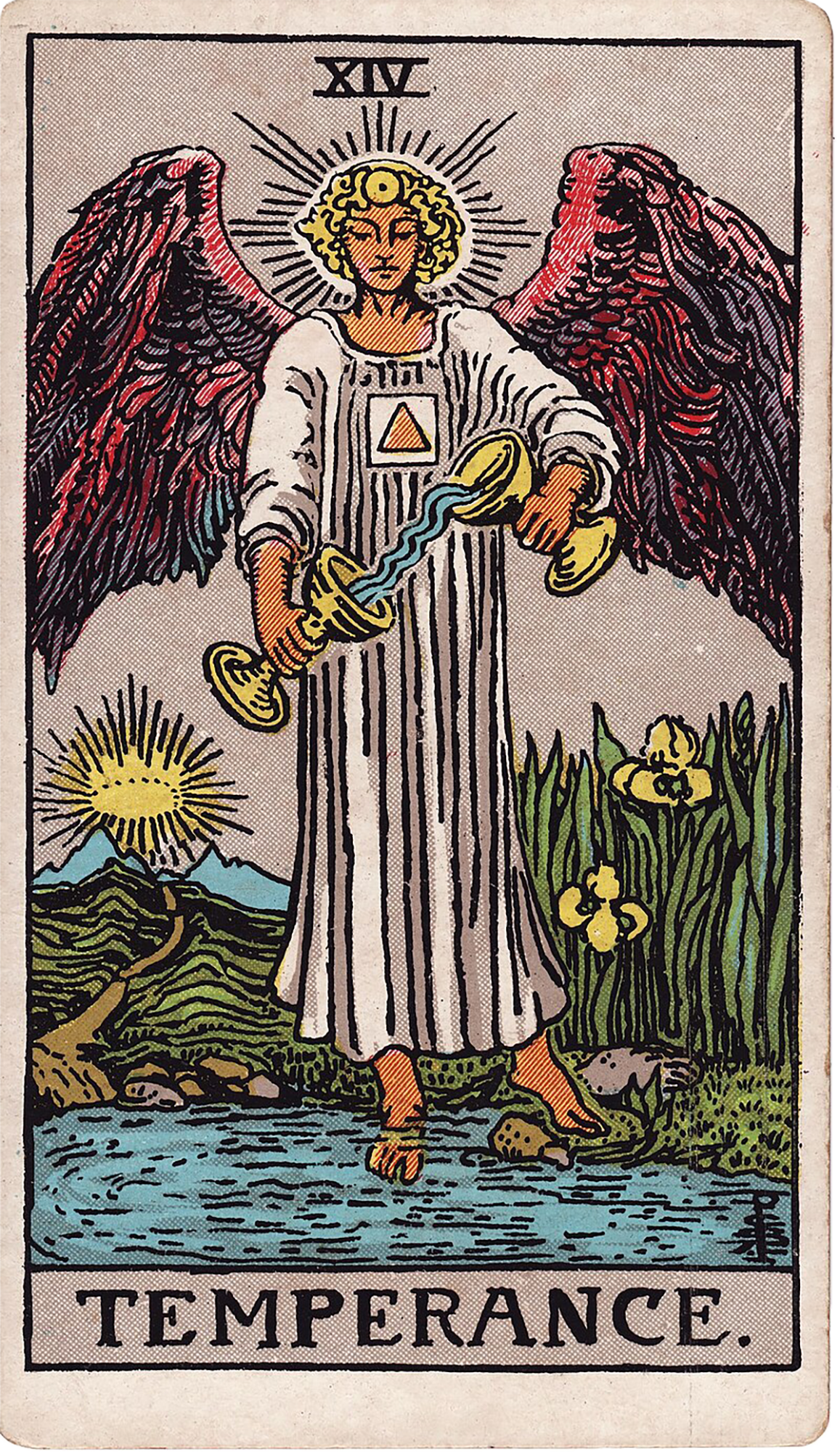 Temperance
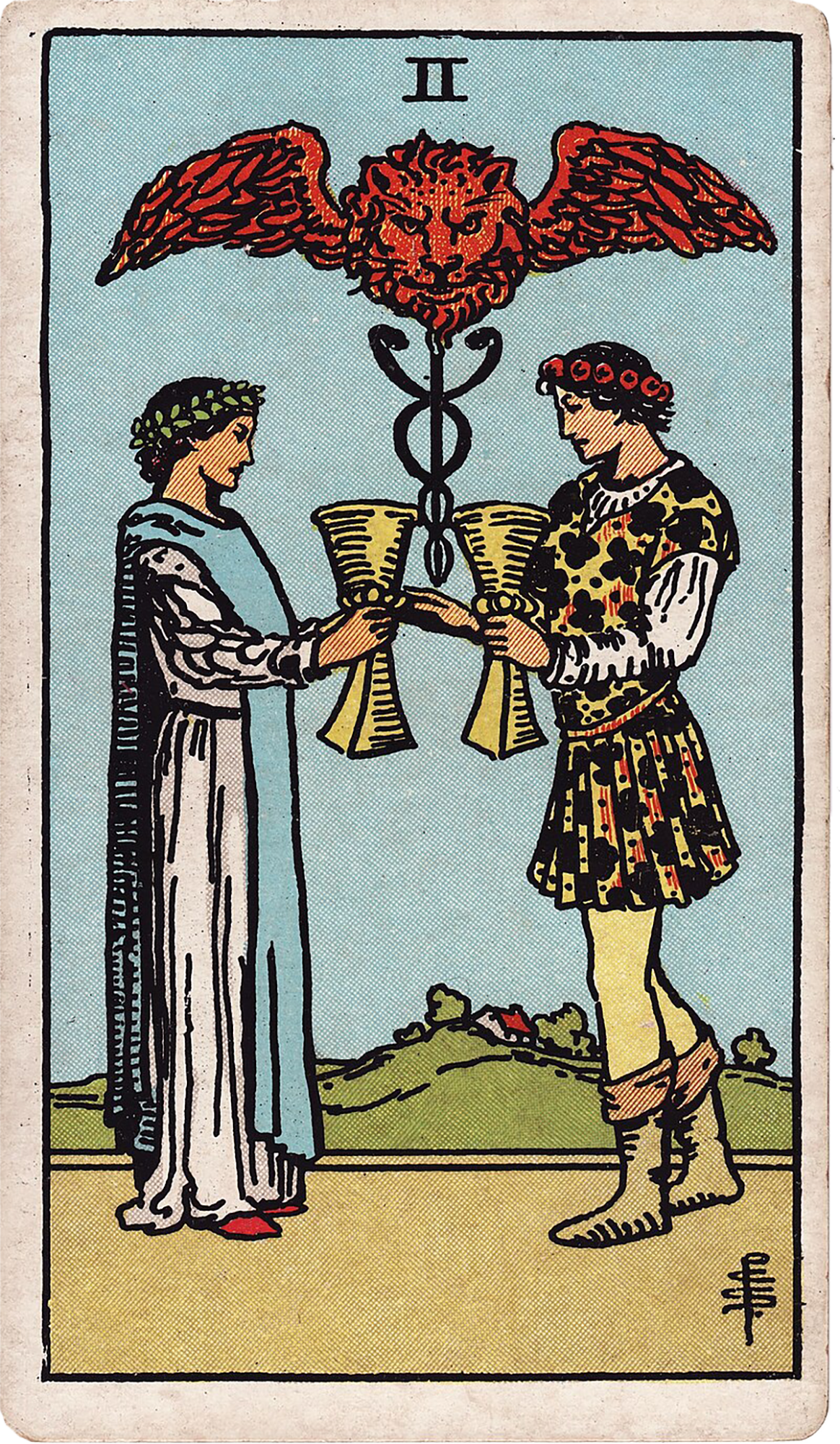 2 of Cups
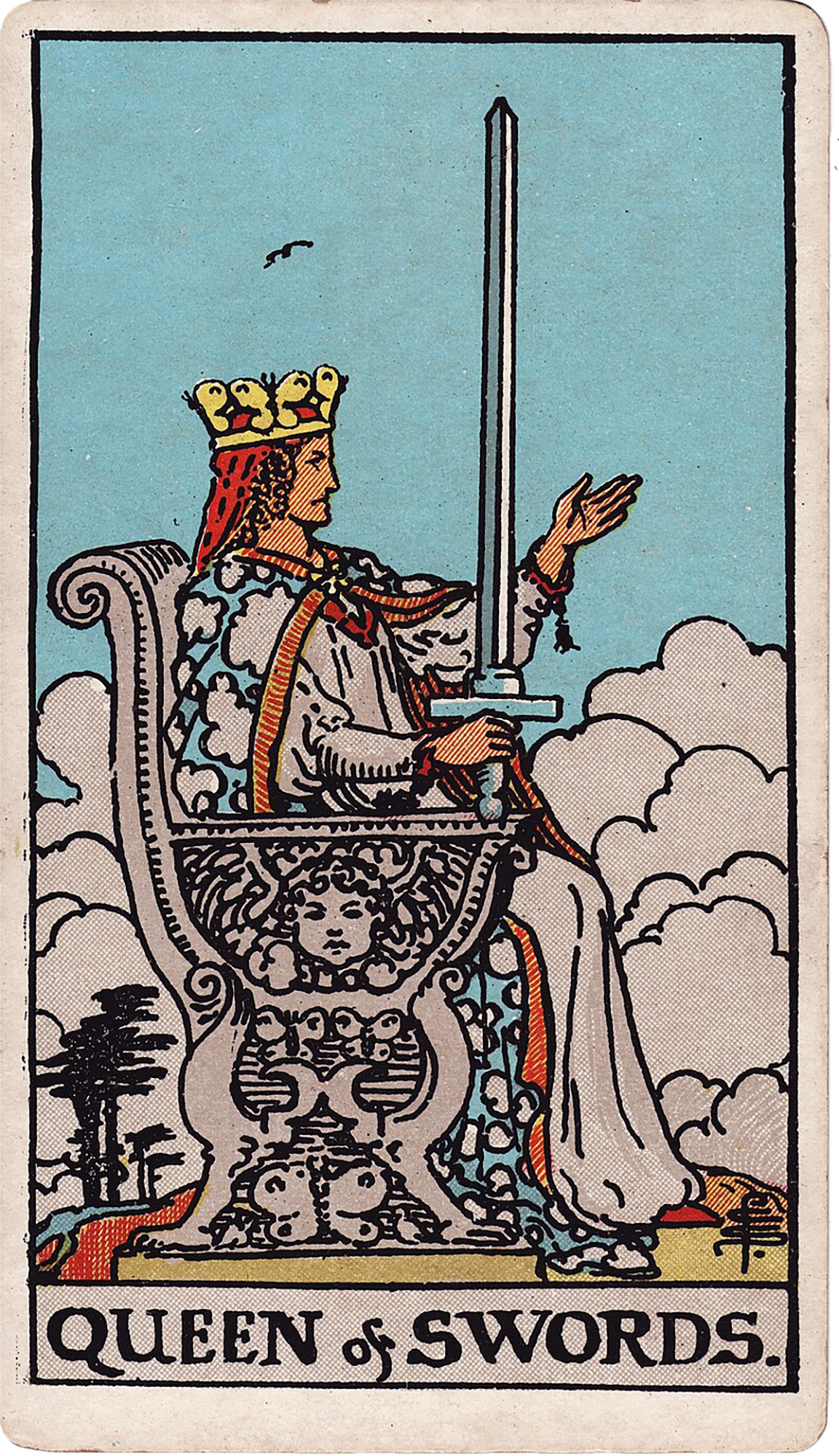 Queen of Swords
Why a three-card combination matters
When you see Temperance, 2 of Cups, and Queen of Swords together, the reading is asking you to hold three complementary functions at once: process (Temperance), relationship exchange (2 of Cups), and the communication style or boundary (Queen of Swords). Tarot is rarely about single-card prescriptions; the strength of a combination is how each card modifies what the others want to do. In family conversations—a topic this article centers on—these cards map naturally onto what a difficult conversation needs: clarity of message, a steady process for delivering that message, and an intention toward mutual recognition rather than dominance or avoidance.
Reading the images: Rider–Waite cues to keep in mind
Anchor your practical work in the visual details from the Rider–Waite-Smith deck. Temperance shows an angel or figure gently pouring liquid between two cups, one foot on land, one in water, and a path toward distant mountains or a sun. That pouring is not frantic mixing; it's careful proportioning and steady motion. Use that image to guide questions about pacing, small steps and making different parts of a situation work together. The 2 of Cups depicts two people facing one another, exchanging cups; above them is a caduceus or a winged lion's head depending on the deck—an emblem of a healing, almost medical reciprocity. This card's picture asks you to look for mutuality: who is being seen and returned in the exchange? Is there a vow or commitment gesture embedded in the scene? The visual focus is the meeting itself. The Queen of Swords sits on a throne holding an upright sword; her expression and posture suggest intellectual clarity and an ability to speak truthfully. Crowns, butterflies, or elements around her throne in RWS symbolism indicate transformation and the mature use of the intellect. When you picture the Queen, think of language that is exact, honest, and bounded—speech that cuts through obfuscation without necessarily injuring intent.
How these cards modify one another: a synthesis framework
Begin by assigning a functional role to each card as you interpret the spread: Temperance = process and pace; 2 of Cups = relational goal and reciprocity; Queen of Swords = communication style and boundary. Instead of reading each one separately, ask these three integrative questions: - Which card indicates the primary action to take now? (Often the court card, Queen of Swords, will supply this.) - Which card shows how to carry that action out? (Temperance often answers: gradually, proportionately.) - Which card shows the desired relational pattern and the measure of success? (2 of Cups points to mutual recognition and an exchange.) For example, if Queen of Swords asks you to speak directly about a hurt, Temperance tells you how to deliver that message (timing, tone, increments) and 2 of Cups reminds you to invite and expect a reciprocal response. The three cards together become a choreography: speak, pace, and invite mutuality.
Avoiding the one-card-at-a-time trap
A common beginner mistake is to treat each card like a separate prediction: Temperance will happen, 2 of Cups will happen, Queen of Swords will happen. The Tarot works best as a network. Resist reading cards in isolation by doing these steps: 1) Place the cards into functional positions (for example: Approach / Process / Outcome). 2) Read the image and text for each card in relation to its position. 3) Ask how the energy of one card changes the 'how' of another (e.g., how does Temperance's moderation change the Queen's blunt truth?). 4) State a single, concise guidance sentence that synthesizes all three (e.g., "Set a clear boundary in a short statement, then pause and offer a specific chance for the other person to reply, using slow, measured check-ins"). This method helps you generate advice that feels actionable and nuanced instead of compartmentalized.
Upright and reversed: when to emphasize behavior, blockage, or private process
Use upright and reversed placements to highlight whether the card's energy is available, blocked, or happening internally. Upright Temperance favors deliberate mixing and measurable steps; reversed Temperance points to impatience, overcorrection, or unclear boundaries between roles. Upright 2 of Cups indicates a capacity for reciprocal exchange; reversed 2 of Cups draws attention to misalignment, unequal effort, or a need to simplify expectations. Upright Queen of Swords encourages crisp, honest speech; reversed Queen of Swords warns of bitterness, cutting words, or emotional distancing. When cards are reversed, ask whether the difficulty is external (the other person resists) or internal (the querent is practicing but not yet integrated). For instance, Queen of Swords reversed plus Temperance upright plus 2 of Cups upright could mean the querent is tempted to use harsh language; Temperance says slow down and calibrate; 2 of Cups says keep the aim mutual. The reading is then practice-focused: rehearse the phrasing and monitor tone before speaking.
A practical three-card spread to facilitate a family conversation
Use a simple spread focused on action: Card 1 (Approach) = Queen of Swords; Card 2 (Process) = Temperance; Card 3 (Relational Goal) = 2 of Cups. Arrange the three cards left to right and read them in order. Step-by-step: 1) Queen of Swords as Approach: Name the main message you need to deliver. What is the precise boundary, observation, or truth that must be expressed? Use the Queen's symbolism to write a single, non-accusatory sentence: "I need to tell you X because it affects Y." Avoid narrative history; keep it present and clear. 2) Temperance as Process: Decide how you will deliver it. Will you use timed pauses, a calm tone, or offer examples in small pieces? Temperance suggests starting with a small step—an opening question, a short statement, then a pause for response. Visualize the pouring cups: alternate speaking and listening in measured portions rather than dumping the whole content at once. 3) 2 of Cups as Relational Goal: Articulate what a reciprocal response looks like. Are you asking for acknowledgment, a concrete change, or an expressed feeling? The 2 of Cups imagery asks that you make room for the other person’s cup to be filled too. Offer a simple invitation: "Can you tell me how this looks from your side?" or "Would you be willing to try X for the next week and then check in?" End the conversation with a short closing step informed by Temperance: schedule a lighter next step (a follow-up, a written note, or a brief check-in) so the integration is steady, not abrupt.
Concrete phrasings and micro-techniques anchored to each card
Use the Queen of Swords for sentence structure and boundary: "I noticed X; it affects Y; I need Z." Her sword asks for clarity—avoid hedging phrases that obscure your point. Temperance supplies pacing phrases and micro-techniques: "I want to say something briefly, then I want to hear you." Use time-limited turns: two minutes of speech then a pause, or "I’ll speak for 90 seconds and then stop so you can respond." Think of the cups passing from hand to hand—alternate turns. For the 2 of Cups, use reciprocity prompts: "What I’m hoping for is X; what can you offer in response?" or "I’m telling you this because I want us to be on the same page—how do you experience this?" If the other person is defensive, invite micro-agreements: "Can we agree to try this once and see what happens?" That kind of small, mutual pact mirrors the card’s exchange image and reduces psychological stakes.
Examples in family contexts
Example 1 — Adult sibling conflict over caregiving: Cards: Queen of Swords upright, Temperance upright, 2 of Cups upright. Interpretation: Speak clearly about responsibilities (Queen), break the caregiving plan into measured tasks and shared responsibilities (Temperance), and request a shared schedule or mutual agreement so everyone’s effort is seen (2 of Cups). Sample opening: "I’m worried about Mom’s medications being missed. I want us to set a simple schedule we can all follow. Can we each commit to specific days for one month and then check in?" Example 2 — Parent and adolescent boundary issue with mixed signals: Cards: Queen of Swords upright, Temperance reversed, 2 of Cups reversed. Interpretation: The truth needs to be stated (Queen), but the process is currently rushed or lopsided (reversed Temperance), and mutual understanding is weak (reversed 2 of Cups). Advice: Keep the message short and factual. Don’t try to force immediate mutuality. Instead, suggest a small trial with clear terms: "I need you to be home by X tonight. If it’s difficult, tell me how we can make that happen." Follow-up with a calm planning session later when emotions are lower. A pattern across scenarios: the Queen provides the voice, Temperance the tempo and structure, and the 2 of Cups the relational metric you use to judge success.
Career adjacent family scenarios and emotional/practical contexts
Family conversations can overlap with career issues—inheritance disputes, role expectations in family businesses, or caregiving responsibilities that affect jobs. Apply the same choreography: Queen of Swords for precise role descriptions and expectations, Temperance for phased plans that won’t collapse under pressure, and 2 of Cups for reciprocal acknowledgement (for example, "I will cover mornings if you cover evenings for X weeks"). In emotional contexts like grief or estrangement, the cards can be more delicate. Queen of Swords may encourage naming the pain concretely rather than avoiding it; Temperance asks for slower, repeated small kindnesses (letters, short visits) rather than dramatic reunions; 2 of Cups points to moments of mutual recognition, even if small—an apology accepted or an honest admission of feeling. The goal is to convert emotional intensity into manageable exchanges that can be integrated over time.
Common interpretive mistakes and how to avoid them
1) Over-prescribing one card’s advice: Don’t make the Queen of Swords the only rule—Temperance still controls how the Queen’s directive lands. 2) Ignoring reversals’ nuance: A reversed 2 of Cups is not fatal—see it as a sign to simplify expectations rather than abandon hope. 3) Forcing literal labels on people: A family member is not permanently a 'Queen of Swords' or '2 of Cups'—cards describe a role or needed action in context. 4) Skipping the visual detail: The Rider–Waite images are instructive. If you ignore the pouring cups or the exchange of the 2 of Cups you lose practical cues about pacing and reciprocity. 5) Giving prescriptive scripts as universal solutions: Use the cards to inform concrete behaviors, then adapt to real-time feedback. The Tarot’s job is to guide choices and preparedness, not to predict impossible compliance.
Practical practice drill for learners
Practice this combination with role-play. One person acts as the querent; the other plays the family member. Draw the three cards or place the printed images in front of you: Queen of Swords (Approach), Temperance (Process), 2 of Cups (Relational Goal). Spend five minutes crafting a single-sentence opening that honors the Queen. Choose one Temperance technique (a two-minute rule, one concrete example, or a scheduled follow-up). End with a 2 of Cups invitation: one question requesting reciprocity. Swap roles and discuss: Was the speech clear? Did the pacing feel manageable? Did the exchange feel mutual? Repeat and refine.
Conclusion and integrating this lesson into your readings
Temperance, 2 of Cups, and Queen of Swords form a practical toolkit for handling difficult family conversations. The RWS imagery gives you three complementary directives: temper the pace, aim for mutual recognition, and speak with clear boundaries. Your interpretive skill grows when you synthesize these functions into one coherent plan and test it in real interactions through small experiments. Use the three-card spread as both a reading device and a rehearsal template: the cards don’t make the conversation happen—but they give you a map for how to make difficult exchanges more likely to be productive and less likely to escalate.
Practice questions
• Holding the images of Temperance, 2 of Cups, and Queen of Swords in your mind, which of the three feels most comfortable for you in a conversation? Which feels hardest?
• What would a one-sentence Queen-of-Swords statement about your current family issue sound like? Keep it to observation-impact-request form.
• How can you break a difficult topic into smaller Temperance-sized pieces to avoid overwhelming the other person?
• What would a minimal 2-of-Cups reciprocity look like in your situation—an acknowledgement, a small action, or a time-limited trial?
• If one of these cards appears reversed in a reading, how would that change your immediate behavior? Would you pause, practice the phrasing, or schedule a later check-in?
• Which common interpretive mistake resonated most with you and how will you avoid it next time you read these cards?
• After a real conversation informed by this spread, what would you ask in a follow-up reading to measure progress?
Comments
Sign in to comment.
Continue learning
Interpreting the Dance of Justice and The Devil: Balancing Morality and Temptation in Tarot Readings
The combination of Justice and The Devil in tarot presents a profound exploration of morality, temptation, and personal accountability. This article unpacks how these cards influen...
Harnessing the Power of The Magician and Ace of Wands: Igniting Creativity and Manifestation in Tarot Readings
The combination of The Magician and the Ace of Wands in tarot readings offers a potent blend of creative energy and manifestation power. This article delves into the ways these car...
Understanding the Synergy Between The Empress and The Emperor in Tarot Card Combinations
This article delves into the intricate synergy between The Empress and The Emperor cards in Tarot, focusing on how their combined energies modify and enrich readings across various...
Decoding Transformation and Renewal with Death and The Star in Tarot Combinations
This article delves into the card combination of Death and The Star, two powerful Major Arcana cards from the Rider-Waite-Smith deck. It explores how their imagery and meanings int...
Balancing Ambition and Compassion with The Emperor and Queen of Cups in Tarot Combinations
This article delves into the nuanced Tarot card combination of The Emperor and Queen of Cups, emphasizing how their energies complement and challenge each other. By analyzing their...
Finding Emotional Healing and Renewal with The Star and The Moon Tarot Combination
This article examines the rich interplay between The Star and The Moon tarot cards when they appear together in a reading. Using the traditional Rider-Waite-Smith symbolism and the...
Unlocking Emotional Wisdom with The High Priestess and The Queen of Cups in Tarot Combinations
This article delves into the card combination of The High Priestess and The Queen of Cups, emphasizing their shared themes of intuition, emotional depth, and receptivity. By examin...
Unlocking Emotional Resilience with Strength and The Star in Tarot Combinations
This article delves into the Tarot card combination of Strength and The Star, revealing how their interplay highlights pathways to emotional resilience. Anchored in the Rider-Waite...
Unveiling Emotional Strength with Strength and The Queen of Cups in Tarot Combinations
This article delves into the dynamic Tarot combination of Strength and The Queen of Cups, emphasizing how these cards together illuminate emotional strength, compassionate boundari...
Unlocking Emotional Transformation with Death and The Moon Tarot Combination
This article explores the rich and complex interaction between the Death and The Moon tarot cards within the Rider-Waite-Smith tradition, focusing on their combined potential to un...