
Find Clarity Without Burning Out Using Ace of Swords Two of Pentacles and Four of Swords
This article teaches how to read the Ace of Swords, Two of Pentacles, and Four of Swords together as a compact strategy for making clear decisions while avoiding burnout. Using Rider-Waite-Smith imagery and suit logic, it shows how an initiating clarity (Ace of Swords), active balancing (Two of Pentacles), and deliberate rest (Four of Swords) interact in upright and reversed positions. The lesson covers how the cards modify one another, concrete examples in relationship and career contexts, a step-by-step practical reading method, common mistakes to avoid, and concrete interventions and script prompts to help clients move from thinking to sustainable action.
Read the cards together
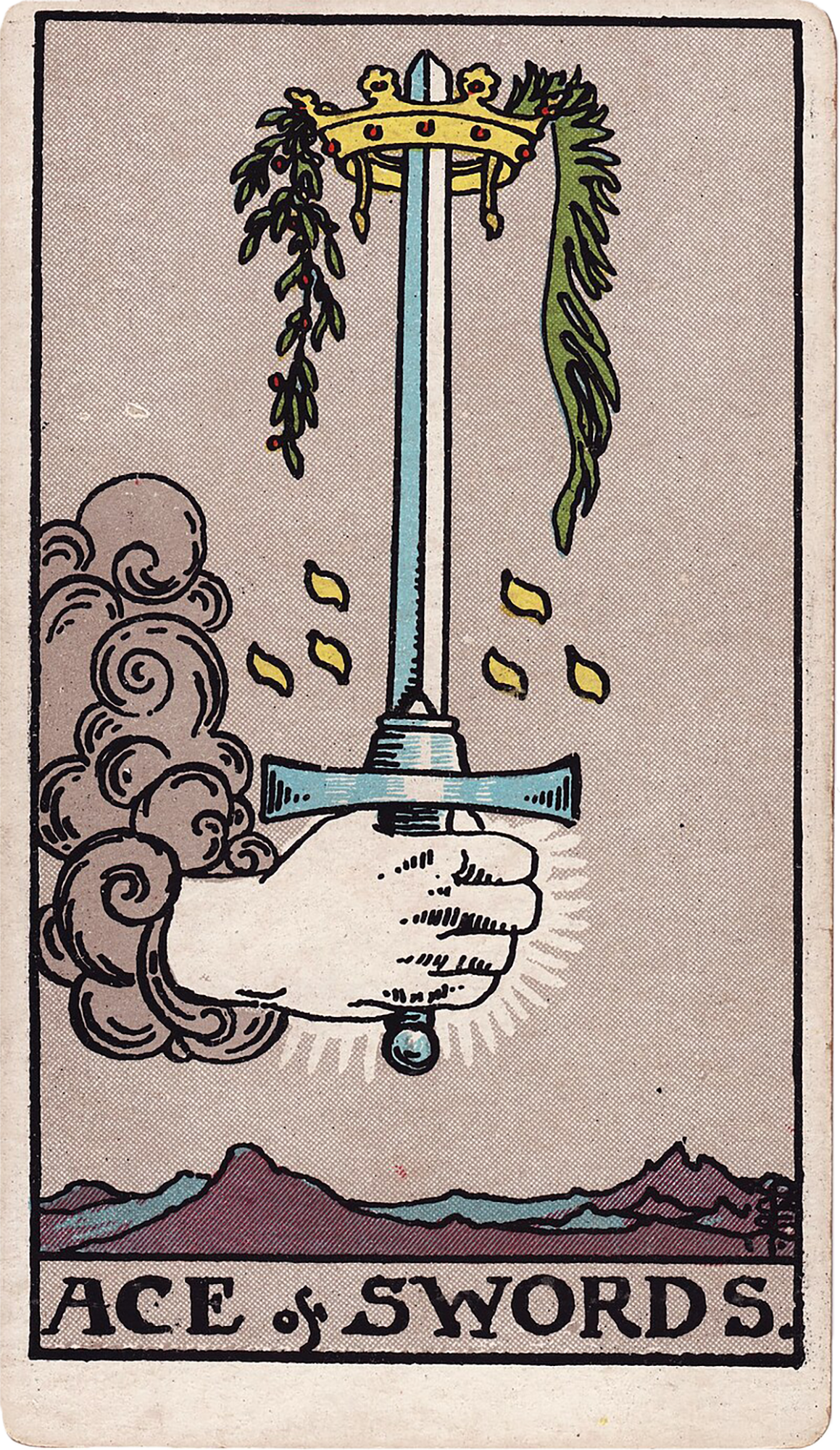 Ace of Swords
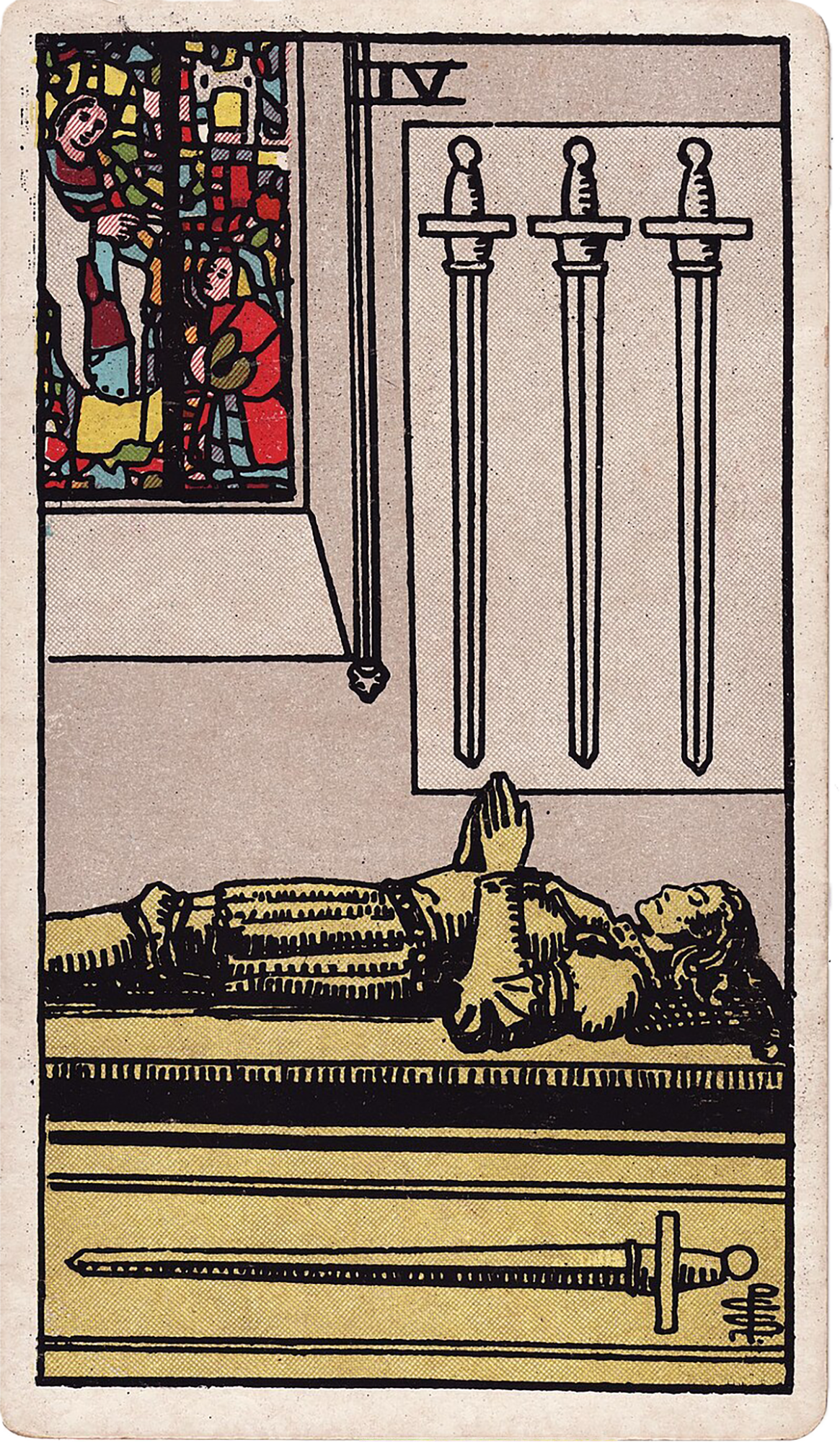 4 of Swords
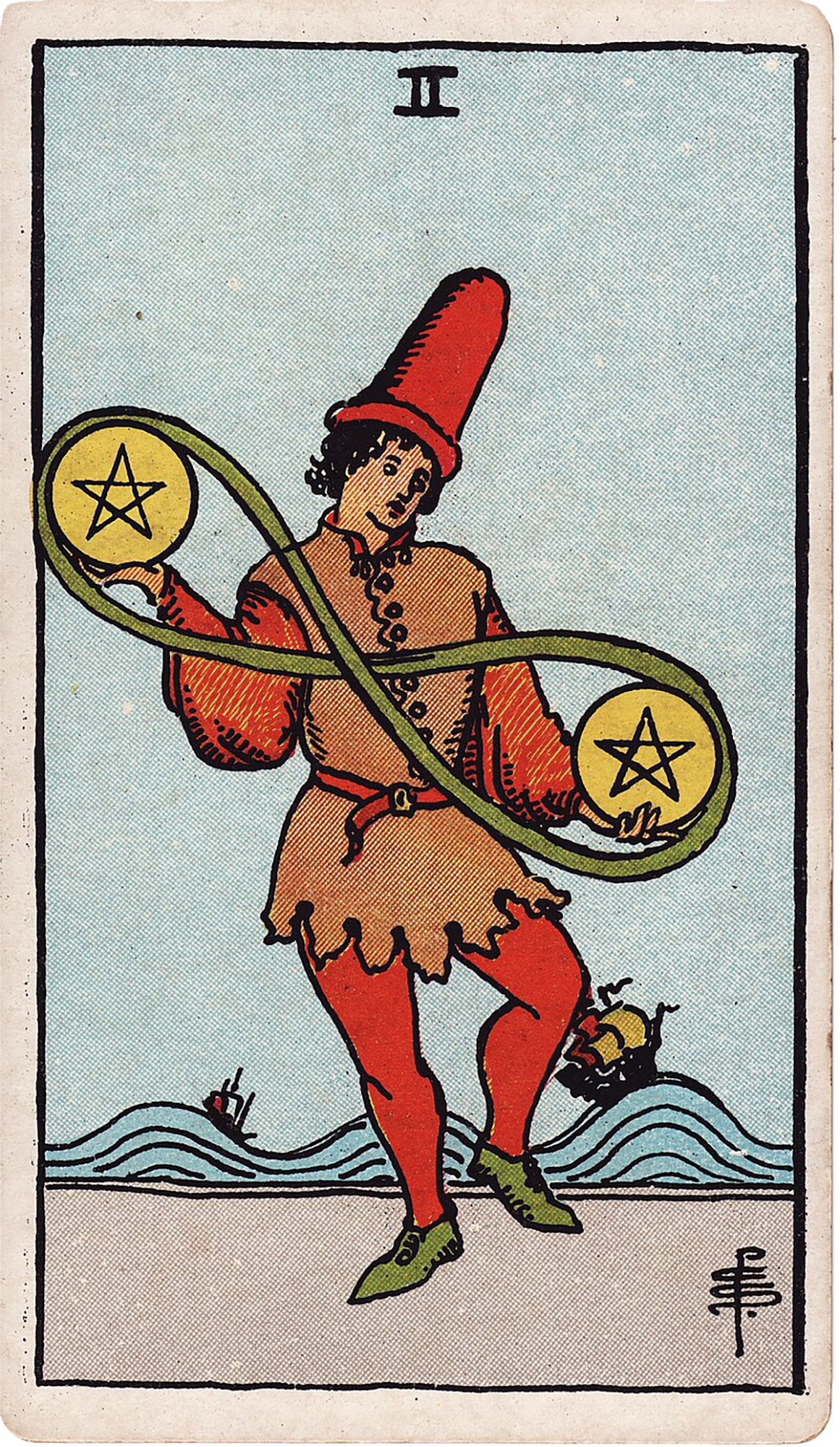 2 of Pentacles
Why learn this combination
These three cards form a compact, practical trio: an idea or clear cut (Ace of Swords), the daily juggling of resources and priorities (Two of Pentacles), and a required pause for recovery (Four of Swords). Together they map a common human cycle: insight, management, and rest. For learners, this combination is especially useful because it crosses suits—Swords provide clarity and decision-making energy while Pentacles anchor to material routines and resources—and a Four (stability through pause) shows where to stop. Studying these cards together builds skill in layering mental, material, and restorative themes, and in translating symbolism into sustainable, concrete advice rather than dramatic pronouncements.
Imagery and Rider-Waite-Smith symbolism to anchor meaning
Work from the images. In Rider-Waite-Smith, the Ace of Swords shows a single upright sword thrust through clouds, often topped by a crown and laurel. The hand from the clouds represents a new mental gift—clarity, decisive speech, a truth that cuts through fog—while the crown/laurel suggests potential victory if handled well. The Two of Pentacles shows a figure juggling two pentacles connected by an infinity ribbon, with ships riding waves in the background; this image encodes active balance, ongoing adaptation to external change, and the demand to keep multiple responsibilities moving. The Four of Swords depicts a recumbent figure lying in repose (often in a church-like setting) with three swords leveled above and one sword below; this image communicates deliberate withdrawal, recovery, and the need for mental quiet after strain. When you teach or read, repeatedly point to these images: hands emerging, infinity ribbon, recumbent figure. Naming visual details helps clients and learners move from abstract meanings to embodied symbols.
Basic interpretive logic: ace, two, four and suits
Interpret by combining rank logic and suit logic. Aces are seeds and catalysts: the Ace of Swords is a seed of clarity or a decision-point. Twos are active balances or choices in motion: the Two of Pentacles is not a static balance but responsive juggling. Fours are stabilization or rest: the Four of Swords asks for structured downtime or consolidation. Add the suits: Swords deal with thought, communication and boundaries; Pentacles deal with work, routines, money and the body. So this trio reads as: a clear idea or instruction (Ace of Swords) that must be implemented amid juggling resources and tasks (Two of Pentacles), with an explicit instruction to schedule rest or recovery (Four of Swords). Practically, the reading asks: how do you act on clarity without overextending? The cards collectively answer: prioritize, adapt, and rest.
How the cards modify one another: dynamics and key questions
Use modifier logic: ask what each card makes easier or harder in the others. Common dynamics: - Ace of Swords modifies Two of Pentacles: a new clarity helps you decide which juggled priorities deserve your attention; it can also make juggling feel sharper or more urgent. Key question: what decision simplifies the juggling? - Two of Pentacles modifies Ace of Swords: the juggling context shapes how clarity can be applied—an idea may be brilliant, but resources and timing matter. Key question: what practical constraints does the juggling impose on your decision? - Four of Swords modifies both: it can temper the Ace’s urgency and the Two’s activity by declaring rest a necessary step. Key question: does implementing clarity require a pause first? Read the cards sequentially and relationally: if Ace appears first, the spread leans toward acting on insight; if Four appears first, the cards emphasize recovery before action; if Two leads, the present scene is primarily management and adaptability.
Reading order and sequencing techniques
Try two simple patterns. Pattern A — Timeline read: position 1 = Ace of Swords (what needs clarity), position 2 = Two of Pentacles (how to manage now), position 3 = Four of Swords (what rest or boundary to add). Pattern B — Problem-solution-readiness: position 1 = challenge (Two of Pentacles: juggling/overload), position 2 = tool (Ace of Swords: what clarity or conversation helps), position 3 = outcome or practice (Four of Swords: where to schedule rest). Always narrate transitions: how does the Ace of Swords move into the Two of Pentacles? Does the clarity reduce items to juggle or reassign them? Does the Four of Swords require an immediate pause or a planned rest period? Use conditional phrasing: "If you act now on the Ace’s insight, you will need to…" or "If you wait to rest as Four suggests, the Ace’s clarity can be implemented with…" This avoids deterministic language and keeps options open.
Upright and reversed: when to mention them and how they change readings
Bring upright/reversed meanings in only when they add actionable nuance. Upright Ace of Swords points to useful clarity; reversed Ace warns of harshness, confusion, or truth used as a weapon. Upright Two of Pentacles shows adaptive balance; reversed warns of overcommitment or chaotic juggling. Upright Four of Swords invites deliberate rest; reversed signals restlessness, forced inactivity, or returning to work too soon. Examples of combined implications: - Upright Ace + Upright Two + Upright Four: clear plan, managed priorities, scheduled recovery = sustainable action. - Upright Ace + Reversed Two + Upright Four: clarity exists, but juggling is mismanaged—rest and re-prioritize before acting. - Reversed Ace + Upright Two + Reversed Four: harsh or confused thinking while you juggle and avoid rest—danger of burnout; focus first on reframing thought patterns and building micro-rests. When reversals appear, ask: is the issue internal (I’m thinking harshly) or external (circumstances chaotic)? This keeps you from simply labeling reversals as 'bad' and moves the client toward specific repair steps.
Contextual examples: relationships
Scenario: a partner has realized they need clearer boundaries. Cards drawn: Ace of Swords (upright), Two of Pentacles (upright), Four of Swords (upright). Reading: the Ace offers the phrase or boundary that clarifies needs. Two of Pentacles says they are juggling emotional labor and external responsibilities (work, kids, caregiving), so the language must be practical and adjustable. Four of Swords insists on built-in recovery time—don’t demand immediate perfection from the partner; schedule downtime after conversations. Practical advice to give: draft a short boundary statement (Ace), map current weekly obligations and identify one task to delegate (Two), and agree on a cooldown period after difficult conversations (Four). If Ace were reversed, counsel would focus on softening how the truth is spoken; if Two were reversed, address overcommitment that undermines any boundary.
Contextual examples: career and project work
Scenario: deciding whether to accept a new responsibility at work. Cards: Two of Pentacles (upright) leading, Ace of Swords (upright), Four of Swords (reversed). Reading: you are actively juggling priorities (Two); the Ace brings a clear criterion—perhaps a straightforward question like 'Will this move bring measurable progress toward X?'—that helps say yes or no. Four reversed warns you’re skipping needed rest and may rush back before fully recovered. Practical application: apply the Ace’s decision filter to current commitments (Two). If the project passes, negotiate boundaries such as protected focus time and explicit rest breaks because Four reversed signals burnout risk. If the project fails the Ace’s test, decline or delay. Use negotiation scripts: 'I’m interested, but to do this well I need X hours or Y support.'
Contextual examples: emotional and health contexts
Scenario: someone feels mentally sharp but chronically exhausted. Cards: Ace of Swords (upright), Four of Swords (upright), Two of Pentacles (reversed). Reading: you have clarity about what matters (Ace) and you need rest (Four), but the juggle is failing (Two reversed). The combination suggests the person must protect the clarity by removing or delegating tasks rather than trying to juggle them. Interventions: create a short action list aligned with the Ace (one or two non-negotiable priorities), delegate or defer three items to reduce the Two’s pressure, and schedule a concrete recovery window (Four): a weekend off, a short digital detox, or a sleep plan. Emphasize micro-rests if a longer pause is impossible.
Practical reading method step-by-step
1) Clarify the question: invite a focused question about decision, balance, or rest—e.g., 'What will help me make this decision without burning out?' 2) Shuffle and choose with intention; note which card you felt first. 3) Lay cards in a simple three-position spread: A) Insight/What needs cutting through (Ace of Swords), B) Management/What’s being juggled (Two of Pentacles), C) Recovery/How to rest or consolidate (Four of Swords). 4) Read images first: name crown/laurel, infinity ribbon, ships, recumbent figure and church window. 5) Sequence your narrative: how does A move to B and then to C? 6) Check reversals and ask clarifying questions: if a card is reversed, ask whether the block is internal or external and what small step resolves it. 7) Offer two concrete next steps: one immediate micro-action and one scheduled practice (e.g., a 15-minute clarity journaling exercise and a 48-hour rest plan). 8) Close by inviting the querent to test the recommendation and report back—tarot is iterative and improved by feedback.
Common mistakes and how to avoid them
Mistake: reading cards in isolation. Avoid by always narrating transitions: what does the Ace’s insight actually change about the Two’s juggling? Mistake: treating rest as optional. The Four of Swords is often a required step; don’t turn it into a vague suggestion—make it concrete. Mistake: forcing the Ace’s clarity as a blunt instrument—an Ace can cut, but it can also be misapplied as harsh truth; check tone and timing. Mistake: assuming upright is 'good' and reversed 'bad' without nuance. Reversed cards often identify where effort is needed rather than doom. Mistake: ignoring Rider-Waite visual cues—use imagery to ground readings in specifics (crown, infinity ribbon, church setting). Training yourself to point to images reduces projection and keeps readings practical.
Concrete interventions, language and scripts
When these three cards appear, give clients clear, actionable techniques: - Clarifying ritual (Ace of Swords): 10-minute 'Define the One Thing' exercise. Write the decision question and a one-sentence criterion that would make 'yes' non-negotiable. - Juggle audit (Two of Pentacles): list current tasks for one week, then circle the top two that feed your long-term goals; delegate or defer the rest. - Rest prescription (Four of Swords): schedule a specific rest block—15 minutes twice daily, one evening device-free, or a single full day off. Combine scripts: 'I have a clearer sense that X matters (Ace). To work on X I will drop Y and delegate Z this week (Two). I will keep Sundays free for rest so I don't burn out (Four).' Offer micro-practices when full rest is impossible: five-minute breath breaks, changing location between tasks, or a short walk after intense thinking.
How to bring this lesson into your practice
Practice by doing three-card drills: shuffle and draw these three cards deliberately, or force them into readings and narrate their transitions aloud. Use client work to test prescriptions and follow up—did scheduling a Four-style rest help implement the Ace’s clarity? Track outcomes and adjust. Teach clients to use the combination as a decision tool: clarity (Ace) plus a balancing plan (Two) plus a rest schedule (Four) forms a replicable pattern they can apply outside readings. Finally, emphasize non-judgment: these cards often show constant cycles of insight and exhaustion; your role as a reader is to help translate symbols into sustainable practices, not to fix everything in a single reading.
Closing notes on ethics and tone
This combination often touches on sensitive territory: mental strain, exhaustion, relationship boundaries, and work stress. Use gentle, non-alarmist language. Offer practical steps but avoid prescribing medical or legal advice. If Four of Swords indicates deep rest is needed and the querent reports severe exhaustion or depressive symptoms, suggest professional medical evaluation in addition to tarot-based self-care. Keep readings collaborative and iterative: invite clients to test recommendations and report back rather than promising outcomes.
Practice questions
• What single sentence captures the clarity the Ace of Swords offers for your current situation?
• Which two responsibilities are you actively juggling right now, and which could be delegated or deferred?
• When did you last schedule a real rest period like the Four of Swords suggests? What stopped you from doing so?
• If your clarity (Ace) pushed you to act immediately, what would change about your current juggling (Two)?
• If the Four of Swords were insisting on a pause, what is one micro-rest you could commit to today?
• When one of these cards is reversed, how do you tell whether the work needed is internal (mindset) or external (circumstances)?
• How can you translate Ace-of-Swords language into a short script that feels true and non-harsh?
• What evidence will you look for to know a chosen change reduced the risk of burnout?
Comments
Sign in to comment.
Continue learning
Interpreting the Dance of Justice and The Devil: Balancing Morality and Temptation in Tarot Readings
The combination of Justice and The Devil in tarot presents a profound exploration of morality, temptation, and personal accountability. This article unpacks how these cards influen...
Harnessing the Power of The Magician and Ace of Wands: Igniting Creativity and Manifestation in Tarot Readings
The combination of The Magician and the Ace of Wands in tarot readings offers a potent blend of creative energy and manifestation power. This article delves into the ways these car...
Understanding the Synergy Between The Empress and The Emperor in Tarot Card Combinations
This article delves into the intricate synergy between The Empress and The Emperor cards in Tarot, focusing on how their combined energies modify and enrich readings across various...
Decoding Transformation and Renewal with Death and The Star in Tarot Combinations
This article delves into the card combination of Death and The Star, two powerful Major Arcana cards from the Rider-Waite-Smith deck. It explores how their imagery and meanings int...
Balancing Ambition and Compassion with The Emperor and Queen of Cups in Tarot Combinations
This article delves into the nuanced Tarot card combination of The Emperor and Queen of Cups, emphasizing how their energies complement and challenge each other. By analyzing their...
Finding Emotional Healing and Renewal with The Star and The Moon Tarot Combination
This article examines the rich interplay between The Star and The Moon tarot cards when they appear together in a reading. Using the traditional Rider-Waite-Smith symbolism and the...
Unlocking Emotional Wisdom with The High Priestess and The Queen of Cups in Tarot Combinations
This article delves into the card combination of The High Priestess and The Queen of Cups, emphasizing their shared themes of intuition, emotional depth, and receptivity. By examin...
Unlocking Emotional Resilience with Strength and The Star in Tarot Combinations
This article delves into the Tarot card combination of Strength and The Star, revealing how their interplay highlights pathways to emotional resilience. Anchored in the Rider-Waite...
Unveiling Emotional Strength with Strength and The Queen of Cups in Tarot Combinations
This article delves into the dynamic Tarot combination of Strength and The Queen of Cups, emphasizing how these cards together illuminate emotional strength, compassionate boundari...
Unlocking Emotional Transformation with Death and The Moon Tarot Combination
This article explores the rich and complex interaction between the Death and The Moon tarot cards within the Rider-Waite-Smith tradition, focusing on their combined potential to un...