
From Collaboration to Mastery Three of Pentacles Eight of Pentacles and King of Pentacles in Career Readings
This lesson explores how Three of Pentacles, Eight of Pentacles and King of Pentacles form a coherent career narrative from collaboration through focused practice to mature stewardship. It anchors interpretation in Rider–Waite–Smith imagery, shows how the cards modify each other in upright and reversed positions, offers a practical step-by-step reading method, gives sample readings and common pitfalls, and provides exercises to build skill reading these Pentacles combinations responsibly and usefully.
Read the cards together
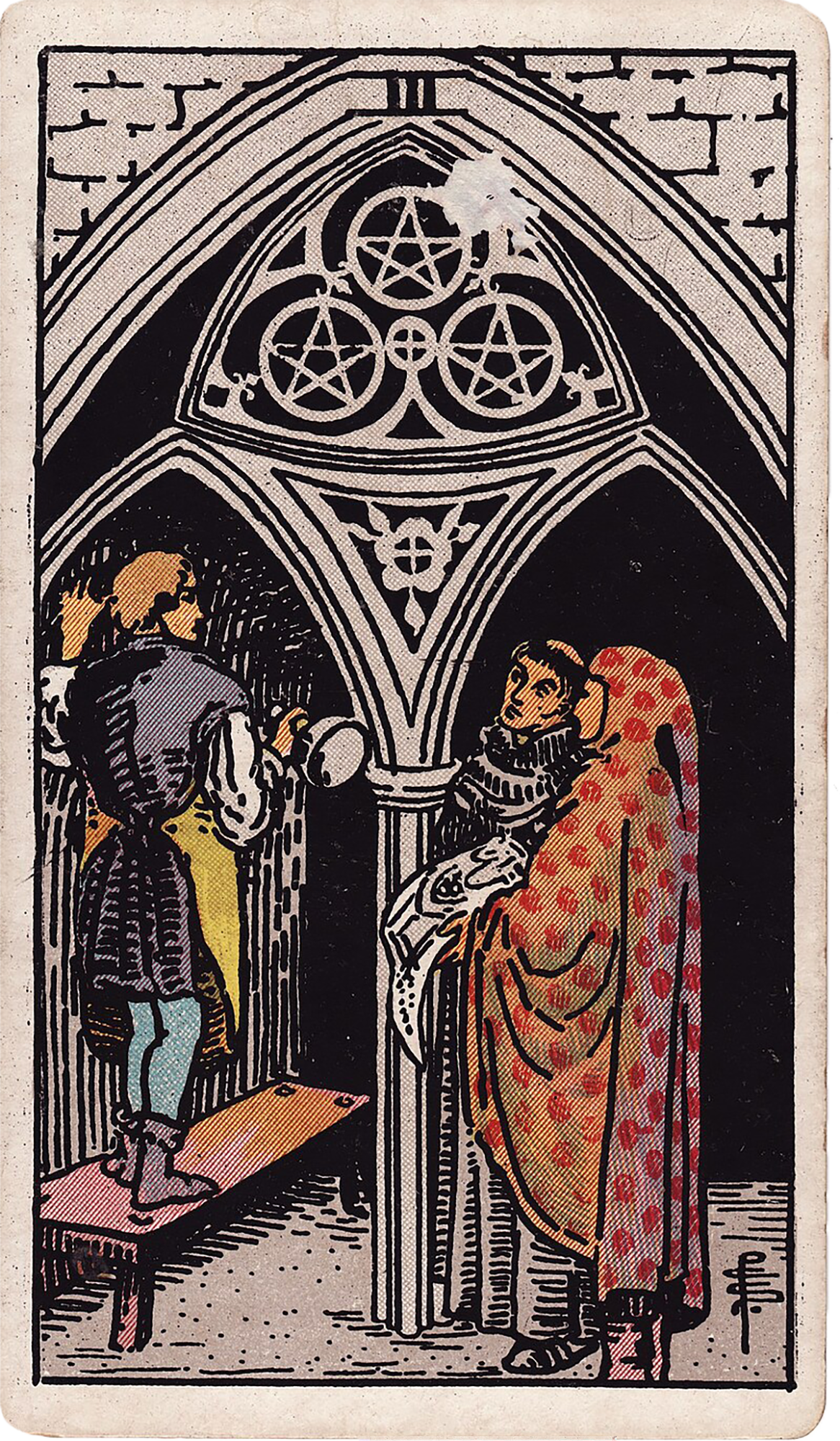 3 of Pentacles
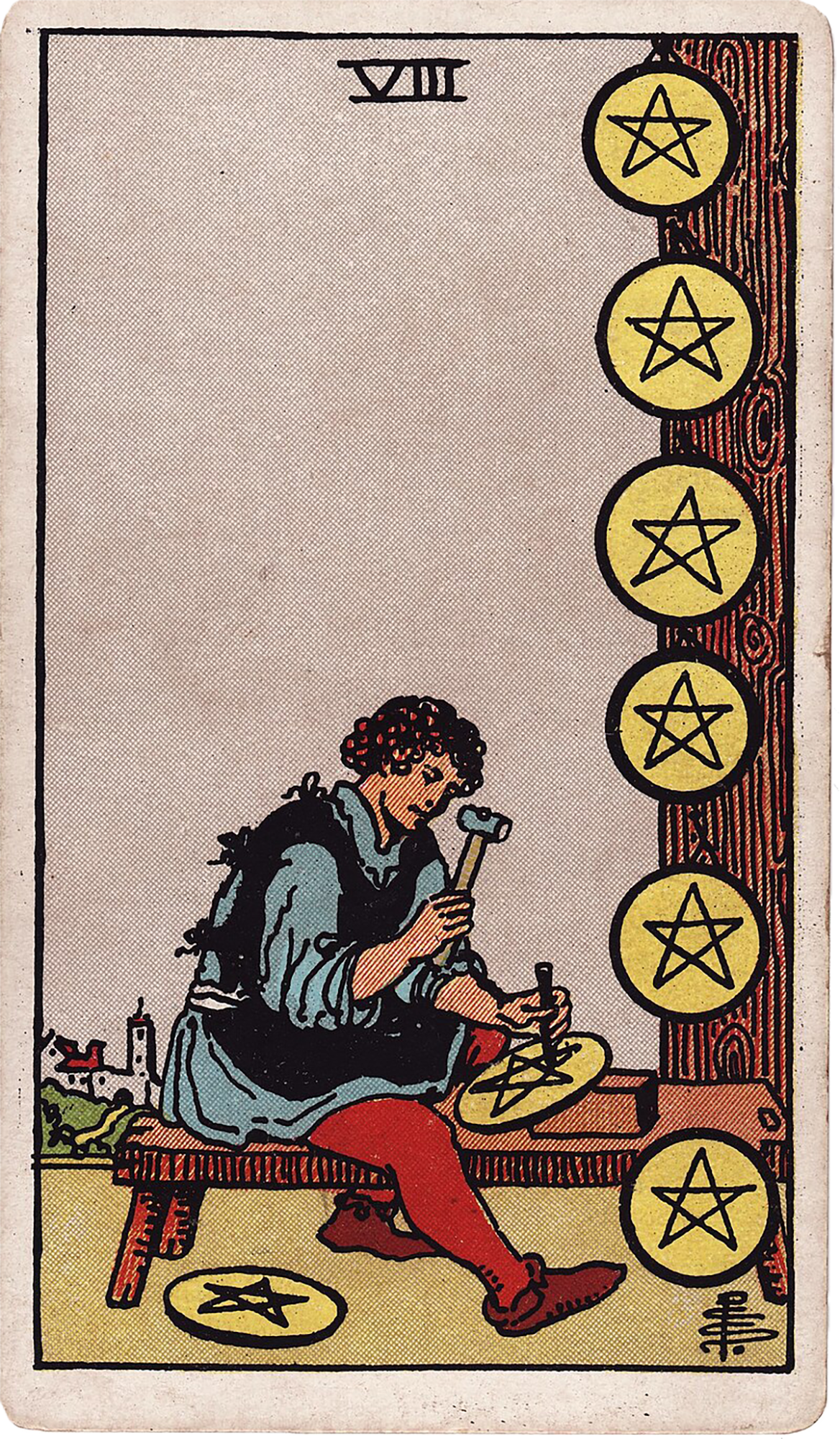 8 of Pentacles
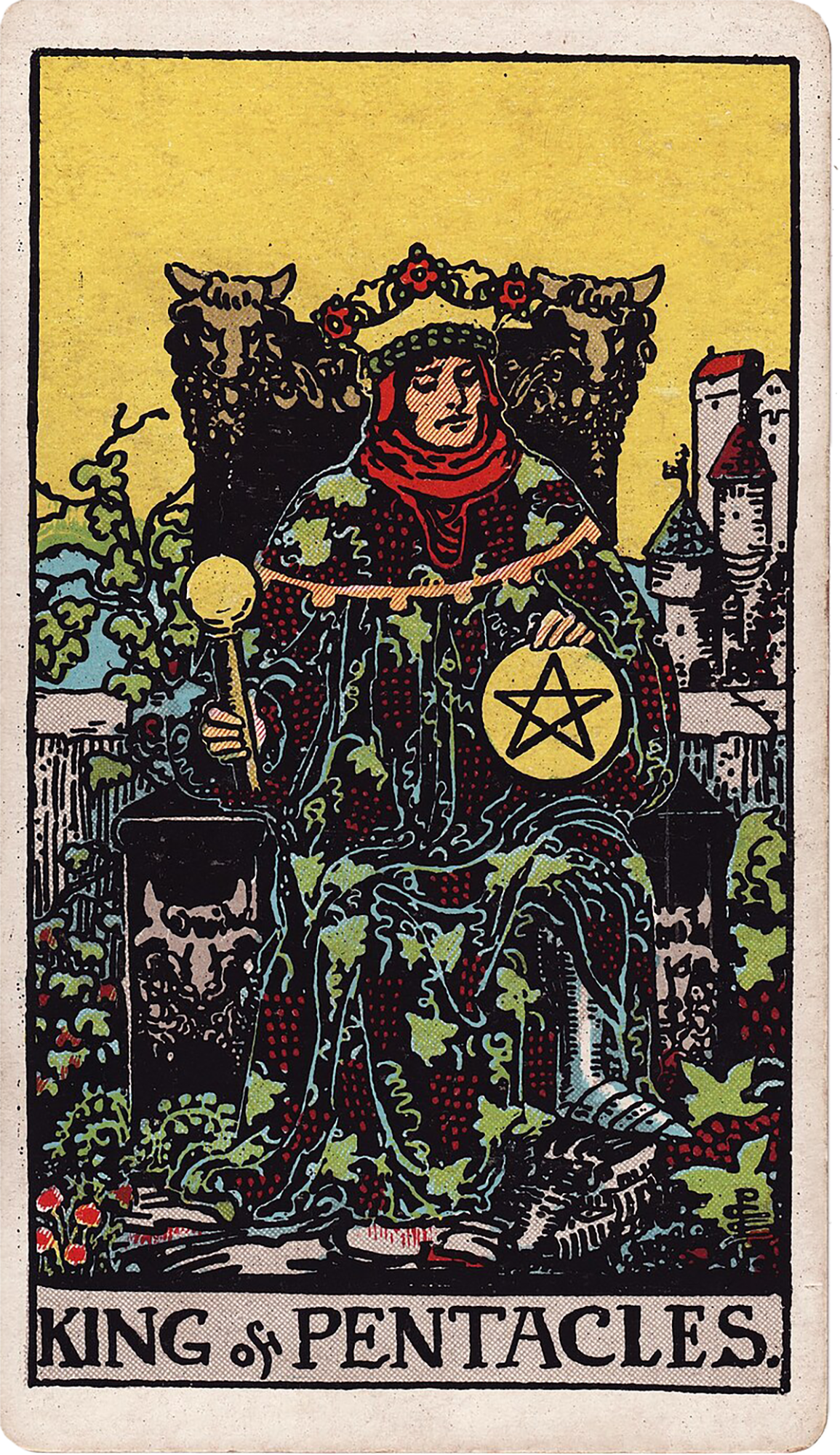 King of Pentacles
Purpose and overview
This card-combination lesson focuses on Three of Pentacles, Eight of Pentacles and King of Pentacles when they appear together in career-focused readings. These three are all Pentacles: an elemental cluster that leans toward work, craft, money, routine, the body and long-term material stability. Read together they often describe a process: collaboration and standards (Three), focused practice and refinement (Eight), and finally stewardship, business competence or mature leadership (King). The goal here is not to produce a one-size-fits-all prediction but to give learners techniques for reading how these cards modify each other, how imagery informs nuance, how reversals change dynamics, and how to translate a reading into concrete guidance for querents.
Look first at the images and what they ask
Begin every combination reading by looking at the cards as a single scene. Three of Pentacles (Rider–Waite–Smith) shows a craftsman on a bench working a pentacle while two figures in clerical or supervisory dress examine plans and the emerging work within an architectural space (a church or arch). The composition is architectural and cooperative: the craftsman is measured, his tools and bench visible; the others bring plans, approval or critique. Eight of Pentacles depicts a single artisan bent over repetitive, careful work at a bench, with pentacles on the wall behind him and a distant castle—he is practicing, perfecting craft through repetition. King of Pentacles shows a seated, affluent king on a richly decorated throne, surrounded by symbols of bulls, vines and material success: stewardship, stable enterprise, security and a capacity to support others materially. When you read these cards together, anchor to those images. Notice the repeated bench and workshop motifs (Three and Eight), the wall of pentacles (Eight), and the presence of supervision and institution (Three) that contrasts with the solitary labor of Eight. King of Pentacles closes the scene with a throne and cultivated estate—an end state or role for the labor and oversight represented earlier.
Symbolic anatomy of each card and how to use it
Three of Pentacles: Numerology and composition emphasize collaboration, standards, planning and visible craft. The cathedral or arch in the background suggests work that serves a larger structure or public function; the three figures show distinct roles—hands-on skill, supervisory knowledge and design. In career contexts this card asks: who is contributing distinct expertise, and what quality standards are being set? Eight of Pentacles: The repeated pentacles on the wall and the central bench reveal apprenticeship, consistent practice and a craft ethic. The solitary craftsman is not ostentatious; he repeats, learns, and perfects. Flow here is inward: skill grows through attention to detail rather than external recognition. In career terms the Eight asks about daily habits, learning curves and realistic expectations for improvement. King of Pentacles: Earth sign rulership, vineyard and bulls are traditional RWS symbols of abundance, stability, and conservative yet effective business sense. The King is a figure who can manage systems, finances and people to create long-term prosperity. In career readings he represents the role of mature leadership, secure entrepreneurship or a client/mentor with experience and resources. Use these symbol clusters as interpretive anchors: materials (tools, benches), spaces (workshop, cathedral, estate), and figures (apprentice, supervisor, king) tell you whether a spread emphasizes immediate coordination, disciplined practice, or long-term stewardship.
Core career narrative: from collaboration to mastery
Taken as a sequence, Three of Pentacles → Eight of Pentacles → King of Pentacles maps a very common career trajectory. Three of Pentacles asks the querent to work with others, clarify expectations and meet external standards. Eight of Pentacles asks for sustained repetition and focused improvement—they may need to take on routine tasks, refine a technique or complete training. King of Pentacles points toward a role that manages resources, builds business systems, or provides stability and mentorship. As modifiers, each card adjusts the tone of the others. If the Three sits left of the Eight in a past-present-future layout, it shows that collaborative feedback set the stage for disciplined practice; the Eight's honest work then matures into the King’s capacity to lead. If the King appears before the Eight, the reading suggests existing support or a secure environment that enables focus. The narrative isn’t strictly linear: any of these cards can also show an aspiration, a barrier, or an internal quality to develop.
How the cards modify one another in upright alignments
Upright Three of Pentacles + Upright Eight of Pentacles: Together these emphasize a learning culture where clear standards and feedback (Three) and focused practice (Eight) reinforce each other. Career advice: formalize mentorship, create learning plans, set measurable benchmarks. Add upright King of Pentacles: The combination now maps onto progression—collaboration and apprenticeship lead to a stable leadership position or sustainable enterprise. The King legitimizes the result: it’s not only skill but the ability to steward resources and others. Upright Three + upright King (without Eight): This pairing stresses structure and oversight; work can be coordinated and supported, but may skip the deep practice. Advise querents to build a concrete skill-development plan (Eight energy) rather than rely solely on connections or managerial support. Upright Eight + upright King (without Three): Emphasis here is mastery through solitary discipline leading to stewardship. The read: someone cultivates competence and assumes responsibility; collaboration may still be necessary for scale, so Three’s energy could be a recommended next step if growth stalls.
When a card is reversed how it shifts the combination
Reversals in these Pentacles change the quality of the process. Three of Pentacles reversed often indicates poor teamwork, unclear standards or lack of recognition; Eight reversed flags perfectionism, repetitive monotony or failure to learn; King reversed warns of greed, rigidity, or mismanagement of resources. How they modify each other: Three reversed + Eight upright + King upright: The querent’s skills improve (Eight) and they may gain status (King), but the workplace culture (Three reversed) is dysfunctional—expect undercutting, poor processes or lack of recognition. Advise systemic changes: clarify roles, document work, secure fair evaluation. Three upright + Eight reversed + King upright: Collaboration and leadership exist but the individual is stuck in rut or perfectionism. Here Eight reversed warns that relentless repetition without reflection is wasting energy. Recommend deliberate variation, targeted learning, or re-evaluation of tasks to restore growth. Three upright + Eight upright + King reversed: Skill and teamwork produce material success, but King reversed warns against becoming overly materialistic or controlling. This combination calls for ethical checks, succession planning and emotional intelligence training to prevent the concentration of power from causing burnout or resentment. Reading reversals is not a moral condemnation but a diagnostic tool: ask what has become exaggerated, blocked or misaligned and seek practical steps to rebalance the system.
Beyond one-card-at-a-time: techniques for relational reading
A common beginner mistake is to read each card separately and then try to stitch meanings together. Instead, treat the three cards as a single system with interactions. Techniques: - Layered verbs: Convert major imagery into actions. Three of Pentacles = consult, design, receive feedback. Eight of Pentacles = practice, refine, repeat. King of Pentacles = manage, fund, institutionalize. Then consider which verbs are active, which are passive, and whether the querent is protagonist in the scene. - Spatial narrative: Read left-to-right or past-present-future; top-to-bottom; or central-anchoring (which card dominates visually?). The King’s throne is visually larger and can function as outcome even if it appears first—ask whether it’s an aspiration or present reality. - Role-mapping: Identify who plays which role: craftsman, supervisor, king. Sometimes the querent is the craftsmen (Eight), sometimes the supervisor (Three), sometimes the King. Clarify with the querent. - Tension and resolution: Ask what tension each card introduces and whether another card resolves it. For example Three might introduce need for standards; Eight supplies the labor to meet them; King supplies institutionalization and reward. - Imagery cross-checks: Compare repeated motifs—the bench, tools, pentacles-on-wall, architectural background. Repetition across cards strengthens a theme; contradiction invites nuance (solitary vs collective scenes).
Sample readings and specific, image-based interpretations
Sample 1 — Past/Present/Future: Three of Pentacles (past) + Eight of Pentacles (present) + King of Pentacles (future). Reading: The querent previously joined a team where standards and feedback were explicit (Three); now they are deep in practice refining their craft (Eight); outcome is likely a stable leadership or sustainable business role (King). Advice: formalize a mentorship into a portfolio, document improvements to make the step to the King measurable. Sample 2 — Obstruction reading: Eight of Pentacles (reversed) + Three of Pentacles (upright) + King of Pentacles (upright). Reading: The querent is trapped in monotony and perfectionism (Eight reversed) despite a supportive team and strong leadership around them (Three, King). Image cue: the solitary worker is not learning; the wall of pentacles shows static repetition. Advice: rotate responsibilities, seek new projects that challenge existing skills, and ask mentors for different tasks. Sample 3 — Power dynamics: Three of Pentacles (reversed) + Eight of Pentacles (upright) + King of Pentacles (reversed). Reading: Skilled work is happening, but team dynamics are poor and leadership may be controlling or self-serving. Image cue: the craftsman produces quality, but the supervising figures are absent or misaligned; the King’s throne looks ornate but closed. Advice: document achievements, negotiate safe exit strategies, or seek alternative sponsors who model better stewardship. Each sample uses visual details: the bench, the architectural backdrop and the throne to ground advice in imagery rather than abstract labels.
Relationship and emotional contexts where these cards matter
Although these cards are career-oriented, their Pentacle energy applies in relationships and emotional life when material or practical matters are central. Three of Pentacles in a relationship reading can indicate workable co-parenting, household cooperation or joint projects; Eight of Pentacles suggests someone is investing time to improve how they show up (learning to listen, tending rituals); King of Pentacles represents steady support, financial reliability or a partner who manages the household and provides security. Combinations: Three + Eight together can show couples collaborating on a shared vocation or home improvement where one partner handles plans and the other refines execution. King present can indicate long-term security from one partner but also risk of complacency. Reversals: Three reversed signals unacknowledged contributions; Eight reversed signals burnt-out caretaking without growth; King reversed warns of possessiveness or money controlling the relationship. In emotional contexts emphasize processes (how people negotiate tasks) rather than labels (good/bad partner). Use the images—tools, bench, throne—as metaphors for who bears visible labor and who holds authority.
Common mistakes and how to avoid them
Mistake 1: Treating cards as tidy titles. Avoid saying, "You are the King now," without confirming with context. Use the King as a role or influence not a static identity. Mistake 2: Linear ladder fallacy. Don’t assume Three → Eight → King always equals inevitable promotion. Read timing, placement and querent agency; a King may be aspirational or a warning. Mistake 3: Ignoring imagery details. The cathedral in Three signals public or institutional work; the castle behind the Eight suggests distant goals; the vines and bulls around the King imply agriculture, commerce or long-term investments. Use these specifics. Mistake 4: Over-valuing reversals as catastrophes. Reversals point to where energy is stuck or exaggerated; treat them as diagnostic invitations to action. Mistake 5: One-card isolation. Always read interaction—ask how the solitary craftsman (Eight) responds to the supervisors (Three) and what the King consolidates or corrupts.
Practical reading method step-by-step
1) Quiet look: Lay the cards in front of you. Name visual anchors for each card (tools, bench, pentacles-on-wall, plans, throne, vines). 2) Ask orientation questions: Which card looks like the querent? Which looks like environment? Which looks like outcome or obstacle? Confirm with the querent. 3) Convert image to verbs: For each card write 2–3 action verbs (Three = coordinate, align, receive critique; Eight = practice, focus, refine; King = steward, fund, secure). 4) Read interactions: Ask how one card’s verbs affect the next. Does teamwork enable practice? Does mastery trap you in control? 5) Check tension: Identify blocked energy (reversals, conflicting imagery) and translate into practical barriers (unclear expectations, repetition without learning, misuse of resources). 6) Formulate advice: Use the cards to craft 2–4 concrete steps. Example: "Request a documented feedback rubric (Three); set a 12-week skill target with measurable outcomes (Eight); create a compensation or responsibility plan tied to milestones (King)." 7) Confirm and close: Offer the querent options to choose from and ask which resonates. Record the reading for follow-up.
Practice exercises to build fluency
Exercise 1 — Image journaling: Over five days, sketch or list details you notice in Three of Pentacles, Eight of Pentacles and King of Pentacles. For each detail write a one-sentence career interpretation. Exercise 2 — Reversal lab: Pull the three cards and intentionally flip one. Write three questions a querent should answer to clarify that reversal’s meaning. Practice delivering questions that are diagnostic rather than judgmental. Exercise 3 — Role swap: For three mock readings, assign the querent to be the craftsman, then the supervisor, then the King. Note how counsel changes when the querent shifts role. Exercise 4 — Intervention design: Using the combination upright, draft a realistic 12-week plan that moves from Three to Eight to King energies. Include milestones, measurable outputs and stakeholder check-ins.
How to turn readings into ethical, actionable guidance
Translate card dynamics into concrete, short-term actions for your querent. If Three of Pentacles is weak, advise documentation and role clarifications; if Eight of Pentacles is strong, recommend making a portfolio and tracking improvements; if King of Pentacles appears, discuss financial planning, delegation and succession. Always phrase suggestions as options with costs and benefits: "One path is X, which requires Y investment and could lead to Z." Encourage the querent to test small steps, gather feedback and return for follow-up readings to measure progress. Keep the imagery as metaphors for tangible tasks—tools become deliverables, bench hours become practice logs, throne becomes income target or official title.
Closing checklist and final teaching points
When you finish a career reading with Three of Pentacles, Eight of Pentacles and King of Pentacles, run through this checklist: - Have you anchored to image details (tools, plans, wall of pentacles, throne)? - Did you convert images to verbs and ask who plays each role? - Did you read interactions rather than stack meanings? - If reversals appear, did you frame them diagnostically and propose corrective actions? - Did you produce 1–3 specific, measurable steps the querent can try in the next 2–12 weeks? Remember: these cards together usually describe a craft-to-leadership process, but the reading’s value comes from translating symbolic diagnosis into practical, ethical next steps. Teach clients to treat the spread as a stage in a continuing career story rather than as decree: collaboration, disciplined practice, and responsible stewardship are a cycle they can re-enter with intention.
Practice questions
• Which figure in the images (craftsman, supervisor, king) first feels like you in your current career situation, and why?
• Where does feedback show up in your work: formal reviews, peer critique, or self-assessment? Which of the three cards highlights that process?
• If you follow Eight of Pentacles’ advice, what measurable skill or output could you produce in 12 weeks?
• When has collaboration (Three of Pentacles) improved your output, and when has it stalled you? What changes would improve teamwork?
• If King of Pentacles represents a role you want, what practical steps (finance, delegation, reputation) must you build to reach it?
• Which card feels reversed in your lived experience—where is energy stuck or exaggerated—and what small experiment could rebalance it?
• How do the physical objects in the images (tools, plans, throne) translate into concrete deliverables in your workplace?
• What ethical boundaries should the King of Pentacles remind you to set if material success becomes a priority?
Comments
Sign in to comment.
Continue learning
Interpreting the Dance of Justice and The Devil: Balancing Morality and Temptation in Tarot Readings
The combination of Justice and The Devil in tarot presents a profound exploration of morality, temptation, and personal accountability. This article unpacks how these cards influen...
Harnessing the Power of The Magician and Ace of Wands: Igniting Creativity and Manifestation in Tarot Readings
The combination of The Magician and the Ace of Wands in tarot readings offers a potent blend of creative energy and manifestation power. This article delves into the ways these car...
Understanding the Synergy Between The Empress and The Emperor in Tarot Card Combinations
This article delves into the intricate synergy between The Empress and The Emperor cards in Tarot, focusing on how their combined energies modify and enrich readings across various...
Decoding Transformation and Renewal with Death and The Star in Tarot Combinations
This article delves into the card combination of Death and The Star, two powerful Major Arcana cards from the Rider-Waite-Smith deck. It explores how their imagery and meanings int...
Balancing Ambition and Compassion with The Emperor and Queen of Cups in Tarot Combinations
This article delves into the nuanced Tarot card combination of The Emperor and Queen of Cups, emphasizing how their energies complement and challenge each other. By analyzing their...
Finding Emotional Healing and Renewal with The Star and The Moon Tarot Combination
This article examines the rich interplay between The Star and The Moon tarot cards when they appear together in a reading. Using the traditional Rider-Waite-Smith symbolism and the...
Unlocking Emotional Wisdom with The High Priestess and The Queen of Cups in Tarot Combinations
This article delves into the card combination of The High Priestess and The Queen of Cups, emphasizing their shared themes of intuition, emotional depth, and receptivity. By examin...
Unlocking Emotional Resilience with Strength and The Star in Tarot Combinations
This article delves into the Tarot card combination of Strength and The Star, revealing how their interplay highlights pathways to emotional resilience. Anchored in the Rider-Waite...
Unveiling Emotional Strength with Strength and The Queen of Cups in Tarot Combinations
This article delves into the dynamic Tarot combination of Strength and The Queen of Cups, emphasizing how these cards together illuminate emotional strength, compassionate boundari...
Unlocking Emotional Transformation with Death and The Moon Tarot Combination
This article explores the rich and complex interaction between the Death and The Moon tarot cards within the Rider-Waite-Smith tradition, focusing on their combined potential to un...