
From Fantasy to Decision with the Seven of Cups Two of Swords and Ace of Swords
This card-combination lesson focuses on the 7 of Cups, 2 of Swords and Ace of Swords. Together these cards chart a narrative from imagination and overwhelmed choice, through suspended decision, toward a clarifying insight or decisive conversation. The article emphasizes how to read the trio as an interacting system, how Rider-Waite-Smith imagery anchors meaning, how upright and reversed placements shift emphasis, and practical techniques for applying the combination to relationships, career and emotional situations. Learners will find step-by-step reading methods, sample three-card spreads, common pitfalls and exercises to practice translating visual cues into useful guidance.
Read the cards together
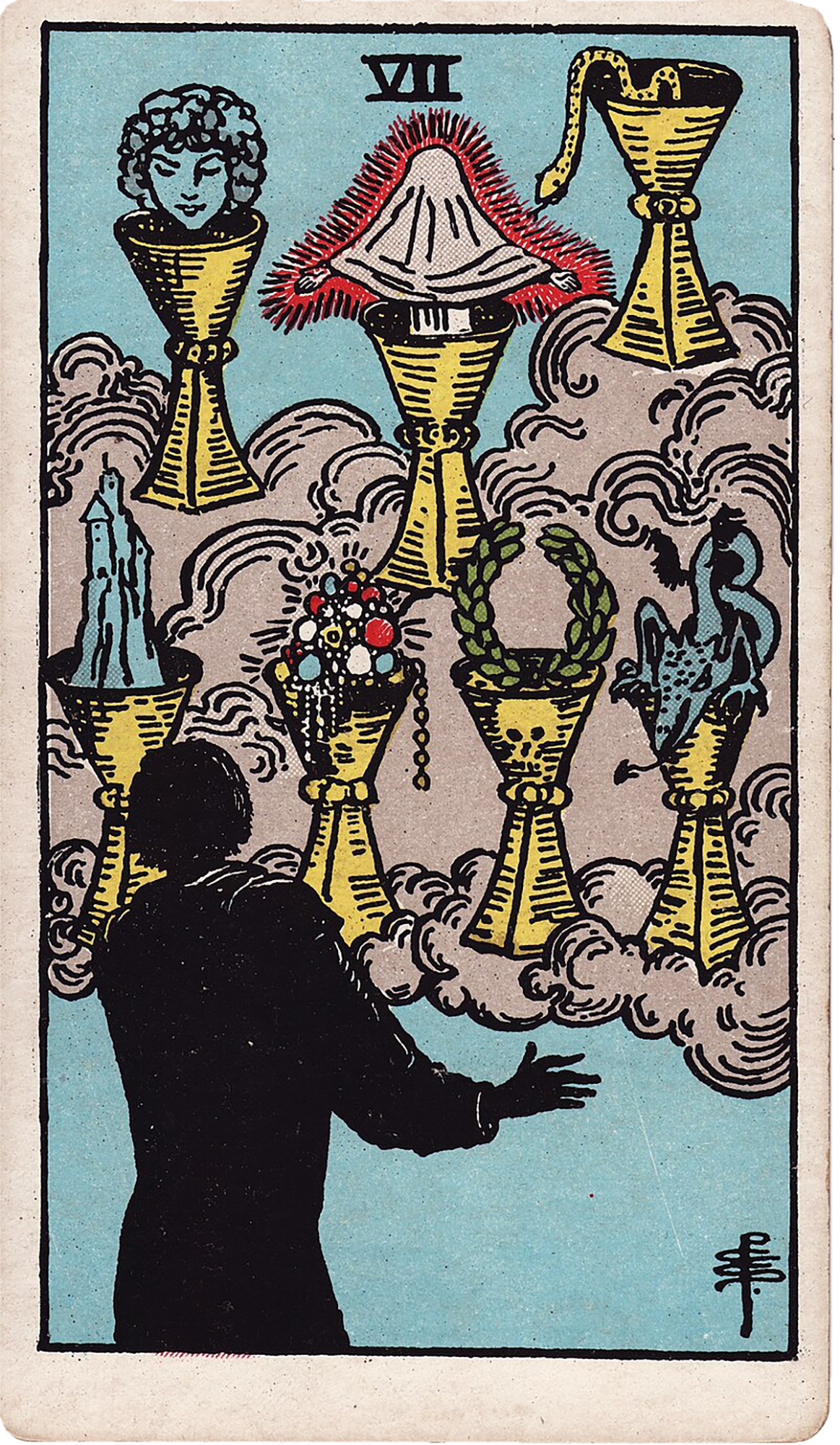 7 of Cups
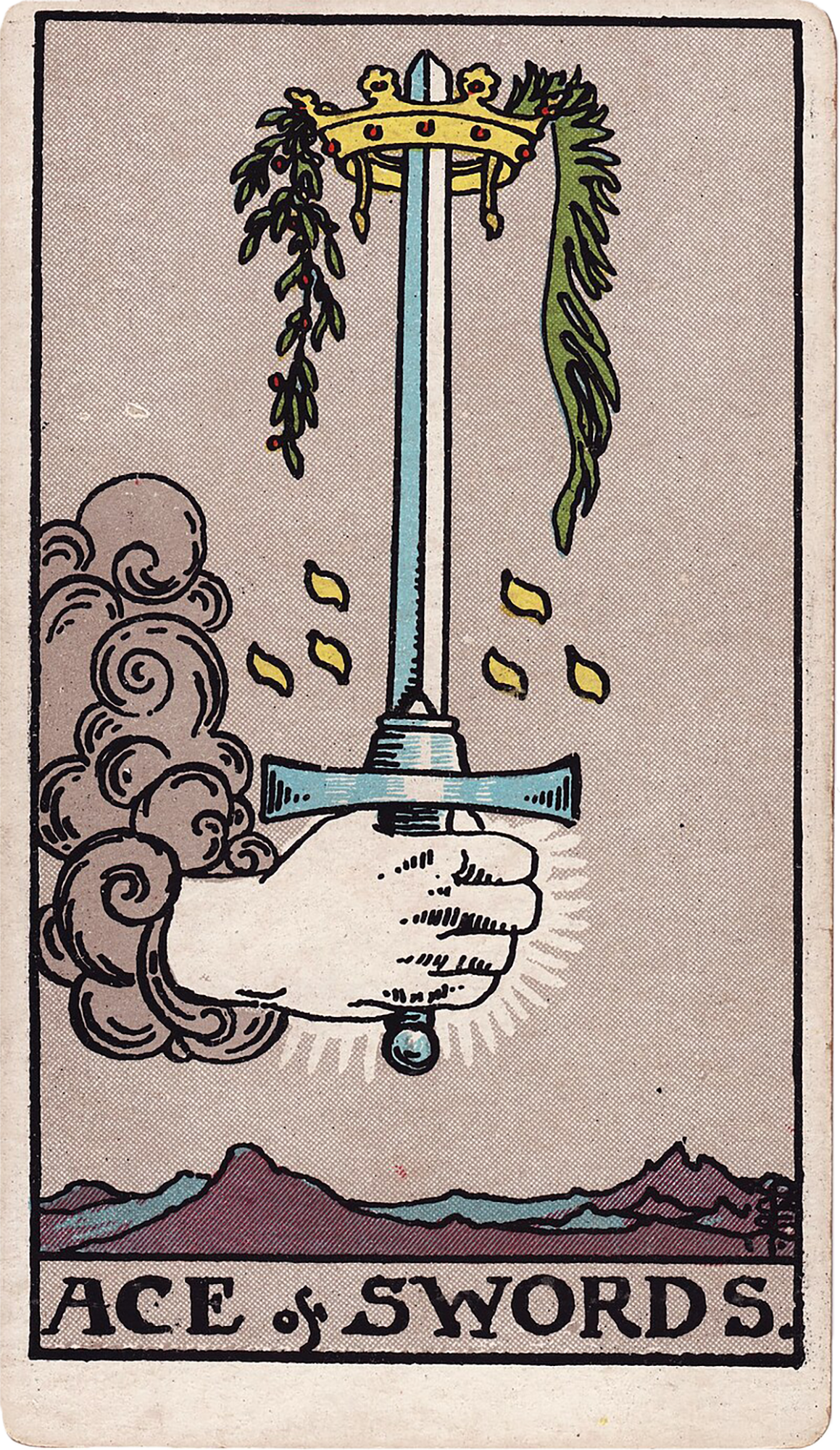 Ace of Swords
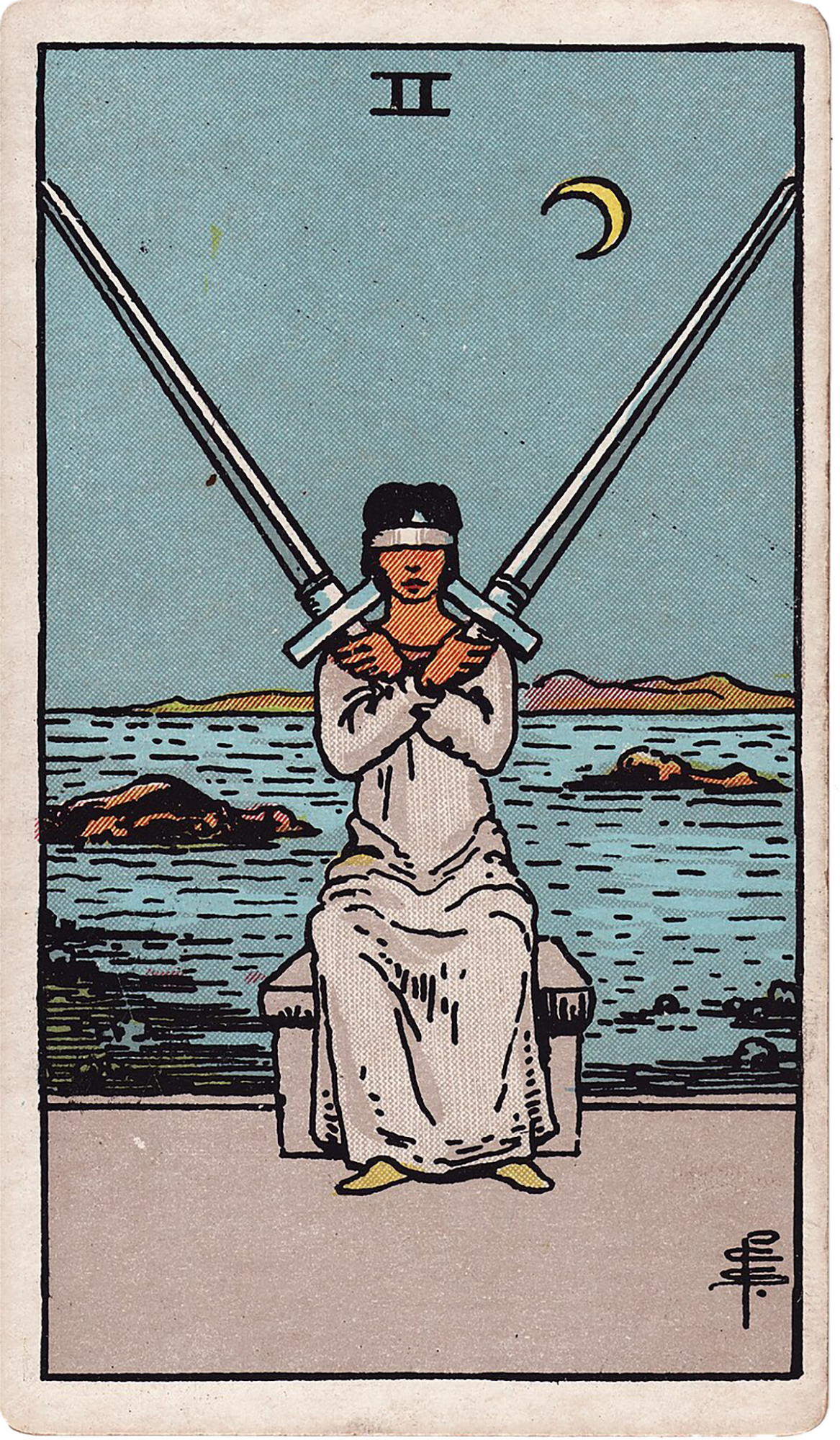 2 of Swords
Introduction: a three-card arc from imagining to cutting through
When the 7 of Cups, 2 of Swords and Ace of Swords appear together they describe a recognizable psychological and narrative pathway: the 7 of Cups opens with many possible futures and active imagination; the 2 of Swords shows a decision or commitment paused, blocked or held in tension; the Ace of Swords offers a breakthrough of clarity, truth or decisive communication. As a card-combination lesson, the goal is not to mechanistically name one fixed outcome but to read how these energies modify one another in the spread, how Rider-Waite-Smith imagery gives clues for nuance, and how to translate symbolism into concrete advice for querents. This article walks learners through that process with technique, contexts and examples.
Visual cues and Rider-Waite-Smith symbolism to anchor interpretation
Use the supplied images as primary evidence. The 7 of Cups shows a figure facing seven floating cups in clouds; each cup contains a different image: a castle, a snake, a head or mask, a laurel wreath, jewels, a dragon, and a shrouded, unreachable figure. This tableau is the classic symbol of fantasy, wishful thinking, projection, and the seductive quality of options. The clouds emphasize unreality and imagination; the diversity of images points to competing desires and fears. The 2 of Swords presents a blindfolded person seated at a shoreline, two crossed swords held horizontally. The moon above and the water behind suggest that emotion and intuition are present but partially hidden; the blindfold signals incomplete information or willful avoidance. The crossed swords visually lock movement: this card often represents a stalemate, postponement of judgment, or a balanced tension. The Ace of Swords famously shows a single upright sword rising from a hand in a cloud, often crowned with a laurel wreath and with mountains or clear sky behind. It is the image of mental clarity, decisive truth, and the power of a freshly defined idea or verbal articulation. The Ace implies beginning, and the sword symbolizes separation and cutting through confusion. Reading these images together, pay attention to: where vision is clouded (7 of Cups), where vision is deliberately blocked (2 of Swords blindfold), and where vision is restored or articulated (Ace of Swords). The physical gestures and environmental cues in the images tell a story about agency: the person in 7 of Cups often reacts to options; the 2 of Swords is actively holding off making a choice; the Ace offers a tool or resource for decisive action.
How these cards modify one another in a spread
Treat the three cards as a dynamic: 7 of Cups sets the field of choices and emotional content; 2 of Swords locates the decision point or block; Ace of Swords indicates the quality of resolution available. Instead of reading each card in isolation, ask how the Ace of Swords sharpens or corrects the fantasies of the 7 of Cups, and how the 2 of Swords explains the delay or the conditions under which the Ace's clarity will be accepted. Examples of modification patterns: - If the 7 of Cups is strong and vivid, the 2 of Swords explains that the querent is overwhelmed or ambivalent; the Ace suggests the breakthrough will be intellectual: a conversation, a fact, or a logic-driven choice will settle matters. - If the Ace of Swords is emphasized visually or in position, it can mean that one clear criterion or truth will eliminate multiple illusory options from the 7 of Cups. The 2 of Swords then represents the moment of holding that criterion up and refusing to decide until the truth is acknowledged. - If the 2 of Swords appears reversed or visually unstable, the combination can show a forced decision or rash cut: the Ace's energy has arrived but the querent may act without integrating emotional reality from the 7 of Cups, causing regrets. Always ask: which card is the protagonist in the spread? Sometimes the 7 of Cups is central and the Ace is distant, indicating that fantasies still dominate and clarity is only latent. Other times the Ace dominates, showing a new idea or rule that will reorder options immediately.
Relationship context: choosing between desire, fear and the need for clarity
In relationship readings the 7 of Cups often represents multiple attractions, idealized images of a partner, or conflicting desires within the relationship. The cups' images map to typical relational fantasies: security (castle), passion or danger (dragon), status or reward (jewels), an unknown or shadow side (shrouded figure). The 2 of Swords makes plain why no choice has been made: perhaps one or both partners are avoiding a candid talk, or a person is emotionally unready to commit because their internal list of options hasn't been sorted. The Ace of Swords here functions as the catalyst for an honest conversation, a statement of needs, or a boundary that cuts away illusions. Practical interpretations: - If the querent is single, the spread can mean they have many possible partners or images of what they want (7 of Cups), they are pausing to protect themselves or because they lack clarity (2 of Swords), and a clear value or line will clarify which choice is real (Ace of Swords). The advice: define non-negotiables and ask direct questions. - If the querent is in a relationship, the 7 of Cups can show fantasies about what the relationship 'could be' versus what it is. The 2 of Swords suggests avoidance: difficult topics are not being discussed. The Ace of Swords suggests an intervention: a candid conversation, truth-telling, or a definitive decision (stay/change) based on a cut-through insight. Pay attention to emotion: the Ace's clarity can feel harsh. Encourage compassionate phrasing and a plan for integrating emotional realities from the 7 of Cups rather than simply dismissing them.
Career and practical contexts: from options and analysis paralysis to a decisive strategy
In career readings the 7 of Cups often signals a menu of opportunities or ideas that look tempting but vary widely in quality. The cups' objects can map onto real-world options: lucrative offers (jewels), stable but slow advancement (castle), risky ventures (dragon), or hidden liabilities (snake). The 2 of Swords explains why the querent has not chosen: missing data, fear of commitment, or a deliberate waiting period to see how conditions evolve. The Ace of Swords offers the professional tool: a clear criterion, a decisive business plan, a pivotal meeting or a sharply articulated pitch. Use the combination to formulate tactical advice: - Practical reading: identify which images in the 7 of Cups correspond to actual job offers or strategies. Ask which option aligns with the Ace of Swords' principle: what is the one metric that clarifies choice? Profit margin, work-life balance, mission fit? - If the 2 of Swords is reversed, it may indicate a forced choice due to deadlines or external pressure; the Ace can represent a legal or contractual clarity that forces a decision. Warn the querent to verify facts before acting, because the Ace's decisive nature can cut both ways if based on incomplete information. Encourage structured decision-making: list options, map them to the 7 of Cups imagery, define the Ace of Swords criterion, and note what the 2 of Swords blindfold hides (emotions, market signals, team dynamics).
Emotional and practical life contexts: how cognitive clarity and feeling intersect
Emotionally the trio asks whether the querent is following projection or reality. The 7 of Cups is the imagination stage — where longings and fears populate choices. The 2 of Swords locates the place where emotion and cognition are out of sync: the heart or intuition may 'know' something but the mind refuses to see it, or vice versa. The Ace of Swords is the intellectual principle that can reconcile the two by naming what matters. A practical life-context example: a querent is choosing where to live. 7 of Cups lists fantasies about different neighborhoods; 2 of Swords shows indecision because of sentimental attachments or fear of losing identity; Ace of Swords clarifies the objective criteria that make one location clearly the right choice. The reading's task is to surface those objective criteria and to plan how to process the emotional losses still present in the 7 of Cups. Always ask: what does the querent need to name aloud? The Ace often requires articulation — writing a pros and cons list with one decisive rule can be the ritual that moves the 2 of Swords into action while honoring the 7 of Cups' emotional truths.
Upright and reversed interplay in the combination
Use the card definitions supplied as context, but avoid assuming that reversal simply negates upright meaning. Instead, treat reversals as shifts in process or emphasis. - Upright 7 of Cups + Upright 2 of Swords + Upright Ace of Swords: a classic sequence. Imagination produces multiple options; the decision is being suspended; a breakthrough is possible if the querent applies logic or has a crucial conversation. Advice is to gather facts and prepare to speak clearly. - Reversed 7 of Cups + Upright 2 of Swords + Upright Ace of Swords: reversed 7 of Cups can mean narrowing of options, disillusionment, or the internal nature of the problem. Here the field of choices might already be shrinking, but the querent refuses to decide. The Ace suggests clarity is ready; the work is acceptance and action. - Upright 7 of Cups + Reversed 2 of Swords + Upright Ace of Swords: reversed 2 of Swords often signals that a stalemate is breaking or that a decision has been forced. If the Ace is upright, the break will likely be through decisive truth-telling. Warn about impulsivity: the querent may rush to the Ace's clarity without integrating feelings from the cups. - Any combination where the Ace of Swords is reversed must be read carefully: reversed Ace can indicate harshness, misused logic, or confusion. If the Ace is reversed alongside a dominant 7 of Cups, the querent may use analysis to justify fantasies or may weaponize 'truth' to end ambiguity in a hurtful way. The 2 of Swords in that case often shows the need to slow down and realign ethics with clarity. Always evaluate whether the Ace's clarity is constructive (cutting to reveal truth) or destructive (cutting to punish or deny feeling).
Avoiding the one-card-at-a-time trap and reading the system
A common beginner mistake is to parcel the three cards into separate ideas: 7 of Cups = fantasy, 2 of Swords = indecision, Ace of Swords = truth. That surface summary misses interaction. Instead follow this process: 1. Identify the narrative spine: which card feels like the motor of change in the spread? Is the Ace initiating, or is the 7 entrenched? 2. Map the temporal relationship: does the 7 of Cups describe past fantasies, present confusion, or possible futures? Place cards in time relative to the question. 3. Look for visual echoes: does the Ace's crown connect to the laurel in the 7 of Cups? Does the moon in the 2 of Swords suggest intuition that the Ace must respect? These echoes refine meaning. 4. Translate each image to concrete elements in the querent's life. The 'snake' in the 7 of Cups could be a warning about a partner or business partner. The 'castle' could be longed-for stability. 5. Test coherence: propose a coherent sentence that links the three cards: for example, 'You have many fantasies about how this could look; you are pausing because you lack all the facts; a clear conversation or criterion will decide which fantasy is realistic.' If the sentence fits the querent, refine. If not, reassign cards to different temporal roles. This system-reading keeps interpretation flexible, grounded in imagery, and sensitive to process.
Step-by-step practical reading method and sample three-card spreads
Method to practice with querents or in self-work: 1. Lay the three cards left-to-right and label positions: A = context/options (7 of Cups), B = decision point/block (2 of Swords), C = resolution/action (Ace of Swords). You can change labels depending on your usual spread language. 2. Describe each image aloud to the querent before naming an interpretive label. Ask: which cup image jumps out? How does the person in the 2 of Swords look? What quality of the Ace feels strongest? 3. Ask the querent to map images to real options or feelings. This grounds symbolism. 4. Formulate the combined narrative by creating a sentence that links A-B-C. Test it with the querent. Adjust if necessary. 5. Translate the Ace of Swords into a practical next step: a question to ask, a boundary to state, a document to seek. Give concrete language for the clarifying conversation. Sample spread 1: Decision about leaving a relationship - A 7 of Cups: many fantasies about life apart and life together; castles and jewels suggest both security and rewards are imagined. - B 2 of Swords: the querent has not told their partner or themselves the truth; blindfold represents avoidance. - C Ace of Swords: the necessary action is a clear conversation naming needs and limits. Practice a short script: 'I have been weighing options and need to tell you what I need...' The Ace suggests verifiable facts and specific requests. Sample spread 2: Career pivot - A 7 of Cups: multiple offers or side projects; the dragon suggests risky opportunity. - B 2 of Swords: decision delayed until market data or finances are clarified. - C Ace of Swords: identify one decisive metric (salary threshold, hours per week) and state it in writing. Use that rule to eliminate choices. Sample spread 3: Self-guidance when options are internal - A 7 of Cups reversed: narrowed options or disillusionment; fewer cups are appealing. - B 2 of Swords reversed: pressure to pick now or face consequences. - C Ace of Swords reversed: beware of cutting words or a harsh verdict. Recommend slowing, seeking counsel, and reframing the Ace into constructive clarity rather than punitive finality.
Common mistakes and how to avoid them
Mistake: Skipping imagery and leaping to canned meanings. Remedy: always describe what you see first; note which cup image is emotionally salient. Mistake: Treating the Ace of Swords as morally superior or always the answer. Remedy: the Ace is a tool that can be used well or poorly. Ask whether clarity is compassionate and integrated with emotional truth from the 7 of Cups. Mistake: Assuming reversal equals failure. Remedy: treat reversals as process markers: a reversed 7 of Cups can be healthy narrowing; a reversed Ace may be a warning to check logic and motive. Mistake: One-card isolation. Remedy: form an inter-card sentence and check for coherence with the querent's life. Mistake: Forcing timing. Remedy: use contextual clues and ask whether cards refer to a decision now, a process underway, or a catalytic future event. If timing is crucial, validate with follow-up questions rather than definitive pronouncements.
Exercises to build skill and interpretation logic
1. Image-mapping drill: Pull the 7 of Cups and, without labels, list five life domains each cup image could represent. Practice mapping quickly. 2. Sentence linkage practice: Draw these three cards and write five different A-B-C sentences, varying which card you treat as protagonist. Notice how meaning shifts. 3. Reversal sensitivity: For each reversal variant of the three cards, write advice you would give and justify it with image details. 4. Role-play: Practice delivering the Ace of Swords message as a soft script for a querent who fears hurting someone. Make the Ace clear but compassionate. 5. Feedback loop: After readings, ask querents to report outcomes when decisions are made. Track whether following the Ace's clarity produced better integration with emotional realities from the 7 of Cups.
Conclusion: from inner landscape to decisive speech
The 7 of Cups, 2 of Swords and Ace of Swords form a pedagogical trio about how imagination, avoidance, and clarity interact. Learning to read them as a system — rooted in Rider-Waite-Smith imagery — improves interpretation from vague counsel to practical, actionable guidance. The 7 of Cups reminds readers to value feeling and imagination, the 2 of Swords shows where clarity is held back, and the Ace of Swords supplies the instrument for decisive speech or insight. The mature reader helps querents translate the Ace into compassionate, concrete steps that honor the emotional truths surfaced by the cups, rather than using clarity as an excuse to dismiss what matters.
Practice questions
• Which specific image in the 7 of Cups feels most relevant to my situation right now, and why?
• What is my 'blindfold' in the 2 of Swords — information I am avoiding or an emotion I'm unwilling to name?
• If the Ace of Swords offers one clear criterion to decide by, what would that criterion be in this situation?
• How could I express the Ace's clarity in a way that respects the feelings represented by the cups?
• Am I using logic to hide from feeling, or am I ready to use clarity to support healthy action?
• If I rush to action when the Ace appears, what might I lose from the 7 of Cups that needs mourning?
• How does timing appear in this combination for my question — is the Ace immediate, or does it describe a developing capacity?
• When I form a single sentence linking the three cards, does it feel true or forced? What needs changing?
Comments
Sign in to comment.
Continue learning
Interpreting the Dance of Justice and The Devil: Balancing Morality and Temptation in Tarot Readings
The combination of Justice and The Devil in tarot presents a profound exploration of morality, temptation, and personal accountability. This article unpacks how these cards influen...
Harnessing the Power of The Magician and Ace of Wands: Igniting Creativity and Manifestation in Tarot Readings
The combination of The Magician and the Ace of Wands in tarot readings offers a potent blend of creative energy and manifestation power. This article delves into the ways these car...
Understanding the Synergy Between The Empress and The Emperor in Tarot Card Combinations
This article delves into the intricate synergy between The Empress and The Emperor cards in Tarot, focusing on how their combined energies modify and enrich readings across various...
Decoding Transformation and Renewal with Death and The Star in Tarot Combinations
This article delves into the card combination of Death and The Star, two powerful Major Arcana cards from the Rider-Waite-Smith deck. It explores how their imagery and meanings int...
Balancing Ambition and Compassion with The Emperor and Queen of Cups in Tarot Combinations
This article delves into the nuanced Tarot card combination of The Emperor and Queen of Cups, emphasizing how their energies complement and challenge each other. By analyzing their...
Finding Emotional Healing and Renewal with The Star and The Moon Tarot Combination
This article examines the rich interplay between The Star and The Moon tarot cards when they appear together in a reading. Using the traditional Rider-Waite-Smith symbolism and the...
Unlocking Emotional Wisdom with The High Priestess and The Queen of Cups in Tarot Combinations
This article delves into the card combination of The High Priestess and The Queen of Cups, emphasizing their shared themes of intuition, emotional depth, and receptivity. By examin...
Unlocking Emotional Resilience with Strength and The Star in Tarot Combinations
This article delves into the Tarot card combination of Strength and The Star, revealing how their interplay highlights pathways to emotional resilience. Anchored in the Rider-Waite...
Unveiling Emotional Strength with Strength and The Queen of Cups in Tarot Combinations
This article delves into the dynamic Tarot combination of Strength and The Queen of Cups, emphasizing how these cards together illuminate emotional strength, compassionate boundari...
Unlocking Emotional Transformation with Death and The Moon Tarot Combination
This article explores the rich and complex interaction between the Death and The Moon tarot cards within the Rider-Waite-Smith tradition, focusing on their combined potential to un...