
From Fog to Focus Interpreting The Moon and Ace of Swords Together
This card-combination lesson examines how The Moon and the Ace of Swords interact in a reading. Using Rider-Waite-Smith imagery as an anchor, the article teaches how to read these two cards as a pair rather than two isolated signals. Key themes: the tension between intuition, the unconscious, and emerging clarity; methods for positioning cards in narrative or modifier roles; practical contexts (relationship, career, emotional, family); how reversals change tone; common interpretive pitfalls; and concrete practice methods and sample readings to build reliable, responsible interpretations.
Read the cards together
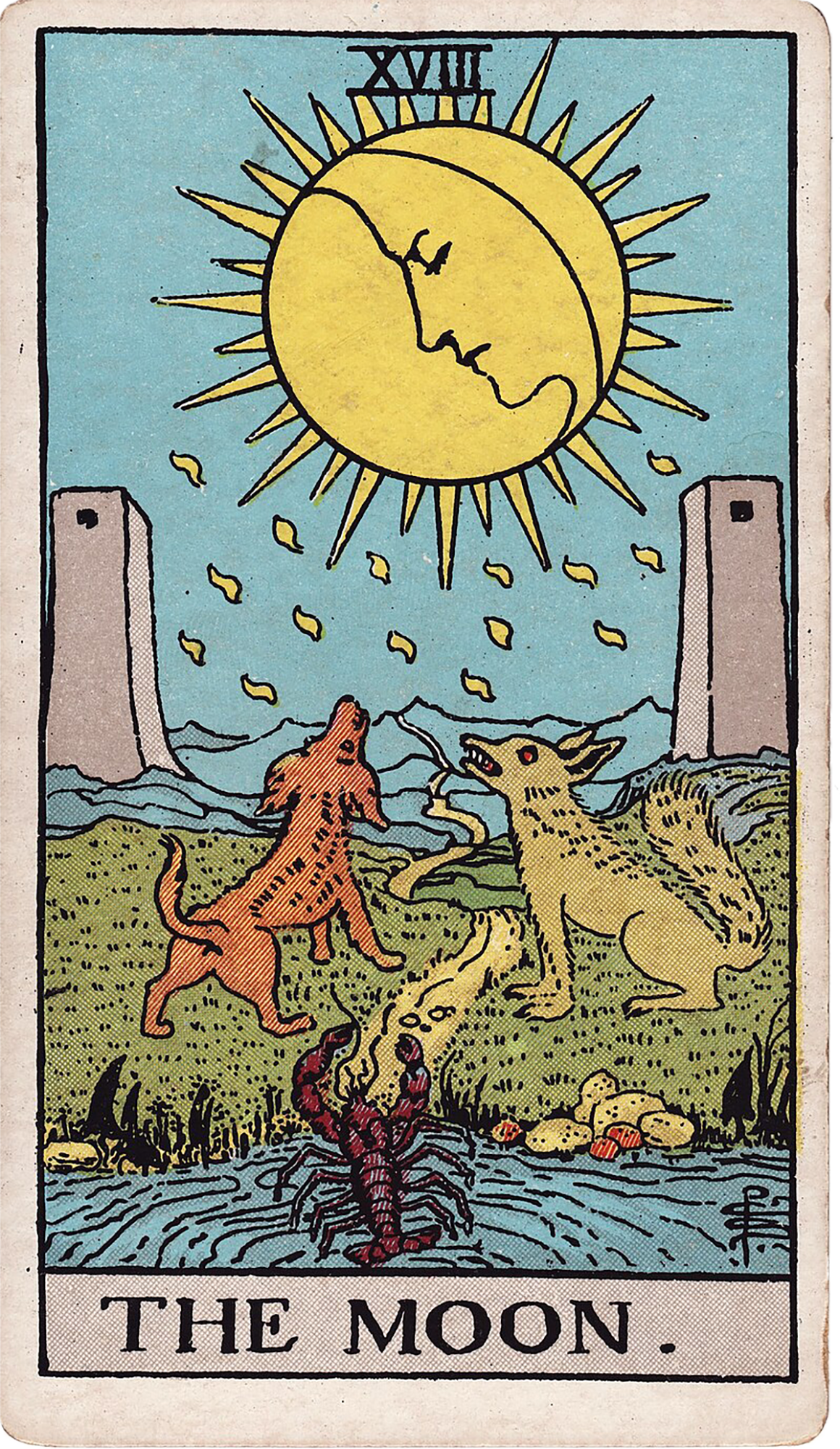 The Moon
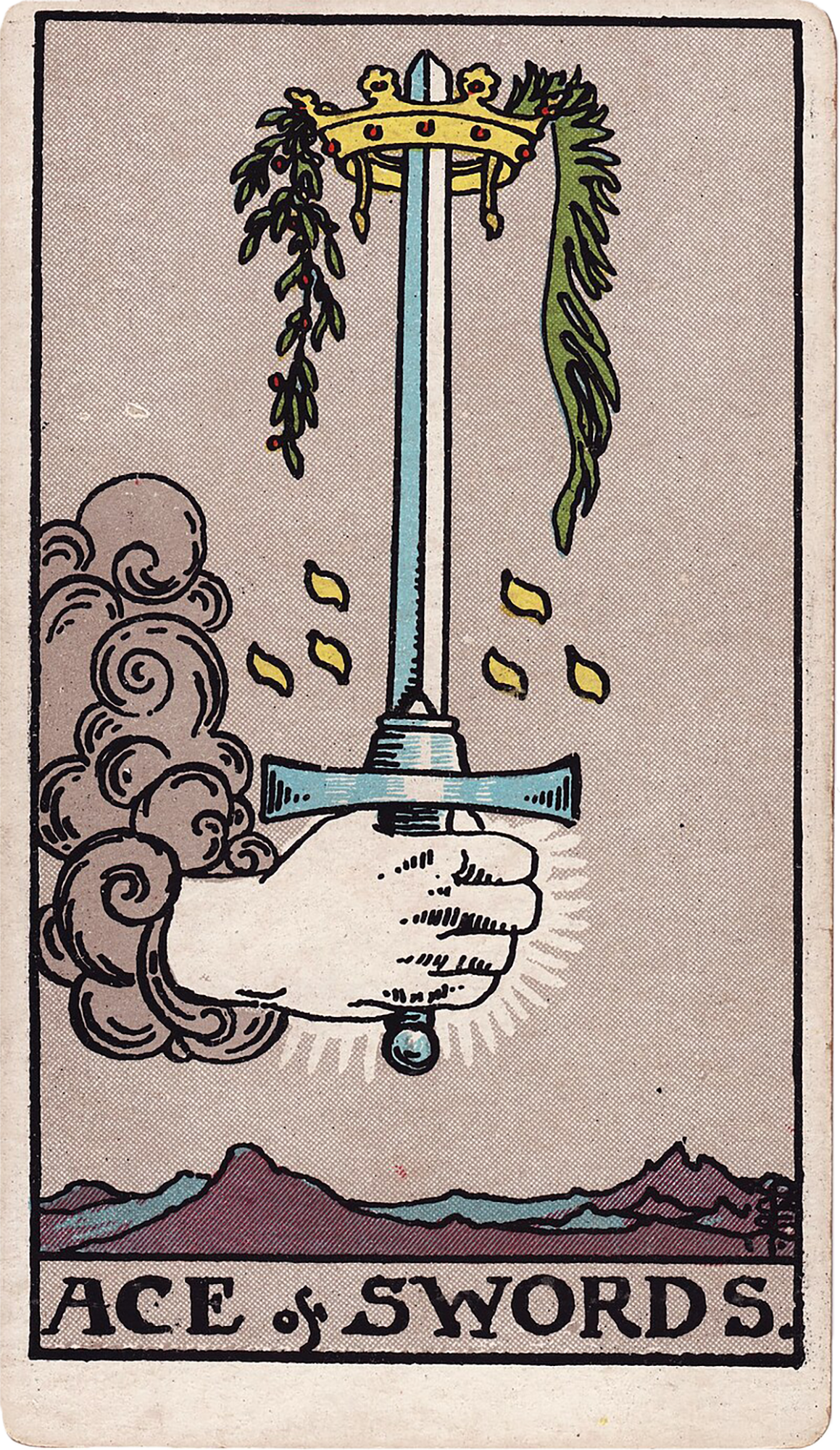 Ace of Swords
Introduction
When The Moon and the Ace of Swords appear together they form a compact lesson about how insight and intellect meet uncertainty. The Moon, with its dog and wolf, the crustacean emerging from the water, the two towers and the winding path, represents a psychological landscape: dreams, impressions, the not-yet-visible, and the pull between instinct and domestication. The Ace of Swords—an upright blade thrust from a cloud, a crown wrapped in a laurel wreath—brings the air suit’s promises: clarity, decisive words, a principle that cuts. Read together, these cards ask: How will clarity enter a situation that is still half in shadow? Will truth be used to illuminate or to wound? This article is a teaching tool for learners who want to interpret these two cards as a conversation rather than two separate pronouncements.
Visual Anchors and Symbolic Dialogue
Ground your reading in the images. The Moon’s features on the Rider-Waite-Smith deck create a scene that feels both uncanny and domestic: a full moon with a human face implies a reflective consciousness; a crayfish leaves the water and must cross land, indicating a slow emergence of unconscious material into the conscious arena; the two towers and the path suggest a journey through thresholds where perception is uncertain; the dog and wolf ask the reader to notice the balance between tame and wild instincts. The Ace of Swords shows a single upright sword, a hand projecting from a cloud, a crown and laurel: a sudden potential for intellectual victory, an idea that has authority and clarity. Contrast and interplay are the first things to notice. Water (Moon) meets Air (Swords): emotional, instinctual material is pressing toward expression, understanding, or judgment. The Moon’s long path implies that insight may arrive gradually, while the Ace of Swords promises a precise moment: a truth articulated, a decision made. Visually, imagine cutting moonlight with a blade: the image evokes the act of naming a dream or calling a boundary into existence. Use those visual metaphors as interpretive tools rather than literal events: the crayfish’s risk of exposure might represent a vulnerable admission; the sword’s crown might point to a statement that changes the field of power within a relationship or workplace.
Principles of How These Cards Modify One Another
A few working principles help convert image into technique. - Framing vs. Action: Determine which card frames context and which offers action. The Moon often describes background conditions — uncertainty, confusion, emotional complexity. The Ace of Swords commonly provides what needs to happen next: a clear statement, decision, or structure. In many placements The Moon tells you the terrain; the Ace hands you the tool. - Timing and Pace: The Moon suggests slow, subjective unfolding; the Ace of Swords promises a puncturing moment. When paired, expect a period of inner preparation followed by a specific, possibly sharp, move. The sword may be the trigger that suddenly clarifies what the Moon had been hinting at. - Tone and Use of Truth: The Ace of Swords’ clarity can be constructive (cutting through illusion) or destructive (a truth used as a weapon). The Moon’s fog makes it harder to predict which. Always ask how the querent handles truth under stress: does cutting clarity heal or escalate? - Internal vs External: The Moon often signals inner material; the Ace of Swords can represent external speech or internal realization. Read proximity to the question—if the spread is about inner work, the sword may be a new understanding; if it’s about conflict, it may be spoken word. - Elemental Translation: Translate water-language to air-language. Ask: What emotional truth wants a name? What intuition needs an argument? The Ace can be the grammar that organizes the Moon’s images. These principles let you avoid simplistic ‘‘one card equals problem, the other equals solution’’ readings. Instead, treat the pair as a small drama in which one card supplies context and the other supplies mode of engagement.
Contextual Interpretations: Relationship Situations
Read these cards together as a narrative about feelings and communication. - The Moon upright + Ace of Swords upright: The relationship contains murky feelings, unspoken anxieties or private fantasies (Moon). The Ace indicates that one person will cut through the fog with an honest conversation, a clarified boundary, or a decisive question. Visually, the Moon’s path implies that vulnerability is already being tested; the Ace’s crown suggests that truthful speech could restore authority or equilibrium. Advice: encourage articulating feelings carefully—bring the Moon’s images into words without shaming. - The Moon upright + Ace of Swords reversed: Uncertainty persists and the potential clarity has been misapplied. The reversed sword may appear as a harsh truth, accusation, or premature conclusion that wounds instead of clarifies. Because the Moon already distorts perception, be wary of statements offered as ‘‘the truth’’ that are actually projections. Ask: Are people confusing fear with fact? Suggest pausing before delivering hard statements. - The Moon reversed + Ace of Swords upright: The fog is lifting internally; hidden feelings are beginning to organize. The Ace suggests a clean articulation is possible now. The crayfish is on the land; the insight arrives. In relationships this can be a turning point: someone's growing self-honesty allows them to speak with integrity. - Both reversed: Private confusion is colliding with weaponized logic. This configuration warns of inner denial or a truth used to control. Suggest reflective practices before confrontations and encourage mediatory language.
Contextual Interpretations: Career and Work
In workplace contexts the Moon often flags unclear roles, office gossip, or projects that rely on tacit knowledge. The Ace of Swords brings the possibility of a meeting, memo, or decision that redefines scope. - Moon upright + Ace upright: There’s ambiguity about responsibilities or a project's direction (Moon). The Ace promises a clarifying memo, meeting, or a decisive strategic thought that will cut through assumptions. Visual image: the Moon’s towers stand like vague organizational boundaries; the sword’s crown marks a formal declaration that will reshape structure. Recommend preparing facts and objectives so the sword’s clarity is precise rather than blunt. - Moon upright + Ace reversed: Someone tries to impose a hasty decision without acknowledging underlying uncertainties. The result may be resentment or missed details. Use the Moon to remind the querent to map the implicit assumptions before responding. - Moon reversed + Ace upright: Hidden dynamics have been exposed—now the moment for a clear policy or position has arrived. The sword can enforce a fair ruling if informed by what was hidden. Practical note: When advice includes action-oriented language (send an email, request a meeting), anchor it to the Ace’s energy; when it emphasizes listening, mapping unknowns, or recognizing projections, anchor to The Moon.
Contextual Interpretations: Emotional and Practical Situations
These cards also work in inner-life or practical domains—health choices, legal processes, or emotional crossroads. - Moon upright + Ace upright: You’re in a liminal place, perhaps anxious or dreaming about outcomes. The Ace suggests a specific mental strategy—documenting, analyzing, articulating—that will change the situation. For example, in a medical context, the Moon can reflect fear or uncertainty about symptoms; the Ace could advise getting a second opinion or asking a clear set of diagnostic questions. - Moon upright + Ace reversed: Mental clarity is possible but being used harshly—rushed self-diagnosis, catastrophizing conclusions. Encourage slowing down and separating intuition (what you feel) from immediate judgments (what you declare). - Moon reversed + Ace upright: Inner confusion is resolving and an actionable plan becomes possible. The image of the crayfish nearing the shore suggests readiness to act; the sword gives the shape of that action. Always remind querents this combination values both inner listening and clear articulation—one without the other is unstable.
Family and Household Contexts
When the question centers on family dynamics, The Moon frequently points to inherited patterns, unspoken expectations, or emotional currents passed down. The Ace of Swords introduces a potentially shrewd conversation, boundary, or a legal/administrative action (e.g., forms, school meetings). - Moon upright + Ace upright: A long-standing family pattern is named for the first time. The imagery suggests someone is ready to bring what was implicit into daylight. The sword’s crown indicates that naming may carry legitimacy—someone in the family could assert a healthy boundary successfully. - Moon upright + Ace reversed: Naming comes as blame. The sword cuts but does not heal. Recommend facilitating the conversation with clear intentions and rules so the sword’s power becomes constructive. - Moon reversed + Ace upright: Private realizations result in decisive steps: arranging care, signing documents, setting rules. The Moon’s reversal can mean the family member is coming to terms with a reality previously denied; the Ace makes the needed action possible.
Reversal Dynamics and Nuance
Reversals alter emphasis but do not flip meanings into neat opposites. Treat reversals as modifiers telling you where the card’s energy is stuck, exaggerated, or internalized. - Moon reversed: Often a clearing of confusion, denial of one’s intuition, or internalizing of fears. It can be a hopeful sign of emerging clarity or a warning that someone is refusing to trust their inner signal. In pairings the reversed Moon can mean the unconscious material is now contained and psychological work is required. - Ace of Swords reversed: Attention to misuse of truth—sarcasm, brittle criticism, or thinking too quickly. The sword’s capacity for clarity is present but tangled with defensiveness or poor timing. When both are reversed, expect a psychological standoff: the person may be beginning to see a pattern (Moon reversed) but is using logic to avoid feeling (Ace reversed). Your ethical role is to help the querent notice where intellect is protecting them from necessary feeling work and where feeling is masking as rationality. Ask clarifying questions and avoid definitive judgments.
Technique: A Practical Step‑by‑Step Reading Method
To bring these insights into practice, use a predictable method that helps you avoid one-card-one-meaning traps. 1) Identify the Question and Roles: Confirm the querent’s question. Decide whether the cards are best read as context/action, past/present, or cause/effect. For most two-card draws, treating The Moon as terrain and the Ace of Swords as response produces rich results, but always check the spread’s positions. 2) Describe Each Card Visually: With the querent present, name key images—The Moon’s crayfish, dog and wolf, towers, path; Ace of Swords’ hand, crown, laurel. Ask which image resonates first. This enrolls the querent in the interpretation and uncovers projection. 3) Translate Image to Theme: Turn the visual into concise themes: Moon = uncertainty, projection, emerging material; Ace = clarity, decisive speech, boundary. Keep these themes as your interpretive scaffolding. 4) Ask the Linking Question: How does the Ace respond to the Moon in this situation? Is the sword cutting through illusion, or is the sword being brandished in response to fear? Use questions like: Who needs to speak? What feeling needs naming? Is the timing right for decisive action? 5) Consider Polarity and Timing: Is this an immediate instruction (Ace now) or a future moment after more processing (Moon then Ace)? Use the path imagery to estimate pace: long path suggests preparation. 6) Check Reversals as Modifiers: If a card is reversed, ask where energy is stuck. Reversals often point to work needed before the upright energy can function. 7) Offer Practical Steps: Translate the card-pair into 1–3 concrete actions: name the concern, prepare a short script for a conversation, set a boundary, gather facts, or take a pause. Use imagery: ‘‘Write down two dreams or worries (Moon), then draft a single-sentence question you can ask (Ace)’’. 8) Close with Contingencies: Give the querent signs to watch for. For example: ‘‘If the conversation feels like accusation, the Ace may be reversed—step back and reframe. If the felt image shifts from murky to clearer, the Moon may be unsticking itself and a new, frank discussion will help.’’ This method keeps the reading actionable and anchored to the imagery in the provided cards.
Common Mistakes and How to Avoid Them
Learners often make repeatable errors when combining The Moon and the Ace of Swords. Watch for these pitfalls. - Mistake 1: Treating the Ace as automatically a ‘‘fix.’' The Ace of Swords is potential, not guaranteed skillful use. Ask who will wield the sword and to what end. - Mistake 2: Reading the Moon as purely negative or ‘‘mysterious drama.’' The Moon contains useful sensitivity and creative insight. Don’t moralize uncertainty; use it as data. - Mistake 3: Ignoring reversals’ nuance. Reversed cards are not curses. They indicate process issues: distortion, timing, or internalization. - Mistake 4: Over-literalizing images. The crayfish crossing land is not an actual animal problem; it’s symbolic of emergence. Translate images into psychological and practical metaphors. - Mistake 5: Delivering advice without consent. The sword imagery can inspire bluntness—don’t use it as license to push direct interventions. Frame suggestions as possibilities. Avoiding these mistakes requires curiosity, careful questioning, and reminding yourself that cards form a conversation, not a script.
Case Studies and Sample Interpretations
1) Relationship example: A querent wonders if they should tell their partner about a recurring fantasy that’s troubling them. The Moon upright + Ace of Swords upright. Interpretation: The Moon shows the fantasy as part of private psychological material; the Ace suggests naming it could be clarifying. Practical read: Prepare the conversation (write a short statement), choose a calm moment, and use ‘I’ language. Watch the tone—if the Ace feels sharp when spoken, pause and soften. 2) Workplace example: A project is stalled because roles are unclear. The Moon upright + Ace reversed. Interpretation: Assumptions and office politics (Moon) are creating confusion; the reversed Ace warns against a hasty memo that blames others. Practical read: Instead of issuing edicts, call a clarifying meeting with questions that map responsibilities. 3) Family example: A parent senses a teen is pulling away but no clear reason is surfaced. Moon reversed + Ace upright. Interpretation: The parent’s fog is clearing; a direct, compassionate question could open the conversation. Practical read: Use one clear, non-accusatory question and be ready to listen. 4) Personal emotional work: The querent is anxious about a health decision. Moon upright + Ace upright. Interpretation: The fear is real; gather facts and ask precise questions of a practitioner. The sword advises clarity: make a prioritized list of questions for the next appointment. Each example keeps the imagery central: what path is visible, who is on it, whether a blade will shape events, and whether the crown is a formal authority or merely symbolic of certainty.
Teaching Practice and Next Steps
To build skill with this pair, practice with the following exercises: 1) Do ten two-card draws where you place The Moon in position A (context) and the Ace in position B (action). Write a one-paragraph interpretation, then compare across draws to notice patterns. 2) Switch roles: Place Ace as context and Moon as action to see how the dynamic changes. 3) Verbally narrate the image story before you interpret: ‘‘The crab crawls toward the land, the dog and wolf watch, the path disappears into the mountains; a hand offers a crowned sword.’’ This slows you down. 4) For reversals, write two sentences: one that treats the card as behaving well, one that treats it as problematic; then synthesize the nuance. The central skill is differential attention: let the cards’ images teach you what the querent is not yet saying and how a clear move might help or harm. Keep practicing imagery-first interpretation, and always link suggestions to the querent’s agency and consent.
Conclusion
The Moon and the Ace of Swords make an elegant pair for teaching how intuition and reason collaborate in a reading. Use the Moon to notice what is hidden, disavowed, or slowly emerging; use the Ace of Swords to identify what needs naming, what must be decided, and how language or policy could change the situation. Anchor every interpretation in the Rider-Waite images: the crayfish’s risk, the howling pair, the towers and winding path, and the hand bearing a crowned blade. Always ask who will speak, how truth will be used, and whether timing requires more patience. Read the cards together, ask concrete questions, and translate image into specific practice. That is how you move from fog to focus.
Practice questions
• Which detail in The Moon’s image (crayfish, dog/wolf, path, towers, moon face) resonated most for you and why?
• When the Ace of Swords offers a clear statement, who in your life would benefit from that clarity and who might be harmed?
• How do you tell the difference between intuition that needs articulation and fear masquerading as insight?
• In a reading, how do you decide which card should set context and which should be the action?
• What signs tell you the Ace of Swords is being used constructively rather than as a weapon?
• How would you rephrase a blunt message suggested by the Ace to avoid the pitfalls highlighted by The Moon?
• When a reversal appears, what practical steps would you recommend to unstuck the energy?
• How can you incorporate a ritual or concrete practice that honors both the Moon’s need for reflection and the Ace’s need for clear action?
Comments
Sign in to comment.
Continue learning
Interpreting the Dance of Justice and The Devil: Balancing Morality and Temptation in Tarot Readings
The combination of Justice and The Devil in tarot presents a profound exploration of morality, temptation, and personal accountability. This article unpacks how these cards influen...
Harnessing the Power of The Magician and Ace of Wands: Igniting Creativity and Manifestation in Tarot Readings
The combination of The Magician and the Ace of Wands in tarot readings offers a potent blend of creative energy and manifestation power. This article delves into the ways these car...
Understanding the Synergy Between The Empress and The Emperor in Tarot Card Combinations
This article delves into the intricate synergy between The Empress and The Emperor cards in Tarot, focusing on how their combined energies modify and enrich readings across various...
Decoding Transformation and Renewal with Death and The Star in Tarot Combinations
This article delves into the card combination of Death and The Star, two powerful Major Arcana cards from the Rider-Waite-Smith deck. It explores how their imagery and meanings int...
Balancing Ambition and Compassion with The Emperor and Queen of Cups in Tarot Combinations
This article delves into the nuanced Tarot card combination of The Emperor and Queen of Cups, emphasizing how their energies complement and challenge each other. By analyzing their...
Finding Emotional Healing and Renewal with The Star and The Moon Tarot Combination
This article examines the rich interplay between The Star and The Moon tarot cards when they appear together in a reading. Using the traditional Rider-Waite-Smith symbolism and the...
Unlocking Emotional Wisdom with The High Priestess and The Queen of Cups in Tarot Combinations
This article delves into the card combination of The High Priestess and The Queen of Cups, emphasizing their shared themes of intuition, emotional depth, and receptivity. By examin...
Unlocking Emotional Resilience with Strength and The Star in Tarot Combinations
This article delves into the Tarot card combination of Strength and The Star, revealing how their interplay highlights pathways to emotional resilience. Anchored in the Rider-Waite...
Unveiling Emotional Strength with Strength and The Queen of Cups in Tarot Combinations
This article delves into the dynamic Tarot combination of Strength and The Queen of Cups, emphasizing how these cards together illuminate emotional strength, compassionate boundari...
Unlocking Emotional Transformation with Death and The Moon Tarot Combination
This article explores the rich and complex interaction between the Death and The Moon tarot cards within the Rider-Waite-Smith tradition, focusing on their combined potential to un...