
Interpreting Collaboration Generosity and Legacy with the Three Six and Ten of Pentacles
This article teaches how to read the Three, Six and Ten of Pentacles as an interrelated system rather than isolated cards. Using Rider‑Waite‑Smith visual anchors—the apprentice and master carver in the 3 of Pentacles, the scales and hands in the 6 of Pentacles, and the multi‑generational courtyard in the 10 of Pentacles—we trace a narrative from collaboration and skill (3) through exchange and fairness (6) to long‑term stability and legacy (10). You will learn practical synthesis techniques: layering numerology, noting directional imagery, assigning roles in family and workplace contexts, testing reversals for stuck dynamics, and converting the trio into clear questions and steps for clients. Numerous case examples show how the cards modify one another in relationships, career and estate/financial contexts, and exercises help you internalize the method.
Read the cards together
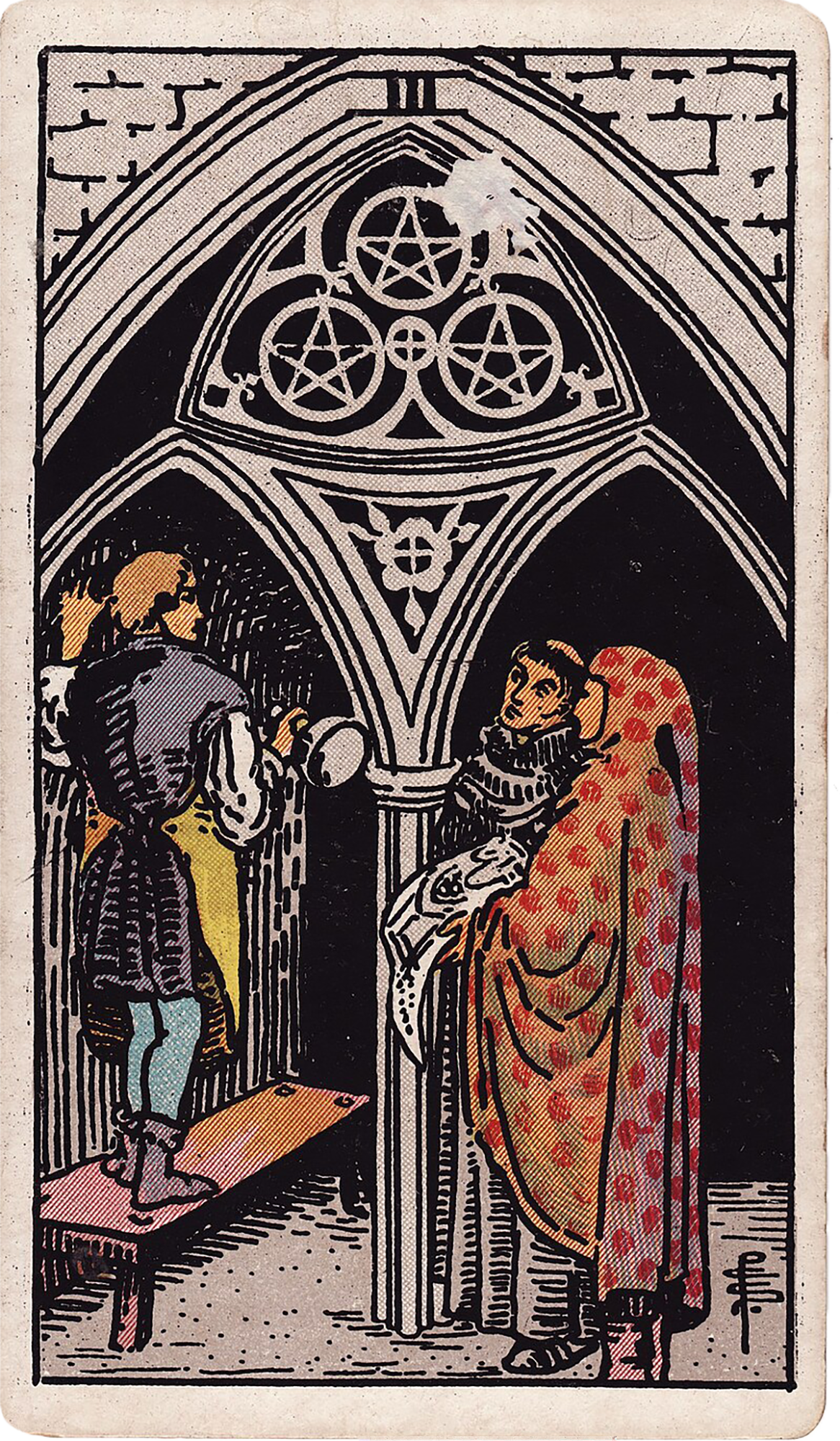 3 of Pentacles
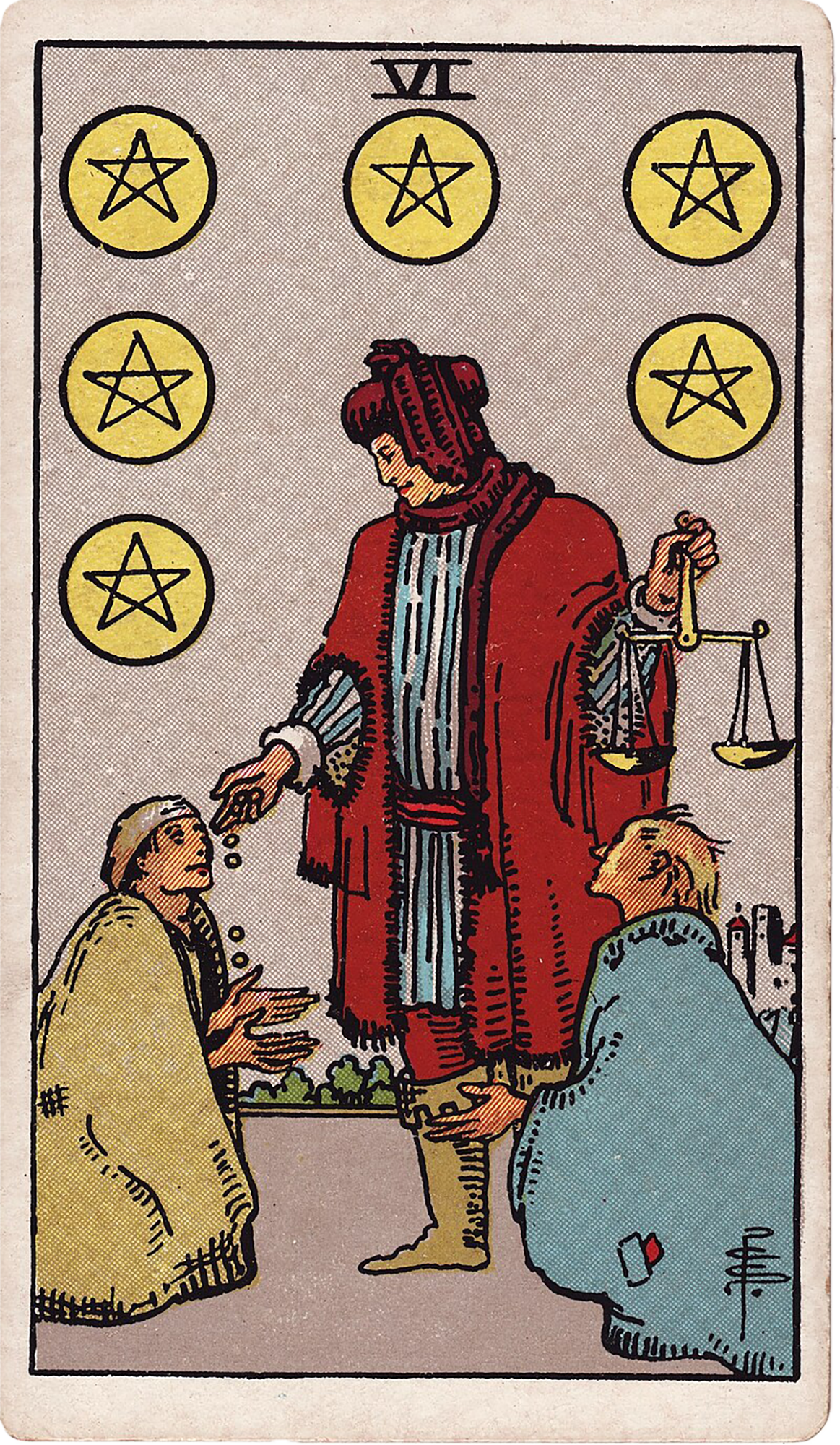 6 of Pentacles
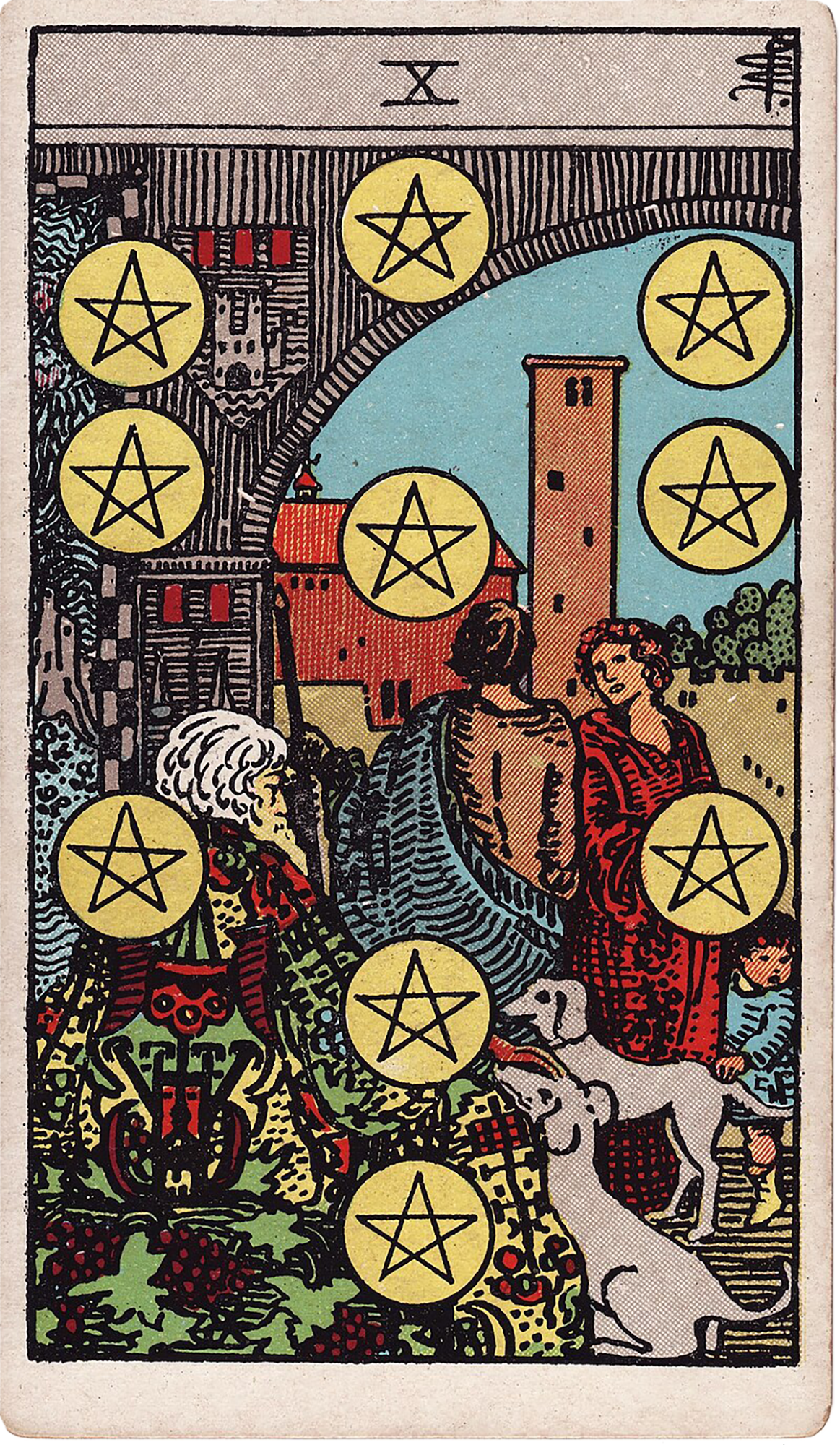 10 of Pentacles
Introduction: Why these three cards belong together
The 3 of Pentacles, 6 of Pentacles and 10 of Pentacles share suit identity and an arc of development: skill and collaboration (3), exchange and balance (6), and completion, shared systems or legacy (10). In Rider‑Waite‑Smith imagery these three cards form a coherent story about resources moving through skillful work into equitable patterns and finally into institutional or family structures that last. For learners, the key promise of this combination is practical: it helps you answer questions about how people work together, how money or care is shared, and what will endure. This article keeps the supplied card images central. Refer to the stonework, tools, coins, scales, the postures of figures and the multi‑generational setting as your primary evidence while you synthesize meanings.
Visual anchors and Rider‑Waite‑Smith symbolism
Readers should begin by studying the three supplied images. The 3 of Pentacles shows a craftsman inscribing or carving a cathedral arch while two other figures hold plans and observe. The image emphasizes apprenticeship, craft tools, a developed plan, and differing types of expertise—practical skill, design authority, and patronage. The 6 of Pentacles depicts a wealthy man distributing coins to two beggars while holding scales in his other hand. The scales symbolize balance and fairness; the hands and coins show the literal act of giving and receiving. The 10 of Pentacles presents an older couple or patriarchal figure, a younger family member, dogs, a courtyard and a heraldic arch decorated with pentacles. It implies inheritance, social order, and resources that persist across generations. Use these visual details as your evidence in readings: posture, gaze, tools, clothing and architectural elements are not decorative—they are interpretive clues about power, expertise, reciprocity and durability.
Numerology and elemental logic across the trio
Layer simple numerology: 3 = cooperation, growth through others, skill amplified by many; 6 = balance, responsibility, exchange; 10 = completion, systems, outcomes that outlast individuals. All three are Pentacles, an earth suit, so practical matters—work, money, health, routine, assets—are central. Read the trio as a developmental sequence: skill assembled with others (3) produces resources that must be managed and shared fairly (6) to become stable, enduring structures (10). Conversely, if any card is reversed or problematic, it indicates a block at that stage: stalled collaboration, imbalanced giving, or fragile legacy.
Core synthesis techniques: avoiding one‑card readings
One common beginner error is to read each card in isolation and then tack on a sentence of synthesis. Instead, use these techniques: 1) Narrative sequencing: place the cards in time (past–present–future or resources–exchange–legacy). 2) Role allocation: assign the three cards to roles (who has skill, who gives or withholds, who benefits long term). 3) Visual cross‑checks: trace imagery across cards—does the giving hand in the 6 match the patron in the 3? Are the architectural shapes in the 3 repeated as family structures in the 10? 4) Elemental tension: keep Pentacles as the core but note if a card's action suggests air or fire qualities (planning, conflict); this helps explain interpersonal dynamics. 5) Problem locus: identify which card is most active or unusual in the spread and treat it as the focal problem to resolve. Use these methods to move from three separate meanings to a coherent, testable story.
Reading the trio in a family context
Because your topic is family, anchor interpretations in household roles, inheritance, caregiving and intergenerational systems. Upright 3 of Pentacles in a family spread often points to collaborative household projects: remodeling a home, shared trades, or relatives pooling skills (an uncle teaching a trade, siblings organizing care). The 6 of Pentacles asks whether those exchanges are equitable: who gives time or money, and are gifts conditional? The 10 of Pentacles is the outcome: legacy, family wealth, traditions, wills or the reputation that carries forward. Example reading: layout position Past = 3 of Pentacles, Present = 6 of Pentacles, Future = 10 of Pentacles. Interpretation: the family developed practical skills together (3) and currently navigates giving and receiving—perhaps eldercare where some relatives contribute more (6). If balance is negotiated honestly, the likely result is a stable family arrangement or a clear inheritance plan (10). If the 6 is reversed (strings attached), the 10 might still appear upright but represent a brittle legacy; the outward appearance of stability hides resentments that will erode long‑term trust.
Career and workplace contexts: mentorship, compensation and institutionalization
In workplace readings the 3 of Pentacles often indicates apprenticeship, team design and craft collaboration: think architects, developers, medical teams—people whose skills are interdependent. The 6 of Pentacles then checks compensation and power: are contributions being rewarded fairly? Is the manager using resources responsibly? The 10 of Pentacles corresponds to organizational legacy: pension structures, company culture that outlasts founders, succession planning. Combine them: a company promotes mentorship programs (3), moves toward fairer pay or profit‑sharing (6), and therefore builds a sustainable institution (10). If the 3 is reversed (poor standards or isolated talent), even a generous 6 cannot fully translate into a healthy 10—the system lacks lasting craft or process. Conversely, a reversed 10 suggests the organization lacks structural longevity and may be patching over deeper inequities flagged by the 6.
Money, estate and practical resource flows
Financially focused readings will center on the 6 of Pentacles but must be read together with the 3 and 10. The 3 points to the source of value—skill, work, or business craft; the 6 shows the mechanics of distribution—loans, gifts, philanthropy, debts; the 10 denotes long‑term asset patterns—trusts, property, family businesses. Example: if a client draws the 3 upright, the money stems from competent craft or enterprise. If the 6 is reversed, there may be loans or aid with strings that complicate future inheritance (10 reversed). Another common scenario: 3 upright + 6 upright + 10 upright is an encouraging indicator for building generational wealth through fair compensation and clear systems. Watch for the 6's scales: who holds them in the image? That visual directs your questions about power and accountability in the resource flow.
Reversals and stuck dynamics: how flips modify the narrative
Reversals are not merely "bad." They localize the blockage. Reversed 3 of Pentacles: poor collaboration, egoistic artisanship, lack of planning; in combination this weakens both fair exchange and eventual legacy—skills exist but are not integrated. Reversed 6 of Pentacles: imbalance in giving—strings attached, shame around receiving, exploitation; this can poison well‑intentioned collaboration from the 3 and create a legacy in the 10 that is conditional or coercive. Reversed 10 of Pentacles: family conflict over money, fragile legacy or appearances maintained without substance; when paired with upright 3 and 6, the problem may be external (laws, taxes); when paired with reversed 3 or 6, the issue becomes internalized—skills and exchanges fail to translate into durable structures. In practice, ask which reversed card feels "stuck"—and then find an action word: simplify the plan (3 reversed), renegotiate terms or boundary work (6 reversed), or rebuild values and documentation for inheritance (10 reversed).
Technique: step‑by‑step synthesis method
Use this repeatable method when these three cards appear together. 1) Scan visuals: name 3 details from each image (posture, tools, objects). 2) Assign a timeline or role for each card (for family: craft/skill, exchange/caregiving, legacy/inheritance). 3) Ask three targeted questions: What skill or work generated the resource? Who controls distribution? What will remain? 4) Test balance: use the 6 of Pentacles as a balance test—if it’s upright, assume fair exchange; if reversed, probe for strings. 5) Trace causality: does the 3 lead into the 6 (skill producing resources), or does the 6 feed back into the 3 (giving enabling training)? 6) Check for conflict: if imagery shows closed postures, averted gazes or unequal clothing, introduce power dynamics into your reading. 7) Produce actionable advice: specify one behavioral step to restore flow (practice a skill together, formalize agreements, create a written will). Write these steps down for the client as tangible next actions.
Case examples and sample readings
Case 1: Family business tension. Spread: 3 of Pentacles upright, 6 of Pentacles reversed, 10 of Pentacles upright. Reading: The craft and competence exist (3)—the family works well together on the product—but the current distribution of profits has strings attached (6 reversed): perhaps one sibling lends to another with controlling terms. The 10 upright suggests the business could become a lasting legacy, but only if the 6’s imbalance is resolved. Advice: formalize compensation and loans, create transparent bookkeeping, and hold a mediated meeting to reframe gifts as investments with clear expectations. Case 2: Eldercare and emotional labor. Spread: 3 of Pentacles reversed, 6 of Pentacles upright, 10 of Pentacles reversed. Reading: Lack of coordinated caregiving or poor planning (3 reversed) means some family members are improvising. People are generous in the moment (6 upright) but the 10 reversed warns of long‑term instability—no will, unclear finances, or family resentment. Advice: convene a planning session to map responsibilities, assign roles and record legal documents so current generosity does not become future chaos. Case 3: Career mentorship. Spread: 3 upright, 6 upright, 10 upright. Reading: A program of apprenticeship and mentoring (3) leads to healthy resource sharing or equitable pay (6) and sets the stage for a sustainable career path or organizational legacy (10). Advice: document mentorship outcomes, set measurable compensation frameworks, begin succession training.
Common mistakes and how to avoid them
Mistake 1: Reading the cards as chronological prophecy. Solution: Use them as a map of dynamics rather than a fixed time line—ask whether the sequence is past/present/future or simultaneous roles. Mistake 2: Overlooking visual contradictions. Solution: Use at least three visual details per card to test your interpretation. Mistake 3: Relying only on upright/reversed polarity. Solution: Treat reversals as process clues—what needs attention—not just "bad." Mistake 4: Ignoring context. Solution: Always tie meanings back to the question (family dispute vs career planning). Mistake 5: Giving abstract moralizing advice. Solution: Translate your reading into concrete tasks the querent can try within two weeks.
Exercises to build skill with this combination
Exercise 1: Image journaling. Spend 10 minutes with each supplied card image. Write six observations about posture, clothing, and setting. Then create a one‑sentence story that links those six observations across the three cards. Exercise 2: Role swap. For three different family scenarios (inheritance, caregiving, small business), assign the 3, 6 and 10 to roles and draft two specific questions to ask during a reading. Exercise 3: Reversal mapping. Take each possible reversal (3 reversed, 6 reversed, 10 reversed) and list three real‑world actions that would restore flow (practice, boundary setting, legal organization). Exercise 4: Client phrasing. Turn your synthesis into a short script: "I’m seeing that the family has strong practical skills (3), but the terms of giving are unclear (6). Clear documentation and a mediation session could protect what you want to leave behind (10)." Practice delivering this script aloud with empathy.
Putting it together: an ethical reading checklist
Before concluding a reading that uses these cards, run this checklist: 1) Evidence first: cite specific visual details that justify your interpretation. 2) Multiple hypotheses: offer at least two plausible narratives when tensions exist. 3) Actionable advice: provide one immediate step and one medium‑term step. 4) Power sensitivity: if the 6 of Pentacles indicates imbalance, be careful about advising unilateral giving—encourage negotiation and consent. 5) Documentation: for legal or financial matters implied by the 10, recommend professional advice (legal, financial planner) rather than definitive instructions. This keeps readings responsible and client‑centered.
Conclusion: reading for durable solutions
The 3, 6 and 10 of Pentacles together form a practical curriculum in how resources are created, shared, and preserved. Anchor every interpretation in the supplied images: the apprentice at the arch, the handing hands and scales, the family crest and courtyard. Use the synthesis techniques above to turn symbolic insight into testable, real‑world steps—repair teamwork, renegotiate exchange, document legacy. When you move beyond one‑card summaries and toward integrated narratives, these three Pentacles become powerful tools for resolving family challenges, stabilizing careers and designing legacies that reflect shared values.
Practice questions
• Which visual detail in each of the supplied card images stands out to you, and why might that detail matter for a family reading?
• If the 6 of Pentacles shows an imbalance in giving within a household, what are two concrete negotiation steps you could suggest to restore fairness?
• How does the 3 of Pentacles alter your interpretation of a family dispute about money versus the 10 of Pentacles doing the same?
• When one card is reversed, how do you decide whether to treat that reversal as an internal block, an interpersonal problem, or an external structural issue?
• What would you document or advise a client to document when the 10 of Pentacles appears in a spread about inheritance?
• Pick a recent reading you gave and re‑interpret it using the narrative sequencing method described here—what changes in your advice?
Comments
Sign in to comment.
Continue learning
Interpreting the Dance of Justice and The Devil: Balancing Morality and Temptation in Tarot Readings
The combination of Justice and The Devil in tarot presents a profound exploration of morality, temptation, and personal accountability. This article unpacks how these cards influen...
Harnessing the Power of The Magician and Ace of Wands: Igniting Creativity and Manifestation in Tarot Readings
The combination of The Magician and the Ace of Wands in tarot readings offers a potent blend of creative energy and manifestation power. This article delves into the ways these car...
Understanding the Synergy Between The Empress and The Emperor in Tarot Card Combinations
This article delves into the intricate synergy between The Empress and The Emperor cards in Tarot, focusing on how their combined energies modify and enrich readings across various...
Decoding Transformation and Renewal with Death and The Star in Tarot Combinations
This article delves into the card combination of Death and The Star, two powerful Major Arcana cards from the Rider-Waite-Smith deck. It explores how their imagery and meanings int...
Balancing Ambition and Compassion with The Emperor and Queen of Cups in Tarot Combinations
This article delves into the nuanced Tarot card combination of The Emperor and Queen of Cups, emphasizing how their energies complement and challenge each other. By analyzing their...
Finding Emotional Healing and Renewal with The Star and The Moon Tarot Combination
This article examines the rich interplay between The Star and The Moon tarot cards when they appear together in a reading. Using the traditional Rider-Waite-Smith symbolism and the...
Unlocking Emotional Wisdom with The High Priestess and The Queen of Cups in Tarot Combinations
This article delves into the card combination of The High Priestess and The Queen of Cups, emphasizing their shared themes of intuition, emotional depth, and receptivity. By examin...
Unlocking Emotional Resilience with Strength and The Star in Tarot Combinations
This article delves into the Tarot card combination of Strength and The Star, revealing how their interplay highlights pathways to emotional resilience. Anchored in the Rider-Waite...
Unveiling Emotional Strength with Strength and The Queen of Cups in Tarot Combinations
This article delves into the dynamic Tarot combination of Strength and The Queen of Cups, emphasizing how these cards together illuminate emotional strength, compassionate boundari...
Unlocking Emotional Transformation with Death and The Moon Tarot Combination
This article explores the rich and complex interaction between the Death and The Moon tarot cards within the Rider-Waite-Smith tradition, focusing on their combined potential to un...