
Interpreting Drive Pressure and Burnout with Knight of Wands 7 of Wands and 10 of Wands
This article teaches how to read the combination of the Knight of Wands, 7 of Wands, and 10 of Wands as a coherent story about energetic momentum, defended position, and accumulated burden. It shows how Rider-Waite symbolism anchors interpretations, how cards modify and amplify one another, how reversals change the narrative, and how to translate the trio into responsible, specific advice for querents in relationship, career, and practical emotional contexts. Includes stepwise reading technique, common mistakes, and practice exercises.
Read the cards together
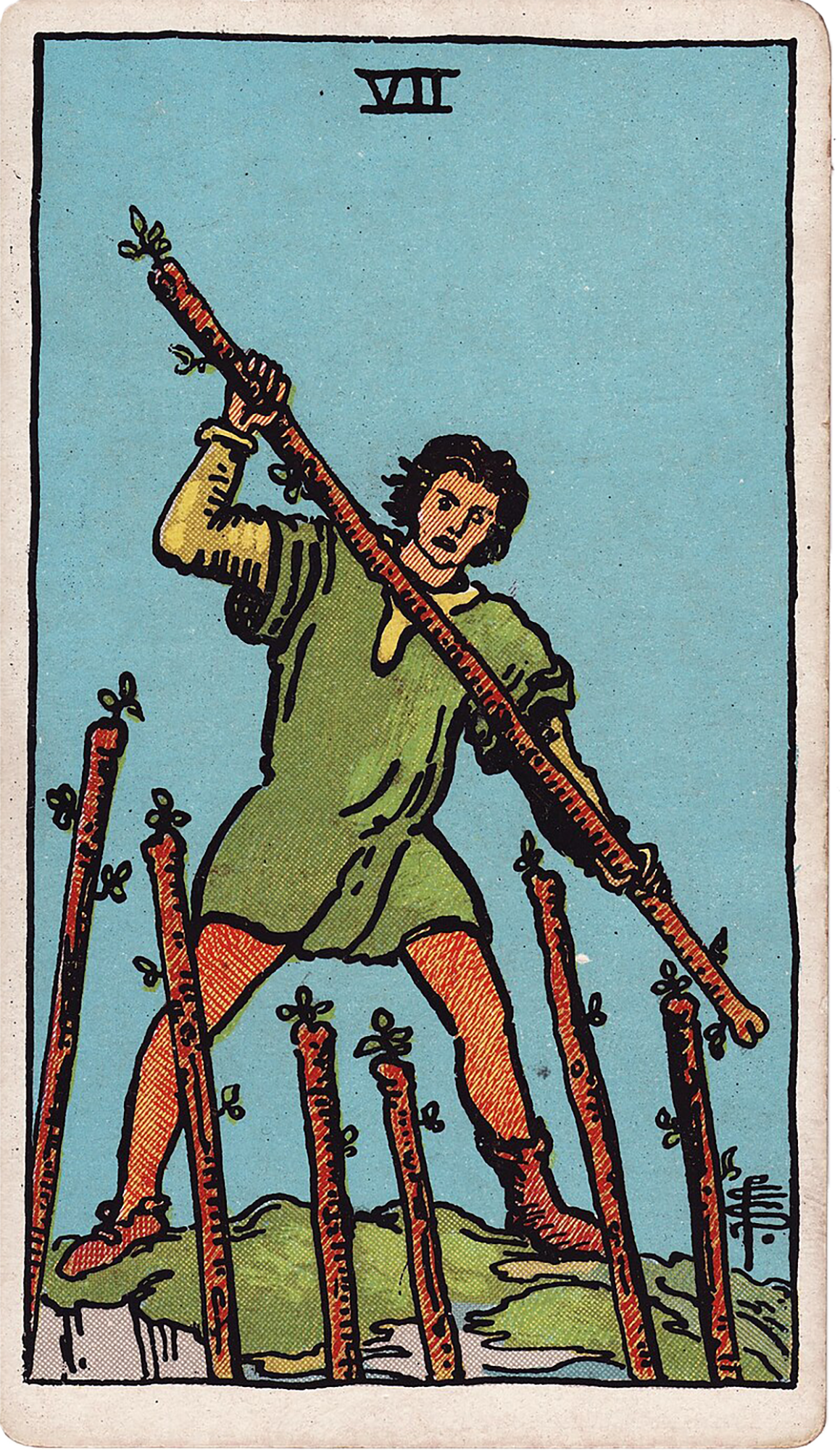 7 of Wands
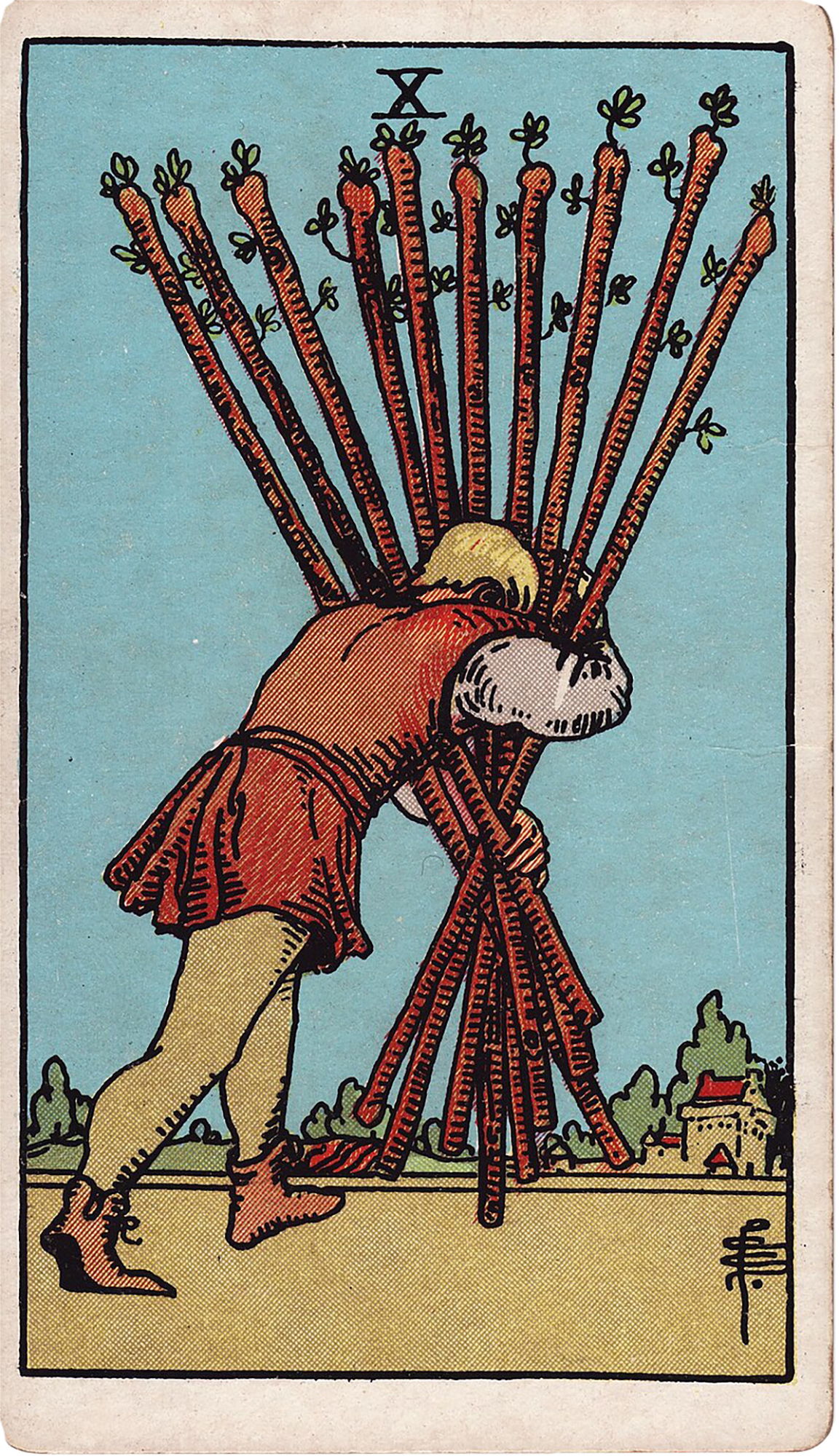 10 of Wands
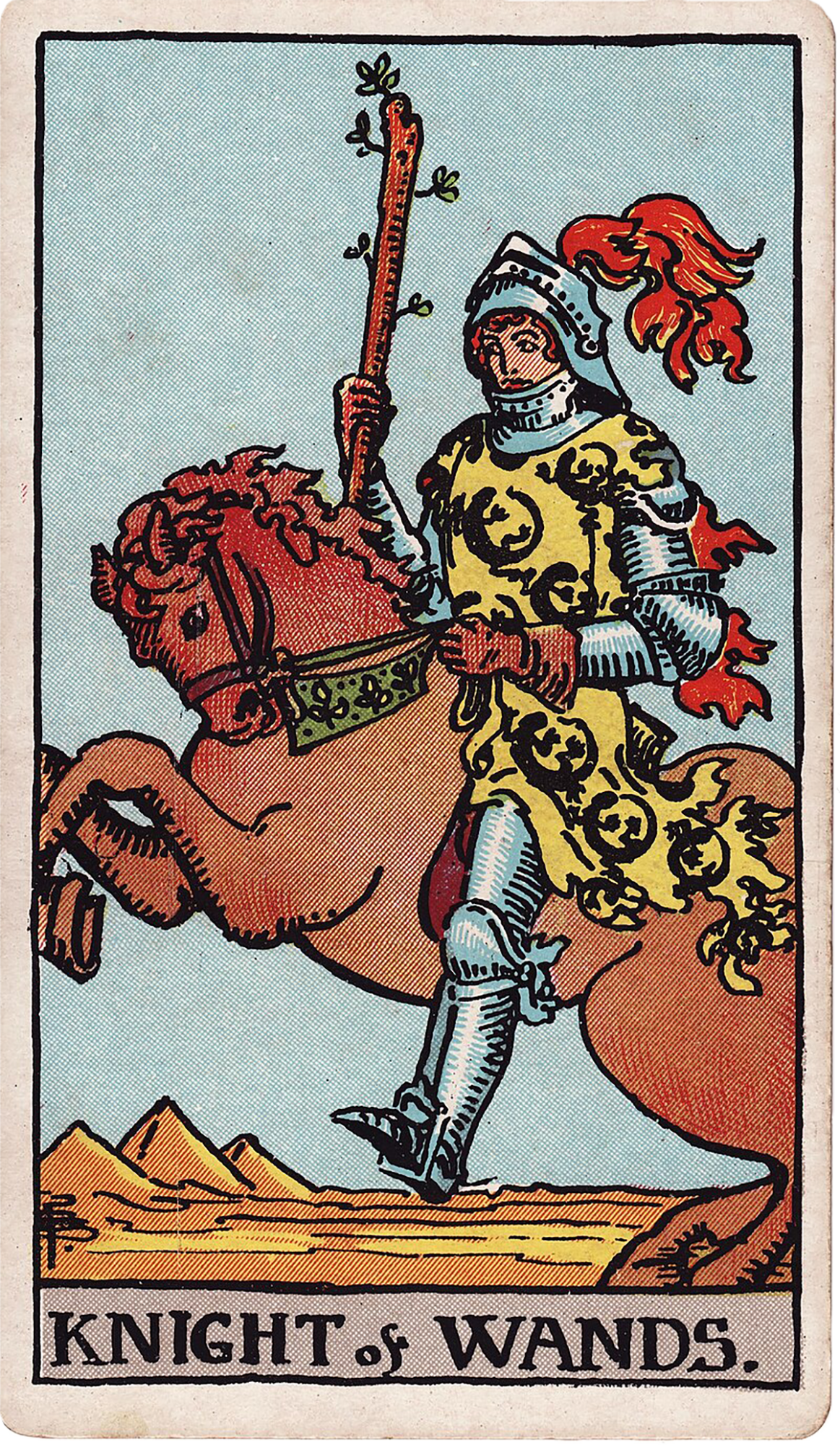 Knight of Wands
Introduction
Working with three Wands cards together gives a strong, focused reading about how energy is being used and managed. The Knight of Wands, the 7 of Wands, and the 10 of Wands form a clear narrative arc: impulsion or pursuit, standing ground in the face of opposition, and the accumulation of responsibility until weight becomes noticeable. Because they are all from the suit of Wands, the reading will be about motivation, initiative, identity, direction of will, and how passion is expressed. This article treats these three supplied cards as a single system, anchored in Rider-Waite visual details and practical interpretive technique.
Quick visual read and key image anchors
Start by looking closely at each card image and naming the most obvious physical details. For Knight of Wands note the mounted rider, the forward-leaning horse, the Knight's posture, the imagery on the Knight's cloak and shield, and any sense of motion or haste. On the 7 of Wands notice the elevated defender, the stance of one figure holding a single wand against six below, the sense of higher ground and challenge. On the 10 of Wands attend to the overloaded figure carrying a heavy bundle of wands and the destination or structures in the background. Use these images as anchors when you build meaning. The Knight is active motion; the 7 is confrontation and defense; the 10 is the visible weight of accumulated duties. Let the images set tone and detail the story rather than relying only on word-list meanings.
Core meanings recapped and numerology
Before combining, refresh the basic meanings. Knight of Wands typically signals speed, bold action, adventurous energy, and sometimes a person who acts before planning. 7 of Wands shows holding ground, defending values, asserting boundaries, and skillful resistance in a contest. 10 of Wands represents an end-stage burden, responsibilities that became a heavy load, and the need to organize, delegate, or release. Numerology adds nuance: 7 is a testing or refining number, often meaning a trial that clarifies what matters. 10 is completion and transition, suggesting a cycle concluding with consequences to carry or distribute. Because all three are Wands, interpret through the lens of initiative, desire, and identity energy.
How the cards modify one another in a reading
Read these three cards as interacting influences rather than isolated messages. There are several structural relations to examine. 1) Sequence or timeline: If the spread is chronological, Knight of Wands as past or initiating energy points to a rapid start or impulsive venture. The 7 of Wands as middle energy suggests the moment of defense or competition that arrived because of that initial push. The 10 of Wands as outcome shows the long-term cost or accumulated obligations that followed. 2) Roles and dynamics: Treat the Knight as the actor or impulse, the 7 as the situation that tests skill and boundaries, and the 10 as the logistical result. 3) Amplification versus mitigation: The Knight can amplify the 7 if the querent charges into conflict without careful planning, making defense more exhausting. Conversely, a steady, disciplined Knight energy might mitigate the 10 by enabling delegation or decisive completion. 4) Direction of energy: Knight is outward motion, 7 is braced opposition, 10 is constrained inward weight. Map that directional flow to the querent's question to see whether energy is getting stuck, burned out, or channeled effectively.
Reading interaction examples across contexts
Below are rooted examples showing how the trio can play out. Use imagery and positions to customize each reading. Relationship context 1: Romantic pursuit leading to imbalance. The Knight of Wands shows a passionate pursuit or flamboyant courtship. The 7 of Wands suggests someone is defending the relationship's boundaries or feeling under pressure from external critics or competing suitors. The 10 of Wands warns that one partner is carrying the relationship work alone or that roles created by the Knight's initial momentum were not negotiated, resulting in a heavy, possibly unsustainable load. Relationship nuance: if the 7 shows someone on higher ground, the defended position can be healthy boundary setting rather than aggression. Career context 2: Fast project, conflict, and overload. The Knight of Wands indicates a bold initiative, a new project, or an energetic leader. The 7 of Wands shows a period of contest or needing to justify the work to peers or management. The 10 of Wands suggests the project has created an unsustainable workload for the querent or team. Emotional and practical context 3: Personal drive and burnout. The Knight of Wands represents internal restlessness and drive to chase new things. The 7 of Wands points to strained boundaries, needing to stand up for priorities. The 10 of Wands marks the tipping point where accumulated responsibilities demand reorganization, rest, or delegation. Across contexts always use the cards images to decide whether defense is protective or reactive, whether the Knight is heroically moving forward or recklessly charging, and whether the 10 is a sign to finish or to surrender duties that never belonged to the querent.
Upright and reversed dynamics when useful
Use reversals to refine rather than to flip meanings mechanically. Upright Knight of Wands typically indicates constructive courage and forward movement. Reversed, it points to recklessness, impatience, or repeating unfinished ventures. Upright 7 of Wands shows competent defense and boundary clarity. Reversed 7 draws attention to defensiveness, exhaustion, or choosing battles poorly. Upright 10 of Wands says burden and near-completion; reversed 10 indicates collapse under pressure, refusing to delegate, or finally letting go. Combine reversals for narrative nuance. Example: Knight upright + 7 reversed + 10 upright could read as an energetic push that led the querent into continual fighting and increasing weight because boundaries were over-defensive; the outcome is burnout. Knight reversed + 7 upright + 10 reversed might indicate restlessness and inconsistency undermining a generally solid defensive stance, but the eventual liberation from duties is possible if the querent slows and chooses differently. Always anchor reversal interpretation in the imagery: is the Knight's horse straining forward? Does the 7's figure look isolated or firm on the hill? Does the 10's porter seem near his destination or far from relief?
Technique for reading this trio step by step
Step 1 Identify the question and the querent's role. Ask whether any card represents the querent, another person, or an energy. Step 2 Scan suit and imagery. Because all three are Wands, emphasize motivation and action. Note the Knight's motion, the 7's vantage point, and the 10's burden. Step 3 Establish a working timeline or position scheme. Choose a spread frame such as Past-Now-Advice, Situation-Challenge-Outcome, or Self-Other-Action. Step 4 Read directional flow. Is energy moving from Knight into 7 then 10, or are the cards indicating parallel issues? Map momentum versus resistance and load. Step 5 Weave numerology and image details. Use 7 as testing phase and 10 as completion and inevitable consequence. Describe how the Knight's urgency either sustains or sabotages the 7 and the 10. Step 6 Offer pragmatic steps anchored to card meanings. For instance, if the Knight is driving the querent into overload, recommend planning, pacing, and delegation. If the 7 shows healthy defense, recommend maintaining clear boundaries before attempting to finish the load indicated by the 10. Step 7 Close with an ethics check. Warn about glorifying martyrdom or valorizing burnout. Deliver choices rather than fate.
Common mistakes and how to avoid them
Mistake 1 Reading each card in isolation. Avoid additive lists by constructing interaction: who is doing what to whom and why. Mistake 2 Ignoring imagery. The Rider-Waite pictures hold crucial cues for posture, direction, and background that often decide whether energy is constructive or destructive. Mistake 3 Assuming court cards always mean a specific person. The Knight of Wands can be an energy pattern inside the querent rather than a literal person. Mistake 4 Moralizing struggle. Wands cards often value action, so be careful not to praise busyness as virtue. Mistake 5 Over-relying on single reversals as disaster. Use reversals to locate stuck dynamics and offer practical steps. Mistake 6 Not checking context. A Knight can be the necessary spark in one question and a reckless force in another. Always ask follow-up questions and anchor advice to daily actions.
Case examples with sample readings
Example A Career startup reading. Spread frame Past-Now-Outcome. Past Knight of Wands upright shows the querent launched a startup quickly with charisma. Now 7 of Wands upright indicates they are defending the idea against criticism and are on higher ground but under attack. Outcome 10 of Wands upright warns that the founder is at risk of carrying too much of the company and will need to delegate or burn out. Actionable counsel: keep the Knight energy for vision, train others to share operational tasks, and refract the 7s defense into clearer boundaries about roles. Example B Relationship question. Spread frame Self-Partner-Advice. Self as Knight of Wands upright: querent is excited and impulsive in love. Partner as 7 of Wands reversed: partner is defensive, exhausted, or overwhelmed by fighting. Advice 10 of Wands reversed: consider releasing duties and stopping martyrdom in the relationship; encourage honest conversation about workload distribution and emotional responsibility. Example C Personal burnout. Single-card positions Situation-Obstacle-Next Step. Situation Knight of Wands reversed points to scattered energy. Obstacle 7 of Wands upright shows the querent is still defending too much. Next step 10 of Wands upright invites intentional delegation or dropping projects. The reading emphasizes slowing, ranking priorities, and asking for help.
Integrating interpretation into language for clients
When you speak with a querent translate the trio into clear behavioral options. Avoid fatalism and offer agency. Example phrasing templates to adapt: 1) Your drive is real and useful, but the combination shows a pattern where enthusiasm led you into a defended position and now you are carrying too much. 2) The Knight gave you momentum; the 7 shows you choosing which things to keep fighting for; the 10 asks you to organize or let go. 3) If you hear the Knight as a person, ask whether that person helps you carry the load or expects you to carry theirs. Always propose action steps: delegate one task this week, negotiate boundaries on a specific area, or schedule rest days to test whether the burden is essential.
Practice exercises for learners
Exercise 1 Visual anchoring. Lay out the three card images and spend five minutes describing nonverbal cues from each. Note the Knight's horse and direction, the defender's stance on the 7, and the porter in the 10. Exercise 2 Role swap. Read the trio three times assigning the Knight to self, then to another person, then to an internal impulse. Observe how narrative shifts. Exercise 3 Reversal mapping. Shuffle and pull the three again; when a card is reversed write two sentences that alter the basic story and two practical steps in response. Exercise 4 Client phrasing. Practice giving a 90 second spoken summary that combines image, interaction, and two concrete actions. Record and review.
Closing guidance and ethical notes
This combination often highlights a crossroads between courage and endurance. Knight of Wands can be a saving spark or a reckless force; 7 of Wands can be a wise boundary or exhausting defensiveness; 10 of Wands can be the sign of a meaningful final effort or of unsustainable martyrdom. As a reader, help querents choose between finishing stories they began and releasing duties that never required their labor. Use imagery, timeline, and behavior-focused suggestions to convert symbolic insight into manageable next steps. Remember to avoid deterministic language and to respect the querent's sovereignty in choosing among options.
Practice questions
• When you look at the Knight of Wands image, what single motion or posture stands out and why might that matter to the querent now
• Which of your own boundaries does the 7 of Wands imagery make you think of, and how might those boundaries be serving or draining you
• Where in your life are you carrying a 10 of Wands bundle, and what would delegate, simplify, or release look like this week
• If the Knight represents an inner pattern rather than a person, how do you harness speed without sacrificing sustainability
• How do you test whether the 7 of Wands is healthy defense versus reactive defensiveness in a real situation
Comments
Sign in to comment.
Continue learning
Interpreting the Dance of Justice and The Devil: Balancing Morality and Temptation in Tarot Readings
The combination of Justice and The Devil in tarot presents a profound exploration of morality, temptation, and personal accountability. This article unpacks how these cards influen...
Harnessing the Power of The Magician and Ace of Wands: Igniting Creativity and Manifestation in Tarot Readings
The combination of The Magician and the Ace of Wands in tarot readings offers a potent blend of creative energy and manifestation power. This article delves into the ways these car...
Understanding the Synergy Between The Empress and The Emperor in Tarot Card Combinations
This article delves into the intricate synergy between The Empress and The Emperor cards in Tarot, focusing on how their combined energies modify and enrich readings across various...
Decoding Transformation and Renewal with Death and The Star in Tarot Combinations
This article delves into the card combination of Death and The Star, two powerful Major Arcana cards from the Rider-Waite-Smith deck. It explores how their imagery and meanings int...
Balancing Ambition and Compassion with The Emperor and Queen of Cups in Tarot Combinations
This article delves into the nuanced Tarot card combination of The Emperor and Queen of Cups, emphasizing how their energies complement and challenge each other. By analyzing their...
Finding Emotional Healing and Renewal with The Star and The Moon Tarot Combination
This article examines the rich interplay between The Star and The Moon tarot cards when they appear together in a reading. Using the traditional Rider-Waite-Smith symbolism and the...
Unlocking Emotional Wisdom with The High Priestess and The Queen of Cups in Tarot Combinations
This article delves into the card combination of The High Priestess and The Queen of Cups, emphasizing their shared themes of intuition, emotional depth, and receptivity. By examin...
Unlocking Emotional Resilience with Strength and The Star in Tarot Combinations
This article delves into the Tarot card combination of Strength and The Star, revealing how their interplay highlights pathways to emotional resilience. Anchored in the Rider-Waite...
Unveiling Emotional Strength with Strength and The Queen of Cups in Tarot Combinations
This article delves into the dynamic Tarot combination of Strength and The Queen of Cups, emphasizing how these cards together illuminate emotional strength, compassionate boundari...
Unlocking Emotional Transformation with Death and The Moon Tarot Combination
This article explores the rich and complex interaction between the Death and The Moon tarot cards within the Rider-Waite-Smith tradition, focusing on their combined potential to un...