
Justice The Devil and 2 of Swords Interpreting Ethical Conflict and Temptation
This card-combination lesson explores how Justice, The Devil, and 2 of Swords interact in a spread. Using Rider-Waite-Smith symbolism—scales, sword, chains, blindfold, moon—learners will practice moving beyond one-card readings, evaluate upright and reversed dynamics, and apply the trio to relationships, career, and emotional dilemmas. The article offers a step-by-step technique, example readings, common pitfalls, and reflection prompts for grounded interpretation.
Read the cards together
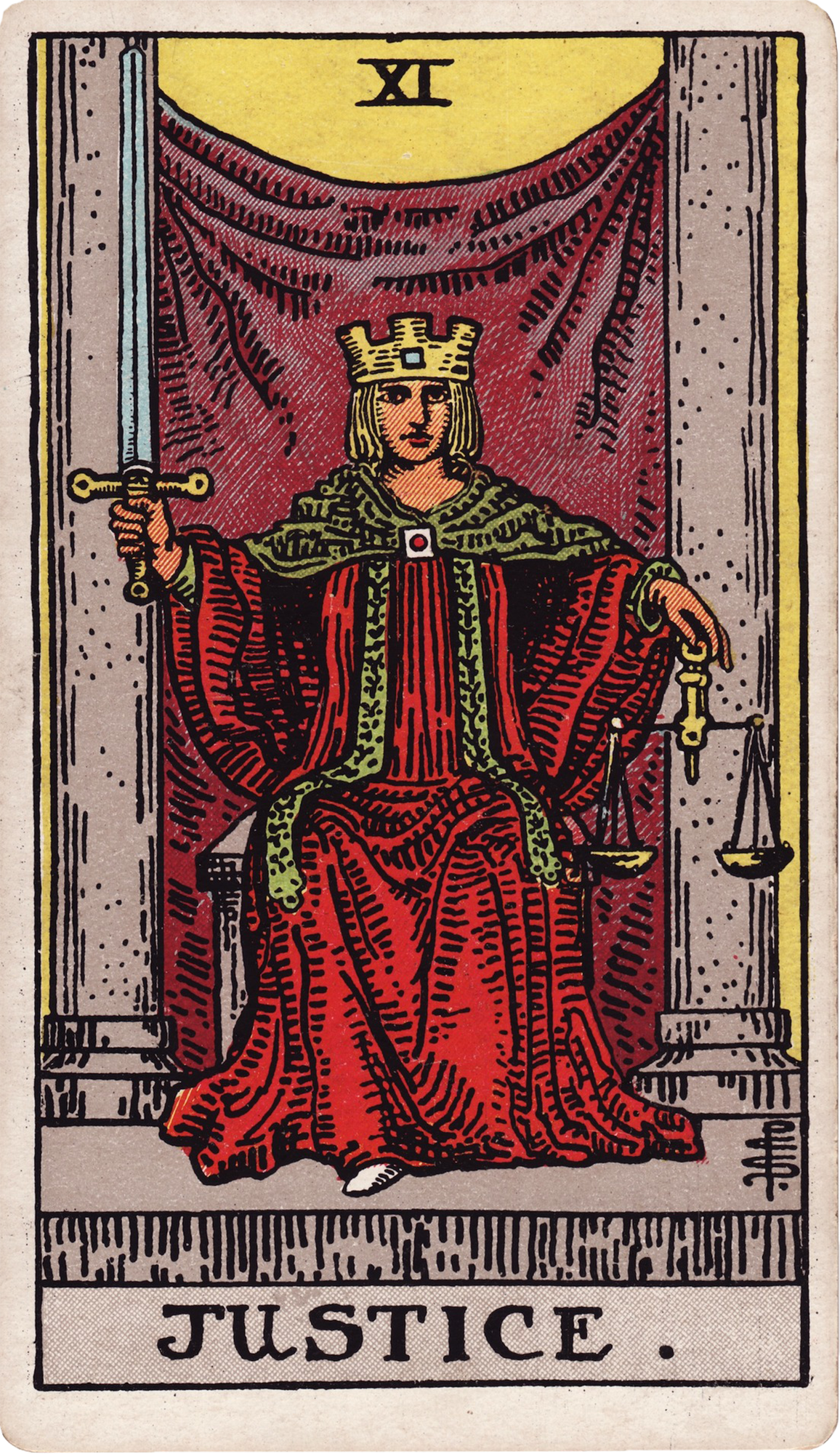 Justice
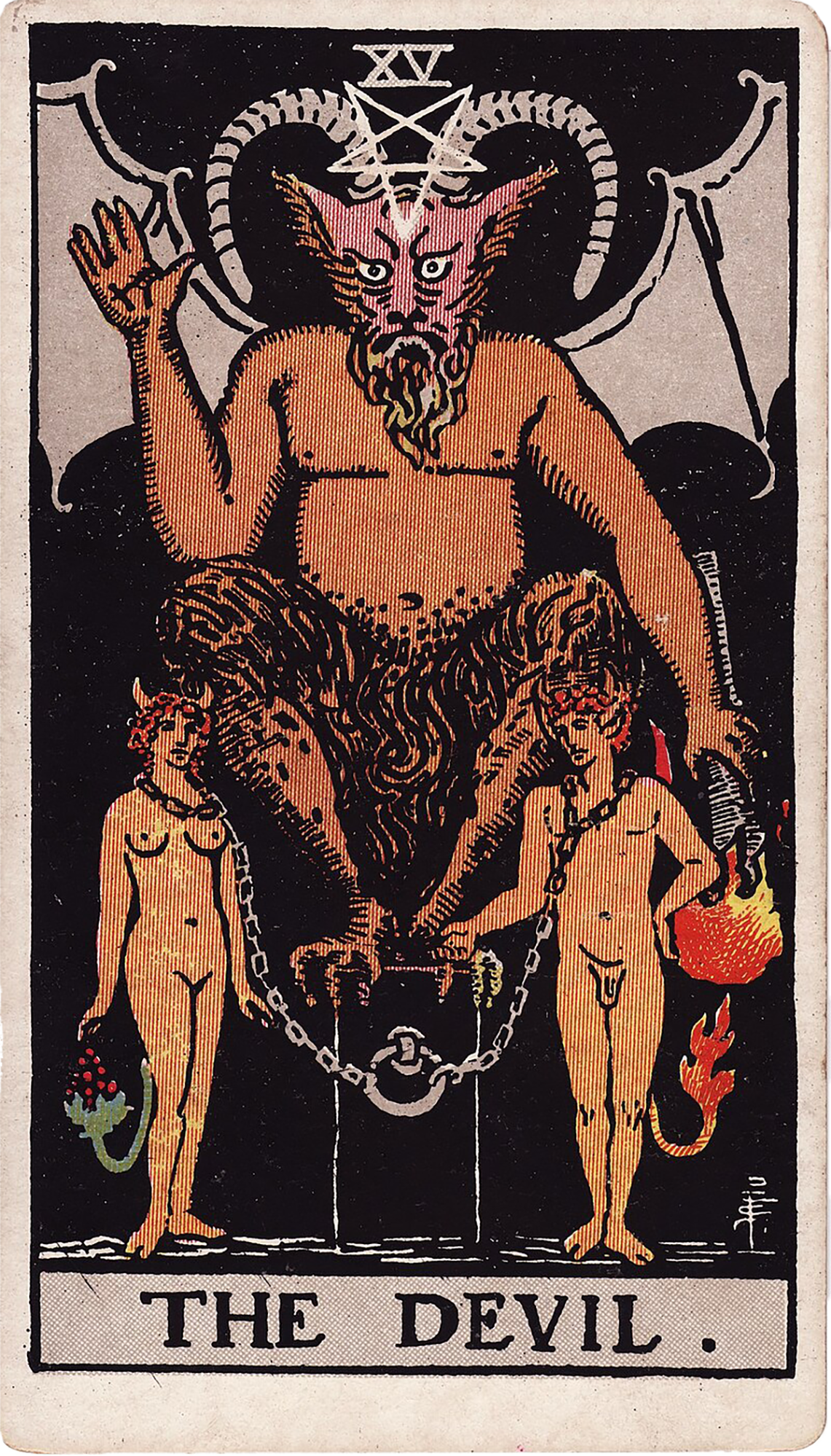 The Devil
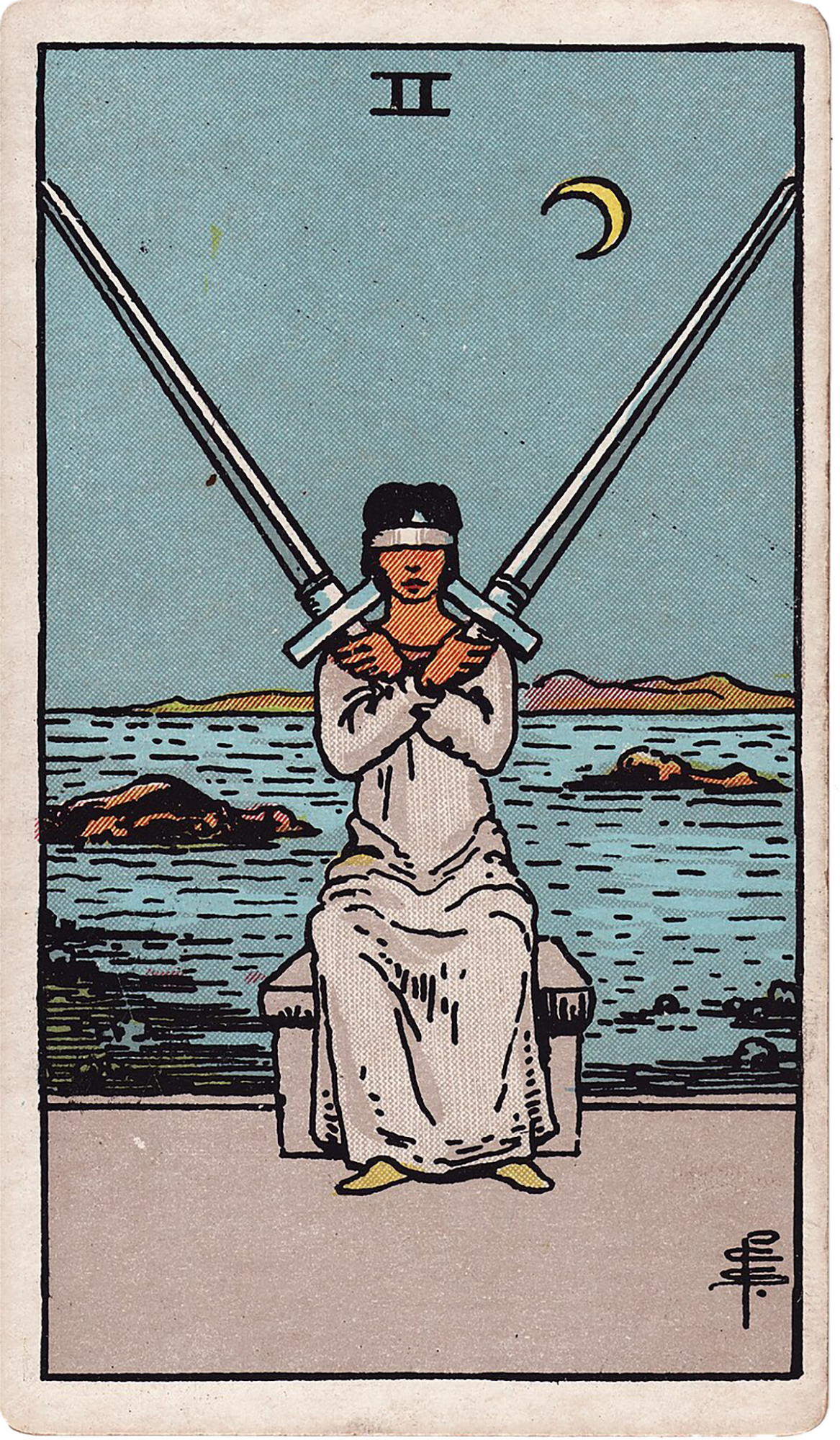 2 of Swords
Why study this combination
Justice, The Devil, and 2 of Swords form a compact drama about ethics, attachment, and stalled choice. Justice names fairness, evidence, and consequences. The Devil points to bondage—material, emotional, or habitual—and the shape of desire or fear that keeps someone attached. 2 of Swords dramatizes indecision: a pause, a blindfold, a stalemate. Together these three cards show a situation where a moral or practical truth has surfaced (Justice), where unhealthy attachment or temptation is visible (The Devil), and where action is being held off or blocked (2 of Swords). For learners, this trio is valuable because it requires balancing analytic clarity with compassionate, practical strategies. The following sections teach how to read their interaction using the imagery printed with the cards: the scales and sword of Justice, the horned figure and chains of The Devil, and the blindfolded figure with crossed swords and moon from the 2 of Swords.
Core imagery and what to ask the cards
Anchor your reading in what you can see on each displayed card. Justice: the seated figure holds scales and an upright sword. Ask: what evidence is on the table? What boundary or corrected balance is demanded? The scales invite a proportional response; the sword indicates a clear statement or action that cuts through confusion. The Devil: notice the chained pair, the horned figure, and the inverted symbolism of material desire and shadow. Ask: who or what is binding the querent? Where is the desire or fear operating as a driver? 2 of Swords: the blindfold, crossed swords, and distant sea under a crescent moon show information withheld and emotion under the surface. Ask: what is being avoided? What will become visible if the blindfold is lifted? Using these visual prompts prevents generic descriptions and keeps interpretations tied to the images that readers will see in the public article.
Technique for reading combinations and avoiding one-card thinking
Start with orientation: note which of the three cards are upright or reversed in the spread and where they sit (position or relation to question). Step 1 — Describe each card's images precisely as they appear: the scales, the chains, the blindfold, the moon, the sword. Step 2 — Ask an image-based question for each card (see the previous section). Step 3 — Look for directional influence. Which card feels like the problem (The Devil)? Which points to the principle to apply (Justice)? Which shows the current process (2 of Swords)? Step 4 — Build a sentence linking them, for example: "The Devil shows what binds the querent; Justice indicates the fair and visible remedy; 2 of Swords explains why the querent is hesitating to act." Always avoid reading each card in isolation as an absolute. Instead, treat cards as roles in a short scene: actor (Devil), judge (Justice), and observer/blocked chooser (2 of Swords). This theatrical approach helps you interpret dynamics rather than simple meanings.
How the cards modify one another: basic interaction patterns
Justice modifying The Devil: When Justice appears next to The Devil, the reading emphasizes naming and measuring the attachment. The scales are asking for naming the cost and establishing boundaries. Rider-Waite-Smith imagery suggests that objective assessment can expose how a relationship, addiction, or financial entanglement is unfair or unsustainable. Justice can make The Devil's bondage legible: it asks you to inventory what is owed and what consequences are likely if nothing changes. Justice modifying 2 of Swords: Justice encourages removing the blindfold by gathering evidence and making a proportionate decision. The sword in Justice supports cutting ties where necessary, but Justice also asks for fairness rather than reaction. The Devil modifying Justice: The Devil can show what biases or fears distort justice. The chains and allure suggest that a temptation is influencing how fairness is perceived; here, Justice warns against self-deception disguised as rational choice. The Devil modifying 2 of Swords: The Devil can explain why the chooser is frozen—shame, fear of loss, or gratification is keeping the blindfold in place. 2 of Swords modifying Justice: A stalemate can block the application of justice. Even a fair decision won't land if the querent cannot or will not remove the blindfold. 2 of Swords modifying The Devil: The paralysis shown by 2 of Swords can feed the Devil: staying stuck sustains unhealthy attachment. In short, look for which card names the obstacle (often The Devil), which points to the remedy (often Justice), and which shows the internal process resisting change (often 2 of Swords).
Contexts: relationship, career, and emotional/practical examples
Relationship context: If the spread about a partnership shows Justice, The Devil, and 2 of Swords, you might see a pattern where an unfair dynamic or boundary violation has become visible (Justice), but one partner feels bound by desire or fear (The Devil), and choices are being avoided (2 of Swords). Image-based read: the scales demand an honest accounting of give-and-take; the Devil's chains show where dependence or secrecy is active; the blindfold shows denial. Practical reading move: encourage actionable fairness (clear boundary, equitable compromise) while naming the attachment to be addressed and identifying the smallest step that breaks the stalemate (a conversation, yes/no boundary). Career context: The Devil often signals a toxic workplace habit—overwork, ethical shortcut, or tempting but risky offer. Justice suggests documentation, transparency, or HR processes that restore balance. 2 of Swords means the querent may be postponing a decision because of missing data or fear. Practical reading move: identify what specific evidence is missing, then recommend proportionate next steps: collect records, request a meeting, or create a decision timetable. Emotional/practical context: For inner conflict—such as guilt over a desire—Justice suggests examining values and consequences; The Devil shows the pull of gratification or safety; 2 of Swords shows emotional avoidance. Practical move: name one measurable value-based action (Justice), identify what internal script keeps the chain in place (The Devil), and choose a small practice to unfreeze the choice (lift the blindfold for a moment with journaling or a trusted listener).
Working with upright and reversed states usefully
Only mention upright/reversed when orientation adds useful nuance. Upright Justice close to The Devil suggests that the querent has enough clarity to make a fair assessment of a trap; reversed Justice warns that bias, denial, or a magified sense of blame is confusing the process. Upright The Devil points to visible bondage that can be named; reversed The Devil often suggests a pattern has begun to loosen or that denial about desire is occurring. Upright 2 of Swords shows a conscious pause waiting for more information; reversed 2 of Swords indicates avoidance breaking into action, decision fatigue, or a forced choice. When combining these observations, avoid formulaic reading (e.g., "Reversed equals bad"). Instead, ask: does reversal show recovery, resistance, or a hidden interior process? Example: reversed The Devil + Justice upright + 2 of Swords upright could indicate that the habit is starting to loosen but the querent still hesitates to act; Justice says now is the time to apply fair consequences. Always cross-check with imagery: are the chains in The Devil loose? Is the blindfold in 2 of Swords slipping? Those visual clues strengthen your orientation.
Common mistakes and how to correct them
Mistake 1: One-card reductionism—reading each card separately as a full answer. Correct by building relational sentences that show how one card influences another. Mistake 2: Moralizing the querent—declaring The Devil a condemnation. Correct by treating The Devil as descriptive of a pattern, not a character judgment. Mistake 3: Overreliance on courtroom metaphors for Justice. Correct by using Justice's practical symbols: proportionality, measurement, and consequence, which can apply to private fairness as well as legal settings. Mistake 4: Ignoring placement and timing. If the cards sit in a position describing the past, present, or advice, adapt your interpretation accordingly. Mistake 5: Ignoring small details in the images—if the scales are balanced or the chains look loose, that nuance matters. Train yourself to report the image and then interpret it; that sequence prevents projection.
Practical reading method and two short examples
Practical method (worksheet approach): 1) Record orientation and spread position for Justice, The Devil, and 2 of Swords. 2) List three concrete image details from each card. 3) Write a one-sentence role for each card (Judge, Binder, Blocker). 4) Compose one linking sentence: identify obstacle, propose proportionate remedy, and name the smallest actionable step. 5) Ask clarifying questions and draw one additional card if the querent needs a next action. Example A — Relationship question: Justice upright at past, The Devil upright at present, 2 of Swords upright at outcome. Read: Past revealed patterns of imbalance; currently a strong attachment or denial keeps both parties repeating behavior; outcome shows stalemate unless someone makes a fair step. Action: request a transparent conversation anchored in specific examples (Justice) and set one boundary step to test the attachment (The Devil) that the querent can commit to removing the blindfold (2 of Swords). Example B — Career question: Justice upright in advice, The Devil reversed in present, 2 of Swords upright in obstacle. Read: The Devil reversed suggests the toxic pattern is loosening; 2 of Swords shows indecision about the next career move; Justice urges documenting work and communicating expectations. Action: gather evidence of accomplishments and schedule a review meeting as a proportional step to resolve the stalemate.
Closing integration and ethical notes
This combination encourages honest, image-grounded readings that respect complexity. Justice asks for fairness; The Devil names what binds; 2 of Swords exposes avoidance. As a learner, practice translating images into specific, proportionate actions—small steps that test assumptions rather than sweeping pronouncements. Ethically, avoid shaming: The Devil is a pattern to work with, not a permanent moral sentence. Use Justice's sword and scales to help clients see costs, gains, and responsibilities. Finally, remind querents that tarot offers insight and options, not deterministic predictions. The three cards together are most useful as a process map: identify the binding pattern, make a fair assessment, and choose the smallest next move that will lift the blindfold.
Practice questions
• When you look at the displayed Justice card, what specific detail in the scales or sword feels most relevant to your situation?
• Which chain, image, or symbol on The Devil card do you think represents the strongest attachment in your life and why?
• With the 2 of Swords image in front of you, what feels like the blindfold in your own decision process?
• If Justice recommends a proportional action, what is one measurable step you could take this week?
• How might shame or denial be disguising itself as logic when The Devil and Justice appear together?
• What is a minimal experiment you can run to test whether the stalemate shown by 2 of Swords is practical avoidance or prudent waiting?
Comments
Sign in to comment.
Continue learning
Interpreting the Dance of Justice and The Devil: Balancing Morality and Temptation in Tarot Readings
The combination of Justice and The Devil in tarot presents a profound exploration of morality, temptation, and personal accountability. This article unpacks how these cards influen...
Harnessing the Power of The Magician and Ace of Wands: Igniting Creativity and Manifestation in Tarot Readings
The combination of The Magician and the Ace of Wands in tarot readings offers a potent blend of creative energy and manifestation power. This article delves into the ways these car...
Understanding the Synergy Between The Empress and The Emperor in Tarot Card Combinations
This article delves into the intricate synergy between The Empress and The Emperor cards in Tarot, focusing on how their combined energies modify and enrich readings across various...
Decoding Transformation and Renewal with Death and The Star in Tarot Combinations
This article delves into the card combination of Death and The Star, two powerful Major Arcana cards from the Rider-Waite-Smith deck. It explores how their imagery and meanings int...
Balancing Ambition and Compassion with The Emperor and Queen of Cups in Tarot Combinations
This article delves into the nuanced Tarot card combination of The Emperor and Queen of Cups, emphasizing how their energies complement and challenge each other. By analyzing their...
Finding Emotional Healing and Renewal with The Star and The Moon Tarot Combination
This article examines the rich interplay between The Star and The Moon tarot cards when they appear together in a reading. Using the traditional Rider-Waite-Smith symbolism and the...
Unlocking Emotional Wisdom with The High Priestess and The Queen of Cups in Tarot Combinations
This article delves into the card combination of The High Priestess and The Queen of Cups, emphasizing their shared themes of intuition, emotional depth, and receptivity. By examin...
Unlocking Emotional Resilience with Strength and The Star in Tarot Combinations
This article delves into the Tarot card combination of Strength and The Star, revealing how their interplay highlights pathways to emotional resilience. Anchored in the Rider-Waite...
Unveiling Emotional Strength with Strength and The Queen of Cups in Tarot Combinations
This article delves into the dynamic Tarot combination of Strength and The Queen of Cups, emphasizing how these cards together illuminate emotional strength, compassionate boundari...
Unlocking Emotional Transformation with Death and The Moon Tarot Combination
This article explores the rich and complex interaction between the Death and The Moon tarot cards within the Rider-Waite-Smith tradition, focusing on their combined potential to un...