
King of Swords and Queen of Cups for Balanced Leadership and Empathy
This lesson examines the interplay between the King of Swords and the Queen of Cups as a model of balanced leadership and empathic authority. Anchoring interpretation in Rider-Waite-Smith imagery and the supplied card meanings, it shows how to read the pair dynamically across relationships, career situations, and emotional/practical challenges. You will learn step-by-step reading techniques that avoid one-card-at-a-time traps, understand upright and reversed interaction patterns, practice concrete spreads and sample narratives, and get exercises for strengthening your interpretive skill.
Read the cards together
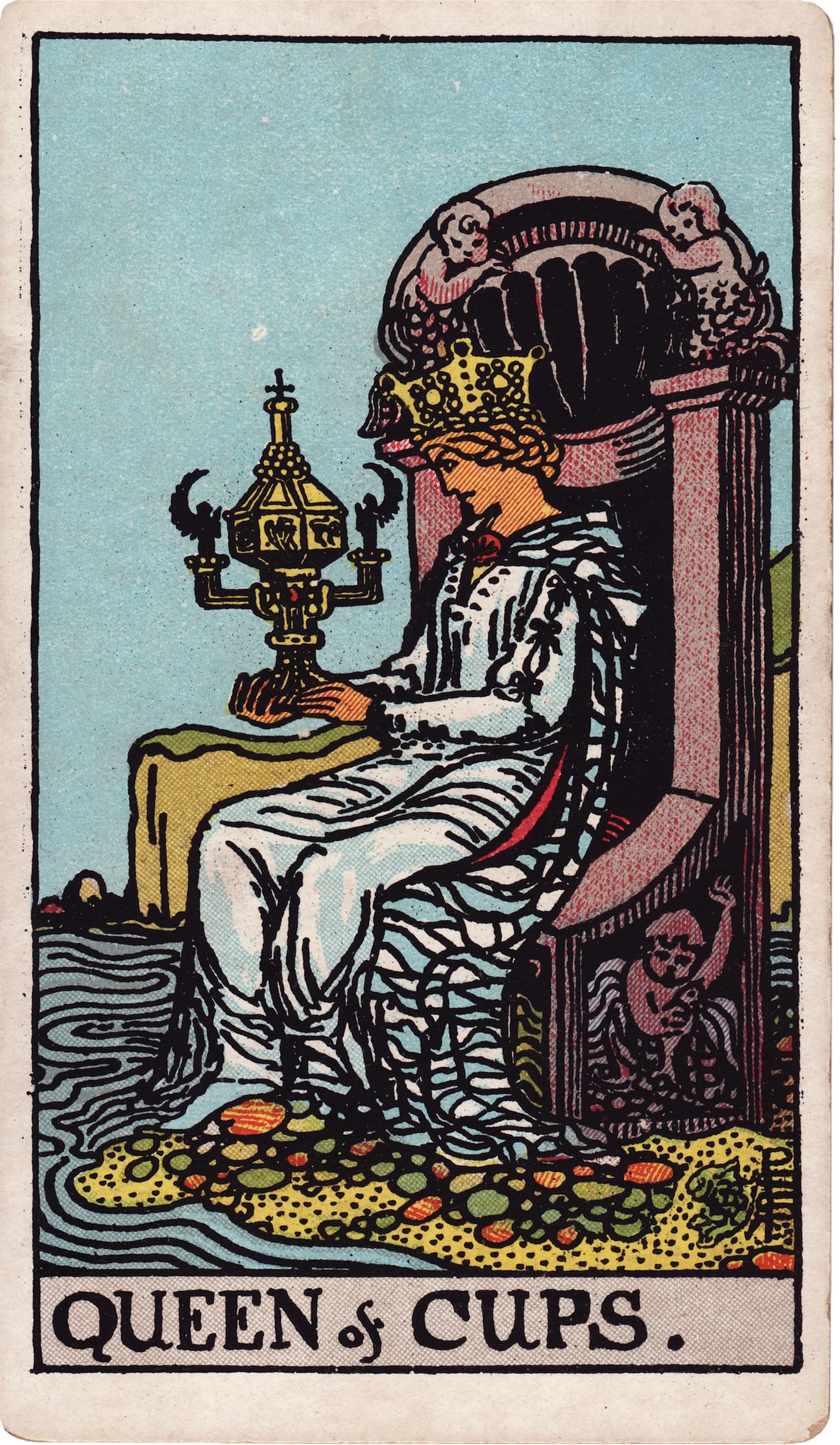 Queen of Cups
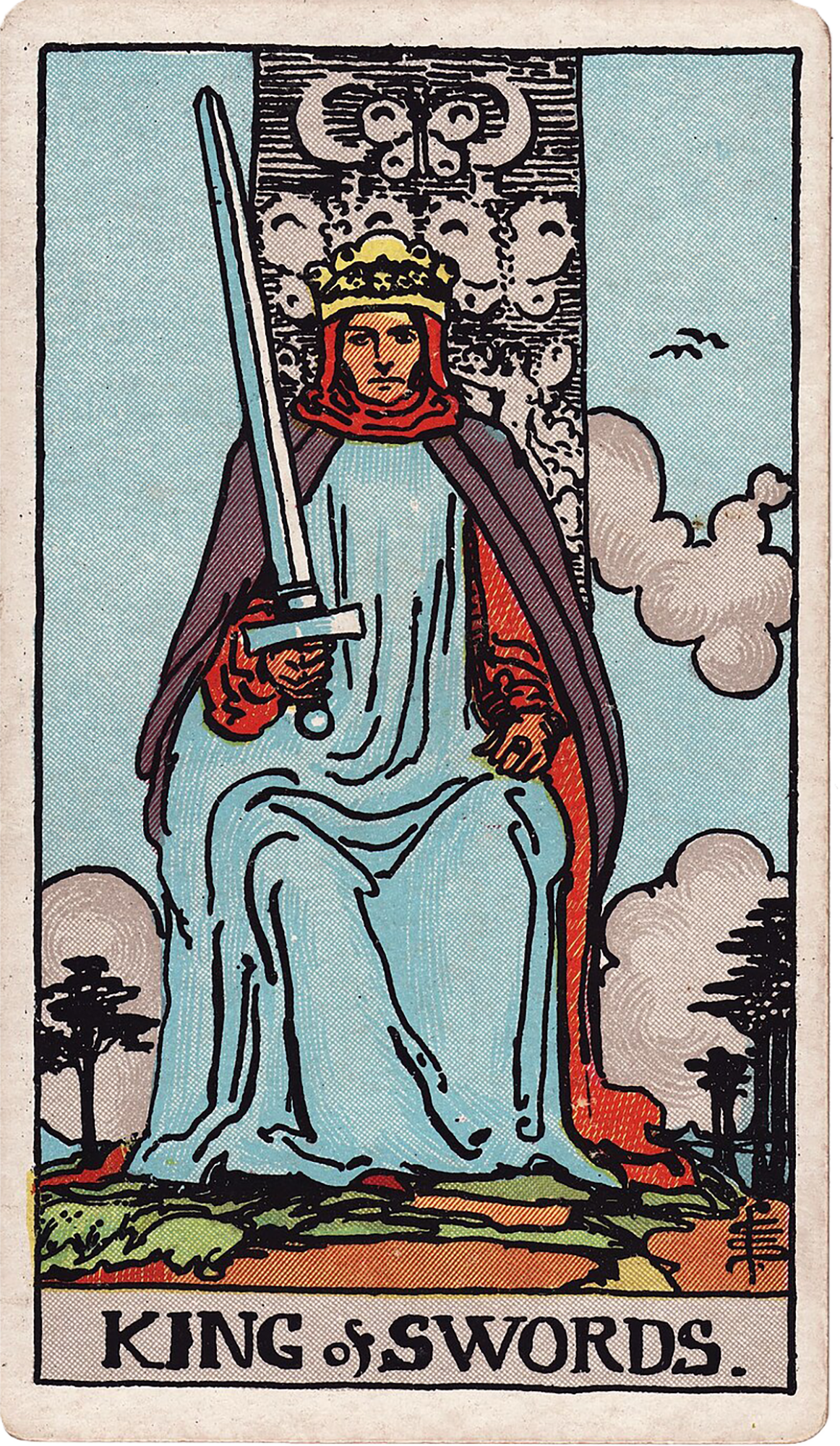 King of Swords
Introduction and pedagogical goals
This article teaches a reliable way to read the card combination King of Swords and Queen of Cups. The goal is not to predict a fixed outcome but to train readers to see how two court cards modify one another, produce tensions, and suggest practical responses. You will learn to anchor meanings in the visual details of the supplied King of Swords and Queen of Cups, map their complementary energies, and use simple techniques to produce nuanced, situational readings for relationships, workplace dynamics, and emotional decisions.
Visual anchors and Rider-Waite-Smith symbolism
Always begin with what you can see. The supplied images of the King of Swords and the Queen of Cups give immediate, concrete material to work with. Use these visual cues as your first interpretive layer. King of Swords (visual cues to note) - The King holds his sword upright. The vertical blade is a clear symbol of logical clarity, discernment, and decisive principle. In a reading, the sword suggests a capacity to cut through confusion and name a structure or truth. - He sits on a throne and wears robes and armor. The throne reinforces institutional or formal authority, while the armor suggests readiness to act and protection of ideas. - Look for airborne symbolism in Rider-Waite-Smith-style depictions: clear sky, wings, butterflies or cherubic motifs. These emphasize the suit of Swords as an air element — abstract thinking, communication, and mental frameworks. Queen of Cups (visual cues to note) - The Queen gazes at a covered cup. Her inward attention to the cup highlights inner life, receptivity, and the skill of listening to feelings or intuition rather than acting on impulse. - She sits near the water or on a maritime throne. The sea imagery points to the flow of feeling, memory, and the unconscious processes that shape emotional perception. - Decorative sea motifs (shells, fish) and flowing robes place her squarely in the realm of Cups — emotion, relationships, empathy, and the capacity to contain feelings. Use these images to form concrete metaphors: the King’s upright sword can clarify or threaten the Queen’s cup; the Queen’s sea can soften or flood the King's ordered thought. These are not poetic flourishes only — they guide how the cards interact in a spread.
Core single-card meanings summarized
Before combining, make sure the base meanings are clear. Use the supplied upright and reversed descriptions as working definitions. King of Swords upright: mature intellectual authority, strategic judgment, decisions guided by principle and evidence. Practical, decisive, oriented to truth and consequences. Queen of Cups upright: mature emotional receptivity, empathy, intuitive understanding, and an ability to hold feeling without being swept away. Practical in the sense of responding to what is present. King of Swords reversed: intellectual coldness, arrogance, manipulation, or abuse of authority. Thinking may become rigid or disconnected from ethical concerns. Queen of Cups reversed: emotional overwhelm, codependency, withdrawal into fantasy, or difficulty separating intuition from anxiety. The process of healthy feeling may be stuck. These summaries are the first layer. The combination layer asks: how do a principled mind and an empathic heart change each other's expression in this situation?
How the cards modify one another conceptually
Look at the pair as a relational system rather than two isolated archetypes. There are three main modes of interaction to consider: harmonizing, correcting, and clashing. 1) Harmonizing (mutual enhancement) - King of Swords + Queen of Cups upright: The most positive expression. The King supplies clarity, structure, and fair boundaries; the Queen supplies listening, contextual sensitivity, and intuitive nuance. Together they create leadership that is both principled and humane. Think strategic decisions made with emotional intelligence, or caregiving that uses reason to craft sustainable support. 2) Correcting (one stabilizes or tempers the other) - King upright with Queen reversed: The King's clarity can offer the structure needed to help a Queen of Cups energy organize feelings and set boundaries. Here the King acts as a stabilizer, helping the Queen move from overwhelm toward practical containment. - Queen upright with King reversed: The Queen’s empathy can humanize a King whose thinking has become cold, manipulative, or disconnected. The Queen acts as a moral mirror, reminding the King of real human consequences and opening channels of feeling that restore grounded judgment. 3) Clashing (mutual distortion) - Both reversed or one reversed while the other is upright but not influencing positively: If the King becomes domineering and the Queen becomes enmeshed, the result is unhelpful either/or dynamics — coercion meets emotional enmeshment. This pairing can create toxic leadership styles or dependent caregiving that avoids accountability. Directionality matters: ask which card is more active in the present question. Is the King enforcing rules on the Queen, or is the Queen inspiring the King to soften? Use card placement and spread positions to clarify influence.
Relationship context: romantic, familial, and professional relationships
When reading this combination about interpersonal dynamics, use the following lenses: power and care, boundary and receptivity, communication and listening. Romantic or intimate relationships - King upright + Queen upright: A partnership where decisions are articulated clearly and feelings are respected. Arguments are more likely to be resolved because one partner can name the problem (King) and the other can express why it matters emotionally (Queen). This pairing encourages honest feedback combined with empathy. - King upright + Queen reversed: The person with King energy may be able to reorganize a partner’s scattered emotions, but must avoid becoming a rescuer. The reading advises practical boundary-building and offering tools rather than paternalistic solutions. - King reversed + Queen upright: The empathic partner may tolerate intellectual manipulation. The Queen should be encouraged to practice boundaries and name harms explicitly; the King’s reversal suggests the need for accountability. Family dynamics - In family roles, the King often represents a parental or organizational authority while the Queen represents caregiving or emotional caretaking. The pair suggests the healthiest family systems balance rules and routines (King) with emotional attunement (Queen). Professional relationships - In a workplace, this combination speaks to leadership styles. A manager who combines King clarity with Queen emotional intelligence can give direct feedback, hold teams to standards, and also cultivate morale. If one element is out of balance, expect either cutthroat decisions or sentimentality that avoids necessary performance conversations.
Career and leadership contexts
The King of Swords and Queen of Cups together form a template for ethical, pragmatic leadership. Strategy and people management - King provides strategy, policy, and clear communication. Queen ensures that policies consider human consequences and that team members feel heard. A reading may advise adopting practices that incorporate both: clear written expectations (King) and regular check-ins (Queen). Decision-making under pressure - When decisions are high-stakes, the Queen’s ability to read the emotional temperature prevents decisions that are logically correct but socially destructive. The King’s sword prevents paralyzing compassion that delays necessary action. Career transitions - If a querent is deciding whether to accept a managerial role, the pair suggests asking whether you can sustain both clarity and compassion in the new position. If the cards appear together, they encourage building structures (protocols, communication norms) that allow empathy to thrive without undermining accountability. Reading tip: translate the imagery concretely. Imagine the King’s desk with policy documents and a marked-out plan; imagine the Queen’s office with a chair for private conversations and a practice of asking 'How will this affect people?'
Emotional and practical problem-solving
Use the two cards as a template for making decisions that require both evidence and feeling. Practical method - Start by identifying what the King would ask: What is the principle at stake? What are the facts? What are the consequences of action versus inaction? - Then ask what the Queen would ask: How does this feel to the people involved? What has been unseen? What do we need to hold so people won’t be harmed emotionally? Problem example: a family member is avoiding medical care. King questions: What is the treatment timeline? What are the risks? Queen questions: What fears are motivating avoidance? How can we hold the person’s dignity and autonomy? Combining the answers creates a plan that is factual and compassionate: clear scheduling and consent processes combined with emotional support and space for processing.
Upright and reversed dynamics in combination
Only use reversals when they clarify stuck processes or internalized dynamics. Here are common combination scenarios and how to read them. Both upright - Interpretation: Mature synthesis. Advice: preserve both capacities intentionally. Watch for overconfidence (thinking 'we’ve got it') and continue to check feelings. King upright + Queen reversed - Interpretation: Reason can help untangle emotional overload, but beware of converting care into control. Advice: the King’s clarity should be offered as structure, not as a lecture; recommend small, practical steps the Queen can try with explicit consent. Queen upright + King reversed - Interpretation: Empathy is present but thinking is compromised by coldness or manipulation. Advice: use the Queen’s relational skills to invite accountability; help the King articulate intentions and be checked by the Queen’s attunement. Both reversed - Interpretation: Dangerous imbalance — cold authority meets emotional chaos. Advice: prioritize safety, establish non-negotiable boundaries, and bring in structural accountability. In readings, emphasize immediate practical steps to stabilize the situation before exploring deeper causes. Nuance: sometimes a reversed card signals an inner process rather than an external person. A Queen reversed can mean the querent’s own feelings are stuck; a King reversed can show the querent’s thinking is compromised. Ask clarifying questions: who is acting? Is this inner or outer experience?
Avoiding one-card-at-a-time reading: integrative technique
A common beginner error is to read each card as a separate noun and then stitch meanings together mechanically. Instead, treat cards as active verbs in conversation. 1) Identify roles: Decide which card answers which part of the question. Who is decision-maker? Who is emotional climate? Will one be the advisor and the other the environment? 2) Map influence: Ask whether the King is modifying the Queen, vice versa, or whether they are co-equals. Use positions in the spread (e.g., King in 'action', Queen in 'impact') to determine directional influence. 3) Create a compound sentence: Translate the pair into a short interpretive sentence, e.g., 'The King of Swords is organizing the Queen of Cups’ compassion into practical supports' or 'The Queen of Cups is tempering the King of Swords’ harsh decisions with human reality.' This forces synthesis rather than list-making. 4) Test with imagery: Revisit the cards’ images and narrate a micro-scene. For example: 'The King holds the sword to clear fog so the Queen can see what in the cup is truly needed.' If the scene feels contradictory, your initial synthesis needs revision. 5) Ask clarifying questions: Who benefits? Who is harmed? What is the immediate next step? These questions convert interpretation into applied advice.
Practical reading method and sample spreads
Use structured positions to make the pair’s dynamics visible. Two practical spreads follow; both use only the supplied cards as focal points but allow clarifiers if needed. Spread 1: Roles and Advice (3 cards) - Position 1: Current leadership/voice — place the King of Swords here if it describes the active energy. - Position 2: Current emotional climate — place the Queen of Cups here. - Position 3: Advice — combine the two into a single line of action (this is a synthesis position). How to read: Describe how the King is currently acting and how the Queen responds. For advice, craft a concrete next step that honors both: e.g., 'Schedule a short, structured meeting (King) with room for two-minute emotional check-ins at the start of each meeting (Queen)'. Spread 2: Influence Ladder (4 positions) - Who leads? - What are they thinking? - How are people feeling? - Outcome if unchanged. Place King in the 'thinking' position and Queen in 'feeling' (or vice versa depending on cards drawn). This spread clarifies where misalignments exist and what needs rebalancing. Sample reading (relationship) - Situation: A couple arguing about household roles. Cards: King upright, Queen upright. - Synthesis: One partner is ready to write clear agreements (King) while the other is asking to be heard about emotional labor (Queen). Advice: Create a written plan for chores plus a weekly emotional check-in where each person can say what matters. Sample reading (career) - Situation: A manager contemplating a performance policy. Cards: King upright, Queen reversed. - Synthesis: The manager has the capacity to set fair standards (King), but the team’s morale is fragile (Queen reversed). Advice: Implement the policy with phased steps, empathetic explanations, and support structures so the team can adapt rather than feel abandoned.
Common mistakes and how to avoid them
1) Treating the pair as a single 'good' or 'bad' sign: Both upright does not mean 'everything is fine.' Always ask what work is required to sustain the balance. 2) Over-relying on personality labels: Don't assume the cards name specific people automatically. They often describe roles or energies active in the situation. 3) Ignoring reversals' process orientation: A reversed Queen usually means a stuck emotional process, not simply 'bad emotions'. Ask what is stuck and what could loosen it. 4) Forcing a neat moral judgment: The King of Swords can do harm even when upright if detached from consequences. The Queen of Cups can help in unhealthy ways if she diminishes necessary boundaries. Always weigh outcomes and beneficiaries. 5) Forgetting imagery: If you move too quickly to generic meanings, you miss important cues from the supplied card images. Revisit the visual details to find specific metaphors.
Exercises for learners and practice prompts
1) Image-based narration: Spend five minutes writing a one-paragraph scene in which the King of Swords and Queen of Cups meet in a room. Let the scene show who speaks first, what objects are present, and what decision is being made. 2) Role-switching exercise: Take a current minor conflict (work or home). First, speak from the King’s voice: outline principles and facts. Then speak from the Queen’s voice: outline feelings and needs. Notice what each voice leaves out. 3) Reversal practice: Shuffle to decide which card is reversed for the exercise. Interpret the pair in three minutes. Then flip the reversal and re-interpret. Compare how the story changes. 4) Small readings with structure: Use the 'Roles and Advice' spread on three different recent situations. For each, write a one-sentence synthesis and one concrete next step. 5) Boundary planning: If you naturally identify with the Queen energy, practice formulating a King-style plan for a boundary (date, steps, consequences). If you identify with the King, write a short empathic script you could say in a difficult conversation.
Putting it all together and ethical considerations
The King of Swords and Queen of Cups together model an ethic: decisions should be clear, and clarity should be compassionate. When reading this combination, always ask: Who gains from the outcome? Who might be marginalized? What concrete steps will maintain both truth and care? Ethical practice reminders - Do not use the King as an excuse to override consent. Logic without consent becomes coercion. - Do not use the Queen as permission to avoid accountability. Compassion without boundaries can enable harm. Final interpretive checklist - Describe the visual scene between the two cards. - Identify roles and directional influence. - Translate the interaction into a single synthesis sentence. - Offer one practical, testable next step that honors both energies. - If reversals appear, prioritize stabilization and ask clarifying questions. With practice, this method will help you read the King of Swords and Queen of Cups as a living dialogue rather than two fixed labels. The result is a reading that is actionable, humane, and grounded in the imagery on the supplied cards.
Practice questions
• When you look at the supplied images of the King of Swords and the Queen of Cups, what immediate micro-scene do you imagine? Who speaks first and why?
• In a recent decision you made, which part of you behaved like the King of Swords and which part like the Queen of Cups? What was missing?
• If one of these cards is reversed in a reading, what small practical step could you recommend to address the stuck process?
• How would you translate the combination into one sentence of advice for a manager balancing team performance and morale?
• What boundaries would the King of Swords insist upon that the Queen of Cups might resist, and how would you mediate between them?
Comments
Sign in to comment.
Continue learning
Interpreting the Dance of Justice and The Devil: Balancing Morality and Temptation in Tarot Readings
The combination of Justice and The Devil in tarot presents a profound exploration of morality, temptation, and personal accountability. This article unpacks how these cards influen...
Harnessing the Power of The Magician and Ace of Wands: Igniting Creativity and Manifestation in Tarot Readings
The combination of The Magician and the Ace of Wands in tarot readings offers a potent blend of creative energy and manifestation power. This article delves into the ways these car...
Understanding the Synergy Between The Empress and The Emperor in Tarot Card Combinations
This article delves into the intricate synergy between The Empress and The Emperor cards in Tarot, focusing on how their combined energies modify and enrich readings across various...
Decoding Transformation and Renewal with Death and The Star in Tarot Combinations
This article delves into the card combination of Death and The Star, two powerful Major Arcana cards from the Rider-Waite-Smith deck. It explores how their imagery and meanings int...
Balancing Ambition and Compassion with The Emperor and Queen of Cups in Tarot Combinations
This article delves into the nuanced Tarot card combination of The Emperor and Queen of Cups, emphasizing how their energies complement and challenge each other. By analyzing their...
Finding Emotional Healing and Renewal with The Star and The Moon Tarot Combination
This article examines the rich interplay between The Star and The Moon tarot cards when they appear together in a reading. Using the traditional Rider-Waite-Smith symbolism and the...
Unlocking Emotional Wisdom with The High Priestess and The Queen of Cups in Tarot Combinations
This article delves into the card combination of The High Priestess and The Queen of Cups, emphasizing their shared themes of intuition, emotional depth, and receptivity. By examin...
Unlocking Emotional Resilience with Strength and The Star in Tarot Combinations
This article delves into the Tarot card combination of Strength and The Star, revealing how their interplay highlights pathways to emotional resilience. Anchored in the Rider-Waite...
Unveiling Emotional Strength with Strength and The Queen of Cups in Tarot Combinations
This article delves into the dynamic Tarot combination of Strength and The Queen of Cups, emphasizing how these cards together illuminate emotional strength, compassionate boundari...
Unlocking Emotional Transformation with Death and The Moon Tarot Combination
This article explores the rich and complex interaction between the Death and The Moon tarot cards within the Rider-Waite-Smith tradition, focusing on their combined potential to un...