
Manifestation Roadmap with The Magician Ace of Pentacles and the Three of Wands
This card-combination lesson treats The Magician, Ace of Pentacles and 3 of Wands as a coordinated roadmap for turning intention into a lasting, growing reality. The Magician supplies agency, focus and the first deliberate move. The Ace of Pentacles supplies a tangible seed—resource, offer, or material opening—that needs practical care. The 3 of Wands shows how that seed expands, where to hold perspective and what patience or reach is required. Read as process, role and modifier rather than three isolated messages. The article gives technique for sequencing these cards, how they modify one another in relationship, career and family contexts, case examples, common mistakes, and practical exercises for learners.
Read the cards together
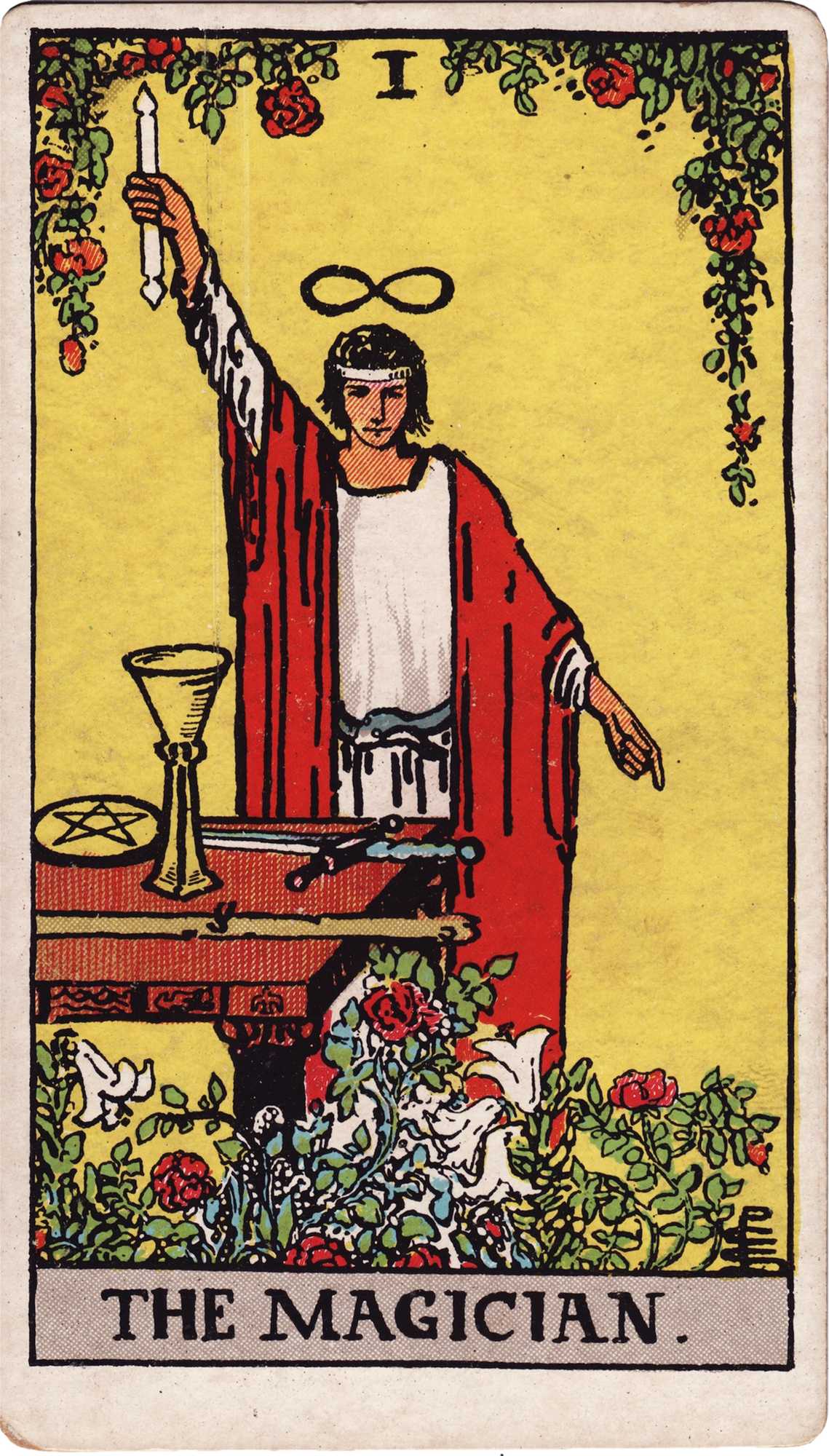 The Magician
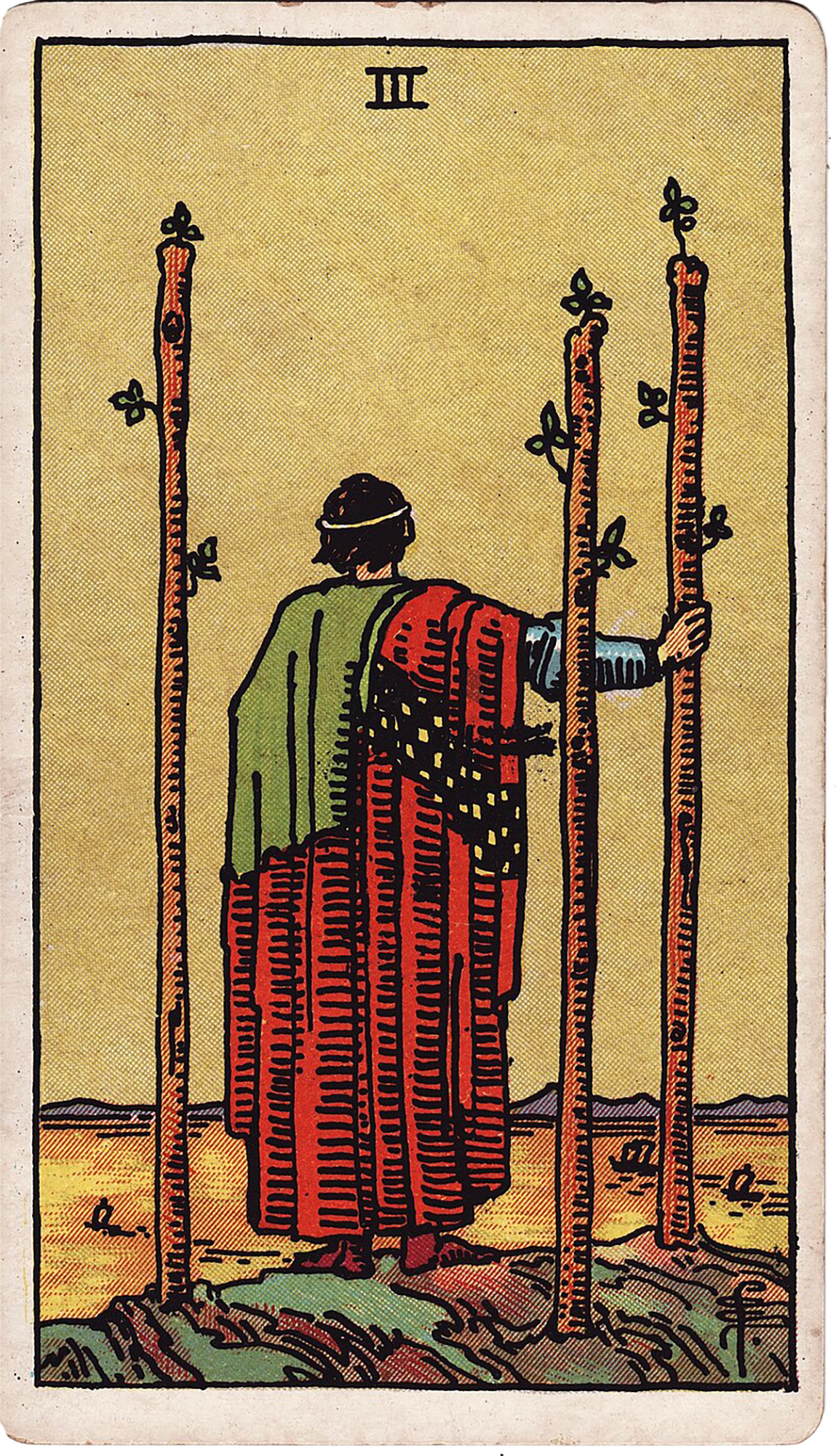 3 of Wands
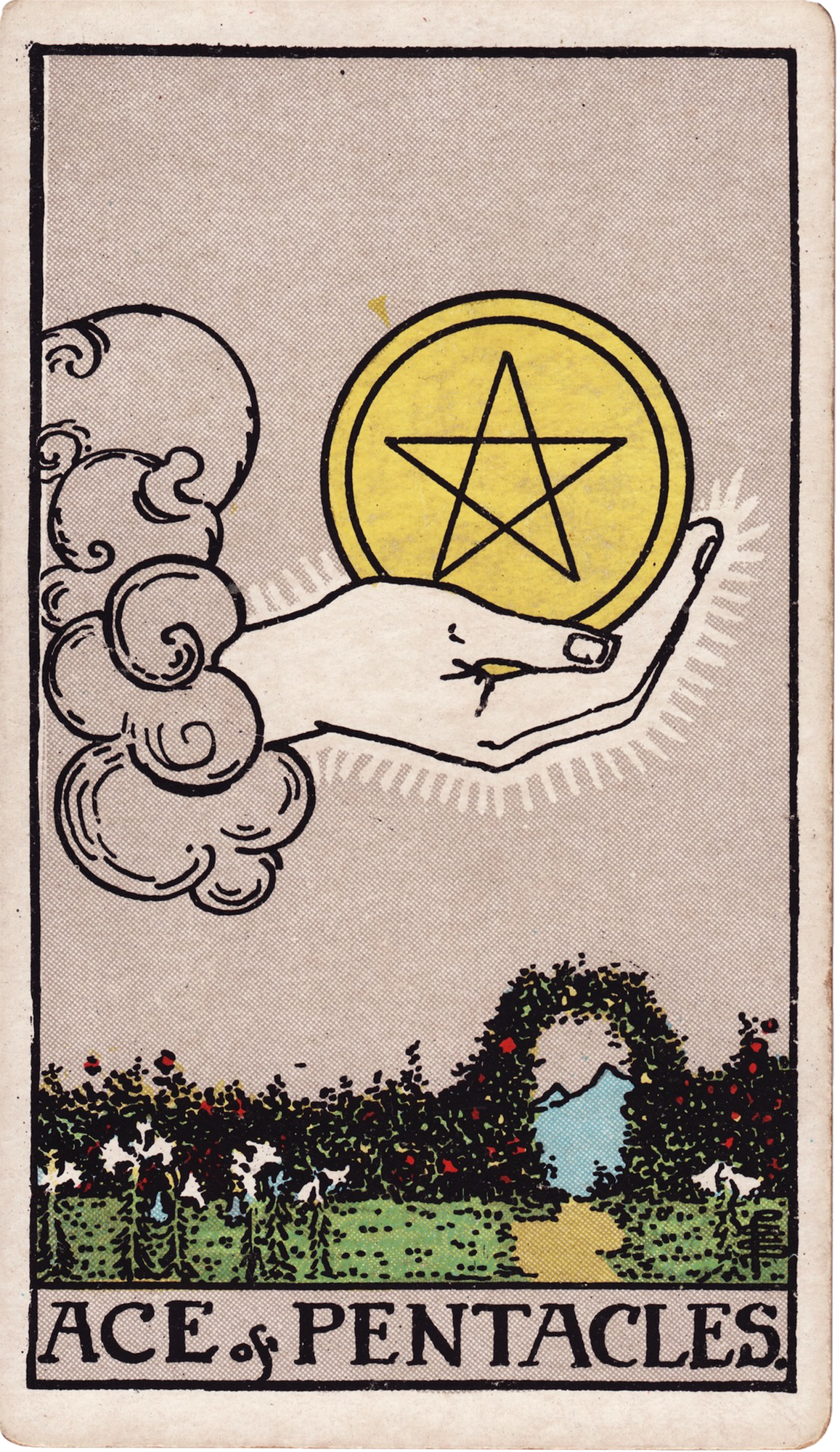 Ace of Pentacles
Why read these three cards together
The three-card set The Magician, Ace of Pentacles and 3 of Wands forms a natural narrative about manifestation. Visually in the Rider‑Waite family, The Magician stands with tools on the table, an infinity symbol above his head and one hand pointing upward and the other down—classic iconography for bridging inner power and outer action. The Ace of Pentacles is a hand emerging from the clouds presenting a single pentacle over a garden and a path that leads toward an arch and distant mountains: an offered material beginning with a route to cultivate. The 3 of Wands shows a lone figure looking out across water at ships and horizon, standing by three planted wands: an image of perspective, expansion and the wait for results to travel outward. Together they map three phases that students of tarot call intention (The Magician), embodied opportunity (Ace of Pentacles), and expansion/harvest growth (3 of Wands).
Core imagery and what each card contributes
Anchor the reading in the cards' pictures and conventional meanings before combining them. The Magician: notice the table with the four tools, the lemniscate (infinity) above his head, and his posture. These elements signal deliberate use of available skill, clear communication of purpose, and the decision to convert potential into a first concrete move. Upright, he asks, Where can you act now with clarity? Reversed, he warns of scattered action, manipulation, or blocked confidence. Ace of Pentacles: focus on the clear hand offering a single coin, the cultivated garden and the path. This is literally a material token: a practical resource, a job offer, funding, a stable domestic beginning, health opportunity, or something new in the realm of Pentacles (work, money, home, body). Upright it is a seed requiring care and routine. Reversed it points to missed use of an offer, poor planning, or scarcity thinking. 3 of Wands: the lone figure watching the horizon and ships indicates perspective, patient readiness and planning for expansion beyond the first steps. It asks the querent to match the current stage—don’t act like you’re just starting; act like you expect a wider reach and shape accordingly. Upright it favors strategic patience. Reversed it draws attention to delays, weak follow-through, or expansion before the foundation is ready. Make sure to refer to these concrete visual details as you read. Imagery is the thread that keeps interpretation grounded rather than speculative.
How these cards modify one another: three primary relational patterns
When reading combinations, resist the 'three independent cards' trap. Instead, consider specific modifier patterns: sequence (timeline), role-sync (function at once), and lensing (one card reframes another). 1) Sequence (stepwise roadmap) - The Magician → Ace of Pentacles → 3 of Wands is the most natural sequence: first a deliberate choice or communication, then a tangible opening that appears or is created, then the early stage of growth and the requirement for perspective. Use this when the question is about a process (e.g., How will this project unfold?). - Read the Magician as the skill or decision that activates the Ace: the offered pentacle is useful only if it’s recognized and acted on. The 3 of Wands then advises on scaling that seed. Example phrasing: "Your clarity and first decisive move (Magician) bring a concrete opportunity (Ace) that will need patient, outward-facing planning (3 of Wands)." 2) Role-sync (simultaneous roles) - Sometimes all three apply simultaneously: The Magician represents the querent’s agency, the Ace of Pentacles shows the available resource, and the 3 of Wands describes how the situation is oriented (expansion, waiting for returns). Here the cards act in different domains at once: skillset (Magician), tangible opening (Ace), and strategy/timing (3 of Wands). - This is useful for questions like "What do I have to work with?" The answer becomes: "You have clear skills and communicative capability; a material seed is present; and the project is ready to be planned outwardly." 3) Lensing and conflict (one card reframes another) - The 3 of Wands can refract the Ace of Pentacles: a promising offer might require far-sighted planning (don’t accept unless you can scale or wait). The Magician can empower the Ace: the resource won’t mature without deliberate skill. Conversely, reversed forms create warning lenses: a reversed Magician undermines the Ace (the opportunity will be mishandled), a reversed Ace makes the Magician’s actions less likely to produce tangible returns, and a reversed 3 of Wands shows expansion is premature. Always ask which pattern best fits the querent's question and context. Use follow-up cards or clarifying questions if more than one pattern seems possible.
Contextual readings: relationships
When the question is about relationships or family dynamics, keep imagery literal and practical. The Magician upright in a relationship reading points to direct, clear communication, boundary-setting and the need for one honest first move: a conversation, an offer of help, or a new structure. Visually, the Magician’s pointing hands suggest aligning words and actions—say what you mean and do what you say. Ace of Pentacles here often indicates a concrete family-level opening: an offer to move in together, a proposal of shared finances, an actual gift, or the start of a stable household routine. Note the garden/path imagery: does the couple have a real path forward (shared home, job security) or is the offer symbolic? 3 of Wands adds the longer-angle view. It asks whether both partners are ready to plan beyond the immediate day-to-day—are they looking to expand family life, relocate, or integrate long-term responsibilities? The ship imagery suggests external forces or people that may be involved (relatives, relocation, outside jobs). Upright, patience and coordination will yield expansion. Reversed, it warns of premature planning, promises that go unfulfilled, or one partner expecting growth before foundations exist. Sample reading (upright all): "If you take a clear first step—speak openly about expectations (Magician)—a real, useful offer or resource appears (Ace of Pentacles). But this will require you to plan together and allow time for the new arrangement to grow (3 of Wands)." If The Magician is reversed: watch for clever talk that doesn’t lead to action or for manipulation of offers. If Ace is reversed: a proposed stability might be illusory. If 3 of Wands reversed: you may need to simplify expectations and focus on day-to-day reliability before expansion.
Contextual readings: career and work
In career contexts these cards make a practical, time-tested triplet. The Magician signals initiative: pitching, applying, negotiating or using a skillset to generate an opening. On the table in his image are tools representing all suits—this is a reminder that the Magician's power is to coordinate resources, not to wish for outcomes. The Ace of Pentacles will often be a literal job offer, contract, funding, or a new revenue stream. Treat the pentacle as a literal 'coin'—what is the concrete resource being handed to you? The garden/archway suggests an environment to be cultivated; examine whether the workplace or opportunity has a defensible path to stability. The 3 of Wands instructs on scale and timing: is this opportunity one that can be expanded? Are you positioned to send out your work (ships) and expect returns? Upright, it says yes—prepare infrastructure, plan logistics and monitor external partners. Reversed, it warns that expansion efforts could be too early or that follow-through will be weak. Example scenario: You pitch (Magician) and are offered seed funding (Ace of Pentacles). The 3 of Wands asks you whether you have distribution channels and the patience to wait for growth. Practically, this means building a timeline, confirming partners, and setting milestones rather than assuming immediate revenue. If the cards show mixed signals (e.g., Magician upright, Ace reversed), the lesson is about better planning: your initiative is strong but the practical offer is flawed—revise expectations, renegotiate, or refuse until foundations are clearer.
Contextual readings: emotional and practical family contexts
For family-oriented questions—childcare, household finance, caregiving, health—the three-card set points to how to convert intention into reliable domestic reality. The Magician suggests decisive reorganization: setting new routines, asking for help, or speaking up about needs. Pay attention to the Magician's tools as metaphors: which practical resources (time, money, skills, outside support) can be coordinated? The Ace of Pentacles is a sign of something tangible that will matter for family life: a job with better hours, a health appointment that can stabilize a situation, a grant or benefit. The path in the image invites you to trace what follow-up care or consistent routine will look like. 3 of Wands asks if the family is ready to expand its view outward. Expansion here could mean adding members (by birth, adoption, or merging households), starting a home-based business, or planning care for aging relatives. The ship imagery suggests coordination with external systems: schools, medical networks, employers. Stop and ask: does the Ace lead to a path the family can maintain? Does the Magician’s skillset include the stamina to make that practical change stick? If not, rework the plan. If 3 of Wands comes reversed, simplify, slow down, and shore up day-to-day routines before reaching outward.
Avoiding one-card-at-a-time mistakes
Common learner mistakes with combinations include these pitfalls: - Isolation reading: treating each card as an independent verdict. A Magician by itself tells one story; the Ace another. Together they must be synthesized. Ask how each card affects the others instead of listing meanings. - Linear tunnel vision: assuming the cards always form a strict past-present-future timeline. They can, but often one is function, one is obstacle and one is advice. Ask the querent whether they want a process timeline or a multifaceted overview. - Reversal overreaction: reacting to a reversed card as if it cancels the whole reading. A reversed Magician might simply point out where the querent’s confidence is shaky; it doesn’t doom the Ace of Pentacles if that card is upright. Treat reversals as diagnostic markers—where energy is stuck or distorted. - Imagery ignoring: failing to use the pictures to generate practical questions. The Ace's path, the Magician's pointing hands, the 3 of Wands' ships are clues—name them aloud when reading. - Forcing prediction instead of offering strategy: this trio is about agency and process. Move from 'will this happen?' to 'what steps will increase the likelihood and quality of outcome?' This approach empowers querents and avoids deterministic forecasts.
Practical reading method and step-by-step technique
Use a consistent method to transform the images into action-oriented counsel. 1) Slow observation - Look at each card and name two specific visual details (e.g., Magician: infinity symbol, table tools; Ace: hand and garden path; 3 of Wands: ships, horizon). State them aloud to the querent. 2) Single-card core phrases - Condense each into a short operative phrase: Magician = deliberate first move; Ace of Pentacles = tangible seed; 3 of Wands = strategic waiting/expansion. 3) Ask the key integrative question - For combinations like these, ask: Which of these three is the active constraint? Which one needs more attention? Example prompts: "Which of these cards feels most urgent?" and "Which one feels like advice?" 4) Map relationships - Decide if the reading is sequence, role-sync or lensing. For example, if the querent asks 'How do I get this grant?' sequence is likely. If they ask 'What resources do I have?' role-sync fits. 5) Make a concrete micro-plan - Translate to 2–4 actionable steps tied to the cards. Example: 1) Use the Magician—prepare a clear proposal and rehearse deliverables; 2) Vet the Ace—confirm contract terms and budget; 3) Activate the 3 of Wands—line up distribution and timeline milestones for 3–6 months. 6) Offer contingency guidance - If a card is reversed, name the blockage and give corrective actions: reversed Magician -> work on clarity and integrity; reversed Ace -> renegotiate terms or shore up savings; reversed 3 of Wands -> simplify scope and focus on execution. 7) Invite follow-up pulls - Suggest a clarifying card for each uncertainty: one card for "What to do next week?" or a small spread to check logistics. Don’t overload the querent with hypothetical possibilities—focus on immediate, testable steps.
Examples and micro-case studies
Example A — Career launch (all upright) - Reading: The Magician → Ace of Pentacles → 3 of Wands. - Interpretation: Your initiative and polished presentation (Magician) attract a concrete project or contract (Ace of Pentacles). You should prepare infrastructure now so you can scale: contracts, partners, a timeline (3 of Wands). Action plan: finalize a one-page offer, check budget lines, and set three milestones for outreach over the next quarter. Example B — Relationship offer with caution (Magician upright, Ace reversed, 3 upright) - Reading: The querent is ready to negotiate and speak directly (Magician), but the current material offer or stability is shaky (Ace reversed). The 3 of Wands asks you to look at long-term viability: can this offer realistically grow? Advice: open the conversation (Magician) but verify the terms and require concrete commitments before relying on the offer. Example C — Family care (Magician reversed, Ace upright, 3 reversed) - Reading: A real resource or help is available (Ace upright), but the querent lacks clarity or is using charm instead of structure (Magician reversed). The 3 of Wands reversed warns against overreaching. Advice: accept the tangible help but set firm plans and routines; work on clearer boundaries and logistics so the help becomes sustainable.
Practice exercises for learners
Exercise 1 — Single-question sequencing - Pull these three cards for a single project question. Force one reading as a timeline (Magician = week 1 action; Ace = week 2 concrete change; 3 of Wands = month 2–3 growth). Write a one-paragraph plan tied to imagery. Exercise 2 — Role assignment - For three different real concerns (relationship, job, family logistics) assign each card a role (skill, resource, strategy). Draft a 45–60 minute action checklist per concern. Exercise 3 — Reversal diagnostics - Practice with reversed card scenarios. For each reversed possibility, write three micro-interventions that address the specific blockage described by the reversed image. After each exercise, compare with a peer or mentor and note where imagery led to tangible steps versus metaphorical language. Improve by replacing metaphors with concrete tasks.
Common language templates and phrasing
To keep readings practical, use templates that translate imagery into action. Examples: - "The Magician shows where to take a clear first step—specifically ______ (call, proposal, boundary)." - "The Ace of Pentacles is a tangible opening: check these three things before you accept—_______, ______, ______." - "The 3 of Wands asks you to plan for expansion: what are your channels and timelines for scaling?" These phrases keep you from vague fortune-telling and force concrete questions. Insert visual anchors when possible: "The Magician’s pointing hands suggest aligning words and deeds—what exactly will you say and when?" or "The Ace’s path asks: what follow-up routine will you use to tend this seed?"
Synthesis and ethical notes
Synthesize by returning to imagery: a person (Magician) uses tools to accept a hand-off (Ace of Pentacles) and then watches ships head outward (3 of Wands). Manifestation in tarot is not magic without effort; it is the combination of clear intent, tangible opportunity and patient execution. Use these cards to create a short, testable plan and to identify where energy tends to leak away. Ethically, avoid promising outcomes. This trio is excellent for strategy: turn a reading into a sequence of experiments—actions you can take in the next week or month—and measurable checkpoints. Encourage the querent to use tarot as a decision support tool, not a deterministic prophecy.
Final checklist for a balanced reading
Before concluding a reading using The Magician, Ace of Pentacles and 3 of Wands, verify: - You named specific visual details from each card. - You chose whether to read sequence, role-sync or lensing, and told the querent why. - You gave 2–4 concrete actions tied to the cards. - You identified any reversal as a blockage with concrete corrective steps. - You suggested a follow-up check (timing aligned to the 3 of Wands horizon: 4–12 weeks) and a clarifying pull if needed. Keeping this checklist ensures the reading is practical, learner-centered and grounded in the cards' imagery.
Practice questions
• Which image in the three cards feels most alive to you and why (Magician’s tools, Ace of Pentacles’ path, 3 of Wands’ ships)?
• If The Magician is the skill you bring, how will you concretely use that skill to tend an Ace of Pentacles opportunity this week?
• Where in your current family or relationship plans are you acting like the 3 of Wands (waiting and planning) versus acting like you’re still at the beginning?
• If one card were reversed, how would that change the two concrete actions you plan to take?
• What is one measurable milestone you can set now to test whether the Ace of Pentacles opportunity is real?
Comments
Sign in to comment.
Continue learning
Interpreting the Dance of Justice and The Devil: Balancing Morality and Temptation in Tarot Readings
The combination of Justice and The Devil in tarot presents a profound exploration of morality, temptation, and personal accountability. This article unpacks how these cards influen...
Harnessing the Power of The Magician and Ace of Wands: Igniting Creativity and Manifestation in Tarot Readings
The combination of The Magician and the Ace of Wands in tarot readings offers a potent blend of creative energy and manifestation power. This article delves into the ways these car...
Understanding the Synergy Between The Empress and The Emperor in Tarot Card Combinations
This article delves into the intricate synergy between The Empress and The Emperor cards in Tarot, focusing on how their combined energies modify and enrich readings across various...
Decoding Transformation and Renewal with Death and The Star in Tarot Combinations
This article delves into the card combination of Death and The Star, two powerful Major Arcana cards from the Rider-Waite-Smith deck. It explores how their imagery and meanings int...
Balancing Ambition and Compassion with The Emperor and Queen of Cups in Tarot Combinations
This article delves into the nuanced Tarot card combination of The Emperor and Queen of Cups, emphasizing how their energies complement and challenge each other. By analyzing their...
Finding Emotional Healing and Renewal with The Star and The Moon Tarot Combination
This article examines the rich interplay between The Star and The Moon tarot cards when they appear together in a reading. Using the traditional Rider-Waite-Smith symbolism and the...
Unlocking Emotional Wisdom with The High Priestess and The Queen of Cups in Tarot Combinations
This article delves into the card combination of The High Priestess and The Queen of Cups, emphasizing their shared themes of intuition, emotional depth, and receptivity. By examin...
Unlocking Emotional Resilience with Strength and The Star in Tarot Combinations
This article delves into the Tarot card combination of Strength and The Star, revealing how their interplay highlights pathways to emotional resilience. Anchored in the Rider-Waite...
Unveiling Emotional Strength with Strength and The Queen of Cups in Tarot Combinations
This article delves into the dynamic Tarot combination of Strength and The Queen of Cups, emphasizing how these cards together illuminate emotional strength, compassionate boundari...
Unlocking Emotional Transformation with Death and The Moon Tarot Combination
This article explores the rich and complex interaction between the Death and The Moon tarot cards within the Rider-Waite-Smith tradition, focusing on their combined potential to un...