
Map a Crisis Arc with The Tower The Star and The World
This article teaches how to read the three-card combination of The Tower, The Star, and The World as a crisis arc: breakdown, renewal, and integration. Using Rider-Waite-Smith symbolism and the supplied card contexts, the lesson shows how each card modifies the others in upright and reversed positions across relationship, career, emotional, and practical questions. You will learn a step-by-step method to move beyond one-card thinking, concrete example readings, common interpreter errors, and ethical communication strategies for sensitive material.
Read the cards together
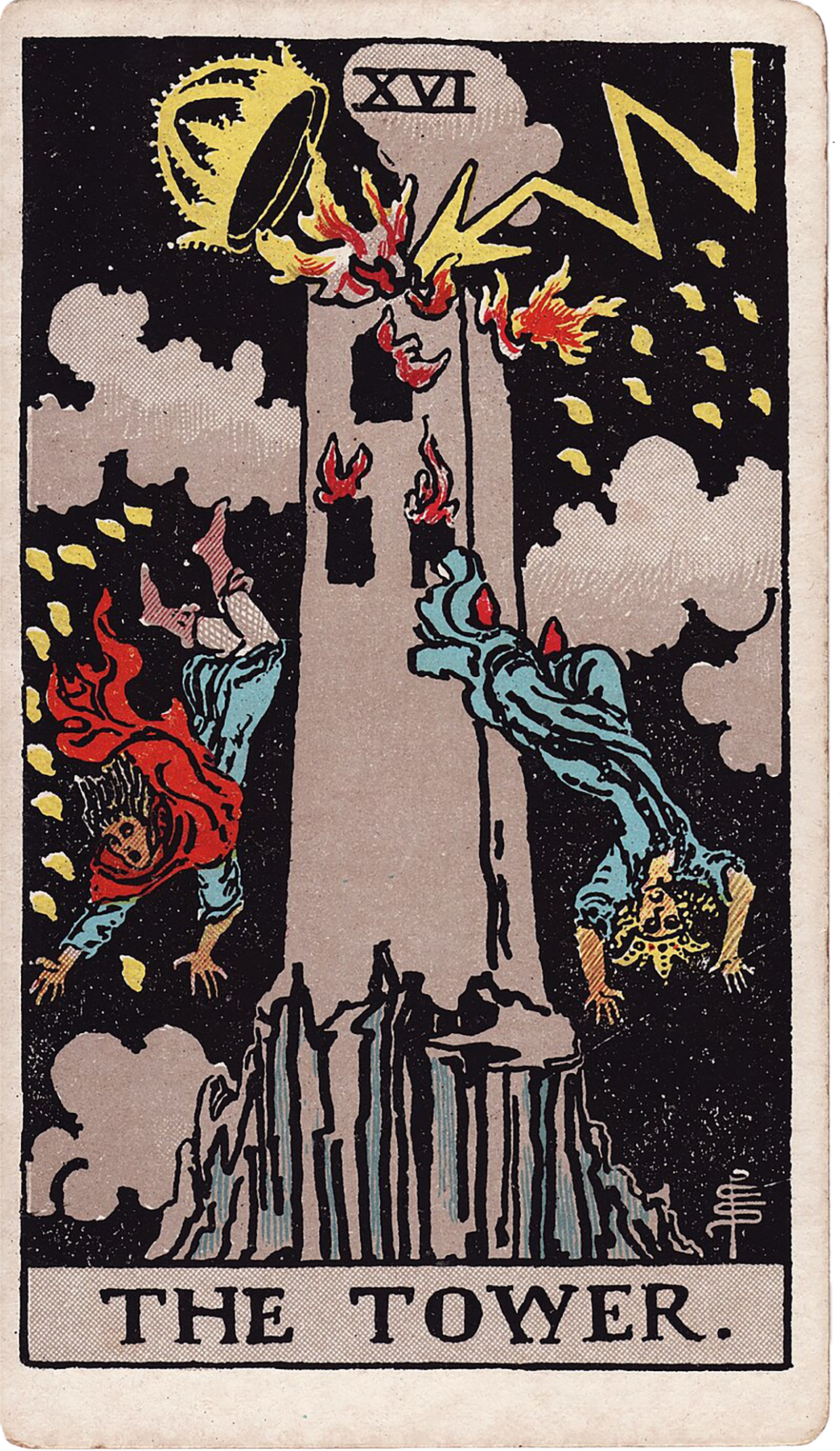 The Tower
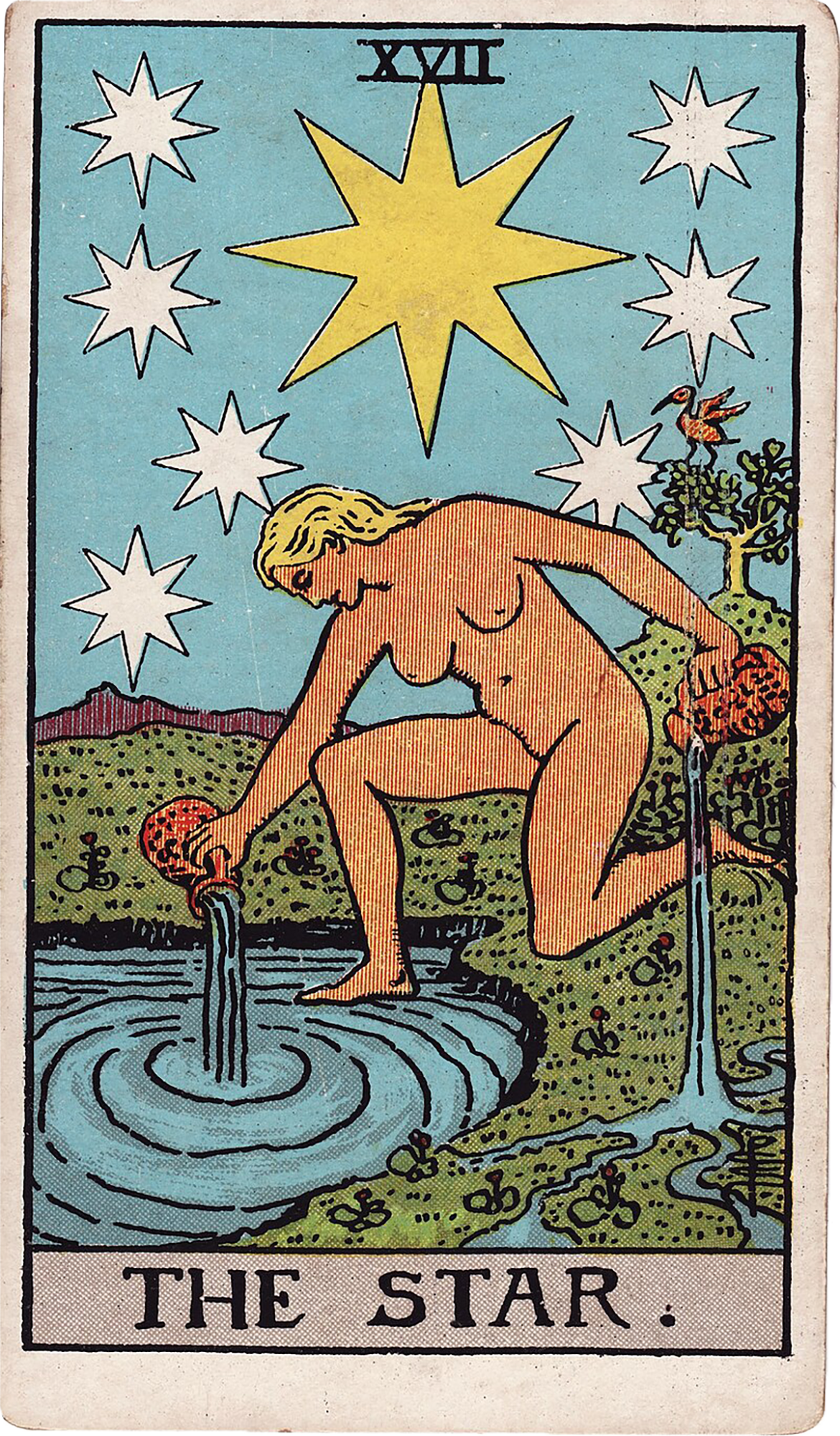 The Star
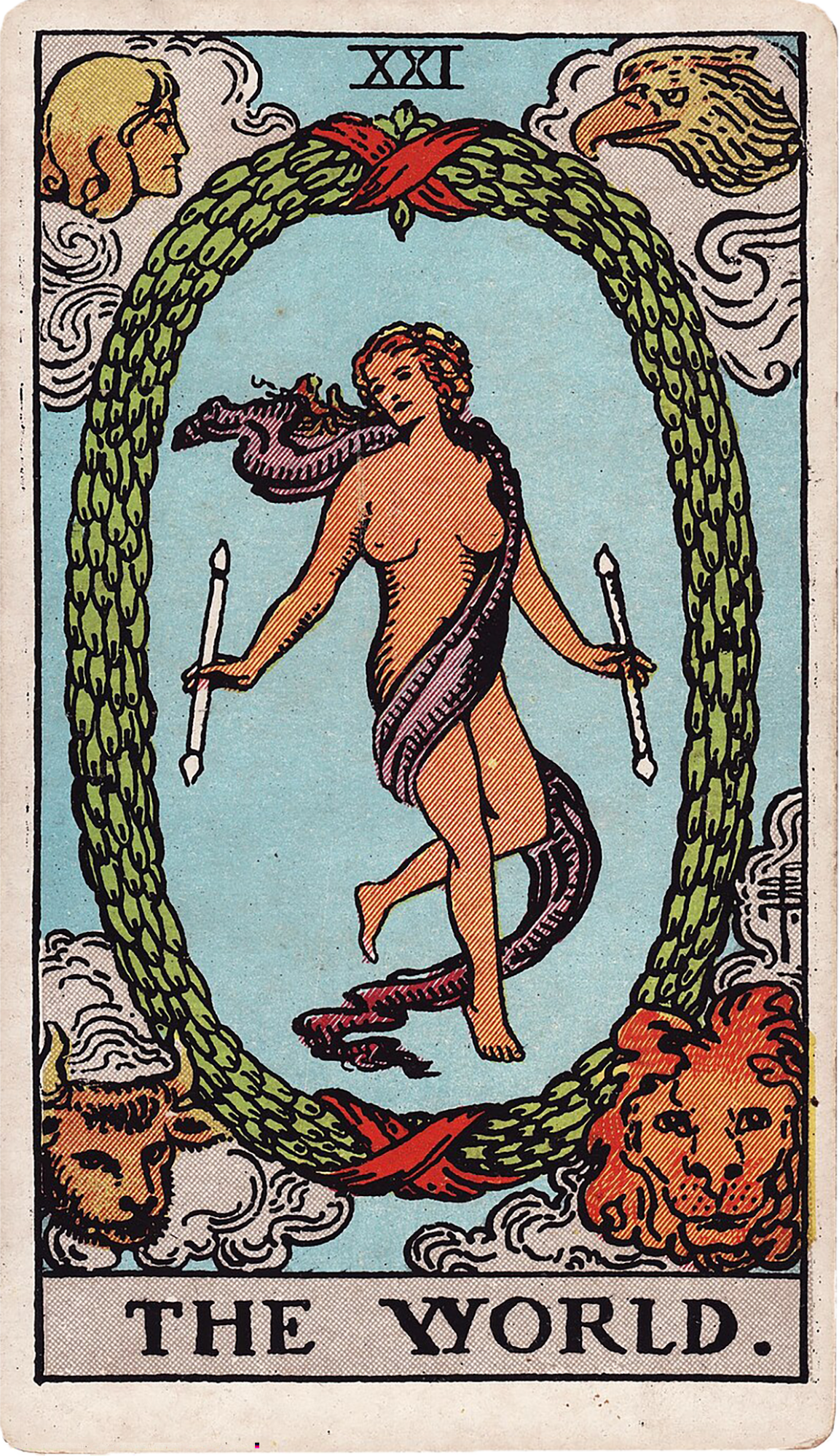 The World
Introduction: Why these three cards form a crisis arc
The Tower, The Star, and The World are often read together because their sequential numbering and imagery naturally sketch a movement from rupture to renewal to completion. The Tower (commonly numbered XVI) depicts sudden collapse: lightning, falling figures, and a knocked-apart structure. The Star (XVII) shows an exposed figure pouring water in a quiet, open landscape under a radiant star. The World (XXI) shows a dancer enclosed in a laurel wreath, holding wands, flanked by the four living creatures. Together they can describe a crisis arc: an unavoidable truth or structural collapse (The Tower) that clears space for hope and steady recovery (The Star) and finally leads to integration or achieved closure (The World). This article treats these cards visually and practically. You will be asked to look at the supplied images of The Tower, The Star, and The World as you read—note the lightning, the disrupted architecture, the exposed but receptive figure and stars, and the celebratory wreathed dancer. Those images anchor how the cards interact in readings. We will avoid treating any card as a single 'doom' or 'good luck' detector. Instead, each card names a quality the querent can use constructively.
Visual anchor and Rider‑Waite‑Smith symbolism to watch
Before interpreting combos, learn to read the image details. These are the elements that will be modified by adjacent cards. - The Tower: lightning from the heavens, crown knocked off, two falling figures, flames, a broken tower. RWS symbolism: sudden awakening from a false security, a divine shock not necessarily malicious but clarifying. Look for what is collapsing (roof, crown, foundations) and who is falling. The supplied upright context emphasizes honest response and rebuilding from what remains real; reversed notes resistance and repeated crises. - The Star: a naked woman kneels at the water's edge, pouring water into a pool and onto land, under a large central star and smaller stars around. RWS symbolism: vulnerability, replenishment, soul‑level hope, and a rhythmic give-and-take with the world. The upright context emphasizes steady renewal and acting from authenticity; reversed warns of discouragement or waiting passively for healing. - The World: a central figure, often dancing, surrounded by a laurel wreath and the four evangelist creatures at the corners. RWS symbolism: completion, cyclical closure, integration of the self with experience, and readiness for the next cycle. Upright descriptions stress recognition of completion and integration; reversed indicates incomplete business or delayed closure. When you read the combo, notice which visual elements are most striking. Does the Tower's lightning point toward the Star? Does the Star’s water suggest what needs to be replenished after the Tower? Does the World’s wreath suggest that what emerges from the Tower+Star is durable enough to count as closure? These visual relationships are the first layer of modification between cards.
How cards modify one another: basic interaction principles
Card combinations are not arithmetic; they are conversational. Each card speaks, and the others reply. Use these guiding moves when you interpret: 1) Positioning: Which card appears first in time or in the spread layout? A Tower in the past position is an event that set the present. A Tower in the future warns of imminent rupture that may clear a path. The Star as present marks ongoing restoration. 2) Voice and tone: The Star softens the Tower’s shock; it offers a tone of healing rather than despair. Conversely, The Tower can jolt a too-easy World into realistic change. 3) Focus: The World asks, 'What is integrated?' The Star asks, 'What needs steady replenishment?' The Tower asks, 'What truth demands honesty now?' Combining them shows the arc: the Tower clarifies what must change, the Star supplies the practice of renewing faith and authenticity, the World marks the endpoint where learning becomes a pattern. 4) Movement verbs: Read images as verbs. Tower: fall, reveal, separate. Star: pour, replenish, steady. World: complete, dance, integrate. Join verbs into a sentence: 'A revealing collapse (Tower) forces a steady practice of renewal (Star) that, when embodied, becomes integrated achievement (World).' 5) Balance upright/reversed: Use the supplied upright and reversed contexts to identify where qualities are present, blocked, or exaggerated. Read reversal not as simple 'bad' but as a modifier: Tower reversed often indicates avoided change; Star reversed indicates passive waiting or lost faith; World reversed shows delayed closure.
Reading sequences and spreads: practical methods
Three practical spread templates work well with this trio. Use them as frameworks and always adapt to the question. A) Past / Present / Future - Past: The Tower — identifies the inciting crisis or structural crack. Use the Tower’s imagery to specify what broke and why. Ask: which 'false structure' fell? Was it a role, belief, relationship, job, policy? - Present: The Star — identifies current resources for healing. Where is authenticity returning? What small acts of replenishment are possible now? - Future: The World — potential endpoint: what would completion look like if current practices continue? What closure might be available? B) Problem / Response / Outcome (active reading) - Problem: The Tower — what must be faced directly? This asks for immediate choices and boundary-setting. - Response: The Star — practical actions of faith: where to be honest, where to rebuild incrementally. - Outcome: The World — how integration might look and what unfinished business would block it. C) Internal / External / Advice (psychological focus) - Internal: The Star — inner resources, strengths, wounds. - External: The Tower — external events that disrupt internal equilibrium. - Advice: The World — what integration would require: completion, rituals, saying goodbye, or acceptance. Technique tip: After laying the cards, read each alone for one minute focusing on concrete image details (what color, which figure, which direction), then read pairs (1+2, 2+3), asking: how does the second card transform the first? Finally read the trio as a sentence or story. This stepwise compression prevents simplistic two-word summaries and forces narrative logic.
Interpreting upright and reversed interactions
The supplied card contexts emphasize upright useability and reversed nuance. Use these distinctions to produce more precise readings. - Tower upright + Star upright + World upright: The clearest crisis arc. Something was exposed and had to fall; the querent is engaged in steady repair and reclaiming hope; eventual integration is possible if they continue acting honestly and practically. Use imagery: Tower lightning cleared away the false crown; the Star's water nourishes a reborn ground; the World’s wreath suggests celebration and mobility. - Tower reversed + Star upright + World upright: Resistance to necessary change likely caused prolonged instability. Tower reversed asks: where are you resisting? Star upright indicates that internal healing is available despite denial. The World upright suggests completion still possible once that resistance is addressed. - Tower upright + Star reversed + World upright: A sudden crisis has led to discouragement. Star reversed warns of passive waiting or idealizing a fix. The World upright shows that integration is possible, but the querent must actively participate rather than wait for a miracle. - Tower upright + Star upright + World reversed: The arc proceeds, but the final completion is delayed. The Tower and Star indicate valuable work happening—awareness and replenishment—but World reversed indicates practical obstacles to closure (unfinished business, perfectionism, or external impediments). Ask what practical task remains: paperwork, an apology, restitution, pragmatic boundary. - All three reversed (Tower reversed + Star reversed + World reversed): A pattern of avoidance, lost faith, and incomplete endings. This reading is usually an invitation to therapy or structured support; it shows that energies are internalized and stuck rather than expressed constructively. When reversals appear, ask clarifying questions: Where is this energy blocked? Is the problem internal (private, psychological) or external? Look to neighboring cards for a corrective: an upright Star can heal a reversed Tower’s tendency to hoard or repeat crisis; an upright World can show what 'enough' looks like for a reversed Star's perpetual dissatisfaction.
Examples applied to contexts
Concrete scenarios help you see the cards at work. Below are three concise examples; in each, use the visual details of the supplied cards. 1) Relationship context Spread: Past / Present / Future - Past (The Tower): One partner discovered infidelity or a longstanding secret; the Tower’s lightning describes the shock and the couple's home-life structures being shaken. Notice the falling figures: who left or was pushed out of role? - Present (The Star): After the shock, one or both are beginning to be honest and vulnerable again. The Star’s naked figure pouring water suggests willingness to put emotion into practical repair—therapy sessions, transparent communication, rituals to rebuild trust. - Future (The World): If the work continues, the relationship may move into a new integrative form: not 'back to before' but a shared structure that includes the lesson. The World’s wreath suggests ritualized closure—an agreement, renewed vows, or formally ending and celebrating what was learned. Interpretive subtleties: If Star appears reversed, expect inability to forgive or to re-engage emotionally; counsel practical steps rather than vague reassurances. If World reverses, closure may require external acts (legal separation, mediated closure) rather than emotional readiness alone. 2) Career context Spread: Problem / Response / Outcome - Problem (The Tower): A sudden layoff, managerial upheaval, or public mistake revealed. In the image, the Tower’s crown falling off could symbolize lost status. Ask which institutional structure failed. - Response (The Star): The querent is advised to rebuild through honest resumé updates, networking from a place of authenticity, slow skill replenishment. The Star’s water suggests balancing self-care and practical effort. - Outcome (The World): The possible outcome is an integrated career shift—a role that better aligns with the querent's values. The World’s dancer shows mobility and a new professional identity. Interpretive subtleties: Tower upright plus Star upright is a strong sign to actively rebuild. Tower reversed might mean the person keeps clinging to the old job without adapting; Star reversed warns against waiting for a 'perfect' job to appear. 3) Emotional / practical inner work Spread: Internal / External / Advice - Internal (The Star): The querent has an inner thread of hope and an ability to replenish themselves, but may need specific practices (journaling, small daily acts). - External (The Tower): External events (a breakup, diagnosis, or social collapse) forced interior work. The Tower's image invites naming what the external event revealed about the querent's habits or reliance. - Advice (The World): Ritual or integrative practices can finalize learning—closing a chapter through ceremony, boundary setting, or taking a decisive action that marks completion. Interpretive subtleties: If World is reversed, the advice is to identify practical unfinished tasks. If Star reversed, the querent is being asked to stop idealizing sudden inspiration and instead do steady, concrete work.
Common mistakes and how to avoid them
Readers commonly fall into several traps with dramatic cards like The Tower. Here’s how to avoid them. 1) Mistake: Treating The Tower as only disaster. Correction: Use the supplied upright text — The Tower emphasizes responding honestly to a sudden truth and rebuilding from what remains real. Ask what is revealed rather than assuming doom. 2) Mistake: Reading each card alone and then tacking them together. Correction: Read pairs and then the trio in sentence form. Ask how The Star’s steady renewal changes the meaning of the Tower’s collapse and how the World does or does not validate the attempted integration. 3) Mistake: Over-interpreting reversal as moral judgement. Correction: Use reversals as diagnostic tools—blocked, delayed, internalized—not as final assessments. The supplied reversed contexts show movement possibilities. 4) Mistake: Ignoring imagery directions. Correction: Look for where figures face, where light comes from, what is broken or intact. The Tower’s lightning direction might point at the Star, implying that the shock has led directly to the hope stage. 5) Mistake: Promising definite timelines or absolute outcomes. Correction: This trio describes dynamics and potentials. Offer practical steps and conditional outcomes, not guarantees. 6) Mistake: Recommending only spiritual platitudes when practical interventions are necessary. Correction: Combine the Star's emotional work with concrete tasks suggested by the World (lists, rituals, closure actions) and the Tower’s immediate boundary or safety needs.
Practical reading method and phrasing
When you speak the cards to a querent, use language that is clear, compassionate, and action-oriented. A practical verbal template: 1) Observe: 'I see The Tower lightning and two figures falling—something exposed and unbalanced.' (Anchor to image.) 2) Translate: 'This suggests a sudden truth or collapse that forced a decision.' (Use Tower upright/reversed nuance.) 3) Offer resources: 'The Star shows there are real resources for steady renewal: small acts, honest speech, routines that replenish you.' (Anchor to Star imagery.) 4) Project possibility with contingency: 'If you take those steady steps, The World shows a likely phase of integration—closure that isn't denial but a usable achievement.' (Anchor to World imagery.) Phrase with conditional verbs: could, might, appears to, suggests. Offer specific next steps depending on the reading: who to contact, what boundaries to set, what ritual may help. If the Tower is threatening safety, prioritize immediate safety resources and concrete steps before existential discussion. Technique tip: After offering an interpretive paragraph, ask the querent which detail rings true. Use their answer to refine the reading and to prevent over-interpretation.
Closing technique: turning the arc into practice
End the reading by translating the arc into a 3-step practical plan aligned with the cards: Step 1 — Triage (The Tower): Identify what must be stopped, what truth must be named, and immediate protective boundaries. Write a short checklist of urgent actions. Step 2 — Repair routine (The Star): Identify 2–3 daily or weekly practices that replenish and create authenticity—talking honestly, sleep and nutrition, small consistent professional tasks, therapy. Make these concrete and measurable. Step 3 — Integration act (The World): Name a symbolic or practical act that marks completion when it occurs: closing a file, a ceremony, sending a final letter, or launching a new project. Decide what 'enough' looks like so perfectionism doesn't prevent closure. This practical framing helps the querent move from feeling described to being enabled. All three cards, in upright or reversed positions, function as coaching prompts: The Tower forces honest assessment; The Star supplies steady practice; The World helps define completion. Remember: you are guiding possibility, not dictating fate. Anchor interpretations to the supplied images often during the reading: point to the lightning, the pouring water, the wreath. Those images keep the reading grounded and visually coherent.
Practice questions
• Look at the supplied image of The Tower. What specific structure in your life does the crown or the tower represent?
• When you look at The Star's pouring water, what small actions could you perform this week that mirror that steady replenishment?
• If The World represents completion, what would a minimal viable 'completion' look like in your situation?
• Where might you be resisting necessary change (Tower reversed)? What is the cost of that resistance?
• If hope feels blocked (Star reversed), what concrete step—no matter how small—could interrupt passive waiting?
• What practical unfinished business could be preventing closure (World reversed)? Who else might need to be involved?
• How does reading the cards as a sentence (Tower -> Star -> World) change your sense of agency compared with reading each card separately?
• Which image among the three feels most emotionally charged for you, and why?
Comments
Sign in to comment.
Continue learning
Interpreting the Dance of Justice and The Devil: Balancing Morality and Temptation in Tarot Readings
The combination of Justice and The Devil in tarot presents a profound exploration of morality, temptation, and personal accountability. This article unpacks how these cards influen...
Harnessing the Power of The Magician and Ace of Wands: Igniting Creativity and Manifestation in Tarot Readings
The combination of The Magician and the Ace of Wands in tarot readings offers a potent blend of creative energy and manifestation power. This article delves into the ways these car...
Understanding the Synergy Between The Empress and The Emperor in Tarot Card Combinations
This article delves into the intricate synergy between The Empress and The Emperor cards in Tarot, focusing on how their combined energies modify and enrich readings across various...
Decoding Transformation and Renewal with Death and The Star in Tarot Combinations
This article delves into the card combination of Death and The Star, two powerful Major Arcana cards from the Rider-Waite-Smith deck. It explores how their imagery and meanings int...
Balancing Ambition and Compassion with The Emperor and Queen of Cups in Tarot Combinations
This article delves into the nuanced Tarot card combination of The Emperor and Queen of Cups, emphasizing how their energies complement and challenge each other. By analyzing their...
Finding Emotional Healing and Renewal with The Star and The Moon Tarot Combination
This article examines the rich interplay between The Star and The Moon tarot cards when they appear together in a reading. Using the traditional Rider-Waite-Smith symbolism and the...
Unlocking Emotional Wisdom with The High Priestess and The Queen of Cups in Tarot Combinations
This article delves into the card combination of The High Priestess and The Queen of Cups, emphasizing their shared themes of intuition, emotional depth, and receptivity. By examin...
Unlocking Emotional Resilience with Strength and The Star in Tarot Combinations
This article delves into the Tarot card combination of Strength and The Star, revealing how their interplay highlights pathways to emotional resilience. Anchored in the Rider-Waite...
Unveiling Emotional Strength with Strength and The Queen of Cups in Tarot Combinations
This article delves into the dynamic Tarot combination of Strength and The Queen of Cups, emphasizing how these cards together illuminate emotional strength, compassionate boundari...
Unlocking Emotional Transformation with Death and The Moon Tarot Combination
This article explores the rich and complex interaction between the Death and The Moon tarot cards within the Rider-Waite-Smith tradition, focusing on their combined potential to un...