
Mapping Family Roles and Ancestral Patterns with Court Cards
This article teaches how to read the Page, Knight, Queen and King of Cups as a set for mapping family roles and ancestral emotional patterns. It explains Cup suit symbolism in family work, reads each court card as an archetypal family role, gives practical spreads and step-by-step methods, highlights common mistakes, and offers exercises and reflection prompts so learners can apply these insights to readings and healing work.
Cards explored in this article
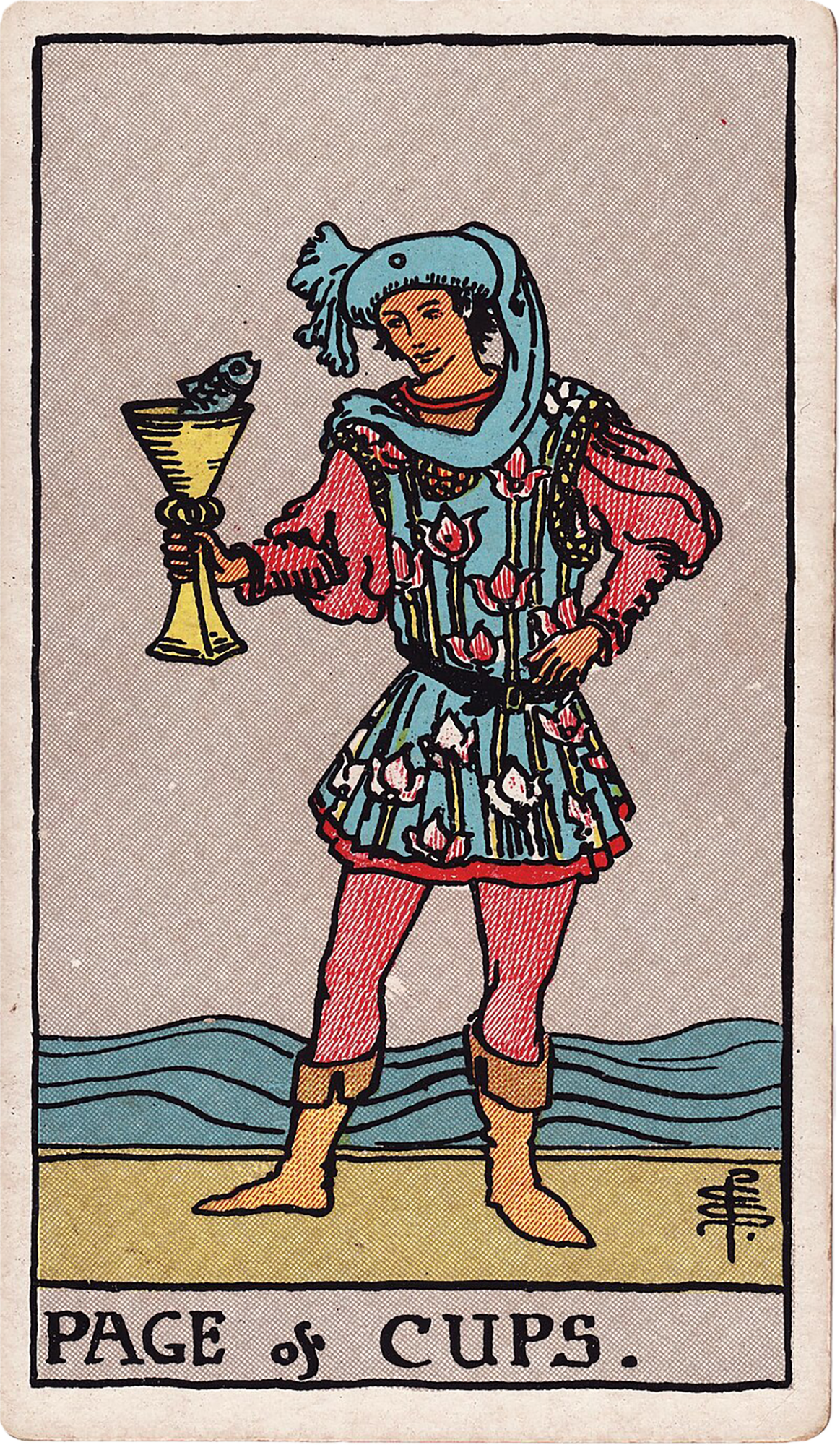 Page of Cups
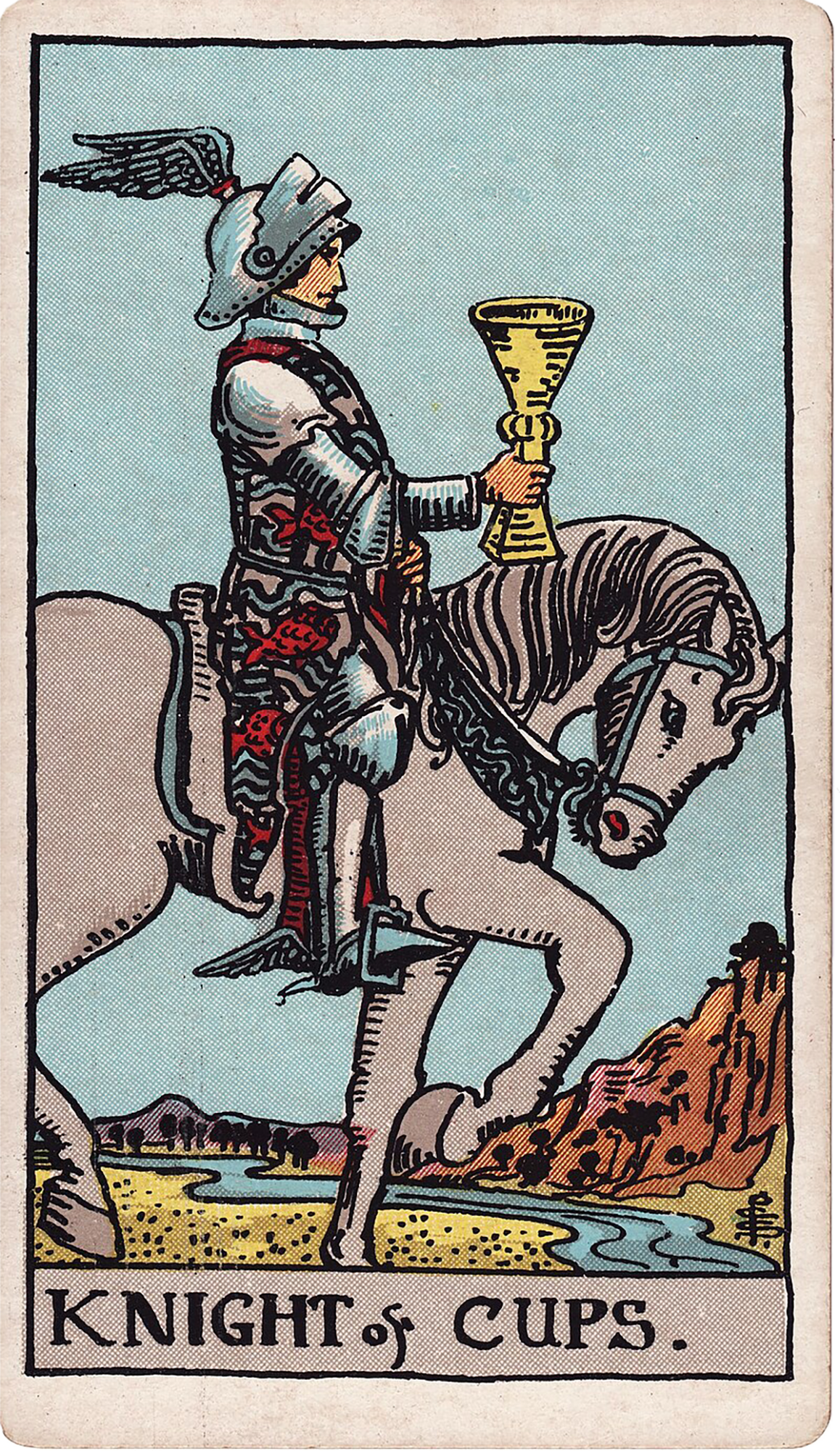 Knight of Cups
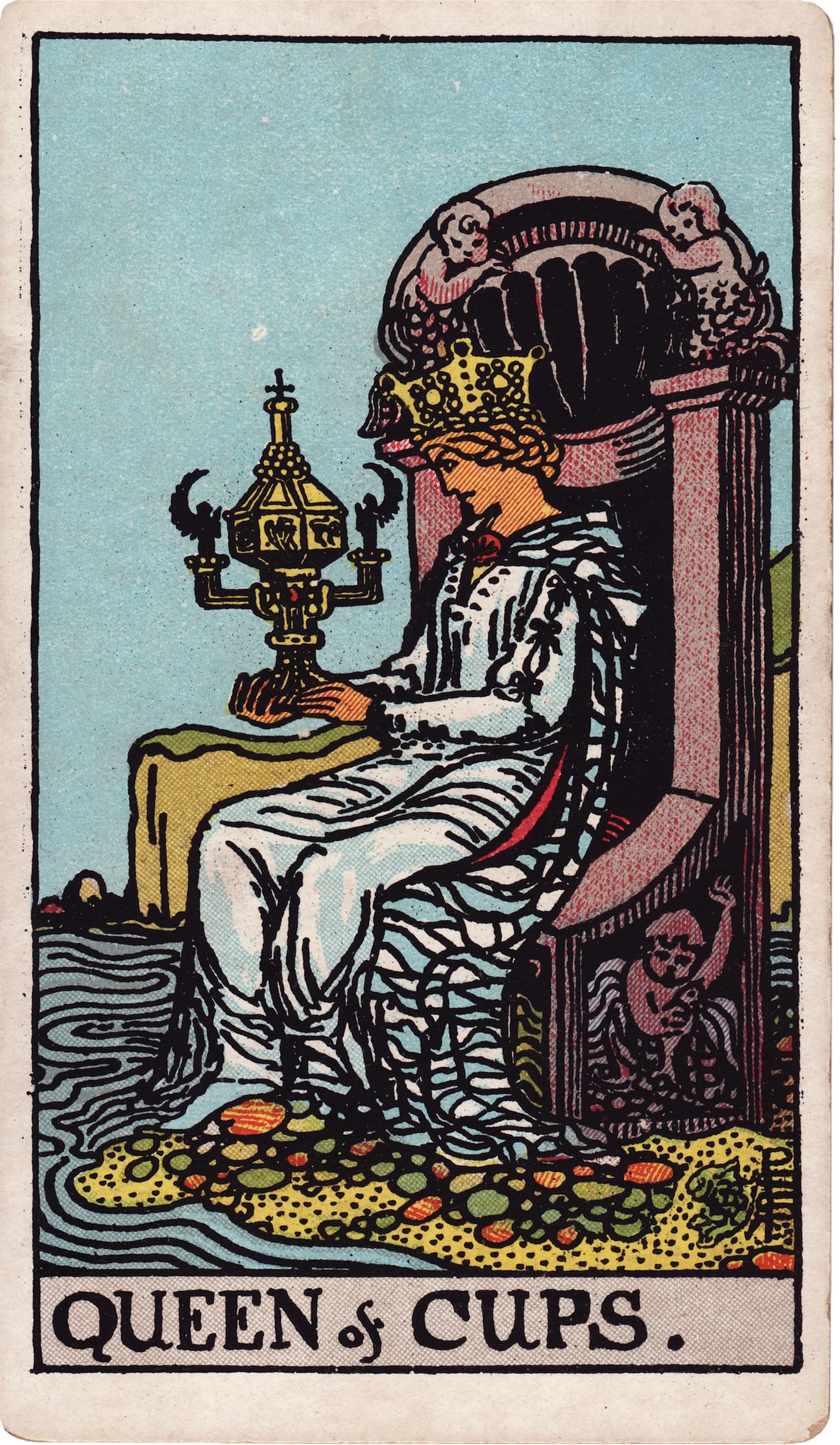 Queen of Cups
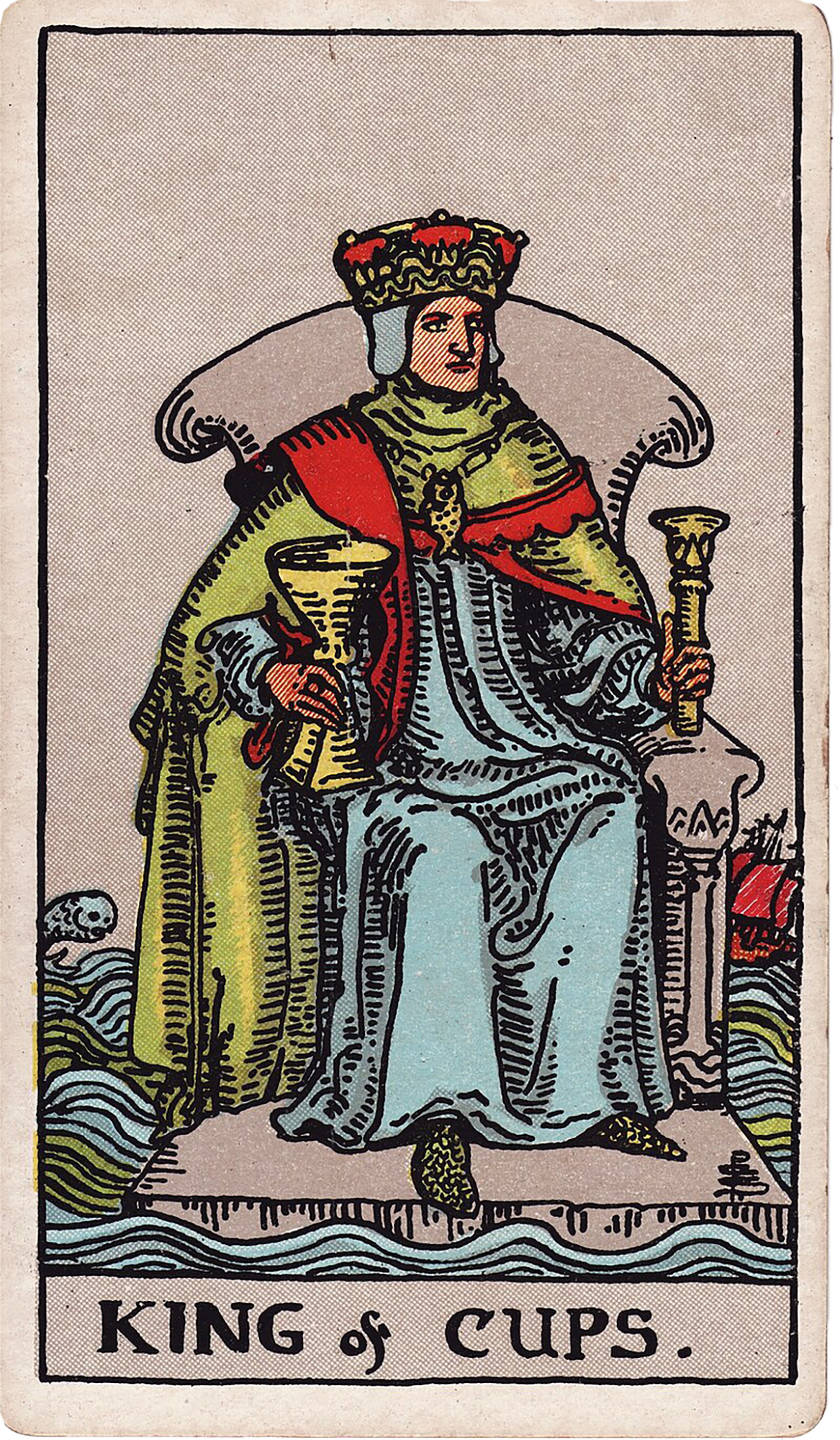 King of Cups
Introduction: Why court cards are useful for family and ancestral work
Court cards are among the most useful group in the Minor Arcana when you want to map people, roles, or recurring dynamics across generations. When you are working specifically with family systems and ancestral patterns, the court cards function as living templates: they describe modes of feeling, action and relationship rather than merely literal identities. This article focuses on the Cups court — the Page of Cups, Knight of Cups, Queen of Cups and King of Cups — and shows how their Rider‑Waite‑Smith imagery and practical meanings map into family roles, emotional legacies and repetitive patterns that move through lineages. Cups are the suit of water: emotion, intimacy, receptivity, memory and the processes by which families transmit feeling. Reading the Page, Knight, Queen and King of Cups together gives you a spectrum from nascent feeling and message (Page) to movement and pursuit (Knight) to nurturance and containment (Queen) and finally to stewardship or leadership of emotional culture (King). Because the supplied images will display while you read, use the visual details — fish in the cup, posture, nearby water, facial expression, direction of gaze — as active clues. In family mapping, these cards can represent people, inherited roles, internal parts, or recurring relational dynamics.
Court cards as role types not literal people
Before we look at each Cup court card, clarify a central methodological point: court cards are best read as archetypal roles or patterns rather than fixed biographies. The Page of Cups might represent a person (a young relative), an aspect that shows up in many family members (the tender but unpracticed emotional learner), a specific intergenerational message that repeats, or even the way a family introduces new feelings. Similarly, the Knight can be an initiator or the family member who chases emotional ideals; the Queen the long‑standing caregiver or emotional container; the King the figure who sets emotional boundaries — constructively or manipulatively. Always ask: is this card pointing to an individual, a recurring role, an internalized part, or an interactional position? The answer will shape interpretation and the practical steps you suggest. In ancestral work, one card can describe a repeated function that has passed from, say, grandmother to mother to daughter — and the imagery on the supplied cards will help you spot how that function manifests.
Reading the Cards visually and symbolically
Use Rider‑Waite symbolism to root your family interpretations in concrete imagery. Look closely at each of the supplied images while you read: - Page of Cups: The Page commonly holds a cup with a fish peeking out. The fish is a classic RWS symbol of surprise, intuition and messages from the unconscious. When you see the Page of Cups in a family spread, attend to the card’s youthfulness, curiosity and the sense that an emotional message or creative impulse arrives unexpectedly. Because the supplied card text says the upright Page highlights an unexpected emotional message, intuitive impression or creative feeling, let those possibilities anchor your reading. If reversed, watch for emotional immaturity, hypersensitivity or internalized feeling that hasn’t been expressed outwardly. - Knight of Cups: The Knight usually rides toward a destination, offering a cup. In RWS, knights are agents of movement. With Cups, the Knight moves what the family values emotionally: invitations, promises, proposals or romanticized narratives. The upright Knight emphasizes pursuing what the heart values with grace and emotional intention — a good lens when a family member actively pursues a relational pattern. Reversed, the Knight warns of idealization, empty promises or chasing fantasy rather than relating to people concretely. - Queen of Cups: The Queen is seated near water, often gazing into her cup or into the surrounding sea. She embodies matured receptivity, empathy and an inner container for feeling. In family mapping the Queen can be the emotional home or anchoring caregiver. The upright Queen emphasizes mature empathy and containment; reversed, she points to emotional overwhelm, codependency or absorbing others’ moods. - King of Cups: The King commonly sits on a throne near water, representing emotional authority and stability. He models steady emotional leadership — feeling deeply without being overwhelmed. He can be the person who maintains emotional culture in the family. Upright, the King is steady and composed; reversed, he might manage feelings through repression, manipulation or performative calm. By naming the visible elements — the fish in the Page’s cup, the Knight’s direction and posture, the Queen’s throne and proximity to water, the King’s composed sea — you keep your reading grounded in image. That makes the interpretation less speculative and more tied to the card’s actual visual language.
The Cups court spectrum as family roles
Use the Page→Knight→Queen→King progression as a functional ladder rather than a strict chronological path. Each card describes a distinct family role or pattern. - Page of Cups: The emotional beginner and messenger. In family work the Page is often the child who senses but cannot yet articulate family feeling, the family member who brings news or creative possibilities, or the internalized childlike part that is curious, vulnerable or unpracticed in emotional regulation. Upright the Page suggests an authentic emotional message or a chance to respond with curiosity and play. Reversed the Page can represent emotional immaturity, denial of an intuition because it seems childish, or an inner place that repeats a wounded responsiveness. - Knight of Cups: The emotional pursuer and relational initiator. The Knight is the relative who carries romanticized narratives about how relationships should be, who pursues emotional ideals, or who enacts family promises and invitations. Upright, the Knight is persuasive and emotionally intentional; reversed, he can be moody, unreliable, or caught in fantasy. In ancestral patterns, Knights often move through generations as those who attempt to change family feeling through pursuit rather than steady practice. - Queen of Cups: The emotional container and nurturer. The Queen commonly represents the relative who absorbs others’ feelings, holds the family’s emotional memory, or models empathy. She may be the maternal figure, but she can be any caregiver who maintains emotional continuity. Upright, she is empathic and grounded; reversed, she is overwhelmed, enmeshed, or confused about boundary vs. absorption. - King of Cups: The emotional steward and leader. The King models how a family organizes and regulates feelings publicly: the manner in which grief is held, anger is allowed, or calm is performed. He may be the parent who makes decisions about emotional tone. Upright, the King creates safety through composure; reversed, he can control feelings through repression or manipulation. When multiple court cards appear in a family reading, consider how these roles interact: is the Queen containing what the King tries to control? Is the Knight attempting to rescue or romanticize the Page’s vulnerability? Do similar court cards recur across generations, suggesting a passed‑down role?
A practical reading method for mapping family roles
Here is a step‑by‑step spread and method you can use in readings. This technique is designed for learners and can be adapted to longer, multigenerational layouts. 1) Define the scope: decide whether you are mapping three generations, current household dynamics, or a particular line (maternal or paternal). Clarity here guides interpretation. 2) Choose positions: use a four‑card layout where each position corresponds to a role or function across the chosen scope. Example layout for three generations: position 1 = ancestor (grandparent), position 2 = parent, position 3 = querent, position 4 = emergent pattern or future child. Alternatively, use positions that map functions: messenger, pursuer, container, steward. Keep the position labels consistent across readings. 3) Pull court cards intentionally: shuffle and draw until you have four cards. If you draw any of the supplied Cups court cards — Page, Knight, Queen, King of Cups — place them in the positions. If a court card appears more than once (e.g., two Queens of Cups in distinct positions), treat that repetition as a strong sign of a recurring role. 4) Read images first: before you combine meanings, name the visual details on the supplied images. Where is the figure looking? Is there a fish, a calm sea, armor? Does the posture suggest movement or stillness? These details will suggest how the emotional energy shows up in family interactions. 5) Apply role logic: map each card to the function of its position. If the King of Cups appears in the ancestor slot, ask: did an ancestor hold emotional leadership in the family? Was it steady or controlling? Use the supplied upright/reversed guidance to determine whether the legacy is healthy or stuck. 6) Look for pattern flow: do you see a narrative from Page → Knight → Queen → King across positions? That sequence can indicate an emotional story: a nascent message (Page) prompted someone to act (Knight), who then created a container (Queen) that became formalized as leadership (King). Or the flow may be fractured: a reversed card may indicate where the chain went wrong. 7) Translate to practice: identify small, actionable changes. For example, if the Queen of Cups appears reversed in the parental slot, suggest boundary work, external supports and containment practices instead of encouraging more caretaking. If the Knight of Cups appears reversed in the querent position, recommend grounding practices and reality testing before committing to emotionally charged decisions. 8) Check resonance and ethical limits: invite the querent to reflect on whether the mapping rings true. Do not conflate archetype with criminal responsibility or diagnostic labels. Court cards offer patterns to explore, not forensic proof.
Interpreting reversals and stuck patterns
The supplied card contexts emphasize that reversals are not simply the opposite of upright meanings. They point to places where the process is stuck, exaggerated or internalized. When mapping ancestral patterns: - Page of Cups reversed: Look for an ancestral message that was never adequately received or expressed. This can show up as a family tendency to dismiss children’s feelings, to mock sensitivity, or to internalize the 'don’t say what you feel' rule. The work here is to make the Page’s message visible and teachable again: simplify, practice, and create permission to feel. - Knight of Cups reversed: This often identifies a pattern of idealization or repeated broken promises in family history. Perhaps one generation promised emotional availability and failed, leaving descendants chasing mirage relationships. The corrective step is to root promises in accountability and to shift from fantasy to concrete reliability. - Queen of Cups reversed: This signals a container that has been overwhelmed or misused. Ancestors may have been expected to absorb pain without boundaries, and that expectation becomes a family role. Healing involves externalizing care, choosing where to hold and where to refer, and clarifying boundaries to avoid enmeshment. - King of Cups reversed: This might point to ancestral emotional leadership achieved through control, suppression, or 'calm at any cost' that silences honest feeling. The remedy is to teach vulnerability as strength and to create spaces where anger and grief can be expressed safely rather than being managed into neat composure. Always ask: where did this pattern begin, how has it been rewarded, and what small behavioral or conversational shifts can interrupt the automatic transmission?
Examples and case studies anchored to the supplied cards
Example 1: A three‑generation layout yields Page of Cups (grandmother reversed), Knight of Cups (father upright), Queen of Cups (querent reversed), King of Cups (future pattern upright). - Visual read: The grandmother’s Page reversed suggests an ancestor whose emotional messages were stifled or dismissed. Perhaps she was the family member who was told to 'stop being so sensitive.' The father as Knight upright appears to have taken on the role of pursuit — he seeks deep emotional connection and may attempt romantic rescue. The querent as Queen reversed feels overwhelmed by absorbing everyone else’s feelings and has unclear boundaries. The King upright in the emergent slot suggests that the lineage could stabilise into steady emotional leadership if guided. - Interpretation and practice: The family may have an undercurrent where sensitivity was minimized (Page reversed), producing a parent who overcompensates by grand gestures (Knight upright) that leave their partner or child to contain the aftermath (Queen reversed). The corrective would be to name the grandmother’s missing message aloud, invite the father to practice consistent small acts rather than dramatic offers, and teach the querent delegation and boundary setting so that the potential King‑like stability can be genuinely shared. Example 2: A household reading shows Knight of Cups reversed in the partner position and Queen of Cups upright in the caregiver role. - Visual read: The Knight reversed suggests a partner inclined toward idealizing the relationship and making promises without follow‑through. The Queen upright shows someone reliably holding feeling and offering empathy. - Interpretation and practice: This dynamic often exhausts the Queen figure, who compensates for the Knight’s inconsistency. Recommended steps include creating clear agreements about follow‑through for the Knight, identifying how the Queen can externalize support rather than absorb every unmet expectation, and inviting both parties to practice small, measurable reliability tasks over time. In both examples, the imagery on the cards — the fish's surprise, the Knight’s posture, the Queen’s gaze, the King’s composed demeanor — gives sensory anchors for conversation. Use those images to help clients tell stories about particular moments or recurring incidents that fit the archetypal pattern.
Common mistakes and how to avoid them
When learners begin using court cards for family mapping, they often make a few predictable errors. Here are the common mistakes and practical corrections: - Mistake: Reading courts as literal gendered people only. Correction: Remember that the court card represents a role or pattern. A Queen of Cups can describe a man who habitually nurtures, a collective family function, or an internalized caregiving voice. - Mistake: Forcing a card onto a single person when it is describing a recurring role. Correction: Ask whether the card’s pattern appears across multiple family members. Repetition of the same card in separate positions usually indicates a legacy rather than a single individual. - Mistake: Ignoring imagery and relying only on label. Correction: Train yourself to describe what you see: the Page’s fish, the Knight’s direction, the Queen’s sea, the King’s expression. Let the visual language nuance the archetype. - Mistake: Treating reversals as purely negative. Correction: Read reversals as stuck processes that contain information about what needs attention. They point to repair work, not permanent condemnation. - Mistake: Making predictive pronouncements. Correction: Frame interpretations as patterns and possibilities for change. Court cards show how emotion circulates; they do not dictate fate. - Mistake: Failing to provide practical steps. Correction: Every mapping reading should include small, concrete interventions: boundaries, conversation starters, ritual acts to acknowledge missing messages, or accountability plans for promises. Keeping these corrections in mind will make your family mapping readings more responsible, nuanced and useful.
Exercises and journaling prompts for learners
Practice relates the card images to real family material. Try these exercises while looking at the supplied images: 1) Image journaling: Spend ten minutes with each of the Page, Knight, Queen and King of Cups. Describe the image in detail, then free‑write for ten minutes about which family member, moment or rule the image evokes. Focus on physical sensations and memories. 2) Role tracing: Choose one role (e.g., Queen of Cups) and trace it across three generations. Who enacted it? How was it rewarded or punished? What emotion does that pattern protect? What does it cost? Where could containment be shared or outsourced? 3) Message recovery: If you pull the Page of Cups—especially reversed—list the messages that were never spoken in your family (what no one said about grief, desire, fear). Draft a short letter to give voice to one of those messages. 4) Small experiments: If the Knight of Cups appears in your own chart as reactive romantic pursuit, design a two‑week experiment to replace one grand gesture with three small acts of reliability. Journal what changes. 5) Boundary mapping: If you resonate with the Queen of Cups reversed, map daily limits you can try for a week (times when you do not answer caretaking requests immediately, or a list of support persons you can refer people to). Record how it feels to let some feelings be held elsewhere. These practical exercises ground symbolic insight in lived habit change.
Bringing family mapping into healing and ethics
Working with ancestral patterns and family roles can stir deep emotion and uncovered secrets. Ethical practice matters. Keep these principles in mind: - Consent and safety: If you are reading for someone about their living relatives, avoid making claims that could cause harm. Encourage consent when reading about another person directly. - No forensic certainty: Court cards can indicate tendency, not proof of actions or crimes. Stick to feelings, roles and habits, not allegations. - Offer resources: If ancestral mapping shows trauma, provide or suggest therapeutic resources, community supports or grounding practices rather than promising transformation from a single reading. - Empowerment over labeling: Use court images to create options. If a family pattern is mapped by the Knight of Cups reversed, present concrete steps to shift from fantasy to accountability rather than simply diagnosing the family as 'romantic and unreliable.' - Rituals of acknowledgment: For ancestral work, recommend small rituals of acknowledgment: lighting a candle for a grandmother with an unspoken message, writing the missing Page’s message into a family letter, or a formal conversation that names the King’s emotional rules. Rituals do not change facts but can shift relational meaning. By coupling image‑based insight with ethical care and practical steps, your court‑card family work becomes a tool for greater understanding and possible transformation.
Conclusion and key takeaways
The Page, Knight, Queen and King of Cups form a powerful toolkit for mapping emotional roles and ancestral patterns. Use Rider‑Waite imagery — the Page’s fish, the Knight’s movement, the Queen’s container, the King’s composed authority — as concrete anchors for interpretation. Read court cards as roles and patterns, not only literal people. Treat reversals as indicators of stuck processes to repair. Combine image work with practical interventions: boundary setting, small experiments in reliability, and rituals of acknowledgment. Above all, present interpretations as offerings for inquiry and action rather than fixed predictions. Court card family mapping, done carefully, can help learners and querents see how emotional cultures are transmitted and where small, clear interventions might change the family story.
Practice questions
• Which of the Cups court card images (Page, Knight, Queen, King of Cups) resonates most strongly with a family member or internal part you know, and why?
• Can you trace a role (messenger, pursuer, container, steward) through at least two generations in your family? What changed and what stayed the same?
• When you look at the Page of Cups image, what unspoken emotional messages come to mind from your childhood?
• Where does the Knight of Cups energy show up as helpful in your family, and where does it tend to create disappointment?
• How does the Queen of Cups' way of holding feeling help or hinder your household's emotional health?
• If the King of Cups represents emotional leadership in your family, what behavior would you change to make that leadership more honest and less controlling?
• Which reversal (Page, Knight, Queen or King of Cups reversed) feels like an area where a small behavioral experiment might create a noticeable shift?
• What safe, ethical step can you take this week to acknowledge an ancestral emotional pattern (a conversation, a letter, a ritual)?
Comments
Sign in to comment.
Continue learning
Navigating Conflict Resolution and Inner Struggles with the Five Card Cross Tarot Spread
This article delves into the Five Card Cross Tarot Spread as a practical tool for navigating conflict resolution and inner struggles, especially within family contexts. Using the s...
Deepening Connection and Communication Using the Relationship Five Card Spread
This article introduces the Relationship Five Card Spread as a practical tool to enhance family communication and connection. Using five specific card positions—You, The Other Pers...
Unlocking Personal Insight with the Seven Card Horseshoe Spread
The Seven Card Horseshoe Spread is a practical and insightful Tarot layout ideal for exploring personal and family dynamics. This article breaks down each position—Past, Present, H...
Finding Emotional Healing and Renewal with The Star and The Moon Tarot Combination
This article examines the rich interplay between The Star and The Moon tarot cards when they appear together in a reading. Using the traditional Rider-Waite-Smith symbolism and the...
Using the Relationship Five Card Spread to Deepen Emotional Bonds and Improve Communication
This article presents a comprehensive guide to the Relationship Five Card Spread, focusing on deepening emotional bonds and improving communication within family and interpersonal...
Using the Relationship Five Card Spread to Strengthen Communication and Emotional Connection
This article explores the practical use of the Relationship Five Card Spread to enhance communication and emotional connection within family relationships. Anchored by the Tarot ca...
Unlocking Emotional Maturity with The Emperor The Hierophant and The King of Cups
This article delves into the card combination of The Emperor, The Hierophant, and The King of Cups as a powerful trio for understanding and unlocking emotional maturity. Focusing o...
Balancing Ambition and Intuition with The Emperor and The High Priestess in Tarot Combinations
This article delves into the card combination of The Emperor and The High Priestess, highlighting their complementary energies of structure and intuition. It explores how these car...
Combining The Lovers The Empress and The Hierophant to Understand Relationship Growth
This article explores the Tarot card combination of The Lovers, The Empress, and The Hierophant within the context of relationship growth. Each card’s upright and reversed qualitie...
Interpreting The Hierophant in Modern Life Decisions and Traditions
The Hierophant card offers rich insights into the role of tradition, guidance, and the structures that shape our decisions in modern life, especially within family and personal dev...