
Move from Idea to Teamwork with Ace of Wands and 3 of Pentacles
This article teaches how to read the Ace of Wands together with the 3 of Pentacles as a two-card narrative that moves a creative impulse into organized teamwork and craft. Using Rider-Waite-Smith imagery, we anchor interpretation in the cards' visuals and practical meanings, examine upright and reversed interactions, provide step-by-step reading techniques, and offer concrete examples for relationship, career, and practical project contexts. The aim is skill-building: turning inspiration into reproducible work through communication, planning, and respect for expertise.
Read the cards together
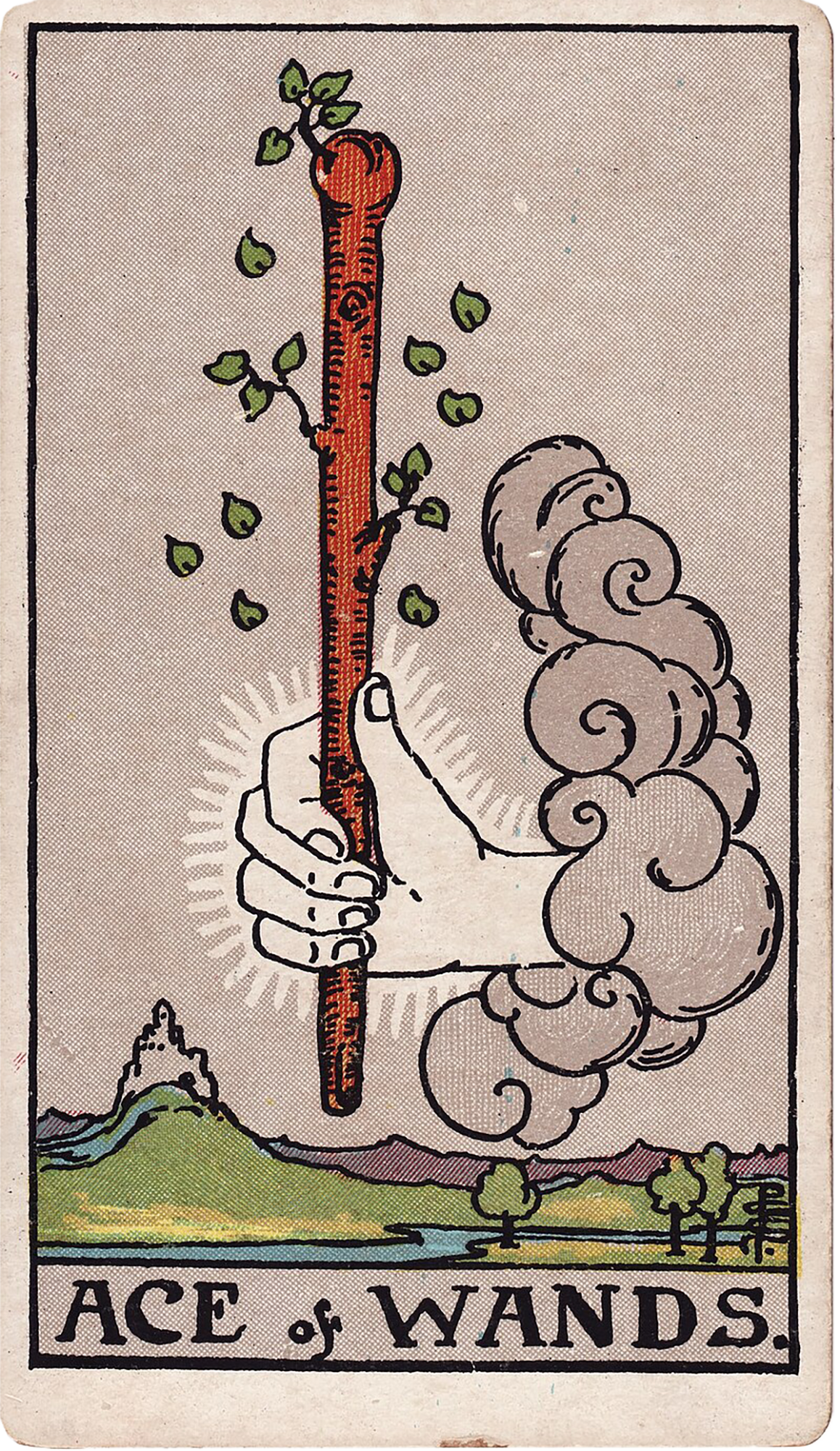 Ace of Wands
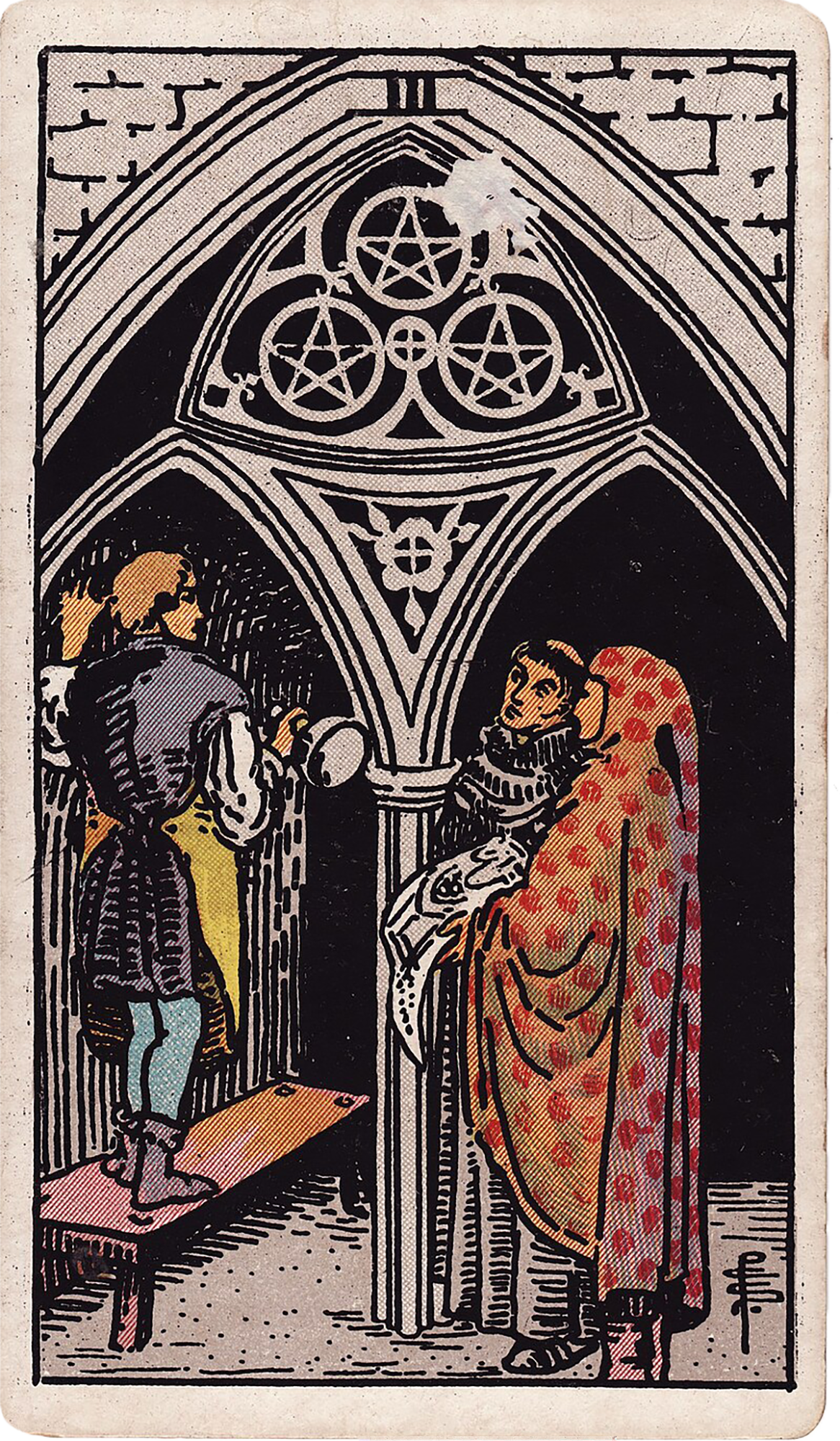 3 of Pentacles
Introduction: Why this combination matters
The Ace of Wands and the 3 of Pentacles form a classic initiation-to-implementation pair. The Ace of Wands is the spark: energy, motivation, a clear impulse that wants expression. The 3 of Pentacles is the workshop: craft, collaboration, shared standards and feedback. Read together, these cards describe the movement from an idea that needs a first action into a social and practical structure that turns that action into a skillful outcome. For learners, this is an ideal combination to practice moving beyond single-card shorthand toward a short, coherent narrative.
Reading the imagery: What to look for in the supplied cards
Because the public article will display the supplied images, train your eye on details. The Ace of Wands in Rider-Waite-Smith shows a hand emerging from a cloud holding a freshly budding wand. The hand suggests an offer or opportunity that seems to come from outside ordinary effort; the bud and green leaves signal potential and life. The background is often a wide landscape: distant hills and rivers that imply future growth and direction. The 3 of Pentacles depicts a stonemason on a scaffold or bench, chiseling or measuring, while two figures—one in religious habit and a patron with plans—look on. The arch or building wall is decorated with three pentacles. The tools (chisel, mallet, bench), the plans in the patron's hands, and the attentive spectators highlight skill being exercised in service of a shared project. When you look at both images together, ask: who is offering the wand, and who is gathered around the work? Does the energy of the Ace aim toward the building in the 3 of Pentacles? Notice direction, gestures, and the material signs of craft.
Basic symbolic translation between suits
Use the suits to translate function. Wands are about initiation, identity, will and the direction of energy. Pentacles are about material reality, craft, routine and long-term stability. In this pairing, the Ace of Wands gives the direction and urgency: what wants to begin. The 3 of Pentacles answers: how will this be built, who needs to be involved, and what standards will hold? When you read them together, treat the Ace as a call to action and the 3 as the blueprint and labor. This translation helps you turn abstract inspiration into practical questions: who, what, how, and which standards?
How these cards modify each other: headline patterns
There are several consistent ways the cards interact. - Ace of Wands upright + 3 of Pentacles upright: A strong, timely idea meets a capable team. The reading emphasizes taking a first practical step—start a prototype, create a simple plan, convene the right people. The imagery shows the bud's energy needing the mason's care: act soon, then invite collaboration. - Ace upright + 3 reversed: The inspiration is alive but the collaborative structure is weak. The mason's tools may be present but standards or recognition are missing. Practical caution: refine scope, set criteria, and formalize roles before scaling. - Ace reversed + 3 upright: A team or craft context exists, but the spark is blocked or inconsistent. Maybe the initiator is hesitant, or attention is scattered. The group can compensate by clarifying goals, practice, and creating a safe way to unstick the impulse. - Both reversed: Internal blocks and dysfunctional teamwork. Slow down, reassess motivations, retrain skills, and repair communication before pushing forward. These patterns are guidelines—always confirm with the question and surrounding cards—and use imagery to nuance decisions (e.g., a very leafy wand suggests fertile ideas; a worn bench suggests long practice).
Contextual interpretations: relationships and family dynamics
When the question involves relationships or family life, use the Ace of Wands as desire, initiative or a family-level impulse (a desire to start something together, to change routines, to begin parenting classes, to renovate a home). The 3 of Pentacles then shows how practical cooperation would look: delegating tasks, acknowledging different strengths, or seeking external help. Example readings: - Ace upright + 3 upright: A couple has a clear idea—perhaps to start a garden, a home renovation, or a shared creative project—and when they divide tasks according to skill, they thrive. The RWS imagery supports this: a new spark (the wand) is handed over to a space where tools and plans are respected. - Ace upright + 3 reversed: The urge to change is there, but one partner may do hurried work, or others' contributions go unrecognized. The lesson: set standards and clarify expectations to avoid resentment. - Ace reversed + 3 upright: One person feels blocked about initiating, but the household has practical strengths. Here the practical team can help the blocked partner by coaching or reducing pressure so creativity can return. Focus always on behavior rather than judging motives; the cards describe how to operationalize the relationship energy.
Contextual interpretations: career, projects, and entrepreneurship
In career readings, the Ace of Wands often signals a new project, product idea, or leadership impulse. The 3 of Pentacles is about skillful execution, systems, and multidisciplinary collaboration. Read them as a ‘launch followed by structure’ sequence. - Ace upright + 3 upright: Time to prototype. The Ace encourages a quick, manageable first action (a one-page plan, a pilot). The 3 suggests recruiting collaborators who bring technical or craft skills and who will give honest feedback. - Ace upright + 3 reversed: The idea is strong but the team process is sloppy. This can produce churn or wasted resources. Actions: standardize deliverables, set review checkpoints, and get clear on quality levels. - Ace reversed + 3 upright: The organization has processes, but leadership is lacking initiative. The workforce can seed the idea internally, using the 3's structure to create a small, low-risk proof of concept that prompts leadership action. Emphasize the practical: who is doing what this week? The RWS images remind you that tools, plans, and visible progress are what translate inspiration into revenue or maintenance.
Emotional and practical life contexts
Beyond specific projects or relationships, these cards name an emotional dynamic: the tension between wanting and making. The Ace of Wands carries desire, identity and courage, while the 3 of Pentacles brings steadiness, habit and standards. Practically, this pairing asks: how can enthusiasm be channeled into repetitive practice that yields something reliable? The images help you parse emotional tone: the Ace's hand is bright and almost urgent; the mason in the 3 is concentrated and methodical. Use that contrast to advise grounded steps—short rituals, schedules, skill drills—that conserve the Ace's energy rather than burning it out.
Upright and reversed readings: nuance over polarity
Upright versus reversed matters only as it helps you detect where the process is working or stuck. Don’t treat reversals as purely bad; reversed Ace of Wands can mean the energy is internal or private, while reversed 3 of Pentacles can indicate a chance to redesign team roles. Always ask process questions: Where is the impulse too fast or too slow? Where are standards missing or misapplied? Reversal is a signal to look for a procedural fix—simplify, acknowledge, practice, or reassign—rather than a moral verdict.
Avoiding the one-card-at-a-time mistake: a practical technique
A common error is to read each card in isolation and then force them to fit. Instead, practice these steps for true integration: 1) Describe each card's function for this question in one sentence: Ace = "what wants to happen first"; 3 of Pentacles = "how the work will be organized and evaluated." Keep it temporal: first/next. 2) Map interactions: ask how the Ace's action affects the 3 of Pentacles' environment and vice versa. Where does the wand's direction meet the stonemason's tools? Do they amplify or conflict? 3) Translate into verbs and people: convert imagery into concrete verbs (plant, start, sketch, practice, measure) and identify roles (initiator, craftspeople, patron, coach). 4) Create an action plan: name one immediate step (this day/week), one medium-term practice (this month), and one criterion or standard to judge success (quality metrics or feedback loop). By moving from nouns and adjectives to verbs and actions, you make the combination practical and avoid vague summaries.
Step-by-step practical reading method you can use
Use this short spread aimed at moving idea to teamwork. Positions: 1) Impulse (Ace of Wands). 2) Collaboration (3 of Pentacles). Optional: 3) Next practical step (clarifier card — if you draw one, treat it as an immediate action). Method: - Ask a clear, actionable question: "How can I move this idea to a real collaborative project?" or "What first step will help this household plan succeed?" - Lay the Ace of Wands in position 1 and the 3 of Pentacles in position 2. - First read each card in one sentence, using imagery: e.g., "A sudden, fertile impulse is offered; it needs a first, visible step." and "A craft-focused group is available; tools and standards matter." - Ask interaction questions: What does the Ace need from the 3 to survive the first week? What does the 3 need from the Ace to justify investment? - Translate answers into three concrete actions: immediate (today/this week), organizational (roles/standards), and maintenance (feedback process). Use the cards' imagery to inspire realistic steps (e.g., from the 3, gather a plan or blueprint; from the Ace, produce a single prototype or a written one-sentence pitch). This method turns a card combo into an executable plan.
Worked examples
Below are short practice readings showing how to anchor interpretation in the images and suit qualities. Example A — Career startup: Question: "Should I build a prototype this month?" - Ace of Wands upright (impulse): The image calls for a first action; you have energy and a clear object. One-sentence read: "Start something small and visible." - 3 of Pentacles upright (teamwork): The image shows craft and review. One-sentence read: "Invite a skilled collaborator and set simple quality checks." - Integrated advice: Make a 2-week prototype, recruit one technical friend or contractor to review, and schedule one feedback session. The Ace supplies urgency; the 3 supplies process. Example B — Home project: Question: "Can we renovate without arguments?" - Ace upright: The desire to change is strong—someone is ready to take initiative. - 3 reversed: The workshop lacks standards—roles are unclear, and work may be patchy. - Integrated advice: Before starting, create a short checklist of non-negotiables, agree on who chooses materials, and set a single mediator for disputes. The Ace can fire you up, but the reversed 3 warns: organize first. Example C — Creative block in a team: Question: "Why are we stalled?" - Ace reversed: The wand’s energy is blocked or scattered. - 3 upright: People have skill but cannot proceed without a clear prompt. - Integrated advice: Use the team's competence by assigning a small, nonthreatening task that creates momentum (a prototype, a rehearsal). Work on lowering perfectionism so the blocked spark can become tangible.
Common mistakes and how to avoid them
Mistake: Reading only positive or only negative. Fix: Let imagery and suit function determine nuance. Mistake: Treating the Ace as only personal and the 3 only social. Fix: Remember the Ace can be a project impulse inside a team, and the 3 can reflect an individual's craft development. Mistake: Forgoing practical next steps. Fix: Always translate into one immediate action, one organization step, and one success metric. Mistake: Ignoring details like tools, garments, the wand’s budding state, or the presence of plans in the 3 of Pentacles. Fix: Spend a minute describing visible elements and ask how they matter to the question. These corrective moves will keep learners grounded and skillful.
Practice exercises for learners
1) Two-card daily draw: For one week draw the Ace and 3 of Pentacles as a paired focus. Note what small action the Ace suggests and one craft or team-related thing the 3 suggests. Journal outcomes. 2) Role-play: With a friend, have one person be the "Ace" (pitch an impulsive idea in 90 seconds) and the other the "3" (ask three practical, craft-oriented questions). Switch roles and debrief. 3) Image study: Spend five minutes describing the Ace image and five minutes describing the 3 of Pentacles. Write one sentence that combines them into a single action plan. These exercises build the habit of moving from symbol to procedure.
Summary and final tips
The Ace of Wands plus the 3 of Pentacles offers a usable map: inspiration requires structure, and structure benefits from a clear initial act. Always anchor your reading in the images—the budding wand and the mason's bench—and translate their interaction into verbs, roles and measurable next steps. Use reversals as diagnostic signals to ask what needs practice, communication or reorganization. Above all, treat this combination as training: it teaches you how to convert desire into craft through listening, planning and maintaining standards.
Practice questions
• When you look at the Ace of Wands image, what single first action does it suggest for a current project in your life?
• Looking at the 3 of Pentacles, who in your circle functions like the mason, the patron, or the planner, and how can you engage them?
• If your Ace of Wands energy is blocked, what small, low-pressure practice could the 3 of Pentacles' craftsmanship offer to restart momentum?
• How would you translate the combined imagery of the two cards into a one-week action plan with measurable outcomes?
• What standards or checkpoints are missing from your current projects, and how can you use the 3 of Pentacles to implement them?
Comments
Sign in to comment.
Continue learning
Interpreting the Dance of Justice and The Devil: Balancing Morality and Temptation in Tarot Readings
The combination of Justice and The Devil in tarot presents a profound exploration of morality, temptation, and personal accountability. This article unpacks how these cards influen...
Harnessing the Power of The Magician and Ace of Wands: Igniting Creativity and Manifestation in Tarot Readings
The combination of The Magician and the Ace of Wands in tarot readings offers a potent blend of creative energy and manifestation power. This article delves into the ways these car...
Understanding the Synergy Between The Empress and The Emperor in Tarot Card Combinations
This article delves into the intricate synergy between The Empress and The Emperor cards in Tarot, focusing on how their combined energies modify and enrich readings across various...
Decoding Transformation and Renewal with Death and The Star in Tarot Combinations
This article delves into the card combination of Death and The Star, two powerful Major Arcana cards from the Rider-Waite-Smith deck. It explores how their imagery and meanings int...
Balancing Ambition and Compassion with The Emperor and Queen of Cups in Tarot Combinations
This article delves into the nuanced Tarot card combination of The Emperor and Queen of Cups, emphasizing how their energies complement and challenge each other. By analyzing their...
Finding Emotional Healing and Renewal with The Star and The Moon Tarot Combination
This article examines the rich interplay between The Star and The Moon tarot cards when they appear together in a reading. Using the traditional Rider-Waite-Smith symbolism and the...
Unlocking Emotional Wisdom with The High Priestess and The Queen of Cups in Tarot Combinations
This article delves into the card combination of The High Priestess and The Queen of Cups, emphasizing their shared themes of intuition, emotional depth, and receptivity. By examin...
Unlocking Emotional Resilience with Strength and The Star in Tarot Combinations
This article delves into the Tarot card combination of Strength and The Star, revealing how their interplay highlights pathways to emotional resilience. Anchored in the Rider-Waite...
Unveiling Emotional Strength with Strength and The Queen of Cups in Tarot Combinations
This article delves into the dynamic Tarot combination of Strength and The Queen of Cups, emphasizing how these cards together illuminate emotional strength, compassionate boundari...
Unlocking Emotional Transformation with Death and The Moon Tarot Combination
This article explores the rich and complex interaction between the Death and The Moon tarot cards within the Rider-Waite-Smith tradition, focusing on their combined potential to un...