
Navigating Creative Uncertainty with The Moon 2 of Pentacles and Page of Cups
This lesson teaches how to read the three‑card combination of The Moon, 2 of Pentacles, and Page of Cups as an integrated narrative about creative uncertainty, balancing resources, and emotional receptivity. Using Rider‑Waite‑Smith imagery—moonlight, the dog and wolf, the lobster, the juggling figure of the 2 of Pentacles, and the young messenger of the Page of Cups—learners will practice combining archetypal signals into practical advice. The article covers upright and reversed nuances only where they clarify dynamics, shows how to avoid one‑card literalism, offers concrete spread positions and questions, and provides examples for relationship, career, and practical emotional work.
Read the cards together
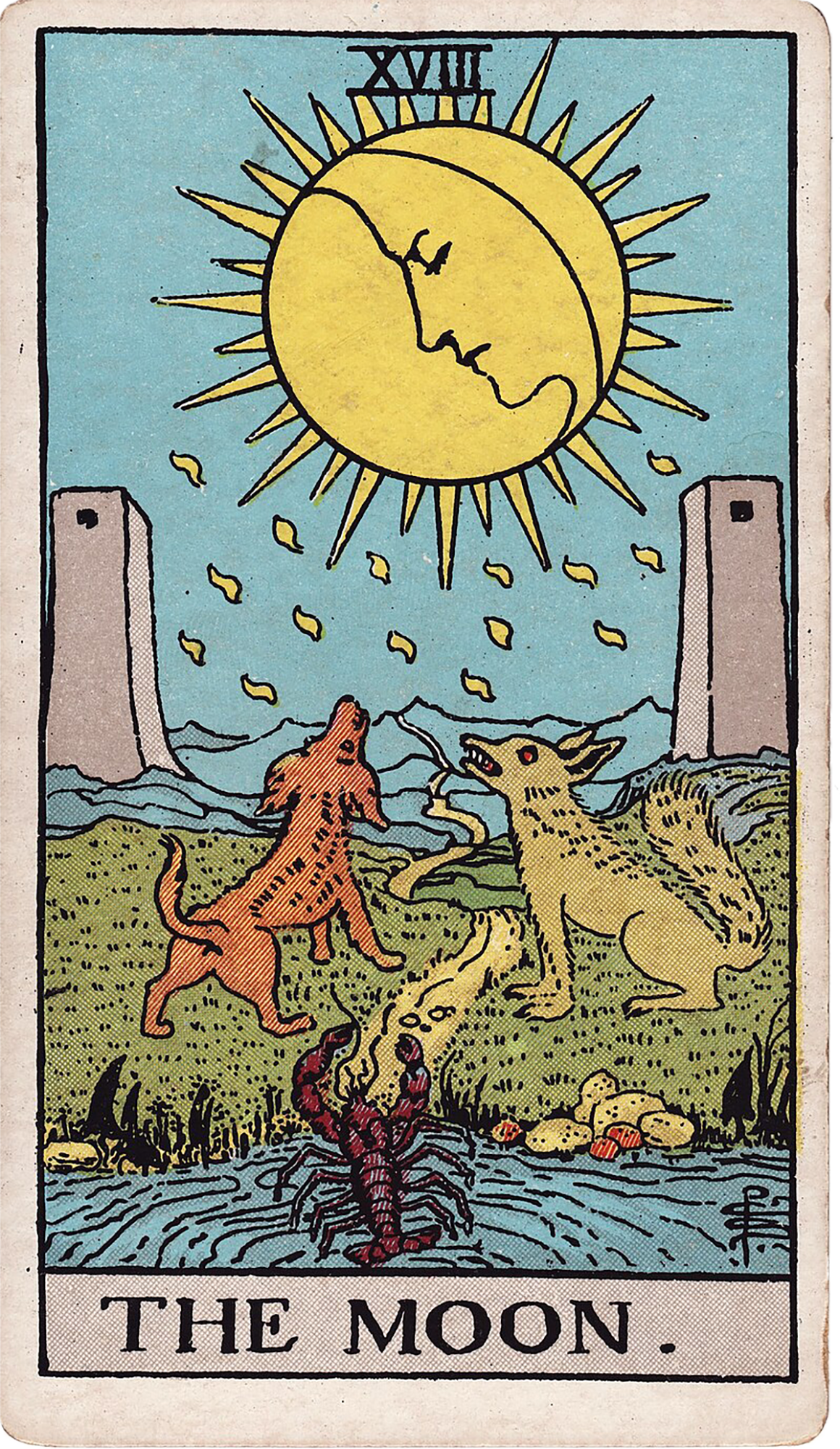 The Moon
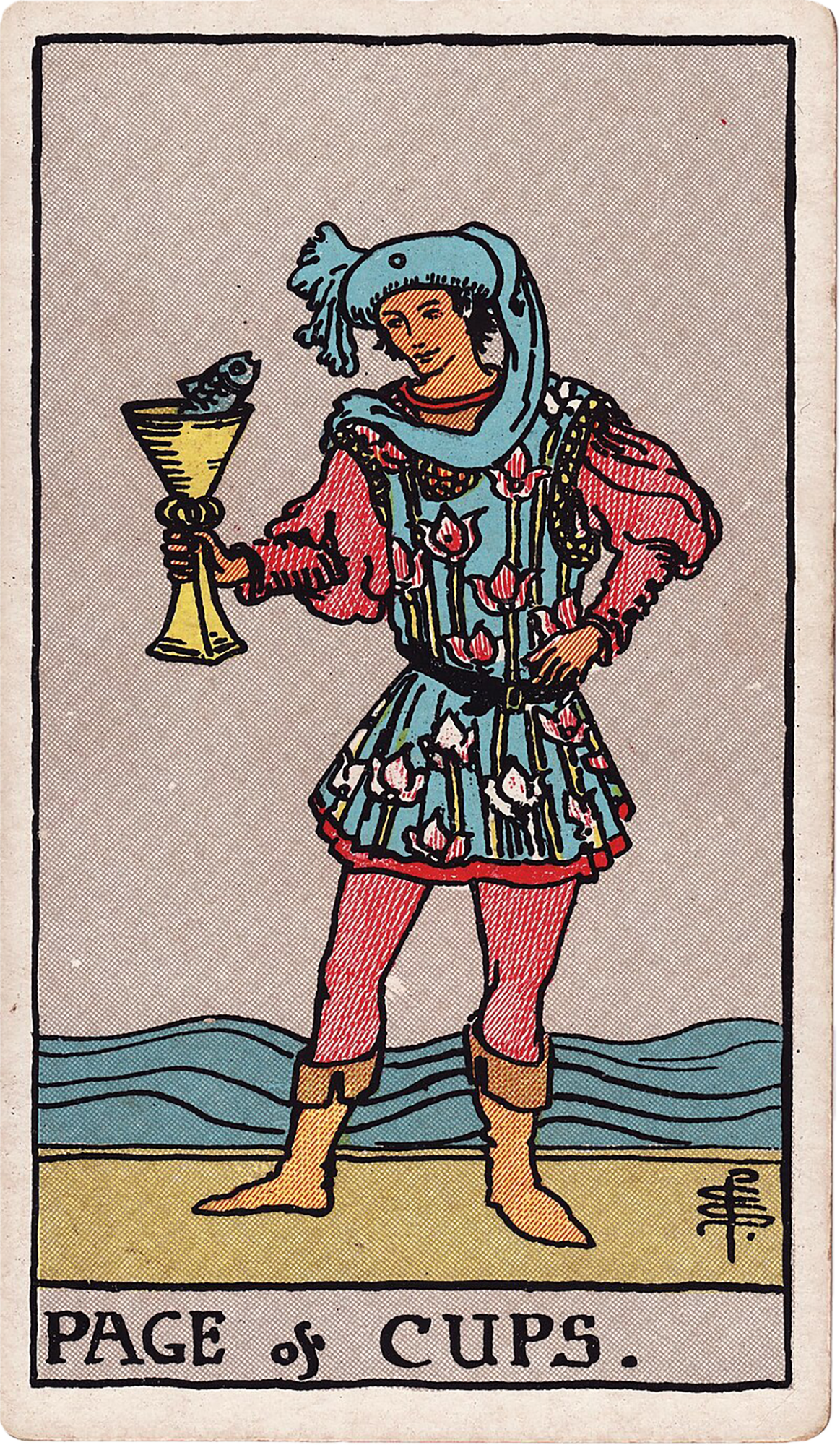 Page of Cups
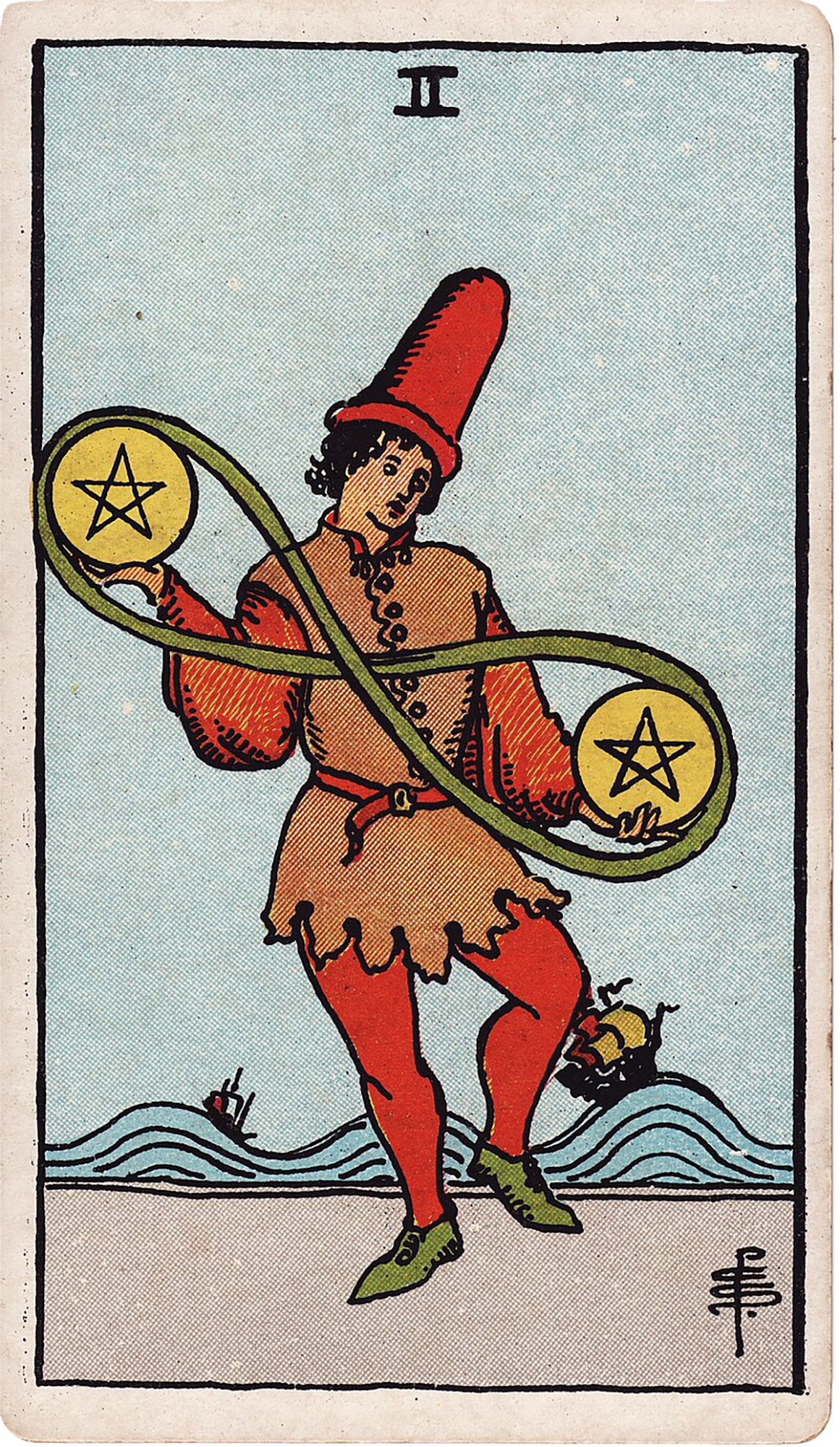 2 of Pentacles
Introduction and learning goals
This article is a card‑combination lesson focused on The Moon, 2 of Pentacles, and Page of Cups. Our aim is not fortune telling but to build interpretive skill: see how these three cards modify each other, use Rider‑Waite‑Smith imagery as anchors, and produce usable guidance for relationship, career, and practical emotional contexts. You will learn a method: identify who is speaking in the spread, name the dominant dynamic, define the practical constraint, and find the next usable step.
Visual anchors and core archetypes
Begin with what the cards show. The Moon presents moonlight, two towers, a dog and a wolf, and a crawfish or lobster emerging from water; it signals imagination, the boundary between conscious and unconscious, intuition, and the presence of projections or partial visibility. The 2 of Pentacles shows a person juggling two coins connected by a lemniscate ribbon: motion, active balance, shifting priorities, and material or practical give‑and‑take. The Page of Cups depicts a youthful figure holding a cup from which a small fish pops its head—unexpected feeling, an intuitive message, curiosity rather than finished emotion. Keep these images in view as you translate symbols into a reading.
How the cards modify each other—basic logic
Treat the three cards as roles rather than isolated definitions: The Moon names the atmosphere or problem (uncertainty, blurred boundaries, creative or emotional fog). The 2 of Pentacles represents the practical stance or constraint (what needs balancing: time, money, health, commitments). The Page of Cups is the actor or possible response (a tentative emotional message, an intuitive experiment, a creative impulse). Read them left to right or assign positions (stage, limit, response). For example: The Moon + 2 of Pentacles = an uncertain situation that requires active resource juggling; the presence of the Page of Cups suggests the workable move is small, curious, or experimental rather than grand. The Moon can amplify Page’s imagination into confusion if 2 of Pentacles is overburdened; conversely, 2’s practical rhythm can anchor Page’s feeling into a sustainable experiment.
Avoiding one‑card literalism and the interpretive method
A common novice mistake is to read each card as an independent sentence and then tack them together. Instead use a dialogue method: 1) Identify the scene (The Moon): what is not fully seen? 2) Name the constraint (2 of Pentacles): what must be balanced or managed? 3) Offer the response (Page of Cups): what small, emotionally honest or experimental step fits the scene and constraint? Ask: which card is the question, which is advice, which is background? Swap roles if needed—sometimes the Page is the central concern and The Moon is the advice to slow down. Always re‑anchor to imagery: does moonlight make the Page’s fish feel like omen or jest? Does the juggling ribbon loop around the moon’s shape in your mind? Use those visual metaphors to test interpretations.
Upright and reversed nuances that matter here
Only use reversed meanings when they clarify relationships among the three cards. Useful examples: The Moon reversed often signals that confusion is beginning to clear, which shifts the reading from 'be cautious' to 'start testing impressions'; Page of Cups reversed warns that an emotional message might be immature, escapist or misread; 2 of Pentacles reversed highlights overcommitment or loss of balance. In combination: The Moon reversed + 2 of Pentacles upright + Page upright could mean intuition is clarifying and now can be integrated practically; The Moon upright + 2 reversed + Page upright warns that imagination (Moon) and feeling (Page) are present but the querent cannot manage practical demands. Describe reversals as process clues: blocked energy, private struggle, or a correction in progress—then ask how to rebalance, simplify, or practice.
Relationship context: reading intimacy and creative tension
Image the three‑card set as a small narrative about intimacy. The Moon names emotional ambiguity—mixed signals, fear, projections between partners. The 2 of Pentacles shows that daily life or responsibilities are being juggled: childcare, time, finances. The Page of Cups brings a tentative emotional outreach—an apology, a vulnerable text, a creative idea for connection. Interpretation pathway: The Moon asks where projections are active—are fears being placed onto small gestures? The 2 of Pentacles asks whether practical juggling is causing emotional misunderstanding. The Page of Cups suggests a proportionate, low‑risk emotional move: a curious question, a short letter, a playful experiment to test whether deeper patterns are projection or real. If 2 of Pentacles is reversed, advise simplifying: reduce the moving parts before the Page’s tentative offer becomes misread. If Page of Cups is reversed, the 'message' might be immature or tone‑deaf—teach how to temper it with concrete gestures that 2 of Pentacles supports.
Career and project context: balancing creative risk and resources
For work or creative projects, The Moon signals uncertainty about outcomes or unclear feedback; it may describe prototype stage where intuition matters but results are not yet reliable. The 2 of Pentacles insists on active resource management—time, budget, or energy. The Page of Cups is the viable experiment: a small prototype, a trial proposal, a tentative pitch. Practical advice: use the Page’s small scale to test a hypothesis under the balancing constraints of the 2 of Pentacles. Place limits (timebox, budget) to prevent moonlit imaginings from consuming resources. If The Moon is reversed, you may be beginning to see what works; shift to measurable iterations. If 2 of Pentacles is reversed, the warning is avoid taking on fresh experiments until the juggling is resolved; if Page is reversed, refine the emotional or brand messaging so it doesn’t appear naive.
Emotional and practical context: inner work and skillful action
Internally, The Moon asks you to attend to dreams, intuitions, or anxieties that are not yet fully articulated. The 2 of Pentacles coaches you to maintain bodily and material stability while exploring—schedule time, maintain sleep, track expenses. The Page of Cups encourages curiosity: journal prompts, a small creative ritual, or saying one honest sentence to a trusted person. Technique: pair one ritual (Page) with one constraint (2) during a week under the Moon’s influence. Examples: commit to three nights of dream journaling (Page) while reducing social commitments (2) so you have energy to notice what rises. If The Moon is reversed and fear is clearing, the practice is to translate felt insight into a small concrete change supported by 2 of Pentacles’ routines.
Reading technique: spreads, positions, and sample questions
Use a simple three‑card layout: Position A—Terrain (The Moon): What is currently unclear or vivid in the inner landscape? Position B—Resources/Constraints (2 of Pentacles): What must be balanced to work with the terrain? Position C—Action/Response (Page of Cups): What is a small, emotionally honest test or message to try next? Ask focused questions: Where am I projecting? What practical boundary will let me experiment safely? What small emotional experiment fits my schedule and risk tolerance? For practice, record two versions of the reading: literal behavior (what you can do this week) and reflective behavior (what inner observation you’re cultivating).
Common mistakes and how to correct them
Mistake 1: treating The Moon as only ominous. Correction: use it as a cue to check projections and to protect against premature action. Mistake 2: elevating Page of Cups’ whim into a full plan. Correction: always pair Page’s impulse with 2 of Pentacles’ limits—small, timeboxed tests. Mistake 3: reading reversals as purely negative. Correction: see reversals as process markers (blocked, private, correcting) and test them against context. Mistake 4: ignoring Rider‑Waite imagery. Correction: mention the dog/wolf, lobster, juggling ribbon, and the fish in the cup—these images guide whether you emphasize wild instinct, domesticated habit, emergence from the unconscious, active balancing, or surprise within emotion.
Worked example and interpretation logic
Scenario: A creative person asks whether to propose a collaboration. Draw: The Moon (left), 2 of Pentacles (center), Page of Cups (right). First pass: The Moon shows uncertainty about collaborators’ intentions and one’s own creative anxieties (watch the lobster emerging—something from the unconscious is surfacing). The 2 of Pentacles indicates current obligations—freelance work, health routines, or a day job—that require juggling. The Page of Cups is the suggested move: send a short, curious proposal or a small sample instead of a full bid. Interpretation logic: The Moon sets the risk framing (ambiguous territory). 2 of Pentacles sets the acceptable scale (what you can actually deliver). Page of Cups gives the form (a modest, emotionally genuine opening). Practically: timebox the collaboration to a two‑week trial and propose a modest deliverable. If 2 of Pentacles were reversed, you would first clear your schedule; if Page reversed, rewrite the proposal to be less tentative and more professional.
Practice exercises and closing advice
Exercise 1: Pull the three cards and write two readings: one that treats The Moon as primary and one that treats the Page as primary; note how the 2 of Pentacles changes each time. Exercise 2: For a current decision, draft a one‑week micro‑experiment that fits the Page’s scale and the 2’s constraints; use The Moon’s prompt to notice emotional projections. Closing advice: always translate symbolic insight into a small, testable action. These three cards together are most useful when they shift imagination into disciplined curiosity—use the Moon to notice what is hidden, the 2 of Pentacles to set boundaries, and the Page of Cups to try one small, honest step.
Practice questions
• Where in my life is moonlight creating attractive but unclear possibilities versus genuine intuition?
• What two practical commitments am I juggling that limit my capacity to act on creative impulses?
• What is one small emotional or creative experiment I can run this week that fits my current schedule?
• When I feel uncertain, do I tend to project fears onto others (Moon) or to withdraw (Page)?
• How will I know whether to keep balancing demands (2 of Pentacles) or to simplify before acting?
• If a message arrives that feels naive or confusing, what evidence would help me test it before responding?
Comments
Sign in to comment.
Continue learning
Interpreting the Dance of Justice and The Devil: Balancing Morality and Temptation in Tarot Readings
The combination of Justice and The Devil in tarot presents a profound exploration of morality, temptation, and personal accountability. This article unpacks how these cards influen...
Harnessing the Power of The Magician and Ace of Wands: Igniting Creativity and Manifestation in Tarot Readings
The combination of The Magician and the Ace of Wands in tarot readings offers a potent blend of creative energy and manifestation power. This article delves into the ways these car...
Understanding the Synergy Between The Empress and The Emperor in Tarot Card Combinations
This article delves into the intricate synergy between The Empress and The Emperor cards in Tarot, focusing on how their combined energies modify and enrich readings across various...
Decoding Transformation and Renewal with Death and The Star in Tarot Combinations
This article delves into the card combination of Death and The Star, two powerful Major Arcana cards from the Rider-Waite-Smith deck. It explores how their imagery and meanings int...
Balancing Ambition and Compassion with The Emperor and Queen of Cups in Tarot Combinations
This article delves into the nuanced Tarot card combination of The Emperor and Queen of Cups, emphasizing how their energies complement and challenge each other. By analyzing their...
Finding Emotional Healing and Renewal with The Star and The Moon Tarot Combination
This article examines the rich interplay between The Star and The Moon tarot cards when they appear together in a reading. Using the traditional Rider-Waite-Smith symbolism and the...
Unlocking Emotional Wisdom with The High Priestess and The Queen of Cups in Tarot Combinations
This article delves into the card combination of The High Priestess and The Queen of Cups, emphasizing their shared themes of intuition, emotional depth, and receptivity. By examin...
Unlocking Emotional Resilience with Strength and The Star in Tarot Combinations
This article delves into the Tarot card combination of Strength and The Star, revealing how their interplay highlights pathways to emotional resilience. Anchored in the Rider-Waite...
Unveiling Emotional Strength with Strength and The Queen of Cups in Tarot Combinations
This article delves into the dynamic Tarot combination of Strength and The Queen of Cups, emphasizing how these cards together illuminate emotional strength, compassionate boundari...
Unlocking Emotional Transformation with Death and The Moon Tarot Combination
This article explores the rich and complex interaction between the Death and The Moon tarot cards within the Rider-Waite-Smith tradition, focusing on their combined potential to un...