
Navigating Heartbreak with The High Priestess and Three of Swords
This lesson explores the two-card combination of The High Priestess and the 3 of Swords using the supplied Tarot card images. The High Priestess—the veiled figure with a crescent moon, pomegranates, and a hidden scroll—represents inner knowing, secrecy, and the slow emergence of truth. The 3 of Swords—the heart pierced by three swords beneath storm clouds and rain—names clear, often painful truth and the practical work of grief and communication. Together they form a powerful pairing for navigating heartbreak: one card points inward toward listening and containment, the other demands acknowledgement of painful facts. This article teaches how each card modifies the other in multiple life contexts (relationship, career, emotional/practical), explains upright and reversed permutations when relevant, offers a reproducible reading method, outlines common mistakes, and provides case examples and practice prompts for learners. Use this material to deepen interpretive skill rather than to promise fixed outcomes.
Read the cards together
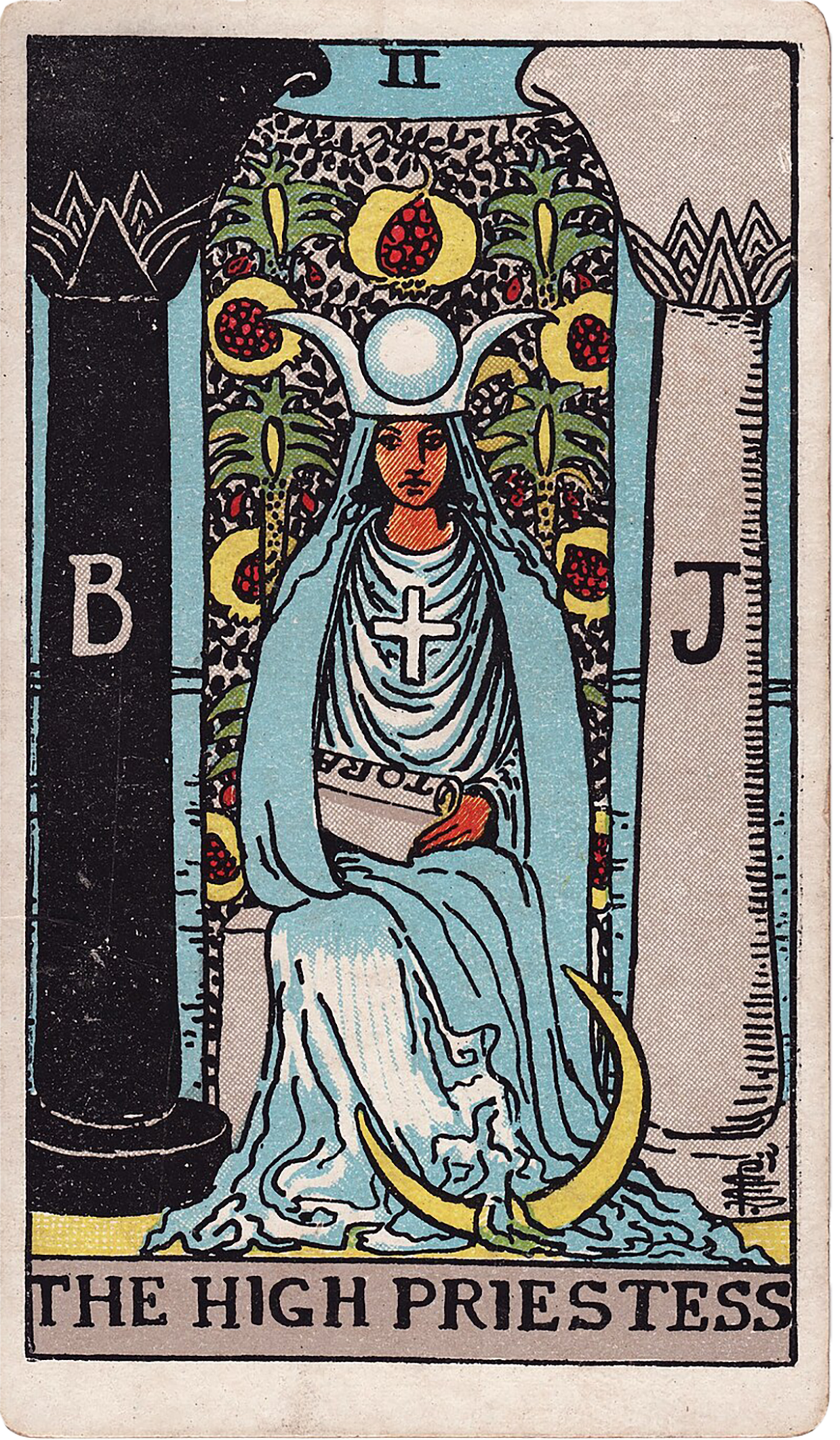 The High Priestess
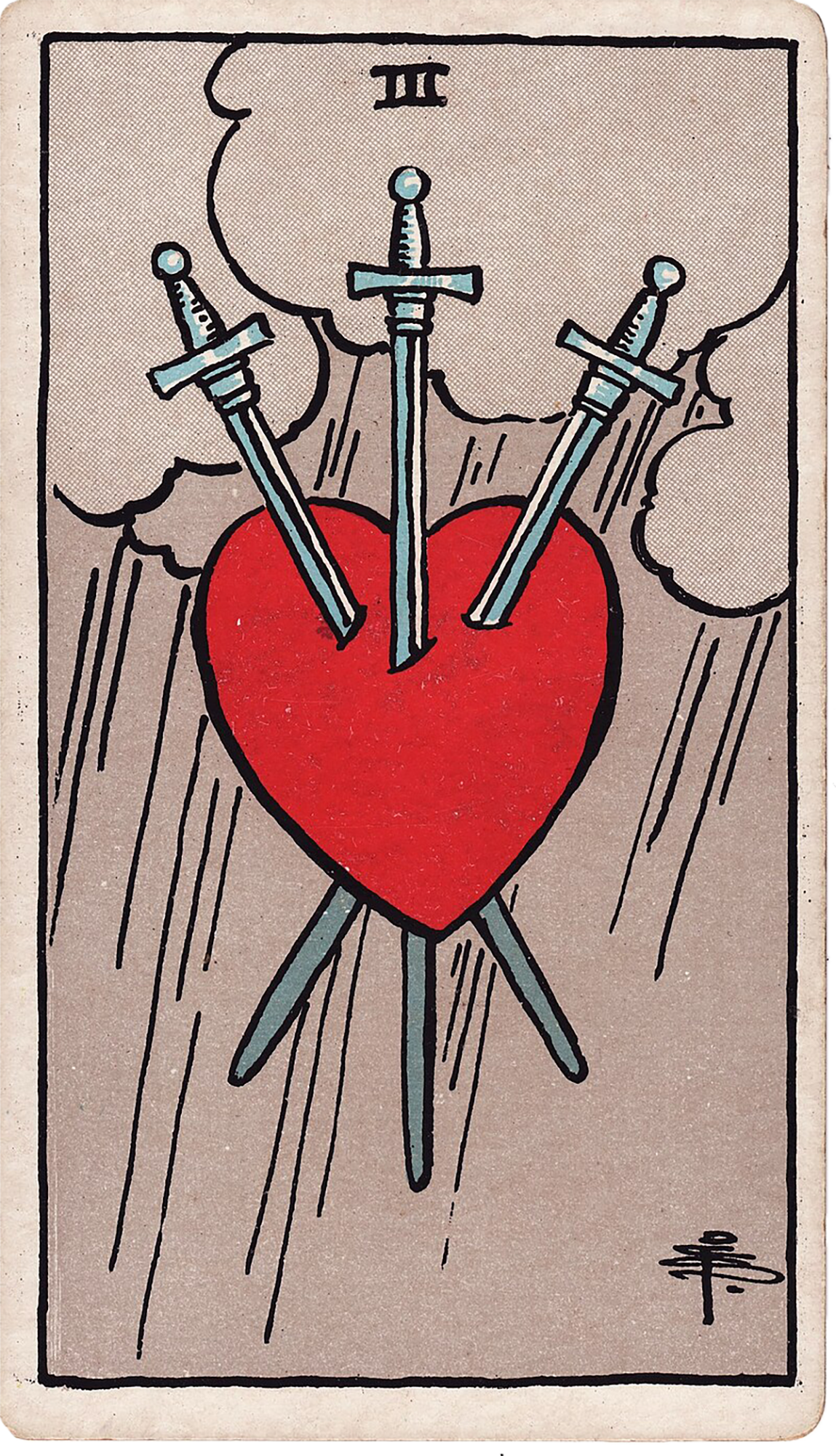 3 of Swords
Introduction: Why pair The High Priestess with the 3 of Swords
When the supplied Tarot card images of The High Priestess and the 3 of Swords appear together, the reading almost always centers on the interface between inner knowing and painful truth. The High Priestess (the veiled woman, crescent moon at her feet, pomegranates and the hidden scroll) invites silence, observation, and patient discernment. The 3 of Swords (the pierced heart, three swords, storm clouds and rain) names heartbreak, clarity that stings, and the work required to move through grief. Their combination matters because these cards sit in different registers: The High Priestess is receptive, inward, and symbolic; the 3 of Swords is cognitive, piercing, and socially legible. Learners should recognize that the dialogue between them—who listens, who speaks, where the hurt becomes visible—will shape the practical advice you give. This pairing is ideal for sessions about breakups, disclosures, sudden realizations, and the moment when private insight meets unavoidable fact.
Core interpretive logic: how these cards modify each other
Start by anchoring to the concrete imagery the reader will see in the supplied cards. The High Priestess' veil suggests a barrier between what is obvious and what is hidden; the pomegranates hint at fertile but private knowledge; her scroll suggests an unread or partially revealed truth. The 3 of Swords' central heart, split by swords under a clouded sky, shows that truth can be sharp and public in its effects. Interpretive moves you can use systematically: 1) Directionality: Decide which card names the initiating force and which describes the response. If the 3 of Swords seems like the event (a wound, an honest sentence, a breakup), The High Priestess will describe the interior response or the field of possible knowledge. Reversely, if the querent is already in an interior process (High Priestess dominant), the 3 of Swords may be a necessary external consequence or a truth that must be acknowledged. 2) Function: Identify whether each card is prescribing a skill. The High Priestess prescribes listening, containment, and timing. The 3 of Swords prescribes named truth, clear boundaries, and cognitive processing. 3) Timing and process: The veil and moon imagery point to gradual emergence; the storm clouds of the 3 of Swords point to a concentrated moment of impact. Use that to structure the reading: first containment/recognition (High Priestess), then naming/response (3 of Swords), or vice versa depending on pattern. 4) Emotional tone: The High Priestess cushions the 3 of Swords' sharpness by suggesting grief that benefits from private reflection, ritual, or a slow, deliberate process rather than immediate public reaction. 5) Ethical caution: The 3 of Swords may demand honesty that The High Priestess warns against delivering harmfully; counsel clients to time truth-telling appropriately and to choose forms of honesty that reduce unnecessary damage.
Avoiding simplistic one-card-at-a-time readings
A common error is to read each card in isolation and then stick labels together mechanically: 'High Priestess means intuition; 3 of Swords means heartbreak; therefore it's heartbreak from intuition.' That flattens subtlety. Instead, practice an integrative approach: 1) Read for relationship (how the cards interact), not just properties. Ask, 'How does the way The High Priestess listens change the wound the 3 of Swords exposes?' and 'How does the 3 of Swords force The High Priestess' silence to become speech?' 2) Use position or question to assign roles (e.g., left card = inner work, right card = external event) and then reinterpret each card through the other's lens. 3) Attend to image overlap: notice where the High Priestess' moon (cycles) meets the 3 of Swords' rain (cleansing) and what that metaphor suggests about timing and recovery. 4) Check for contradiction rather than forcing harmony. Sometimes the High Priestess will recommend patience when the 3 of Swords demands action; the tension itself is meaningful (e.g., 'You need to listen first, but you will still have to speak later').
Relationship context: heartbreak, secrecy, and recovery
In love and partnership readings the supplied images point to a multilayered process. Use these interpretive patterns: 1) The High Priestess foregrounds inner truth, boundary work, and hidden information. If a querent asks about a breakup, this card suggests parts of the story are still private, or that the querent needs to notice body-based intuition, dreams, or silence. The 3 of Swords indicates that something has been made plain—the hurt is visible. Combine them to read different dynamics. Examples: - High Priestess upright + 3 of Swords upright: The wound is clear but the best next step is listening and containing your feelings before reacting. The High Priestess asks the querent to allow grief to be felt privately and to gather information: what was said, what was left unsaid, how did your inner sense respond? The 3 of Swords makes it ethical to name the pain and set proportional boundaries later. - High Priestess reversed + 3 of Swords upright: Intuition or discretion is blocked. Perhaps the querent is ignoring signs, denying clear cheating or dishonesty, or is held in secrecy that intensifies pain. Here practical work: set a small test—ask one clear question, request one piece of evidence, and prioritize clear communication rather than passive avoidance. - High Priestess upright + 3 of Swords reversed: Grief is internalized or being avoided publicly. The High Priestess can support an inward grieving practice that allows the reverse 3 of Swords process to resolve: journaling, ritual, sitting with the imagery. - Both reversed: A sign to seek support. The veiled figure can be withdrawn in unhelpful ways and the wound may be repeating. Encourage therapy or trusted community contact rather than solitary repression. Practical guidance for relationship readers: ask the querent whether they want public closure (conversation, letter, shared ritual) or private processing, and suggest proportionate timing. Use the veil and the storm imagery to discuss when to speak and when to hold silence.
Career and practical context: betrayal, clarity, and strategy
The supplied cards often appear in workplace questions where a painful truth must be integrated with strategic caution. Read The High Priestess as confidential knowledge, non-disclosure, or the need to wait for more data. Read the 3 of Swords as a career setback, candid feedback, or a severing decision. Interpreting them together: - High Priestess upright + 3 of Swords upright: You face clear professional pain—a firing, a harsh review, or a project failing. The High Priestess advises collecting facts, keeping communications measured, and developing a reflective plan rather than impulsive rebuttals. The scroll imagery suggests documentation: keep records of conversations. - High Priestess reversed + 3 of Swords upright: Secrets, gossip, or unexamined biases may be causing the wound. This combination warns that hidden dynamics are intensifying the hurt; call for transparency where safe and escalate concerns through appropriate channels. - High Priestess upright + 3 of Swords reversed: The project or conflict may look like it has passed publicly but is still unresolved internally. The High Priestess supports slow work—debriefs, lessons learned, and reorientation. - Both reversed: A dysfunctional cycle of secrecy and recurring setbacks. Encourage structural changes: supervision, mediation, or documented processes. When giving practical career advice, emphasize procedures and proportional action: the 3 of Swords asks for decision and consequence; the High Priestess asks that decisions be informed and timed.
Emotional and practical healing: grief work with imagery
Here the images themselves are useful tools. The High Priestess' veil and the 3 of Swords' rain can become prompts for healing practices. Technique suggestions: - Containment exercise: Sit with the High Priestess image. Breathe into the symbol of the veil and imagine a container for difficult feelings. Allow whatever emerges to be witnessed internally without immediate disclosure. - Naming exercise: After containment, bring the 3 of Swords image to mind and name the hurt aloud—one-line statements that are factual ('They left; the promise was broken; the decision was made'). Use the naming to reduce abstract rumination. - Ritual transition: Use the moon/veil cycle to set a time-bound ritual—an evening of private mourning (High Priestess) followed by a transitional act such as writing and then closing the letter without sending (3 of Swords). - Journaling prompts anchored to imagery: 'What is behind the veil that I have not allowed myself to see?' and 'What sentence would feel like truth to say out loud right now?' Remember that The High Priestess supports processes that do not rush; the 3 of Swords asks for appropriate naming so the grief can move forward. For many querents the therapeutic path is to alternate containment and expression until the storm clouds lose their intensity.
Upright and reversed permutations: practical rules of thumb
Upright/reversed meanings should be used to refine your read, not to create binary fates. Helpful heuristics: - If The High Priestess is upright, prioritize inner work, waiting, and the deliberate gathering of facts; if reversed, suspect blocked intuition, secrecy, or avoidance. - If the 3 of Swords is upright, expect a clear hurt that needs naming and a proportional response; if reversed, expect suppressed or lingering grief, or a healing process that is incomplete. When combining: - Both upright: Healthy grief; allow private processing, then speak. Encourage naming the hurt and measured action. - High Priestess upright + 3 of Swords reversed: The querent has internal resources for healing but may need help translating insight into practice. Suggest daily rituals and incremental disclosures. - High Priestess reversed + 3 of Swords upright: Danger zone: hurt is visible but intuition or discretion is compromised; recommend evidence-based steps and external support. - Both reversed: Recurrent wounding and secretive patterns; advise structured help (therapy, mediation). Always triangulate with the querent's agency: these combinations describe tendencies, not destiny.
Step-by-step reading technique for two-card pairings
Use this reproducible method when you pull the supplied images and want consistent, teachable results. 1) Clarify the question and assign positions. Example: Position A = inner world/what needs to be known (left) ; Position B = external reality/necessary action (right). 2) Describe each card visually to the querent. Anchor to the supplied images: 'Notice the veiled scroll and crescent moon in The High Priestess; notice the pierced heart and storm clouds in the 3 of Swords.' 3) Decide role/directionality: Ask whether the querent feels more in the position of listener (High Priestess) or receiver of hurt (3 of Swords). If unclear, ask which card feels more active. 4) Integrate: Formulate two working sentences that connect them: e.g., 'You need to sit with your grief privately (High Priestess) before initiating the difficult conversation that names the breakup (3 of Swords).' 5) Translate into practice: Offer 2-3 specific steps—timing, communication scripts, documentation, or ritual. 6) Check for reversals and test: If a card is reversed, rephrase into process language: 'blocked intuition' -> 'take a small, testable step to verify your sense.' 7) Close with client choice: Give options that reflect both cards' energy and let the querent choose the scale and timing of action. Practice this method until the integration of image and language becomes fluent.
Three short case examples
Case 1 — Relationship, both upright: A querent draws The High Priestess upright and the 3 of Swords upright after asking about a recent breakup. Interpretation: The heartbreak is clear and naming it is important, but the High Priestess suggests waiting to speak until feelings are contained. Practical steps: private grieving for 3–7 days, write an unsent letter, then prepare a single calm conversation that names facts and boundaries. Case 2 — Career, High Priestess reversed + 3 of Swords upright: An employee suspects management withheld a promotion and receives a sharp HR reprimand (3 of Swords). The reversed High Priestess suggests blind spots and office gossip. Practical steps: gather documentation, request a formal meeting with HR, bring a witness if appropriate. Case 3 — Emotional healing, High Priestess upright + 3 of Swords reversed: Someone who left a relationship months ago still feels recurring pangs. The 3 of Swords reversed shows incomplete grieving; The High Priestess upright supports an inner ritual: nightly journaling for 21 days and a quiet symbolic release (e.g., burning a short note) to complete the cycle. These vignettes show how the same images produce distinct pragmatic recommendations depending on context and card orientation.
Common mistakes and how to avoid them
1) Over-simplifying cards to single keywords: Counter by always describing image interaction—how the veil meets the wound. 2) Forcing a moral judgment: Neither card is 'punishment.' The 3 of Swords is informative; the High Priestess is protective. Frame pain as information. 3) Ignoring agency: Avoid telling querents they 'must' do X. Offer options scaled to the cards' guidance. 4) Skipping grounding before delivering sharp news: If you must relay the 3 of Swords' message, use The High Priestess' containment technique: pause, breathe, and offer a time-limited plan. 5) Neglecting follow-up: Pain often unfolds. Encourage a follow-up reading or a check-in so the querent can adapt as the veil lifts and the storm shifts.
Practice exercises for learners
1) Two-card journaling: Pull the supplied images, then write a 300–500 word reflection that integrates each image into a single sentence, then a short plan. 2) Imagery meditations: Spend five minutes observing The High Priestess image, five minutes with the 3 of Swords, then record physical sensations and insights. 3) Role-play readings: With a partner, practice delivering both the compassionate containment (High Priestess) and the clear naming (3 of Swords). Notice where you rush from feeling to fixing and practice slowing down. 4) Reversal drill: For each permutation (both upright, mixed, both reversed), write three hypothetical client scenarios and the corresponding three-step practical advice. These exercises build the muscle of integration rather than rote memorization.
Closing guidance: ethical and skillful interpretation
Always remember: the supplied Tarot card images are prompts, not prophecies. When The High Priestess and the 3 of Swords appear, the reading will be most useful if framed as skill training—how to listen, name, and time responses—rather than as deterministic signaling. Center the querent's agency by offering proportionate options: contain, name, plan. Use the High Priestess image to encourage restraint, careful timing, and inner work; use the 3 of Swords image to insist on clear facts, communication, and proportional decisions. When in doubt, recommend supportive resources (trusted friend, therapist, HR) and schedule a concrete follow-up. This pairing teaches a humane balance: grief and clarity can coexist if we allow silence to do some of the work and honesty to do the rest.
Practice questions
• When you look at the supplied image of The High Priestess, what bodily sensations or memories does the veil evoke for you?
• How does the image of the 3 of Swords change when you imagine it sheltered by the High Priestess' moonlight?
• Which of these two cards feels more active in a recent conflict in your life, and why?
• If you had to design a single 24-hour practice that honors both containment and naming, what would it include?
• What small, testable step can you take to verify an intuition you are uncertain about?
Comments
Sign in to comment.
Continue learning
Interpreting the Dance of Justice and The Devil: Balancing Morality and Temptation in Tarot Readings
The combination of Justice and The Devil in tarot presents a profound exploration of morality, temptation, and personal accountability. This article unpacks how these cards influen...
Harnessing the Power of The Magician and Ace of Wands: Igniting Creativity and Manifestation in Tarot Readings
The combination of The Magician and the Ace of Wands in tarot readings offers a potent blend of creative energy and manifestation power. This article delves into the ways these car...
Understanding the Synergy Between The Empress and The Emperor in Tarot Card Combinations
This article delves into the intricate synergy between The Empress and The Emperor cards in Tarot, focusing on how their combined energies modify and enrich readings across various...
Decoding Transformation and Renewal with Death and The Star in Tarot Combinations
This article delves into the card combination of Death and The Star, two powerful Major Arcana cards from the Rider-Waite-Smith deck. It explores how their imagery and meanings int...
Balancing Ambition and Compassion with The Emperor and Queen of Cups in Tarot Combinations
This article delves into the nuanced Tarot card combination of The Emperor and Queen of Cups, emphasizing how their energies complement and challenge each other. By analyzing their...
Finding Emotional Healing and Renewal with The Star and The Moon Tarot Combination
This article examines the rich interplay between The Star and The Moon tarot cards when they appear together in a reading. Using the traditional Rider-Waite-Smith symbolism and the...
Unlocking Emotional Wisdom with The High Priestess and The Queen of Cups in Tarot Combinations
This article delves into the card combination of The High Priestess and The Queen of Cups, emphasizing their shared themes of intuition, emotional depth, and receptivity. By examin...
Unlocking Emotional Resilience with Strength and The Star in Tarot Combinations
This article delves into the Tarot card combination of Strength and The Star, revealing how their interplay highlights pathways to emotional resilience. Anchored in the Rider-Waite...
Unveiling Emotional Strength with Strength and The Queen of Cups in Tarot Combinations
This article delves into the dynamic Tarot combination of Strength and The Queen of Cups, emphasizing how these cards together illuminate emotional strength, compassionate boundari...
Unlocking Emotional Transformation with Death and The Moon Tarot Combination
This article explores the rich and complex interaction between the Death and The Moon tarot cards within the Rider-Waite-Smith tradition, focusing on their combined potential to un...