
Negotiation and Compromise with Two of Cups Three of Pentacles and Justice
This in‑depth lesson teaches how the Two of Cups, Three of Pentacles and Justice work together to describe negotiation, compromise and accountable collaboration in family contexts. Using Rider‑Waite imagery—two people exchanging cups, craftsmen at a cathedral, the scales and sword of Justice—learners will practice reading how emotional reciprocity, practical skill and formal fairness modify one another. The article explains upright and reversed dynamics when useful, offers step‑by‑step reading technique, sample spreads and concrete examples (dividing household labor, family business agreements, caregiving decisions, and custody or inheritance situations). The emphasis is on interpretation logic, avoiding single‑card simplification, and translating symbolism into actionable advice for clients.
Read the cards together
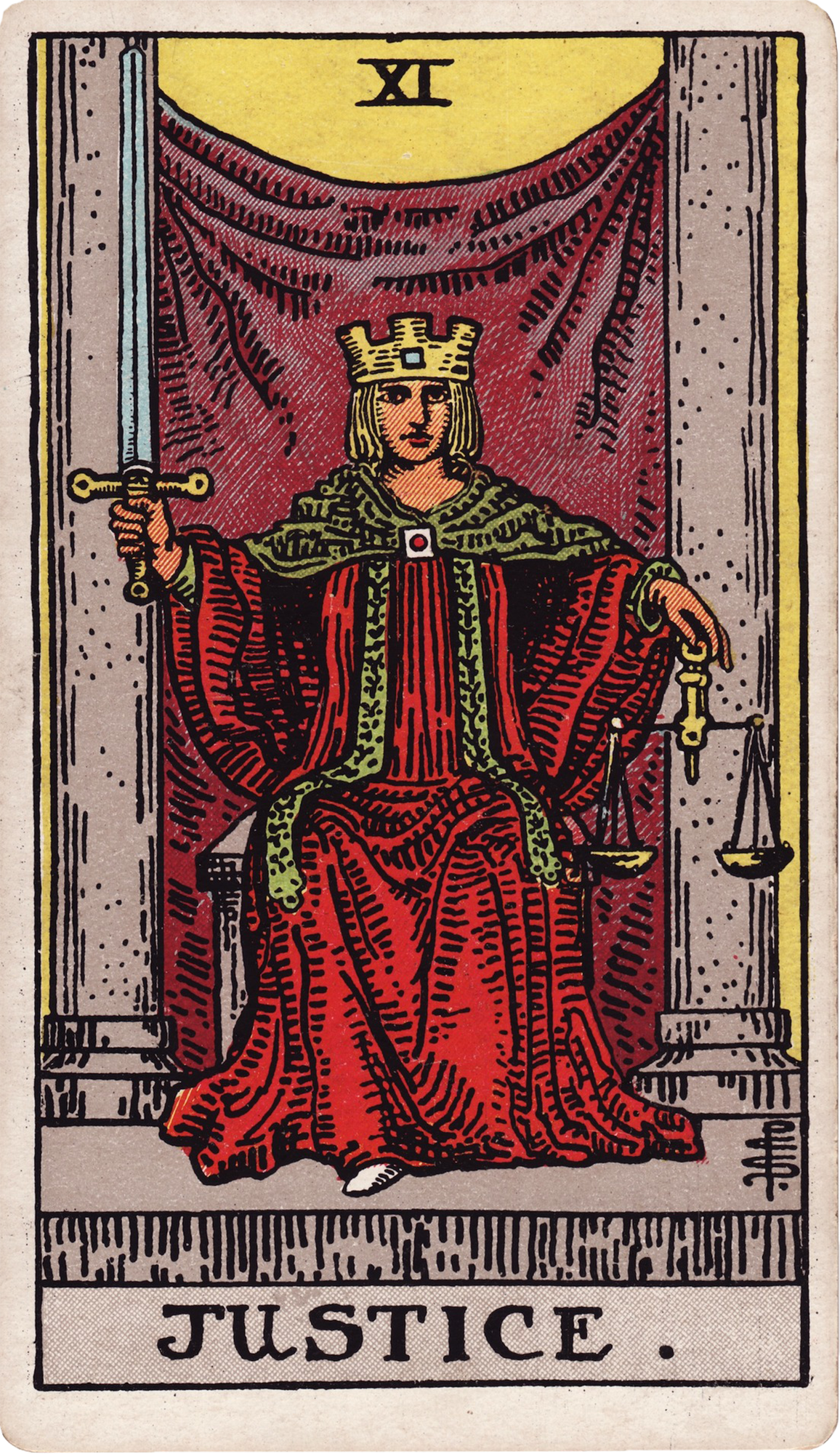 Justice
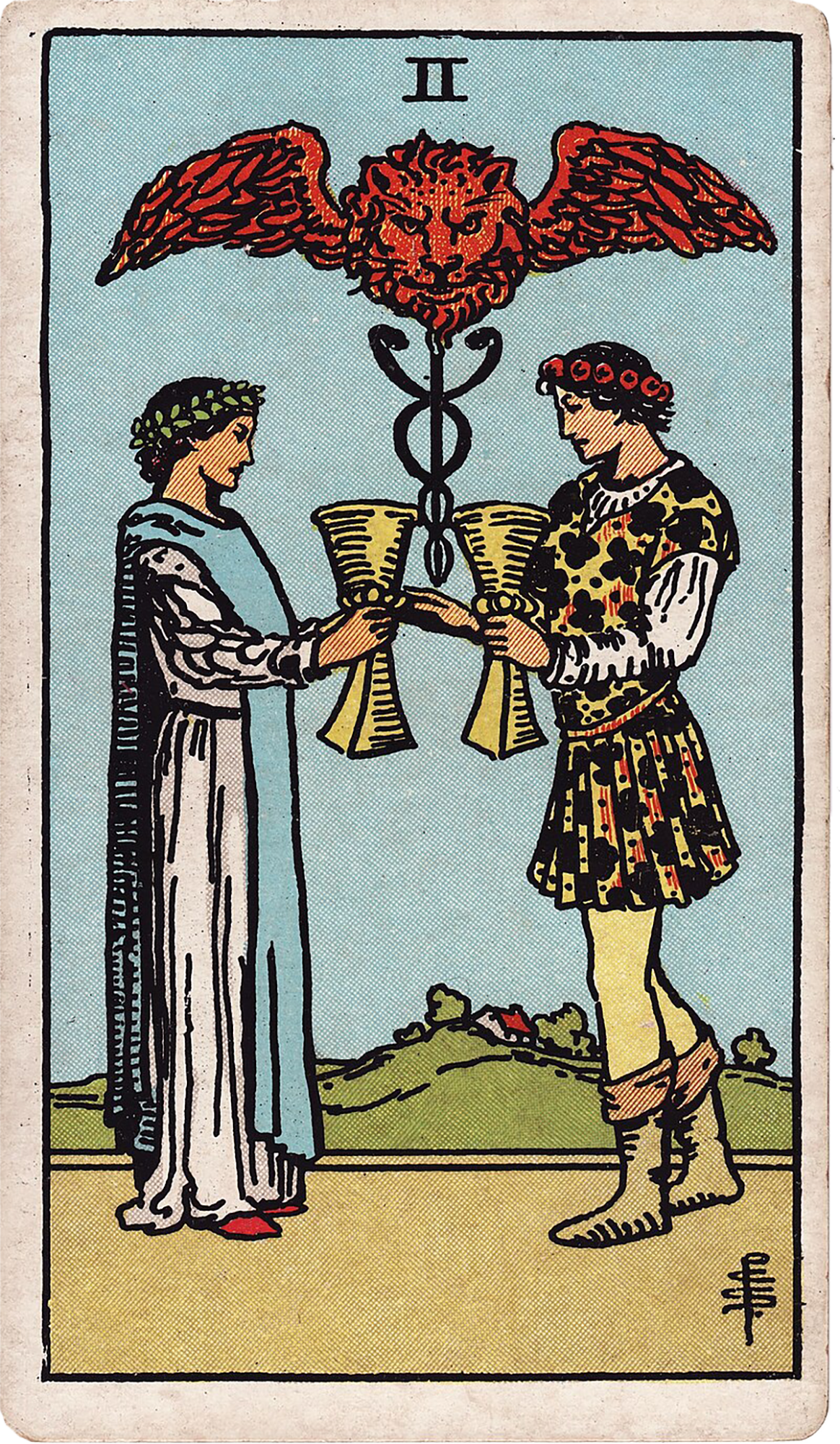 2 of Cups
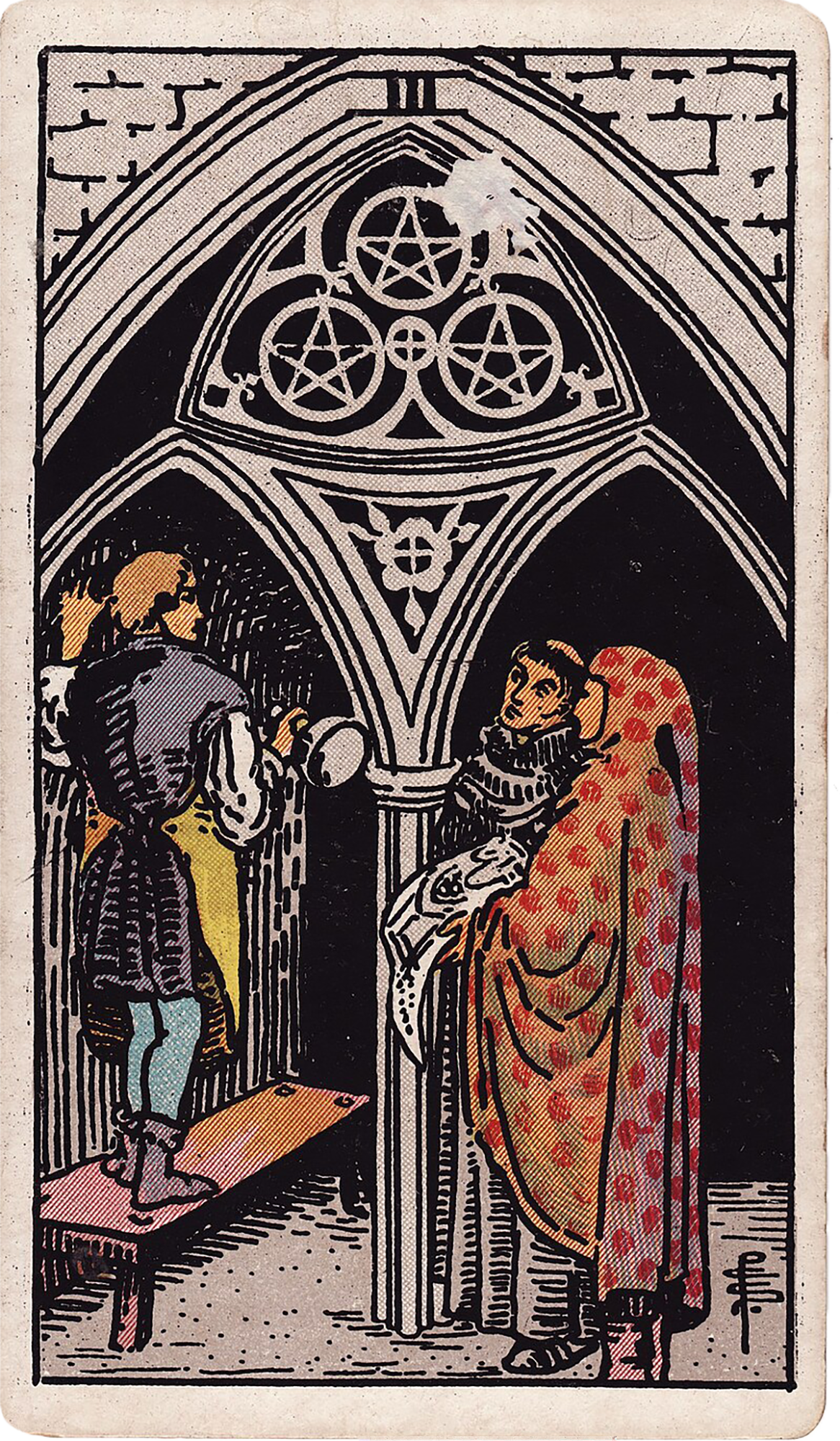 3 of Pentacles
Overview and central question
When the Two of Cups, Three of Pentacles and Justice appear together the central theme is negotiation that aims to be both emotionally respectful and structurally fair. Visually the cards help you tell a story: the Two of Cups shows two figures meeting and exchanging cups (a moment of recognition and mutual offer), the Three of Pentacles shows skilled collaboration, plans and visible craft (blueprints, a shared project), and Justice stands with scales, a sword and a throne (clarity, proportion, accountability). In family settings this trio asks: how can people honor emotional ties while building clear roles, standards and consequences that hold everyone accountable? This article teaches methods to read the combination as a dynamic process rather than a static fate.
Visual and symbolic anchors you should notice
Anchor every interpretation to the cards' key imagery. With the Two of Cups focus on the exchange of cups, the mirrored posture, the caduceus/lion motif above the cups (if visible in your deck) which implies healing, agreement and a shared vow. With the Three of Pentacles anchor on the cathedral or building under construction, the three figures (one often an architect or designer presenting plans and others working), the chisels, mallet or measuring tools—these signal craft, standards and documented plans. With Justice anchor to the scales, the upright sword and the throne—these represent balance, clear measurement and the formal consequences of choices. Also attend to posture, gaze and garments: who is looking at whom, who holds tools, who holds cups, and whether Justice’s gaze is neutral or engaged. These visual details will surface concrete language for negotiation and compromise.
Core meanings and how they modify each other
Briefly: Two of Cups = reciprocity, relational exchange; Three of Pentacles = collaborative craft, skills and standards; Justice = proportional decisions, accountability, documented fairness. Read together they create a three‑part process: First, the emotional contract or intent is formed (Two of Cups). Second, the practical plan and division of labor are sketched and implemented (Three of Pentacles). Third, the arrangement is measured, formalized or reviewed for fairness and consequence (Justice). How they modify one another in practice: - Two of Cups softens Justice. Justice is about boundaries and consequences; Two of Cups brings mutual willingness to meet, which can temper Justice’s severity and shift emphasis toward negotiated fairness rather than imposed rulings. - Justice formalizes Three of Pentacles. The Three of Pentacles shows working together, but Justice asks for documented standards, explicit role descriptions, or transparent criteria so the collaboration lasts and can be evaluated. - Three of Pentacles grounds Two of Cups. Emotional goodwill in Two of Cups can remain theoretical unless concrete plans, schedules and skill‑recognition in Three of Pentacles make it sustainable. When you read these cards imagine them as stages of any family negotiation: the initial mutual offer (Two of Cups), the shared labor and planning (Three of Pentacles), and the terms or review that keep the agreement fair (Justice).
Upright and reversed possibilities when they matter
Upright patterns are straightforward: an upright Two of Cups with upright Three of Pentacles and upright Justice describes a negotiation in which people are willing to meet, work is organized and standards are clear—an excellent sign for mediated agreements, co‑parenting plans or family business contracts. Reversals become useful when diagnosing blockages: - Reversed Two of Cups draws attention to misalignment, unequal investment or unspoken resentment. In a family negotiation that may mean one person agrees outwardly but is not emotionally on board. - Reversed Three of Pentacles signals poor coordination, unclear expectations, or someone’s skill or effort being overlooked. It can show that plans exist but are executed badly or without shared standards. - Reversed Justice highlights bias, avoidance of accountability, or decisions made without enough evidence. Within the trio it can indicate that any written agreements are unfair or that one person is trying to bypass a process. Combinations involving reversals tend to show where the process is stuck: for example, Two of Cups upright + Three of Pentacles reversed + Justice upright suggests good will but poor coordination—Justice may call for more formal planning to protect the relationship. Two of Cups reversed + Three of Pentacles upright + Justice reversed could show competent execution but an underlying relational fracture and power imbalance—work gets done but fairness and recognition are missing. Always ask: does the reversal describe what’s overt (behavior) or what’s internal (shadowed feelings)? Use neighboring cards to test whether the reversal is a practical block or an interior pattern.
Avoiding the one-card-at-a-time trap
Learners often interpret each card as a separate sentence rather than parts of one paragraph. To avoid that, practice the following three habits: 1) Read for process. Ask what role each card plays in a short sequence: emotional offer, practical implementation, formal review. This will make the combination feel like a single narrative rather than three unrelated statements. 2) Track influence. Decide which card is the mover (what started the issue), which is the method (what’s actually happening), and which is the modifier (what controls the outcome). For example: Two of Cups as mover (relationship breakdown or proposal), Three of Pentacles as method (reallocating work), Justice as modifier (need for fairness and documentation). 3) Use image linking. Find visual connections across cards (cups ↔ tools ↔ scales) and translate them into direct questions: who is exchanging what? who is doing the work? how will fairness be judged? This keeps you rooted in imagery instead of abstractions. Practice this by taking a one‑line description and rephrasing it into one coherent recommendation. Instead of saying "Two of Cups means agreement, Three of Pentacles means work, Justice means fairness," say "Two of Cups shows both parties want a fair offer; Three of Pentacles warns that the plan needs explicit tasks and skills assigned; Justice recommends formalizing the plan and establishing measurable criteria and consequences."
Contextual readings: Relationship and intimate partnership
Scenario: partners negotiating household responsibilities, childcare or a financial decision. How to read: The Two of Cups shows there is mutual care and willingness—an emotional basis on which to build. The Three of Pentacles indicates you need to lay out specific roles, schedules, or skill sets: who cooks, who handles finances, who manages appointments. Justice indicates that the agreement should be fair and measurable: perhaps a written chore schedule, a percentage split of expenses, or a review point after three months to recalibrate. Upright pattern: If all three are upright, this is an excellent reading for mediated negotiation: partners want to cooperate, they can plan competently and a fair system can be created. Advice would be to draft a shared plan, set concrete metrics (hours, money, outcomes) and agree on a review mechanism. Reversed patterns to watch: If Two of Cups reverses, ask whether one partner is only superficially consenting. If Three of Pentacles reverses, watch for vague or poorly executed plans that rely on assumptions. If Justice reverses, watch for hidden power imbalances—an agreement that benefits one person while appearing fair. In these cases recommend clarifying motives, testing the plan in small steps, and insisting on transparent criteria for review.
Contextual readings: Family logistics and caregiving
Scenario: aging parent care, sibling division of tasks, or coordinating medical appointments. Reading approach: Two of Cups highlights family bonds and the emotional contract to care. Three of Pentacles highlights the need for a practical plan: schedules, a roster, clearly defined responsibilities and recognition of specialized skills (who drives, who manages finances, who liaises with doctors). Justice emphasizes fairness between caregivers (avoiding burnout by measured rotation of duties), and may also invite legal or formal documentation (powers of attorney, written care agreements). Practical advice: Encourage a written plan that assigns tasks by skill and availability, sets compensation or time‑off expectations, and schedules regular check‑ins. Use Justice as justification for bringing in an impartial mediator or social worker if fairness concerns persist. Red flags: If Three of Pentacles reverses you may find chaos or duplicated efforts; if Justice reverses there may be sibling favoritism or denial of responsibilities; if Two of Cups reverses one caregiver might feel resentful and unacknowledged.
Contextual readings: Family business and career contexts
Scenario: a family business negotiating roles and profit share, or siblings deciding on inheritance or property management. Reading specifics: Two of Cups indicates a desire to maintain family harmony—parties want to preserve relationships. Three of Pentacles urges professional standards, role clarity, and recognition of skill differences (the person who handles finances should be acknowledged as the specialist). Justice calls for formal agreements—contracts, transparent ledgers, clear conflict resolution clauses. Tactical reading: When the Three of Pentacles is strong, emphasize creating job descriptions, training or capacity building and outside accounting. When Justice is strong, suggest formalized governance structures such as operating agreements, meeting minutes and an impartial signatory for major decisions. When Two of Cups is strong, recommend rituals of recognition (regular meetings that start with appreciation) to protect the relational fabric. Pitfalls: Over‑reliance on family goodwill (Two of Cups without Three of Pentacles and Justice) often produces long‑term resentment. Use the cards to argue for both heart and structure.
Emotional and practical dynamics to translate into advice
Translate the symbolism into actionable steps for clients: - Two of Cups ⇒ name shared goals. Ask each person to voice the need they want honored and the gesture that would feel like reciprocity. - Three of Pentacles ⇒ convert goals into tasks. Build a simple chart: tasks, responsible person, timeframe, required skills, and support needed. Treat the chart like a blueprint or plan for the project. - Justice ⇒ define measurement and consequences. Decide what success looks like, what data will be used, when to reconvene, and what should happen if someone does not meet responsibilities. Sample script to use with a family: "You all want the same outcome (Two of Cups). Let's list three concrete tasks and who is best placed to do each one (Three of Pentacles). Then we’ll set two measurable checkpoints and what we'll do if someone can't keep up—maybe hire help or redistribute tasks (Justice)." This script links imagery to procedure and keeps the reading practical.
Practical reading method and sample spreads
Technique: Ask a focused question that frames negotiation or compromise (for example: "How can my family fairly share caregiving for my mother?"). Shuffle while repeating the question. Lay the cards in a simple three‑position spread so that each card gets a role. Recommended spread (three positions): 1) Emotional basis / Mutual intent (place the Two of Cups): what is the relationship intention? Is everyone genuinely willing? 2) Practical plan / Division of labor (place the Three of Pentacles): what must be built—skills, schedule, tools? 3) Fairness / Accountability (place Justice): how should the agreement be reviewed and enforced? Interpretation steps: - Read the cards in sequence as a narrative: Does the emotional basis support the plan? Is the plan realistic? Will Justice accept the chosen accountability methods? - Check for reversals and ask clarifying questions: If Three of Pentacles is reversed ask "What skill or coordination is missing?" If Justice is reversed ask "Who benefits from the current arrangement?" and "Is documented evidence present?" - Pull clarifier cards (if you use them) to answer specific procedural gaps: timescale, resources needed, or a neutral mediator. Extended spread (five positions) if you want more nuance: 1 emotional intent (Two of Cups), 2 necessary skills/resources (Three of Pentacles), 3 possible obstacles to fairness (Justice), 4 suggested immediate action, 5 review mechanism/timing. Use the supplied three cards to anchor positions 1–3 and consider neutral cards for 4–5.
Case studies and example readings
Example 1 — Chore negotiation between partners: Cards: Two of Cups upright, Three of Pentacles upright, Justice upright. Reading: Partners care and want to cooperate. They should make a clear chore plan assigning tasks by skill and preference and set a measurable standard (hours per week) with monthly reviews. Advice: write a rotating schedule and plan a review meeting. Example 2 — Sibling disagreement about caregiving: Cards: Two of Cups upright, Three of Pentacles reversed, Justice upright. Reading: Siblings want to honor the parent but implementation is chaotic. The remedy is to bring in project structure: delegate tasks by skill, create a roster and perhaps hire a coordinator for logistics so goodwill isn't overwhelmed. Justice suggests documenting responsibilities so expectations are transparent. Example 3 — Family business profit split with hidden resentment: Cards: Two of Cups reversed, Three of Pentacles upright, Justice reversed. Reading: Work is being done competently, but relational trust is frayed and fairness is compromised (perhaps an uneven profit split or favoritism). Practical steps: separate financial records, propose a neutral audit or mediator, address the relationship issues directly (Two of Cups reversed) before relying solely on procedures. For each example highlight imagery: refer to the cups being exchanged (is the exchange genuine?), the tools and blueprint of the Three of Pentacles (is the plan clear?), and the scales of Justice (are they balanced?).
Common mistakes and how to avoid them
1) Treating Justice as only "court or legal outcome". Justice is also a principle of proportionality and clear measurement. Before advising litigation consider procedural fixes like contracts and documented reviews. 2) Seeing Two of Cups as idyllic harmony that removes the need for structure. Emotional goodwill helps, but without the Three of Pentacles and Justice it often erodes. Always pair relationship energy with practical planning. 3) Overlooking reversals' nuance. A reversed card doesn't guarantee disaster; it indicates where energy is distorted. Ask whether the reversal describes a hidden feeling or an observable behavior. 4) Reading in isolation. Pulling a single card and making a sweeping life decision is a mistake. Contextualize the card within the family system and check for concrete evidence. 5) Ignoring power dynamics. Justice helps identify bias; use it to illuminate who benefits and who bears burdens. Where imbalance exists suggest neutral help, redistributive measures or clear contractual remedies. Avoid these mistakes by using image anchoring, asking clarifying questions, and translating symbolic suggestions into concrete action steps.
Interpretation logic and decision protocol for readers
When you sit to read this combination, adopt a decision protocol: 1) Identify the type of negotiation (emotional vs. logistical vs. legal) and place Two of Cups, Three of Pentacles and Justice within that frame. 2) Determine which card is dominant (strongest visual detail, first drawn, in center) and treat it as the key focus—dominant Two of Cups emphasizes relationship repair, dominant Three of Pentacles emphasizes planning, dominant Justice emphasizes rules and review. 3) Translate images into non‑mystical tasks: exchange of cups → expressed promises; cathedral/blueprint → plans and standards; scales → criteria and procedures. 4) Produce an action plan: 1) name issues, 2) assign tasks, 3) set measurement and review, 4) build a remedial step if fairness fails. This logic turns symbolic interpretation into a practical roadmap the client can follow. It also helps you avoid letting abstract meaning obscure clear recommendations.
Final teaching points and ethical considerations
This combination is strongly oriented toward negotiated outcomes that respect feelings, honor skill and require accountability. As a reader, hold these ethical positions: - Prioritize consent and respect (Two of Cups) while insisting on clear roles and fair evaluation (Three of Pentacles and Justice). - Recommend documentation for agreements in sensitive family matters—written notes, schedules, or formal legal instruments when necessary. - Be careful not to impose your own sense of fairness; use the cards to surface the question and then help clients articulate their own criteria. Remember: readings should empower decision‑making not replace it. Use the imagery of these three cards to support actionable plans that balance heart, craft and fair measure.
Practice questions
• When I imagine the Two of Cups in this situation, what mutual offer or promise do I see being made?
• What specific tasks or skills would the Three of Pentacles ask us to list and assign?
• How would Justice measure fairness here and what criteria would it use?
• Where might goodwill alone be insufficient without a plan or written agreement?
• Who benefits from the current arrangement and who risks being overburdened?
• What small pilot step could test the plan before fully committing?
• If one card were dominant, which would it be and how would that change the recommended action?
• What neutral evidence could we collect to support a fair review (hours logged, receipts, third‑party reports)?
Comments
Sign in to comment.
Continue learning
Interpreting the Dance of Justice and The Devil: Balancing Morality and Temptation in Tarot Readings
The combination of Justice and The Devil in tarot presents a profound exploration of morality, temptation, and personal accountability. This article unpacks how these cards influen...
Harnessing the Power of The Magician and Ace of Wands: Igniting Creativity and Manifestation in Tarot Readings
The combination of The Magician and the Ace of Wands in tarot readings offers a potent blend of creative energy and manifestation power. This article delves into the ways these car...
Understanding the Synergy Between The Empress and The Emperor in Tarot Card Combinations
This article delves into the intricate synergy between The Empress and The Emperor cards in Tarot, focusing on how their combined energies modify and enrich readings across various...
Decoding Transformation and Renewal with Death and The Star in Tarot Combinations
This article delves into the card combination of Death and The Star, two powerful Major Arcana cards from the Rider-Waite-Smith deck. It explores how their imagery and meanings int...
Balancing Ambition and Compassion with The Emperor and Queen of Cups in Tarot Combinations
This article delves into the nuanced Tarot card combination of The Emperor and Queen of Cups, emphasizing how their energies complement and challenge each other. By analyzing their...
Finding Emotional Healing and Renewal with The Star and The Moon Tarot Combination
This article examines the rich interplay between The Star and The Moon tarot cards when they appear together in a reading. Using the traditional Rider-Waite-Smith symbolism and the...
Unlocking Emotional Wisdom with The High Priestess and The Queen of Cups in Tarot Combinations
This article delves into the card combination of The High Priestess and The Queen of Cups, emphasizing their shared themes of intuition, emotional depth, and receptivity. By examin...
Unlocking Emotional Resilience with Strength and The Star in Tarot Combinations
This article delves into the Tarot card combination of Strength and The Star, revealing how their interplay highlights pathways to emotional resilience. Anchored in the Rider-Waite...
Unveiling Emotional Strength with Strength and The Queen of Cups in Tarot Combinations
This article delves into the dynamic Tarot combination of Strength and The Queen of Cups, emphasizing how these cards together illuminate emotional strength, compassionate boundari...
Unlocking Emotional Transformation with Death and The Moon Tarot Combination
This article explores the rich and complex interaction between the Death and The Moon tarot cards within the Rider-Waite-Smith tradition, focusing on their combined potential to un...