
Negotiation Strategies with the Queen of Swords King of Pentacles and Justice
This in-depth card-combination lesson shows how the Queen of Swords, King of Pentacles and Justice work together to shape negotiation strategy in family contexts. Using Rider–Waite–Smith imagery and the supplied card meanings, the article explains how clear communication, material stewardship and impartial standards interact. You will learn how these cards modify one another, how to read upright and reversed permutations when relevant, how to avoid single-card simplification, and concrete negotiation tactics you can derive from the trio. Two practice examples illustrate career/estate and relationship/family negotiations, followed by troubleshooting and reflective prompts for study.
Read the cards together
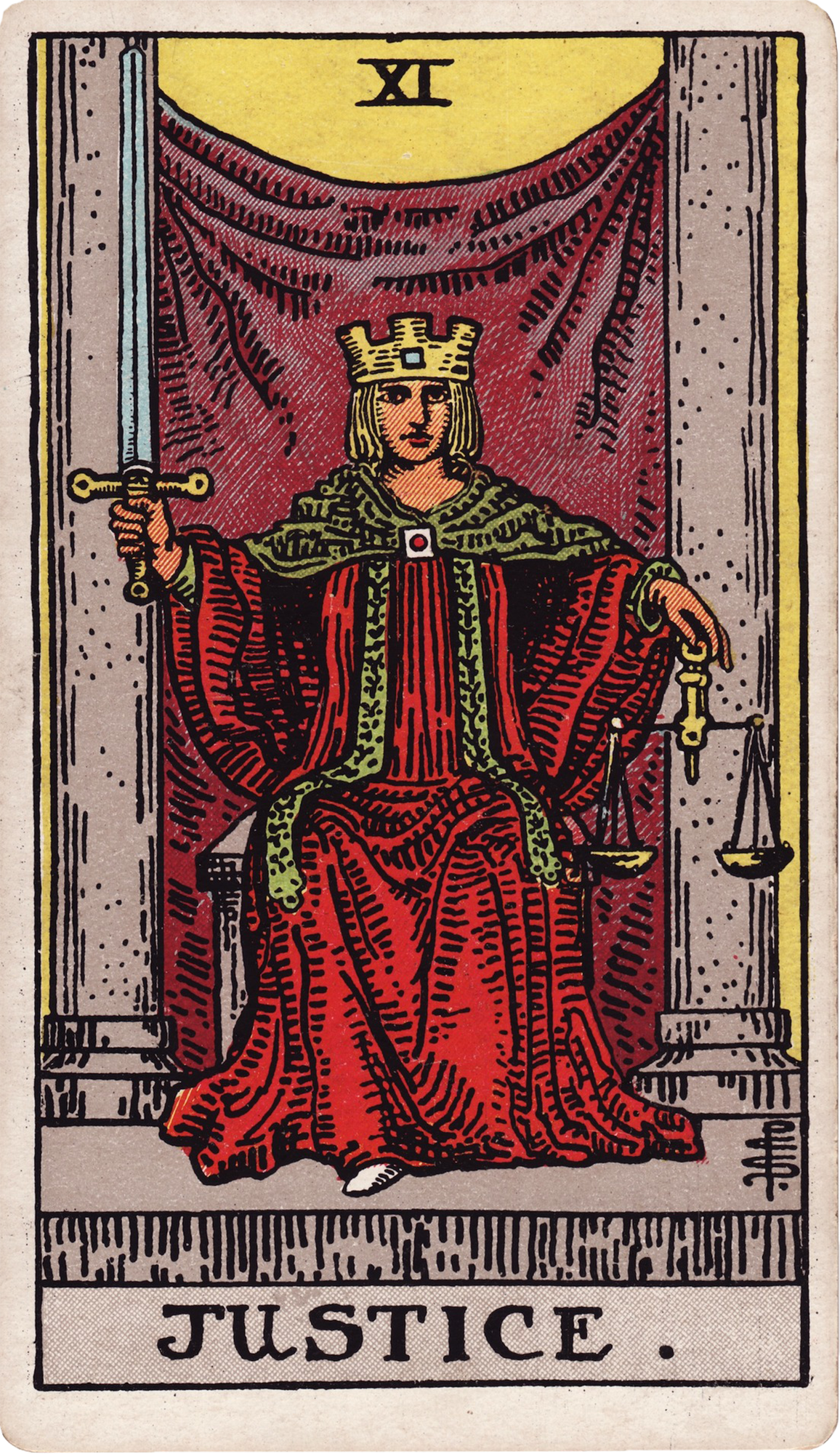 Justice
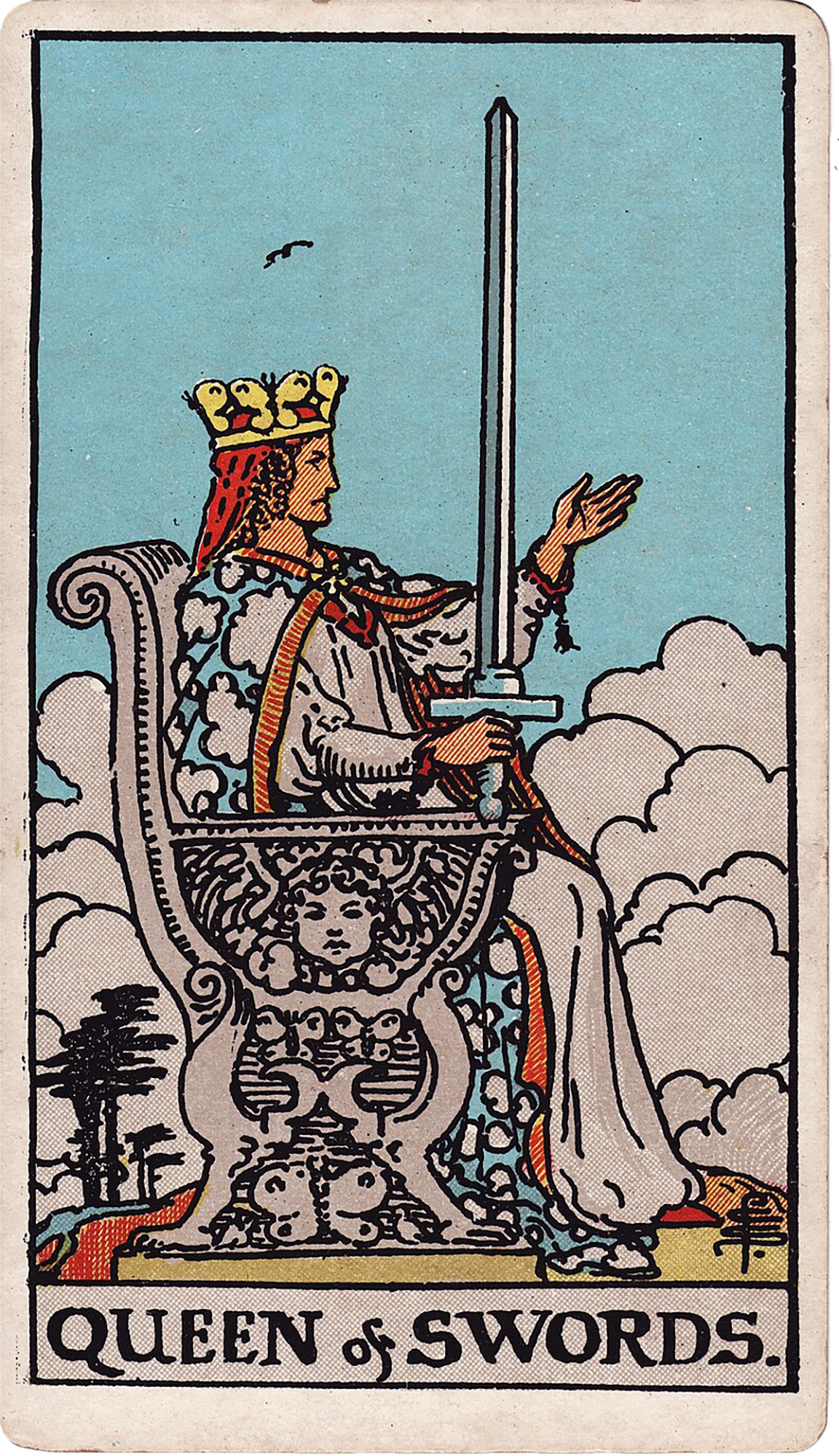 Queen of Swords
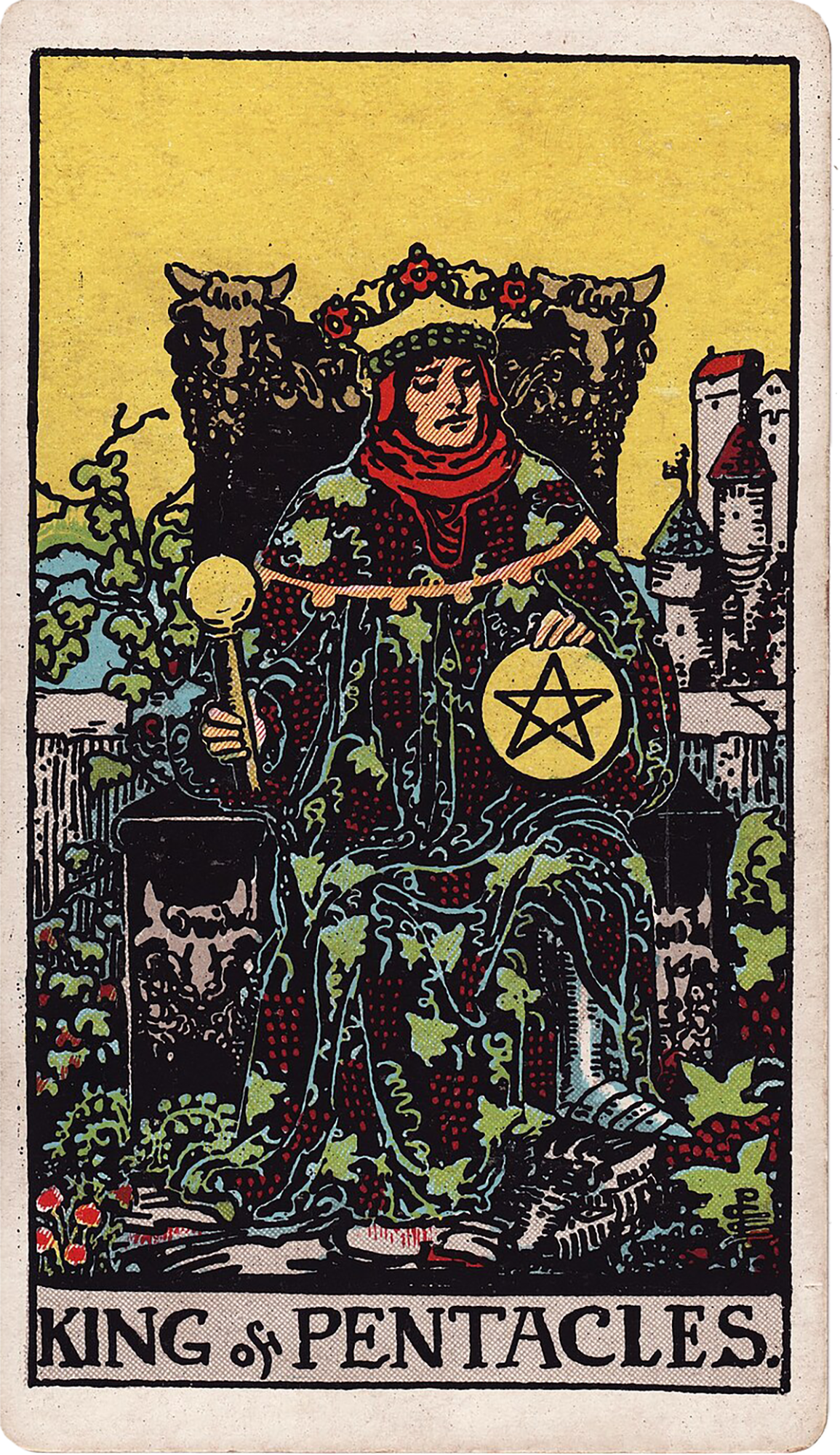 King of Pentacles
Introduction: Why this trio matters for negotiation
When the Queen of Swords, King of Pentacles and Justice appear together in a spread, the combination reads like a negotiation brief built from three complementary capacities: clear-minded communication (Queen of Swords), practical resource management and stability (King of Pentacles), and standards, balance and consequence (Justice). In family settings—where money, domestic arrangements and emotional boundaries meet—this triad maps almost directly onto the tasks a good negotiation requires: name the facts clearly, propose stable and realistic terms, and anchor the deal to impartial principles or enforceable consequences. Because the public display will show the supplied images for each card, learning to read this set begins by looking closely at those images. Notice the Queen’s upright sword and direct gaze; the King’s pentacle and richly embroidered robe; Justice’s scales and double-edged sword. These visual cues are not decorative: they are the language the tarot uses to suggest roles you can step into or invite into the conversation. This article teaches how to translate those visual cues into negotiation strategies, how each card modifies the others, where reversals redirect meaning, and how to read them together without reducing the combination to three separate mini-meanings.
Key imagery and how to translate it into negotiation roles
Start with the images you have. On Rider–Waite–Smith boards, the Queen of Swords sits upright, sword held vertically, wearing a crown often decorated with butterflies; her eyes are clear and her posture reserved. The sword points to truth, discrimination and thinking that separates fact from feeling. In negotiation terms she is the communicator and the boundary-setter: she names the facts, asks targeted questions, removes ambiguity and calls out evasions. The King of Pentacles is seated on a throne decorated with fruit, vines or bulls, holding a pentacle or scepter—symbols of material achievement, stewardship and slow, reliable growth. He represents concrete offers, warranties and the ability to attach resources to promises. In negotiation, he is the person who can transform terms into sustained financing, guarantee, or household arrangements that are durable. Justice sits between pillars, scales in one hand and sword in the other. She embodies standards, proportionality, evidence and consequence: the measurement against which claims are weighed. Justice asks: what is fair given the facts? What must be acknowledged or rectified? In negotiation she is the arbiter—either an internal standard the parties agree to or an external process (a written contract, mediation, a chosen rule) that ensures accountability. Translating imagery into roles helps you see the combination as a small team: Queen of Swords diagnoses and frames, King of Pentacles supplies and stabilizes, Justice verifies and enforces.
How cards modify one another: basic interaction patterns
When reading combinations, avoid tallying single-card meanings. Instead, treat each card as an active function that modifies the others. With this trio, common interaction patterns include: - Framing + Offer + Standard: The Queen frames the issue and requests clarity, the King formulates a materially realistic offer, and Justice defines the fairness test to accept or reject it. Example: in a family budget discussion, the Queen will identify where spending is ambiguous, the King will propose a savings schedule tied to shared costs, and Justice will establish a rule—percent of income—against which proposals are measured. - Translation: Justice translates an abstract claim into concrete terms the King can accept, while the Queen turns Justice’s standards into clear language and conditions. For example, Justice might demand proportional compensation for past contributions; the Queen will articulate what that means in numbers; the King will schedule how those payments will be made. - Tension and resolution: If the Queen is uncompromising about truth, and the King emphasizes stability, Justice mediates by suggesting fair trade-offs. The cards can therefore describe negotiation dynamics rather than outcome: who will insist on evidence, who will prioritize long-term security, and which rule will settle impasses. - Tactical sequencing: Read left to right or top to bottom depending on your spread. If Justice comes before the Queen, the cards suggest an agreed standard is already in place but needs clearer communication. If the King is first, material realities constrain the conversation; the Queen must frame demands within those limits; Justice then tests whether the result is proportionate. Always imagine the trio as a conversation: which voice is leading, which is responding, and which enforces the consequence?
Practical negotiation strategies derived from the cards
Use the cards as a source of tactical guidance rather than prophecy. Specific negotiation moves suggested by the imagery and meanings: 1) Build your case like the Queen of Swords: gather clear, concise evidence. Create a fact list—dates, amounts, witnessed agreements—and present it without embellishment. In family discussions, a neutral list reduces emotional escalation and gives Justice something solid to weigh. 2) Offer stability like the King of Pentacles: when proposing terms, anchor them to resources or routines. Say: “I can cover X if we agree to Y,” or propose phased solutions—partial payments, scheduled caregiving hours, or a trial period. The King’s energy is about guarantees and durability; translate promises into enforceable steps (bank transfers, calendar entries, a written note). 3) Invoke standards like Justice: agree on a metric or principle before bargaining escalates. This can be as formal as a document or as simple as an agreed percentage split, a calendar-based schedule, or a mediating family member. Naming the standard reduces subjectivity and makes the negotiation about proportionality rather than personalities. 4) Use conditional language and scales: Justice’s scales suggest framing offers as proportional trade-offs. Try “If you increase contribution A by 20%, then I’ll reduce my hours by X” rather than ultimatums. 5) Prepare for enforcement: Justice implies consequences. Clarify what happens if terms are breached—repayment schedules, role reassignment, or mediation. The Queen’s clear phrasing and the King’s concrete mechanisms make enforcement realistic rather than punitive. 6) Balance heart and practicality: even though the Queen prioritizes truth, her sword in Rider–Waite imagery can cut unnecessarily. Pair her clarity with the King’s steadiness: state needs plainly, then show the real-world impact to invite practical solutions rather than raw criticism. 7) Split short- and long-term goals: let the Queen handle immediate clarifications (Who did what, when?), let the King set sustainable structures (how will resources be managed going forward?), and let Justice decide what to do about past imbalances (a one-off settlement, apology plus material compensation, etc.).
Applying the trio in family and relationship contexts
Family negotiations are often heavy because they mix money, time and emotion. With these three cards, you have a map for separating the threads. - Example: Shared caregiving responsibilities. The Queen of Swords asks: who is available and what can they realistically do? She insists on concrete answers (days and times). The King of Pentacles proposes a stable plan: a rotating schedule, budget for support services, or paid help attached to a regular fund. Justice provides the fairness test: are tasks distributed proportionally to capacity and prior contributions? If not, Justice suggests a corrective such as compensated hours or reweighted chores. - Example: Inheritance or family asset division. The Queen ensures all documents and claims are named and examined; the King evaluates the estate’s long-term viability and proposes sustainable divisions (e.g., selling a property and dividing proceeds vs. one family member inheriting and compensating others); Justice insists on an equitable formula—evidence-based and perhaps with an external mediator if necessary. Always remind querants (the person whose reading it is) that the cards are not legal advice. Instead, they suggest negotiation postures: prepare facts (Queen), ground offers in feasibility (King), and frame turns of negotiation around agreed principles (Justice). In emotionally charged family settings, this trio asks you to make decisions visible, defensible and enforceable so relationships can continue without repeated resentments.
Career and financial negotiations: offers, contracts and power
In workplace or financial talks, the trio takes on familiar roles: the Queen of Swords is the professional communicator (clear job descriptions, boundaries, non-emotional language), the King of Pentacles is the sponsor or resource-holding party (salary, budget lines, benefits), and Justice is the HR policy, contract clause or legal standard. Tactics informed by the cards: - Prepare a factsheet (Queen): responsibilities, benchmark salaries, comparable offers, accomplishable KPIs. - Turn demands into deliverables (King): request raises tied to measurable outcomes or negotiate phased increases, stock vesting, or guaranteed severance provisions. - Use existing standards (Justice): cite company policy, industry norms, or legal contracts as the scale. If none exist, propose a fair framework—percent increase per year of service, or a probationary period with objective review. If one card appears reversed, it should inform tone: a reversed Queen warns against letting communication become bitter or defensive; a reversed King warns about rigidity or greed that’ll stall talks; a reversed Justice signals bias in procedures and suggests inviting a neutral arbitrator or documenting everything carefully.
Upright and reversed nuances and how to avoid simple one-card reads
Your supplied card descriptions already outline upright and reversed themes. Use those orientations only as modifiers within the trio. - Upright Queen of Swords + Upright King of Pentacles + Upright Justice: This is the classic negotiation triad—clear evidence, realistic offers, and fair measurement. Expect a constructive conversation with enforceable actions. - If the Queen is reversed: communication may be sharp in ways that damage rapport. The King may need to soothe by softening terms or offering reassurances; Justice will demand that any bitterness doesn’t obscure the facts. Practically, this combination asks you to separate tone from content—record facts in writing and insist on neutral phrasing. - If the King is reversed: watch for attempts to cling to resources or use money to control. The Queen then becomes the investigator: ask for clear accounting and insist on transparent offers. Justice will test whether the King’s demands are proportionate or exploitative. - If Justice is reversed: the negotiation lacks a fair standard or has hidden bias. The Queen’s clarity is essential to expose inconsistencies, and the King must be prepared to secure material safeguards if the system can’t be trusted—escrow, written contracts, or third-party mediation. Avoid one-card thinking by always asking: which card is speaking as action, which is the constraint, and which is the referee? Read them as roles in a process. Note the card positions in your spread—lead, obstacle, outcome—to map who speaks first, who constrains, and who ultimately enforces the agreement.
Practical reading method: step-by-step for learners
Use this structured approach when these three cards appear in a negotiation reading. 1) Identify positions: note where each card sits in the spread. Is the Queen past/present/future? Is Justice in the outcome? This gives role sequence: who frames, who offers, who judges. 2) Visual inventory: look at the supplied images. For the Queen, focus on the sword, her gaze and any barren landscape—these indicate whether clarity will be sharp or lonely. For the King, note fruit, vines, and the pentacle—these suggest resources and their quality. For Justice, look at the scales and sword—what feels balanced and what feels decisive? 3) Translate imagery into strategic tasks: write down one sentence per card describing its negotiation function in this case (e.g., Queen: gather receipts and list responsibilities; King: propose a payment schedule; Justice: agree on a proportional rule). 4) Ask clarifying questions: Who benefits from stability? What does fairness mean here? What are the non-negotiables? Use the Queen’s energy to demand clear answers; write them down. 5) Create proposals anchored in the King’s practicality: turn requests into measurable terms. Include contingencies and timelines. 6) Apply Justice’s scale: test each proposal against your fairness principle—equal time, proportional pay, documented reciprocity. If the test fails, iterate. 7) Prepare enforcement language: what happens if terms fail? Use the King’s mechanisms—escrow, schedules, shared calendars—and the Queen’s phrasing for a written agreement. If necessary, bring in a neutral process to embody Justice. 8) Re-check emotional tone and reversals: if any card is reversed, add corrective steps (e.g., mediator for reversed Justice, cooling-off period and clarified language for reversed Queen, stricter accounting for reversed King). 9) Offer staged acceptance: recommend trial periods before permanent changes, reflecting the King’s preference for sustainable arrangements and Justice’s attention to fairness over time. 10) Record the agreement: a written summary signed by parties or timestamped messages can function as both Queen’s clear communication and King’s material anchor, and it supplies evidence if Justice’s scales need to be rebalanced later.
Two practice examples
Example A — Family home maintenance and cost sharing: Situation: Siblings must decide how to split household maintenance costs after a parent’s declining health. Reading: Queen of Swords (present) + King of Pentacles (advice) + Justice (outcome). Interpretation: The Queen says: list actual expenses and caregiving hours; the King advises: create a joint maintenance fund with regular contributions; Justice concludes: divide contributions proportionally to income and prior caregiving, with a documented formula. Negotiation strategy: the siblings gather receipts (Queen), propose a monthly pooled account with scheduled withdrawals for repairs (King), and agree to a percentage formula (Justice). Enforcement: require quarterly accounting and an agreed mediator if disputes arise. Example B — One family member requests a loan for starting a business: Situation: A family member asks for capital to start a small business; other relatives worry about repayment. Reading: King of Pentacles (present) + Queen of Swords (challenge) + Justice (advice). Interpretation: The King stands ready to fund but needs guarantees. The Queen challenges: What are the business numbers and realistic forecasts? Justice advises: set an impartial repayment schedule and consequences. Negotiation strategy: demand a business plan (Queen), tie funding to milestones and a security mechanism such as partial collateral or revenue share (King), and document terms in writing with agreed dispute rules (Justice). If the Queen seems reversed in the reading, be wary of emotionally driven promises; insist on the plan before funds change hands. In both examples the trio mapped to clear steps: clarify, anchor, and formalize.
Common mistakes and how to troubleshoot readings
Learners often fall into patterns that weaken interpretation. Common mistakes and fixes: - Mistake: Reading each card in isolation. Fix: Ask how each card functions in a process—who frames, who offers, who enforces. - Mistake: Treating reversals as outright “bad.” Fix: Use reversals to name what’s blocked, internalized or exaggerated and then map practical mitigations. - Mistake: Ignoring imagery. Fix: Spend two minutes describing what you see on each supplied card before abstracting meaning. - Mistake: Translating cards into rigid prescriptions (e.g., "do X or else"). Fix: Focus on negotiation postures—what behavior the cards encourage—rather than deterministic outcomes. - Mistake: Forgetting legal or financial realities. Fix: Always remind querants that Justice in tarot suggests fairness and structure but is not a substitute for legal counsel when contracts or the law are involved. - Mistake: Missing emotional undercurrents. Fix: The Queen can be emotionally distanced but cutting; notice whether communication style itself needs addressing—sometimes a softer Queen works better alongside King’s practicalities to maintain relationship health. When stuck, return to one simple question: what would a fair, clear, and materially realistic agreement look like right now? That question is the combination’s operating principle.
How to practice and integrate this lesson
Practice readings focused on negotiation scenarios. Pull these three cards intentionally and do the step-by-step method above. Use role-play: assign the Queen’s, King’s and Justice’s functions to the people involved and have them state what they need and what they can offer. Record short written agreements and revisit them after a trial period to mimic the King’s stewardship and Justice’s auditing. Keep a study log: note spreads, whether cards were upright or reversed, what negotiations actually followed, and where the advice was accurate or needed recalibration. Over time you’ll learn how the Queen’s phrasing, the King’s proposals and Justice’s standards manifest in real-world bargaining. Finally, practice ethical reading: present options, not commands; emphasize documentation and consent; and remind querants that tarot is a tool for planning and clarity—not a replacement for mediation or law when those are required.
Practice questions
• When you imagine the Queen of Swords’ gaze on your negotiation, what facts become unavoidable?
• Which concrete resources (time, money, space) does the King of Pentacles ask you to account for before making an offer?
• What impartial standard would Justice demand in your current family dispute?
• If one of these cards were reversed in your reading, which practical safeguard would you add?
• How can you convert an emotionally charged request into a Queen-style list of facts without losing empathy?
• What would a phased or trial agreement inspired by the King of Pentacles look like for your situation?
• Who could serve as an external Justice in your negotiation (mediator, contract, shared accountant)?
Comments
Sign in to comment.
Continue learning
Interpreting the Dance of Justice and The Devil: Balancing Morality and Temptation in Tarot Readings
The combination of Justice and The Devil in tarot presents a profound exploration of morality, temptation, and personal accountability. This article unpacks how these cards influen...
Harnessing the Power of The Magician and Ace of Wands: Igniting Creativity and Manifestation in Tarot Readings
The combination of The Magician and the Ace of Wands in tarot readings offers a potent blend of creative energy and manifestation power. This article delves into the ways these car...
Understanding the Synergy Between The Empress and The Emperor in Tarot Card Combinations
This article delves into the intricate synergy between The Empress and The Emperor cards in Tarot, focusing on how their combined energies modify and enrich readings across various...
Decoding Transformation and Renewal with Death and The Star in Tarot Combinations
This article delves into the card combination of Death and The Star, two powerful Major Arcana cards from the Rider-Waite-Smith deck. It explores how their imagery and meanings int...
Balancing Ambition and Compassion with The Emperor and Queen of Cups in Tarot Combinations
This article delves into the nuanced Tarot card combination of The Emperor and Queen of Cups, emphasizing how their energies complement and challenge each other. By analyzing their...
Finding Emotional Healing and Renewal with The Star and The Moon Tarot Combination
This article examines the rich interplay between The Star and The Moon tarot cards when they appear together in a reading. Using the traditional Rider-Waite-Smith symbolism and the...
Unlocking Emotional Wisdom with The High Priestess and The Queen of Cups in Tarot Combinations
This article delves into the card combination of The High Priestess and The Queen of Cups, emphasizing their shared themes of intuition, emotional depth, and receptivity. By examin...
Unlocking Emotional Resilience with Strength and The Star in Tarot Combinations
This article delves into the Tarot card combination of Strength and The Star, revealing how their interplay highlights pathways to emotional resilience. Anchored in the Rider-Waite...
Unveiling Emotional Strength with Strength and The Queen of Cups in Tarot Combinations
This article delves into the dynamic Tarot combination of Strength and The Queen of Cups, emphasizing how these cards together illuminate emotional strength, compassionate boundari...
Unlocking Emotional Transformation with Death and The Moon Tarot Combination
This article explores the rich and complex interaction between the Death and The Moon tarot cards within the Rider-Waite-Smith tradition, focusing on their combined potential to un...