
Reading Anxiety and Recovery with the Nine of Swords and the Four of Swords
This card-combination lesson explores how the Nine of Swords and the Four of Swords interact in a spread. Both cards belong to the suit of Swords so they speak primarily to thought patterns, communication and mental habits. The Nine highlights amplified fear, night-time worry and the mind’s habit of catastrophizing. The Four calls for deliberate pause, strategic rest and mental restoration after strain. Read together the pair becomes a conversation: what needs rest to interrupt anxiety, or what anxiety prevents healthy recovery? The article covers symbolism (Rider–Waite–Smith details), upright and reversed dynamics, multiple contexts (relationship, career, emotional and practical life), practical spreads and clarifiers, step-by-step reading technique, example readings, common mistakes and exercises to practice interpreting this combination with nuance and ethical care.
Read the cards together
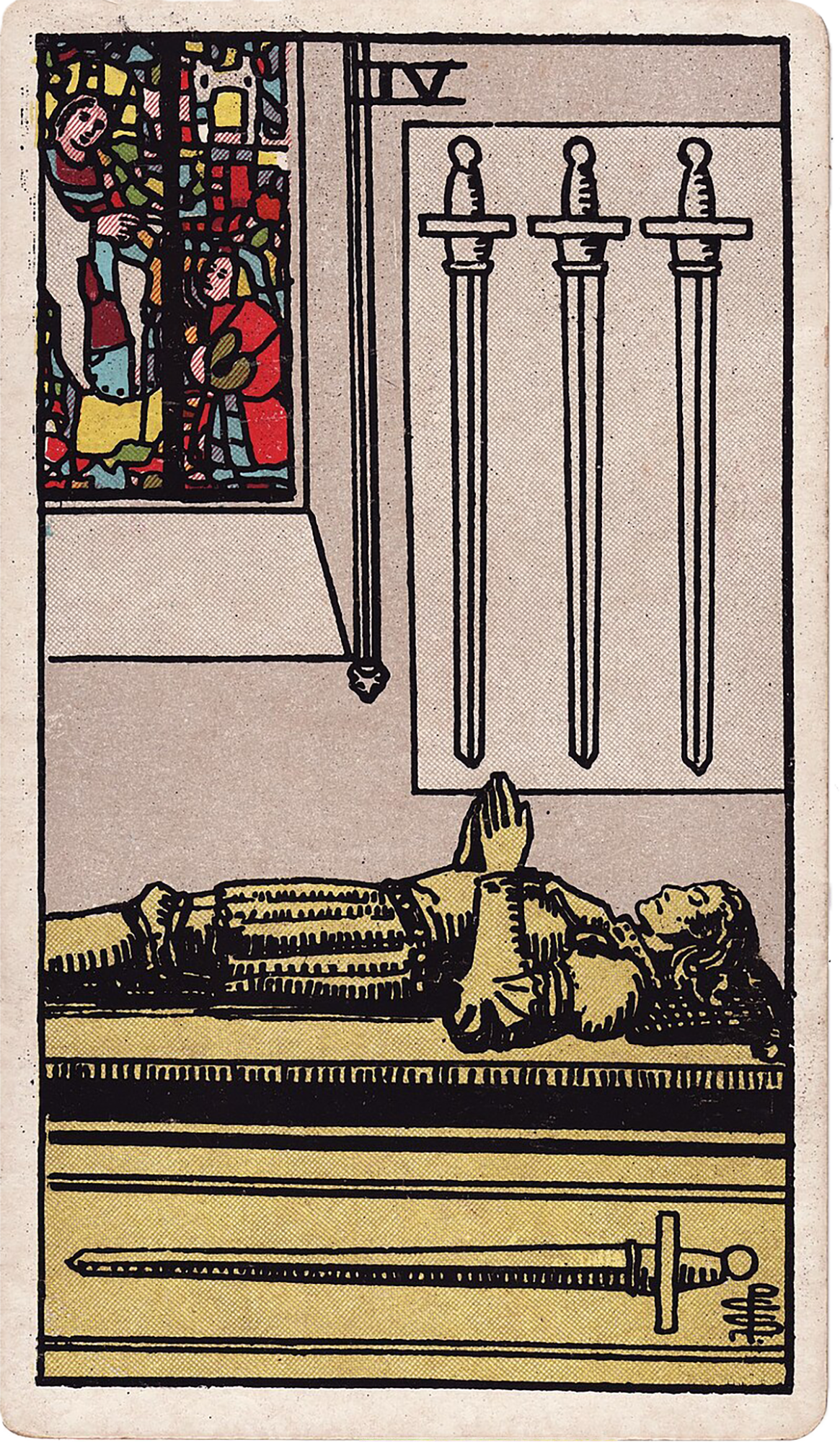 4 of Swords
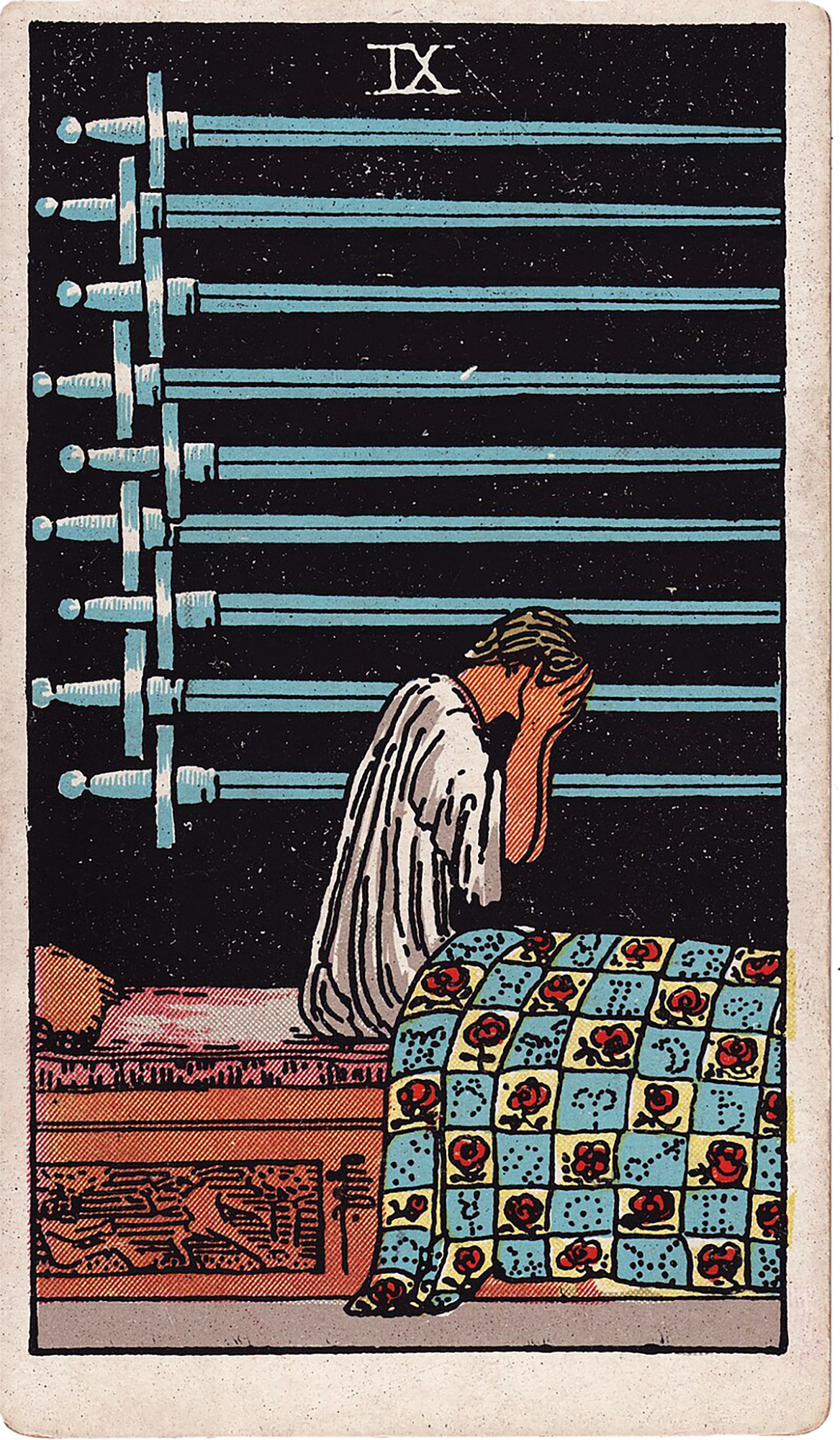 9 of Swords
Introduction: Why these two Swords belong together
When the 9 of Swords and the 4 of Swords appear together the reading becomes explicitly about the mind — its alarms, its exhaustion, and the practical choices that change those states. Both cards are from the suit of Swords, which in traditional Rider–Waite–Smith symbolism governs thought, language, conflict, consequences of mental habits and the structures that shape understanding. The Nine of Swords focuses on fear, nightmares and worry amplified during vulnerable hours. The Four of Swords asks for a deliberate pause, a recovery period and a practical restoration after conflict or strain. Together they create a dialectic: anxiety demanding attention and rest demanding it be properly done. This lesson treats their pairing as a problem-and-plan conversation rather than as two isolated pronouncements.
Reading each card on its own: imagery and core meanings
Before combining cards you need to know them well visually. Look carefully at the supplied images of the 9 of Swords and the 4 of Swords. Nine of Swords imagery and meaning: In the Rider–Waite family, the 9 of Swords usually shows a figure sitting upright in bed, hands covering face, in a dark hour. Nine swords hang on the wall above them like a mental barricade. The scene suggests insomnia, catastrophizing thoughts, shame or grief that intensifies at night. The card’s upright text supplied with your images emphasizes that this is a practical card: the mind is amplifying fear during vulnerable hours and the proper response involves care, evidence and support rather than automatic belief. In spreads the upright 9 often indicates a self-perpetuating thought loop that needs deliberate checking — the card names the problem well. Four of Swords imagery and meaning: The 4 of Swords typically shows a recumbent figure — often depicted like a resting knight — lying in a tomb or chapel. Three swords hang on the wall and a fourth lies beneath the figure. Stained glass behind suggests sanctuary or a place of inner vigil. This card’s upright supplied meaning focuses on deliberate pause, recovery and mental restoration after conflict or strain, and on responding practically to the present stage rather than an abstract ideal. The 4 of Swords is not escapism: it is organized rest, a tactical retreat to heal and regroup. When reading either card, notice the domestic details: bed and chamber in the Nine; church-like stillness and the arrangement of swords in the Four. Those visual cues tell you whether the issue feels private, medical, spiritual, interpersonal or practical.
Basic dynamics: How the Nine of Swords modifies the Four of Swords and vice versa
Consider the pair as a two-way influence rather than a sum of two messages. There are a few fundamental interactions: 1) 4 of Swords softens 9 of Swords: When the 4 of Swords appears alongside the 9, it can function as practical advice: the way out of the Nine’s waking fears is a deliberate pause, rituals for rest, or creating a contained sanctuary where worries can be examined rather than amplified. Visually, the 4’s resting figure suggests a break from the 9’s nocturnal intensity — a space where the mind isn’t constantly triggered. In this reading the 4 is corrective: “Stop the cycle. Allow measurable recovery.” 2) 9 of Swords sharpens 4 of Swords: Conversely, the 9 can expose why the rest offered by the 4 is not happening or not effective. If the 9 is dominant, the rest might be interrupted by night terrors, intrusive thoughts or shame. The Nine may indicate that rest is being attempted but undermined by unresolved worries needing speaking or therapy. Visually, the swords on the 9’s wall show mental barriers. Those barriers can keep a person from accessing the sanctuary implied by the 4. 3) Co-dependent pattern: The pair can identify a stuck loop: anxiety (9) causes hypervigilant restlessness, so the person either over-sleeps or can’t rest (blocked 4), which in turn increases anxiety. Read as a cycle, the combination invites interventions that are both cognitive and somatic. 4) Sequential story: In temporal readings the 4 of Swords might indicate a needed pause that, if taken, reduces later anxiety. Or the 9 might describe the present and the 4 the necessary next step. The visual cues help decide which is now and which is next: a bed represents immediate stings of night; the chapel’s stillness suggests the healing stage that follows conflict. 5) Advice vs. description: Decide which card is descriptive (what is happening) and which is prescriptive (what to do). Ask: which image feels like the current experience — the sleepless figure or the resting knight — and which feels like the solution?
Upright and reversed nuances when both cards appear
Use upright and reversed meanings when they add clarity. Your supplied texts for upright and reversed versions are very useful; treat reversal as a signal that something in the process is blocked, exaggerated or underdeveloped rather than simply the opposite. Both upright: 9 upright + 4 upright reads as a clear diagnosis and plan: the Nine’s worry is real (or feels real), and the Four signals the right self-care — planned rest, withdrawal from battle, simplified routine, or a short sabbatical. The combination often appears when the client is ready to take practical steps but may need help designing those steps. 9 upright + 4 reversed: The mind is amplifying fear (9) and the rest is failing or being avoided (4 reversed). This can show forced inactivity that doesn’t produce recovery (e.g., burnout leading to numbness) or a conscious avoidance of the pause because anxiety insists on action. The reading should investigate whether rest is being skipped due to shame, obligation, or a belief that rest equals failure. 9 reversed + 4 upright: 9 reversed brings relief, seeking help, or persistent anxiety that has shifted shape. Paired with a healthy 4, the cards say that help-seeking and real rest are in motion — the person is beginning to speak or accept support and to allow restorative time. The 4 upright can anchor the 9 reversed into structured recovery. Both reversed: 9 reversed + 4 reversed is complicated: the Nine’s anxieties may be hidden, minimized or changing but not resolved; the Four’s rest is also ineffective, restless, or prematurely ended. This pairing warns of a stuck state where cognitive recognition hasn’t translated into sustainable practices. It’s a red flag for professional support or for restructuring daily habits. In every case, ask whether the card describes internal state or external condition. The 9’s imagery of private nighttime suffering often points inward; the 4’s chapel hints at external sanctuaries (time off, therapy) as well as internal practice (meditation, boundaries).
Relationship context: What the cards say about partnerships and family
When these two cards show up in relationship readings they frame how anxiety and rest (or lack of it) play out between partners or within family dynamics. Reading notes anchored to the images: The 9 of Swords often appears when someone experiences private worry about the partnership — fears of abandonment, guilt, or imagined betrayals. The figure’s isolation in the night points to inner narratives that may not be shared. The 4 of Swords’ sanctuary suggests a pause in interaction: the need for calm, a break after argument, or a period of reflection before making decisions. Common configurations and interpretations: - 9 upright + 4 upright: One partner is losing sleep over the relationship, but the pair will benefit from an intentional pause: structured conversation after a calm day, a cooling-off period, or therapy that provides a safe space. The advice is to create a shared sanctuary where fears can be voiced without escalation. - 9 upright + 4 reversed: Private worry exists but rest or reconciliation is being thwarted. This could mean a partner drinks or works to avoid dealing, or that attempts to “take a break” are actually avoidance tactics that prolong distress. The reader should gently probe whether breaks have been helpful or merely delaying necessary communication. - 9 reversed + 4 upright: Relief is beginning — wounds are being talked about and a real period of healing is possible. Use the 4’s image to suggest concrete acts (phone-free evenings, check-ins) that allow conversation to be held safely. - Both reversed: Hidden anxieties and ineffective recovery. Partners may assume everything is fine while both are internally restless. Encourage explicit check-ins rather than letting the night silence become a wall. Advice for readers: Encourage clients to translate the 4 of Swords’ sanctuary into practical duo actions: agreed cooling-off rules, scheduled talks, couple therapy, or even separate temporary space with clear communication. Use the 9’s presence to validate emotional experience before offering solutions: name the worry, seek evidence, and identify whether the fear is past, present or projected.
Career and practical-life contexts: decisions, burnout and timing
In work readings this pair commonly addresses burnout, decision paralysis and when to step back. Imagery anchored guidance: The 9’s sleepless figure can represent the professional who lies awake worrying about layoffs, performance reviews, client outcomes or career trajectories. The 4’s resting knight suggests a tactical retreat: time-off, sabbatical, reduced hours, or temporary withdrawal to recover cognitive resources. Interpretations by configuration: - 9 upright + 4 upright: The cards advise a planned rest. This may be a short leave, recalibrating workload, or delegating tasks. The 4 is practical — what action will strengthen the constructive side of rest? Establish boundaries, a checklist for what must be handed off, and a fixed timeframe for respite. - 9 upright + 4 reversed: The job’s anxieties are intense and rest is being interrupted — either because of external demands or a fear of appearing weak if you step back. This warns of creeping burnout; the reading should prioritize concrete steps to protect health: medical check, renegotiation of responsibilities, or a clear conversation with supervisors. - 9 reversed + 4 upright: Anxiety is easing as rest is taken. This is a favorable sign for phased return-to-work plans and for structuring reintegration with new safeguards. - Both reversed: There may be hidden pressure or shame about needing rest and no effective recovery plan. This combination often calls for external support (HR, physician) because internal recognition has not translated into sustainable action. Practical reading technique: Ask about the client’s sleep, routine, micronutrients, exercise and workplace policies. Use the 4 imagery to prompt a plan: where is the sanctuary? Who ensures it remains undisturbed?
Emotional and practical life contexts: therapy, health and self-care
Beyond relationships and work, this pair often points to mental health rhythms and self-care practices. Because both are Swords, their talk is about cognitive patterns, but the 4 in particular connects thought to embodied practices of recovery. Clinical sensitivity: These cards can name symptoms that overlap with clinical diagnoses: insomnia, panic, PTSD flashbacks, or situational anxiety. They are not a substitute for professional diagnosis. When readings suggest chronic distress (repeated 9s, 4 reversed), ethically encourage medical/therapeutic support. How imagery informs interventions: - Sleep hygiene: The 9’s bed scene invites questions about routines around sleep: screens, caffeine, sleep environment. The 4’s chapel suggests rituals that create a liminal transition into rest — a consistent bedtime routine, a short meditation, or a ritual that signals to the nervous system it is safe to relax. - Speaking and naming worries: The 9 often conceals worries under shame. The 4 offers a place to practice language: journaling, talking with a trusted person, or cognitive restructuring exercises with a therapist. - Physical rest versus avoidance: Use the 4’s practical dimension to distinguish necessary rest from forced inactivity that numbs rather than heals. Ask: does rest lead to restored function, or does it hide avoidance? - Rehabilitation steps: If the pair suggests a time-out is needed, break recovery down into measurable steps: medical check, therapy sessions, sleep plan, physical activity, and community supports. The 4 is a strategy card; use it to build an actionable plan.
Technique and method: how to read this combination in practice
Avoid reading the two cards as independent pronouncements. Work with a method that identifies role, sequence and evidence. Step 1 — Ask the question: Are we diagnosing or advising? If the querent asked “Why am I anxious?” treat the 9 as description and the 4 as advice. If they asked “What will help?” the 4 may be the action card while the 9 describes obstacles. Step 2 — Identify which card speaks first: Hold both images in mind and ask which feels like present reality. Which image is louder? The 9’s nocturnal intensity or the 4’s quiet repose? Use the querent’s body language and language to ground this. Step 3 — Position reading: If you use a spread, place the cards deliberately (example layouts below). This prevents the cards from being read as equals when they have different roles: - Problem / Advice: 9 = Problem, 4 = Advice. - Past / Present / Future with a clarifier: 9 in present, 4 in near future = recovery is possible if specific actions are taken. - Inner / Outer / Action: 9 = inner worry, 4 = recommended outer boundaries or actions to create rest. Step 4 — Ask clarifiers. Use small follow-up draws or questions: What is the 9 specifically afraid of? What does a realistic 4-day/week rest look like? Use the imagery: is the sanctuary physical (a room, break) or procedural (set times, no contact)? Step 5 — Translate into small, specific practices. The 4 invites concrete routines. A good practice plan for a querent might include three concrete items: one sleep hygiene change, one boundary with other people, and one appointment with a health professional. Step 6 — Time and check-in. The 4 suggests a rest of measurable length. Set a concrete review date and a set of measurable criteria for “rest has worked” (e.g., sleep improved by X, anxiety episodes reduced). Encourage the querent to return with notes at that time.
Examples and sample readings
Example 1 — Single-session dating reading: A querent asks why they feel haunted by a recent argument. Cards: 9 of Swords upright (present), 4 of Swords upright (advice). Interpretation: The argument has produced sleepless rumination (9). The 4 recommends a deliberate cooldown and structured conversation after both parties have had time to rest. Action plan: agree to a 48-hour pause, write down worries, and schedule a calm, rule-bound talk where each speaks without interruption. Example 2 — Career crossroads: A client fears burnout. Cards: 9 upright (present), 4 reversed (outcome). Interpretation: The person is anxious and attempts at rest are either incomplete or are being avoided. The 4 reversed warns against staying in forced inactivity (e.g., staying home but not engaging in healing routines) and against returning to work too quickly. Action plan: medical evaluation, negotiate partial leave with clearly defined tasks, and set a structured physical activity routine to support sleep. Example 3 — Hidden progress: A querent worried about obsessive thoughts draws 9 reversed and 4 upright. Interpretation: Anxiety is changing form and the person is beginning to seek help; the 4 confirms effective rest or therapy is underway. Encourage continuing the therapy plan and build explicit sleep-support rituals to consolidate gains. In each example, the visual cues help specify interventions: the 9’s bed says sleep-focused interventions; the 4’s chapel suggests sanctuary, defined spaces and rituals.
Common mistakes and how to avoid them
Mistake 1 — Treating cards as deterministic: Do not read the pair as guaranteed outcomes. These cards describe patterns and point to interventions; they do not rule out agency or external support. Mistake 2 — Over-focusing on sleep alone: Because both images include rest, readers sometimes reduce interpretation to “sleep more.” The 4 of Swords is about intentional recovery of many kinds: cognitive, emotional and physical. Use clarifiers to find the right level of intervention. Mistake 3 — Ignoring reversed nuance: Reversals are not just “bad” or “good” — they show where a process is stuck. Use the supplied guidance to see whether a reversal indicates avoidance, premature return, hidden relief, or incomplete recovery. Mistake 4 — One-card-at-a-time literalism: The 9 and 4 are part of a conversation. Don’t read them as isolated utterances. Ask which card is the problem and which the solution, and don’t neglect timing and sequence. Mistake 5 — Moralizing rest: Resist language that shames a querent for needing rest. The 4 of Swords is tactical not lazy. Frame rest as a strategy for functionality, not a moral failing.
Practice exercises for learners
Exercise 1 — Sensory anchoring: Spend five minutes with the image of the 9 of Swords. Note bodily reactions and list three words that describe the card’s energy. Repeat with the 4 of Swords. Compare lists; practice moving from the 9’s words (fearful, isolated, sleepless) to the 4’s words (sanctuary, pause, structured). This helps you read the cards’ emotional temperature. Exercise 2 — Role assignment drill: Do ten mini-readings where you decide which card is diagnosis and which is remedy. Use prompts: “I can’t finish a project,” “We keep fighting,” “I feel stuck.” Practice framing an actionable plan from the 4 grounded in the 9’s specific worry. Exercise 3 — Clarifier practice: When the pair appears, draw three clarifiers asking “What blocks this rest?” “What would reduce the nighttime replay?” and “What small action counts as a 4-of-Swords rest?” Note how answers change your advice. Exercise 4 — Ethical boundary practice: Make a script encouraging professional help when the combination looks medically serious (persistent insomnia, intrusive thoughts, suicidal ideation). Practice delivering that script sensitively and clearly.
Conclusion: Reading for recovery and agency
The 9 of Swords and the 4 of Swords together map a territory that is both painful and hopeful. The Nine names the mind’s capacity to magnify fear; the Four offers a practical pathway back to functioning through deliberate rest. The two together teach readers to balance validation of suffering (the 9) with tactical planning (the 4). Keep your focus on role, sequence and visual detail. Use clarifiers, translate sanctuary into measurable actions, set review points and be ethically willing to recommend professional support. Above all, treat the pair as a living conversation: one card is often speaking about the problem, the other about a practical, evidence-based step toward recovery.
Practice questions
• When you look at the supplied image of the 9 of Swords, what specific detail (the bed, the swords on the wall, the figure’s posture) feels most like the querent’s experience? Why?
• Does the 4 of Swords represent a physical place, a routine, or a mental practice in this reading? How do you know from the imagery?
• Which card in the pair is describing present reality and which is offering practical advice? What evidence supports your choice?
• If the 4 of Swords appears reversed, what small, measurable change could you propose to transform forced inactivity into productive recovery?
• How would you translate the 9 of Swords’ private worry into a clarifying question that can be used to draw a follow-up card?
• Which therapists, medical professionals or community resources would you ethically suggest when this pair signals chronic distress?
• In a relationship spread, what concrete boundaries or rituals could embody the 4 of Swords’ sanctuary?
• How can you avoid moralizing rest when working with clients who feel guilty about stepping back?
Comments
Sign in to comment.
Continue learning
Interpreting the Dance of Justice and The Devil: Balancing Morality and Temptation in Tarot Readings
The combination of Justice and The Devil in tarot presents a profound exploration of morality, temptation, and personal accountability. This article unpacks how these cards influen...
Harnessing the Power of The Magician and Ace of Wands: Igniting Creativity and Manifestation in Tarot Readings
The combination of The Magician and the Ace of Wands in tarot readings offers a potent blend of creative energy and manifestation power. This article delves into the ways these car...
Understanding the Synergy Between The Empress and The Emperor in Tarot Card Combinations
This article delves into the intricate synergy between The Empress and The Emperor cards in Tarot, focusing on how their combined energies modify and enrich readings across various...
Decoding Transformation and Renewal with Death and The Star in Tarot Combinations
This article delves into the card combination of Death and The Star, two powerful Major Arcana cards from the Rider-Waite-Smith deck. It explores how their imagery and meanings int...
Balancing Ambition and Compassion with The Emperor and Queen of Cups in Tarot Combinations
This article delves into the nuanced Tarot card combination of The Emperor and Queen of Cups, emphasizing how their energies complement and challenge each other. By analyzing their...
Finding Emotional Healing and Renewal with The Star and The Moon Tarot Combination
This article examines the rich interplay between The Star and The Moon tarot cards when they appear together in a reading. Using the traditional Rider-Waite-Smith symbolism and the...
Unlocking Emotional Wisdom with The High Priestess and The Queen of Cups in Tarot Combinations
This article delves into the card combination of The High Priestess and The Queen of Cups, emphasizing their shared themes of intuition, emotional depth, and receptivity. By examin...
Unlocking Emotional Resilience with Strength and The Star in Tarot Combinations
This article delves into the Tarot card combination of Strength and The Star, revealing how their interplay highlights pathways to emotional resilience. Anchored in the Rider-Waite...
Unveiling Emotional Strength with Strength and The Queen of Cups in Tarot Combinations
This article delves into the dynamic Tarot combination of Strength and The Queen of Cups, emphasizing how these cards together illuminate emotional strength, compassionate boundari...
Unlocking Emotional Transformation with Death and The Moon Tarot Combination
This article explores the rich and complex interaction between the Death and The Moon tarot cards within the Rider-Waite-Smith tradition, focusing on their combined potential to un...