
Reading Career Investment Signals with Knight of Pentacles Seven of Pentacles and Ace of Pentacles
This article teaches how to read a three-card Pentacles combination—Knight of Pentacles, 7 of Pentacles, and Ace of Pentacles—focused on career and investment questions. Using Rider‑Waite‑Smith symbolism and the supplied card images, it explains how the Ace acts as potential, the 7 as review and patience, and the Knight as steady execution. You will learn how these cards modify one another in upright and reversed positions, how to avoid simplistic one-card readings, practical spread methods, concrete career and relationship examples, common mistakes, and a step‑by‑step method for synthesis.
Read the cards together
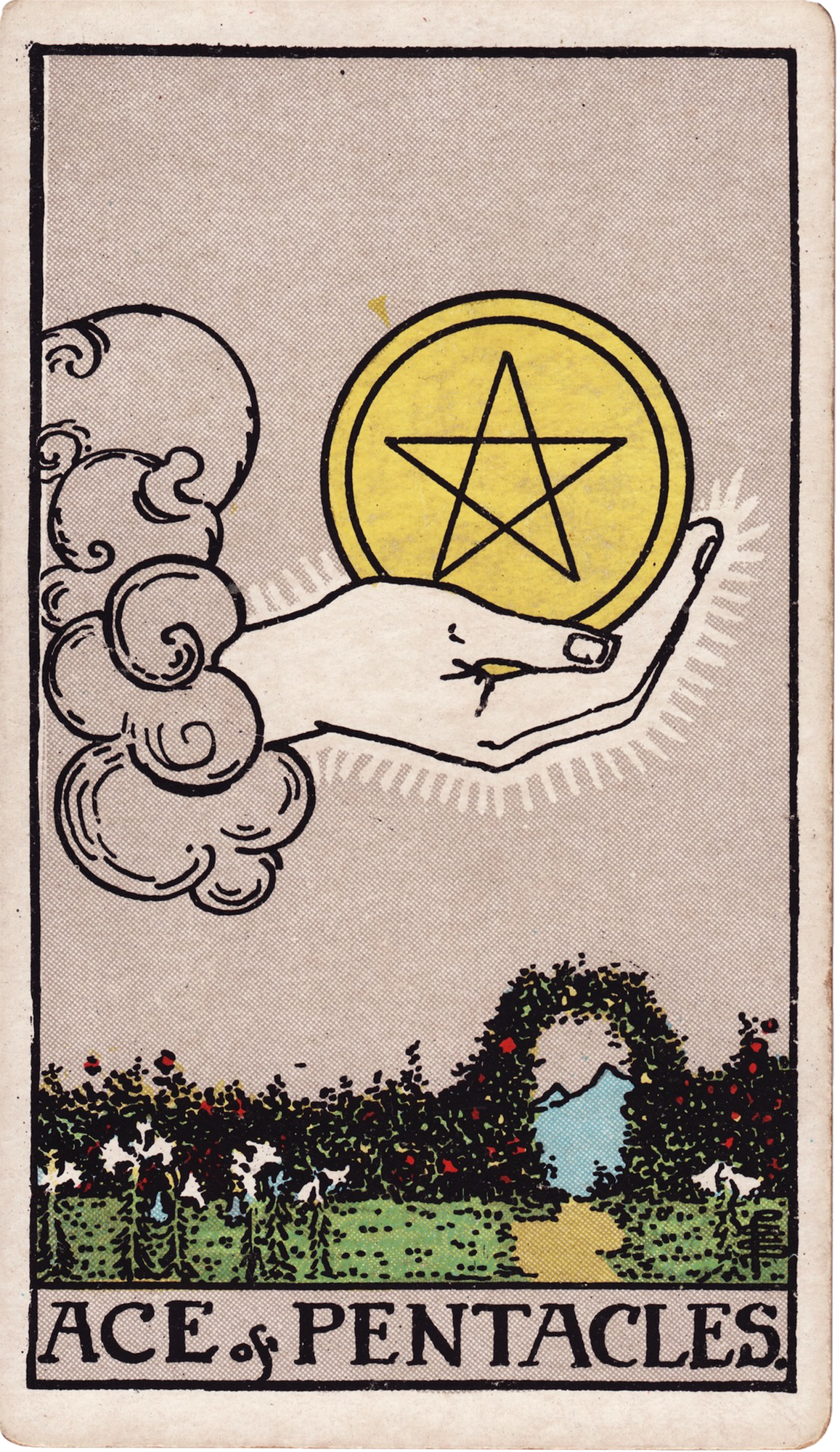 Ace of Pentacles
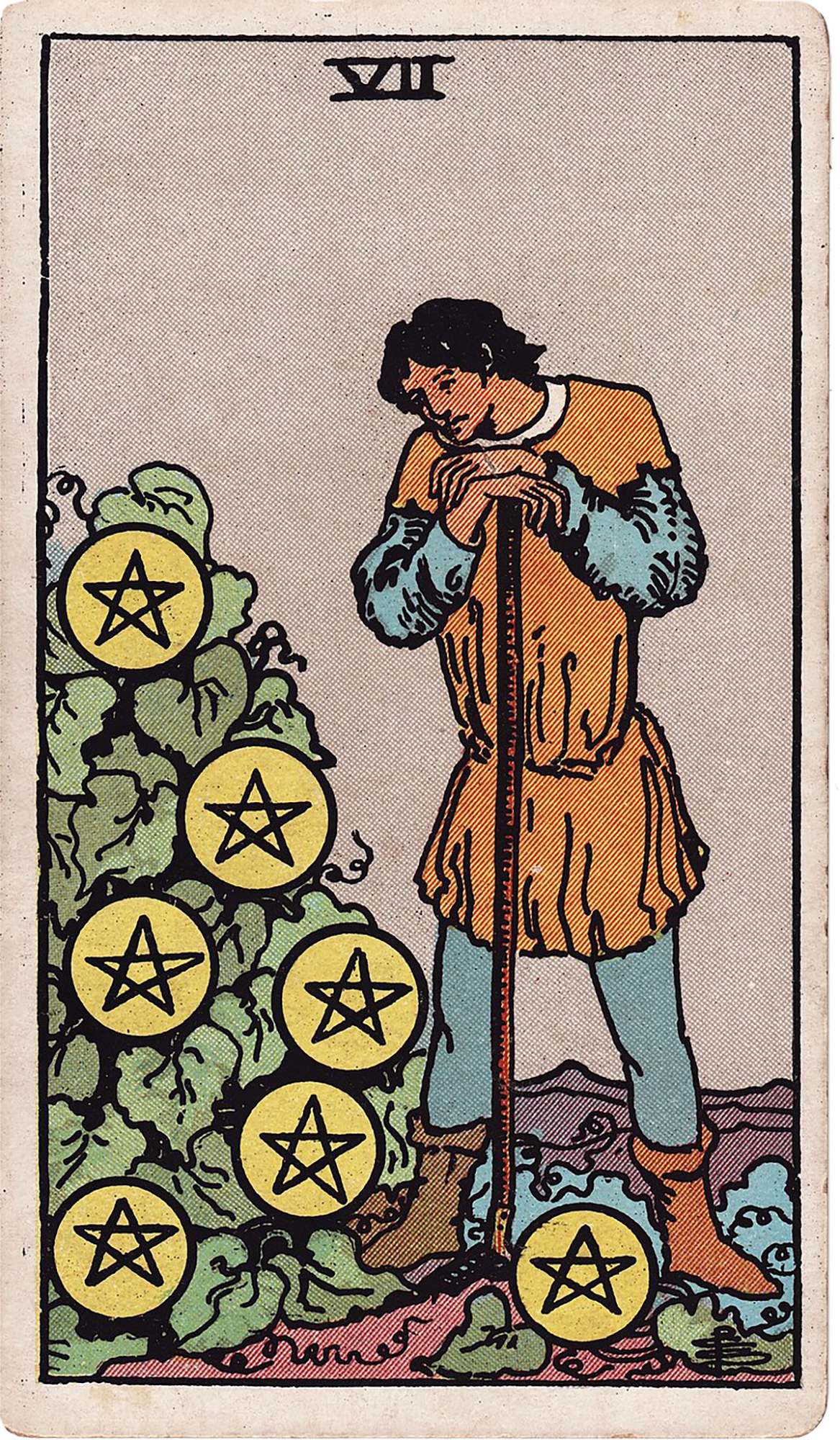 7 of Pentacles
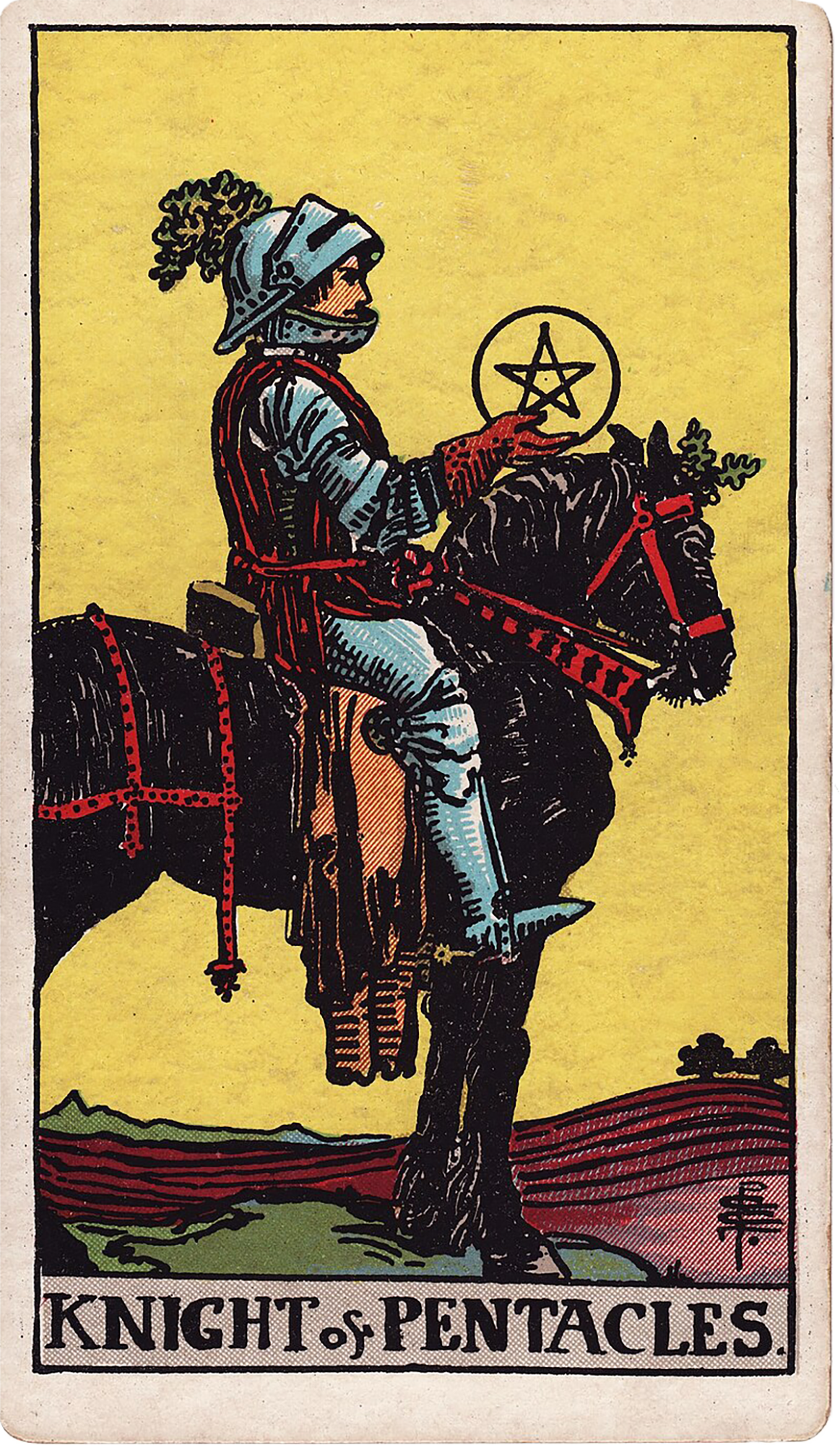 Knight of Pentacles
Purpose and overview
This article is a lesson in reading a specific Pentacles trio: the Knight of Pentacles, the 7 of Pentacles, and the Ace of Pentacles. The focus is career and investment signals, but the same logic applies to other material or practical concerns such as health, craft, and household finances. Because the supplied public display will show the exact images of these three cards, every interpretation here repeatedly anchors to their visual details: the hand offering a pentacle in the Ace, the solitary gardener looking at his crop in the 7 of Pentacles, and the steady, planted Knight on his slow horse. Those images are not decorative—they are active cues that shape how the cards modify one another.
Quick reminder of each card's core energy
Ace of Pentacles (upright): a tangible opportunity, resource, or material beginning offered to the querent. The Rider‑Waite image—a hand emerging from clouds offering a pentacle over a garden and gateway—signals a visible, concrete seed that can be turned into lasting value through consistent care. 7 of Pentacles (upright): assessment and patient evaluation of long-term effort. In the RWS image a figure leans on a hoe, eyes on pentacles growing on a shrub. The posture is contemplative: not despair, not celebration—an honest moment of review to decide whether to continue the current course, replant, or adjust technique. Knight of Pentacles (upright): slow, steady, methodical execution. The armored knight sits on a still horse holding a pentacle—not romantic or dramatic, but reliable. The landscape of fields behind him suggests plowing, routine, and the labor that turns seeds into harvests. When reversed, each card draws attention to a particular snag: the Ace reversed points to missed or poorly planned opportunity; the 7 reversed warns of impatience or sunk-cost persistence; the Knight reversed highlights stagnation or an inability to convert steady effort into forward motion. We'll use reversals only when they clarify the combination.
Why combination reading matters: avoiding one-card simplification
A common beginner mistake is to interpret cards one at a time and then glibly string those meanings together. In reality, the three cards form a small system where each card shifts emphasis, role, and timing for the others. Think in terms of roles, not isolated labels. In a career question the Ace of Pentacles might be the candidate offer, a seed project, or a budget allocation. The 7 of Pentacles then asks, Is the current investment producing the return you expected? The Knight of Pentacles describes how the work will be done, or how the querent will need to act. Each card modifies the others by providing context: the Ace locates what is possible; the 7 measures progress and appetite for risk; the Knight demonstrates the practical temperament that will succeed or fail. Also consider the cards' spatial or temporal relationship in the spread. If you place them as Past/Present/Future or Situation/Challenge/Advice the same three cards will deliver different practical signals. This lesson provides multiple reading templates so you learn to synthesize rather than stack meanings.
Using Rider‑Waite symbolism to deepen interpretation
The Rider‑Waite images are rich in cues for texture, tone, and recommended action. Use them deliberately: - Ace of Pentacles image: the hand and the garden gate suggest an offer that leads into a cultivated space. Ask whether the opportunity includes access—to mentorship, infrastructure, workspace—or is merely a dangling reward without a gate to enter. - 7 of Pentacles image: the figure's posture—resting on his tool and looking at the crop—signals a decision point. Is his expression satisfied, worried, or resigned? That feeling will often be visible in the card image and helps you assess whether the investment still excites the querent. - Knight of Pentacles image: the knight's stationary horse and focus suggest discipline rather than speed. Does the image suggest stubbornness or dependable persistence? For career readings, this tells you whether the strategy requires methodical daily practice, slow scaling, or task-level discipline. By reading these visual details together you produce a narrative: a practical seed (Ace) grows under patient tending (7) and steady labor (Knight), or conversely a promising seed gets neglected, reviewed poorly, or strangled by overcautious routine.
Three practical spreads and how to read them
Below are three simple layouts that work well for career-investment questions. For each layout I provide a sample synthesis using the actual cards. 1) Timeline: Past / Present / Future - Past: Knight of Pentacles ■ shows a period of steady labor or a conservative approach. Maybe the querent has been working methodically, investing time rather than networking or taking risks. - Present: 7 of Pentacles ■ indicates the current moment is review. The querent is watching yields and asking whether to continue this method. - Future: Ace of Pentacles ■ projects a new tangible opportunity arriving if the current review yields adjustments. The image of the Ace suggests a concrete offer will appear, but only if the pathway through the garden gate has been opened. Synthesis example: The querent has been dependable and slow-building (Knight). They are now at the moment of checking their work (7) and are likely to receive a concrete opportunity (Ace) if they are honest in the review and are willing to refine their methods. The practical advice is to document what work is actually producing measurable results and be ready to accept an offer that requires continuity rather than theatrical change. 2) Situation / Obstacle / Advice - Situation: Ace of Pentacles ■ a clear opportunity or resource is present. - Obstacle: 7 of Pentacles ■ uncertainty about returns or patience issues; worrying whether to continue. - Advice: Knight of Pentacles ■ continue with steady, practical action; set routines and small milestones. Synthesis example: An employer presents a project or budget (Ace), but the team is ambivalent because previous investments have had slow returns (7). The Knight advises establishing repeatable procedures—daily checklists, budget tracking, slow pilots—rather than abandoning the initiative or sprinting prematurely. 3) Investment Lens: Capital / Management / Execution - Capital: Ace of Pentacles as the resource, seed funding, or initial offer. - Management: 7 of Pentacles as review, performance metrics, or governance. - Execution: Knight of Pentacles as the operating temperament and daily operations. Synthesis example: In a startup context, the Ace is the initial funding or prototype. The 7 asks whether metrics justify further funding. The Knight signals that success will depend on methodical customer development and careful iteration rather than flamboyant marketing. If metrics lag, adjust management (7) before scaling execution (Knight).
How the cards modify one another: specific interactions
When you read combinations, ask three questions: which card names the seed or resource; which names evaluation; which names action? With these three cards the roles are flexible but typical patterns emerge. Ace modifies 7 and Knight: If the Ace appears as a seed, examine whether it is robust enough to justify the 7's patience and the Knight's routine. A richly detailed Ace image (clear garden gate, solid pentacle) strengthens the case for continuing to tend the investment. If the Ace looks less anchored (reversed or surrounded by negative cards in larger spreads), it warns that the 7's wait may be waiting for something that won't appear. 7 modifies Ace and Knight: The 7 holds the audit role. When the 7 is prominent, it can temper the Ace's excitement: "Yes, there is an offer, but what is the ROI timeline?" If the 7 shows satisfaction in the image, it encourages continuing with the Knight's methods. If the 7 shows frustration or weariness, it pressures a reevaluation: perhaps pivot or reallocate resources. Knight modifies Ace and 7: The Knight contributes method. If the Ace promises a big change but the Knight image is immobile, the combination says the change will come through conservative, disciplined work, not dramatic reinvention. If the Knight appears reversed or stagnant, it can neuter the Ace, turning a promising opening into procrastination. Mutual modifiers in practice: Example—Ace upright + 7 reversed + Knight upright. The Ace brings an opportunity; the reversed 7 warns of impatience or expecting quick returns; the Knight insists on steady practice. The reading: do not abandon an opportunity because immediate returns are small; commit to routine execution and reassess on a realistic schedule.
Upright and reversed subtleties when useful
Use reversals to highlight a process stuck or misapplied, rather than simple 'bad' meanings. - Ace reversed across the combination: The seed offered is compromised—maybe it's missing infrastructure, or it's attractive but shallow. If the Knight is upright and the 7 is upright, the reading may say: the effort and method are solid, but the opportunity itself is flawed. Practical move: strengthen the foundation; request clearer terms or more support before investing further. - 7 reversed across the combination: The querent may be trapped in sunk-cost thinking or too impatient. If the Ace is present upright, the advice might be to objectify metrics—pick three measurable outcomes and a timetable—rather than letting doubt drive decisions. If the Knight is reversed, the combination warns that method and review are both broken: stop throwing time at the problem without meaningful change. - Knight reversed across the combination: Execution is where the problem lies—either stagnation or destructive overwork. With an upright Ace and upright 7 the reading could be: you have an opportunity and the appetite to wait, but your process needs overhaul: implement accountability or restructure roles. Reversals are diagnostic tools. They mark where the triad's system is failing and where to intervene.
Career-focused examples and language to use
Below are concrete sample interpretations for common career questions. In practice adapt language to the querent's situation (job seeker, entrepreneur, corporate employee). Example 1 — Should I accept the job offer? (Spread: Situation/Concern/Advice) - Situation (Ace of Pentacles upright): The offer is tangible and includes clear resources—salary, role, or equipment. The pictured hand and garden gate suggest a real entry point. - Concern (7 of Pentacles upright): You are evaluating the long-term return and wondering whether growth will accrue with patience. Image suggests a pause to check crops. - Advice (Knight of Pentacles upright): Accept if you are willing to do the steady work; negotiate expectations and ask about development timelines. The Knight asks you to insist on clear KPIs. Example 2 — Is this side project worth my time? (Spread: Past/Present/Future) - Past (Knight of Pentacles): You have already built something through steady effort. - Present (7 of Pentacles): You're at a review point—are leads or sales appearing? The image asks for honest metrics. - Future (Ace of Pentacles): There is a potential tangible payoff—sales or a contract—if you formalize the funnel and keep applying consistent labor. Example 3 — Team investment decision (Spread: Capital/Management/Execution) - Capital (Ace upright): Funding or a budget line is available. - Management (7 reversed): Current evaluation methods are poor; you're either cutting too soon or clinging to failing metrics. - Execution (Knight reversed): Work processes are stuck. The combination warns: do not pour more money in until you replace management metrics and reset workflows.
Emotional and relationship contexts
Even in relationship reading—such as household finances, career-family tradeoffs, or shared projects—this trio gives practical advice. - Ace of Pentacles: an offer of real resources or a concrete change (partner proposing shared finances, a move with job prospect). - 7 of Pentacles: the moment of checking whether the partnership contributions have produced desired security or harmony. - Knight of Pentacles: how one or both partners operate—methodical, reliable, possibly risk-averse. Interpretation tip: If reading for two people, use the Knight to describe the responsible party's approach: are they willing to do the daily chores that turn the Ace into a home? Use the 7 to reveal whether patience is mutual or if one partner feels stuck. Advice frequently becomes procedural: set small shared tasks, a savings schedule, or a six‑month review with agreed metrics.
Common mistakes and how to avoid them
1) Treating cards as labels: Avoid statements like "Ace = money, 7 = wait, Knight = slow" without context. Always specify what the 'money' is in this reading: a salary, a budget, a tool. 2) Ignoring imagery variations: The Rider‑Waite images show tone. Use that tone—are the figures optimistic, tired, resolute? These visual cues should change your advice. 3) Overemphasizing timing: Pentacles describe processes; they rarely indicate exact dates. Use them to set rhythms (months, quarters) rather than days. 4) Not asking the right clarifying questions: When the 7 appears, ask "What measurable outcomes would convince you to continue?" When the Knight appears, ask "What daily habit will move this forward?" When the Ace appears, ask "What infrastructure or support is included with this offer?" 5) Forgetting interaction logic: Always ask which card names the resource, which names evaluation, and which names execution. If you can’t assign roles quickly, reframe the spread or pull a clarifying card (from the same three if appropriate).
A step-by-step practical reading method
Follow this procedure when you encounter this three-card grouping in a career or investment reading. 1) Observe imagery first: Look at the hand, the gardener, the knight. Note expression, posture, and background details. Write one sentence for each card describing visual tone. 2) Assign role: Which card is most obviously the resource (Ace), the evaluation (7), and the method (Knight) in this context? Assign roles explicitly. 3) Ask the three modifier questions: How does the method (Knight) change the resource (Ace)? What does the evaluation (7) demand before more investment? Where do reversals indicate blockage? 4) Quantify outcomes: Translate the 7's review into measurable criteria—revenue targets, time frames, or deliverables. This turns abstract patience into practical checkpoints. 5) Produce actionable advice: Convert card language into tasks (e.g., "create a 90‑day checklist," "request formal offer with training clause," "schedule a metrics review after three months"). 6) Check coherence: Read the three roles in sequence as a sentence. If the sentence sounds contradictory, re-examine card positions or ask for one clarifying card focusing on obstacle or timeline. 7) Communicate with nuance: When you present the reading, emphasize options, not destiny. Use conditional language: "If you create the KPIs the 7 asks for, the Ace is likely to convert into a sustainable position, provided you apply the Knight's routines."
Closing synthesis and practical takeaways
Knight of Pentacles, 7 of Pentacles, and Ace of Pentacles together form a practical narrative about seed, tending, and disciplined labor. In career and investment contexts their lesson is clear: opportunities mean little without honest evaluation and disciplined follow-through; likewise patient tending benefits most from a reliable execution plan. Always use imagery to adjust tone: the Ace's gate, the 7's gaze, the Knight's stillness. Use the 7 to set measurable checkpoints, use the Knight to design daily habits, and treat the Ace as a resource that only becomes valuable through that combined practice. Reversals are signposts to diagnose where the system is failing—seed, review, or execution—and to prescribe concrete repairs. This is a combination about practical realism and steady growth. Teach clients to translate the reading into measurable steps, not just reassurance. That is how these three earthy cards move from symbolism into real-world career and investment decisions.
Practice questions
• Looking at the images of the Ace of Pentacles, 7 of Pentacles, and Knight of Pentacles, which visual detail stood out first and why might it matter to a career question?
• If the Ace is a concrete offer in your life, what three measurable outcomes would the 7 of Pentacles need to see before you continue investing time?
• Which daily or weekly habits would the Knight of Pentacles ask you to commit to in order to convert the Ace into lasting value?
• If one of the three cards were reversed, where would you suspect the process is stuck: foundation, evaluation, or execution? What practical step could you take immediately?
• How would you reframe a client's vague ambition into the concrete language these three cards require (resources, metrics, routine)?
Comments
Sign in to comment.
Continue learning
Interpreting the Dance of Justice and The Devil: Balancing Morality and Temptation in Tarot Readings
The combination of Justice and The Devil in tarot presents a profound exploration of morality, temptation, and personal accountability. This article unpacks how these cards influen...
Harnessing the Power of The Magician and Ace of Wands: Igniting Creativity and Manifestation in Tarot Readings
The combination of The Magician and the Ace of Wands in tarot readings offers a potent blend of creative energy and manifestation power. This article delves into the ways these car...
Understanding the Synergy Between The Empress and The Emperor in Tarot Card Combinations
This article delves into the intricate synergy between The Empress and The Emperor cards in Tarot, focusing on how their combined energies modify and enrich readings across various...
Decoding Transformation and Renewal with Death and The Star in Tarot Combinations
This article delves into the card combination of Death and The Star, two powerful Major Arcana cards from the Rider-Waite-Smith deck. It explores how their imagery and meanings int...
Balancing Ambition and Compassion with The Emperor and Queen of Cups in Tarot Combinations
This article delves into the nuanced Tarot card combination of The Emperor and Queen of Cups, emphasizing how their energies complement and challenge each other. By analyzing their...
Finding Emotional Healing and Renewal with The Star and The Moon Tarot Combination
This article examines the rich interplay between The Star and The Moon tarot cards when they appear together in a reading. Using the traditional Rider-Waite-Smith symbolism and the...
Unlocking Emotional Wisdom with The High Priestess and The Queen of Cups in Tarot Combinations
This article delves into the card combination of The High Priestess and The Queen of Cups, emphasizing their shared themes of intuition, emotional depth, and receptivity. By examin...
Unlocking Emotional Resilience with Strength and The Star in Tarot Combinations
This article delves into the Tarot card combination of Strength and The Star, revealing how their interplay highlights pathways to emotional resilience. Anchored in the Rider-Waite...
Unveiling Emotional Strength with Strength and The Queen of Cups in Tarot Combinations
This article delves into the dynamic Tarot combination of Strength and The Queen of Cups, emphasizing how these cards together illuminate emotional strength, compassionate boundari...
Unlocking Emotional Transformation with Death and The Moon Tarot Combination
This article explores the rich and complex interaction between the Death and The Moon tarot cards within the Rider-Waite-Smith tradition, focusing on their combined potential to un...