
Reading Indecision Intuition and Fantasies with The High Priestess 2 of Swords and 7 of Cups
This lesson teaches how to read a three-card cluster made of The High Priestess, 2 of Swords, and 7 of Cups. It shows how Rider-Waite-Smith imagery — the veiled priestess, the blindfolded figure with crossed swords, and the clouded cups of possibility — combine to form a narrative about inner knowing, suspended choice, and tempting but unclear options. The article covers how each card modifies the others in relationship, career, and practical emotional contexts; how to work with uprights and reversals; a step-by-step method for integrated interpretation; common pitfalls; and exercises to develop the skill of separating intuition from projection.
Read the cards together
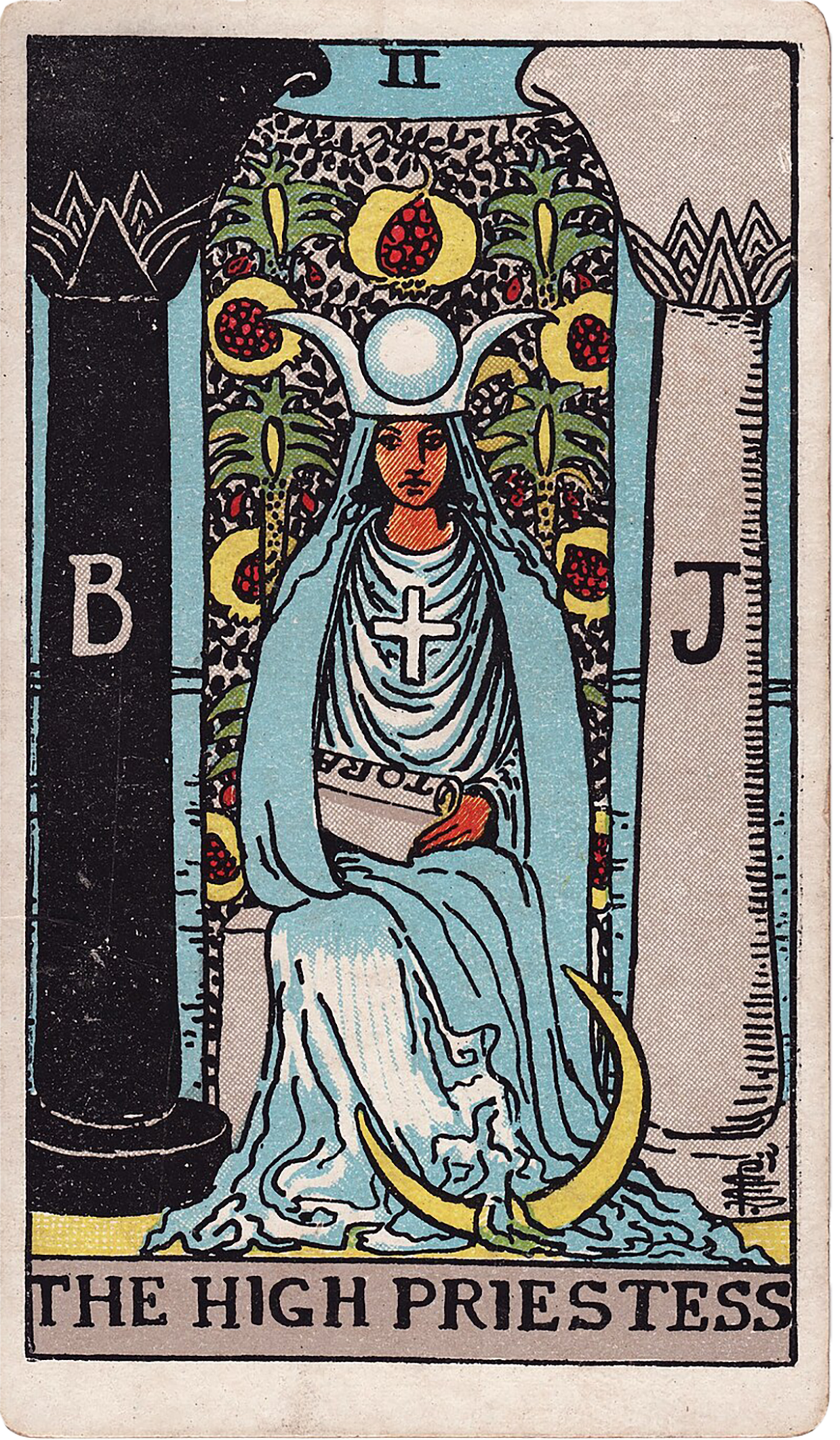 The High Priestess
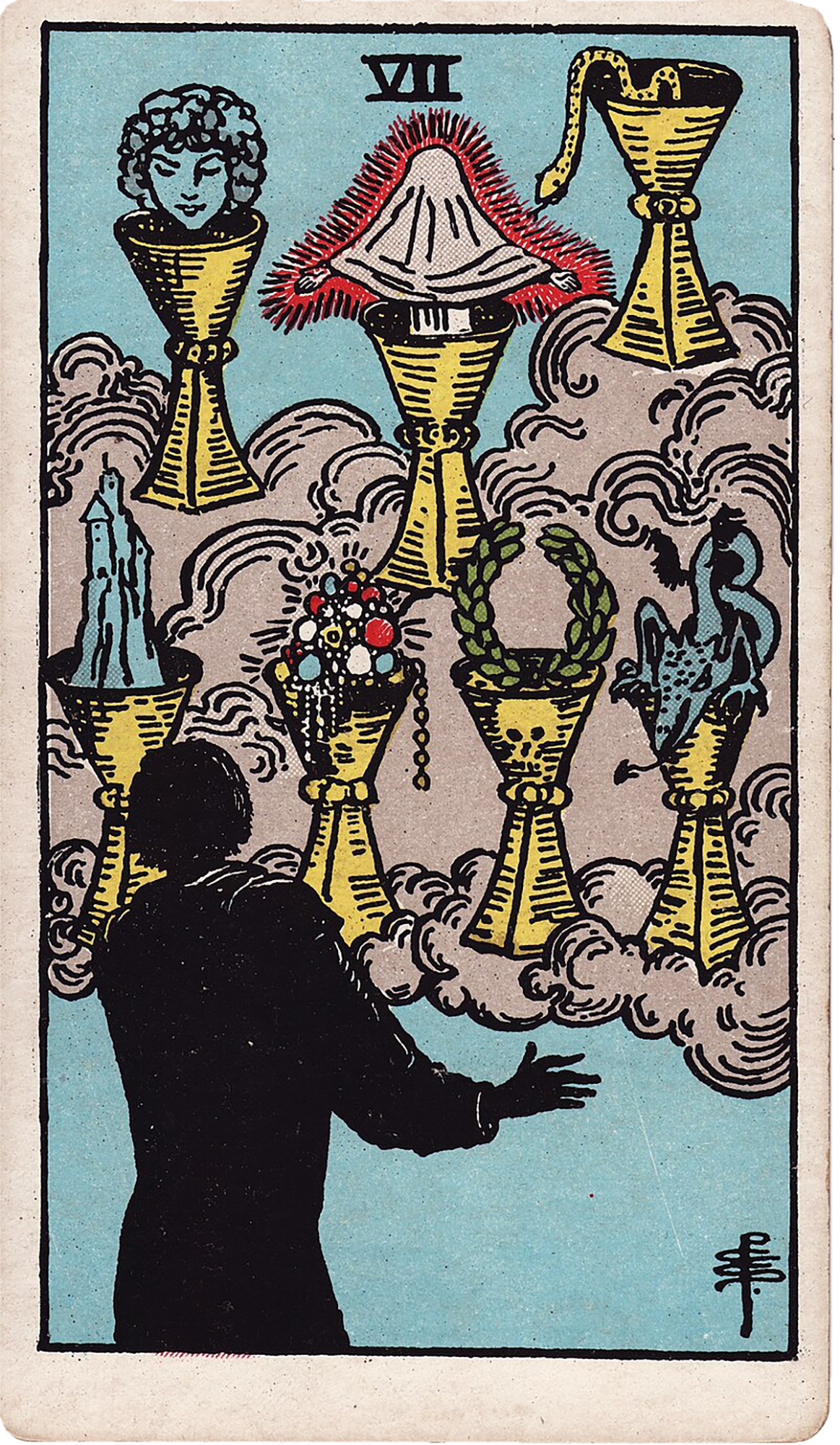 7 of Cups
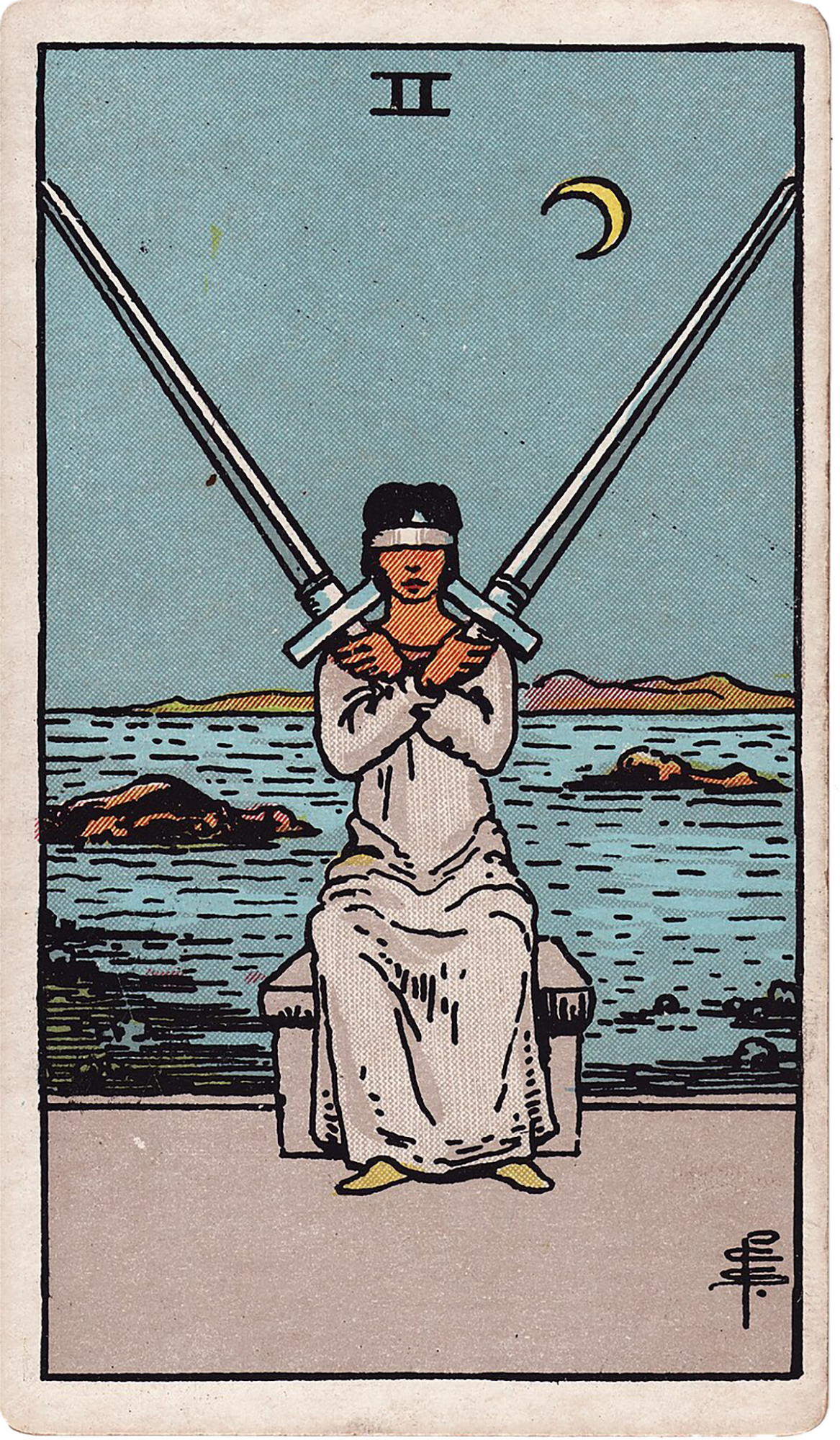 2 of Swords
Overview of the three cards and the central theme
When The High Priestess, 2 of Swords, and 7 of Cups appear together they frame a single problem: the tension between inner knowing, suspended decision, and an array of alluring or confusing possibilities. Use the Rider-Waite-Smith visuals as constant reference. The High Priestess sits between black and white pillars, half-hidden by a pomegranate veil, with the crescent moon at her feet and a scroll partially concealed — imagery of hidden knowledge, layered truth, and the invitation to listen beneath surface thought. The 2 of Swords shows a blindfolded figure with two crossed swords, seated before a calm sea and a crescent moon — a state of choice withheld because information or emotional readiness feels incomplete. The 7 of Cups scatters cups in clouds, each cup containing an object or figure (a castle, jewels, a laurel wreath, a serpent, a head, a shrouded figure, a dragon/illusion depending on edition) — a pictorial catalogue of fantasies, possibilities, fears and desires that invite discernment. Read together, they ask: can inner, quiet discernment separate true options from seductive illusions and allow a proportionate choice rather than paralysis or escapism?
How each card modifies the others
Think in terms of role rather than rank. The High Priestess supplies the temperament: inward, receptive, discriminating if allowed. The 2 of Swords describes the current behavior: withholding a decision, keeping swords crossed as a protective boundary or a block. The 7 of Cups supplies the content that stimulates the block: many emotional or imaginative options, some meaningful, others distracting. Practically: The High Priestess can turn a 7 of Cups flood of images into a listening exercise — not for immediate action but for what echoes as true. She can temper the 2 of Swords' stalemate by advising a subtle, inner test rather than a forced display of logic. Conversely, a dominant 7 of Cups can overwhelm The High Priestess, producing fantasies mistaken for intuition; in that case the 2 of Swords may be a useful pause that prevents impulsive choices. If the 2 of Swords is reversed, the stalemate is breaking; paired with The High Priestess and 7 of Cups this can mean the querent is beginning to act on an inner sense or, less ideally, moving impulsively toward an illusion. Always observe which card feels most active in the image sequence and let that inform which energy is leading the story.
Reading imagery for nuance and practical evidence
Anchor interpretation to details: The High Priestess' veil and pomegranates suggest hidden generational or collective patterns and fruitful secrets; the scroll implies partial reveal — some facts are present, some are withheld. Use this to ask: what is already known that the querent refuses to say aloud? The 2 of Swords' blindfold asks whether the block is self-imposed (refusal to feel or to know) or protective (waiting for clearer information). The calm sea beyond the figure indicates emotions present but kept at a distance; if the sea is turbulent in the image you have been given, that signals emotional pressure pushing toward decision. The 7 of Cups' objects act like test points: the castle might represent security or status, the jewels material temptation, the laurel or wreath success or public acclaim, the serpent a threat or tempting quick solution, the shrouded figure an unknown inner shape — assign concrete, real-life equivalents when reading. Ask the querent to name one real circumstance that corresponds to a cup and check for evidence. This visual-to-fact link prevents dream-speech from becoming predictive certainty.
Contexts and examples Relationship
Scenario: A querent is torn about a partner and several romantic possibilities. The High Priestess suggests an internal truth about attachment patterns — perhaps a habitual fear of intimacy that speaks quietly through dreams or bodily sensation. The 7 of Cups shows the mind populating alternatives: exes idealized, fantasy lovers, or imagined scenarios where leaving produces romantic opportunity. The 2 of Swords shows the querent pausing, perhaps pretending to be neutral while internally oscillating. Interpretation logic: The reader should ask which cup contains a realistic, embodied option versus which are wishful stories. Use the High Priestess to probe somatic signals: when you imagine being with X, where do you feel it in the body? That clarifies whether a cup is grounded. If the 2 of Swords is reversed in this context, it may mean the person is about to make a move without full emotional integration — a warning to test rather than leap.
Contexts and examples Career
Scenario: A job seeker faces multiple offers and a sense of paralysis. The 7 of Cups maps the offers' attractions: one cup contains money, another status, another creative freedom, another stability, another risk. The 2 of Swords shows deliberation — perhaps an information gap about benefits or culture. The High Priestess asks the seeker to listen for less obvious data: references, internal hesitations, the 'soft' evidence in interviews. Practical technique: have the seeker list for each offer what is already verified and what is imagined. The image of The High Priestess advises small tests (short projects, informational interviews) that reveal hidden qualities. If the High Priestess appears reversed, caution that bias, wishful thinking, or secrecy might be skewing judgment: verify hard facts before deciding.
Contexts and examples Emotional and practical problem solving
Scenario: A creative person has many project ideas and cannot commit. The 7 of Cups is the creative flood; the 2 of Swords is the self-imposed freeze that keeps nothing completed; The High Priestess offers inner criteria for what project to pursue (which idea resonates deepest, not which sounds best externally). Techniques include timed trials (work on one idea for two weeks) to let intuitive preference show itself in persistent attention. If the 7 of Cups appears reversed with the High Priestess upright and the 2 of Swords upright, that's a helpful sign: fantasy is shrinking and inner listening is clarifying a realistic path, making a deliberate choice possible.
Upright and reversed nuances and combinations to watch
Use reversals to refine the narrative rather than flip meanings simplistically. Examples: 1) High Priestess reversed + 7 of Cups upright + 2 of Swords upright: inner knowing is blocked or confused; fantasies swell and the querent maintains paralysis. The reading should focus on separating projection from gut sense and recommending grounding tests. 2) High Priestess upright + 7 of Cups reversed + 2 of Swords reversed: the flood of fantasies has begun to collapse; inner sense is clearer and the stalemate is breaking. This configuration often precedes a decision, but the 2 of Swords reversed can be either healthy resolution or hasty choice — ask what evidence supports movement. 3) 7 of Cups dominant + High Priestess dominant + 2 of Swords dominant: if one card visually dominates the spread, treat it as the leading energy (e.g., overwhelming options vs. inner clarity vs. stalemate). The practical reading choice is to identify which card is in the 'driver's seat' and orient advice accordingly.
Integrated reading method step by step
1) Identify roles: assign The High Priestess to "inner standard/knowing," 2 of Swords to "decision stance," 7 of Cups to "options/imagery." 2) Read images first: list three concrete correspondences for each card's visual elements (for the 7 of Cups, name which real choices map to the depicted objects). 3) Ask clarifying questions: What is known? What is assumed? What test would falsify a favorite option? 4) Weigh the cards in sequence: if The High Priestess appears leftmost, interpret inner knowing as the starting point; if 2 of Swords is central, the reading centers on the suspension; if 7 of Cups is last, the outcome will be how choices play out. 5) Suggest a proportionate next step that fits the stage: not always an immediate choice. Examples include small experiments, information-gathering, somatic checks, or naming which cup is grounded vs imagined. 6) Close by checking for actionability: if no step is possible, offer a practice (journal, meditation on The High Priestess) that refines evidence.
Common mistakes and how to avoid them
Mistake 1: Treating the High Priestess as a call to inaction. Correction: she recommends disciplined inner work or small tests, not perpetual waiting. Mistake 2: Reading 7 of Cups only as 'good' or 'bad' — it is a set of data points that require sorting. Correction: translate each cup into a concrete alternative and verify. Mistake 3: Over-ascribing the 2 of Swords as immovable stalemate. Correction: note whether the blindfold is protective or avoidant; look for signs (reversals, surrounding cards) that it is loosening. Mistake 4: One-card-at-a-time literalism. Correction: always interpret interactions: suits (Cups emotion, Swords thought, Major Arcana inner law) show how processes mix. For example, don't let the 7 of Cups' fantasies cancel The High Priestess' quiet testing; instead ask which fantasies survive factual checks.
Exercises to build skill
1) Visual Mapping Exercise: pull the three cards and, looking only at the images, write down one physical sensation, one memory, and one concrete evidence item that each card evokes. Practice the habit of translating image to data. 2) Cup-to-Check Drill: for each object in the 7 of Cups, write one verifiable question (Does this job pay X? Has this person shown reliable commitment?). Use answers to eliminate at least two options. 3) High Priestess Listening Practice: spend five minutes daily sitting with the image and noticing bodily reactions to questions like "Is this a yes?" Log patterns over a week to see consistent signals. 4) Two-Week Micro-Test: if the 2 of Swords shows stalemate, pick one low-risk experiment tied to the most resonant cup and run it for two weeks. Record outcomes and return to the reading to see how images have shifted.
Closing guidance for learners
Treat this trio as a diagnostic cluster more than a verdict. The High Priestess asks for interior calibration; the 7 of Cups reveals the content of imagination and desire; the 2 of Swords shows how the querent is relating to choice itself. Your job as a reader is to translate symbolic images into tests, evidence, and proportionate next steps. Keep returning to the cards' images — the veil, the blindfold, the cloudy cups — and let them bridge from metaphor to practical questions the querent can answer. Over time you will learn to recognize when intuition is reliable and when it has been hijacked by fantasy.
Practice questions
• Which of the three images felt most active when you first saw the spread and why?
• What in your life corresponds concretely to one of the objects in the 7 of Cups?
• Is the 2 of Swords' blindfold protective or avoidant in this situation? What evidence supports your answer?
• When The High Priestess invites inner listening, what small test could you run in seven days?
• How would you explain the difference between intuition and wishful thinking to a querent using only details from these cards?
Comments
Sign in to comment.
Continue learning
Interpreting the Dance of Justice and The Devil: Balancing Morality and Temptation in Tarot Readings
The combination of Justice and The Devil in tarot presents a profound exploration of morality, temptation, and personal accountability. This article unpacks how these cards influen...
Harnessing the Power of The Magician and Ace of Wands: Igniting Creativity and Manifestation in Tarot Readings
The combination of The Magician and the Ace of Wands in tarot readings offers a potent blend of creative energy and manifestation power. This article delves into the ways these car...
Understanding the Synergy Between The Empress and The Emperor in Tarot Card Combinations
This article delves into the intricate synergy between The Empress and The Emperor cards in Tarot, focusing on how their combined energies modify and enrich readings across various...
Decoding Transformation and Renewal with Death and The Star in Tarot Combinations
This article delves into the card combination of Death and The Star, two powerful Major Arcana cards from the Rider-Waite-Smith deck. It explores how their imagery and meanings int...
Balancing Ambition and Compassion with The Emperor and Queen of Cups in Tarot Combinations
This article delves into the nuanced Tarot card combination of The Emperor and Queen of Cups, emphasizing how their energies complement and challenge each other. By analyzing their...
Finding Emotional Healing and Renewal with The Star and The Moon Tarot Combination
This article examines the rich interplay between The Star and The Moon tarot cards when they appear together in a reading. Using the traditional Rider-Waite-Smith symbolism and the...
Unlocking Emotional Wisdom with The High Priestess and The Queen of Cups in Tarot Combinations
This article delves into the card combination of The High Priestess and The Queen of Cups, emphasizing their shared themes of intuition, emotional depth, and receptivity. By examin...
Unlocking Emotional Resilience with Strength and The Star in Tarot Combinations
This article delves into the Tarot card combination of Strength and The Star, revealing how their interplay highlights pathways to emotional resilience. Anchored in the Rider-Waite...
Unveiling Emotional Strength with Strength and The Queen of Cups in Tarot Combinations
This article delves into the dynamic Tarot combination of Strength and The Queen of Cups, emphasizing how these cards together illuminate emotional strength, compassionate boundari...
Unlocking Emotional Transformation with Death and The Moon Tarot Combination
This article explores the rich and complex interaction between the Death and The Moon tarot cards within the Rider-Waite-Smith tradition, focusing on their combined potential to un...