
Reframing Failure into Strategy with Ten of Swords Seven of Pentacles and Page of Pentacles
This article teaches how the Ten of Swords, Seven of Pentacles and Page of Pentacles form a three-act sequence: ending or collapse, evaluation of investment, and the pragmatic restart of learning and planning. It shows how to read their visual symbolism together, how they modify each other in career, relationship and emotional contexts, and gives technique, case examples, exercises and common pitfalls for learners who want to shift from one-card labels to integrated strategy-based readings.
Read the cards together
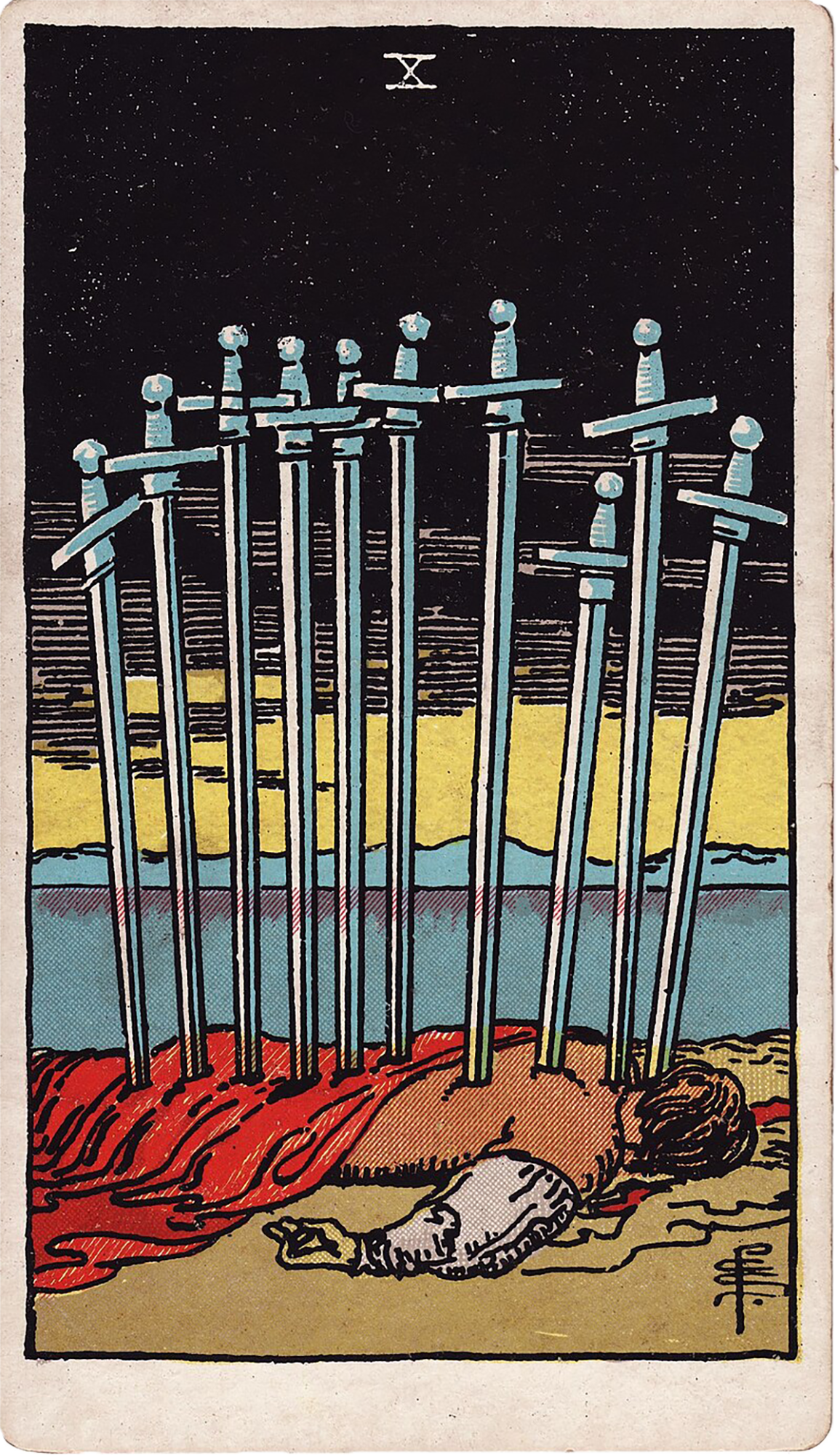 10 of Swords
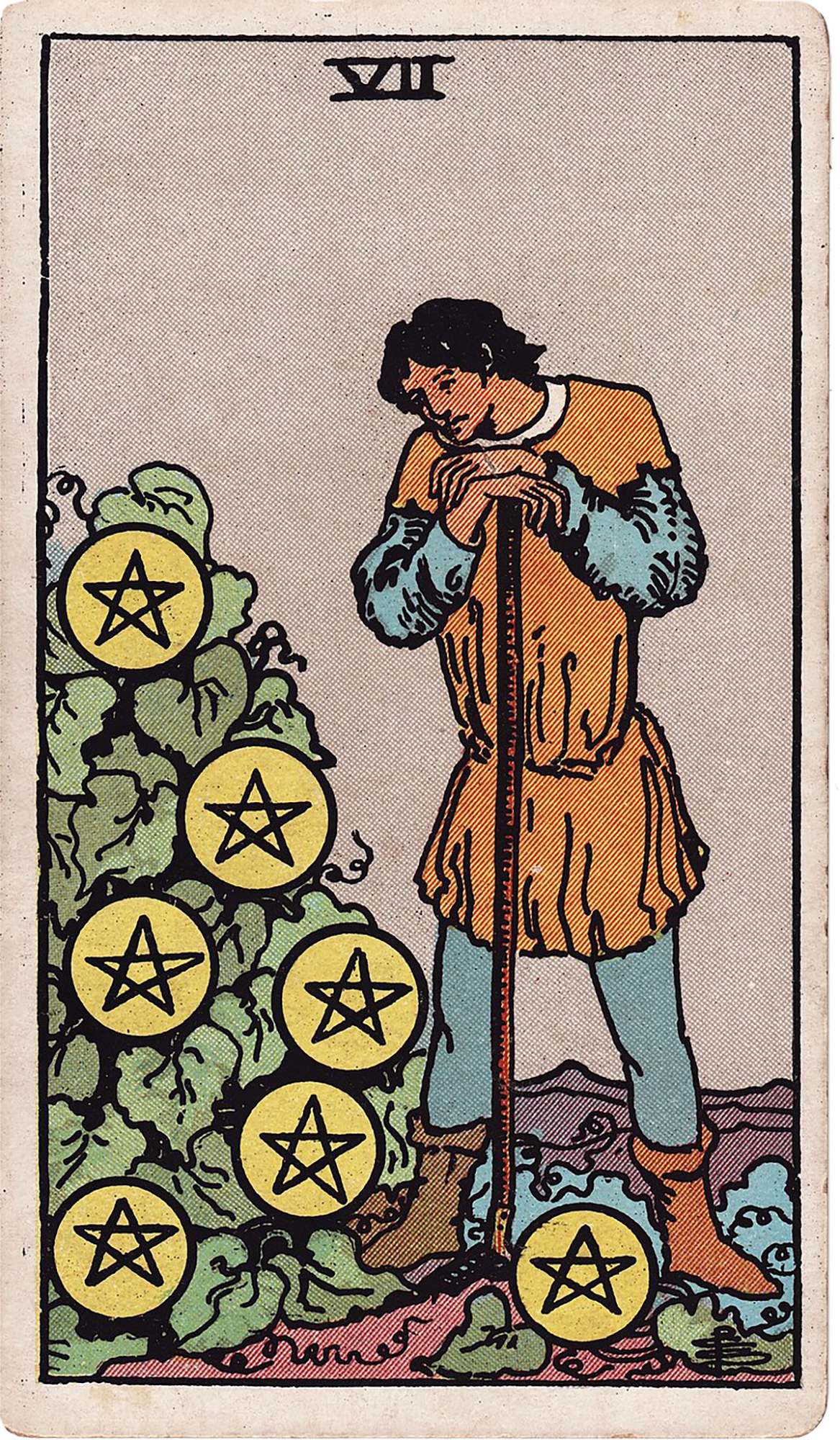 7 of Pentacles
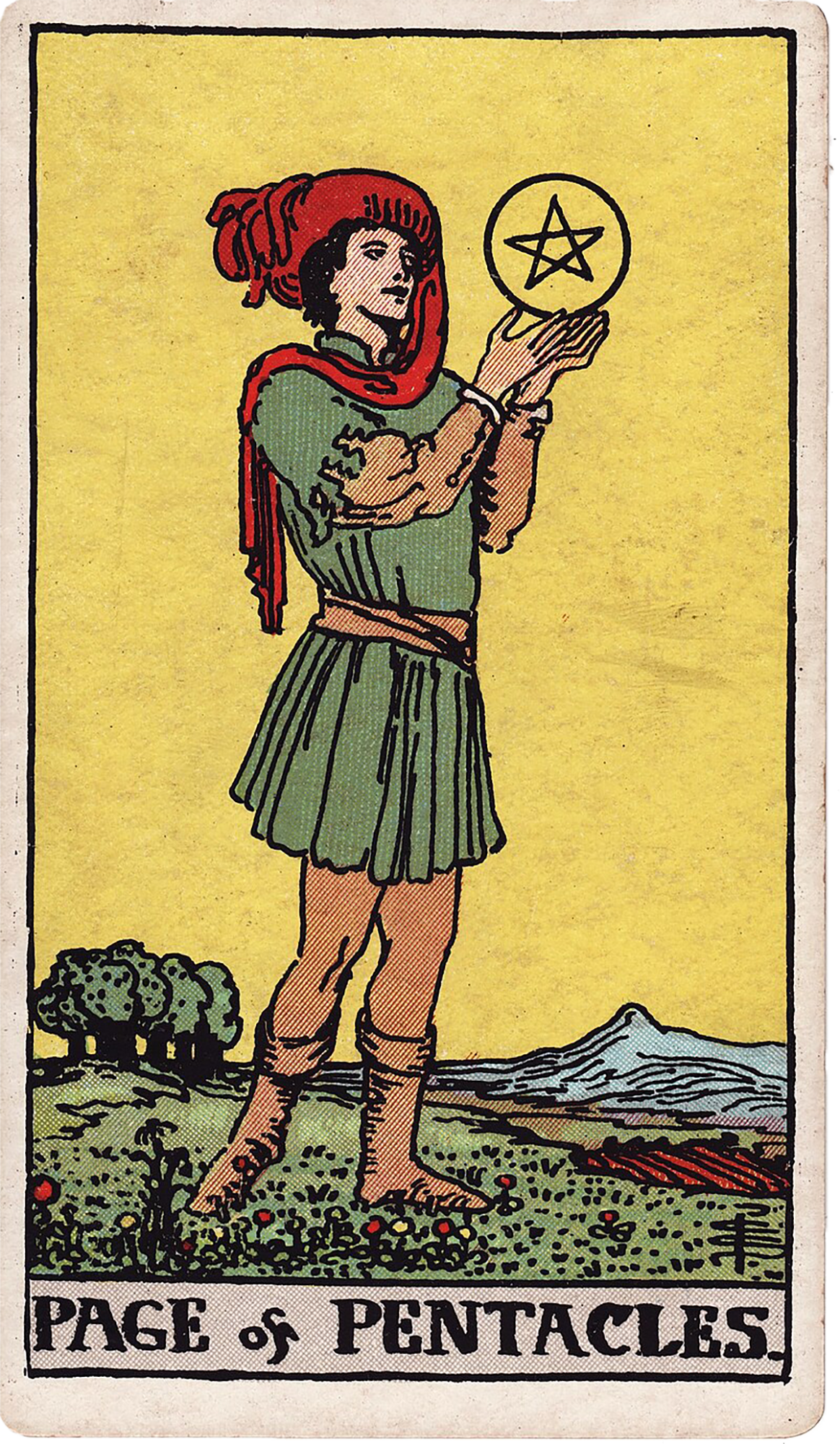 Page of Pentacles
Introduction: From Catastrophe to Curriculum
The combination of the Ten of Swords, Seven of Pentacles and Page of Pentacles reads like a short curriculum in failure and rebirth. The Ten of Swords gives the shock or definitive ending; the Seven of Pentacles asks for a patient, hard-eyed review of what you planted and why; the Page of Pentacles offers the learner's energy to rebuild with practical skill. Read visually: the Ten's dark figure and the first hint of dawn tell you something has hit bottom but also that recovery is plausible; the Seven's gardener waiting over slow-growing pentacles asks you to pause and evaluate yield versus input; the Page's studious gaze at a single pentacle hands you a new apprenticeship or careful step to take next. Together they form a narrative arc you can translate into strategy rather than a moralized judgment of success or failure.
Card close readings: imagery, core meanings, and what to watch for
Ten of Swords (upright): In traditional Rider-Waite-Smith imagery the Ten of Swords shows a prone figure pierced by swords, under a heavy sky but with a thin band of light along the horizon. Upright, the card announces a painful ending or the culmination of a destructive pattern. It names a limit: damage has been done, the situation cannot continue as it was, and the practical task is to respond to reality rather than cling to what has failed. Watch for the dawn—the card asks you to locate the practical first steps for recovery and to be honest about which parts are over. Ten of Swords (reversed): Reversed, the focus shifts to survival strategies and whether someone is resisting necessary endings, or beginning to recover but not yet integrated the lesson. It can indicate repeated collapse or a pattern that is now mostly internal and private: the external world may not see the slow rebuild. When the Ten is reversed, ask: where is the attempted repair superficial? What needs simpler, steadier work? Seven of Pentacles (upright): The Seven of Pentacles shows a farmer leaning on a hoe, looking at pentacles growing on stalks. This is a pause for review after sustained investment. Upright, the card calls for honest assessment of whether the effort will pay off and whether adjustments are needed. It is not a dramatic card; it is a practical ledger moment. Watch for the body posture—there is patience but also a question: do you continue, alter, or redirect? Seven of Pentacles (reversed): Reversed, the Seven highlights impatience, sunk-cost thinking, or premature abandonment. It warns against repeating work without reflection or losing motivation before returns mature. Ask whether you are measuring realistic outcomes and whether your time horizon is aligned with the project. Page of Pentacles (upright): The Page is the beginner-intent on material matters: a young person studying a single pentacle, representing curiosity about skill, a commitment to learning, and grounded planning. Upright, it's practical and modest—new coursework, a trial job, an experiment in health or finance that you treat seriously. Look at the Page's posture: focused, not dramatic. The Page brings a methodical restart. Page of Pentacles (reversed): Reversed, the Page can mean procrastination, unfocused learning, or planning without follow-through. It suggests that opportunity is present but competence and discipline are not yet formed. When reversed, ask what structures are missing to move from idea to skill.
How these three cards modify one another: dynamics and thematic roles
Think of the three cards as roles in a short drama: the Ten of Swords sets the scene of collapse or unavoidable ending; the Seven of Pentacles frames the necessary assessment; the Page of Pentacles provides the practical next step of learning or small-scale testing. When reading them together you must track several kinds of modification. 1) Temporal sequencing and causal flow. Often the Ten will represent a prior event (the break, the termination) that forces the review in the Seven; the Page then expresses the next phase of practical re-engagement. This makes the combination especially useful for questions about recovery or pivoting after loss. If the Ten appears reversed, the causal chain may be stuck—ending is resisted or recovery has started but is incomplete, and the Seven becomes a moment where the querent must decide to either continue repeated attempts or accept a deeper change. 2) Tone and suit balance. The Ten is a Swords card (mind, truth, decisive endings), while the Seven and Page are Pentacles (resources, body, work). The swords energy announces a cognitive or truth-driven rupture; the pentacles ask for material follow-through. The swords' message is: name what failed. The Seven's message is: appraise the investment honestly. The Page's message is: begin again on a small, practical scale. The combination invites moving from insight (Swords) to careful material practice (Pentacles). 3) Image-based links. Use Rider-Waite imagery to connect the cards: the Ten's dawn is literal hope but only if paired with the gardener's patience—the Seven—because barren ground does not sprout without tending. The Page stands for the earliest shoot in that tending: a single pentacle studied, a seed being learned about. These images help you form questions for the querent: what do you see at your horizon? What are you willing to tend? What small skill will you commit to? 4) Modulation by reversals. Reversals change whether the sequence is flowing or stuck. Ten reversed + Seven upright + Page upright can indicate that the querent is beginning to rebuild internally but needs to translate inner recovery into honest evaluation. Ten upright + Seven reversed + Page upright warns that an abrupt ending was followed by impatience or a reflexive decision to change course too quickly; the Page may help by suggesting structured learning rather than scattershot responses. The permutations matter because they tell you whether the cards form a coherent strategy or conflicting impulses. 5) Role distribution in spreads. In a three-card spread of Past-Present-Future, Ten/Seven/Page reads almost literally: past collapse, present pause, future plan. But in other layouts (challenge/advice/outcome, or person/situation/action), the cards' roles shift. Always anchor interpretation to imagery: if Ten sits in a present position, emphasize immediate limit and the dawning necessity of change; if Page is in advice position, emphasize small, accountable steps. Treat the Seven as the diagnostic lens wherever it appears.
Contexts and practice: career, relationships, and emotional work
The same three-card combination translates differently depending on question and context. Below are context-specific readings that model how to use imagery and suit logic to provide grounded, practical guidance rather than vague hope. Career and projects - Scenario A: Ten of Swords upright, Seven of Pentacles upright, Page of Pentacles upright. Interpretation: A role, project or business has ended decisively. The Ten shows the necessary closure—the horizon suggests opportunity but not yet clarity. The Seven asks for a careful audit: what skills, networks, or financial realities are preserved? The Page advises taking a beginner's approach to a new skill or small pilot project. Practical guidance: create a one-month audit (Seven) and identify one concrete learning goal (Page) such as a mini-course or informational interviews. Use the Ten's lesson to avoid repeating the same faulty assumptions. - Scenario B: Ten reversed, Seven upright, Page reversed. Interpretation: The querent is still recovering privately from repeated setbacks (Ten reversed) and is in a review mode. The Page reversed signals a danger: repeating old patterns of procrastination or poorly structured learning. Practical guidance: insist on measurable short steps—set two clear metrics for progress and a schedule for accountability. Use the Seven to test whether previous investments (time, money, team members) should be retained. Relationships and roles - Scenario C: Ten upright, Seven reversed, Page upright. Interpretation: A relationship has experienced a painful rupture or betrayal (Ten upright). The Seven reversed shows impatience or a tendency to either cling to what is comfortable or to abandon growth too quickly. The Page upright introduces a humble, curious approach to re-learning how to relate—perhaps suggesting therapy classes, skills-building, or renegotiation with small commitments. Practical guidance: despite the anger of the Ten, avoid snap decisions. Use the Page to trial safe behaviors (short conversations, clear boundaries) and let the Seven's slower perspective inform eventual choices. Emotional and inner work - Scenario D: Ten upright, Seven upright, Page reversed. Interpretation: Internally, the querent recognizes a meltdown or pattern of self-sabotage. They are willing to examine habits (Seven) but the Page reversed warns of surface-level study without practice. Practical guidance: pair reflective journaling (Seven) with disciplined micro-practices (Page) such as a five-minute grounding routine repeated daily. Ask whether the Ten's pain has been fully named; name it aloud or in writing to stop it replaying unconsciously. Money and practical resources - Scenario E: Ten reversed, Seven reversed, Page upright. Interpretation: Financial or material stress has become chronic or cyclical (Ten reversed) and past investments look like poor returns (Seven reversed). The Page upright is hopeful: a small, deliberate move—an entry-level job, a tight budget plan, or an incremental side income—may be the right response. Practical guidance: stop throwing money into the same hole (Seven reversed) and lay out a three-part plan: 1) stabilization steps (immediate), 2) a one-month review (Seven), and 3) a micro-skill learning plan (Page).
Technique: reading the combination rather than the cards individually
Many learners fall into the trap of reading each card as if isolated and then tacking them together. With Ten/Seven/Page, the stronger method is integrative: build a narrative that respects origin (Ten), assessment (Seven) and method (Page). Here is a step-by-step technique to apply in practice. 1) Anchor in imagery first. Before naming upright meanings, describe what you see in the Ten of Swords, Seven of Pentacles and Page of Pentacles. Where is the light? What is the figure doing? What is their posture? This prevents premature moralizing and roots interpretation in the deck's visual message. 2) Identify the dominant function of each card in the spread position. Ask: does the Ten name a cause, a consequence, or a warning? Is the Seven calling for a pause, a metric, or a redirection? Is the Page advice, opportunity, or a trap? Let suit correspondences guide you: Swords for naming truth, Pentacles for material action. 3) Test for sequence and feedback loops. Does the Ten lead to the Seven which leads to the Page? Or does a stuck Ten reversed make the Seven loop into indecision while the Page circles without landing? If there is a loop, sharpen your question: what breaks the loop—an action, a boundary, a focused apprenticeship? 4) Translate to concrete verbs. Convert each card into a single action: Ten = accept/end/acknowledge; Seven = review/measure/decide; Page = learn/try/small-step. Put those verbs into a simple plan: Day 1–7 accept and stabilize; Day 8–30 review and revise; Month 2–3 begin a small course or pilot. This method makes the reading procedural rather than predictive. 5) Ask clarifying questions. Use the Seven as a diagnostic probe: What exactly did you invest? What returned? Use the Page as an action probe: What small, low-cost experiment can you try? Use the Ten to examine beliefs: what story about failure do you keep repeating? 6) Use follow-up clarifiers. If the spread suggests a stuck reversal, pull a clarifier from the deck (if you use more cards) and ask which of the three stages needs the most attention. If you prefer not to pull more cards, ask the querent for concrete evidence of progress and create a short accountability plan. 7) Avoid moral language. Instead of "you failed" say "this system reached its limit" (Ten), "we can examine inputs and outputs" (Seven), "we can design a low-risk experiment to learn" (Page). This keeps readings actionable rather than shaming.
Examples and case studies
Example 1: Freelance burnout Scenario: A freelancer draws Ten of Swords upright in the 'Recent Past', Seven of Pentacles upright in 'Present', Page of Pentacles upright in 'Advice'. Interpretation: The Ten shows a burnout or contract collapse—perhaps an exhaustive client relationship ended. The Seven says the freelancer is currently pausing to ask whether prior practices (pricing, contract terms, work hours) yielded sustainable income. The Page recommends a concrete learning goal: a short course on business boundaries or a pilot with a new eco of clients. Practical plan: 1) Stabilize income (emergency clients or temporary work). 2) Map costs and client ROI for the last six months (Seven). 3) Enroll in one specific skill-building activity and set a measurable milestone for three months (Page). Example 2: Relationship trust breach Scenario: Ten of Swords upright in 'Situation', Seven reversed in 'Challenge', Page upright in 'Outcome'. Interpretation: The Ten is a sharp rupture—betrayal or a relationship ending. Seven reversed as a challenge warns of wanting to either rush reconciliation or throw out everything at the first sign of difficulty. The Page upright as outcome suggests a modest, apprenticeship-like rebuild: small rituals to rebuild trust rather than dramatic gestures. Practical plan: Establish two small behaviors to restore trust (consistency in texting, agreed times for check-ins). Measure weekly rather than trying a one-off overhaul. Example 3: Repeated financial setbacks Scenario: Ten reversed in 'Obstacle', Seven upright in 'Action', Page reversed in 'Advice'. Interpretation: Ten reversed shows a pattern of collapses that the querent is still recovering from. The Seven upright as action encourages a thorough review of where funds were spent and whether investment decisions were strategic. The Page reversed warns against jumping into new ‘get rich quick’ schemes without disciplined learning. Practical plan: Create a clear budget and emergency fund first; delay any new investments until the review shows a clear, realistic runway.
Common mistakes learners make and how to avoid them
Mistake 1: Treating the Ten as only doom. Correction: The Ten of Swords names an ending, but Rider-Waite imagery includes dawn. When combined with pentacles the practical question becomes: what do you do next? Always follow the Ten with a material action question. Mistake 2: One-card isolation. Correction: Don’t read the Ten, then the Seven, then the Page as separate stories. Instead, ask how each image answers the practical question posed by the other. Practice reframing cards as roles in a process: verdict, audit, apprenticeship. Mistake 3: Moralizing reversals. Correction: A reversed Ten is not failure forever—it flags stuckness or internal recovery. Use it diagnostically: what small test will prove integration? Mistake 4: Offering only emotional consolation. Correction: With two Pentacles cards present, concrete next steps matter. Give measurable, time-bound actions: a 14-day review, a one-page skills plan, three pilot calls. Learners need to practice converting insights to structure. Mistake 5: Ignoring suit interplay. Correction: Swords communicates truths and limits; Pentacles demand follow-up in the world. Name the cognitive truth the Ten indicates and the material behaviors the Seven and Page require.
Practice exercises and a short protocol for readings
Exercise 1: Three spreads across time. Shuffle and pull Ten/Seven/Page three times, each time asking: 1) "What should I stop?" 2) "What should I evaluate?" 3) "What small step should I take?" Compare answers and write a three-point action plan. Exercise 2: Image chaining. For each card, describe one concrete object or detail (Ten: dawn, blood, swords; Seven: hoe, row of pentacles, posture; Page: gaze, pentacle, soil). Write how each object could be translated into a concrete action in your life. Example: dawn = schedule a quiet hour to plan; hoe = clear a small part of your workload; single pentacle = commit to one micro-course. Quick reading protocol for clients (10-15 min): 1) Invite the querent to describe recent events in one sentence. 2) Show the three cards; name the images aloud. 3) Ask which card 'speaks' first to them. 4) Translate each card into one verb (stop/review/learn). 5) Create three practical actions with timelines (3 days, 3 weeks, 3 months). 6) Offer a concrete accountability check—call, note, or brief email in two weeks. These exercises train the muscle of turning tarot imagery into an incremental plan rather than a verdict.
Conclusion: From story to strategy
Ten of Swords, Seven of Pentacles and Page of Pentacles together form a compact pedagogy for failure: name the end honestly (Ten), evaluate your investments with patience and metrics (Seven), and adopt a beginner's, disciplined approach to relearning or re-entry (Page). The Rider-Waite images—dawn after the Ten, the waiting gardener of the Seven, and the studious Page—give you a visual roadmap. For learners, the crucial skill is integration: always translate the cards into verbs and timelines, avoid moral labels, and use reversals to pinpoint where the process stalls. When you do this, the combination becomes less about fate and more about method: how to reframe failure into a deliberate strategy for repair, growth and durable skill.
Practice questions
• Looking at the images of these three cards, which single detail draws your attention and why?
• Where in your life have you experienced a Ten-of-Swords-type ending that you have not yet fully acknowledged?
• What investments (time, money, habits, relationships) would the Seven of Pentacles ask you to measure honestly?
• What concrete micro-skill or small experiment could the Page of Pentacles represent for you right now?
• If one of these cards is reversed in a reading, how would you translate that into a specific practical change?
• How can you convert the cards' narrative (end, review, apprentice) into a 30-day plan with measurable steps?
• When you read these cards for someone else, what clarifying questions will you ask to avoid giving only emotional comfort?
• Which of the three stages—acceptance, evaluation, beginner practice—usually takes you longest, and why?
Comments
Sign in to comment.
Continue learning
Interpreting the Dance of Justice and The Devil: Balancing Morality and Temptation in Tarot Readings
The combination of Justice and The Devil in tarot presents a profound exploration of morality, temptation, and personal accountability. This article unpacks how these cards influen...
Harnessing the Power of The Magician and Ace of Wands: Igniting Creativity and Manifestation in Tarot Readings
The combination of The Magician and the Ace of Wands in tarot readings offers a potent blend of creative energy and manifestation power. This article delves into the ways these car...
Understanding the Synergy Between The Empress and The Emperor in Tarot Card Combinations
This article delves into the intricate synergy between The Empress and The Emperor cards in Tarot, focusing on how their combined energies modify and enrich readings across various...
Decoding Transformation and Renewal with Death and The Star in Tarot Combinations
This article delves into the card combination of Death and The Star, two powerful Major Arcana cards from the Rider-Waite-Smith deck. It explores how their imagery and meanings int...
Balancing Ambition and Compassion with The Emperor and Queen of Cups in Tarot Combinations
This article delves into the nuanced Tarot card combination of The Emperor and Queen of Cups, emphasizing how their energies complement and challenge each other. By analyzing their...
Finding Emotional Healing and Renewal with The Star and The Moon Tarot Combination
This article examines the rich interplay between The Star and The Moon tarot cards when they appear together in a reading. Using the traditional Rider-Waite-Smith symbolism and the...
Unlocking Emotional Wisdom with The High Priestess and The Queen of Cups in Tarot Combinations
This article delves into the card combination of The High Priestess and The Queen of Cups, emphasizing their shared themes of intuition, emotional depth, and receptivity. By examin...
Unlocking Emotional Resilience with Strength and The Star in Tarot Combinations
This article delves into the Tarot card combination of Strength and The Star, revealing how their interplay highlights pathways to emotional resilience. Anchored in the Rider-Waite...
Unveiling Emotional Strength with Strength and The Queen of Cups in Tarot Combinations
This article delves into the dynamic Tarot combination of Strength and The Queen of Cups, emphasizing how these cards together illuminate emotional strength, compassionate boundari...
Unlocking Emotional Transformation with Death and The Moon Tarot Combination
This article explores the rich and complex interaction between the Death and The Moon tarot cards within the Rider-Waite-Smith tradition, focusing on their combined potential to un...