
Resolve Indecision with The High Priestess The Hanged Man and the Two of Swords
This card-combination lesson teaches how The High Priestess, The Hanged Man, and the 2 of Swords work together to diagnose and move through indecision. Using Rider–Waite–Smith symbolism, practical reading technique, upright and reversed nuances where relevant, and concrete examples in relationship, career, and personal contexts, the article shows how to avoid one-card literalism and how each card modifies the others to produce a coherent advisory voice. The aim is to equip learners to read these three cards as a system: to recognize where knowledge is hidden, where a pause must be used, and what kind of action is proportionate and ethical.
Read the cards together
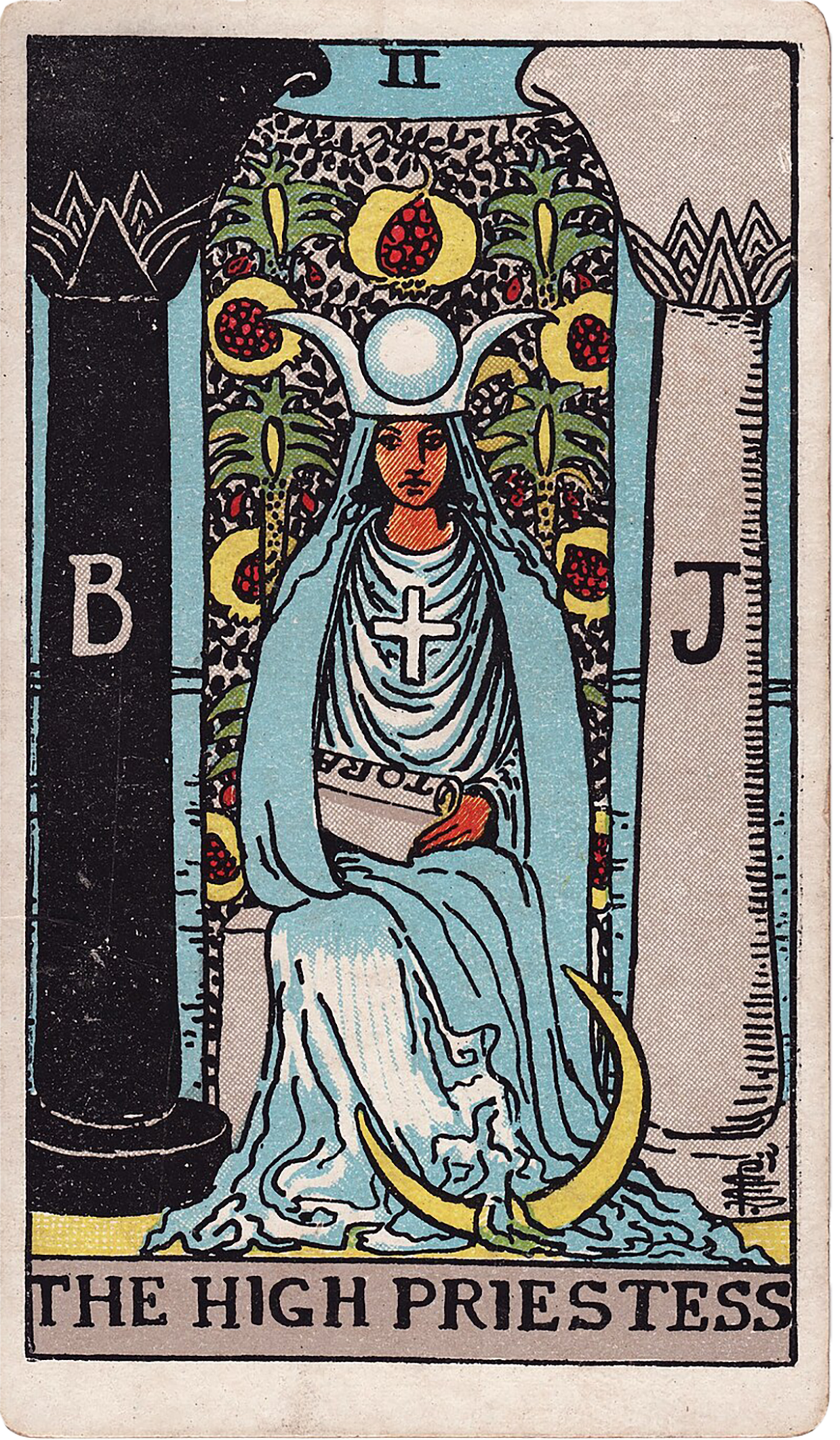 The High Priestess
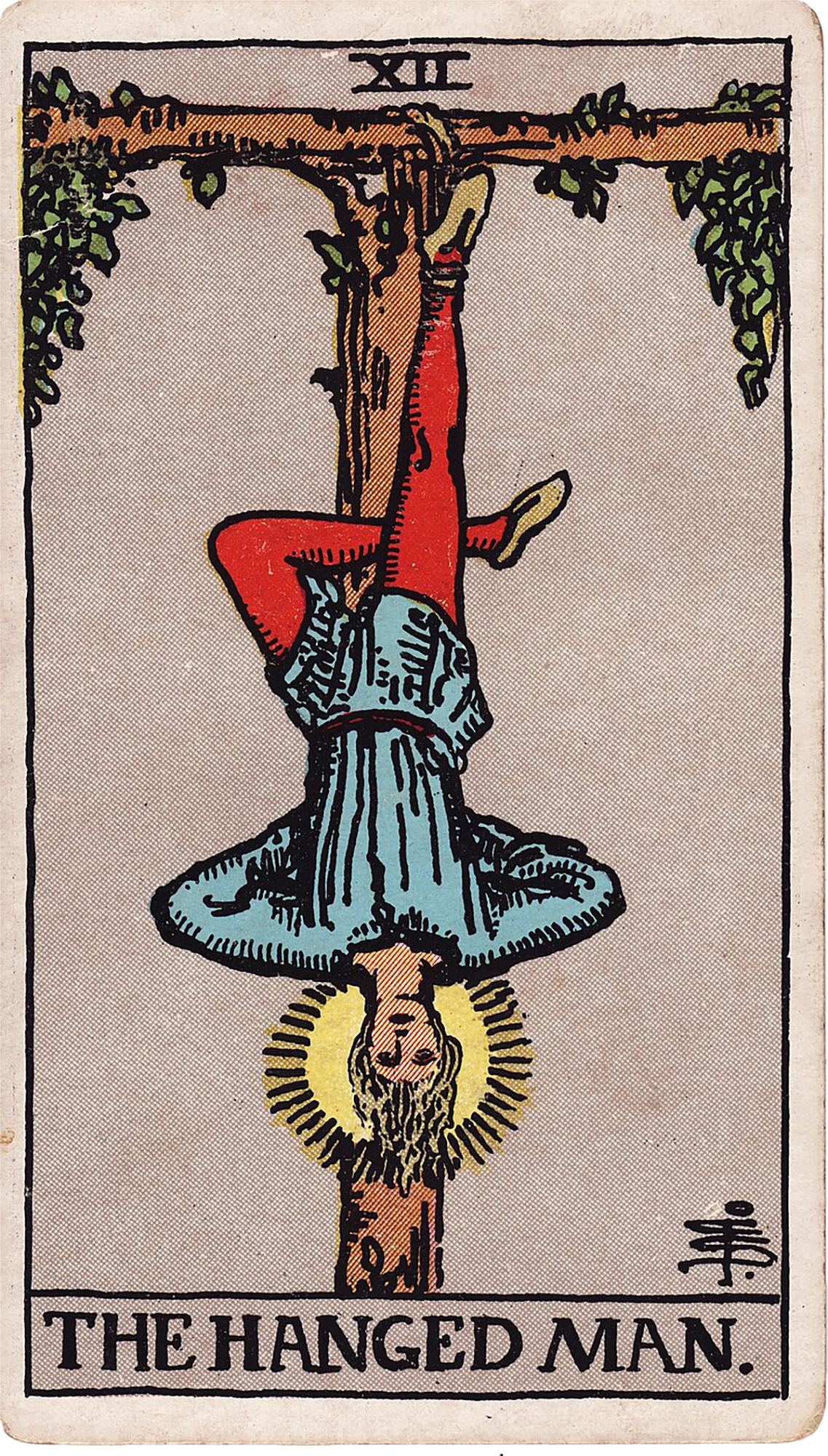 The Hanged Man
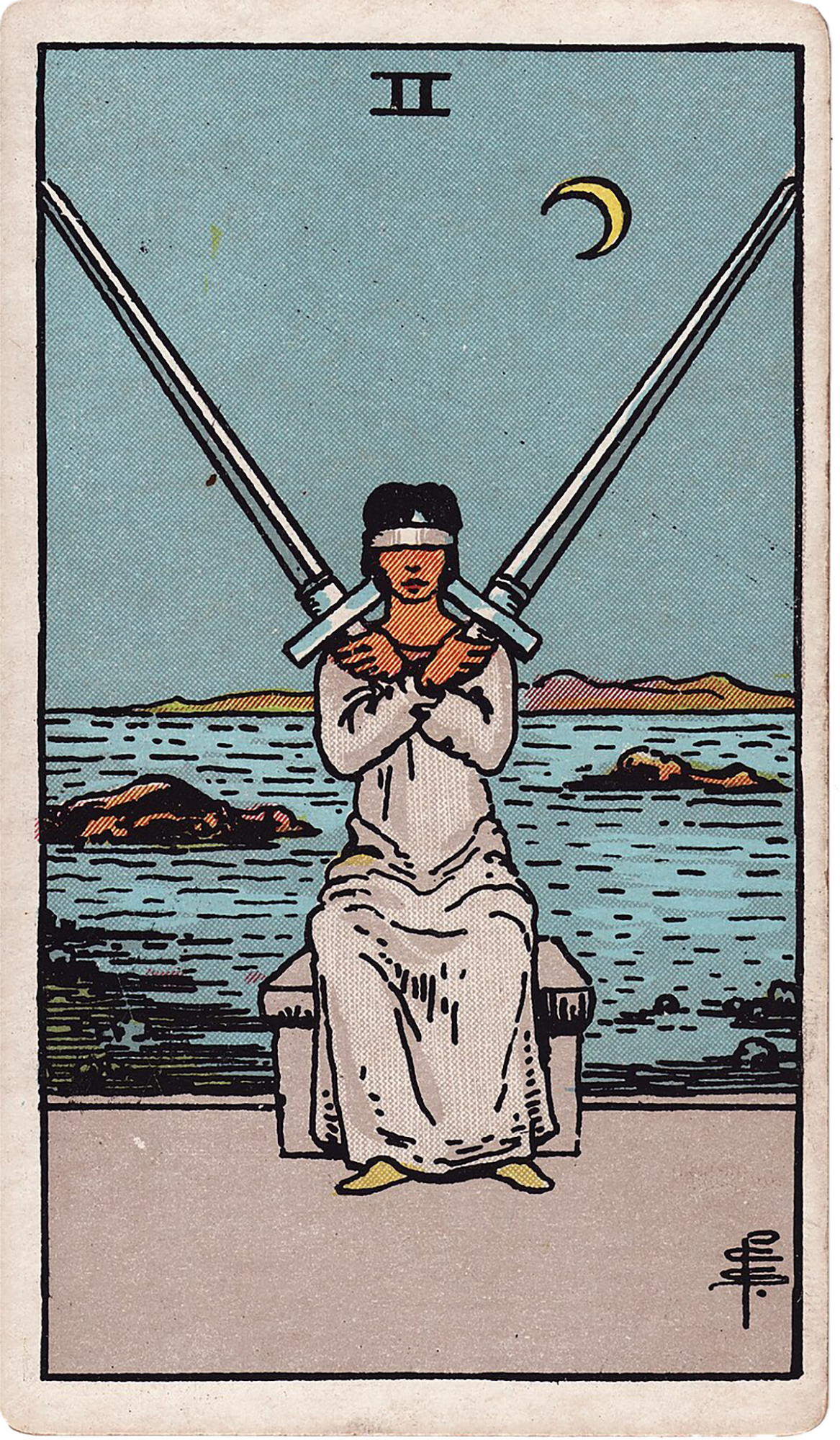 2 of Swords
Why this combination matters for indecision
Three images that frequently appear when a querent is stuck are the veiled woman of The High Priestess, the suspended figure of The Hanged Man, and the blindfolded guardian of the 2 of Swords. Each card names a different reason for hesitation: interior knowing or secrecy (High Priestess), deliberate or forced suspension that invites perspective (Hanged Man), and an active holding pattern where a decision is being blocked by incomplete information or emotional unreadiness (2 of Swords). Read together, the three cards provide a diagnostic map: what is hidden, whether the pause serves transformation or avoidance, and what decision mechanics are at work. Instead of treating them as three separate answers, the reader should synthesize how one card modifies the energy and practical advice of the others. That synthesis is the most useful tool for helping someone move from stuckness into proportionate next steps.
Principles for reading combinations (avoid one-card-at-a-time)
Many learners fall into the trap of reading each card in isolation, then listing meanings. That approach misses interaction. A combination reading asks: does Card A amplify, check, delay, complicate, or specify Card B? Start by noting role: which card names the problem, which names the obstacle or inner habit, and which offers the mechanism for change? For these three: • Identify the central issue language: often the 2 of Swords names the decision itself — a suspended choice, blindfolded evaluative stance, or stalemate. • Treat The High Priestess as the inner landscape and information field: what is known beneath the surface, what is being withheld, and where intuition or secrecy is active. • Use The Hanged Man to evaluate the function of the pause: is the suspension transformative (upright) or stagnant and martyr-like (reversed)? Read the trio as a sentence: The 2 of Swords states the immediate challenge; The High Priestess qualifies the information available or required; The Hanged Man tells you how the pause is functioning or should be used. Pay attention to verbs: is the High Priestess asking the querent to notice, is the Hanged Man asking them to release, and is the 2 of Swords calling for a proportionate choice?
Anchoring to the imagery: what to look for on the cards
Anchor each interpretation to the classical Rider–Waite–Smith imagery so your reading feels connected to the cards the querent sees. • The High Priestess: veil patterned with pomegranates and a crescent at her feet; she sits between the pillars B and J, indicating a threshold between seen and unseen. Her scroll, typically marked "TORA" or partly concealed, signals hidden law, inner knowledge, or material that isn't fully revealed yet. In readings about decisions, her presence asks where the querent must be patient for information to emerge, where secrecy or privacy is at play, and where attention to rhythm, symbol, dream, or slow perception will help. • The Hanged Man: an inverted figure suspended by one foot, often with a calm or enlightened expression and a halo. The inversion signals a literal change of perspective, release of usual control, and an invitation to let perspective change rather than forcing an outcome. Pay attention to the sense of voluntary suspension versus coerced hanging. • 2 of Swords: a blindfolded figure holding two crossed swords, usually seated at a stone bench with water behind and a crescent moon above. The blindfold and crossed swords describe a decision under internal conflict, a need to choose with incomplete evidence, and the tension between logic and feeling. Linking the visual motifs (veil, blindfold, inversion) helps you read how sight and not-sight, interior knowledge and external choice, are in dialogue.
How the cards modify one another: pairwise patterns
Describe the common pairwise dynamics before synthesizing the trio. These are the building blocks of combination logic. • The High Priestess + 2 of Swords: The High Priestess reframes the 2 of Swords’ blindfold. If the 2 of Swords shows a decision being stalled, the High Priestess points to inner material that, if attended to, clarifies the choice. She suggests that the blindfold may be an act of necessary inward attention (listening to dreams, subtle clues, secrecy) rather than mere avoidance. Conversely, if the High Priestess energy is blocked or reversed, she warns that what looks like intuition may be projection or secrecy hiding from necessary conversation; the 2 of Swords' stalemate may be maintained by withheld facts or self-deception. • The Hanged Man + 2 of Swords: The Hanged Man indicates what kind of pause the 2 of Swords represents. Upright, Hanged Man transforms the pause into active perspective-taking: surrender for the sake of seeing differently. The suspended figure makes the blindfolded person’s waiting purposeful — a detox from reactive choice. Reversed, Hanged Man signals that the suspension has calcified into martyrdom or refusal to act; the 2 of Swords has drifted from useful waiting to fearful avoidance or passive resistance. • The High Priestess + The Hanged Man: Both cards are about inward shift and altered knowing, but they differ in tone. The High Priestess asks for quiet receptivity and guarding inner knowledge; the Hanged Man asks for deliberate release of control and a reorientation of stance. Together they can indicate a deep internal reshaping: intuition emerges differently because perspective itself has changed. If the High Priestess is upright and the Hanged Man is upright, the querent is likely in a generative pause where new information and new perspective will arrive. If either is reversed, expect distortions: secrecy that resists necessary perspective change, or surrender that becomes passive avoidance.
Reading the trio: three common synthesis patterns
Three useful patterns recur in practice and give you ready templates for advising querents. Use them as heuristics, not rigid rules. Pattern 1 — The Generative Pause (High Priestess upright, Hanged Man upright, 2 of Swords upright): The 2 of Swords names a choice held in balance; the High Priestess shows that important material must be allowed to emerge and tended to; the Hanged Man says the pause is transformative. Advice: do not force the decision; create conditions for slow information to arrive (journaling, solitude, consultation), and set a proportionate time limit for the pause. Pattern 2 — Hidden Avoidance (High Priestess reversed or problematic, Hanged Man reversed, 2 of Swords upright or reversed): The 2 of Swords' stalemate is being sustained by secrecy, projection, or stubborn non-surrender. The Hanged Man reversed warns that the pause is now stagnation or martyrdom. Advice: identify what is being hidden and make a small, concrete disclosure or practice that reintroduces accountability. Pattern 3 — Intentional Discernment Under Constraint (High Priestess upright, Hanged Man reversed or awkward, 2 of Swords upright): The querent has inward access to necessary knowledge but is stuck because the external circumstances won’t permit full reorientation. The Hanged Man’s resistance indicates frustration: the querent must practice selective action. Advice: choose the smallest ethical action that aligns with inner knowing (e.g., ask a clarifying question, create a boundary) rather than attempting a wholesale transformation now.
Contexts: relationship, career, emotional/practical
Apply the combination to common life domains. Anchor interpretations to the card imagery and conventional meanings in each context. Relationship context: • 2 of Swords: a relationship decision is being held in limbo — whether to speak, commit, leave, or reopen trust. The blindfold suggests that one or both partners are not fully acknowledging feelings. • High Priestess: suggests inner knowing about the relationship's deeper truth, or indicates secrecy (someone keeping feelings private, or an emotional pattern hidden beneath polite behavior). Pay attention to the veil/pomegranates motif: fertility of hidden content (unspoken needs, past wounds) that may be fruitful if revealed carefully. • Hanged Man: indicates whether the pause will be beneficial—upright suggests a mutual period of reflection could help; reversed suggests that one partner is stuck in martyrdom or passive-aggression. Practical counsel: in a generative alignment (High Priestess + Hanged Man upright), encourage structured quiet time and intentional emotional inventory before making a public choice. If reversed patterns appear, recommend a small, honest disclosure or mediation rather than continued silent stalemate. Career context: • 2 of Swords: indecision about a job offer, career pivot, or speaking up at work. The blindfolded posture can signal fear of conflict or lack of necessary facts. • High Priestess: calls for listening to whispers of fit — intuition about cultural fit, the hidden costs or benefits that aren’t in the job description. The High Priestess may also indicate confidential information or timing that will make a decision clearer. • Hanged Man: invites a deliberate change of perspective — perhaps shadowing someone in the role, delaying acceptance to observe, or reframing success metrics. If Hanged Man is reversed, the stay may be stagnation: don’t turn delay into avoidance. Practical counsel: set a bounded experiment (a week of deeper research, a conversation with a mentor) rather than indefinitely postponing. Emotional/practical life decisions: • 2 of Swords: choosing whether to move, enroll, end a habit, etc. • High Priestess: advises checking inner congruence — bodies and dreams often carry useful data. The veil suggests some facts remain hidden; investigate without forcing. • Hanged Man: a pause may be needed to allow the body or nervous system to shift perspective; techniques like brief solitude, ritual, or perspective exercises help. If reversed, the pause has become unhealthy waiting and requires a small decisive action.
Upright and reversed possibilities that change the conversation
Use upright and reversed qualities selectively. The supplied card texts describe how each reversed meaning points to distortion rather than moral failure. Use that nuance. • The High Priestess upright: listen beneath appearances; work with what exists now; ask where deliberate choice would help. Reversed: secrecy, disconnection from intuition, or projection. If reversed in combination, ask whether private information is being withheld or whether 'inner knowing' is actually anxiety. • The Hanged Man upright: deliberate pause for perspective change; the suspension is transformative. Reversed: stagnation, martyrdom, or waiting without learning. In combination, reversed Hanged Man often turns a useful pause into passive resistance. • 2 of Swords upright: a decision held because of incomplete info or emotional readiness; naming the immediate task often helps. Reversed: avoidance, decision fatigue, forced choice, or a stalemate beginning to break. When reversed 2 of Swords appears, watch whether the querent has moved into action without integration or is cracking under pressure. Interpreting reversals together: imagine where the distortion is concentrated. Example: High Priestess reversed + Hanged Man upright + 2 of Swords upright suggests the pause could be used well, but the querent's access to inner truth is blocked; the remedy is methodical discovery (journal, evidence-gathering) rather than more waiting. Conversely, High Priestess upright + Hanged Man reversed + 2 of Swords reversed warns that inner knowledge exists but the pause refuses to yield new perspective and the stalemate is breaking into reactive decision; counsel the querent to slow down and test before committing.
Practical reading method: step-by-step for this combination
Use this reproducible method when these three cards appear together. 1) Frame the question precisely. Work with the querent to translate vague anxiety into a single decision-focused question. 2) Anchor each card’s role. Ask: Which of these three names the immediate task (2 of Swords)? Which names hidden or inner content (High Priestess)? Which names the functional quality of the pause (Hanged Man)? 3) Describe imagery aloud. Point to the veil, scroll, crescent, inverted halo, crossed swords and ask the querent which visual element resonates. This helps them own the metaphor. 4) Determine whether the pause is generative or stagnant. Use the Hanged Man’s energy: is there learning and perspective-shift, or resentment and foot-dragging? 5) Check for secrecy vs. necessary privacy. High Priestess can mean privacy that is needed or secrecy that hides truth. Ask clarifying questions: who benefits from privacy, and would revealing something change the decision dynamics? 6) Translate into proportionate actions. For example: if the pause is generative, propose a time-bound slow step (a 7-day information-gathering plan). If it’s avoidance, prescribe a concrete accountability action (a small disclosure, a deadline). If inner knowing is present but the querent fears acting, design a ritual or experiment that tests rather than commits (an audition, a short-term trial). 7) Anchor decisions with checkpoints. Ask the querent when they will revisit the question and what evidence will justify moving forward. This guards against perpetual Hanged Man suspension. 8) Offer follow-up spread options. If needed, propose a quick 3-card sequence (e.g., what to notice, what to do, what will change) using only these cards’ energies as prompts rather than drawing new cards.
Case studies: three practice examples
Detailed examples illustrate how to synthesize in real readings. Example 1 — Relationship: A querent draws The High Priestess upright, The Hanged Man upright, and 2 of Swords upright while asking whether to tell a partner about lingering doubts. Reading: 2 of Swords names the immediate tension — the querent is holding a choice to disclose. The High Priestess upright indicates that inner knowledge and timing matter; some feelings are not ready to be fully voiced, but they’re real and worth honoring. The Hanged Man upright frames the pause as purposeful; a deliberate, temporary withholding while the querent organizes their feelings could be respectful and useful. Practical counsel: spend two weeks journaling and perhaps do a short therapy session; plan to speak when you can name concrete examples rather than vague anxiety. Example 2 — Career: The querent is offered a promotion but feels uneasy. Cards: 2 of Swords reversed, High Priestess upright, Hanged Man reversed. Reading: 2 of Swords reversed suggests decision fatigue or a stalemate starting to break with pressure. High Priestess upright means there’s inner sense about fit and hidden costs; Hanged Man reversed warns that delay has become reactive or resentful. Practical counsel: translate the inner sense into data: ask for a written job scope, talk to the future team, and set a short deadline to decide. The goal is to convert intuition into information rather than indefinite waiting. Example 3 — Personal health decision: A person is deciding whether to pursue a demanding treatment. Cards: High Priestess reversed, Hanged Man upright, 2 of Swords upright. Reading: 2 of Swords shows necessary decision-making tension; High Priestess reversed warns that intuition is muddled — perhaps anxious projection or denial of symptoms; Hanged Man upright suggests that a period of deliberate perspective-taking (second opinions, time for the body to settle) would be beneficial. Practical counsel: get objective tests, consult a trusted practitioner, and set a bounded pause for careful reflection before choosing an invasive option.
Common mistakes and how to avoid them
Avoid these frequent errors when reading this set. Mistake 1 — Treating silence as cowardice. The presence of The High Priestess or The Hanged Man does not automatically condemn a querent for pausing. Evaluate the function of the pause: is it learning or avoidance? Mistake 2 — Equating High Priestess with 'always trust your gut.' The supplied card context explains that a reversed High Priestess often indicates mistaking anxiety for intuition. Test intuitive hits against evidence. Mistake 3 — Forgetting proportion. The 2 of Swords often requires a proportionate action: a small test rather than a maximal gambit. Mistake 4 — Ignoring timeline. Pauses are useful only if bounded. Encourage checkpoints. Mistake 5 — Literalizing inversion. Reading The Hanged Man only as 'sacrifice' is reductive. Emphasize perspective change and voluntary suspension. How to avoid them: always ask clarifying questions, use time-boxed experiments, translate metaphor into behavior, and map interior states to external evidence.
Exercises and practice routines for learners
Practice helps integrate this combination into your reading toolkit. Exercise 1 — Image journaling: Lay out the three supplied cards and journal for 15 minutes, rotating focus between image detail (veil, halo, blindfold), bodily reaction, and one-sentence synthesis. Practice until you can describe a coherent three-card sentence in under five minutes. Exercise 2 — Role-play readings: With a partner, take turns being querent and reader using three mock scenarios (relationship, job, health). Force the reader to propose one small experiment and one time checkpoint. Exercise 3 — Evidence test: When you sense a 'High Priestess' insight, list three observable facts that would support or contradict that intuition within a week. Exercise 4 — Pause audit: When the Hanged Man appears, ask the querent to list what they are learning from waiting. If they cannot name learning, advise an action to test whether the pause is productive or stuck. Keep a log of outcomes to refine your pattern recognition.
Closing synthesis and ethical notes
When The High Priestess, The Hanged Man, and the 2 of Swords appear together, the reading is rarely about a dramatic, immediate command. It is usually about process: how to steward information, how to make the pause work, and what minimal action will break a stalemate without causing harm. Your job as a reader is to translate the cards’ symbolic intelligence into accountable, proportionate, and practical advice. That means: check the querent’s consent for any recommended disclosure, avoid pressuring people into quick decisions, and always propose trial actions rather than irrevocable steps when uncertainty remains. Use the cards as a collaborative diagnostic tool: the 2 of Swords frames the task, the High Priestess clarifies inner resources and hidden facts, and the Hanged Man evaluates the pause’s function. Together they offer a map from indecision to ethically aligned action.
Practice questions
• When you look at the images of The High Priestess, The Hanged Man, and the 2 of Swords together, which single visual element feels most persuasive and why?
• How would you translate a 'proportionate action' into a measurable experiment for a querent whose 2 of Swords shows stalling?
• What questions will you ask to distinguish a generative pause (Hanged Man upright) from stagnant delay (Hanged Man reversed)?
• How can you test whether an intuitive feeling (High Priestess) is genuine insight or projection?
• Name three small, reversible actions you might recommend for each domain (relationship, career, health) when this trio appears.
• How will you set time-bound checkpoints when advising a querent to wait?
• What language will you use to encourage disclosure without violating privacy when the High Priestess suggests secrecy?
• How would you support a querent to convert inner knowing into external inquiry or data collection?
• What are the ethical limits for advising someone to act or to withhold action when the cards reveal hidden information?
• After a reading with this trio, what follow-up spread would you request to check progress and why?
Comments
Sign in to comment.
Continue learning
Interpreting the Dance of Justice and The Devil: Balancing Morality and Temptation in Tarot Readings
The combination of Justice and The Devil in tarot presents a profound exploration of morality, temptation, and personal accountability. This article unpacks how these cards influen...
Harnessing the Power of The Magician and Ace of Wands: Igniting Creativity and Manifestation in Tarot Readings
The combination of The Magician and the Ace of Wands in tarot readings offers a potent blend of creative energy and manifestation power. This article delves into the ways these car...
Understanding the Synergy Between The Empress and The Emperor in Tarot Card Combinations
This article delves into the intricate synergy between The Empress and The Emperor cards in Tarot, focusing on how their combined energies modify and enrich readings across various...
Decoding Transformation and Renewal with Death and The Star in Tarot Combinations
This article delves into the card combination of Death and The Star, two powerful Major Arcana cards from the Rider-Waite-Smith deck. It explores how their imagery and meanings int...
Balancing Ambition and Compassion with The Emperor and Queen of Cups in Tarot Combinations
This article delves into the nuanced Tarot card combination of The Emperor and Queen of Cups, emphasizing how their energies complement and challenge each other. By analyzing their...
Finding Emotional Healing and Renewal with The Star and The Moon Tarot Combination
This article examines the rich interplay between The Star and The Moon tarot cards when they appear together in a reading. Using the traditional Rider-Waite-Smith symbolism and the...
Unlocking Emotional Wisdom with The High Priestess and The Queen of Cups in Tarot Combinations
This article delves into the card combination of The High Priestess and The Queen of Cups, emphasizing their shared themes of intuition, emotional depth, and receptivity. By examin...
Unlocking Emotional Resilience with Strength and The Star in Tarot Combinations
This article delves into the Tarot card combination of Strength and The Star, revealing how their interplay highlights pathways to emotional resilience. Anchored in the Rider-Waite...
Unveiling Emotional Strength with Strength and The Queen of Cups in Tarot Combinations
This article delves into the dynamic Tarot combination of Strength and The Queen of Cups, emphasizing how these cards together illuminate emotional strength, compassionate boundari...
Unlocking Emotional Transformation with Death and The Moon Tarot Combination
This article explores the rich and complex interaction between the Death and The Moon tarot cards within the Rider-Waite-Smith tradition, focusing on their combined potential to un...