
Turning Creative Vision into Sustainable Work with The Magician Ace of Pentacles and 8 of Pentacles
This article teaches how to read the three-card combination of The Magician, Ace of Pentacles and 8 of Pentacles as a coherent narrative that moves from intentional skill to a tangible beginning to disciplined craftsmanship. Using Rider‑Waite‑Smith symbolism and the supplied card meanings, you will learn practical techniques for reading these cards together in career, relationship, and personal-growth contexts; how reversals change the story; common interpretive mistakes; step‑by‑step spread methods; and concrete example readings that show how to transform creative intention into lasting, sustainable work.
Read the cards together
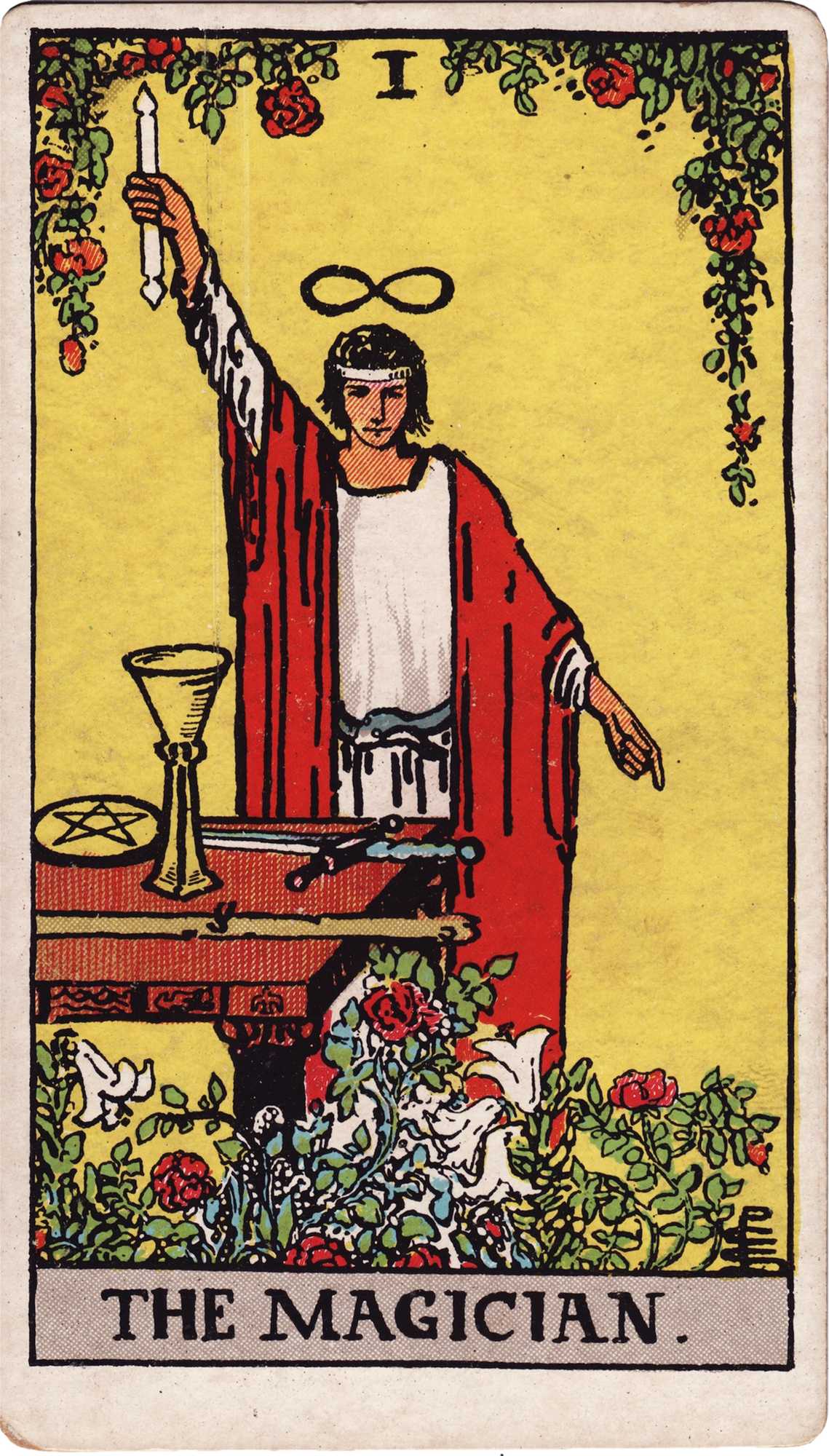 The Magician
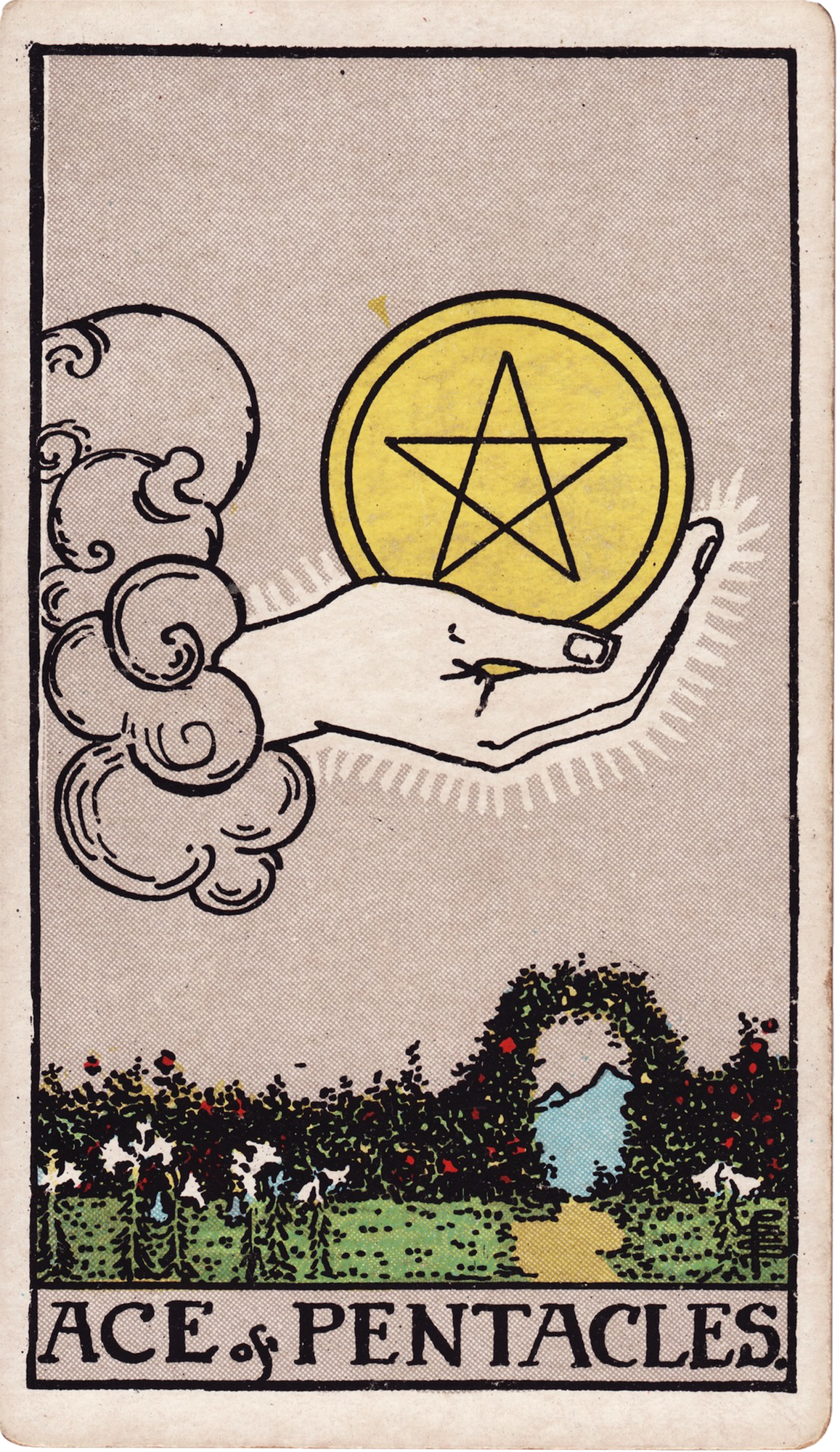 Ace of Pentacles
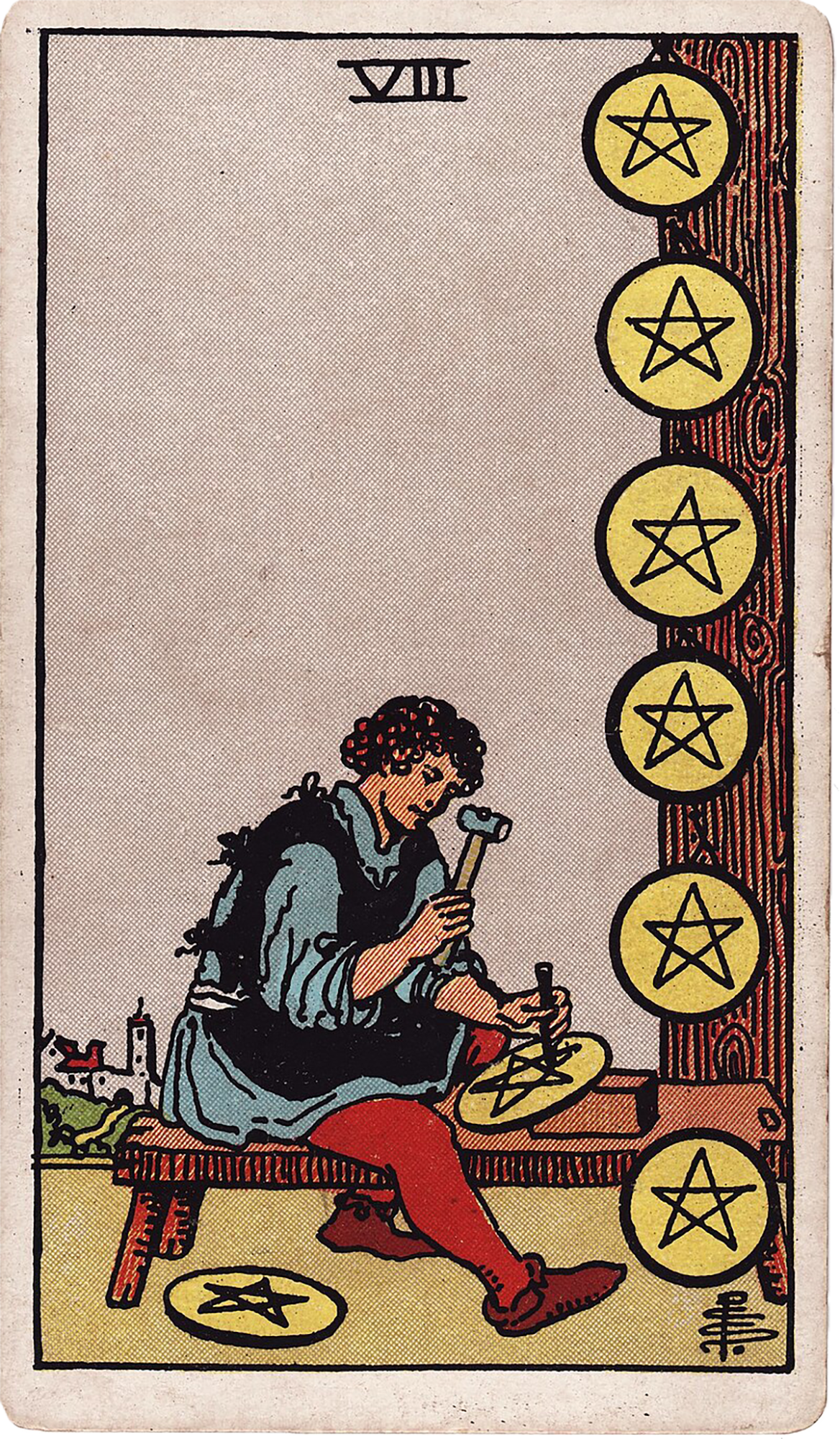 8 of Pentacles
Introduction and central thesis
When The Magician, Ace of Pentacles and 8 of Pentacles appear together the combination often reads like a three‑stage arc: a focused decision to act (The Magician) meets a tangible opportunity or resource (Ace of Pentacles) and is realized through repetitive skill-building and craft (8 of Pentacles). This lesson focuses on how to translate a creative vision into sustainable work. The supplied card texts emphasize The Magician's deliberate use of available skills and clear communication, Ace of Pentacles' practical opportunity and need for grounded response, and 8 of Pentacles' steady practice and attention to process. Read these cards as collaborators in a single narrative rather than as three isolated answers.
Reading the imagery: anchor points from the Rider‑Waite‑Smith deck
To read these cards in combination, use the RWS visual cues printed on the supplied images. The Magician: note the infinity symbol above his head, one hand raised toward the sky and one pointing to the earth (the as‑above, so‑below gesture), the table with tools of the suits that signal capacity across realms, and the red and white garments that speak of will and purity of intent. The Ace of Pentacles: observe the single pentacle offered by a hand emerging from clouds, the fertile garden below, and the stone archway and path that suggest a threshold into long‑term material stability. The 8 of Pentacles: watch the artisan repeating pentacles on a bench, the focused downward gaze, the shopwork context and distant town and mountains implying apprenticeship and eventual integration into a wider economy. Connect the objects: The Magician's table contains a pentacle among the tools, so visually he already holds the seed of material work. The Ace's hand offers a pentacle as a gift or seed. The 8 of Pentacles shows how that seed becomes craft through repetition.
Core interpretive logic for the combination
Start with agency. The Magician names the agent: someone with skills, clarity, or the intention to focus talents. The Ace of Pentacles names the world offering: an opportunity, resource, or concrete starting point that can be made valuable. The 8 of Pentacles names the method: disciplined practice, apprenticeships, craft‑making and incremental improvement. A straightforward interpretive algorithm: identify what the querent can deliberately act on (The Magician), ask what concrete resource or opening is present (Ace of Pentacles), and specify what practice, schedule or quality control is necessary to turn the opening into a durable result (8 of Pentacles). This logic avoids deterministic prophecy and returns the reading to choices and work.
How the cards modify one another
Look for modifying relationships rather than stand‑alone meanings. Examples of modification patterns: - The Magician modifies Ace of Pentacles by clarifying how to claim the opportunity. Where Ace supplies a gift, The Magician explains the posture: a clear ask, a first concrete move, boundary setting or a demonstration of skill will make the opportunity usable. - The Magician modifies 8 of Pentacles by showing what kind of practice is needed: deliberate, communicative, or boundary‑oriented practice rather than rote repetition. The Magician suggests experimenting with technique, then selecting the method that best channels your intention. - Ace of Pentacles modifies 8 of Pentacles by specifying what you are practicing toward: a product, a job role, a client base, a health regimen. The Ace gives the practical end-point, and the 8 explains how to make it reliable. - 8 of Pentacles modifies The Magician by tempering inspiration with discipline: the Magician's creative flare must be refined through routine and standards to become sustainable. These mutual modifications produce a working cycle: decide and direct (Magician), receive and concrete (Ace), refine and stabilize (8).
Context 1 — Career and creative entrepreneurship
In a career reading this trio is one of the most favorable combinations for moving a creative idea toward paid work. Read it like this: The Magician indicates you have the skills and the capacity to present them—portfolio, pitch, or an initial demonstration. The Ace of Pentacles shows a concrete business opening: a client lead, a small grant, a product prototype, or even a first sale. The 8 of Pentacles insists the path to sustainability is craftsmanship—pricing models, quality control, consistent delivery, and continuous skill development. Practical reading implications: - Ask what the smallest viable product or demonstration looks like; The Magician suggests a showpiece you can produce now. - Use the Ace-of‑Pentacles image (hand from clouds, garden, archway) to locate the opportunity: is it a one‑time gift, or a doorway into broader income? - Use 8 of Pentacles to set KPIs: hours per week, units produced, revisions per item, feedback loops. For freelancers, this combination can mean convert an inquiry into an ongoing contract by showing repeatable process. For a maker, it suggests turning prototypes into a production routine.
Context 2 — Relationship and shared projects
When the question concerns partnership or a shared project, these cards describe a trajectory from intentional communication to a practical foundation to disciplined contribution. The Magician asks where clearer boundaries, honesty, or a deliberate offer would move the relationship forward. The Ace of Pentacles signals a shared tangible resource—a small joint investment, a rental deposit, a studio space, or a child or pet—something that requires practical arrangements. The 8 of Pentacles emphasizes that the relationship's health will depend on regular, quality contributions: chores, financial agreements, maintenance work, or creative labor invested steadily. If the Ace is a shared purchase, The Magician tells you how to initiate the conversation or contract; the 8 shows the maintenance plan needed to keep it viable. This combination is pragmatic love: intention + resource + ongoing effort.
Context 3 — Emotional and practical growth
Read for inner work: The Magician is your capacity to bring awareness and skill to an internal change—deliberate practice of new habits, clearer self‑talk, or communicating needs. The Ace of Pentacles becomes the first tangible sign of change: a new routine that yields measurable benefits, improved health markers, or a small but meaningful gain in stability. The 8 of Pentacles is the long road: repetition, patience, and steady application. Emotionally, this combination counsels active agency rather than waiting: use the Magician's clarity to choose a specific habit, accept the Ace's small win as a seed, and then practice with the 8's persistence. In therapy or self‑work contexts the cards together can recommend structured practice—journaling every morning, skill drills, financial habits, or a concrete experiment run for a set time.
Upright and reversed nuances and how to avoid one‑card thinking
The supplied texts already frame upright and reversed meanings. Use reversals only to refine the triadic story. Key reversed modulations: - Reversed The Magician: the agent is scattered, manipulative, or lacking confidence. In combination this can mean the opportunity (Ace) will only be useful if the querent aligns integrity with action; otherwise attempts to monetize or claim resources may falter. - Reversed Ace of Pentacles: the opportunity is missed, poorly planned, or scarce thinking prevents reception. With The Magician present the message can be 'you can create your own smaller, more realistic seed' rather than wait. - Reversed 8 of Pentacles: perfectionism, boredom, or cutting corners prevents craft from maturing into sustainability. With The Magician and an Ace present, this warns against either polishing forever or doing shoddy work that undermines the opening. Avoid reading each card in isolation by asking: which card names the agency, which card names the world or resource, and which names the method? That structure keeps you from stacking independent single‑card meanings. Also check image relationships: if The Magician's tools include a pentacle, treat the Ace's pentacle not as a separate miracle but as a reinforcement or specification of the pentacle already on The Magician's table.
A step‑by‑step practical reading method
Use the following method when these three cards show up together or when you intentionally lay them for this lesson: 1) Determine spread position labels that fit the question: intent/seed/practice, or past/present/future, or who/what/how. 2) Describe each card briefly using the supplied upright/reverse text, then glue them into the three‑point story: agent → resource → method. 3) Translate images into actionable prompts: The Magician's raised hand = first public shout; his table tools = what you already own; Ace's archway = what you want to enter; 8's bench = how many hours of practice weekly. 4) Identify friction points by asking whether any card is reversed or whether any card conflicts with another (e.g., Ace reversed but 8 upright means the opportunity is shaky but skill is strong—invest in clarity or proof of concept). 5) Produce a 4‑step plan for the querent: immediate first move (Magician), secure the resource (Ace), set a practice routine (8), and a test metric (timeframe, income target, or quality measure). 6) Close by asking the querent whether this plan is viable emotionally and practically; iterate.
Three example readings
Concrete examples help translate theory into practice. Example A — Freelance animator. Spread positions: intention (The Magician), incoming work offer (Ace of Pentacles), growth strategy (8 of Pentacles). Interpretation: The Magician says prepare a focused showreel and a concise pitch; Ace indicates a small paid commission or grant that can fund a short residency; 8 instructs to set a weekly schedule for producing 2–3 test clips that refine your signature style. Action plan: finish a 60‑second demo in two weeks (Magician), negotiate clear deliverables for the small commission (Ace), and set a 10‑hour/week craft schedule for three months (8). Example B — Couple wanting a home. Spread positions: who initiates (The Magician), what resource appears (Ace of Pentacles), what upkeep is needed (8 of Pentacles). Interpretation: One partner must set clear boundaries and a plan (The Magician); a down‑payment or favorable rental offer appears (Ace); the household will require ongoing rules and maintenance tasks to remain sustainable (8). Example C — Personal health habit. Spread: readiness (The Magician), first measurable change (Ace of Pentacles), disciplined routine (8 of Pentacles). Interpretation: The querent chooses a single concrete habit (The Magician), experiences an early win like improved sleep or energy (Ace), and then builds it into daily practice through incremental repetition (8).
Common mistakes and how to avoid them
Readers often make avoidable errors when working with this trio. Mistake 1 — One‑card pigeonholing: reading each card separately and then stacking unrelated meanings. Remedy: force a three‑level question (who/what/how) so cards form roles in one narrative. Mistake 2 — Overvaluing upright/reverse labels: grabbing a reversed meaning as a fatal verdict. Remedy: treat reversals as modifiers indicating blockage or internalization and consult image relationships for whether the block is temporary or a call to inner work. Mistake 3 — Ignoring imagery links: missing that The Magician already contains a pentacle and that the Ace of Pentacles' archway and the 8 of Pentacles' workshop suggest a spatial path. Remedy: map visual connections on the card images: objects, gestures, and directions. Mistake 4 — Missing contingencies and required labor: interpreting the presence of The Magician and Ace as automatic success. Remedy: always ask 'what does the 8 of Pentacles demand in hours, revisions, financial margin, or feedback cycles?' This keeps readings grounded.
Practical next steps for querents and readers
Turn the reading into an experiment. Use the cards as a project brief: - Write a single, actionable goal inspired by The Magician (e.g., make a prototype, draft a contract). - Identify the tangible resource the Ace of Pentacles maps to and list required steps to access it (apply, pitch, save, ask). - Design a 12‑week 8 of Pentacles practice program with measurable milestones: weekly tasks, quality checks, and customer feedback points. Include contingency plans for reversals: if The Magician feels reversed, invest time in confidence and integrity exercises before launching; if the Ace is reversed, rescope the project smaller and test; if the 8 is reversed, streamline work and prioritize learning over perfection. End every plan with a three‑question accountability check: what will I do this week? How will I measure progress? Who will I tell to make it real?
Closing synthesis
The Magician, Ace of Pentacles and 8 of Pentacles together provide a clear model for converting creative intention into lasting work: decide and direct, accept a tangible opening, and commit to the patient apprenticeship of craft. Because the cards emphasize agency, resourcefulness and disciplined practice, they are less about luck and more about structure. Use the visual symbols on the supplied cards to trace a narrative path—Magician's gesture to Ace's handed pentacle to 8's benchwork—and translate that pathway into specific, time‑bound steps. Read this combination as a map rather than a promise: it shows a viable route, but success still requires clear action, honesty, and steady craft.
Practice questions
• What small, demonstrable first move would show you are acting like The Magician in your situation?
• What exactly does the Ace of Pentacles represent right now: a client, a payment, a place, or a seed idea?
• How many hours per week can you realistically commit to 8 of Pentacles style practice, and what will you do during that time?
• If The Magician felt reversed (scattered or performative), what integrity check could you put in place before accepting the Ace?
• If the Ace of Pentacles feels scarce or reversed, what minimal viable version of the project could you produce without it?
• Where in your habit system might perfectionism or cutting corners (reversed 8) be undermining progress?
• What visual or symbolic link between these three cards stands out to you and how can that image guide a concrete next step?
• Who will hold you accountable to the practice schedule you design from the 8 of Pentacles?
Comments
Sign in to comment.
Continue learning
Interpreting the Dance of Justice and The Devil: Balancing Morality and Temptation in Tarot Readings
The combination of Justice and The Devil in tarot presents a profound exploration of morality, temptation, and personal accountability. This article unpacks how these cards influen...
Harnessing the Power of The Magician and Ace of Wands: Igniting Creativity and Manifestation in Tarot Readings
The combination of The Magician and the Ace of Wands in tarot readings offers a potent blend of creative energy and manifestation power. This article delves into the ways these car...
Understanding the Synergy Between The Empress and The Emperor in Tarot Card Combinations
This article delves into the intricate synergy between The Empress and The Emperor cards in Tarot, focusing on how their combined energies modify and enrich readings across various...
Decoding Transformation and Renewal with Death and The Star in Tarot Combinations
This article delves into the card combination of Death and The Star, two powerful Major Arcana cards from the Rider-Waite-Smith deck. It explores how their imagery and meanings int...
Balancing Ambition and Compassion with The Emperor and Queen of Cups in Tarot Combinations
This article delves into the nuanced Tarot card combination of The Emperor and Queen of Cups, emphasizing how their energies complement and challenge each other. By analyzing their...
Finding Emotional Healing and Renewal with The Star and The Moon Tarot Combination
This article examines the rich interplay between The Star and The Moon tarot cards when they appear together in a reading. Using the traditional Rider-Waite-Smith symbolism and the...
Unlocking Emotional Wisdom with The High Priestess and The Queen of Cups in Tarot Combinations
This article delves into the card combination of The High Priestess and The Queen of Cups, emphasizing their shared themes of intuition, emotional depth, and receptivity. By examin...
Unlocking Emotional Resilience with Strength and The Star in Tarot Combinations
This article delves into the Tarot card combination of Strength and The Star, revealing how their interplay highlights pathways to emotional resilience. Anchored in the Rider-Waite...
Unveiling Emotional Strength with Strength and The Queen of Cups in Tarot Combinations
This article delves into the dynamic Tarot combination of Strength and The Queen of Cups, emphasizing how these cards together illuminate emotional strength, compassionate boundari...
Unlocking Emotional Transformation with Death and The Moon Tarot Combination
This article explores the rich and complex interaction between the Death and The Moon tarot cards within the Rider-Waite-Smith tradition, focusing on their combined potential to un...